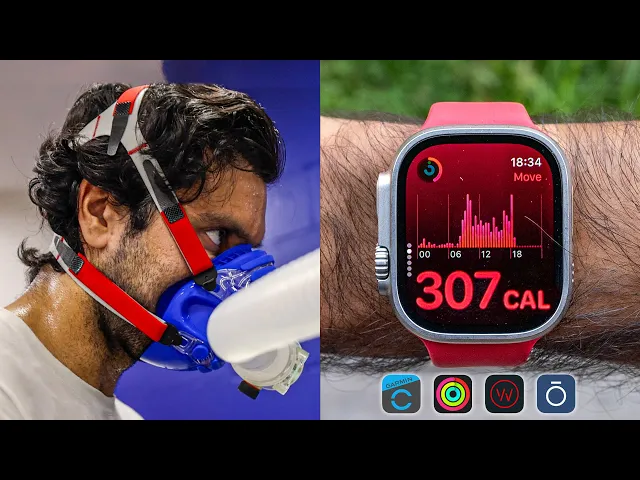
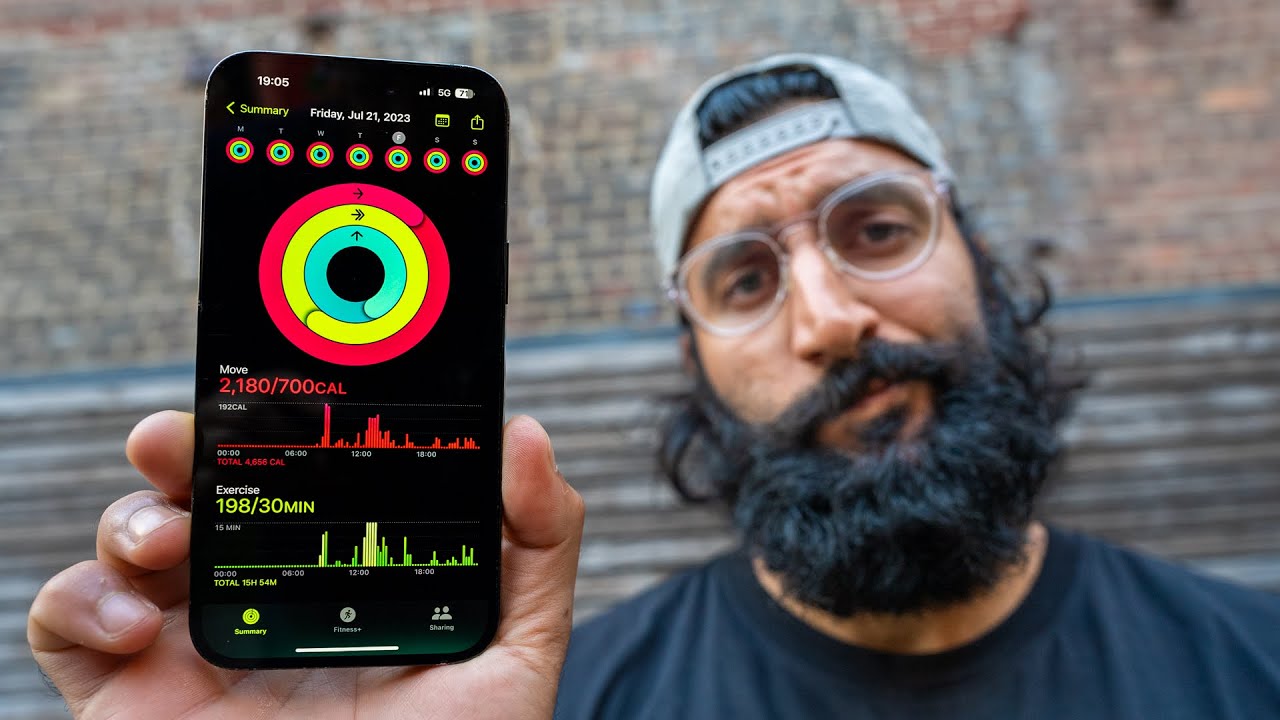
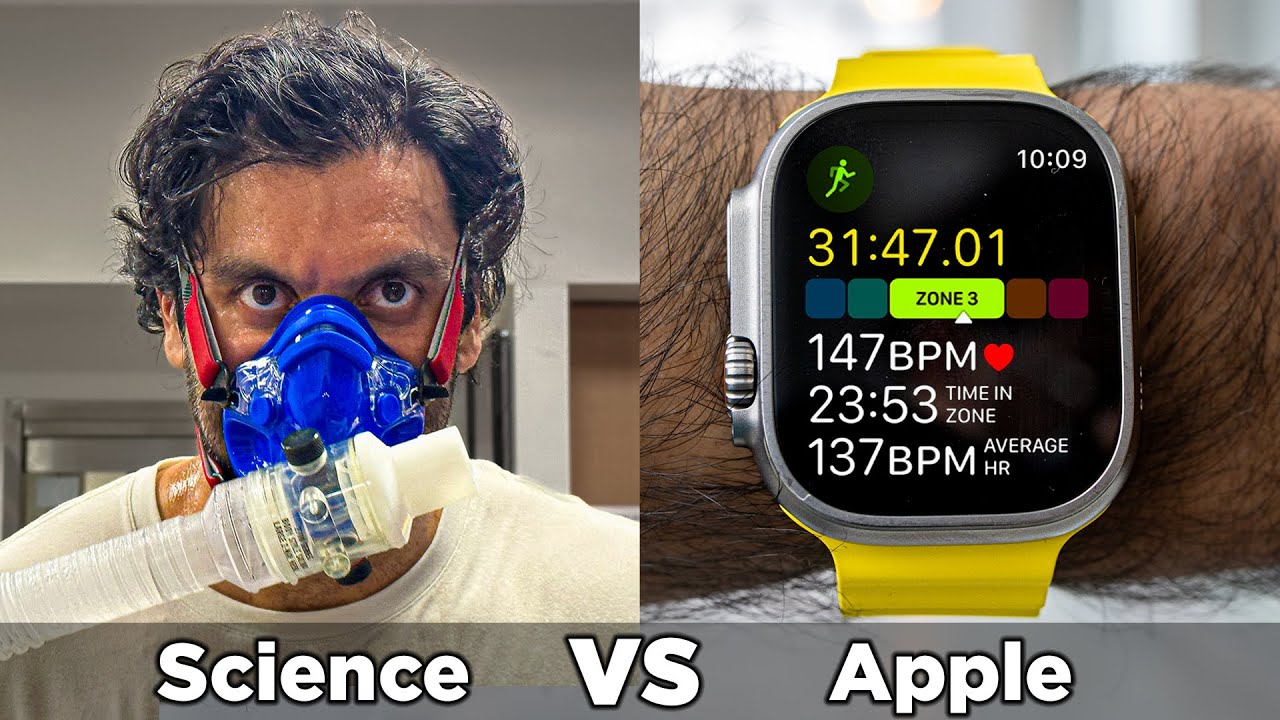
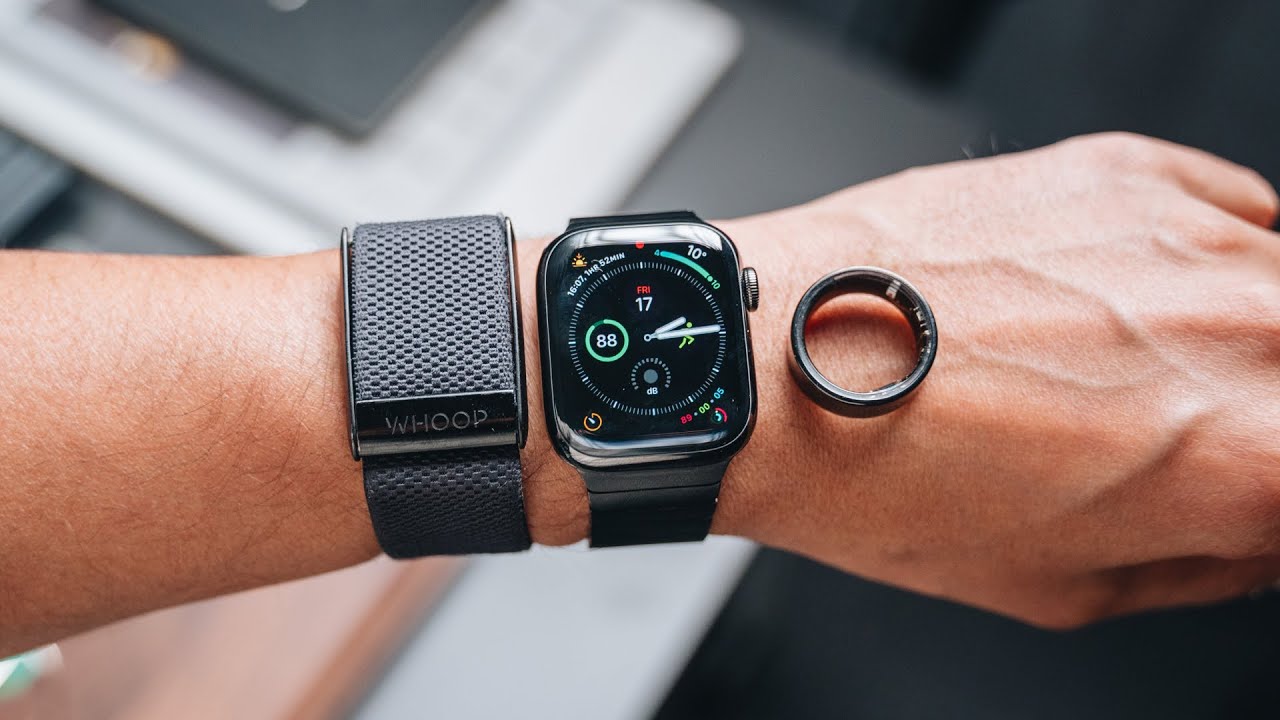
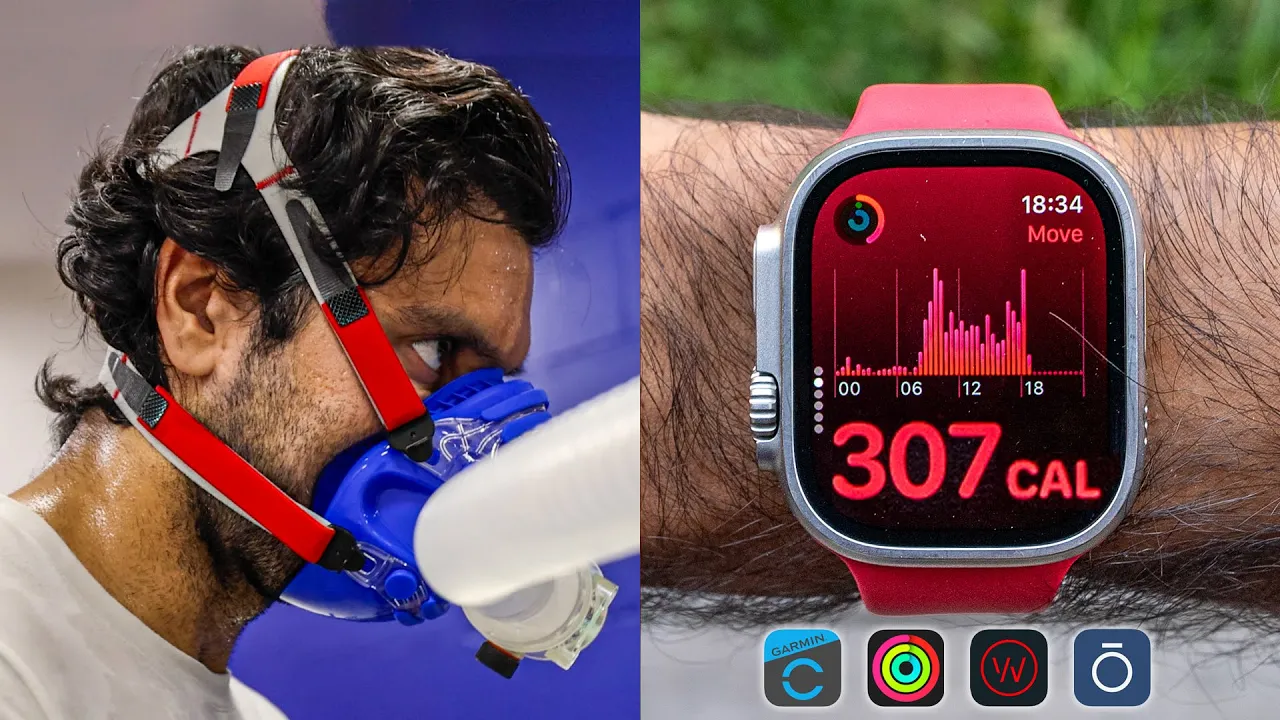
how accurate is the calorie burn on an Apple Watch Garmin whoop or a ring is a question that I've been asking myself for a long time and today we're going to find out I decided to test my calorie burn at multiple different sports Laboratories with different kinds of exercises and compare it to as many wearable devices as I could so I did three different tests the first test was with Nikki at Elevate Performance Services and this is kind of how I calculated so we kind of did a step test where it's 4 minutes and then
we would increase the speed and then she gave me a chart of if you were running any spaces for an hour this is the hourly burn calorie burn so I took 4 minutes divided by 60 Minutes multiplied it by the calorie burn for that hour and then I added that up for every single segment that we did and I got a final number of 323.09 calories burned on that day I was only wearing my Apple watch and whooop and the Apple watch gave me 550 calories burned and the whoop gave me 327 in this specific
scenario the whoop was actually the closest to the actual Cali burn let me know if I calculated it correctly I think in these tests this Cali Bur should be slightly a little bit higher because I started the watches and devices before and then she probably stopped the test and then there's a little bit of extra time and fluff on after as well but it seems from this one the whoop was the closest I did an hour and a half workout today that was 11 minute pace and that was 8 miles and it says my I
think my watch I burned 1100 calories so that's overestimating watches usually do remember this is not science it's for entertainment purposes only now what has actual science said so there's this recent article that came out from A7 and there were a few key takeaways that wearables had a 20% error rate for heart rate caloric expenditure could have an error rate of up to 100% which means they're totally inaccurate and then they also had some sleep information as well essentially saying that they're not perfect either in this article they mentioned that Apple watch would miscalculate caloric
expenditure up to 115% between a 28 and 93% overestimation of energy expenditure by these watches they are not accurate for energy expenditure so everyone who's calculating how much they should eat based on caloric expenditure of their Apple watch or any wearable be mindful cuz it might not be that accurate as you think it is people are looking at their watch going well burn 3,000 calories today guess I can eat 2500 when in reality they only burned 2200 now they're eating 2500 calories they think they're in a deficit actually they're in a surplus when it comes
to calories fitness trackers aren't the only thing that are inaccurate also the calorie labels that's what Casey nice that found it took us 10 hours to test five items because of the discrepancies in the those counts I would have consumed an extra 548 calories I unknowingly ate a McDonald's Quarter Pounder with cheese remember take everything with a grain of salt or pepper I don't know whatever you like dude already from the first test we know that the devices were relatively off so how did the second test go this was with paully at HSS and I
was doing the same exercise running we were doing a 4-minute step test I was running a certain pace for 4 minutes and then increasing that over time so I ran the calculations the same we did 4 minutes divided by 60 Minutes multiplied by the total calories burned per hour of that specific segment in Pace and then I added all of those together which gave us a final value of 597.51 Apple watch at 636 whoop at 430 and Aura at 739 in the first test woof was the closest but in this one now it was the
farthest one off and Apple watch actually had a better accuracy this time around while we figure out measuring our physical health it's important to remember about our mental health too most people spend hours in the gym every week so why not give our mind the same kind of attention regardless if you're just going through a hard time or if you're dealing with a clinical Mental Health Challenge therapy can give you the tools to approach your life in a very different way and that's why I'm excited to tell you about today's sponsor better help I know
from my experience that finding a therapist can be hard and expensive that's why I love better help's mission to make therapy more accessible and more affordable as a millennial who runs his own business I deal with a lot of challenges I been using better help on and off the past few years to help me connect with a professional therapist it's super easy because it's all online and remote better help has helped me change my perspective on life I've been able to deepen my relationships with all of my friends and family it's easy for you to
sign up and get match with a therapist within a few days use my link in the description betterhelp.com back/ shervin clicking the link gets you 10% off your first month of better help to get started on your mental fitness journey so what are the key takeaways I learned that depending on how you wear your Apple watch the type of strap you have the weight of your Apple watch the generation of your Apple watch your skin color hair tattoos the tightness of how you put the band on how much movement you're doing during that exercise versus
no movement can all have an impact on how it calculates your heart rate and then if it's using the heart rate to predict caloric expenditure depending on how far the heart rate is off based on all those other factors your caloric expenditure can be different as well and that's where this older Stanford study on wearables might be interesting they found there was an rate of 40 to 80% of most devices cuz they're using wrist motion and heart rate to calculate most caloric expenditure they built a device that goes on your thigh and your lower leg
and they found that that was more accurate in terms of measuring caloric expenditure you can kind of build it yourself so if anyone knows how to I'd love to feature that in a future video but obviously the most accurate is wearing a mask and measuring your CO2 O2 levels and that's been found I think to be the gold standard of calories burned and if there are any new articles or new information that comes out please comment down below so far I'd only done running exercises what if we tried something different like cycling that's when I
did my third Sports lab test with Caitlyn at HSS 2 minutes we did the same thing but on a bike so it was a 4-minute step test building to increase power levels at each step and luckily I asked her to calculated the total calories burn and she gave me 38.3 total calories in that in that B I mean yes yes all right yeah I don't usually do that so the aura ring was close so you know a lot of addition she also gave me a chart of calories burned per hour at each intensity and this
is really great because we have the exact wattage and we'll have the Cadence so you'll know exactly what the the output or the workload should be to hit these numbers and I know with cycling there's less movement so potentially the heart rate numbers can be more accurate with some of these devices and I did die on the last stage I think it only lasted like a minute and a minute and a halfish but you know I've almost never cycled brutal we'll do these in order of closest to farthest again whoop on my bicep at 352
calories Aura ring at 320 calories Apple watch at 466 calories and Garmin at 471 calories so as the total inverse from what we got in the last lab test the list just literally flipped itself so now I just got even more confused I'm like all right the running says one thing the running at the other lab says another thing the cycling totally something different and all these articles we're reading just say they're all way off and I wear all four of these devices almost every single time I work out and I see how different all
these calorie ranges can be I've heard the best way to understand if you're burning as many calories as you're eating is to weigh yourself weigh in first thing in the morning right have to go to the bathroom do it every day and take the average of that for the week and then compare that to the next week's average and if your weight is increasing that means you're technically eating more than you're burning if your weight is decreasing that means you're actually burning more than you're eating what do you all think is more likely that somehow
you are defying the laws of thermodynamics or that maybe the instrumentation that you are using to assess energy expenditure might not be perfect so I think the biggest takeaway is knowing that your wearable is not going to be very accurate when it comes to caloric expenditure so if you're trying to calculate how much to eat take that information with a grain of salt but do not think that this is the ultimate truth of what's happening with your body I'm going to keep working out till the day I die so make sure to follow me on
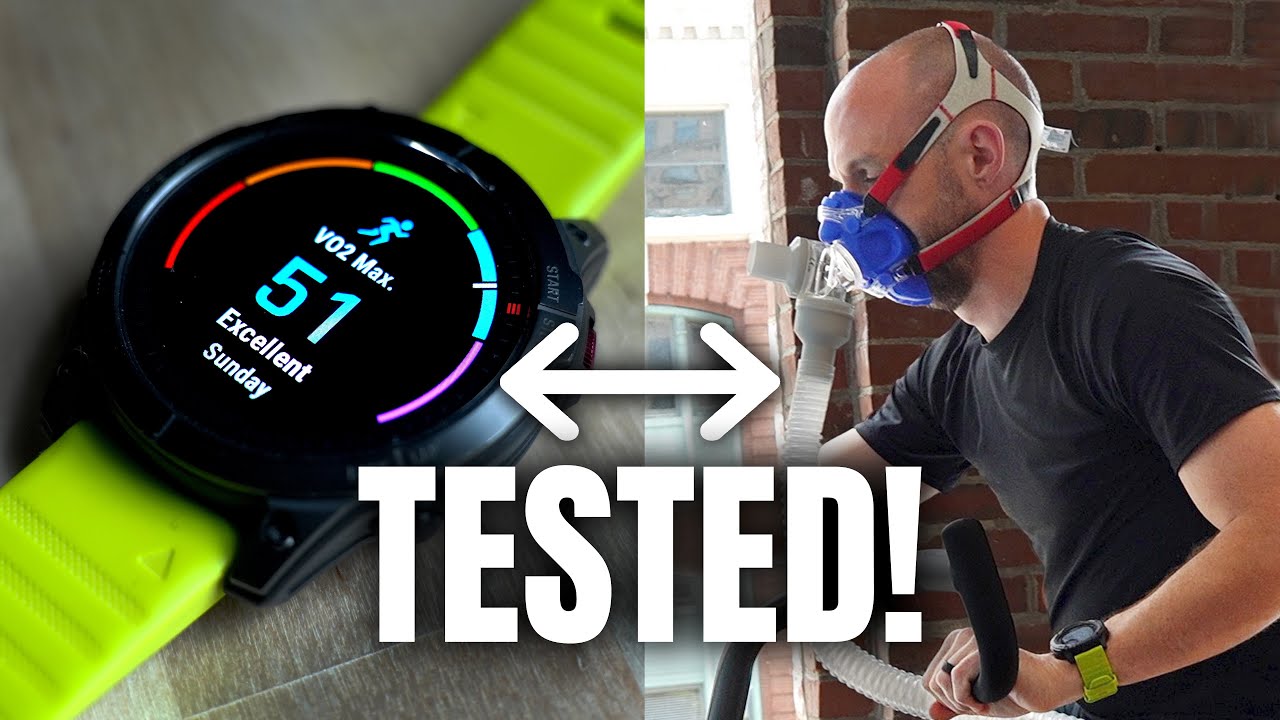
Instagram straa Twitter @ sherven shares let's be friends let's hang out let's talk online since you enjoyed this video go watch my video where I tested the V2 Max variable of the Apple watch versus a SPO lab it'll be linked right here