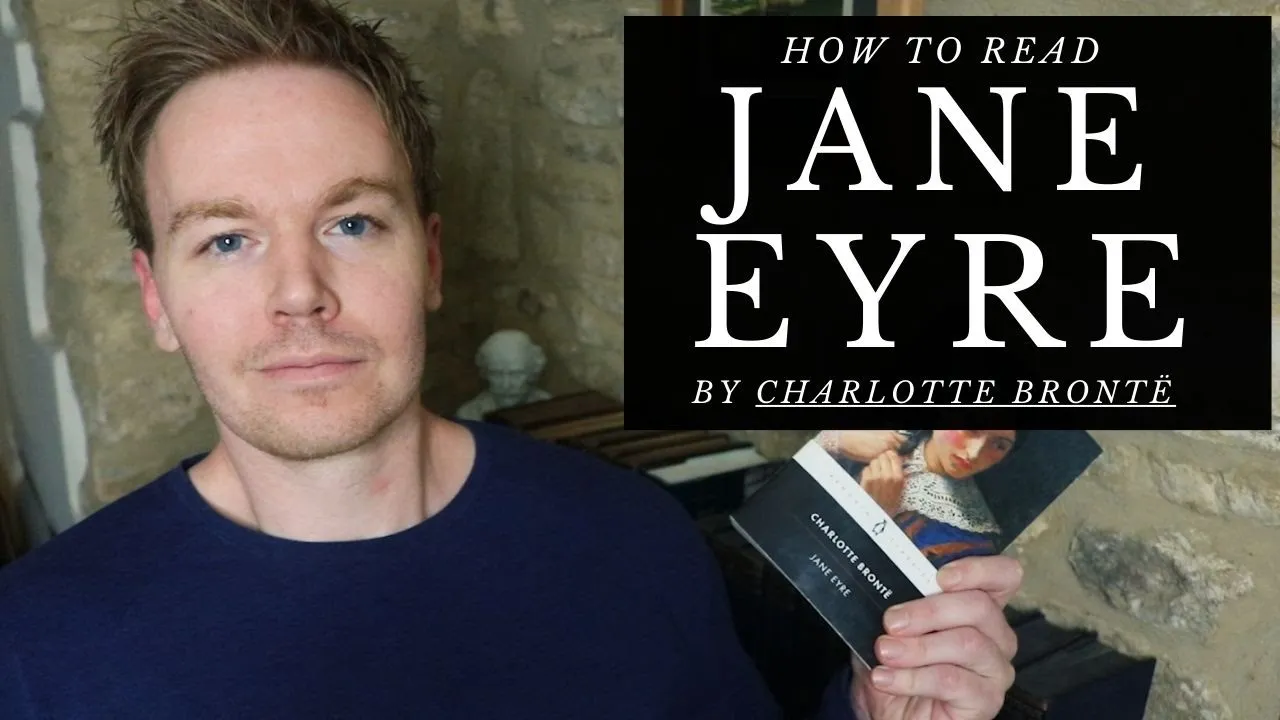
Charlotte bronte's Jane Eyre is one of the most riveting love stories ever penned in English literature first published in 1847 in three volumes under the pseudonym Curry Bell the same year as sister Anne's Agnes gray and sister Emily's Wuthering Heights Jane Eyre would prove to be a Smash Hit in Charlotte bronte's Lifetime and its popularity has endured until the present day and it's not difficult to see why This novel is a treat for readers who adore Sublime descriptions and Gothic motifs and its themes which include love social class gender roles religion Independence and the development
and assertion of self-identity all of this keeps the book as fresh today as when it was first published indeed Bronte was exploring themes concerning the place of women in the world and male female relationships in a way that would have made her very much ahead of her time Jane Eyre is a Timeless work and will continue to inform and move readers for centuries to come we read Charlotte Bronte for prose that feels like a force of Nature and we read Jane Eyre for deep psychological insight and a Deft exploration of The Human Condition and today
as we are now kicking off a deep reading lecture series at the hardcore literature book club at patreon.com forward slash hardcore literature let's talk about how to approach this classic Novel and run through some mindsets that will enable you to obtain a more robust appreciation of this masterpiece and let's meet the writer of this classic now we're going to keep this discussion as spoiler free as possible so if this is the first time you're reading Jane Eyre you're coming to this work for the first time then you are safe I'm not going to go massively
into plot details and I'm going to stay away from anything that would spoil the novel for a first Reader we will be discussing the fine details and specific plot points in our lecture series at the book club and my focus in today's video is going to be biographical because making the acquaintance of Charlotte Bronte will facilitate a very deep appreciation of Jane Eyre and will help keep us away from spoilers I very much personally wish to preserve some of the magic of that first reading experience if you're coming to Jane Eyre for the first time
And despite the classic status of this novel that's very possible it is possible that this will be a fresh read for many and if you don't know what happens in Jane Eyre then you do want to keep yourself protected because having the story unfolds before for the first time is a very special experience this is a very romantic very thrilling and enthralling story and if you're anything like me you're going to absolutely love the central protagonist you're going to Love the heroine Jane Eyre and you may even see something of yourself in her and if
you do that means you are in sympathy with the author Charlotte Bronte now if you went to a London bookstore in 1847 you may have been lucky enough to pick up a copy of an exciting new work that one early Review called one of the most powerful domestic romances to have appeared in years the work this review said had nothing of the old conventional stamp upon it it was a Tale of passion that would make the pulses Gallop the heart beat and fill the eye with tears and indeed if you turned those soon to be
tear-filled eyes of yours to the title page you would have seen this Jane Eyre an autobiography edited by Cara Bell how incredibly enigmatic who is Jane Eyre is this really an autobiography isn't this a novel isn't this a work of fiction and indeed who is this Cara Belle fellow was this a man writing or is this a woman Using a pen name what do we know of the author what do we know of the editor are they young are they old who are they now the subtitle of autobiography of course makes readers wonder about the
degree to which they are reading fact or fiction and indeed this is reinforced throughout the novel in the opening of chapter 10 we're told that this is not to be a regular autobiography now indeed whenever we pick up a novel we almost always wonder about the degree 3 to Which it is autobiographical and great writers know that fiction is a lie that tells the truth and you can be more truthful in an ostensibly made-up story then you can be very often in straight autobiography now there's always a danger of reading too much into a work
and biographical readings can frequently take more license with reality than they really should but in Jane Eyre the parallels with Charlotte's own life are overt and Significant now for me personally it's the more covert connections that inspire me when I'm thinking about the relationship between a work and it's author and I like to think of art as a product of sublimation the writer channels their deepest desires their fears frustrations wishes hopes Ambitions and their world view into their work and so novel becomes an extension of self and then it is flung out into the world
for readers to meet That other self they meet that self halfway and they see something of themselves in the other so why did Charlotte Bronte write Jane Eyre there's always going to be a proliferation of reasons conscious and unconscious when it comes to Artistic production and nowhere is that more evident than when it comes to Jane Eyre the product of Charlotte bronte's artistic genius now I'm going to be reductive and I'm going to pick one conscious reason for her Writing this novel and one unconscious reason though indeed it could be argued very compellingly that the
unconscious reason was actually incredibly conscious too let's start with the conscious reason the Bronte family needed money they lived up in horworth in Yorkshire and the Bronte siblings Emily most significant but Charlotte too would wonder the Moors and you can see evocations of the Moors you can see the influence of the natural world burst Through sublimely in their work understanding where the brontes hailed from goes a long way towards understanding why they were so obsessed with the weather and so accomplished when it came to pathetic fallacy the weather as symbolically representing the character's moods compound
and understanding of where they hailed from with an understanding of their influences the fact that they were reading romantic writers like Shelley And Lord Byron and you have a perfect storm pun intended for gaining a deeper appreciation of their work now the thing about horworth is it was a very sickly Village there was no proper sewage system and there were open drains along Main Street and the back lanes and the cesspools were a breeding ground for all sorts of disease privies which shared by up to a dozen families and the water supply was limited and
impure the church graveyard was dangerously overfilled and Also contributed an additional source of pollution to the water supply now due to this poor hygiene level the mortality rate in the village of horworth was incredibly High nearly half of the children born in the village died before the age of six and the average age of death was only around 30 years old Patrick Bronte the father of the family an Irish immigrant from what is now Northern Ireland one of around 300 000 around this time many of whom had turned Up famished in England Patrick Bronte was
a priest of the local Parish church and he was going blind now he was the only source of family income so if he couldn't work they were all in big trouble so what we see is Charlotte starts rallying her sisters to publish their works together beginning with their poetry published under the pseudonyms of Kara Ellis and Acton Bell that's Charlotte Emily and Anne now Charlotte was very excited about Emily's Poetry she was going through her things when she shouldn't have and she was reading Emily's poems these were very very private poems and if you've read
The Poetry of Emily Bronte then you'll know that they are some of the best poems in the English language they are Sublime they're masterpieces and Charlotte could see that immediately Emily however was very very unhappy that Charlotte had been going through her things and reading her writings she saw This as a gross invasion of her privacy and the prospect of publishing these poems well that was Unthinkable because they were incredibly personal incredibly intimate incredibly raw there's no way she would have wanted to put them out in the world to be judged on now Emily might
have been Furious but luckily Anne came forward and somewhat diffused the situation by saying that she would like to get involved and maybe she could publish something with them both and so After a little bit of persuasion and a bit of upset they adopted these pseudonyms these pen names to disguise their identity and they did indeed publish a volume of their poems together now this was not a success and it only sold two volumes now the brontes had always written they'd written during their childhood and Charlotte and Emily with brother branwell and sister Anne would
create these secret dramas they called them bedtime plays and they would Put little performances on they created their own imaginary worlds and their Heroes and heroines were modeled on byronic protagonists and the political players discussed in blackwood's magazine Patrick had gifted branwell some Toy Soldiers and each of the siblings adopted one and would write things from the point of view of their adopted Soldier giving him a vivid backstory these stories were written in minute handwriting and stitched together In miniature books and many have seen the creation of these imaginary worlds as a response to their
Bleak reality a reality that was filled with hunger and sickness and cold all this to say the brontes were a curious breed they had a vivid Collective imagination that we are hard pushed to see matched by any other group of sibling writers in English or indeed in world literature so they needed money for the family and Charlotte saw herself as the family's Savior after the failed poetry publication we see the sisters move towards pushing their fiction into the hands of Publishers and Sharla was a fierce advocate for Emily's Wuthering Heights and Anne's Agnes gray the
plan was to have these two published alongside her own work the professor the problem was that Publishers didn't want the professor The Proposal was to publish these together and Publishers found these to be a strange mix now Indeed if you read the brontes as a collective which I think is a very good thing to do rather than just reading Charlotte's work rather than just reading Wuthering Heights or the writings of Anne you should read the brontes generally and you can see that there are commonalities you can tell that they're sisters and they're from the same
family and they did have an influence upon one another despite that it was a bit of an odd mixture honestly It would be quite odd publishing anything alongside Wuthering Heights if you've read that novel then you'll know exactly why that's a standalone I don't know what other work could be be rightly published beside it but the Publishers thought they could publish Agnes gray and Wuthering Heights together with Wuthering Heights taking up the first two volumes and Agnes gray taking up the last volume this obviously left Charlotte without a work in publication So she went back
to writing and she persevered and she started writing in secret or largely in secret now we know from Elizabeth gaskell's the life of Charlotte Bronte which is a tremendous biography Elizabeth Gaskell and Charlotte Bronte were friends so she could obtain a very intimate access to the details of her life we know from this biography that Charlotte did share Snippets of her work in progress with her sisters indeed she talks about Receiving feedback some constructive criticism from Emily and Anne and she also talks about sticking to her artistic guns doesn't matter what they say I know
what I'm producing is the way it's supposed to be but she did largely keep this project Jane Eyre secret she definitely kept it secret from her father other and he didn't know about Jane Eyre until after it was published and that was quite a thing because she was looking after him at this time he Was ill and this would have been very demanding work now indeed it's interesting to think about what her composition process would have looked like around this time she was suffering from her own diminishing eyesight just like her father and she was
fearing that she might go blind too and so she wrote Jane Eyre on these really small squares of paper and she needed to hold the paper very close to her face one thing she must have snatched an hour or so Here and there during the night during a quiet moment in order to compose this great work now in addition to keeping the composition of Jane Eyre relatively secret Charlotte would also Endeavor to keep her identity secret and she managed to do so for quite a while after publication Jane Eyre was published in 1847 and she
kept her name away from it until the end of 1850. now in the biographical note for new additions Charlotte revealed carabell to be a pen Name and she also revealed her sisters to be Ellis and Acton Bell and by that point both of them had tragically died Emily died in December of 1848 and Anne would follow on shortly afterwards in May of 1849. Charlotte would live a little longer and then tragically die whilst pregnant again we talk about the sisters together because it's very difficult to talk about a single Bronte in isolation it's very rewarding
to talk about them as a Unity as a whole to talk About the Bronte sisters and indeed I like to reread at least one Bronte novel every year during the Autumn months and into the winter I find it's a very good time of year to do so now once the secret was out that Charlotte Bronte was well speculation began to arise as to her relationship with Jane Eyre was Jane Eyre her and indeed William Thackery Charlotte's artistic hero writer of Vanity Fair and the one she dedicated this novel Jane Eyre too Thackery Solicited Charlotte bronte's
anger and indeed she had a furious temper he solicited her anger at a lecture whilst they were congregating afterwards when he introduced his mother to Sharla and he introduced her by saying mother you must allow me to introduce you to Jane Eyre she gave him a good chastising after that and we can see this anger surface in her Central protagonist in the novel and personally I absolutely love her Defiance her defiant attitude Especially very early on when she says to her dear friend Helen Burns you are good to those who are good to you it
is all I ever desire to be if people were always kind and obedient to those who are cruel and unjust the wicked people would have it all their own way they would never feel afraid and so they would never alter but would grow worse and worse when we are struck at without a reason we should strike back again very hard I am sure we should so hard as To teach the person who struck us never to do it again and her friend says you will change your mind I hope when you grow older as yet
you are but a little untaught girl to which Jane replies but I feel this Helen I must dislike those who whatever I do to please them persist in disliking me I must resist those who punish me unjustly it is as natural as that I should love those who show me affection or submit to punishment when I feel it is deserved I love it I love the Defiance I love that anger coming through now we might wonder why was Charlotte so Keen to keep her identity her authorship a secret yes it's true that women would adopt
male pen names in the 19th century for fear of their fiction not being taken seriously but I personally take this as a sign of how much she put of herself into the work she put so much of her inmost self into Jane Eyre her dreams her fears her desires her world view when you read Jane Eyre you are reading Charlotte Bronte at her most intimate vulnerable and raw but also at her most powerful beautiful and truthful too now another explanation as to the secrecy of Charlotte's authorship of Jane Eyre comes in the form of her
romantic life or her romantic longings and I see this as being the more covert inspiration for the work this is the sublimation it's important to know that when Patrick had started to go blind before rallying her Sisters to publish their Works Charlotte Bronte had tried to secure Financial stability for the family by her and Emily aiming to start their own school and so in 1842 they traveled to Brussels and enrolled at a school and started learning French the idea was that this would help them attract students themselves in the future Charlotte Bronte 26 years old
fell in love with her Schoolmaster and emphasis on the word Master which she deployed Significantly and recurrently in her letters and in her works the schoolmaster's name was Constantin and he was the husband of the woman running the school that's right Charlotte Bronte fell in love with a married man she would describe AJ as a man of power as two minds but very choleric and irritable in temperament a little black ugly being with a face that varies in expression sometimes he borrows the lineaments of an insane Tomcat sometimes those of a Delirious hyena occasionally but
very seldom he discards these perilous attractions and assumes an heir not above 100 degrees removed from what you would call mild and gentleman-like Charlotte returns home in 1844 and we see that Charlotte writes a lot of letters to hey Jay now many of them don't survive but the ones that do are compiled in this Oxford world's Classics edition of Charlotte bronte's letters which is very much Worth perusing if you want to get a more intimate understanding of the author and therefore see the writer in the work Charlotte starts to write these really passionate letters to
this Schoolmaster and she's met with just cold restrained replies indeed he'd only really reply six months apart spaced apart he wasn't writing a lot and we read her letters and they are tortured we can see that this is a young woman who is suffering from unrequited love significantly Unrequited love he did not return her affections and this tormented her she spoke of the period of waiting for his next letter as being like torment she'd wait and wait and wait and then love these really restrained cold responses we see in her letters that she's concerned about
not being egotistical that's what she writes in one of the letters I'll stop being egotistical or I'll try to we see that she is suffering from on poor eyesight and she's not very Well and she's telling him all her woes she talks about how she would love to write a book and she would love to dedicate it to him in one particularly painful letter she writes day and night I find neither rest nor peace if I sleep I have tormenting dreams in which I see you always severe always satinine and angry with me I cannot
she says and I will not resign myself to the total loss of my Master's friendship I would rather undergo the greatest bodily pains than Have my heart constantly lacerated by searing regrets if my master withdraws his friendship from me entirely I shall be absolutely without hope if he gives me a little friendship of very little I shall be content happy I would have a motive for living for working and she says you showed me a little interest when I was a people in Brussels and now I cling to the president innovation of this little interest
I cling to it as I would cling on to life perhaps you'll Say to me I no longer take the slightest interest in you Miss Charlotte you no longer belong to my household I have forgotten you well Monsieur tell me so candidly it will be a shock to me that doesn't matter it will still be less horrible than uncertainty I don't want to reread this letter I'm sending it as I've written nevertheless I am dimly aware that there are some cold and rational people who would read it and say she is raving my soul revenge
is to Wish these people a single day of the torments I have suffered for eight months then we would see whether they wouldn't be raving too one suffers in silence so long as one has the strength and when that strength fails one speaks without measuring one's words too much very very painful stuff what we have in Charlotte bronte's letters to Jose is perhaps some of the most unreal relenting series of descriptions of unrequited love in the history of Letters so he would take forever to respond and when he did he was cold and restrained and
then one day he just stopped replying completely he wasn't talking to her anymore so distant responses followed by silence and indeed if you want to learn more about Charlotte's life around this time because it is fascinating and I think it helps us sympathize with her more it breaks Jane Eyre wide open for us it makes it a completely different reading Experience then we are spoiled for Choice when it comes to biographies and I would recommend picking up a few there's Elizabeth gaskells which I've already mentioned you can pick up her letters they're fascinating documents there
is clear Harmon's biography which is brilliant and then there's a really fantastic book called The Secret history of Jane Eyre which I highly highly recommend very good stuff so Charlotte's in love with this man he goes cold on Her and stops responding the love was unrequited anyway and then we see a couple of years is on Charlotte summons her experience with hey Jay in Brussels to write the professor and then she pens Jane Eyre an autobiography so what is Charlotte Bronte doing well she's sublimating that unrequited love into her writing and in this novel she
had an opportunity to fulfill her romantic longing she's fantasizing essentially and she could voice her frustrations she Could voice her desires she could give voice to her inmost feelings and she could talk to hey Jay she can't talk to him anymore he's not responding so she's not writing any more letters but she wants to go on talking to him so she talks to hey Jay as Jane and he talks back and this is wish fulfillment he talks back in the form of Rochester in the novel and indeed even if you know nothing about Jane Eyre
you will probably recognize the name Rochester You'll probably have an image of Rochester Rochester as byronic hero somewhat like Heathcliff though it must be said that Rochester is much more tame in comparison to Heathcliff and indeed if you've read both books Wuthering Heights and Jane Eyre I would love to know which protagonist which male lead you prefer and why he's Cliff or Rochester compare them and consider which one you like more I personally find it very interesting that we have One male romantic lead who was inspired by a very real person in Charlotte's life and
critics would say that Rochester was compounded and influenced by her brother her father and Lord Byron and a few other influences whilst Emily her male romantic lead didn't spring from a specific love interest in her real life and so we wonder where on Earth did Heathcliff spring from he sprang right from the core of Emily's being but that's a discussion for Another day and indeed if you're interested in Reading Wuthering Heights and you would like a series of lectures to take you through the book then we have a Wuthering Heights lecture series available in the
back catalog at the hardcore literature book club anyway it's really interesting to note that obviously as readers we are living vicariously yeah and I talk about living the great books and part of that means flexing our imaginative Powers seeing Everything putting yourself in the shoes of the characters meeting the characters taking their concerns on as your own and then bringing your lived experience your life to bear on the work and thinking about the book whilst you go out and about and live your life but we can see that with Charlotte Bronte her artistic output her
novel was vicarious experience too she gets to talk to her through Jane to Rochester all my heart is yours sir Jane says it belongs to you And with you it would remain were fate to Exile the rest of me from your prayer presence forever and the fact that Charlotte put so much of herself into the fiction was something that caused her anxiety when it came to the publication of the novel but she also had an anxiety about the degree to which the novel was more imaginative flexing rather than drawing from actual personal experience she did
draw from personal experience but it's certainly true that She brought a lot of her imaginative prowess to the novel in order to bolster it now she was writing letters to George lose around this time you might recognize the name George lose was the partner of Mary Ann Evans George Eliot and he warned Sharla against her excessive indulging in Flights of Fancy and he implored her to stick to experience she of course was concerned that she had limited experience but a rich inner life and she had read Extensively so that helped too but thank goodness she
overcame this anxiety and ultimately rejected loses advice to stay away from imagination for fear that the work would not be truthful because what we have is brilliant it's a literary Masterpiece pushing back against the advice to restrain Her Imagination Charlotte writes imagination is a strong Restless faculty which claims to be heard and exercised are we to be quite deaf to her cry and insensate to her Struggles when she shows us bright pictures are we never to look at them and try to reproduce them and when she is eloquent and speaks rapidly and urgently in our
ear are we not to write to her dictation Jane Eyre is the product of a very fertile imagination and it's stitched together from the tradition of literature there is a really strong love of Storytelling the acts and process of Storytelling itself running through this book and that love Of Storytelling ties into the supernatural elements sin Jane Eyre we have fairy tales and folklore and Gothic elements in the DNA of Jane Eyre now the gothic in the early 19th century wouldn't have been considered literary exactly or high literature it was a popular form of entertainment which
is interesting because we study the gothic form today that was one of my personal areas of interest at University the gothic surged in popularity and exploded Out of the French Revolution it was pretty much a knock-on effect of the French Revolution which was before Charlotte bronte's time just a little bit before but she would have been growing up in a culture in England that was seeing a lot of insurrection a lot of turmoil across the channel in France what we see is towards the end of the 18th century we have the horrors of the French
Revolution we have people being guillotined in the street we have the King being executed we have the mob turning on itself we have complete chaos and then we see a surge in popularity of the gothic and it was almost like the horrors of the reign of terror were funneled into this dark unconscious nightmare reflection of reality now Anne Radcliffe one of the most exemplary writers of the gothic form often considered to be the mother of the gothic novel and keep in mind at this time the idea of a novel itself and the Gothic was intertwined
if you said novel people generally thought Gothic and all of the tropes that we take to be Gothic now and Radcliffe delineated the difference between Terror and horror because these Gothic novels were referred to as Terror novels the difference is this terror is the feeling leading up to the dread the awful thing that you're about to experience whereas horror is the feeling of revulsion The Recoil the response to that dread that Awful thing Stephen King in dance Macabre would put it like this Terror On Top horror down below and the cheapest of all would be
the gross out Gore essentially even though the gothic wouldn't have been considered exactly literary Terror was the the higher form or the grander feeling that rioters wanted to summon in their readers Gothic tropes include Supernatural encounters Sublime Landscapes ruins Antiquated spaces and dark secrets and that's key The sins of the past return to haunt the protagonists in the present and a lot of Gothic novels would put women at the center of the narrative now I'm going to link in the body of the lecture post at the hardcore literature book club are deep dive video and
introduction to the gothic because we go very in-depth in that video and we will of course explore the gothic as we read through Jane Eyre together but there's a very strong Gothic tone to Jane Eyre and one doesn't Want to give too much of Away by supplying details but as we've said there's also a number of fairy tales and folk tales running through the fabric of the novel too stories like Little Red Riding Hood Cinderella Beauty and the Beast and Bluebeard among many others so we have this Gothic tone and we have a byronic hero
a byronic male lead in the form of Rochester when we think of byronic Heroes we think about the Romantic Poets particularly the poet who Lent his name to the archetype the description Lord Byron himself the brontes like most of England and most of Europe actually were obsessed with the tales of Lord Byron his exploits not just his poetry but his lifestyle too Lord Byron of course also lent his image to the vampire how we understand the vampire today from polidori onto Bram Stoker is heavily influenced by Lord Byron so we think about the Romantic Poets
when we think about byronic Protagonists but we also think about Milton's Satan Milton Satan was the pre-bironic byronic anti-hero and indeed at the hardcore literature book club we are engaging in a slow and very rewarding appreciation of Paradise Lost and that is a brilliant work to run alongside Jane Eyre you will find these two to be very complementary reads so we have a byronic male lead we have a Gothic tone and atmosphere and Sublime descriptions we have extraordinary Imagery and tropes from fairy tales gifted To Us by a very imaginative writer but all of this
is given to us in plain language plain dealing language and that is something that we should pay attention to as well we see another significant influence in the writing of Charlotte Bronte in the form of Wordsworth and Coleridge specifically I'm thinking about their preface to lyrical ballads now there are three huge seismic shifts when it comes to the History of English literature in the form of three writers Shakespeare Milton and Wordsworth now the really interesting thing about Wordsworth comes in the form of that preface to lyrical ballads they set out their aims aims that would
change the course of English poetry this is an aesthetic Manifesto and one of the aims or the guidelines was that they would employ everyday language that was best suited for poetry just common everyday language and that's What we get in Jane air 2. it's poetic prose yes it's Sumptuous it's evocative it's romantic you can see everything but the style is everyday language it's not highfaluting it's not language that poses a barrier to entry one doesn't need a dictionary by their side in order to gain an appreciation of Jane Eyre and this surprises many readers who
come to the work for the first time many readers who don't read a lot of classic literature and are expecting a challenge I'm surprised that is incredibly readable so when you read through Jane Eyre notice that we have intimations of the other worldly the supernatural notice how they run alongside the mundane and indeed our heroine Jane Eyre is described in both Supernatural and mundane terms Rochester calls her a changeling she's referred to as an elf as a Sprite and she has a very fertile imagination she gets these premonitions and is very sensitive to Omens when
we Read Jane Eyre we feel as though we are really reading a story a prototypical story with all the fancy and Imagination but the Curious Thing is we do also have reality running alongside the supernatural elements the fanciful elements the elements that are torn out of fairy tales despite serving up a really imaginative concoction Charlotte herself was very keen to make her heroine in her words a plain one a plain woman like herself and indeed one of the Themes we have explored in this work is the idea of appearances being deceiving and in the story
we do get Charlotte's insecurity a note of her insecurity about her appearance intrude into the work and indeed Rochester is supposed to be rather plain or unattractive as well though that's very hard to Envision as you read the story Charlotte would say in a letter I sometimes regretted that I was not handsomer I sometimes wished to have Rosy Cheeks a straight nose and Small cherry mouth I desired to be tall stately and finely developed in figure I felt it a misfortune that I was so little so pale and had features so irregular and so marked
as seems I talk of the gothic has had an impact on the weather so I'm going to put a light on now we hear some of Charlotte's own painful insecurity surface in the work when Jane tells herself that she is too plain for Rochester she calls herself a blind puppy she must be blind to think That she's a favorite of Rochester's it does good to know woman she says to herself to be flattered by her Superior who cannot possibly intend to marry her and it is madness in all women to let a secret love Kindle
within them which if unreturned and unknown must Devour the life that feeds it and if discovered and responded to must lead ignis fatuous like into myrie Wilds whence there is no extrication listen then Jane Eyre to your sentence tomorrow place the glass Before you and draw in chalk your own picture Faithfully without softening one defect omit No harsh line smooth away no displeasing irregularity right under it portrait of a governess disconnected poor and plain afterwards take a piece of smooth Ivory take your palate mix your freshest finest clearest tints choose your most delicate camel hair
pencils delineate carefully the loveliest face you can imagine and then whenever in future you should chance to Fancy Mr Rochester thinks well of you take out these two pictures and compare them say Mr Rochester might probably win that Noble Lady's Love if he choose to strive for it is it likely he would waste a serious thought on this indigence and insignificant plebeian very very harsh words I think every reader is going to be able to relate to this to some degree and sympathize with it because we are all our own worst critics compared to how
we talk to Ourselves elves there's not much that another can say to us that's worse our self-talk sometimes when we're in a bad mood or we're suffering from insecurities and doubts our self-talk is awful if we spoke to another the way we spoke to ourselves in our darkest moments then people wouldn't like us they wouldn't like to get to know us or be friends with us so it's painfully relatable this this really critical sharp self-talk and so Charlotte wanted To make her heroine play and that actually means normal but actually means like her and up
until this point heroines in literature would have been physically beautiful and they would have had something striking about them but Sharla was Keen to elevate real rather than idealized women this of course doesn't stop Rochester from falling in love with her but where Jane is idealized aspirational extraordinary for the time period is in the content of her Speech her character her beliefs her words and allow me to read one of my personal favorite passages in the entire book Let's appreciate this together because this is very powerful stuff this is very early on in the book
in chapter 12 when Jane talks about her soul relief being to allow my mind's eye to dwell on whatever bright Visions Rose before it and certainly they were many and glowing to let my heart be heaved by the exultant movement which while it swelled It in trouble expanded it with life and best of all to open my inward ear to a tale that was never ended a tale my imagination created and narrated continuously quickens with all of incident life fire feeling that I desired and had not in my actual existence and then we get to
something really extraordinary it is vain to say that human beings or ought to be satisfied with Tranquility they must have action and they will make it if They cannot find it millions are condemned to a Stiller Doom than mine and millions are in silent revolt against their lot nobody knows how many rebellions besides political rebellions ferment in the masses of Life which people Earth women are supposed to be very calm generally but women feel just as men feel they need exercise for their faculties and a field for their efforts as much as their brothers do
they suffer from too rigid a restraint to Absolute a Stagnation precisely as men would suffer and it is narrow-minded in their more privileged fellow creatures to say that they ought to confine themselves to making puddings and knitting stockings to playing on the piano and embroidering bags it is thoughtless to condemn them or laugh at them if they seek to do more or learn more then custom has pronounced necessary for their sex bear in mind that around this time there was a lot of social unrest and unease as I said the British public would look across
the channel and they would be concerned that the revolts insurrections and uprisings in France would start happening here they were worried about the precedent set by the French Revolution at the end of the previous century and the early parts of the 19th century have been dominated by the Napoleonic Wars so when Charlotte summons the language of revolt and she does so in various places in the novel she sounds very dangerous what we Get here and in this novel generally is a powerful cry for Liberty and equality Jane is an advocate for her sex and whilst
readers might point out that there is no overt cry for legal equality how can we read this novel as anything other than a cry for equality with passages such as this do you think I am an automaton a machine without feelings do you think because I am poor obscure plain and little I am soulless and heartless you think wrong I have as much Soul as you and full as much heart I am not talking to you now through the medium of custom conventionalities nor even of mortal flesh it is my spirit that addresses your spirit
just as if both had passed through the grave and we stood at God's feet equal as we are yes we get cry for equality between the Sexes but one that can be read universally too at time of recording at the hardcore literature book club we are reading Ralph Ellison's Invisible Man And readers who are overlapping these two novels Jane Eyre and invisible man might see some interesting thematic parallels emerge you might find that these works that typically aren't read together we'll inform each other in very exciting ways Ellison's book is about race and identity identity
as a black man in the early 20th century but Ellison stressed the fact that in his novel Blackness was an allegory for The Human Condition and as a man reading Jane Eyre I really connect to that tone of defiance I really connect to the Quest for self-identity and Independence and the quest to be loved on equal terms for who you truly are and this is a book that is ultimately about self Mastery as much as it is about the power dynamics between the self and others as we've said Charlotte would call the man who inspired
Rochester her master and indeed that would be the correct term to use as governess she was a governess Just like Jane and indeed when it comes to the view of governesses at the time we'll have a lot to talk about in our lecture series because governesses were seen as being liable to Madness and licentious Behavior they were seen as being very open to seduction and there are a lot of class anxieties that come through when we think about the nature of a governess and her work Jane like Charlotte is a governess who was also a
clergyman's daughter and that means that She is essentially in a rather ambiguous position when it comes to social class which has a very profound effect on her achieved value in the marriage market and what Bronte really wants to explore in this novel is the idea that marrying someone with whom you have a sympathy and we might want to look to the etymology of the word sympathy it means to suffer in the same way that passion the word passion another word that we'll think about over the course of our Reading of Jane Eyre passion we think
of The Passion of Christ that's connected to suffering if you're in sympatica with another if you sympathize with another then their suffering becomes your suffering Bronte wants to explore the idea that it's better to marry someone you're in simpatico with regardless of social class divisions then Doom Yourself by marrying into a Loveless marriage but whatever you do you must stay true to who you are Charlotte Bronte by the way whilst we're thinking about marriage received three marriage proposals during her lifetime we know that her love for hey Jay was unrequited she didn't want to marry
for status or money she really wanted to marry a man who could be her equal her intellectual and emotional and spiritual equal and yet marrying for love was absolutely not the norm that was the exception not the rule he'd be very lucky if you could marry for love during the 19th century Charlotte would receive three marriage proposals during her life and she would ultimately marry her father's curate and then she would tragically die during pregnancy a few months later this book of course explores social divisions and power power dynamics but it also ultimately is about
self-mastery and James orphan status which was a very popular Motif at this time although we've always loved stories about orphans but Jane is Orphan status allows for an Exploration of The Human Condition at the extremes at its most extreme it is a very strange sensation she said is and we get a Jane who's deploying a memoir tone of voice this is a backward looking reflexive narrative so we get multiple identities we get a younger Jane we get an older Jane we get this curious relationship between self now self who has become the self and self
who I used to be the I who is no longer it is a very strange sensation she says to Inexperienced youth to feel itself quite alone in the world cut adrift from every connection uncertain whether the port to which it is bound can be reached and so we get this exploration of The Human Condition at the extreme but we all can connect to that feeling of dislocation being disconnected and completely alone in the world and needing somebody to sympathize with who sympathizes with us we can all relate to that I think and Charlotte through Jane
once I believe The reader to think about their own position she wants us to live vicariously and experience this story as though it were happening to us and in so doing perhaps we come closer to achieving our own self-mastery and I absolutely love the intimate connection between author or author construct Central protagonist and reader us I love the intimate friendship we have throughout the story Jane Eyre talks to us directly she says reader and the Direct reader address also gifts us the most famous line in the novel but I'm going to refrain from quoting that
line if you've read the story already then you're going to think of it immediately now this was a convention at the time saying hey reader and commenting upon what's happening in the narrative itself you'll see this in Henry fielding's Tom Jones you'll see this in thakaris Vanity Fair and Barry Linden but I find it really interesting to contemplate here Because when Charlotte Bronte deploys this convention I personally find it far less intrusive and disruptive with some books that utilize this convention it breaks the flow of the narrative and it Yanks you out of the world
but I find that the experience of reading Jane Eyre is an immersive one all the way through it's brilliant powerful escapism now when it comes to the central protagonist the heroine I have read criticism and I've heard from readers who aren't Wholly sympathetic to Jane Eyre or they don't find her sympathetic they don't particularly like her now that's not something that I completely understand personally yes in her younger days she's wild she's rebellious and part of the novel part of her journey towards self-mastery which is tied to her being an advocate for her sex involves
controlling that but these are the reasons why I love her as a character we get a very intimate view of her Innermost workings and Jane Eyre to me feels like a very real living breathing thinking human being perhaps this is why Charlotte's so fierce resisted The Works of Jane Austen when she finally came to them she came to Austin very late in her life thanks to George Luz he recommended she check out Austin's work and she did not like her stories now I think that that was potentially an unconscious element of disliking the fact that
Austin had represented psychologically Complex human beings before her her percentages came before her that's not what Charlotte Bronte herself says of course she professes that she disliked those novels for a different reason but I think that's the source of that conflict and indeed all art is conflict it's agon it's competition it's wrestling with one's precursors and I think her resistance to Jane Austen is a tip-off to the fact that her characters are very very strong strong writers Resist strong writers but all this to say I absolutely love the element of the author in the work
in the central character if you have a rebellious streak in you you know right from the start of the novel that you're going to love this story indeed there's fire right from the start with curry Bell's preface where after she thanks everybody who supported the novel she then has some scathing remarks to the novel's detractors she's throwing a punch at Those who tore her down and she says conventionality is not morality because indeed around this time many of the harsh criticisms would say that Jane Eyre was an immoral book conventionality is not morality she says
self-righteousness is not religion appearance should not be mistaken for truth it's important to know that there was indeed wired spread censoring of Jane Eyre upon publication and the moral objections were largely due to how Critically the author presented fervently religious characters but it wasn't just that it was also the pro woman own and message that comes through Charlotte Bronte is advocating for independence of mind for women she's also a fierce advocate for love as we've said that transcends social boundaries all of this meant that the book was not appreciated by more conventional readers of the
time this was an affront to the time this was a rebellious book and Indeed Charlotte Bronte really is a bit of a rebel Jane Eyre was a revolutionary text that was seen as dangerous and indeed one review from 1848 had this to say the tone of mind and thought which has overthrown Authority and violated every code human and divine is the same which has also written Jane Eyre well if you ask me that should be right there on the blurb print that on the back cover and I'll be picking that book up now that seems
like a good place to wrap Things up but before we do let's talk practice qualities the logistics of actually reading Jane Eyre first things first recommended Edition I personally recommend the penguin paperback edition though I love the Oxford worlds Classics Edition too but feel free to use any addition that comes most freely to hand I will be referring to this Edition over the course of the hardcore literature book club lecture series but it will be easy enough to orient yourself and work Through with whatever Edition you can get your hands on for those who love
audio books there is a tremendous audiobook version of Jane Eyre recommended to me by many book club readers and I can see why the narrator is the tremendous Juliet Stevenson she's very very good if you see that her work is narrated by Juliette Stevenson then you can be assured that it's going to be very well read now let's talk a little bit about pacing yeah the structure of This novel is very tight it's very tightly constructed it's very well plotted and the theme informs the structure there is a structural Unity due to Jane's Evolution her
growth her character development all of that informs the structure this story is a buildings romance this book is split into three volumes it was published in three volumes but we can see five phases of character development in our Central protagonist and five different locales And each Locale each location is marked by a different tone now the five stages of character growth kind of puts us in mind of a five-act drama but in novel form and of course Charlotte would absolutely love this parallel indeed very early on in the opening of chapter 11 Jane says a
new chapter in a novel is something like a new scene in a play and when I draw up the curtain this time reader you must fancy you see a room and she goes on to describe it and she says All of this is visible to you so it's like we're reading a play in novel form and at the end of each phase Jane then moves on to the next stage of her life despite the stages of development there is a lot of parallelism there's repetition there's foreshadowing there are echoes and recalls of earlier information so
the unity of the work along with a feeling of organic development makes for a very satisfying reading experience despite the five Stages of development which we will chart along the way during our read through at the book club I find the tripartite nature of the novel as published the three volumes to make for good Milestones little refreshment breaks if you like where readers can discuss everything that's happened up until that point and hypothesize about what they're going to see next the first volume of Jane Eyre runs from chapter one to chapter 15. that's around 170
Seven pages in The Penguin Volume 2 then runs up to chapter 26 which is Page 342 and then the third volume is the rest of the novel for our lectures at the book club as always I encourage self-pacing and the book club is set up to facilitate self-pacing because there's no right or wrong way to read a book there's no right or wrong speed everybody reads at different Paces but I think a really good Pace to aim for and a pace that will also accommodate other Reading reading a few different things side by side maybe
another novel on the go like Ralph Ellison's invisible man maybe or a long epic poem like Milton's Paradise Lost or a couple of Shakespeare plays these are all complementary reads that we're talking about at the book club alongside Jane Eyre I think a good Pace would be around 15 pages a day anywhere between 10 to 20 Pages would be brilliant and we're going to have our discussions our lectures spaced out Roughly 10 days apart so this book will be taking us through through Autumn if you're following along live and that might sound like a bit
of a breezy Pace to many readers but Jane Eyre is compulsively readable once you get into it you most likely will find yourself immersed and hooked and dragged all the way through it you'll get swept up in this story I personally find that the pages fly by and when I'm not reading it I am thinking about all the different Themes and preoccupations so I'm reading it even when the book is not in front of me I'm in discussion with Charlotte Bronte and Charlotte Bronte starts to put herself in discussion with all of my other favorite
writers now the best way to really get the most out of a great work is to read it with other people to share your insights with like-minded lovers of literature and we're very fortunate to have an incredible group of lovers of literature from all over the World all backgrounds all ages all occupations but all United by that common love of great literature we're fortunate to have this group at the hardcore literature book club at patreon.com forward slash hardcore literature so if you want to give Jane Eyre a really deep loving reading then please join our
book club read along as usual along with the discussions lectures we'll have questions to prompt different insights we'll have resources And recommendations for things to follow up if you want to go even deeper into the work and as usual it's going to be a life-changing experience I'd like to end by saying thank you so much for watching thank you for reading along thank you for discussing great literature with me if this is your first time reading Jane Eyre if you're coming to Charlotte bronte's great work for the first time then let me ask you what
are you expecting what are you hoping to get out Of your reading what themes from your wider reading are you hoping to pull in to Jane Eyre and indeed if this is a reread for you then please let us know your history with the book your relationship with Charlotte Bronte and the Bronte sisters gen when was the last time you read the book what did you make of it and what are you hoping to get out of it this time around and once again thank you so much for being here I appreciate you and I
hope you have a Lovely day happy reading everybody and bye bye for now