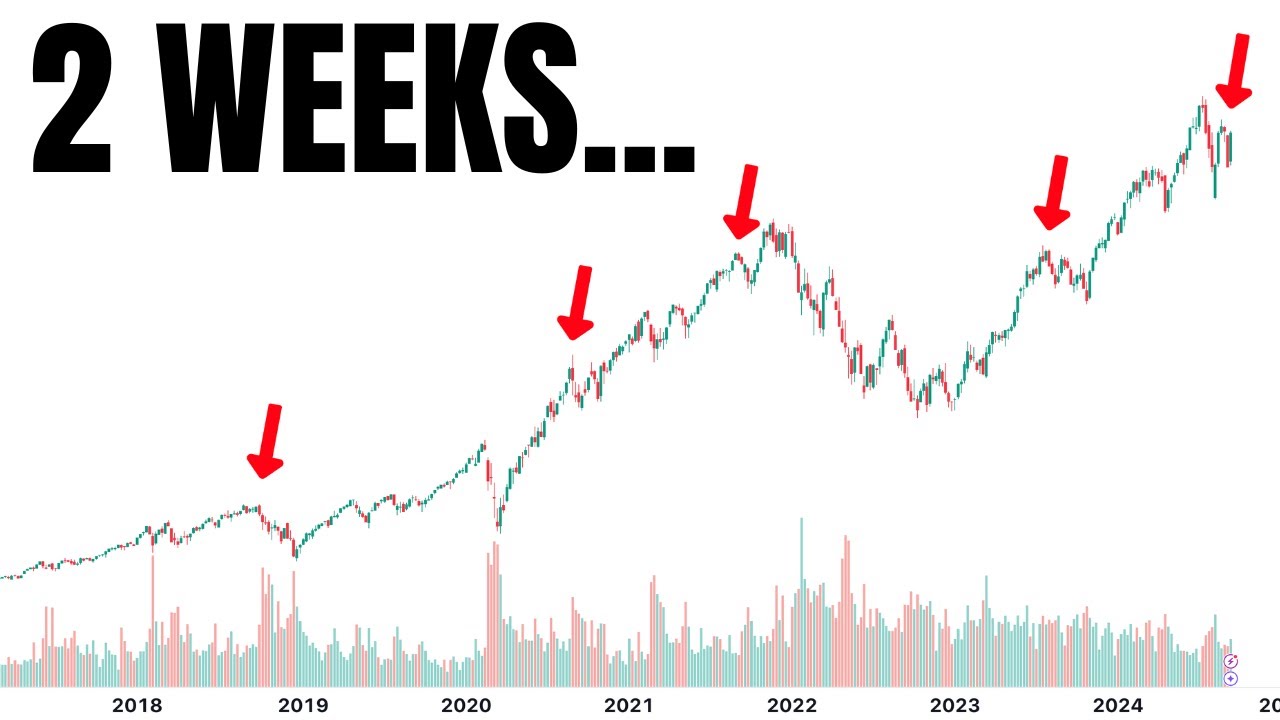
hello my friends today is September 14th and this is Market's weekly so this past week was a pretty good week in markets we saw the S&P 500 uh basically leap higher now not too long ago things were looking pretty dicey but it looks like the s&p500 found support at the 100 day moving average and went straight up now are we going to go on to new alltime highs or are we going to Triple toop I don't know we'll find out soon but I continue to be very cautious until after the November election now today I
want to talk about three things first what jumped out to me last week was gold now we saw gold basically mooning and making new all-time highs let's talk about what could be behind that surge secondly now Mario dragy released a newly authored report on European competitiveness last week and it been uh in the news a lot let's talk about what Mario is recommending and also why basically nothing will change okay the last thing that I want to talk about is a commodity prices other than gold now while gold has been doing very well if you
look at the commodity complex prices of oil base medals have basically been imploding for months let's talk about what could be behind that all right starting with gold now look at this chart of gold prices it looks like it's going to the moon and it looks like it's going higher at an accelerating rate now remember when we talk about gold everyone looks at Gold through a different lens now some people think of gold as an inflation hedge and they will point to the hotter than expected CPI as a catalyst for higher gold prices but I
would also note that when CPI was printing at 8% year-over-year uh gold was not doing very well another common lens to look at gold is through the lens of monetary policy now we are in the mid of a global rate cutting cycle that could accelerate significantly now we had the ECB cut rates again the past week Bank of Canada has cut rates three times and most importantly the FED is going to cut rates this coming week 25 basis points for 50 it's so far it looks like a coin toss now the market is actually pricing
in a pretty aggressive uh path of rate Cuts though now going forward other central banks like the Swiss National Bank and so forth are also going to be cutting rates so basically all the central banks in the world are in rate cutting mode Maybe by a lot and so gold looks to be responding to that and going higher now another common lens to look at gold is through the lens of geopolitics now what we've noticed the past few months is that when there's geopolitical Conflict for example tensions in the Middle East gold gets a pretty
good bid now this past week There's there has also been pretty notable escalations on the Russia Ukraine front now there are reports from Politico suggesting that uh the White House is authorizing Ukraine to use Western provided longrange missiles to strike deep into Russia now in response to this immediately President Putin came out and said that if Western missiles strike deep into Russia we are going to think of Russia as being at war with NATO now that is obviously pretty notable escalation but it just marks the latest in a series of escalations we've seen over the
past 2 years now remember earlier in the conflict the White House was saying that we would never send tanks to Ukraine then they sent tanks to Ukraine then it was never we would never send fighter jets to Ukraine and then they sent fighter jets to Ukraine then it's will never send missiles to Ukraine then they sent missiles to Ukraine but they could only strike certain parts of Russia and now they think now it seems like even that last red line is being crossed so there's been a steady stream of escalations on the Ukraine front so
it's no surprise that gold is sniffing this out now we don't hear about this a lot in the news but it doesn't does seem like geopolitical tensions are are boiling over so that's of course another empasis for Gold's rise and of course you also have these CTA advisers who basically trade on the basis of momentum buying things that go up and selling things that go down and with gold consistently Rising you're going to have a lot of people who just rush in to buy momentum and so I think a lot of factors explain the Gold's
rise and they look like they're going to continue so I guess we'll see if gold continues to Surge in the coming weeks now the second thing that I want to talk about is the recently released dragy report now Mario dragy former president of the ECB has been busy and uh released a report the past week on European competitiveness now I think it's helpful to have a little bit of context to see why he's concerned about this so here's a chart of GDP per capita on a purchasing parity basis so adjusted for currency of the US
and the EU now the US has always been on a perap basis okay not always for the past few decades uh a wealthier country than the EU but the gap between the US and the EU has steadily widen over the past few decades so the living standards in the US have have been increasing at a faster rate than that of the EU now Mario drag is looking at this and thinks that this is due to the difference in productivity between the US and the EU now what is productivity productivity is basically being able to produce
more output with the same inputs for example if you were producing 10 widgets after eight hours of work and then after being more productive you can produce 20 widgets with eight hours of work then you are being more productive that means more goods and services are produced by you and your country and so on a material basis your living centers rise now Mario thinks that the difference between us and EU productivity productivity is largely due to technology the us we had this big Tech boom in the 1990s and the US was able to take advantage
of new technologies improve their productivity and it seems like we are at the cusp of another technology Revolution with AI and maybe the US pulls further ahead now why does the why is the us a better technology than Europe now to be clear the Europe is actually a leader in many Technologies as well but when you look at uh their technological leadership they seem to be focusing more on Green Technology you know stuff like Renewables and carbon stuff like that whereas the I guess what people conventionally think of as high technology say AI cloud computing
semiconductors internet of things things like that uh the US tends to be more advanced now when you look at something like cloud computing on a market cap basis the difference is actually pretty Stark where basically all the leading cloud computing companies are in the US so why another reason why that the US could be leading is not just its emphasis on these te Technologies which tend to be more productivity enhancing but also there's a lot more funding involved so the US the EU does have really good technology companies but oftentimes then they then move to
the US where they can get more funding and support now in the US venture capital is m a much more a much more prominent part of the capital markets so if you are a startup it's more it's easier to get funding from the US where of course failure for for startups is also not as much penalized so the US seems to have a lot of structural advantages when it comes to technology and I I would also knowe that I think on a cultural aspect the US is is seems to be much more open to new
technologies Amazon for example a child of the 1990s Tech boom is everywhere in the US and very commonly in the US if you want something you order it on Amazon where you can get a low price and it can have a delivered to house sometimes within hours whereas in Europe Technologies like Amazon are are not adopted as much now the Amazon is in Europe and competitors are there but a lot of times there's a lot more resistance where local people would say I make a point to not order from Amazon but buy locally in an
effort to support local Industries so there's that culture aspect there um but in the US of course people don't do that and so brick and morar companies basically go bankrupt however those brick and mortar companies then get re buildings get repurposed for other things their employees find new jobs and also new businesses are born where there's a lot of people who go and can sell directly on Amazon be a drop shippers or people who have their own business so basically the structure of the economy in the US is a lot more Dynamic which at the
end of the day results in lower prices for um consumers opport unities for upand cominging businesses at the expense of incumbent businesses and yes that is sad but uh you can see on the aggregate people tend to benefit when you can have uh change now another thing Mario points out is that energy prices in the EU are a lot higher than the us as we all know Europe is highly dependent upon imported gas from Russia now European leadership tends to focus a lot more on Clean Energy Solutions and by that they mean solar uh and
wind rather than say nuclear which in some countries seems to be in the process of being decommissioned now green energy low carbon great but also a lot more expensive when I when compared to something like natural gas so when you look at Energy prices uh between the US and the EU energy is a lot cheaper in the US and that's a huge Advantage when it comes to things like manufacturing or or even very high-tech stuff like data centers now Mario's solution to this gap between say technology and high enry costs is more investment he wants
the EU to spend 800 billion EUR a year to support European uh growth which of course is a great idea except as we all know that will never happen now in the US when the government wants to spend more money they just basically have a Magic Money Tree print more treasuries and for some whatever reason the market is very hungry for us treasuries no matter how much they print in the EU there is no joint debt market so you don't really have european-wide treasuries and when you try to have U debt you have countries like
Germany very clearly oppose it they don't want to be liable for say the spending of U Portugal or Italy and so forth so if the EU were to raise more money to try to have more Investments and Technology they were going to have to raise taxes have say a eu-wide income tax or something like that now that is also very difficult to implement the EU composed of many members a lot of political uh a lot of political consensus needs to be built so it's very difficult so at the end of this day this proposal which
articulates the problems of Europe very clearly that everyone agrees of proposes sensible solutions that can never be implemented and so it's seems like this productivity Gap this living standard Gap that we see uh between the Europe and uh the US and actually many other countries as well is probably going to continue for the foreseeable future until it cannot and then maybe we'll have big change okay the last thing I want to talk about is the commodity markets now we talked about gold mooning but other Commodities haven't been doing as well when you look at Commodities
like oil like base metal honestly it looks like they're imploding now if you're looking at Commodities as a signal for say Global recession well then you you have to be paying attention commod low commodity prices usually suggest weak Global demand which in turn suggests Global recession but we also have to be have a little bit more Nuance lower prices could be due to weaker demand but it could also be due to increase in Supply looking at oil I think according to the recent IA oil report it looks like oil declined in prices largely due to
China growth in oil in China has been very disappointing and that's resulting in weaker oil prices and in addition there seems to be many offshore oil prices that are offshore oil projects that are coming online next year that seem to promise increases in Supply so you have both demand and Supply things uh impacting oil right now but the weakness in Chinese demand is real and that seems to be spilling into other Commodities like iron ore and copper now China is the largest consumer of iron ore as we all know China is the workshop of the
world they import raw materials manufacture cool stuff and then sell it to the rest of the world now the Chinese economy as we've been discussing the past few months has not been doing well in large part because of the deflating of a ginormous property bubble a lot of GDP growth in China over the past few actually decades has been investments in real estate uh basically China has been building more and more new buildings Bridges infrastructure and so forth and that's been driving a lot of growth but now those real estate Investments have been doing us
well real estate prices have been declining and so property developers are not building as much uh new construction and households who own real estate are seeing their net worth shrink and are less inclined to spend so that all suest weaker economy less demand in for for Commodities now I think it's also important to note though that China globally speaking is more of a source of Supply than a source of demand and so when the Chinese economy is not doing well yes they will import fewer goods and services from say the us but to begin with
though uh they weren't a very big part of demand for American companies the flip side is more true where American consumers are a big source of demand for Chinese goods and services and so as Chinese the Chinese economy uh slows down that suggests uh lower import prices for the US which you kind of see and lower commodity prices which of course also is an import price as well so in a sense it's uh having disinflationary pressures on US inflation uh on a market signal you can also look at the Chinese government bonds where the 10-year
uh Chinese government bonds the yields are declining pretty notably so it does seem like things are not going well over there now president XI has been quite adamant that he doesn't want to do a lot of fiscal stimulus he thinks that's not good he doesn't want to just you know print money and make things go away like the West does um but it's also possible he could change his mind and Things become more dire now us looking at us CPI we can see that headline CPI has been pretty subdued because that includes things like commodity
prices whereas core CPI has been more elevated so going forward this likely suggest because of lower commodity prices that headline CPI is going to be pretty benign for the coming months all right so that's all prepared this week is an fomc week so I'll be back to give you my fomc debrief now today we're in a pretty interesting place because the market is pricing in a 50% chance of a 20 25 basis point cut and a 50% chance of a 50 basis point cut as we all know the FED does not like to surprise the
markets so this is a pretty unusual situation my best guess is that the fomc actually does not know what kind of consensus it can build and so it's preparing the market for either 25 or 50 so we'll find out soon what actually happens now remember to like And subscribe and if you're interested in hearing my latest thoughts check out my blog at fedu tocom this week I will make the case as to why aggressive rate cuts are actually bearish equities and if you're interested in learning more about markets check out my online courses at Central
Banking 101.com talk to you all soon