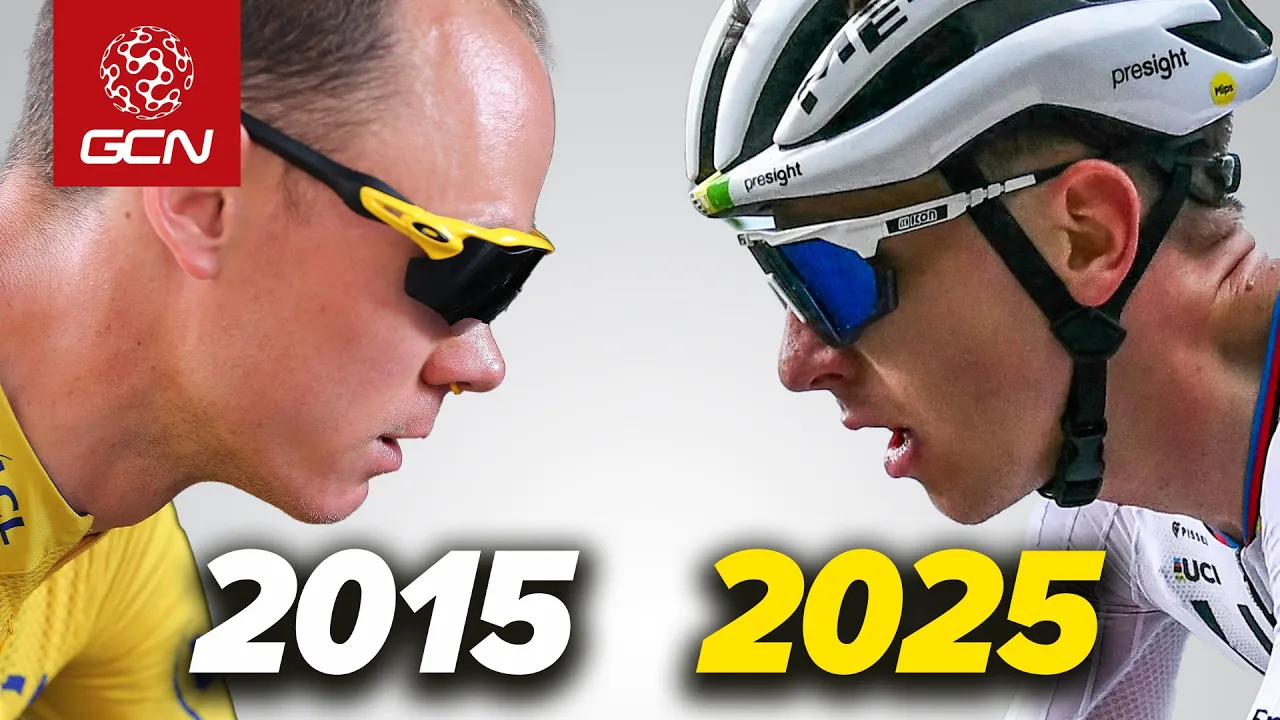
what sort of training exactly are pro riders doing in 2025 and is it that much different to 2010 or even 5 years ago we're being told it is and that's one of the reasons that rise is going so much faster now but I wanted to find out if it's actually true steadily over the last 15 years training science has you know improved drastically at the end of the day like uh Sports phys physiology hasn't really changed like we're still humans and a lot of the science based research that has happened hasn't really changed the demands
of training have also uh been justified by the kinds of racing that's happening everyone's there for training you know versus now every race there's somebody there peeking when you put all of these together you know you don't have one single variable that is the gold standard that tells you what's happening you have to look at the overall picture I've I don't know how many power me I've got given from the but every single bike I get on has a power me uh he would be doing those sessions for 30 40 minutes at 285 290 watts
and that's evolved to the point where you know uh he's now doing 310 Watts for an hour better nutrition more carbs better bikes more Aero clothing faster drivetrains less rolling resistance those are just a few of the things that have improved in Pro cycling over the last decade or even 5 years it genuinely feels like there are no Stones left unturned when it comes to Performance in procycling now but what about training specifically the buzz term over the last couple of years has been zone two but that's something that was done in the '90s my
first ever coach Alan McCrae prescribed me almost entirely Zone 2 training in the winter of 1997 I had to keep my heart rate in a certain bracket one he' worked out using my data from a ramp test done on a techno gy spin cycle I was also reading an article on Vell magazine recently entitled surprising new training techniques that Pro cyclists are using in 2025 and it focused on the 402s that they're doing in preseason training camps that is to say blocks of around 10 minutes where the rid go over threshold for 40 seconds then
spend 20 seconds recovering at just under threshold but again looking back at my own training that's something that I did on the sell test training camp in January of 2010 and that I incorporated into my own training around the same time so how much of things really changed in that period as a first very broad question what would you say are the biggest changes in the way that rid are training now versus let's say 15 20 years ago it's been an evolution and and I think if you compared it now to say 2005 2006 I
mean they're not even comparable and back then you being a great example Yan used to take at least two months off the bike following the end of the season uh lose all of the training adaptations that he acquired during the course of the Season we now know that doing that pretty much set you back to the beginning and so that's what most Riders would do uh in his case he he'd eat a lot of uh I think cake and and probably a few beers and gain you know approximately 10 kilos compared to his T France's
winning weight and then Riders would go to the races and and race themselves into shape and over a period of you know two months of racing they would progressively improve their form towards their goal and and then that then that'd be there you know ready to to comp compete for that particular goal there've also been some you know some pendulum swings yeah in the late 2000s we had this Paradigm of of uh polarized training where uh you know they they they presented various research studies and and quite a few people including myself moved to sort
of promoting doing the the Polar Opposites in training in other words doing very low intensity training and then doing high-intensity interval training and and uh you know that's now swung back to where we understand that heral sort of training intensity distribution is is seemingly the most optimal for the kinds of racing that that happens in the world tour which is where you do the majority of your training at a at a low intensity where you would comfortably have a conversation a good portion but less at a uncomfortable intensity but not going all out and then
you know the cherry on the top is the last little part of uh of the training which is the very high intensity interval training that that athletes are doing now now there's just more refinement and more maybe emphasis put on certain areas whereas previously it was maybe a little bit more relaxed or like the description of training was maybe a little bit uh yeah more relaxed where it might have been like okay today's a threshold day and that might have just been the description of the day's training and then you kind of made it up
as when you went whereas now it's like today's a threshold day it's 4 hours it's for example 4 by 10 minutes at this prescribed wattage at this prescribed heart rate and we're going to take lactate on the first and the second or first and the third one to make sure you're in the right Zone quick interlude for a quick request uh we'd like to know how many of you are really into content like this if you would like to see more along these same lines could you please click the thumbs up button and or leave
a comment below thank you back to the interviewees the cynics watching this might say well you know how much different are things than they were 205 years ago given that there's evidence there that we were already doing similar kinds of training yeah there have been periods where similar kinds of training have been done I think the key thing is is a pulling it all together and knowing what to do for each Rider and being very specific about it so zone two training you know in the past in the 80s and 90s we used to talk
about Tempo training so what is tempo training it's it's a it's in that range a little bit more intense than zone two training um but it was something that a lot of riders did at the time I've done these efforts for quite a while but uh yeah I think it is true that there's more and more people that uh are specifically doing them in a more structured way than there used to be the difference really is with the zone two training is is getting the the the intensity just right because if you overdo the intensity
the athlete ends up overly fatigued they don't recover and and they end up stale and and in an overreached or overtrained uh um stages and doing too little you're not stimulating that Max Ely so you know we'll do a lactate test in December we'll set the training Zone but a lot of riders these days will even have their own lactate meter where they'll go out on a training session and during one of those sessions they'll stop at the side of the road test their blood lactate report back to the coach and and then fine-tune the
intensity one of the latest additions uh for me personally has uh become laate testing in training you obviously have a lot of data from the races you do have a lot of numbers that you can kind of estimate where your threshold is etc etc but doing a lactate test on the road is always uh a lot more accurate I do have lact tap monitor at home but I find it quite hard to measure myself and I also find that there's a lot of Noise Within the data to be honest I think it is useful that
when we do for example normally in the December in the January training camp the team we always do like tap measuring and then for example May in altitude Camp before Criterium dolphiner we also do it there and you can kind of compare to previous years but I haven't found it very useful to try and measure it myself on day-to-day training to be honest in the last uh probably five years I bought a laced measurement device myself is it easy to use yeah I mean it's not it's not crazy complicated I don't do obviously a lot
of times when you go into a lab or somewhere doing testing with somebody uh you do um the lactate measurements out of your Earl but yeah finger prick is quite easy for instance and a like pble who's who's actually one of my athletes who I coach personally you know when we started in in in December uh he would be doing those sessions for 30 40 minutes at 285 290 watts and that's evolved to the point where you know uh he's now doing 310 Watts for an hour so you know that's that's a good 5 to
8% change that you need to dial in from a you know at a 10 to 15 day sort of interval period and and hitting that optimal is I think the key thing that we're doing now using the science and instrumentation that we've got to be able to give the the rider feedback on a almost daily basis to really get that dialed in and reach their potential when you come to a January training camp PR you see season what would be a large number of hours to do in a whole week and what would the longest
ride look like in terms of duration yeah so um definitely a lot shorter and lower total duration than it was uh 20 years ago a big week of training would now be in the low 30s so you know 30 34 hours of training would be considered one of the biggest weeks of the year um there is still scope for you know a Long Easy Ride so there are uh sessions where the athletes will do a five or even a sixh hour ride uh that's sort of reaching the the sort of the highest durations for any
given training session and that's done at a really low intensity and there are a good couple of those uh training rides in the early part of of the season and then as I said again sort of in the middle of the season when they take a break uh and from there it becomes progressively less and less so in the sort of two 3 we period leading up to to a a stage race uh the volume is is going to be ranging from 15 to 25 hours in a week uh Which is far less than it
than it was in the past but very specific stuff um and and and quite difficult to do because of the intensities uh but significantly lower than you know 10 15 years ago yeah I think that 2016 17 18 we didn't really do many altitude training camps uh it's it was more just yeah if you want to do it you can for me it's actually probably gone down uh with the amount of time I spent out of the house uh actually one of the reasons we live in Endor is and one of the reasons we live
where we live in Andor is because we live at 2,000 meters and uh I can sort of avoid some training camps uh that are not mandatory uh but overall in general I think that uh yeah there is more and more time people spend away I mean we have some guys at January camp that are pretty much going straight to T for altitude training uh so it's like week and a half in in uh in southern Spain and then three weeks in Tada so they're on the road for and then they go straight to race so
they're on the road for like six weeks you know uh so it's definitely changed definitely takes quite a bit of commitment it's maybe got more specific earlier for example like if you did a December training camp 8 years ago it was maybe just you go with a team to calp and you do just hours in the bike you have a big group and you just do maybe four five six rest day four five six hours and you stop at a coffee shop and you don't really do too many intervals whereas now already in this December
training camp that we did last month you already have quite specific intervals that each Rider is starting to do so it's not maybe that the training has changed too much it's more that it's just got more spefic specific early on in the season and then like you said about the altitude back 8 years ago was very rare you saw anyone doing any altitude in the first couple of months of the year whereas now the research has been done that if you do repeated bouts of altitude you get a better effect so now it's not about
trying to peek in three weeks time it's about trying to prepare the body for that pre doph altitude training camp so you get a better effect in and then when you're peing for Dolphin T France you've hopefully got a better level than if you hadn't done a preseason training camp at El shoot also we've seen videos recently of sep cus doing very low Cadence work on a climb H and he's not the only one is that something that that you as a team subscribe to and if so what's the reasoning behind that if you're you
know four hours into a race and you're on the third call uh and you're climbing for 45 minutes at a time uh one of the things that happens is that you get muscular fatigue in terms of you know the inability to produce the torque to keep turning the crank over and that's also important when you get to steeper climb so when you get up to gradients of 12 or 13 or 14% your ability to turn the crank over comfortably is something that is determined by your ability to produce torque and we can measure that quite
readily when we look at you know when we just throw the data into an analysis tool we can you know we talk about power dur so your power duration curve is your curve of what you can do maximally for different durations from 5 Seconds through to 5 hours and you have a talk duration curve as well and what we've seen for instance in athletes and and this is some of the key thing one of the one of the key aspects that we have turned things around with in the last two years particularly for tday for
instance and other athletes that I think this year will actually take another step up is that when they would Juniors they had intrinsically a lot of strength you have a high V2 Max when you're 18 and you have a high functional strength now you spend two three four years of doing a lot of volume without adding sufficient train strength kind of training and low Cadence torque type of of work and what we could see is that their functional strength was dropping every season so your mean maximal torque newton meters per kilogram body mass for a
particular period of time was getting lower and lower and reversing that by doing functional strength training has in many riest cases have has reversed their downward Trend in performance and and so it's a it's a very key part of what we do strength work low Cadence work uh I've done uh every every single year even before I was Pro um and I do see the benefits of it uh not just uh for the strength improvements but also just the joints and the muscles um yeah you still especially when you start racing there's a lot of
strain on them and you really need to get the just the ligaments ready I'll run you through basically exactly what I did today so today was a 4-Hour training and we're starting here at about 2,100 M we needed to ride about an hour before we started descending down and in that hour I did uh four 15 seconds Sprints but basically it's starting from 5 kilometers an hour in a relatively big gear so 60 to 80 RPM seated maximum Sprint for 15 seconds 3 seconds rest repeat four times and then I did one 40 minute interval
at about 340 watts uh so that's like Zone 3ish I would say and then again I repeated the same loc Cadence Sprint interval on the way home so so in total was 8 15 second Sprints with one 40 minute Zone 3 interval if you take this next 12 month period starting January first finishing December 31st how much time do you think you spend at altitude and on training camps in general and how much does that look different to 10 years ago so I think roughly if I do about between 75 and 80 race days I'll
spend in total including those race days about 150 to 100 65 days away from home so there's another 80 odd days in there which is training camps and then maybe time at altitude so we will spend probably close to three weeks now and then I'll probably spend another three weeks before dolphan and maybe one week to 10 days between dolphin and the tour and then if I go on to do welter maybe another two weeks after Welter so that's that's close to 9 weeks I think 9 to 10 weeks at altitude what Jack said there
about doing 12 weeks or so per year on training camps is a big difference between my day and now in my few years as a pro we'd have a team get together in November or December then a twoe camp somewhere in southern Europe in January and for me that would be about it the big stars might do another one before the tour to France but that wasn't a given however at UAE it's apparently not quite as Extreme as Jack hay we don't do nearly as much training adults or training camps as as Jack he is
pointing out we have our GC riders or or or grur Riders I should say do about uh six weeks of of training camps per year if we exclude December so in December we have a training camp but that's that camp is largely focused on meetings and and biomechanics and Medicals and so forth so it's not a true training camp but if you look at the training camps that happen in the season uh we we max out at about six weeks but those training camps are important so we know that altitude does improve hemoglobin mass and
and we know that from research and from our own data and that directly relates to your performance at sea level and so what's the optimal period at altitude it it's about three weeks you can do shorter two weeks you get about 2/3 to 3/4 of the adaptation and then the final week you get a little bit more um we know that if you do have an an exposure to altitude earlier on in the season that you get a more rapid and significant response to the second training camp so therefore two training camps is generally what
what what happens and um then you know it's as you point out it's not just the altitude it's the it's the being at a training camp that's also key it allows the the coaches to directly monitor the athlete you know and and and a and a typical test is the you know the breakfast room check when the rider walks into the breakfast room you can tell a lot by by their body language and backing them off when they're doing too much but we also do a lot of monitoring including for instance uh every four days
and at a training camp we do blood tests to look at how well they're responding to the training in terms of monitoring for signs of overtraining and we then calibrate the training loads for riders that are showing signs that they're decompensating the monitoring of riders has definitely gone up a level or or 10 levels whilst I was always very meticulous in logging my own training very precisely I wasn't required to send any of it to my teams back then we were kind of trusted to do what we thought was best for ourselves but now every
single metric is analyzed on an almost daily basis the technology that goes into those kinds of monitoring techniques has has has improved substantially in the last 10 years so um I mean the concept that you're talking about that training Peaks Incorporated which is acute and chronic training load and the training stress balance I mean that's something that first came around in the 50s so H Celia was a researcher in the 50s who came up with this uh and not just for sport but for life in general about this stress adaptation sort of phenomena where you
stress the body you have a reduction in performance because you've got some damage to various different cells and and and and and structure rures and then you adapt and then you improve and he he spoke about this model of you know having the optimal stress and the optimal recovery period and and then having the the best adaptation rate and that's really what that tries to do but that's what we call external load monitoring so it's telling us what the stress is on the human body from a purely from a power and work perspective but everybody's
an individual and so you need to understand the internal load which is in other words how the body responds to that to optimize that for the person and that's where a lot of the research has happened so you know one of the one of those variables is for instance heart rate variability so resting heart rate and heart rate variability tell us uh you know how well the body's coping in terms of of the stresses imposed on it you can then uh and and in fact the research shows that the single most effective mechanism to assess
how a person's responding to their training load is to ask them you always have the fundamentals which stay the same in training but there's definitely been a massive shift into more monitoring and more I guess refined execution of those fundamentals so like for example I remember when I turned professional okay we had power meters and everything like this but it wasn't uncommon that you might have a training bike that didn't have a power meter or your time Tri bike didn't have a power meter whereas now I've I don't know how many power meters I've got
given from the team but every single bike I get on has a power Meer and like every single time now with the garons everything gets uploaded more or less straight away as soon as training is finished for them the coaches to look at whereas previously even with I remember the srms back in the day like they didn't even have GPS data and now like we have GPS data to compare straa segments or to compare intervals compared to what you did last year and I think training has changed a lot but those core fundamentals have generally
stayed the same I also spoke off the Record to another world tour coach about career longevity there's a lot of speculation that Pro careers now will be shorter than they used to be because they won't be able to maintain the intensity for that long but it's just that at the moment speculation and we won't know the answer to it until this current crop of Pros reach retirement age if it's all you've ever known perhaps it won't seem so hard as if your career has span the two distinct periods we've outlined in this video I think
you tend to see slightly shorter cying careers like this year I'm turning 32 I'm 31 at the moment and I all of a sudden start to feel quite old whereas only five years ago I would have been considered sort of in my Peak years when you look historically at uh performances and what age people are performing at but also I think now something that is quite hard especially when you have a family is there's more and more time away from home and that's something that I start to see have an effect on myself my son's
now coming close to 4 years old and it's becoming harder and harder to leave home but I think I would see myself riding until I'm at least 35 and I would like to maybe if I keep getting contract and I'm keep enjoying the sport until 37 at the end of the day I I quite enjoy the sport I enjoy riding I enjoy the racing but it is true that the racing is getting maybe a little bit less enjoyable as it's getting harder and harder from start to finish of every single race that we seem to
do I was actually also thinking very much along those lines uh when I saw yeah kids going pro at 19 20 and hearing how they train and hearing how much they do already in under 23s versus my first power meter I had in under 23 so it was a very different uh sort of training and very different way of life uh but at the same time people are quite moldable and they get used to a lot of things so now I'm not as sure as I was before that actually the careers will be shorter I
think that uh if that's what you know that's all you live that's normal for you so it's not it's not going to change actually the length of the careers I think what it's going to change is just maybe uh how socially uh adequate people might be because they're just gonna be spending so much time like in that extreme uh lifestyle that post career actually it might get more complicated to live a quote unquote normal life in conclusion there have undoubtedly been significant changes to World Tour training these last years but I describe them more as
refinements monitoring is a much bigger thing so everything from Power outputs to lactate to weighing food to sleep metrics to blood glucose levels to core body temperature is now monit on an almost daily basis and that in turn means that everything can be tailored to Riders on an almost day-by-day basis as well the biggest difference though in my opinion is how much more time rise are spending at training camps but the two things go hand inand science and knowledge has come so far that training is a much better more controlled and efficient way of preparing
for a big event than racing itself I really hope you found this video as interesting as I have making it I've always been a bit of a training and Stat nerve myself and I would have lapped up all the technology that's currently being used but maybe you feel it's taking something away from the sport the instinct or The Panache the things that we older fans look back on with rose tinted glasses I'd love to know your thoughts uh let me know in the comments section just down below and as I said before if you'd like
more content like this give us a thumbs up thanks for watching

![The Very Best of Our Epic Gravel Rides [2+ Hour Compilation]](https://img.youtube.com/vi/vhO1WYiaUkY/maxresdefault.jpg)