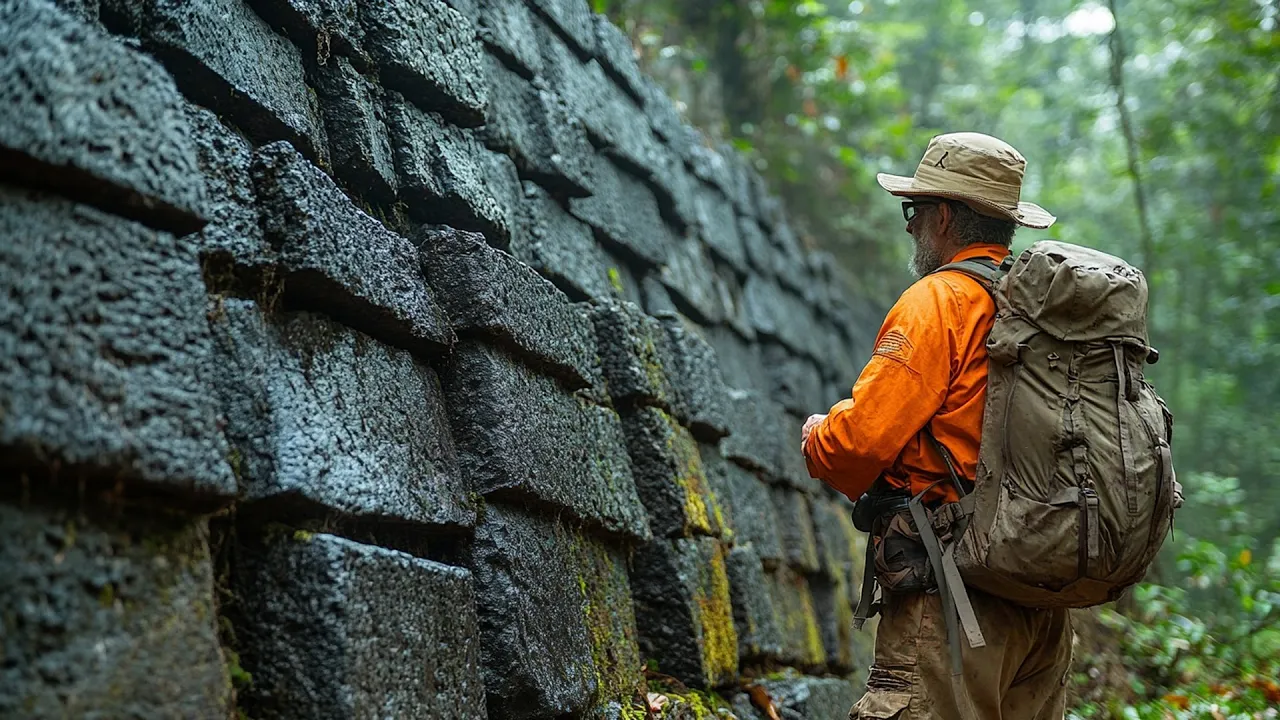
In the early 20th century, a discovery was made in the dense jungles of Java, Indonesia, that, although initially overlooked, would later be recognized as one of the most significant archaeological findings in the region and perhaps even in the world. It was made in 1914 when a Dutch farmer, driven by tales of a mythical king and his lost palace shared by the local Indonesians, ventured into the verdant wilderness surrounding his farm. The colonist's expedition led him to a hill just four hours south of Jakarta, near the village of Karyamukti.
To his amazement, deep in the jungle, he discovered an enormous hill with what appeared to be a series of steps leading to its summit. At the top of these steps, he found a huge collection of ruins made of heavy rectangular blocks scattered in every direction, long since overgrown with foliage. It was the ruins of what many believe is the oldest known pyramid of the world – a vast geoengineered structure that had a series of five steplike terraces, retaining walls, staircases, and, as later explorations revealed, subterranean chambers.
Of course, long before the arrival of the Dutch East India Company and the onset of colonialism and exploitation in West Java, the local inhabitants were well aware of the site and its man-made terraces. They revered the site as Gunung Padang, meaning 'The Mountain of Enlightenment,' and it continues to be a place where locals perform mystical ceremonies near an ancient spring at the base of the site. Sitting at an altitude of roughly 885 meters, or 300 feet, the site is nestled on top of a volcanic hill surrounded by lush forests.
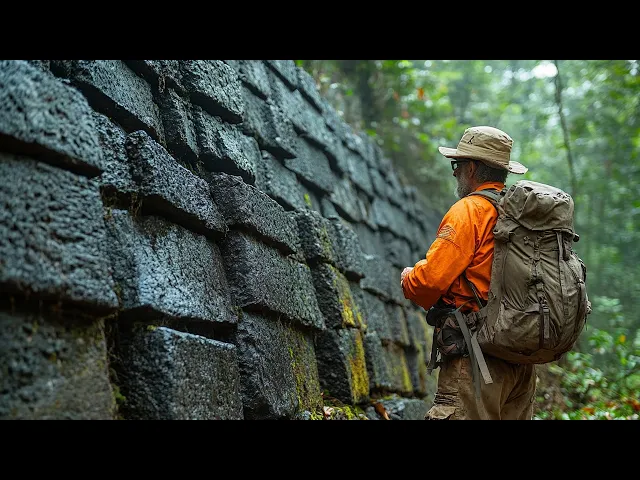
At first glance, the site appears to be a natural hill, but upon closer inspection, it reveals a sophisticated series of terraces. These terraces are organized in a stepped pyramid form, similar to other ancient pyramid structures found across the globe, such as those in Mesopotamia and Mesoamerica. The five-tiered design consists of rectangular terraces constructed from thousands of large basalt columns and blocks.
Most were about five feet in length and weighed upwards of 550 pounds or 250 kilograms, with some being much bigger, weighing over 1,300 pounds, approximately 600 kilograms. Typically, basalt columns form naturally through a process called "columnar jointing," which occurs when thick layers of basaltic lava cool down and solidify. As the molten lava cools, it contracts, creating vertical cracks that form hexagonal or polygonal columns.
Examples can be the Devil's Postpile in California, or the Giant's Causeway in Northern Ireland, both of which are natural. At Gunung Padang, however, all of the basalt columns are detached from each other. They are not standing vertically and were mostly cut into smaller pieces.
This meant that somebody had transported them to the top of this hill, some 300 feet above the valley below. But who, and why? In the following years, as researchers investigated the site, it was clear that the blocks were not scattered about randomly but, in fact, organized into rectangular stone enclosures and rock mounds.
Whoever had brought them up there had used the blocks for construction. In fact, it appeared that the five separate terraces covered the hill over an area of 3,000 square feet, all linked by an ascending staircase of 370 steps. In 2011, a prominent Indonesian geologist by the name of Danny Hilman Natawidjaja started to investigate the site, leading a team of geologists from the Institute of Sciences, as well as archeologists from the University of Indonesia.
At first, their findings were unremarkable. Initial radiocarbon dating done on soils underneath the stone blocks at the surface produced dates of 1500-500 BCE. But as the team began to dig deeper, what they found shocked them.
Using tubular drills that brought up cores of earth and stone, which has provided key insights into the site's construction and potentially revolutionary information about its age. The extracted cylindrical core samples have revealed stratified layers of construction that, according to the team's analysis, suggest Gunung Padang may have been built in multiple phases, spanning tens of thousands of years. The structure has at least four distinct layers of material, each representing a different time period.
Layer 1 and 2, the uppermost layers, visible at the surface, are the most recent. Dr Natawidjaja and his team estimate that these layers could date back around 3,500 years, making them roughly contemporaneous with other megalithic sites found across Southeast Asia. These layers consist of basalt columns arranged in terraces, similar to those seen at other ancient construction sites.
However, the core drilling revealed that this is only the most recent addition to the structure. Layer 3, below the surface layers, lies what Dr Natawidjaja calls the "second phase" of construction. Core drilling has revealed that this layer contains similar basalt stones but arranged in a different pattern.
The organic material found within this layer has been radiocarbon dated to between 7,500 and 9,500 years ago, a time period that predates many of the world's earliest known civilizations. This discovery has led to speculation that the builders of this phase of Gunung Padang had advanced knowledge of construction far earlier than previously believed. And then, Layer 4, the deepest and oldest layer uncovered by core drilling is where Dr Natawidjaja's most controversial findings emerge.
According to his team, this layer dates back as far as 24,000 years, based on radiocarbon dating of organic material and the seismic surveys indicating human intervention at this depth. This layer is composed of even larger basalt blocks and shows evidence of construction techniques that are not fully understood. How could this be possible?
Even at 7,500 years, this would date Gunung Padang at 3,000 years before the ancient Sumerians, and 4,500 years before the ancient Egyptians. And at 24,000 years old, well, that would classify the builders as a completely unknown prehistoric civilization, a civilization that thrived in the region before the last Ice Age, many thousands of years before human civilization is said to have existed. Dr Hilman Natawidjaja was featured in the Netflix series Ancient Apocalypse, hosted by the British author and researcher Graham Hancock, who advocates the belief that an advanced culture, predating what is commonly recognized as the dawn of human civilization, was destroyed in a global catastrophe, possibly by a comet impact or a rapid rise in sea levels at the end of the last Ice Age.
Hancock believes that this lost civilization left behind monumental structures, like Gunung Padang, that have been misdated by modern archaeologists. There, Dr Natawidjaja noted the retaining walls of Gunung Padang, stating that the basalt blocks were cut and stacked with remarkable precision. Intriguingly, the construction utilized an ancient form of mortar that connected the blocks on the retaining walls, which analysis suggests was a sophisticated blend of organic materials.
This compound not only enhanced the durability of the structures but also suggested a complex understanding of construction techniques by the ancient builders. The presence of this mortar, resistant to environmental wear and degradation, further underscores the advanced engineering skills that were in play at Gunung Padang. Moreover, all retaining walls on the site are precisely inclined at 30°.
The Ancient Apocalypse episode made a digital reconstruction of what the site looked like, featuring a stairway at the north side, climbing more than 300 feet, until it reaches the first of five terraces, over an area about 490 feet long by 130 feet wide, with the entire hill ringed by retaining walls of columnar basalt. More than 50,000 basalt stone blocks were used for the construction of this massive step pyramid, with some being artificially modified. Many of the andesite blocks were clearly crafted into rectangular and square shapes, with some having marks resembling cuttings or other indications of deliberate shaping by humans.
The discoveries became even more shocking when Dr Natawidjaja's team used ground penetrating radar and seismic tomography to extensively map what was buried under their feet. Doing so, they discovered that the second layer contained another arrangement of rectangular blocks, organized in a matrix structure, while the third layer contained additional rock structures, including what appeared to be large underground cavities and chambers. It seemed that the blocks on the surface were only the beginning of Gunung Padang.
All of these discoveries meant that Gunung Padang was not merely a simple prehistoric stone terrace but a complex underground construction with substantial chambers and cavities. There were at least three perfectly rectangular chambers, one of which was right at the center of the structure, at around 10 meters or 33 feet down, connected with an access tunnel to an even larger chamber at a larger depth, which in turn connects to a third chamber around 30 meters or 100 feet underground. All three of the chambers are located exactly along the central axis of the site, with their purpose, or what's inside them, still remaining a mystery.
Another strange thing was the discovery of thick layers of artificial soil covering parts of the site up to 7 meters deep. This soil was likely transported and used to cover earlier layers, indicating that the structure was deliberately built up over time. At a depth of 10 meters, or 33 feet, a very interesting artifact was unearthed.
It was a black stone ball, set in the center of another hollowed out stone having a triangular form. The strange thing was that the black stone in the center could actually roll around, hence it became known as the "Rolling Stone". We couldn't find much information on the discovery or any analysis on the object, but we know that these kind of artifacts are very common in ancient Hindu temples.
For example, the Thirukkurungudi Temple, located in Tamil Nadu, India, which is an ancient and revered temple dedicated to Lord Vishnu, has a similar stone ball housed within the mouth of a mythical creature. The stone ball inside is an engineering marvel because it is perfectly spherical and free to roll within its enclosure, yet it cannot be removed. Many other ancient temples have this interesting feature as well.
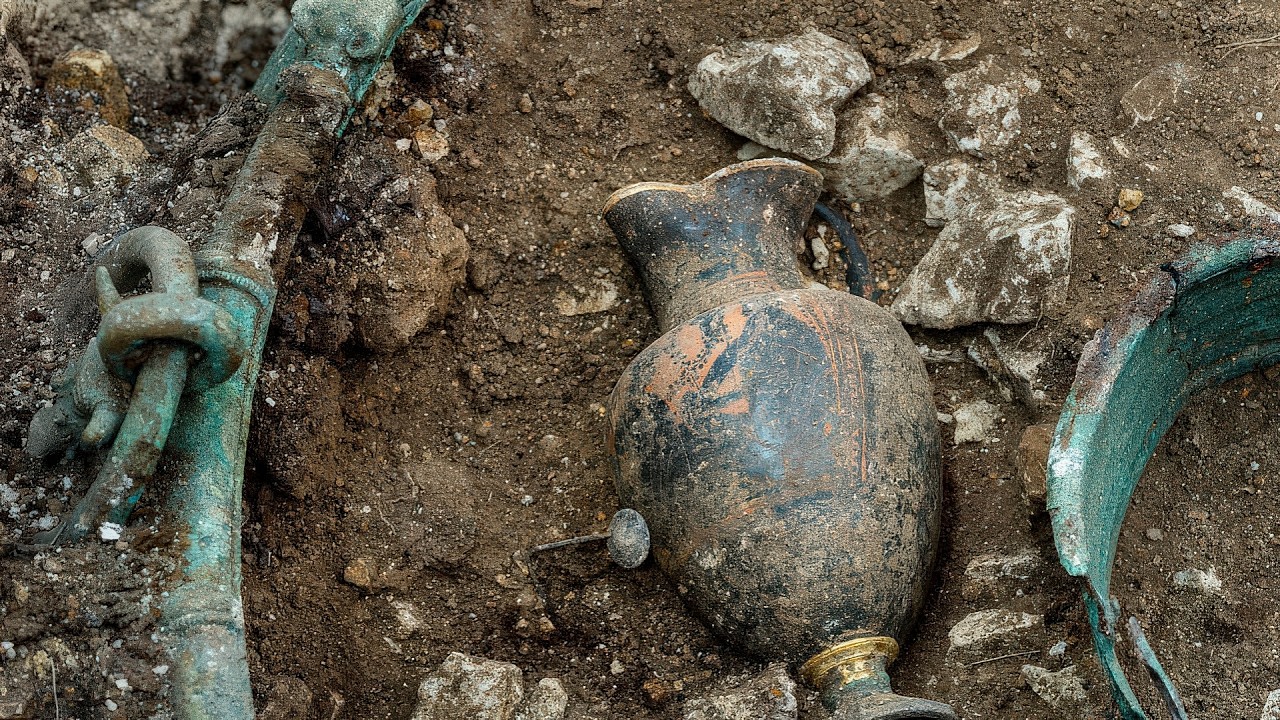
One of the most significant discoveries at Gunung Padang was an artifact, which became known as the Kujang Stone. It was discovered in the deep layers of Gunung Padang, indicating it could be 10,000 years old. The stone was distinct from any local rock type at the site and exhibited clear tool marks.
It had a unique shape, size, and presence of sharp edges, which could not have been a product of natural geological processes. A detailed examination of the Kujang stone, including a CT scan, revealed fascinating insights into its composition. The scan identified metal particles embedded within the stone matrix, uniformly distributed, confirming that the artifact was not merely stone but a cast geopolymer tool.
This discovery suggests that the artifact was artificially created, utilizing advanced material technology likely beyond the known capabilities of ancient civilizations at the time. Further analysis showed the presence of fine kaolinite clay granules mixed with iron particles. These components are thought to impart magnetic properties to the artifact.
The presence of iron within the kaolinite clay is particularly interesting as it suggests a potential use in bioelectrical transduction, possibly related to biophotonic qi meridian healing practices believed to have been conducted at the site. Moreover, the artifact also contained substantial amounts of quartz crystal and other piezoelectric compounds, indicating that it might have functioned as a resonance device. The exact use of this tool remains a mystery, but the integration of piezoelectric materials suggests it could have been employed in ways that interact with acoustic or vibrational energy, potentially for medicinal or ritualistic purposes.
The theory that the site possessed acoustic properties was enhanced by the presence of certain stones at Gunung Padang, known as "music rocks". The composition of these stones is such that, when struck, they produce sounds, suggesting they were placed with a specific acoustic function in mind. This feature, common in other ancient megalithic sites, supports the idea of intentional design.
Take a look at this video from one of the explorations of Gunung Padang by Hugh Newman from Megalithomania, accompanied by author Andrew Collins and Dr Natawidjaja, where they demonstrated the acoustics of these stones. More interestingly, in their videos, they showed that in certain areas on the site, the compass is acting strange, deviating from its typical behavior, which suggests the presence of unusual magnetic anomalies. This phenomenon could indicate that the underground halls and chambers could have strong magnetic properties, aligning with theories that suggest advanced ancient technologies might have been utilized in the area.
Hugh Newman and Andrew Collins have been documenting their visits to Gunung Padang from almost 10 years ago, constantly showing new and interesting discoveries there, so make sure to visit their YouTube channel Megalithomania for more details on the site. We know that the number five holds a significant importance in certain Indonesian cultures and belief systems. For instance, in Balinese Hinduism, the number five is essential because it is linked to the Panca Dewata, which represents five major deities.
In Islam, the number five holds significant religious importance, prominently reflected in the Five Pillars of Islam, which are the foundation of a Muslim's faith and practices. In Gunung Padang, it appears that the number five also has significant meaning. As we already mentioned, Gunung Padang consists of five terraces.
But that's not all. Each terrace is connected by five small steps. Also, the Gunung Padang site is flanked by five rivers that flow on both sides at the foot of Mount Padang.
It's also surrounded by five hills, with its orientation being perpendicular to the five parallel mountains. Some researchers speculate that Gunung Padang once featured a sophisticated water management system, possibly incorporating five wells. However, only two wells remain at the site today, with the upper one now dried up.
The well at the base of the site, which still has flowing water, is known as the Cikahuripan well. The name Cikahuripan itself translates to "water of life" or "spring of life" in Sundanese, making it a sacred place for the locals. The well is believed to possess mystical properties, with its waters considered a source of spiritual energy, purification, and blessings.
Local residents and visitors who seek blessings or spiritual guidance often visit the well as part of a pilgrimage to Gunung Padang. So let's summarize all of the discoveries found so far. We know that the site features a multi-layered construction, with at least three distinct phases, some of which may date back as far as 20,000 years, according to radiocarbon dating of organic material within the deeper layers.
We know there are massive retaining walls with the basalt blocks connected with an ancient form of mortar, creating a pyramid-like structure, with its terraced design and massive basalt columns, suggests sophisticated engineering techniques, including knowledge of earthquake-resistant construction. We know that geophysical surveys have revealed hidden chambers and voids beneath the surface, perfectly aligned on the central axis of the site, pointing to the deliberate, man-made nature of Gunung Padang. And we have a number of man-made artifacts found at the deeper layers of the site.
Yet, despite all of these discoveries, mainstream historians and archaeologists largely dismiss the idea that Gunung Padang is a prehistoric megastructure built by an advanced civilization. Mainstream archaeology is built on the understanding that complex civilizations capable of large-scale construction only emerged around 5,000 years ago, with the development of cities in Mesopotamia, Egypt, and the Indus Valley. The idea that an advanced society capable of building something like Gunung Padang existed 20,000 years ago directly challenges this established timeline.
Accepting such a radical revision would require rewriting major parts of human history, something the academic community is understandably cautious about. But here's where things got very strange. Just as Gunung Padang's fame reached international level, almost instantly, the archaeological establishment in Indonesia and the world lined up in opposition.
Subsequently, any research or excavations at Gunung Padang were brought to a halt. Just as Dr Natawidjaja was starting to gain momentum in his groundbreaking investigations, his work ceased. Government officials, under pressure from mainstream academic institutions and archaeologists skeptical of his findings, made sure he and his team would leave the site and never come back.
Dr Natawidjaja had hoped to expand the excavation to prove the existence of more chambers, tunnels, and deeper layers that could further substantiate his claims about the site's antiquity. The deeper geological surveys, which hinted at a highly engineered structure beneath the surface, were never fully realized due to these obstacles. This sudden halt not only frustrated the research team but also deprived the world of the opportunity to fully explore one of the most mysterious and potentially history-altering sites.
Could an advanced ancient civilization really have existed thousands of years before the ancient Egyptians or Sumerians, before even the last Ice Age? And if so, wouldn't we find more of their megalithic sites? Curiously, not far from Gunung Padang, there's a similar step pyramid, although much smaller, known as Lebak Cibedug.
The Lebak Cibedug site is located in Banten, West Java, approximately 40 kilometers from the nearest major town of Rangkasbitung. Nestled in a secluded and lush environment, the pyramid has been largely forgotten and is not well-known, even among Indonesians. The pyramid itself is hidden among dense foliage, accessible only by traversing steep hills and rugged terrain, which has made it difficult for extensive archaeological excavations to take place.
First rediscovered by local communities, the site quickly became known for its large stone structures, terraces, and pyramid-like design. Its location within the foothills of Java's volcanic landscape, like many other Indonesian megalithic sites, positions it in an area rich with ancient history and mysticism. Although it has been recognized as an important cultural and historical site, much about Lebak Cibedug remains unknown or unstudied due to limited archaeological work and a lack of global attention.
At the heart of the site lies a stepped pyramid that resembles other ancient pyramid structures around the world, particularly the ziggurats of Mesopotamia or the stepped pyramids of Mesoamerica. Lebak Cibedug consists of a series of stone terraces, rising in a pyramid-like form. Each terrace is constructed from large stone blocks, placed one atop the other in a fashion that suggests advanced knowledge of engineering and architectural design.
The structure itself stands approximately 25 meters tall and covers a substantial area of the forested hillside. The pyramid is made up of at least four visible terraces, each with stone platforms. Large stone slabs form steps between the terraces, enabling movement from one level to the next.
One of the biggest questions surrounding Lebak Cibedug is its age. Like Gunung Padang, the site has been the subject of controversy regarding how old it truly is and who built it. Mainstream archaeological studies suggest that the site dates back at least 2,000 years, placing it within the period of early human settlement and the development of megalithic cultures in Indonesia.
However, alternative researchers argue that the site may be much older, possibly dating back several thousand years, to a time when an advanced prehistoric civilization might have flourished in the region. Radiocarbon dating of organic material found around the site has yielded mixed results, with some estimates placing the construction of Lebak Cibedug closer to 5,000 years ago. This would place it in the same time frame as other megalithic structures around the world, such as Stonehenge in England.
However, as with many megalithic sites, accurately dating the construction of stone structures is difficult, as the stones themselves cannot be directly dated, and much depends on the surrounding context and artifacts. Is it possible that the Lebak Cibedug pyramid was built by the same unknown prehistoric civilization that built Gunung Padang? Another interesting site is the Candi Kethek pyramid, a relatively obscure yet fascinating megalithic structure located on the slopes of Mount Lawu in Central Java.
Candi Kethek, just like Gunung Padang and Lebak Cibedug, is also situated on a volcano, precisely the western slopes of Mount Lawu. The pyramid lies at an elevation of approximately 1,400 meters above sea level, surrounded by dense forests and steep mountain terrain. This remote and elevated location adds to the site's mystique and contributes to the difficulty of accessing and studying the structure in detail.
The site was rediscovered relatively recently, compared to other ancient monuments in Java, and has since attracted the attention of researchers and enthusiasts interested in Indonesia's megalithic heritage. "Candi Kethek" roughly translates to "Monkey Temple" in Javanese, a name that likely references local folklore or legends tied to the site. However, little is known about its original purpose or the civilization that built it, as formal excavations and research are still limited.
The most striking feature of Candi Kethek is its pyramid-like structure, which is highly unusual for Javanese temple architecture. Most ancient Javanese temples, or "candi," are built in the style of towering stone temples with intricate carvings, often serving as Buddhist or Hindu places of worship. However, Candi Kethek differs significantly in both form and construction, resembling more of a stepped pyramid than a traditional Javanese temple.
Perhaps the most mysterious of the Indonesian pyramids is Candi Sukuh. The primary structure of Candi Sukuh is located approximately 910 meters above sea level, or 3,000 feet. The temple is distinguished by its overt fertility reliefs, which are uncommon in Javanese temple art.
This rarity raises questions about the timing of its construction – whether it was indeed built during the period theorized by archaeologists or if it originates from an era far more ancient, which still remains to be fully deciphered. The strangest thing about this truncated pyramidal structure is the striking similarity it bears to the stepped pyramids constructed by the Maya. Just compare the Indonesian Candi Kethek temple with the Copan Temple in Honduras, built by the Mayan Empire.
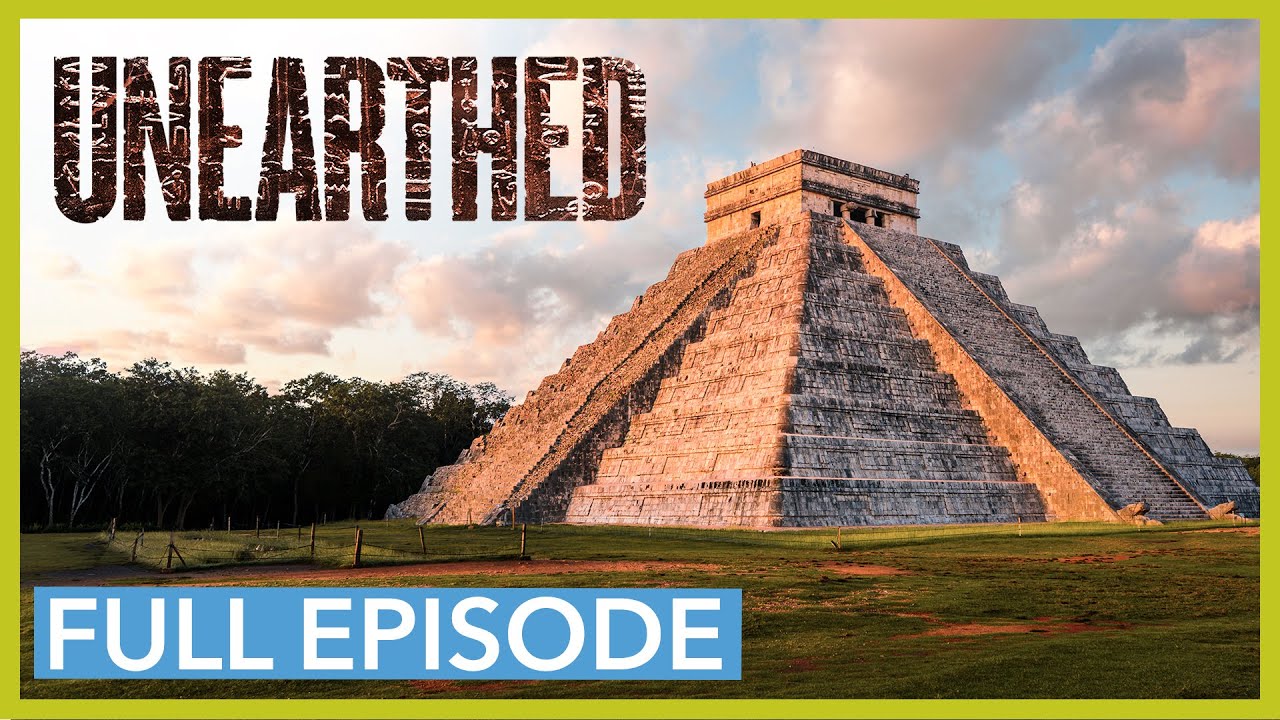
Is the similarity pure coincidence? If we compare the structure to the square-based pyramid of Chichen Itza in Mexico, which is also the work of the Mayans, we once again see remarkable similarity. It is as if these structures are all built by the same culture.
But it's not just the architecture. Take a look at this relief carving on the Indonesian Candi Kethek temple. Now compare it to this relief carving at the Gate of the Sun in Bolivia.
The similarities are even more striking at the Candi Sukuh temple. This motif is actually known as the "God-Self Icon", and strangely, it can be found all across the world, in Europe, Africa, Asia, and the Americas. The Spanish author and researcher Richard Cassaro has highlighted this motif, along with many other resemblances across ancient civilizations that didn't have any contact with each other.
On his website, RichardCassaro. com, he presented an article titled Suppressed By Scholars: Twin Ancient Cultures On Opposite Sides Of The Pacific. There, Cassaro presents a provocative argument that two ancient civilizations, the Mayans and the Balinese, though separated by the Pacific Ocean, share strikingly similar architectural, iconographic, and religious traits suggesting a common origin.
He suggests these similarities indicate both cultures may have inherited knowledge from a now lost "Golden Age" civilization, theorizing that all ancient cultures originated from one earlier, highly-advanced civilization. In the article, Richard Cassaro presents not one or two but twelve striking similarities between the ancient Mayan and Balinese civilizations, suggesting a profound and mysterious connection across these geographically distant cultures. He details how both built stepped pyramids with temples on top, highlighting structures like Bali's Mother Temple of Besakih and the Mayan High Priest's Temple.
Cassaro notes that both civilizations feature twin serpent or dragon balustrades running down significant stairways. Additionally, each culture utilized sacred corbel arch architecture, a building technique involving overlapping stones that converge toward the arch's center. Importantly, both cultures adorned their temple entrances with statues of formidable deities, serving as guardians, which are remarkably similar.
He further observes that both the Mayans and Balinese placed grotesque or fearsome faces above doorways to ward off evil spirits. Each civilization also prominently featured sculpted stone serpents, symbols of fertility, rebirth, and spiritual connection. Remarkably, both depicted figures with specific hand gestures designed to harness spiritual energies, reflecting deep-rooted spiritual practices.
Cassaro points out the presence of twin elephant deities in both cultures' art and architecture, despite their vast separation by the Pacific Ocean. Another shared architectural feature is the design of temple entrances to resemble the mouths of monstrous beings, which symbolize entering a sacred space. He discusses the use of stepped cross symbols in both cultures, similar to the Andean Chakana, representing cardinal points and spiritual concepts.
Each culture also carved the Third Eye symbol on statues, emphasizing spiritual "seeing" and enlightenment. Lastly, both cultures featured triptych three-door temple designs, emphasizing the central door, aligning with their religious teachings about the Third Eye and spiritual insight. With his groundbreaking research, Cassaro argues that the conventional historical narrative, which views history as a linear progression from primitive societies to our modern technological state, fails to recognize the possibility of a spiritually advanced "Golden Age" civilization that might have surpassed our own in both cultural and spiritual aspects.
Mainstream historians and archaeologists, Cassaro points out, are not deliberately misleading the public but are instead trapped within an academic paradigm that does not acknowledge such possibilities. This paradigm insists on viewing history through an evolutionary lens, dismissing any evidence that suggests ancient civilizations might have been more advanced than previously thought. According to Cassaro, the academic system reinforces this view by promoting scholars who conform to mainstream ideas and sidelining those who propose alternative theories, such as hyperdiffusionism.
If you want to dive deeper into Richard Cassaro's work, you can read his three books, Written in Stone, The Missing Link, and Mayan Masonry. But could all of this be true? Could an advanced ancient civilization really have existed thousands of years before the ancient Egyptians or Sumerians, before even the last Ice Age?
And if so, who were they, and what happened to them? Is this prehistoric civilization the link between the Mayans and Ancient Indonesians? And is Gunung Padang and all other megalithic structures in Indonesia built by these people?