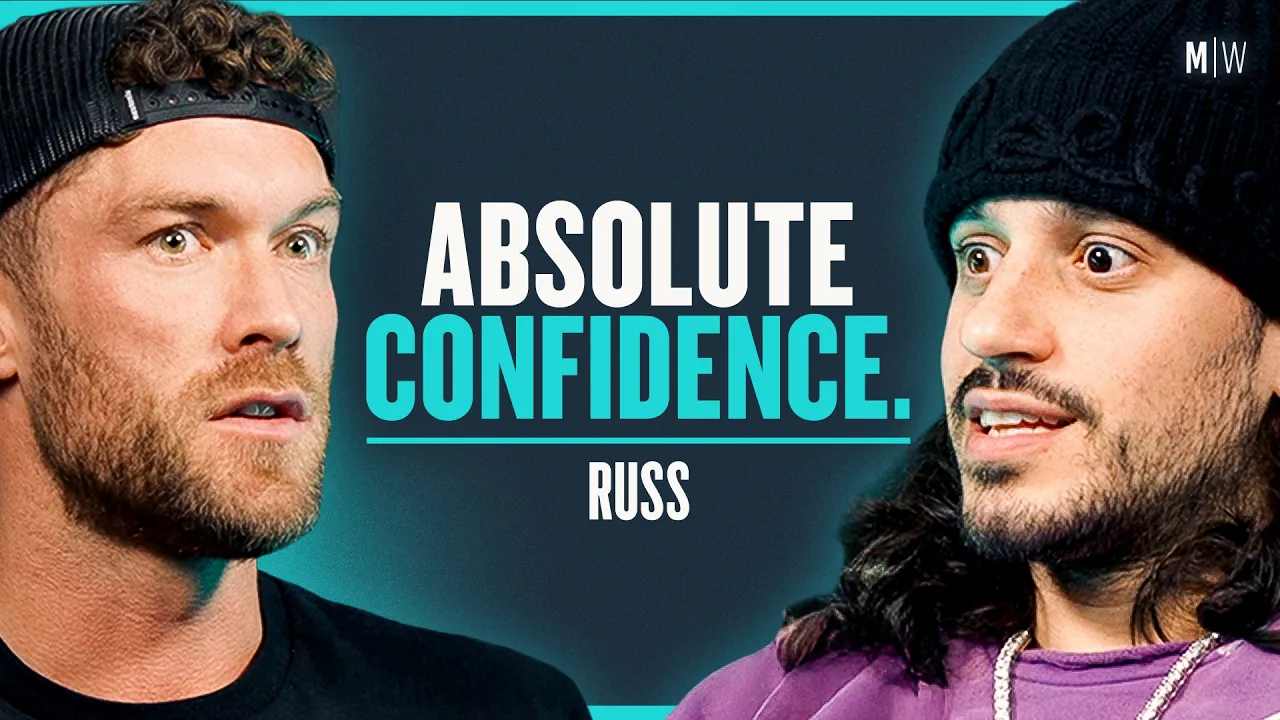
You were talking about work life balance and your inability to have that. >> Yeah. Um, man, I mean, balance is just it's a luxury now. It's a privilege. You can't have it on the way up. It just has to be full 100% commitment to the grind. So now I'm trying to have more balance, but the guilt is there, you know, still like it's just that PTSD >> of like I shouldn't be relaxing right Now, you know? >> It's a difficult question to work out. You know, almost everybody's on the comeup by by design. Very few
people make it or have made it, right? There's way more people that want to be there than are there. Uh, and that means first off that it's a sort of an icky situation because the total addressable market for people who need to learn how to put their take their foot off the gas is basically zero. And the total Addressable market for people that could do with working harder to achieve their dreams is still pretty high. But um, a good question to ask yourself is okay, let's say that you achieve the things that you want to
achieve. You get to where you're supposed to get to. >> Yeah. >> What then? >> That is >> then what do you do? that has been beating my ass for like two years. That Question because here's kind of like how I thought about it is the thing I'm scared of now is not having a horizon. You know, because in the past my present self was not my future self. There was a huge gap between who I was and who I wanted to become. And that gap, the distance is what birthed the hunger and the velocity,
you know, and now my present self is my past's future self. Like the gap has collapsed. So the Hunger has nowhere like obvious to point. And it's scary because, you know, it's not really a fear of complacency. It's a fear of like directional ambiguity. You know what I mean? And you know, kind of to touch on what you said where the market for people trying to get here versus people who are here, it's obviously huge, but a huge difference. But the engine that was driving me and I think drives most people at the Beginning is
here's this person that I want to become that I can imagine. And that engine works until you arrive. And most people never arrive. So they never have to confront this. But like high achievers have to confront it and it's just honest you know and so now it's trying to figure out like not necessarily the new dream but sort of like relocizing the hunger trying to find a new domain for it. I think that's why to be honest therapy Has been so activating for me and interesting because the ambition like moved houses to this internal landscape
>> where I can like attack the internal world because at the beginning the external stuff is such a motivator career status metrics >> validation. >> Yeah. All that but then you get it and you're like well I can't keep tricking my brain into thinking that I want Another plaque or another 100 grand. You know what I mean? Or whatever it is. It's this internal world is so fascinating because it's untapped land. It's new. Yeah. It's new. It's But the issue with is there's no finish line. So it's >> And there's no metrics of prog. >>
There's no metric of pro. So it's real easy to just get lost in myself and end up just doing this endless self-monitoring Rumination. It's like, "All right, hold on." >> Yeah. Well, you apply the same hyper vigilance and obsession that you do to finding the perfect kick drum to working out your relationship with your parents. >> Exactly. >> And it's like maybe you need to relax today and not attack this relationship. >> Think about this. Um, so many people I believe have an obsession with personal development. I certainly know that this Was true for me
>> because it was an anesthetic against not liking who I was in the moment. I was able to delay I was able to put off put on hiatus selflove because I knew that tomorrow me was going to be better than today me. So it didn't matter that I didn't love myself today because tomorrow I'll be better >> but tomorrow I might well you I'm moving in the right direction. I don't need to Matter about where I am now but well you know I haven't reached this level of validation or this particular achievement that I've got.
And then when you do arrive or get close to arriving, uh, or you outstrip the non- goals that you didn't really have and you just think like, what the [ __ ] am I doing here, you're forced to confront a much more difficult question, which is, I can no longer artificially inflate my uh the the like or artificially add buoyancy to My own lack of self-love with tomorrow's promises. >> Yeah. because I'm already so like out past where I thought I was going to get to. >> Yeah. >> That I I tomorrow all of this
feels like a dream. So, um yeah, you end up in a a very odd situation uh where you're >> This is gold medalist syndrome. It's the same it's a it's a classic classic situation that >> fame won't fix your self worth. Money won't make you happy. You don't love that pretty girl. She's just hot and difficult to get. Like you should work less. You should see your parents more. these lessons that everybody who has just become famous or wealthy or got the girl that they thought that they wanted all along or has just lost a
parent, all of them proclaim these revelations with like the vigor of someone that's just gone through a religious awakening. >> Mhm. >> Why? Well, either one of a couple of things. First off, they are satisfied by this but are lying to everybody else to try and pull the ladder up after them so that they don't continue going after it. Secondly, they're ungrateful or they're unable to sort of accept the blessings that life and their hard work has given them. Or thirdly, what they're saying is [ __ ] true. And external accolades won't fill internal voids,
right? >> And the prevalence of it, the fact it's so ubiquitous and so many people >> Yeah. >> arrive >> at this and then go, "Oh, [ __ ] >> So many of my problems are still here." >> All have the same epiphany. >> Correct. >> That's what I've been telling people. It's like, "What if we're right?" you know, you considered that as an alternative. >> Well, the the reason that this is so painful, I think >> it's it's very painful for the people that have gotten there and it's very uncomfortable for the people that
haven't >> because if the people at the end of the race tell people who are still running that the end of the race isn't actually worth it, that really [ __ ] ruins the promise. At least they got it >> and are saying that it's not worth it. I Haven't even got it yet and you're trying to convince me that it's not worth it. How [ __ ] despondent is that? >> Yeah. Well, it comes out very out of touch. And I wouldn't even say it's not worth it. It's just not going to be what
you think. >> It's not going to fix the things that you think it's going to fix. You know, it's going to address material issues, which is huge. You know what I mean? That's a huge struggle for most people. But it does not address any internal struggle you have. And in fact, now that the material struggle is taken care of, now all you have to do is focus on like the internal struggle, which [ __ ] your head up because you're like, "Damn, you're telling me none of this success fixes it?" Like, >> no money. No,
like none of it's going to do it. >> It's Do you know what it would be a good Analogy here? It would be like talking about food and water. There is no amount of food that you can eat unless it contains water that is going to keep you hydrated. >> A great analogy. >> It's It's just water. It's the wrong pathway, you know? It's like trying to fuel your petrol car with electricity. It's like powerful and there's bits of the car that need electricity to run, >> but it's not the thing for that Particular solution.
It's not the right fuel. >> I think that's what's [ __ ] my head up is having to reconcile with the fact that the old fuel doesn't work anymore >> and trying to find new fuel, you know, and it's tough because I was relying on that old fuel for so long. And I >> What did that fuel look like for you? >> Insecurity mixed with conviction, you know? It was like >> it was I don't feel like I'm enough, but I believe I can become enough. >> And it was a psychotic level of delusional confidence.
And the byproduct of that was discipline and consistency. You know, it's like I believed with every fiber of my being that I was going to become this massive successful artist. I had already like my success was decided by me in my head. The outcome was non-negotiable. It was inevitable. And when something's inevitable, the choices aren't choices. They're just I was living in the process. It was identity alignment, it was this is who I'm becoming, and this is what that person does. Which is why my discipline and consistency and work ethic that a lot of people
clap for. It never felt heroic or dramatic. It just felt obvious. This is just what I'm This is what this person does. How long did you release a song a week for? >> Two and a half years, >> right? >> Yeah. >> Okay. So, like 120? >> Yeah. Somewhere around there. >> 40 songs. >> Yeah. And that was after doing 11 albums, which was like 110 songs, >> you know? But again, it just felt like it never felt like this huge undertaking. It was just >> Well, you did. >> Yeah. If you tell somebody, hey,
in 6 Months, you guaranteed are going to have the best physique of your life. you're just gonna do the things every day that are required to get to that point. I'd already decided I was successful. >> I've been thinking about consistency a lot. Um, not too dissimilar to you. I think the same work rate of a artist releasing a song a week would be podcast doing three episodes a week. And that's the pace that we've been at for coming up on six years now. >> Uh, I I've always sort of um bowed at the altar
of consistency. I actually think that I'm stubborn. >> I'm not convinced that I'm I think stubbornness and consistency net out to the same outcome, >> but they come from a little bit of a different place. >> And uh it's more stubbornness is kind of you don't have any choice but to do it. >> Right. Right. >> Uh so think about this. Um you have obsession. >> Yeah. >> Motivation and discipline. >> Yeah. >> So uh motivation is I want to do this thing. Discipline is I will make myself do this thing and obsession is I
can't not do this thing. >> Right. Right. >> The but all of them kind of the the Outcome >> is the same. >> The same. >> Yes. >> But where it's coming from the fuel that you're using to push yourself forward is kind of different. >> So true. Yeah. And at the beginning, like I said, I was running at this version of me that was so far away. But it was such a clear visual. It was as if I was looking at the finish line and I Could see myself waiting for me at the finish
line. So, I knew I was going to get there. But now, the version of me that I'm chasing feels like he's like right around the corner. >> Or behind you. >> Or behind. >> I've already outstripped him. >> I've outripped my own dreams. >> I don't know where to run. I'll run inwards >> and just attack all my, >> you know, issues internally. in, you know, >> I mean, how many times how many times do you see someone do that, but in a more obvious pivot, which is they were a super gregarious party guy, lethario
in their 20s, and then they turned to endurance racing in their 30s or their 40s and now they do try triathlons and iron mans and stuff like that. >> Yeah, it's it's having to relocize all that energy and hunger. Yeah, >> it's tough though cuz I mean >> there's no way to slice it. Like I don't want the same things I wanted when I was 22. >> Those same things can't drive me. I can't be driven by the need to sell out a tour and go platinum or make money and buy my mom a house.
It's like I did all that. >> So I can't keep tricking myself into and this is what I tried to do is like yeah but I got to get another house. Like I Got to get another PL. It's like that doesn't work. It's not it's not enough sustenance, you know. >> Yeah, it's an interesting one because habituation happens to everybody, you know, no matter how successful and unsuccessful you are. Even if you're working a job that you [ __ ] hate and it doesn't pay that much, you got excited for the car that you were
going to lease and then when you got the car after a little while, you got bored of It and you needed to get a slightly better one. If you got a slightly worse one, you felt bad about yourself. But if you got a slightly better one, then it was satisfying for a while. And then the same thing and the same thing and the same thing. And I think there is an assumption that at some point you arrive >> and that that compulsion is relinquished from you. You've like exercised. You've >> exp. >> This is what
me and my best friend were Just talking about. We realize like it's cliche, but the race is the finish line. That's like that getting there is the most fun to me. That's been a blast. That was the I wish I saw how fruitful that part truly was. Cuz like you said, there's no arrival, you know? There's no okay, I'm I'm done what? Putting in work. I'm done showing up. I'm done being motivated, being dis. No, it's it's really like all of a sudden you did this journey and you became this version Of yourself that you
always wanted to become. And I suppose that that's the arrival, but arriving is so much more fun. Uh, it is so much more fun to be a little richer than you were yesterday than merely to be rich. Alice Wellington Roland. It's >> so real. >> Yeah. I mean, dude, Andrew Tate, [ __ ] the the philosopher a Tate uh said said uh uh having things isn't fun. Getting Things is fun. >> 100%. Y >> and unfortunately what this means is uh it's that Luke Combs uh [ __ ] Bellian song uh if the higher I
climb is the further I fall then why love anything at all. Wow. You know last week I found out that this is the eighth biggest podcast in the world. I'm the eighth biggest podcaster in the world as of last week's Spotify charts and it was fantastic. And One of my friends who is like the new business development manager for me rang and was like, "Dude, I'm so [ __ ] happy for you, but you do know what this means next year." And I was like, "Yep, means that we've got to be number eight or number
seven or number six or >> or I'm a loser and >> I'm going to [ __ ] hate it." >> But if I'd been 12th this year and didn't know where I charted, >> it wouldn't have mattered, >> right? >> So, there is a particular type of mindset that you have and learning to relinquish that, learning to be like, "Ah, just [ __ ] It's just nice." Yeah, >> it's just nice to have that >> clap for yourself. Yeah, but the difference between uh and this is one of the great advantages that nobody ever realizes
as it's happening when you're on the climb. It is easier at the beginning in the middle of your journey Within whatever it is. Even if it's just mastery, even if it's internal mastery, when you start your therapy journey, look at all of the lowhanging fruit about I never realized that my parents did that and that was strange and I never realized I had that conversation with my sister that was formative and it made me think about the thing. In the beginning of your journey, the noob gains are real and all of this stuff's just you're
accumulating it all The time. So progress comes relatively easily. >> Yeah. >> But as you get better at anything, and this is unfortunately both true for internal and external metrics. You start going to the gym, you gain strength every session. After 10 years of training, you gain strength every like 3 months, every quarter. >> Um >> it's harder to show up when that's Happening. >> There's less motivation. Yeah. And it means that pullbacks are more likely because you actually have something to lose. You have nothing to lose in the beginning. How? Tell me about the
therapy insights you didn't know that you forgot, >> right? I didn't [ __ ] know them. How can I forget about them? Whereas now, if you >> encounter some conversation with your Girlfriend and you go, "Fuck, there's that pattern again. There's >> I know about that pattern. There's an obligation for me to act on it. That means that I have not got, you know, >> and if I don't act on it, then >> then I'm a piece of [ __ ] I've taken a step backward. What was the point of all of the therapy? Why
therapy is [ __ ] I shouldn't have even gone in any. >> You know what I mean? So that the higher I climb, the further I fall. >> It's so true. And I think, you know, I always like the analogy I use is video games and like creating a player and you know, starting as a 50 overall, right? And it's so fun. You gain attributes so quickly and get yourself up to a 75 and 85 and but then you get to a 98 overall. It's like it's just not that fun to play anymore and you
just want to start a new career. And so I think for me that's kind of why I've been like wanting to get into acting because again it's Almost like I'm trying to trick my brain into go climb a new mountain >> even though I know what's at the top. >> You know what I mean? I'm like >> that's that's a that's a really I've never heard anybody talk about that before. I think that's so interesting that you already know that this is just a race in a different territory. I know what it is. >> It's
the same race in a different territory. >> It just gives me an opportunity to enjoy the climb again though >> because I'm like, I want to go climb a mountain because last time I wasn't there for the climb. >> I was mentally at the summit the whole time. >> I don't know if it's I don't know how easy it is to be there, dude. Especially when you when when you're thinking um the sort of stuff that you do performing on stage to stadiums and arenas of People and it's your music and they're your fans and
they really resonate with you and then you get off and you've got to work out. Are we getting Chick-fil-A or Sweet Green? >> What What time's the lobby call tomorrow? Have we got cuz the bus [ __ ] dude that bus like actually the bed is kind of a bit you know it's a little bit I like the bus that we had last like you're the norm the normaly >> Yeah. of the worries that you have are Always there. >> And I think that that's why envy about anybody's life, especially what looks from the outside
like a magnificent life. Um, life is not made of peak experiences like that. It's not made of days on stage and playing to arenas. Life is an average Tuesday afternoon. >> That's the majority of it. >> Correct. Life is made up of average Tuesday afternoon. >> I've had to learn to look around as much As I can and tell myself this is enough. Like this moment is enough. Because to what you're saying, me sitting with my girl on the couch and our two dogs, that is the majority of the time. It's not selling out a
show, >> you know? And I think part of me sometimes wants to curate a life that is full of as many peak moments as possible, >> but I just know that that's not real. You know, it's like because then I'll do That and I'm missing like the thing I can really sink my teeth into which is balance and normaly and just hanging out with my family and all of a sudden, you know, you don't see your dad for a year and a half cuz you're like over here trying to chase this >> high of being
on a stage or conquering something, you know? So, it's tough though, man. Have you found even when you've played your biggest shows that watching the footage back or watching The the vlogs and all the rest of it, do you have more enjoyment watching it back than you did doing it at the time? >> Do you remember it now through the lens of the camera, not the lens of where you were? >> Cuz it looks like it's someone else's [ __ ] >> Yeah. >> So, I can appreciate someone else's success. >> Very hard for me
to appreciate my own. And when it's happening in front of me, a lot of times it's tough. It's really hard to be present for me. It's very difficult. I spent a lot of my life living outside of my body and living inside my head, you know, and so what I used to do on stage was just I'll just get drunk, you know? I'll turn my brain off. That's how I would turn my brain off. >> Um, and it worked. You know what I mean? But it's not sustainable. And so now I Do my shows sober
and it's harder to be present because I'll be up there and a lot of times I'm in my head. >> Yeah, me too. You know, like when you're when you're drinking on stage, you don't really notice nor care about anyone's facial expression, about what you just said, did, whatever. >> You're just having a blast. When you're sober on stage and I'm singing a song, >> I can see you just like, "What was that? Did I [ __ ] up? Like, was this not cool?" You know, and it just boom. And now >> in a room
of 15,000 people, just one girl in the front row. >> Uh, >> yeah. That's so true, bro. >> I did um I finished off my tour last week. So, I did uh Salt Lake, Denver, Vancouver. >> Nice. >> Um which was lovely. It was really cool way to finish it up and we'd started in New York a couple of months ago and then We we rounded it out there. And the final show that I did, the um parkans on the curtain behind me were brighter than I was used to, which meant that the first four
rows were illuminated. >> It's the worst. >> And they only had one stage light. Look at how [ __ ] specifically like opulent and bourgeoa this sounds. But it meant that the first four rows would just I could see people's eyes. I could see the facial expressions. I could see if Somebody needed to go to the bathroom. I could see everything. >> Like this [ __ ] sucks. This blows so much. Another stage stage. Yeah, exactly. Put another stage light and we are darkening them down. >> This episode is brought to you by Shopify. Look,
2026 is the year that you're finally going to launch that business you've been thinking about for ages. Because, as you've heard me harp on about, making a to-do list for the Thing isn't doing the thing. Telling people you're going to do the thing still isn't doing the thing. But here's the good news. Shopify makes it unbelievably easy to actually do the thing. They make it very simple to create your brand, open for business, and get your first sale. They've got thousands of customizable templates, so all you need to do is drag and drop. You don't
need coding skills or design skills. Can manage things like shipping, Taxes, payments, all from one simple dashboard. And when it comes to converting browsers into buyers, they are best-in-class. Their checkout is 36% better on average compared to other leading commerce platforms. And with Shop Pay, you can boost conversions up to 50%. Shopify takes all of the messiness of running a business off your plate so that you can focus on the job that you came here to do, which is designing and selling an awesome Product. And right now, you can sign up for a $1 per
month trial period by going to the link in the description below or heading to shopify.com/modernwisdom. All lowercase. That's shopify.com/modernwisdom to start selling today. I saw you uh give a break in the middle of one of your performances and said, "I just want to say every parent is going to [ __ ] their kids up a little bit, man. You get to an age where you can't keep blaming Them." >> Yeah. Yeah. >> What's that mean to you? Um yeah, I think naturally when you start therapy, you start descending into the root of a lot of
your patterns and it obviously starts with childhood and the natural inclination is to like point the finger and be like why would you why why but the reality is they didn't have the tools, you know? Like I look back and I'm like my dad was probably my age when he had me. You know what I mean? And I'm like like I would be >> this [ __ ] >> Yeah. It's like what? There's no shot that I would do well. I would do well now compared to what I would do 5 years ago. But yeah,
I just had to get to a place of understanding that I love my parents and there's also just things that they didn't mean to pass on to me and Behaviors and, you know, um yeah, just habits that they didn't mean to pass on, but they did. And I got to unlearn them. And everyone's parents are going to like, you know, unknowingly pass on unhealthy [ __ ] But it's like at a certain age you have to I have to father myself, you know. >> Can I read you an essay, >> please? >> So, I wrote
this a couple of weeks ago. >> Yeah. >> The parental attribution error. We love blaming our parents. Practically a right of passage in modern psychology, but there's a double standard buried in the trend. We attribute what's broken in us to our upbringing while claiming what's strong in us is ours alone. >> Call it the parental attribution error. Like the fundamental attribution error where we blame others actions on their character but excuse our own by pointing to circumstance. Like uh I cut that guy Off in traffic cuz I'm late. He cut me off because he's a
dick. It's a skewed way of assigning credit and blame. We externalize the bad and internalize the good. We're quick to blame and slow to credit. You say you're anxiously attached because no one held you when you needed it, but isn't your ability to be alone in your emotions and to endure discomfort quietly also forged in the same crucible? You blame your parents for pushing you too hard in school, Convinced it made you perfectionistic, and neurotic. But when was the last time you acknowledged that same pressure gave you ambition, discipline, and drive? >> You point to
a childhood where mistakes weren't tolerated is the reason you fear failure. But what about your meticulousness, your standards, your refusal to phone it in? You complain that no one ever asked you what you wanted growing up. But could that also be why you're so tuned in to what Everyone else needs? You say your low selfworth comes from your never being praised, but isn't that the same fuel that makes you outwork everyone around you? You trace your conflict avoidance back to all the shouting at home, but isn't that also where your talent for deescalation and an
emotional radar came from? You chalk up your hyperindependence, not being able to trust anyone, but isn't that also what made you capable, adaptable, and calm Under pressure? You say you're emotionally guarded because no one took your feelings seriously. But isn't that also why you're steady when the people around you fall apart? M you've labeled yourself a people pleaser because you had to keep the peace at home. But maybe that's also where your social fluency and emotional intelligence were born. You blame your poor boundaries on parents who didn't respect yours. But isn't that also why you're
so careful to Not cross anyone else's? You say your fear of being a burden comes from being treated like one, but isn't that the same fear that now makes you reliable, disciplined, and impossible to disappoint? You attribute your sensitivity to criticism, to all of the judgment you grew up with. But isn't that also what makes you thoughtful, receptive, and serious about getting better? You say your nervous system never relaxes because your home was Unpredictable. But isn't that also why you're perceptive, quick thinking, and never caught off guard? The traits you're most ashamed of are often
just the dark side of something light. Your sharp edges didn't appear out of nowhere. They're often the byproduct of something useful, a strength turned up too high, or a gift handled without guidance. Think about a sword. Powerful, precise, designed to cut through resistance. But if it's double-edged, And most strengths are, then sometimes it nicks you on the back swing. That doesn't mean that you throw the sword away. It means that you learn how to hold it properly because most traits worth having come with risk. The truth is messier than a single cause. Every trait is
entangled. Wounds and gifts often share a root. >> The self-reliance you're proud of may come from the same childhood where you couldn't rely on anyone. The confidence You carry may have started as a defense over ever feeling small or dismissed again. Even your drive to succeed may be rooted in the fear of not being good enough. >> But this perspective requires maturity. It's simpler to cast yourself as the victim of bad parenting than to reckon with a complicated inheritance. >> It's easier to say, "They hurt me," than to admit, "They shaped me in ways I'm
still figuring out." >> The cultural narrative rewards blaming your parents more more than it does understanding them. Therapy turns them into victims and villains. Instagram makes them punchlines. But how often do do you thank them in the same breath that you critique them? None of this excuses abuse, neglect, or dysfunction, but it does ask for honesty. And you're going to draw a straight line from your childhood to your flaws. You should also draw that same lineage to your Strengths. If you can't let your parents take credit for what's right with you, maybe you shouldn't be
so quick to make them the villains for what's wrong. >> Incredible. Inc. >> Yes. Yes. >> Now, you know, it's cuz I've thought about that a lot. First of all, that was incredible. >> Thank you. >> Yeah. Um, if that doesn't go viral, I Don't know what. But, um, I've thought about that a lot. And the answer I've come to with talking to certain people is that maybe there was another way to still give you those traits. >> You know what I mean? >> Without the shortcomings. >> Without Exactly. And someone like myself, I was
able to use all those negative things as fuel and still achieve in spite of because of Whatever. But that's just because of how I'm wired. Somebody else who's wired differently would be just buried underneath some of that [ __ ] You know what I mean? Under some of the heavy criticism or whatever the negative traits are. So it's also it sounds good if you succeed. It doesn't sound good if you don't succeed, you know, >> because you've alchemized it, >> right? Which takes a special person. So Yeah, for me it's just the main point I
think again is that maybe there was another way for me to develop those traits. >> Maybe it didn't have to come through this like >> pain and [ __ ] >> Yeah. you know, but I agree in in in essence that, you know, this is what my dad always tells me. He's like, "Yeah, but you turned out all right." >> I'm like, "That's cuz I'm [ __ ] Awesome." But maybe it didn't need to go that way. You know, >> I think we asking the question uh interesting difference between um uh something being a fluke
chance uh and something being sort of written in the stars. >> So if you were to run the universe back Yeah. >> a thousand times, how many times does this happen to you? >> Right. >> And I think that's an interesting question to ask yourself. >> Like um you could think about >> convergence, right? this thing was kind of it was always meant to be. >> Yeah. >> Or coincidence. >> This thing wasn't. So, is it coincidence or is it convergence? >> And uh I think that's a that's a cool question to ask because what
you realize is that the the inheritance you've got In terms of your traits might actually be pretty [ __ ] rare for you that you shouldn't be this person really. >> Oh, >> you know, not just that you're a rare person, but of the all of the persons you could have been, >> this is a rare version. >> Yeah. Yeah. You know, there are way more versions of you and maybe there's not. Maybe most of the versions of you result in you being a multiplatinum [ __ ] Recording. >> Yeah. Yeah. It's it's very um
the self- authoring nature of that. The fact it makes you feel like >> you are the um >> rider on the top of the elephant that's actually controlled it as opposed to this [ __ ] elephant was going where it wanted and I was like >> just thought I was guiding it along the way. >> Isn't that interesting? That's a uh that Concept is what I name my deluxe album after. The elephant in the writer >> is so interesting to me. You swear you're in control, but that elephant >> once it decides where it wants
to go, it's going. >> Yeah. >> Yeah. [ __ ] >> I've heard you talk about people dismissing internal struggle. >> Well, people only validate struggles that they understand. >> Yeah. >> Uh there's a line from Oliver Burkeman that says, "Just because someone carries it well doesn't mean the weight isn't heavy." Yeah. >> I think that's so great. >> God. >> Yeah. >> Yeah. And I think with um I think with men especially, you know, the whole cliche like we've been taught to hide it and to carry it alone and That's what makes you be
a man is carrying all your [ __ ] and keeping it under wraps, you know. Um, and I also like there is truth and validity to the fact that material struggle is vital. You know, having food, water, and shelter is necessary, but there are so many internal struggles that are harder to see. And it doesn't mean that they're not real, you know. And I think I think everyone is just so quick to get Into this uh like struggle competition with people >> like yeah but I had to go through this. But there's always going to
be someone who can say that's cute. I had to go through this. It doesn't mean that your [ __ ] isn't real. It didn't have it doesn't mean it didn't have an impact. Didn't affect you. Um yeah. I don't it's it's so uh divisive to me. Well, it's an interesting one because, and this speaks to your age and stage of development, Two things can be true at once. Many people who don't deserve the term victim >> Mhm. >> use it as a way to gain leverage and status and accolade. >> And also, lots of people
are denying just how [ __ ] hard their life was. >> Yeah. >> Um, so Rogan's got this idea where he says, "The worst thing that's ever happened to you is the worst thing that's ever happened to you." So if if If the worst day of your life is somebody misgendering you in a Starbucks, then that's a pretty big deal. But if the worst day of your life is you running into battle at the [ __ ] Battle of the Som, that is also and everything then becomes kind of relative to that. And it's also
there's a recency bias. Yeah. Yeah, >> there's a Well, life's been pretty good recently and you begin to get a bit of sort of like, you know, velvet Uh night gown syndrome where you think, well, stuff doesn't really need to be that and then you get hit by something and you realize I me 10 years ago would have dealt with this more differently and now me now feels like I'm more fragile. We're not static and one person's ability or lack of to deal with discomfort needs to be sort of scrutinized carefully. You go, >> I
I don't think that that's that big of A deal. And there's a very easy way to call that out. But also going, dude, that you need to accept when uh you've been kicked in the dick and when it's really really hurt. >> Yeah. I think lately I've just been trying to expand my capacity to handle [ __ ] you know? I think >> How do you do that? Um, God, I wish I [ __ ] like knew really actionable advice. Uh, for me, I think it's just interrupting patterns, Catching them when I start to spiral
and start to catastrophize certain things. Just at least step one being aware that I do that. Step two is now interrupting it and being like, I'm okay. My world is okay. It's not a [ __ ] tragedy. Um, but it's tough, you know? And I think that was a lot of my resistance with wanting more success was, well, more success means getting hit more. >> And I've been hit before by my last version of success. I don't want to be Hit again. >> But then I don't want less success cuz then I'm stagnant. >> Um,
so the only answer is you need to increase your capacity to handle [ __ ] you know, to juggle. me and my therapist always talk about is grief and gratitude simultaneously, you know, >> and that's been um that's been challenging, man, because I could have swore once you get success, it's just all things that you're supposed to be Grateful for. There is no more grief, just all gratitude. It's all fun [ __ ] I used to always like look around and be like, "This is [ __ ] up and they [ __ ] that launch
up and this just happened, whatever." and just feel like I had some broken version of success. Like surely there's something wrong with the version of success that I bought. I need to trade this back in. Like this is malfunction. This is not right. But it's like no man, there is always going to be Some [ __ ] and some good [ __ ] going on. And it's just the ability to hold both, you know, and not just ignore the [ __ ] you know, acknowledge it. um but not ignore the gratitude and not think that
it's just supposed to only be that. >> Well, that's a a painful realization for everybody that there will be no point when you have no problems in life. >> Yeah. >> What did you think that one day you were Going to have no more problems? Like getting to a level in a video game and there being no enemies left. That that's not the way that life works. There will never be a time when you have no problems, >> right? >> And unfortunately the problem >> that's not what they sell you though. >> Yeah. Oh, no.
No. Reach the escape velocity, dude. Out in space. They can't hear you scream and they definitely Can't hear your [ __ ] problems. >> Yeah. >> You know, one of those balance boards, it's like a a skateboard deck and it's got a cylinder underneath it and people use it for working on their balance. I think about life >> a lot of the time kind of like that. Even when you're it looks really flat and I'm looking at you and you're almost perfectly still. >> Yeah. You're making these little micro Adjustments at all times. And then
sometimes you go, "Whoa." And you on one side or the other. And I just the more the more that I experience life, the more that I think it works like that. >> Yeah. >> That there is no point where you reach stasis. >> There are times when you are more steady and more flat, and there are times where you were more extreme. And sometimes you Meant to cuz you're playing around, and sometimes you were forced to because there was a big [ __ ] gust of wind. >> Yeah. Um, but there's no point where you're
not fixing >> making those micro adjustments. >> Fixing things and making micro adjustments. Yeah. That you'll never be able to fully take your eyes off the ball. >> And I think that was it still is a big hurdle of mine is overreacting and Catastrophizing the small little like, you know, adjustments that need to be made. Mh. >> And it's because it it it feels it feels like a it used to feel like a threat against who I was and what I built. And did I build something unstable? Did I build something not that great? >>
Did I build something wrong? Am I wrong? Am I [ __ ] up? Well, what that reinforces, if you don't ever hear this, And it's why it's so wonderful to hear the inner workings of somebody's mind, it helps people to realize, oh, this isn't a personal curse. >> Yes. >> On me. >> Mhm. >> This isn't because I did it wrong. This isn't This is just the way life always is for me. Everybody else has arrived. Everybody else is going to have it in such an easy, gentle way. They're whole. They don't have problems. Yeah.
>> No, no, no. This is endemic. >> This is a feature. It's not a bug. >> Yeah. >> Everybody else feels this, too. They just don't talk about it. >> This is why I envy bands. >> I envy bands because you guys all go through the same [ __ ] together. >> That's so incredible to me. Like, I think about the Beatles. I'm like, you all got famous at the exact same time. Like so you always had each other to talk to, but when you're just an artist, everything you're experiencing feels like it's happening in
a vacuum and you're sure that nobody else is having this experience. >> Well, what they even if they say they are having your experience, you can excuse it away because well, the way that they play or the music there, the genre, the fan group that well, you know, their Instagram game is like Totally they actually came up on the there's a way to excuse it. But yeah, you're right. you have a it's a wonderful a wonderful split test when you're in a band. >> Yeah. >> If you're one of four or six or whatever members
of a band, you go, "Well, everybody else is experiencing the exact same thing. Yeah, maybe they play a different instrument, but we're all so the similarities we can assume are Because of the situation and the differences we can assume are just mine." >> Yeah. >> Right. Because I my constitution is different to theirs. And it helps you to run a a pretty good experiment on why you feel the way you do. >> Yeah. And I think that was comforting on the comeup because me and my friends were all at the same place. >> You know
what I mean? So there was a bit Of synergy there psychologically and there was community inherently. And then when one of you kind of ascends to this crazy level, it's kind of like, well, now I know nobody who gets this and you expect me to what? Go like make friends as an adult. Well, that's impossible. You know what I mean? So, it's it's just [ __ ] >> Yeah. We'll get back to talking in just one second, but first, if you have been feeling a bit sluggish, your Testosterone levels might be the problem. They play
a huge role in your energy, your focus, and your performance. But most people have no idea where theirs are or what to do if something's off, which is why I partnered with function because I wanted a smarter and more comprehensive way to actually understand what's happening inside of my body. Twice a year, they run lab tests that monitor over a 100 biomarkers. They've got a team of expert Physicians that analyze the data and give you actionable advice to improve your health and lifespan. And seeing your testosterone levels and tons of other biomarkers charted over the
course of a year with actionable insights to actually improve them gives you a clear path to making your life better. Getting your blood work drawn and analyzed like this would usually cost thousands. But with function, it's just $499. And right now, you can get $100 off, bringing it Down to $399 bucks. Get the exact same blood panels that I get and save that $100 by going to the link in the description below or heading to functionhealth.com/modernwisdomd. That's functionhealth.com/modern wisdom. Talk to me about why it's okay to take your life seriously. Um because I think people
downplay their own passion and zeal for wanting to make a Dream come true out of fear of embarrassment, fear of coming off cringy because you really want that. It's that whole like I'm going to downplay what I want so that if I don't get it, I can just say I didn't even really want it anyway. You do want it and that's okay. That's why I love like Timothy Shalomé coming out and saying, "I want to be great. I'm in pursuit of greatness." That's awesome. All this fake modesty, like too cool [ __ ] I [
__ ] hate. I Think it's fake. And I think that that's just it's posturing. It's image management. You're trying to be relatable. It's not real though. Like I love hearing people claim that I'm trying to be the biggest artist in the world. But I want to be the best. I think I'm the best. I love that >> cuz we all we all have something we desperately want, you know, and I think it's okay for you to be serious about Getting that. I think that there's times where you shouldn't take yourself and certain things too serious.
>> But it's okay to take your life serious. This is your life. You're not going to take this serious. If not this, then what? You know, it's strange to me. It's very strange. I think seriousness gets a bad rap. >> Yeah. >> Because it's seen as uh stern uh not fun having, >> too rigid, >> too contrived. >> Um and yeah, totally >> effortless achievement uh from the outside >> doesn't trigger many of the defense mechanisms. Um because oh my god, he must just be so talented, you know, like how amazing. And he's not sort
of shoving it in our face. and he didn't say what he was going to do before and so on and so forth after. But I think taking things seriously and the bravery to take something seriously is uh like a a wonderful skill to develop. Uh earnestness as well to think about uh seriousness in your idea I think is to do with >> saying what you want. >> Yeah. frankly and showing the level of effort and commitment that you're prepared to put in to go and get it might be a good way to look at it.
Yeah. But earnestness would be the uh same but Directed inwardly toward emotions. So earnestness would be the bravery to take your emotions seriously. >> And uh I like earnest people. You know I think >> your point is basically that >> um detachment is self-p protection. >> Yeah. 100%. >> By keeping things at a distance. Yeah. >> It's the person who's never fully committed in a relationship. >> Well, if they reject me, they're not Rejecting me cuz I kept this little bit of me for me. >> Yeah. >> They didn't, you know, they didn't get to
see all of them. Exactly. Yeah. Because if I'd really wanted them, >> if I'd really tried, >> I would have. >> Then I would have had them. But I didn't. I held this little bit back. Yeah. >> So you >> you always come out on top. >> Yeah. You avoid failure publicly by guaranteeing your failure privately. >> Wow. Yeah, it's a defense mechanism against embarrassment, >> you know, and um yeah, it's it's just okay to want something in your life and want to take it serious, you know? It just is. And I think it's kind
of interesting. I always like related back to watching certain anime and Certain characters who didn't have the innate skill. >> They were [ __ ] annoying. They had to like really bust their ass to like get good and get their powers and [ __ ] And they were annoying to me. They were not as cool as the character who was just nonchalant and just like had the [ __ ] >> Yep. Yep. >> And I think as dudes, we all look at that guy like he's [ __ ] awesome. He's not even trying and he's
badass. And we Look at the main character >> who like doesn't have the skills yet has to work as like annoying. But to me, that's just because it's confronting a lot of times. You know, there's a lot of times when I see somebody busting their ass and um saying like, "This is the journey I'm about to go on. This is what I want. This is what I'm willing to do. This is what I'm going after. I'm not there yet, but I believe I can get there." I see How people react to that. And I just
think it's confronting because it's a mirror for most people. It's it's asking you, are you willing to do the work that this person's willing to do? What are you doing with your life? But it also suggests that success is more in reach than you might think. >> That's the part that [ __ ] people up. >> Yeah. Because well actually it's not because of blas innate talent. That's this mystical ephemeral difficult to Replicate thing. >> Yeah. >> Oh, he he just worked hard and >> oh [ __ ] that means >> all I needed to
do was work hard and therefore the fact that I'm not where they are >> might be my fault >> because I didn't try. >> You know what's easier to say? I think he just sold his soul. I think that's like it's got to be what It is. >> It's so much easier to just do that >> instead of the truth. The truth is far less sexy. >> Correct. >> That's I mean that that is increasingly the direction of this podcast going in. Very unsexy truths unfortunately over and over. Um, and you know, some of the
seductive mirages >> that I was facing when I was a a younger man and now that I'm a young but Slightly less younger man, a lot of I've got to them and realized it wasn't some oasis. It was just like this sort of vision thing. And >> one of those is earnestness and seriousness and taking things seriously. And um, >> I [ __ ] hate I hate ironic speech so much. I think it [ __ ] blows this sort of cynical side. I never plant my position in the ground. I never say like, "Hey, you
went too far." Like, You're not supposed to say that. It's always lol, but actually you're the vote. It's like, no, don't say lol. Say [ __ ] you cuz that's how you felt. But because you don't want to say to somebody that you actually hold a position, that you can be hurt by something or that you care about something. As soon as you say that you care about something, that's a a flag that's planted in the ground and that gives a territory that other people can Try to attack. Yeah. >> Whereas if you're >> I
didn't really care about her all that much. It wasn't really that important to me. I didn't want the business to go that well. I like I'm not that, you know, like I'm just doing comedy on the side. Like it's just like, you know, whatever whatever. Um >> had another uh essay recently. Procrastination is often about fear. >> We like to pretend procrastination is a Time management problem, but regularly it isn't. It's often a self-p protection strategy wearing a Fitbit. When we delay doing the thing that we know we should do, we're sometimes not wrestling with
our schedule. We're wrestling with our selfworth. The logic goes like this. If I try and fail, everyone will see. So, if I never try at all, the failure is private, deniable, and safe. >> This is the psychological slight of hand at the heart of much procrastination. It Feels like avoidance, but functions like armor. You convince yourself the task is scary or the conditions aren't perfect or you need to feel ready first, but really you're just terrified that doing your best might not be good enough, so you don't do anything. >> Yeah, I think that's everyone.
I think you nailed it too with, you know, it's just you get to fail privately and that's and you can handle that, you know, but I just I have a lot of respect For people who publicly go after [ __ ] and I think deep down it's an attractive trait. That's why a lot of times those people attract a lot of fans and a lot because we all know as society ambition and earnestness is attractive >> because we know it's a really tough thing to have and it's no surprise that it's also polarizing you know
>> with with that people need feel the need to like temper their ambition and their earnestness though because if you're too Much then in the UK you would be called a kino No, as in keen keen, like you're too keen, you're o overly enthusiastic. >> Um, >> it would be cringe, right? Like this person who believes this thing and like, yeah, maybe he got there or whatever, but like he sort of loves it too much or whatever. And and it's strange because some people seem to be able to play it off with sort of an
artistic likable quality. And Then for some other people, I don't know what it is. They're just the way that they deliver something similar, the obsession sort of leaks out of them in a a less aesthetic shape. >> I think you know what I've noticed and I I've guilty of this for sure in the past. Sometimes it comes off like you're trying to prove it to yourself. >> Yeah, that's interesting. >> You know what I mean? >> It's the guy at the party who introduces Himself as saying just sold a business for $1 billion, right? >>
As opposed to just it coming out naturally in the course of the conversation. And you people can feel the intention, you know, it's like this feels like you're trying to prove to you. Yeah. >> Um but I do think that there's just an issue with society wanting to control >> and own the key to other people's confidence. >> Oh, that's great. >> Like, no, no, no. We will let you know when you're allowed to feel >> confident about yourself >> because again kind of what you said earlier. They have to believe that because it reaffirms
the hierarchy in their head that we're in control. Confidence is something given by us to you as opposed to the truth which is no no I give myself confidence. I own my Confidence. M this is a this is a good one. So this woman went on a pod recently. I'm going to play this clip for you. This woman went on a pod recently and uh gave a a really wonderful insight about uh the relationship of um how much reputation think people think that you deserve. >> Thought this was >> people have an assumption of the
level of celebration you deserve. >> Interesting, >> right? how good you are and how um much reputation you deserve. >> How do people decide that? >> Let's get to that. Cuz you you you want to try to engineer it. >> Yep. >> If you're above that, people think you're overrated and they want to bring you down and they don't like you. If they perceive that you're below that, then you're underrated. Like underrated is a compliment. Why is it Why is it a Good thing to be poorly rated? In my mind, it's sort of like you
fumble. Like what do you mean you're not wellrated? Like go fix it. >> It's an interesting point. >> But underrated is a compliment. Overrated is an insult. You would think that being highly rated is good, but overrated is not. So, people want to fill that delta. If they think you're underrated, they'll try to bring you up. So, this is like what people, we'll get To this, too, but uh this is what people have been saying about Google Gemini. >> It's underrated. It's like it's high status to say, >> yeah, it's a compliment, but it's >>
it's a compliment, but it's also like seen as insightful and valuable and useful to point out that Google Gemini is good. >> That's true. Yes. People feel good when they make that point. >> Yeah. They're like, I'm pointing this Out. So I'm I'm writing some kind of wrong in the universe. I'm filling that in. >> I guess people also feel good about themselves when they call it something overrated. People just feel good about identifying the discrepancy. >> We're all kind of reputational Karens. We feel off >> when something isn't where it should be. And that's
why all these phrases exist. >> So cool. >> So real though. Yeah. >> That's why like I'm of the opposite mind. I like seeing the Chiefs win the Super Bowl every I want them to win the Super Bowl every year. Like I want the Chiefs to win the Super Bowl every year. I like when Taylor Swift drops an album and it goes number one and people say, "Well, she couldn't just let that girl go." No, beat me. I love [ __ ] like that. I love [ __ ] like that. I don't even I have
no favorite NFL team. When my Brother was like, "Who do you want to win the Super Bowl this year?" I'm like, "The Chiefs. I just want to see dominance." You know what I mean? Because I hate all this like, "Oh, let someone else win." And it's like, "You're not even that great." Prove it. >> Yeah. >> You know what I mean? >> I love [ __ ] like that. >> Yeah. >> But that I mean again that's just like Society is just in my opinion [ __ ] made. It's just a bunch of like weak-minded
people who don't want to face the reality that they themselves lack the quality in the fuel that this person used to become great. Well, that's why the I think it's called the bigotry of small differences or the narcissism of small differences that the closer you are to somebody, the more rivalous you feel your relationship to them. If it's Someone who uh grew up in a different country or had a very different sort of upbringing or from a different family, like yeah, you might not rate their success, but it doesn't have the same sort of visceral
status >> uh rivalry that uh you would expect. But if it's the person who grew up down the street from you >> and you basically had the same opportunities right now, >> that really hurts. Yeah. It's another Reason why uh I've chosen an profession, an industry that is very easy to criticize because everybody does this >> over the dinner table. >> Right. >> Right. I have not tried to put together a track. I've not tried to open up [ __ ] Ableton or ProTools or whatever the [ __ ] and make a song. Therefore, when
I see what you do, I can say that I do or don't like it. But it's so removed from the skill set that I have. But the Closer that you get, the fact that I haven't had to put in 10, 20, 30 years on logic or whatever to work out how to [ __ ] make this thing, uh, anybody can do a podcast. How many times have someone been over dinner and said, "Bro, we should have recorded that. That was like a great That was such a good That was better than like [ __ ]
Joe Rogan. Like we should put that we should have put that on the internet. Maybe we should start a podcast like every white Guy. >> And >> the fact that people feel close, it's the same reason that uh everybody has an insight about how Nike should be doing their social media. Oh, I didn't like I didn't like that social media post. They shouldn't be using AI because everybody's got a social media profile. Yeah. So everybody has some >> everybody's an expert, >> but not everybody files the [ __ ] >> P&L tax return at the
end of year for their company, right? Well, I mean, I would have done it differently. You don't know how the spreadsheet works. You don't do a V lookup or any of this stuff. So, you have more of an opinion and you can be more triggered and push back more when something that somebody else does. >> It feels it feels like you're a part of the industry in a in a roundabout way. And the more Walled off the further away that particular industry is. Elon Elon, you can laugh at the fact that a rocket bursts into
flames if it doesn't work right, but you don't know how it happened. I would have done it differently. No, of course not. But if you listen to a podcast that goes bad, you have an opinion, >> right? >> Well, you have an opinion about that. Why? because you think that you oh if I'd been there and then maybe some people could play football so they'll think well I would have you know that play is just stupid why did they call that play that play is [ __ ] dumb. >> Yeah. And the further and further
away that you get, if you're some, you know, microbiologist that's just come up with something, you go, I it was good or bad, >> the uh resolution with which your criticism or compliments can be deployed. >> Yeah. >> Uh lowered, the more difficult the task is basically and the further your skill set is away from it. >> I think because brilliance is boring and it's subtle. I was watching this documentary on Pixar and the guy was saying the trees in the background the animation. It's so perfect that you don't notice it. >> But if that
tree was drawn [ __ ] up, you would notice it. Same thing with What you soccer players, basketball, like the music I make, whatever. There's certain decisions that are getting made that are the culmination of so many hours in in a high level of taste or intelligence, whatever. not just in my field, in all these different fields that the average person doesn't recognize them. They only recognize the [ __ ] But it's like you don't recognize the brilliance when you don't recognize when it's going well because You don't know what goes into this. And you
think that your volume of commentary replaces your lack of credentials. You don't know what's going on. >> Well, one of the problems as well is that people bind together over criticism way more than over compliments, >> you know. >> Oh, misery loves company. Yeah. you know. >> Yeah. >> And it's to to me >> you give yourself an excuse if you reject the truth, which is >> there's a lot of people kind of what you're saying like similar opportunities who just worked harder. They worked harder or they just were naturally better than you at this
thing and they developed their skills or whatever it is. And so the truth is that you didn't maximize your opportunities. And that sucks to hear. And what's easier to do is Reject their journey, dismiss it with some rumor or some nonsense because the truth is that you could have been here too, but you [ __ ] up. >> Take it up with your mirror. This has got nothing to do with me, >> you know. >> In other news, you've probably heard me talk about element before, and that's because I am frankly dependent on it. Uh,
and it's how I've started my day every single morning. This is the best Tasting hydration drink on the market. You might think, why do I need to be more hydrated? Because proper hydration is not just about drinking enough water. It's having sufficient electrolytes to allow your body to use those fluids. Each grab-and-go stick pack is a sciencebacked electrolyte ratio of sodium, potassium, and magnesium. It's got no sugar, coloring, artificial ingredients, or any other junk. This plays a critical role in reducing muscle Cramps and fatigue while optimizing brain health, regulating your appetite, and curbing cravings. This
orange flavor in a cold glass of water is a sweet, salty, orangey nectar, and you will genuinely feel a difference when you take it versus when you don't, which is why I keep going on about it. Best of all, there's a no questions asked refund policy with an unlimited duration. Buy it, use it all, and if you don't like it for any reason, they give you your money Back, and you don't even have to return the box. That's how confident they are that you'll love it. Plus, they offer free shipping in the US. Right now,
you can get a free sample pack of Element's most popular flavors with your first purchase by going to the link in the description below, heading to drinklnt.com/modernwisdom. That's drinklnt.com/modern wisdom. It's a it's a strange challenge that People have when it comes to do I do I want to criticize this thing because I genuinely have an issue with it? Do I want to criticize this thing because it's triggered in me something that I feel uncomfortable about? >> Yeah. >> And um >> the idea that being a black sheep is still being a sheep. And just because
you're against something doesn't mean that you're in the minority. It doesn't Mean it's a more sophisticated position. >> Yeah. >> You know, you don't really like anything. >> You regularly dislike most things. >> What a sophisticated position to hold. Congratulations, dude. You must have such refined taste. >> I was just talking about this, man. Like this whole community of people who hate anything that's popular because it's popular. Not because they actually don't Like it. They just don't like it because it's popular. Whether it's an artist, whether it's shoes or whatever, it's like sometimes, not all
the time, but sometimes things are popular because they're good. And sometimes things are not popular because they're not good. Not all the time, but sometimes. >> And it just it's people who who feel like they they get to have some sort of autonomy and some sort of like leverage Over the rest of society. Like you guys like that. >> That's the underrated overrated thing again. Right. >> Right. Yeah. Uh yeah, it is funny. There's sort of two camps of people. There's uh one who are creators that are underground and oh dude, you know, it's just
my my work's so sophisticated. They just Yeah, they just don't get it. It's like, oh, maybe it's just not that Good. >> No kidding. >> Um but just because something is big doesn't necessarily mean it's good. But on average, it it typically is like people vote with their feet and there's a lot of competition out there. >> A lot of competition. You think it's got to be that? Do you think Luke Combmes has got to be that big if he can't do country? Well, >> right. >> No, obviously not. >> I have a good friend
who said something a long time ago at the beginning of like my journey and I'm sure we were like hating on some artist or something and he was like, "You know what? Every artist that's like wildly successful or famous, I can always find something about them that I think is like really genius." Like every single one. >> And I was like, "Wow." And I ever since and this is a conversation from 10 years Ago. Ever since then, even artists where I don't like their music, I'm always able to find something about them, whether it's their
branding or their visuals or something where I'm like, that's [ __ ] genius. >> It's much more useful because what >> I can take it. >> Yes. Allow me to take the one thing like, oh my god, I think this person sucks. >> Yeah. >> And I've found something that I think is great. So if my opinion is right, >> how much of a compensatory mechanism is this one thing? They must have the best Instagram on the planet. >> Right. Right. >> As opposed to this just sucks. Everything about it sucks. >> It's like you're
just doing yourself a disservice. You could be stealing and learning and and evolving. >> This is I think related to the fear of Embarrassment that a lot of people have. >> Uh you've got a line that's very similar to a friend. You said uh people who are less talented than you simply care less about being criticized and made fun of will get so much further. Fear of embarrassment is friction. Another friend of mine said, uh, does someone with half your talent and five times yourself believe making 10 times the money? >> That was like I
think to be honest That's me. That's why I've always talked. >> But how do you how So I'm trying to work out how lots of insecurity. >> Yeah. >> Married with lots of self-belief because those two things don't always comport. >> No, I think the insecurity was I'm not good enough. you know, at make, we'll just keep it simple. Early on, it was I'm not good enough at making songs. My raps aren't good enough. My singing Isn't good enough. The beats that I'm making aren't good enough. The mixing isn't good. None of this is good
enough. I knew that deep down because I would make [ __ ] and I would love it. But then I would go listen to established artists at the time, Whiz Khalifa or Drake or Kendrick or JCore or whoever, and I'd be like, damn, their [ __ ] just sounds like way better than my stuff. Um, and so I knew that my [ __ ] wasn't there yet, but I really still genuinely liked what I Was doing. And I had this belief that I could become good enough. >> And so the reason I always tell people
it's like I loved everything I was doing, but if I loved it to the point that I'd never thought I could be better, I would have stopped going to the studio. I would have been like, "No, I made my best song ever. It was last night. My best song ever is the one I'm making tonight." And it always is, >> you know. Um, but yeah, it's that That marriage is the old fuel that I'm talking about, you know? It was cuz how long am I supposed to not feel good enough? You know what I mean?
Cuz now I don't feel like that anymore. I feel like my music is years now where I felt like it's good enough. >> Um, but yeah, it's it was a uh it was a conundrum, man. Really was strange. What was the original question? fear of embarrassment. >> How do we work that in? >> Because I said uh there's someone with half your talent making 10 times the money. >> So I really was not the most talented person at all. There's artists who their fifth song they've ever made is a massive song. >> I'm like I
simply did not have the talent that my fifth song could have even been that big. I was 110 songs deep before I think that I think on my eighth album. So maybe like 85 songs released, But probably hundreds of songs made >> before I'd made something that was good enough to even be a big song. >> You know what I mean? That's a lot of work to even just get to the starting line. >> And um that's why I kind of preach what I preach to up and coming artists, which is the majority of y'all
are going to be like me. You're not going to be like the dude who picked it up and on his fifth song it's a Billboard charting song cuz He's just a freaking nature talent. That the majority of us are me where this [ __ ] sucks for mad long. Like these songs are not good enough for like 200 songs. You know what I mean? That is the majority of us. And I think the belief that I could end up making a great song is what kept me going. And still to this day, while I try
to figure out the direction my hunger is supposed to be pointing in that, you know, north star has never changed, Which is I still think I can make the greatest song of my life, >> you know, >> and I still think I haven't made it. So, but again, it's like I think I've beaten out so many people who were so much better than me. I had friends growing up that were way better than me. >> Way better. But they just what I'll say is this. I think a lot of people cannot tolerate uncertainty the Way
I can. I think that's a very underrated skill. The ability to withstand uncertainty over an extended period of time is a pretty big indicator of if you're going to be a successful artist or not. You know, I had a lot of friends who they put out one song, didn't blow up. All right, I'm going to college. Well, they put out one mixtape, it didn't blow up, and they're like, "This is [ __ ] I'm out." Up andcoming artists that I've talked to Over the years who they put out a couple songs a year, they're mad
their career is not moving fast. It's like, you're not moving fast. How fast can the career move if you're moving slow, you know? And you have to deal with that uncertainty of the external uncertainty. And it's for me, I was able to tolerate external uncertainty. I was able to tolerate lack of external evidence because I gave myself the certainty. I knew I was going To make it. So, I didn't need early on. I didn't need the external validation. My own internal certainty was enough to temper the fact that when I put the song out, it
gets two streams, >> you know, because I just knew that y'all were wrong. I believe that. I seriously thought the first mixtape I ever dropped, I thought it was going to blow up. I remember like tweeting, "Tomorrow my life's going to change." You know what I mean? It's like it didn't at all, But I believed it, you know? >> What about the fear of embarrassment thing, overcoming that? >> I didn't have that. I was consequence blind early on, which I think is just a trait of being young and ignorant, you know. I didn't I didn't
know there was pitfalls. I thought you put out music and it blows up and then you ride off into the sunset and everybody loves you, you know, which is why this is probably not going to be A popular opinion, but I encourage everyone to go after that crazy dream as young as possible because the older you get, the more aware you become that all that glitters is not gold and you start becoming aware of the trade, of the cost of everything. you also have more to trade, right? >> Yeah. Right. And so for me now
even it's like the fear of embarrassment, all that stuff is amplified now because I know there's people watching. I know there's People looking at me. >> Well, I mean, someone asked me this maybe the Vancouver show this week and they said basically, I want to do my first podcast, but I'm really nervous. I'm nervous about what people think. I'm nervous if people are going to have a judgment on it. All the rest of it. So, I'm just going to It's a wonderful question. And it's one that I think a lot of people have. I'm going
to stop you right there. I can promise you that No one is going to laugh at you for your first podcast. Do you know why? >> Cuz no one's going to see it. >> No one's [ __ ] listening. That's why. Cuz no one knows who who you are. No one cares. >> So you have this beautiful upside only. You You already are not a podcaster. >> You already are not a recording artist. >> Yeah. >> There is only upside. Imagine if you did a trade and you said you can bet the Whole obviously you
can [ __ ] put money down. and you can leave a job. Ra, but assuming that you don't do something insane in order to get your first mixtape or podcast off the ground, >> right? >> You can only get better. It's only upside. >> You can only get more views. >> There is no You've already done no views. >> Congratulations. >> Yeah. >> You have an infinity more views that you can get, >> right? >> Yeah. >> You're competing with zero. >> Correct. >> Now you're competing, like you said at the beginning, you're competing now
next year with number eight. >> Yeah. >> But um it's it's it's funny. Hey, I Always tell incoming artists take advantage of the fact that nobody gives a [ __ ] >> cuz they spend so much they spend so much time like do you think that I can drop a song like this right now or what do you think people will think of? I'm like you got 10 fans bro nobody gives a flying [ __ ] like this is the time to do whatever. >> I envy the anonymity that up and cominging artists Have to
a degree. Obviously me not being anonymous and me being successful gives me all these great things, but the purity and clarity you get to operate from when you don't have anyone listening. You don't have any feedback. >> That's why people use pseudonyms, right? They start side project. >> Oh yeah. Put on a mask. >> Yep. >> Alter your voice. I've thought about doing [ __ ] like that. >> Mhm. >> Like starting a whole other career >> and just alter my voice. Pitch it down or pitch it up. >> Change the production. >> Wouldn't that
be cool? I've thought about it almost every day for like five years. >> Do you know that sick kick guy? >> Sick kick? No. >> Sick kick. So he's a [ __ ] like a lot of things. He does live sequencing is one Of his big things. So big [ __ ] off MIDI pad >> and he always wears a mask and his I did a big doom scroll. I wanted to call it a deep dive, but that makes it sound too sophisticated. I was doom scrolling. And uh went through his Instagram and I was
like, "Oh, nobody knows who this [ __ ] is. The guy can sing, he can rap, he can definitely [ __ ] produce and mix. And uh he does some originals. He's got like original Albums, all the rest of it. And he said uh I'm never going to release my uh face until I get a Grammy. And the whole thing if he sings, he need he lifts the mask up just so it covers the bottom of his nose. He'll sing through that and then he'll pull it back down. He plays DJ gigs and does all
the rest of it. And uh I thought that was really cool. There's a big rapper right now, SD Kid from London, who everyone thinks is Timothy Shia. >> Isn't that awesome? And he's rapping with like a Scouse Sax, >> right? Okay. I can promise you it's not Timothy Sha. >> It might be. Wouldn't that be [ __ ] And Timothy Shia is like feeding into it. They're asking him in interviews. They're like, "Is this you?" And he's like, "Oh, we'll be revealed." >> Yeah. Yeah. Yeah. Brilliant. What if it's >> imagine if you imagine if
you're that Artist though and you find out that Timothy Shalom >> through no like uh construction of your own is somehow feeding into your own law like hey Timothy dude [ __ ] appreciate you man >> cuz you know there's going to be time in 5 years when everyone's like you remember when people thought >> Yeah. Yeah. Of course. Of course. >> No, it is a um anonymity is freedom. You know there's a Liberty creative liberty and freedom you have when nobody knows who you are. But again, the the higher you climb, the further you
have to fall. That there's a big difference between never made it and fell off. >> Holy [ __ ] dude. That fell off hurts so much harder than never made it. >> Well, cuz you had it. >> Yeah. You were there. >> You were there. >> Yeah. But by design. By design. Unless You continue to be the best in the world. Like Mike Tyson, you're not going to continue to be the most dominant >> athletes. I don't know how they do it, man. >> Yeah. It's a lesson in humility. Because the stuff that we do,
we can do forever, >> you know. But athletes, it's like you got what, a 10y year window maybe. Especially like if you're a running back in the NFL, eight. >> Well, think about even from your Industry, musicians. >> Oh, yeah. >> Female artists. Yeah. >> Female artists have an additional price that they need to pay. It's like, oh, you want a family? Guess what that you you want a couple of kids? That's like a four, five year hiatus. >> I think about that all the time, man. to be honest because I know in my industry
specifically rap youth is equivalent to cool >> old is lame >> and the currency in rap is being cool and so how do you be old and cool in a genre where those are antms you know what I mean >> um but that's why I love seeing older rappers have success >> who's a good example >> clips Push A and his brother Malice who Grammy nominated. They're like 49 years old. The album's great. It's like that's Important for hiphop as a whole. Whether or not you feel this way about them or whatever the m it
doesn't matter. It's what it's doing for the genre, which is telling people you can have, maturity, wisdom, and still be cool in a genre that appears to only clap for youthful energy, I'll say. >> You know, >> it's like, oh man, that is inspiring. So, you're telling me it doesn't all end >> without being a legacy act, without you just having to run it back. play your debut. You know what I mean? They're putting out a new album that people love like it was their debut album. That to me is inspiring. Or seeing an artist
like Kani catch her biggest hit ever 10 years into her career. Like I just posted that today. I'm like if this doesn't inspire you, I don't know what will. Like this is for me as an artist. The scariest thing is to consider the Possibility that well at some point your best years are going to be behind you, right? Surely >> like your biggest song was the one you put out 5 years ago and you'll and you'll just never do it again. And so I always get scared that is that this year? >> Well, it's a
good excuse to not put out your best song, right? That's why somebody would I'll just hold a little bit back. I'll hold a little bit back. Yeah. And that's why people don't understand why for me and other artists I know the numbers it's not ego anymore. It's existential. You know, if I look at streams and I see they're lower than I think they should be, I don't have an ego situation happening. I have an existential crisis happening because I'm thinking, "Oh my god, is this it? Is this the start of the decline? I'm no longer
able to take care of myself, my Family, the responsibility. Is this it? Is this it? So, it's not ego. It's not my songs are so much better than this. This some [ __ ] It's It feels like it's feedback turns into a threat instead of just data, you know, and it's scary. >> Well, because your sense of self is wrapped up in this thing now. >> Well, yeah. When the work becomes your worth, over with, >> of course. Yeah. Do people love me for Who I am or for what I do? >> Yeah. >> And
if all I do is what I do, then >> isn't that >> what happens? What what what happens when that gets taken away? >> Like that means that the love's going to go too. That people only want me because of what I can do. Yeah. >> And if I can do less, >> then I am less. Yeah. And it's strange because people want to win >> as men, right? Not to do the woe is me men [ __ ] but we do get taught that we're only as good as what we provide, >> as the
value we provide. And so as an artist, as a man, it's like, well, I'm providing value now, but to your point, if the streams are going down, does that mean I'm providing less? And if I start to provide less value, does that mean the love is going to decline as well? >> It's a great point. And uh the first I've talked so much about sex Differences. Yeah. And um >> the first conversation I ever had this year where someone just called it out direct and it's the first time that anyone's ever done it. I thought
it was so great. I was having a conversation with a guy who wrote a book about uh the female orgasm and he was basically saying that as far as he could see the female orgasm is a selection mechanism that uh it is uh a physiological embodied way of the woman's desire Responding to how she perceives her mate. >> And I basically mentioned that well this feels a little bit ruthless that guys are sort of being judged in this manner that they don't really get to control. they just sort of are who they are and they've
worked on themselves to the extent that they do and they turn up and you know this this whereas for women they don't have the same type of judgment like it's men are more Mechanical let's say in that regard >> and instead of equivocating instead of needing to say well you know because men have got it and they went no you're right yeah it's it's tough and that's the way it is women women have this particular type of uh blessing or curse or judgment or ability to scrutinize or bestow uh status or take it away from
from a guy. Uh in the same way as is true here, which is I think that you just need to accept as a man, >> yeah, your >> value to the world is going to be tightly tied to your competence. >> Yeah. >> And if your competence seems to be dipping, >> the world is going to love you a little bit less. they're going to need you a little bit less. And >> that's why you can't rely on that. >> And it's also why you need a [ __ ] partner who sees outside of that.
Like If you have I've got uh a couple of friends who are in relationships with I don't know what you would call it like high highly status sensitive women. One of them >> that is such a gentle >> gentle but I'm I'm really trying to use because one one well look one of them one of them is Diana Fleshman who is a evolutionary psychologist and she's married to Jeffrey Miller and uh Jeffrey's told me this story before but She's like got some dark triad tendency she's wonderful warm lady I I think she's fantastic and I
like her a lot but she's definitely got some sort of psychopathic tendencies in her enough enough and and enough to make a fantastic mother and a a great partner but also that she has some sensitivities that I I've heard like just great story like if if if they're driving and Jeffree misses a turn >> because he's not watching or because he Like gets bullied by somebody who's in the lane that he needs to get in, she's has like a little bit of an ick response because her sensitivity to his competence level is quite tightly attuned.
Um I was talking to a girl not long ago and she said that she saw her partner trip on the street and was like I'm not really I don't want to I don't want to like you know for the next 5 minutes you're not that attractive to me. And I think that um in some ways That kind of a relationship would compel men to keep doing more. Not only do you have to perform out there but you've got to perform in here too. >> But >> that's bad >> for and for certain guy like Jeffrey
for some reason this guy is just construct these two are built to be together. so constructed to be together. He's got no jealousy. He's got no inse. I need to feel like >> same. >> I'm done being >> Chris Williamson and I get to come home and be Christopher. >> Yeah. >> And that like >> there's a line I wrote this a little while ago. Um Sturgil Simpson has a song that my friend um played at his wedding. knows the best man at his wedding. >> And uh I I came up with what I think
basically every man wants to hear, which Is >> I know you can be more, but you are enough already. And even if you just stay where you are, I'll be right here next to you. You're going to be great, but you don't need to be great, and I'm with you no matter what. Or as said best by Sturgil Simpson's mom, "Boy, I don't care if you hit it big cuz you're already number one." >> I would say I do right now, >> bro. Okay. But that I think >> that is so spot on, man. >>
I agree. >> It's so spot on because we feel like we have to go out there and conquer and perform and excel and climb and and if you feel like you still have to be on your [ __ ] agame. >> Yeah. >> And be nail and be on >> vigilant, >> you know, with your partner. Oh man, that would that would just be a wreck. And to be honest, it's been a hurdle of mine because that's my default setting, right? Is to perform beyond be perfect. And you know, that I think has caused vulnerability
issues for me because if I'm vulnerable, >> then I'm in the armor, >> then I'm going to not be perfect. You're going to see me not be great. You're going to see me with training wheels on. I don't want you to see me train. >> My love will be withdrawn. >> Yeah. >> You know, it's been >> Come back when I'm doing flips. >> Yeah. A quick aside, you've probably heard experts like Dr. Rhonda Patrick talk about the benefits of omega-3s. They reduce Hello, Omega-3s. There they are. They reduce brain function. No, they don't. They
support brain function. Maybe I should take more. They support brain function, reduce inflammation, improve heart health, and are backed by Hundreds of studies. But here's the thing. All omega-3s are not made the same. Most brands cut corners. They use cheap fish oil, skip purity testing, throw in fillers, and call it a day. But with Momentous, you know you're getting the highest quality omega-3s on the market. They're NSF certified for sport, and they're tested for heavy metals and purity, so you can rest easy knowing anything that you take from Mantis is unparalleled when it comes to
rigorous Third party testing. What you read on the label is what's in the product and absolutely nothing else. Best of all, Momentus offers a 30-day money back guarantee. So, you can buy it and try it for 29 days. If you don't love it, they'll just give you your money back. Plus, they ship internationally. Right now, you can get 35% off your first subscription and that 30-day money back guarantee by going to the link in the description below or heading to Livemus.com/modernwisdom and using the code modernwisdom a checkout. That's l i v m o m n
o.com/modernwisdom and modernwisdom a checkout. One of the wildest things is this year I've probably been more uh below the neck than I ever have. It's a a journey that I kind of regret regret. I hate previous me for embarking on it because it's really [ __ ] hard. But I think future me will be proud, but at the moment I'm In the valley of like just eating [ __ ] with emotions. Um, but one of the things I've noticed this year, more people have said that they love me than ever before. More friends have said,
you know, just guys, dudes, like I [ __ ] love you, man. And then like, you know, just like it comes out of you sometime sometimes. Maybe it's because we're getting a bit older. Maybe it's because we're part of this movement. Maybe it's because I've released like >> 30 podcasts this year on [ __ ] emotions and they've all been listening to them and it's I've red pill. >> Yeah. Yeah. I've redpilled them with the same kryptonite that I redpilled myself with and now we're all in the valley of despair together. I'm not too sure.
>> But um more more of my friends have said that they love me this year than ever before. And I I I just have to [ __ ] assume that that's because they actually got to see me a bit. They genuinely got To see me. >> Scary though. You know, I'm backstage at some show and I'm just in the [ __ ] trenches. Like everything everything everything that could have gone wrong has gone wrong. >> And uh one of the shows two weeks ago, one of my boys like hugged me for 2 minutes, must have
been 2 minutes. And the other one said a prayer while we were there. And then I go out, did the show, show went good, came back, and I Was like, "Fuck." Like I borrowed his nervous system. Yeah. >> Like I [ __ ] like mine was not mine wasn't robust enough. So, like he [ __ ] lent me some of his peace. >> Yeah. Wow. So, >> what would you do in that moment if they're not there? What does that look like? >> The same thing I've done my entire life. I'm an only child, dude.
Like, I can get through I can get through anything, but I'm sick of [ __ ] lone rangering it. I'm sick of white knuckling my way through it >> because now not only do I know that the show went great and everybody really loved it and the people from CIA were there and they've got all of these notes and oh we need to do the blah blah all this stuff but now I've got the memory of like me and the guys backstage and it's not a memory of us high-fiving or drinking beers or celebrating. It's
like This very small >> like kind of mundane very private normal >> like beautiful memory >> that I've got where I'm like [ __ ] like I borrowed some of Max's nervous system and Bennett said a [ __ ] prayer and like that's you know seared into my >> it's like micro doing a hard time together. >> Yes. Yeah. Yeah. >> And finding like community. >> Yeah. They're seeing it and they're Like, "Fuck." Like, Chris is Chris Chris is really [ __ ] >> suffering at the moment. And that's what gets them. >> And I'm
like, "Oh, if I'd kept that in, >> I would have not got the support that I desperately needed." >> You give them the opportunity. Yeah. >> They would have not had the opportunity to give that to me. we would not have all gone through this shared experience of difficulty that we came out the other Side of which has now bonded us all together. Yeah, just an endless list of reasons to do it. And like the reason to not do it is that some people might laugh at you. >> It's like well I don't know if
the people around you laugh at you when you show your emotions. If you're the sort of person who feels them and I'm not I'm not convinced that everybody feels them equally sort of widely or deeply >> but if you're the sort of person that Does like you need to be around people that can hold that. need to be around I think you you know Connor Beaton good friend of mine >> go >> and uh he's got this line where he talks about uh your friends need to be able to hold you in the complexity of
your emotions. >> Yeah. >> And some people have got more complexity and some have less. And that's why I Think so many friendships that don't work >> and relationships that don't work >> are just two people. It's it's incompatibility. It's not that they're bad. It's that you're fundamentally incompatible. And the >> you think it's a capacity issue though. Yeah. >> To Yes. Yes. Yes. Yes. Yes. Um Yeah. That would be that's an even better way to put it. Yes. >> But and that's almost like a choice though. >> It's almost like is it incompatible because
of something innate or is it incompatible because you're choosing to not expand your capacity for my [ __ ] >> I had a great conversation with Connor sat in that seat like two weeks ago. >> Yeah. >> And it's coming out in between Christmas and New Year. And I basically asked this question. I was like, does everybody cuz Again me putting on the diving mask and going going fully down over the last 12 months has like it just keeps growing and getting bigger and bigger and bigger and the >> the amount that my emotions can
sort of permeate everything that I do and like my [ __ ] daily experience is so great and so painful at the same time. >> Like does everyone feel [ __ ] like this? And his position was genuinely there are some people who just Don't have that big of a breadth or maybe their sort of net of positive and negative is skewed in different sorts of ways. Yeah. >> So, >> you know, if you're talking about excitement, they're happy to go there with you, but if you want to talk about wistfulness or rumination or vigilance
or sadness or anxiety, they're not. And uh the the same vice versa too. Uh Stanton Atkin has this idea of uh Airplanes and submarines. Airplanes nervous systems are able to move real fast and they're kind of up high and submarines they go slow and deep and then they take a little while to come back up and reressurize. >> But maybe is a far more people than know it are not feeling feelings because they choose not to >> than because they can't. >> Yeah. Yeah. >> Like there is a much bigger proportion Of people who should
be feeling them and aren't >> than like can't. >> Right. I agree. >> Yeah. >> I think there's also I've had to learn that not everyone is meant to know everything and you're not meant to share everything with everyone. Certain friends are >> selective. >> Yeah. It's like this is for them. This Is That used to [ __ ] me up though. It made me feel like I was being fake or something, you know? like no everyone in my life needs to get every part of me otherwise I'm being inauthentic. It's like no this is
you know how do you balance vulnerability and strength? You're in an industry which is um not exactly renown for its >> acceptance of male fragility. >> Yeah. >> And inner work. >> Yeah. >> How do you think about balancing those? Um, it's scary and it's getting less scary because I'm doing it. So, naturally, I'm, you know, kind of disarming the fear by just facing it. >> It's scary because I know that not only is the genre that I'm in sort of resistant to vulnerability, but the audience of men are resistant to vulnerability. So, you know,
I I think My music and my career has gone through this transition where I would say before Santiago, this album that I put out 2023, everything before then was me about conquering the external terrain. And then Santiago marked the shift in this like line of demarcation where it was well now I'm going inward you know let me explore this and now the most recent album is sort of the integration that's what I'm working on now cuz again I said earlier I don't want to just endlessly selfmonitor and just stay in here >> you know I
do have to figure out what's the new dream now you know um but I'm just a very big believer in being vulnerable and confronting the parts of you that are, you know, that you've been trying to act like don't exist. That's real strength. I don't think you're strong for being scared to face yourself, you know. And I think I even Said it on this song Clue that I just put out like a couple weeks ago where um I said the monsters I'm making with monsters that you're scared to face, you know, and the demons you
pretended don't exist. I'm fighting publicly. It's like that to me what I'm doing, you know, is courageous and I know it is because this is the kind of [ __ ] that I was scared to do in private. I was scared to sit with the parts of me that I didn't like in private. I'm telling you about them on a Song. You know, I'm not rapping about someone else's life. This is my [ __ ] You know what I mean? This is my life. These are songs that are sparking conversations with my parents and family
members and like, "Yo, what?" >> You know, like this is real life. I'm fighting this [ __ ] publicly in hopes that one, it's because it's cathartic for me and I need to and it's exciting for me to just talk about. It's what I'm passionate about. But two, it's the Hopes that a couple more years of doing this, the men in my fan base like, "Okay, I can do it now." You know, >> you've given them permission. >> Right. Right. >> You've given them permission. And the scariest thing is someone who does that permissionlessly. >>
Yeah. Right. There was no permission to do that. >> Yeah. >> Uh or fewer role models, fewer Archetypes. >> Yeah. >> Uh is the reverse of yours that still resonates with you sort of the most deeply this huge massive back catalog of yours? Is there something that you >> you come back to as a philosophy lots? >> Wow. I've never been asked that. [ __ ] I have recency bias though. It's just whatever the most recent song is. Mhm. >> Um, probably Clue because Clue is the first song where I have said what I've been
trying to say for years, which is you just don't have a clue about what it's like to be me. And I didn't know how to articulate it without sounding like whining about success, you know? And so I was very um intentional about not not making it sound like that, not talking about Anything material really. >> Um but you know the second verse is I resent your audacity. You can't last as me you spineless [ __ ] You can't hold your life together let alone the lives of others. So he you talk it to like and
it goes into this whole thing about just like I don't resent you. I resent your audacity that you think you know what this is. You don't. And that's okay. And what I tell people is sometimes your level of understanding should just be That you don't understand. >> Uhhuh. >> And that's got to be enough. >> You're claiming that you do >> and you haven't done the life experience to understand and you're commenting. So you just haven't earned the experience to comment on this. And that goes for so many people. That's what spawned my posts about
people comparing struggles. It's like I would never critique or comment somebody's struggle That I just don't know about. I don't have the resume. I don't have the credentials to comment on what it's like to be, you know, you were a single mom and this happened and you lost your job student. >> Yeah. It's like I don't [ __ ] know. Like that's I kind of get imposter syndrome when fans hit me up with like certain stories of theirs where they're like, "I'm going through this. What do you think I should do?" I'm like, "I Have
no [ __ ] idea." >> Sounds [ __ ] hard, dude. >> Yeah. And you know, that's something I've had to learn, too, is within my own family is um that fine line between empathy and jumping into the hole with y'all. You know, >> you're going through a hard time. Well, [ __ ] it. Me too. Now >> cuz that to me is what love is and and caring is but that does us no good. Have You got to Joe Hudson? Are you familiar with Joe? No. I'll send you some of his stuff. So he's
um >> good really really great coach eastern western stuff and he's got a a framework for conversations view vulnerability impartiality empathy and wonder. >> So vulnerability is speaking your truth especially when it's scary. Impartiality is not trying to change your experience. Empathy is uh sitting in the emotion without becoming the emotion. And wonder Is curiosity without an outcome. >> Wow. >> Um so view, vulnerability, impartiality, empathy, and wonder. >> Really? That's just emotional sovereignty is what like all wrapped up is that that's been the toughest thing for me. How do I hear about a hard
time my mom's going through >> without wanting to make her emotions my emotions? Well, the the problem there's there's two reasons there. The two two What? Multiple [ __ ] horrible things. First one, uh if you absorb somebody else's emotions as yours, >> you're now in a much more uh unfunctional position to be able to help them. >> Exactly. >> Uh >> you don't have the bandwidth. Secondly, if someone is upset and they see that their Upset is causing you to be upset, >> that means that they feel like their pain is hurting you and
they'll clamp it down. >> Exactly. >> So, there isn't room for it. >> Mhm. >> Uh >> Mhm. And I mean, one of the things that one of the things that Connor says that I've never heard anybody say before, which I think is such a [ __ ] Wonderful >> like reassuring uh third place. So Joe talks about speaking from the third place. So first place is judgment, second place is savior, third place is just impartiality. >> So you can even feel it when you sort of sit in it. So next time that someone's trying
to have a difficult conversation with you, just sat across if you've got like an open posture. So your feet are on the ground and your hands are just Sort of >> on your thighs and you're not sort of forward and you're not sort of back and doing the judgment thing. >> You're just sat in a third place >> and you're balanced between that judgment and that savior position. >> Wow. >> And uh Connor had this line where he said uh your emotions aren't too big for me. >> H dude, your emotions aren't too big for
Me. >> Yeah. >> I can hold you in this. That's fine. I'm safe. I'm okay. >> Yeah. >> You don't need to worry about you. You worry about you. You don't need to worry about me. >> Yeah. >> Right. And I just thought I thought it was so wonderful. >> It is, man. God, that has been a Challenge of my 30s. I've gotten better at it now, but it used to be I couldn't understand why me swooping in to fix things and and being so affected by your emotions to the point where they feel like
they're mine. what I was doing wrong. I could have swore like, "No, you're the one that's [ __ ] up for catastrophizing small [ __ ] and freaking out to the point where I got to feel like I got to swoop in." But I had to learn that, well, wait a second. >> I'm not doing anyone a service by jumping into this [ __ ] lake with you while you're drowning, but you're not really drowning. Your feet are on the floor. You're just flapping your arms. >> And I'm starting to flap my arms, too. Like,
yeah, what is going You know what I mean? that's not doing anything. So, I had to learn my emotions end here and yours start there >> and there's space and now I can still be Here for you and I can help and if you don't want a solution that's fine. I can just be here and I and I have so much more bandwidth now. I had no bandwidth my whole life because I wasn't just dealing with my emotions. I had hers, I had his. I had it was all part of my [ __ ] >>
Yeah. >> You know, and I'm It's not like perfect now, but >> just understanding that concept of Emotional sovereignty has been life-changing. >> When you start off as permeable, >> as absorbent as you were, >> even the smallest movement in the right direction feels like a massive gain. >> Yeah. I mean, if if it's such a normal response, >> it's such a normal response. Somebody's going through something and you want to say, "It's going to be okay." You want to make them be okay cuz they're in pain And you don't want them to be in
pain. Yeah. >> But you saying to somebody who's in pain, >> it's going to be okay, is the same as you saying, "Your not okayess is making me not okay, and I need you to be okay so that I can be okay." There is there is no room for your emotions. They're too big. They're too big and they're making me uncomfortable or I don't think that you can handle them or something. So, I'm going to step in and I'm going to like pervert this direction that you're on. As opposed to just going, "Fuck, man. I'm
really sorry that you're feeling that." >> Yeah. >> Really sorry that you're feeling that. You know what Connor told me one time is getting to the place where your partner or someone that you love has a bad day. You're allowed to have a good day though. Them having a bad day. >> Oh wow. Yeah. >> And it's not threatening to them and it's not guilt guiltridden to you. >> Yeah. Your wife, your mom, whoever, they can be having a bad day and you're still allowed to have a good day. >> Wow. And that was a
huge shift for me cuz I was like, nah, if my girl's having a I'm like, I'm upset. But then that creates that whole, oh, so me being upset is now making you upset. >> Of course. >> And it's just a mess space. Yeah. >> Yeah. Obligations are weird, man. >> Yeah, man. That um in order for you to not be okay. Yeah. In order for for me to be okay, I need you to not be okay. Um like that's the inverse which is people who take a degree of like cathartic resentful pleasure in their part
somebody in their life falling behind. That's the rivalous sort of nature thing. So it it occurs on Both both sides like the people that you're coming up with you're brushing shoulders and a couple of sharp elbows with and you see somebody fall behind and then so if you reflect on that enough and you're an empathetic human you realize that that's kind of a toxic fuel and you don't really want to be using that you you don't want your success to stand on the other should the shoulders of other people's downfalls >> and then the people
in your life if they Feel bad now you feel bad you felt guilty for that one and yeah so you that emotional sovereignty I think is A lovely way to think about Joe an equivalent of that is veagal authority. >> Uh where he says in a room if somebody is losing their [ __ ] do you maintain your veagal independence? >> Yeah. >> And uh yeah, I think that's a it's cool that you've arrived at the same realization. >> Well, yeah. My default setting was to be intertwined, >> you know? >> So even with um
even with my career, you know what I mean? projected onto my fans. Like the emotional imshment I'm in with my fans and career is damaging sometimes, you know, because sometimes I'll feel again I'll catastrophize what's happening in my life because the streams being low this time feels existential >> and then I'll show up with that energy to the world and to my fans and it >> it's >> What does that energy look like? I don't know if it is. I think it's covert. I hope it's covert. They're like, "No, we could tell." >> Yeah. Yeah.
Yeah. >> You're a mess. >> Yeah. You're a mess and we know. Um I I honestly I don't know what it looks Like for them. I think for me it's more visceral. It's frantic. It's panicky. It's um bouncing off the walls. It's I got to make something happen right now. I got to make something shake, you know. And uh yeah, it's like sometimes I I don't know if this I feel like this is related cuz I'm feeling compelled to say it. Sometimes I wish I was the kind of artist who could drop one album every
two years and it's huge and Massive. >> You do the tour >> and I'll see y'all in two years, >> right? You know, it's 50% of the reason why I drop so much music is because I love making songs and sharing them genuinely. The other 50% >> is because none of these have gone huge yet to the point where I can take time off. >> You know what I mean? And it's some of that franticness, some of That existential, oh my god, the ship is sinking is what fuels the output still to this day. >>
Same for me, dude. Same for me. Six years in at three a week, you'll be episode 1,150, 1,100, something like that. >> I don't want to give the universe a chance. >> Yeah. Yeah. Just crushing >> a chance to move on. >> Crushing volumes of evidence like there Is no way that with this much output that that it >> something's got to happen. >> Yeah. Exactly. But it is uh you make yourself uh a victim of your own work, right? >> Yeah. >> Um and there's an idea called the red queen effect. I don't think
anyone's ever talked about this, >> at least not in music, which is crazy because it's a [ __ ] sick idea. So, in Alice in Wonderland, um Alice is running around a tree and as she runs faster and faster and faster around the tree, but she starts moving more slowly. >> There's a line from the Red Queen where she says, "You see, my dear, you now have to run as fast as you can just to say stay in the same place." >> Oh [ __ ] >> I think that's really cool. Yeah. It's the the
classic full calendar day and now you need to become more efficient And you need an assistant to take on the extra calls and you've got to do the the and before you know it in order to just stay in the same place you have to work as hard as you ever have. [ __ ] That's why the idea of climbing another mountain is fun >> because it I I kind of alluded to uh when you're cutting weight versus bulking versus maintenance. Maintenance sucks for me because there's no big change happening. Cutting you see weight flying
off or bulking you see weight flying on. And to your point, it's just it it gets exhausting having to exert so much energy just to maintain. >> Yeah. Yeah. Because you set yourself a a pace when the fuel was different. >> And you know, this is another Joe Hudson thing where he says when you become successful, your job is not to work hard. Your job is to have great ideas. And if if your goal is to make it >> and then you do make it and you're still punishing yourself just as much as you were
in the beginning, you've still got that sort of come up energy. In many ways, >> that's uh compelling. It It's inspiring to people. It feels grassroots and sort of upward aiming and noble. But so much of that is you being terrified that if a few things if people see you take your foot off the gas maybe you'll become Irrelevant. Or if people see you take your foot off the gas they'll think that you've like become a bourgeoa lux luxuriating like um incumbent right. You're like a you you're a nepo baby but you're the father and
the child. >> Yes. Yes. That's the the real fear is that it's I'm going to lose relevance and the only way to find out if I can be one of those artists who can go away and come back and not is by doing it. But Then you might find out too late. >> Not everyone's drilling. >> Yeah, I've seen that happen to artists, you know. >> Um or yeah, the oh, who do you think you are? >> You think you're just this >> you don't need to work so hard. >> It goes back to the
overrated, underrated thing. There's a real sick part of my [ __ ] mind that is terrified of more success because right Now to my fans, I'm still very much slept on and underrated, >> right? What happens if and when I catch the Billboard top 10 song and it's massive. Well, now are you going to root for me now? Cuz now I'm Tom Brady. You know what I mean? Now it's like, are you going to root for the person who's winning? even though I'm winning, but to the like from an optics viewpoint, it's like, Well, he's
not this super mainstream guy. He's still so slept on. He's not in the conversations. And part of me is like, let me just stay right here. >> Yeah. >> It's like, I'm an underdog forever. >> Yeah. >> You know? >> Yeah. Well, again, so much of that is a very accurate representation of the way that human psychology works, unfortunately. And it is that underdog Uh overrated thing that yeah, when you're on your way up, people support you because you remind them of their dreams. And when you're at the top, people try to tear you down
because you remind them of what they gave up on. And um God, >> yes, >> it it's a Alex, one of my friends, has this story about where he started off his gym business sleeping on the gym floor and it was underneath a Like a car park that had these metal rivets in. So every time a car drove over it at night, it would go and he was sleeping on the gym floor. And he was the underdog. People loved him when he was the underdog. All they wanted to do was see him succeed. And then
I know that he's slept. He's moved his bedding over to the far side of the gym. And then he'd take the classes and then he'd move it back at night. And then 18 months later, I think he'd maybe Expanded to a couple of locations. And when people came in, they'd be like, "Boss man, how's everything going?" And he's like, "Well, I did what you I did what you said you wanted me to do. I did it." >> Yeah. And now that I've done it, you the dynamics change and you you're no longer in my >>
be in pursuit forever. Cuz that's relatable. It's really >> Oh, that's great. That's so true. >> They just want you to be in pursuit. They never want you to get there. >> If you get there and I'm not there, what's that say about me? Oh, you think you're better than me cuz you got there. Well, also it you're no longer relatable because if you're if you've made it >> then you're not and maybe that's part of the reason that >> if you appear to take your foot off the gas a little bit that it doesn't
seem like you're still on the climb. It feels Like you're just sort of floating with momentum and >> well in a [ __ ] way. I'm scared that if more people like me, more people will not like me. Well, that's true. >> You know what I mean? >> Any any increase in love often feels like an increase in hate because we forget the compliments and we remember the criticisms. >> So, if any time that your platform grows and you get, you know, you the Proportion of love stays the same, which is what you're trying to
do and you should do on average, right? It's like, you know, 99 to1 love to hate. >> Yeah. >> But because you forget the love, any increase just feels like an increase in hate because your brain is like Teflon for good thoughts and Velcro for bad thoughts. >> Yeah, it's a radar for negativity. It's just on the hunt. >> Always always looking for it. Yeah. Yeah. Yeah. There's a an interesting difference between the UK and the US. And I wonder whether this this will happen within sort of small communities, too. But um in America, I
think on average more people want to see you win in case you take them with you. >> And in the UK, people want to see you stay where you are in case you leave them behind. >> Wow. and this disparity between the two. So, there was a an article that came out in um the Times. Uh and the lady who wrote this article was basically saying, "We've got three podcasters from the UK in the top 10 this year." Uh, and it's really cringe and embarrassing because they're all doing personal development >> and British people should
be they should satisfyingly wallow in their own misery and they're sort they should be stiff upper lipped in their own loneliness and discomfort and trying to sort of improve Yourself is is sort of like lame and cringe and very Americanized and and and not cool. And um I just thought what a what a shame. I mean, our country is not exactly showering itself in glory at the moment. >> And uh if there was any better representation of how much the UK culture is one of tall poppy syndrome that even in the opportunity to celebrate the
fact that we're punching above our weight on the World stage when the country is kind of eating [ __ ] at the moment. >> Yeah. >> No, it's we shouldn't have done it. We should have done it. We should have >> you should have succeeded this way. >> Ironic speech. It was too earnest. It was too serious. You were trying to make remember your place. Remember where you are. Remember where you're from. >> Right. >> And uh I just thought what a >> what a wonderful example of of of our culture. Like that's our cultural
export at the moment. Not this not not a conversation about earnestness and bravery with emotions and trying to improve yourself. not a ungainainely unwieldy uh delicate conversation about how to balance lots of conflicting and intention desires in life but like a piss-taking comment going lol this is [ __ ] gay >> dare I say on brand cuz it's a bit Snobby >> dude it [ __ ] works it works but it works it works for a very specific cohort and this is why unfortunately the UK for for a wild variety of reasons but the culture
is not insignificant We have um we have the same number of universities in the top 10 uh globally as America does. >> Wow. >> But we produce 80% fewer entrepreneurs. >> H >> and you go Kings College, London, Oxford, Cambridge, maybe Durham's in there, I'm not sure. It's at least three. And uh you think so our candidate remembering that we'll have Americans, >> right? So like we'll embibe people from other countries >> [ __ ] Stockholm syndrome into our >> culture of like don't get too big for your boots. >> Yeah. >> Uh yeah, dude.
This is so hilarious. I Just thought it was so interesting. Um >> I think society wants to keep people at arms length when it comes to relatability. >> It's too scary when you're so far away from where I'm at, you know? Especially when I knew you when you were right there. It's just confronting for people. And I just think people want you to be successful, just not more than them. You know what I mean? Like, climb up the ladder. Just don't pass me though. >> I want you to climb as high as you can. As
long as it's not higher than me. >> Yeah. As high, but just a tiny little bit. >> And then stay here forever and let's grind it out. >> Yeah. >> Forever. Let's be in a perpetual grind. >> Yeah. I love that idea about people want to always see you in pursuit. >> Yeah. Yeah, there's something romantic about it. There's something relatable About it. >> Um, >> but that that keeps people sort of with their with their foot on the gas again. Like if the things that you want to have happen happen if you build the
business, the body, the whatever, what happens when you get there? Like what what what is your plan when you finally get there? Because you kind of need to have one. And what you'll find is if you think about um you're doing this big [ __ ] Journey, this massive massive journey, and you've got to get to this place that's really, really, really far away, and the start of the journey is you going across a river. So, you're in a boat, and then you realize 500 miles later that you're out of the river, but you're still
carrying the [ __ ] boat on your head. You're like, "This tool, this fuel was meant for then, but it's not meant for now." And I think we have a very poor judgment >> of when we're supposed to let go of those tools of need for validation, insufficiency, desperate desire to be liked by that girl, to the kids that didn't believe in me in school, like finally make mom and dad 11, whatever. Like, you're very bad at switching fuels. >> Yeah. Well, but again, it's because most people live in this suspended chase forever. >> Most
people are chasing the thing Forever. And so they're not trying to hear any sort of pitfalls of the thing. >> I'm chasing that. Do you mind? You know what I mean? Like that's the mentality. And what can you tell him? It's kind of like, you know, think about the Alchemist book and >> Santiago just >> getting to the oasis. And >> is that where the name for the album came from? >> Yeah. >> Have you walked it? The chamino? >> No. So, I don't know whether I'm going to, but I uh I might do the
epilogue to the Santiago over New York. >> Wow. >> So, you do the big Camino to Santiago. You finish in Santiago Square. >> Is that the I think I'm talking about Palo Quo, the >> Yeah. Yeah. Yeah. That's it. >> So, Santiago's um it's a different Camino, but I think Paloqua walked it And >> got it. Yeah. >> It's got to be related to his name. The journey that he takes takes him through [ __ ] Egypt and all the rest of this stuff. Um, but anyway, you walk from east to west and >> Santiago
is kind of northwest of Spain, >> kind of above above Portugal, but there's an epilogue >> to the walk and it goes from Santiago to Finistera and they thought it's the most >> westerly point of Spain and they thought it was the edge of the world. >> Oh [ __ ] >> Because out in front of you is just the Atlantic. Wow. So, uh, it's about 90k, something like that, and you can do it in 5 daysish. So, uh, I'm thinking I'm going to go to my mom and dad's for Christmas, and then I'm going
to fly there on my own, and I'm thinking about doing that over New Year's. >> Yeah. >> So, yeah, walk to the the edge of the world from the Middle Ages. >> Wow. Perception. >> Yeah. Yeah. Yeah. Um, you were saying Santiago album. >> Yeah. I just think that, you know, it's kind of like Santiago goes on this whole journey. He falls in love with the girl in the desert, the oasis. he wants to stay at the oasis, but he's like, "That's not even what the [ __ ] I was supposed to be doing." And
she's like, "You're a man of the desert. You're supposed to keep going." And he goes to the pyramid. He gets to the pyramid and he swears that there's gold there. And he, you know, that's why he was going. And he's digging the [ __ ] up and there's no gold. And then he just like gets his ass beat. And they joke with him like, "Oh, he's probably thinking about the gold that's buried under that tree in Andalusia, which is where the story starts. is Santiago waking up under this Tree where the gold was at the
whole time. >> So, I don't I still kind of oscillate on what to make of it, but I just think it's kind of how I interpreted it was it was you all along. That was the last kind of song on my album was you were looking for you, but you needed to go on this journey to end up kind of right back where you were, which is with yourself and understanding that the journey was beautiful. You met this Girl. or you met Fatima, you know, you met all these people. You learned what you're capable of,
which I think is kind of why men have this fascination with uh self-sabotaging, you know, is because we all want to see what we're capable of, you know, and it's kind of [ __ ] It's a very toxic attraction to bottoming out, you know, what are we capable of? But that goes back to >> when the ships are down. Yeah, but that Goes back to not having enough initiatory experiences. >> Yeah. Well, I think certainly the thing, and this wasn't my insight, I'm stealing it, but >> that wasn't mine either. >> Yeah. I think that
it's um the best reading of that story, in my opinion, is ending up at the place that you started is not the same as having never left. >> Right. Right. >> That >> that's beautiful. in order to go on this journey. So there's this example I think it's >> that's so beautiful >> some ancient Greek philosopher like Aristotle or something and he said >> imagine that you have a cork bobbing in the ocean >> and you have a ship that goes out and they're friends >> and the ship goes out sails around it Goes and
visits places and people get on and people get off and there's a cork that's bobbing in the harbor >> and then the ship eventually after this long long long journey it comes back and the cork and the ship they talk to each other >> and the ship says to the cork well sort of what did you do? Did you go on a journey? Said, "Well, you know, I was I was here. I was out in the ocean. I've I've been in the ocean the same time as You." >> Yeah. >> It's the difference between going
on a journey and staying in the harbor and bobbing up and down. The time's going to pass anyway. You're still in the water. >> Yeah. >> But what have you done? What did that adventure >> fulfillment, right? Yeah. >> It's funny, too. You know, I always think about that old like fisherman Proverb when you talk about what do you do when you arrive? you know, the whole like the guy's out on the boat fishing and the businessman comes and this is what I'm doing right now. You know, it's but it's so it's just so strange
to me. I can't I can't get a grasp on where my hunger is supposed to be. >> Well, humans aren't designed to arrive. We've never been designed to arrive, you know, even ancestrally. when agricultural revolution like 13,000 Years ago something like that >> before that the amount of food that you could store was as much as you could collect that day plus a bit. >> Yeah. >> There is no arriving. There is just constant pursuit. There is just strive. >> Yeah. >> So we are really maladapted >> to an environment in which you can actually
take your foot off the gas. And then if you've been given a lot of Reward by the world and you've habituated it and you've built all of these patterns and and these sources of validation and just your daily behavioral routines like I need to let go of all of this plus a few million years of programming in a desperate attempt >> to just be be able to go >> to just be >> I've arrived. Yeah. Yeah. Yeah. >> Good luck. >> And then where does your sense of selfworth come from that? And I think that
that's a big question that people, you know, lots of people that listen to your music and listen to my show will become successful and they will face a question that's not too dissimilar to this, which is, [ __ ] I thought that this thing was the answer to my problems. It's not. >> Mhm. >> Am I going to keep eating more of the Food that I know doesn't hydrate me in a desperate attempt to think that it will, or am I going to turn around and try and find where the sort of problem comes from?
And that's the therapy thing. >> I think in the meantime, I just keep doing the work. I keep making decision. >> What does that look like to you? >> Well, for me, just learning that the fruits of my labor, that whole saying, the labor is the fruit, >> you know. And so while I try to figure out what the [ __ ] to do and where to go and where to point my ambition and hunger and where where to get a charge from in the new dream, I'm gonna at least keep my feet moving and
keep doing the work of my artistry because that is still a huge sense of fulfillment for me >> to still make a song, to have an idea, turn nothing into something, to execute An idea, for it to sound like this in my and then it comes out sounding like that is still extremely rewarding. It's visceral when it happens. >> And so it's been a huge support system for me, my my creative side because while I try to figure everything else out, >> at least I have sustenance from this thing still, you know, without any metrics.
I always tell people if I make what I want to make, the song Is a success. It has to be. I can't keep living and dying by the industry's metrics. As existential as it feels to look at those numbers, I can't play that game. I have to change the metrics of success to did I make what I want? >> Did I put out and share what I want? And did I share it in the way I wanted to share it >> and when I wanted to and all that that creative freedom and creative execution Has
to be my metric >> feels like authenticity. >> Yeah. >> But the problem there is and >> like alignment is the new reward, you know, congruence. >> Yeah. Exactly. >> There's a a a massive problem with audience capture that people don't realize throwing red meat to your audience, making what you think that they want to Hear, etc., etc. You know, it's the the YouTuber or podcaster that just starts beef with anybody they can because >> I love how you just said that. Throwing red meat to your audience. It's so I love that. >> It's so
true. >> It's the the musician that just has reverse engineered the exact type of beat or sound that's popular at the moment and I'm going to do it and then it'll work or whatever. >> But the problem is there's many millions, gazillions of problems. One of the really existential ones if you do try and go down that route is if the audience doesn't like what you did, you have no route out because you don't know what you were trying to achieve because it didn't come from you internally and you will [ __ ] hate your
audience because you said I did this for you. It's like them. It's like being the child of a tough parent, >> not wanting to go and play violin, playing violin, making chair, and then your parent not being impressed. And you're going, "But I did it all for you. I did it for your adoration. I didn't do it cuz I wanted to." And you will hate your audience. >> You will hate your audience if you make something for them. You You will hate your audience if you just make stuff for them, no matter how successful it
is or not. But if you make something for them And then they don't love it, >> you're going to feel Yeah. It's going to shoot you through the hooks. you. I didn't even do it. I didn't even do me. I did this for you and you rejected me. >> Yeah, that's uh Rick Rubin always talks about the audience has to come last, which I think is just so true. And it's harder when there is an audience. Kind of what we were saying earlier. It's real easy to put the audience last when there isn't an audience.
>> Of course, I don't care. It's like good. No one cares. >> Yeah. You're not >> You don't care. >> Nobody care. That's it's man that creative freedom. That is maybe the biggest thing I miss about um the come up and being like an up andcoming artist >> is the amazing freedom that just comes with it. You know, I know nobody's watching. So I I don't have a doubt in my mind that I'm making what I actually Want to make >> back then. >> But now I think I'm making what I want to make. >>
No. But there's no way I can say that with full confidence because even if it's subconscious, there is something that's saying, you know, you know people are going to hear this, right? >> Yeah. Yeah. Yeah. Yeah. Yeah. Yeah. Yeah. That I mean the the one advantage I think I have many disadvantages over The world of live music and and recorded music. One of the advantages is that during a conversation, your ability to restrict what it is that you mean and what you say, your your ability to perform um does get eroded a little bit. You
know, if you're two hours into a conversation, >> you're usually sort of bits of you start to leak out. Like authenticity begins to bleed through. >> Very difficult to keep the endurance Race going. Um, and if that's the case, it means well, I can probably be pretty reliably uh assured that what I'm saying is actually like pretty aligned with what I'm mean to say and what I feel. >> Yeah. >> And um yeah, when you spend so long refining 2 in the morning, you're looking at this [ __ ] kick drum for the thousandth time
like going like, >> "Fuck, should I put more cut off on it? I don't know if I I don't know if I do. I don't know if I like the sound of it. Maybe I should just sack this entire thing off. But the >> the opportunity for you to obsess that I've never even realized that before, but that's a real blessing, I think, of this that really is one and done. And we don't edit anything. We never cut anything. >> Beautiful. >> Um, which means that the tightroppe walk of if you [ __ ] it
or if there was a long pause or if you forget a thing like that's in because it was part of the vibe. Yeah. You're not supposed to. It's a difference between a track which is supposed to be as perfect as possible, right? You could have just played like one note like bing, okay, we'll add that in and then bing and then we'll add that in and that over time will construct a [ __ ] riff. Uh the opposite would be One take all instruments single mic. >> A lot of my best [ __ ] is
accidents because I don't believe in accidents in the studio. A lot of times I'll accidentally fill in this pattern of a high hat or I'll accidentally like I meant to click on that piano sound but I clicked on this plucked [ __ ] sound from >> mandolin. >> Yeah. And I went to do the melody. I was like, "Oh [ __ ] that's crazy." You know? So, it's so many times that's where you kind of have to um start exercising your ability to surrender, you know, surrender to the moment, surrender to the idea that surrender
to faith really, that's been a big challenge of mine, faith in general. >> I've had to do that at my shows, you know, cuz doing the show sober right before I go on stage, the last thing I have to do, the obligation that I have is to commit to surrendering. It's going to be out of my control once I'm up there, you know? I don't know if this is a good crowd, bad crowd. They're gonna if the mic's going to [ __ ] go out, my ears are going to go out. But I got to
surrender cuz when I start feeling like what's about to be out there, like now I'm in my head. >> I got to get in my body. But to get in my body, my thoughts and my brain has to surrender to the concept of faith. But faith is difficult for me because I Don't trust anyone more than I trust myself. You know, and that's real tough cuz I micromanage [ __ ] everything cuz I would rather be the reason why something [ __ ] up than you cuz at least you know what I took the last
shot, >> you know, but that's it's not collaborative, you know? It doesn't curate or foster any trust with co-workers, you know, because it just makes them feel incompetent. So, you Don't trust that I can do my job. No, I do. I think I just do it better. You But like that used to be the mentality. >> That's the any soloreneur that's ripped a project off the launch pad themselves. >> Yeah, >> you did do everything. And it's still that delusional self-belief that I can do that >> because again it also comes from knowing I was
not the most talented out the gate That I had to work and bust my ass and spend so much time in the studio to just even get my [ __ ] to a level where it could be enjoyed by a [ __ ] ton of people. >> So I look at any other endeavor the same. I'm like, if I spent enough time, I do think I could get good at that. I just do because I this didn't come easy. Now, if this came easy to me, I think I would not I would just not understand
the Grind of getting good at something, of developing the skill. I know that I have what it takes to commit to something and build a skill. But sometimes, again, it's like you're and my friends have told me this, like you're downplaying how talented you were, though. you did have talent. >> You know, >> it sounds more romantic to say that you had nothing, >> but then when I look at it from a Logical POV, I'm like, if you go play, if 15-year-old me played his beats for 33-year-old me now, I would genuinely think he's not
going to make it. That's why when people play me their music, I'm like, what do you want me to say? because I should have no authority or control or influence on your decision to keep going or not going because I would tell myself if it sucked. >> I would have told me to stop, you know. Um, so I don't know. I just I think that's what's kind of given me the audacity to think I could write a book where I could act, I could go play basketball in Vietnam cuz why not? I [ __ ]
became an artist and I was trash, >> you know? Yeah, Russ, ladies and gentlemen, dude, you're awesome. >> Thank you, man. >> Where should people go? What can they expect next? >> Um, what do I have next? More music to combat the anxiety I have of being forgotten. >> Yeah. Yeah. >> Yeah. Um, music. Uh, I got a movie coming out in um hopefully like in the spring of next year, which is exciting. >> Congratulations. >> Yeah. Uh, yeah. Just catch me spiraling on social media. >> [ __ ] yeah. >> Thanks, man. This was
incredible. I Appreciate you having me. Seriously. Thank you very much for tuning in and congratulations for not being so Tik Tok brain that you actually made it to the end of a full podcast. Hooray. Uh maybe another podcast with the one and only Naval Rabbitant would also be good for you to watch. That's right.





![Zayn: Being Single is Freeing [Die For Me - Full Performance]](https://img.youtube.com/vi/7CbSOkINeB4/mqdefault.jpg)