portraiture in its most conventional sense is the idea of a single frame of a single image that can tell everything about its subject in its character the first thing that came to mind when I think about a beautiful photograph is something that feels sort of soulful to me that has some sense of the photographer's spirit in it photography holds up a mirror to us as to what we are about to me it's about people wouldn't anything else connecting is a process it's a very human process so in some situations you wait to feel comfortable yourself
to interact with the subject that's why I'm very protective of the people a fertile earth which many are there for now it's so hard what I mean when you're on the other side and you know how much you see somebody I started using myself as the model at first so I didn't really know how it would look like because I'm always on the other side of the camera and I like the results so it became a series you know you're you're kind of a one-man band you're off you're just kind of following your own nose
and your own instincts and you're just felt kind of exploring having a kind of adventure it's arresting and it also has a sense of presence and you could put it in an album or you could put it in a drawer you can hang it on the wall it's there to be used and to be seen and it's like a Bible in a hotel room you know it's bare and no one's going to steal it in the case of portraiture that a number of artists have said you know I'm just taking self-portraits and it really has
a lot to do I think with the people they choose the sorts of things they want to look at but usually you know it's their subjects that reflect very much their interest their desire again what they want to see but it very much reflects their interest in their way of seeing and and in the end it's not only about their subject but it's very much about their way of looking at something I love pictures of people you know sleeping on the bench and lovers on the bench and there's all kinds of people playing chess and
doing all sorts of frisbee it's a really a very visual place I never work in the Sun I was go to oh yeah no if you can see this is my was the last picture on the roll from Morocco Marrakech hey wait I was saying hey I'm a one job I worked on they used to call me the Prince of Darkness because I used to shoot just before sunrise so I had the whole crew out on the set were waiting for the Sun to rise so let's walk down here I think people when you first
encounter them they try to put on a particular mask and I don't want people to try and look a certain way I want them to just be completely natural and and just just themselves without it kind of grinning or smiling or putting on some silly expression this is one of my favorite pictures here this is uh a picture I took it on in 1984 this is the women in the best dorm that traditional dress whether it was a turbine or a sari or whatever it evolved over hundreds or thousands of years and then within a
generation they discard it and put on a baseball cap and a t-shirt and and that's and then were you know so that that individuality that unique Ness I starts to disappear that's really sad I was in a small village called Brindavan widows are sent here in India being a widow is sort of a stigma sort of a bit of bad karma bad luck so widows are kind of shunted off to this particular village she was around 80 and had been living in this village as a widow since she was 14 and she could barely walk
she invited us to her home we went there and she gave us some tea and I've ever liked this really wonderful sense of humor and I started thinking of somebody who has such bad luck in life and somebody who has such misfortune and somebody who can actually still be joyous and have a good attitude and a sense of humor that's a real special person you know this is commonality of humanity which comes through although they look different they may be lived in it it may be a nomad than a tent but fundamentally they're just the
same as you arrive so it's good to have all your camera set so that uh as soon as you see something you can pounce I mean the most fun is actually to go to a city or a place with your camera and literally just walk around explore initially it's not really about pictures just about enjoying life and about enjoy the day and about discovering things around you that which you normally wouldn't when you can kind of relax and get in that zone about just being in the moment not thinking about tomorrow or yesterday or what
I've been after dinner but really just focusing on what's around you at that particular point in time I love studio portraits I think that you know there's a way there's a concentration that goes on in that work when you're working just one-on-one with someone in a studio there is a real there has to be some sort of connection something happens there that beautiful before trade and come back to me honey yet before yeah good that's beautiful do for any before before before you don't know it good great go we again funny gonna let me see
if you close that one put a little bit on it yeah good good okay the and then you can do anything I'm just Google yeah good good honey good good exhales that's a problem when you are look compulsive and addictive as I am is that it feels so good that you keep going because you want to like kind of repeat it or just in that moment sometime you have to keep shooting because you are not there yet you know and so in a way it is very much to do with also the high petition and
then to take it to take the picture take the picture and then somehow it becomes less important and people kind of relax also to the less dramatic less project run around and then you know make it also like a sense of thirst you know yeah great go to the lights game yeah good good kisser good and actually I think after cleaning when we will do something without the table and you could be doing it makes a gesture could be beautiful just what you're very awkward in look really stupid don't you exam no music oh maybe
we can play some music good yeah difficult cleaning people just go away sometime I'll go away go away yeah good good I look for something that that I hope in eyes which is something that's trained to to me you know it when it comes and I'm very enough to curate about it because it's only an instinct and you know what to do to me at that moment I Hogan eyes I've I felt something that is body has to do with connection and intimacy and I always try it with people like their best not not you
know but themself as you know and is that's why I don't use like I'm staying away from fashion and and I'm staying away from IDs or produced shoot I mean I think I was very influenced by my father we're not who wanted to be a photographer all his life and his parents will not think it was right after the war Second World War I was very lucky you know because I was like help that way by him and my mother I had no idea that it will be my life you know and that it will
turn out to be a vocation but it did and if anything as I get older it gets even more essential and pronounced and you know focused people before before and just I just want to feel the beginning in your eyes of your feels like just very very yeah beautiful that it is a default it would be for I see beautiful there are people that have been in my life for 20 25 30 years that I follow and then it developed inner inner to deep friendships for Meryl Streep to Daniel DeLuise kidding Klein John Malkovich but
it's a it's a mishmash mishmash for now because it's not the final thing that this is why I'm getting an onion that's Janelle and you look like that we live in this new book I would have said is there's a few people that I follow for 25 years and more sometime one of them is Mireille that yeah this was 77 I think it's just Oh section on Marty Matt Damon into departed huh please border oh yes each photograph you can't say oh this programs just like the another one each one is each one is has
its own character oh that's that's so good really I mean this is soul is it's another face but yeah wait do music good we turn left oh another one for the Altman wait about it was that very charming close to you and to me I'm today me no it is that funny I think in disguiser Italian an Italian filmmaker that is so funny go with I'm gonna go with yeah good yeah good it's almost like you know doing a study it's almost like a doing a study of your face so you so if you if
you're if you look away and then you come back and then I have a different angle of quarter and then you come back and you have right there but remember to be very grounded with your feet and good good good okay yeah do for gonna do stiva you see don't move don't do anything just with your eyes glassy just with your eyes just come to me yeah very host easy I can be maybe too protective sometime and so people I love and work with on and on and on again you know no matter if it's
a personal portrait or if I've been hired to do to do to execute a portrait uniform magazine you know no matter if you are going to it's a long-standing relationship with someone or if you are never going to see them again I mean I have to insist just for myself for the pleasure and the duty of it that it will be the most honest the most directs the most you know intimate that you can I mean some I mean Joe's various two days of degrees of success of course but that's what you hope for I
always feel like there's a big green sign on me it says he's different you know at an altar act a friend of mine once said there's one thing about you it doesn't matter what group you don't belong you don't fit in anywhere you're always going to stand out but I feel like and this is something I tell my classes that catch-22 works our way for the photographer that if he's just standing around and not doing anything that's that important you can have nothing to do but notice me but if you're involved and you're doing something
interesting not only you not notice me whatever you're doing you'll probably understand why I want to photograph it and that's the supposition I go on let me get me you get in to look more directly you want to look up his nose to me most of the fun is finding something out there that's interesting not creating it if it ain't there move on and just do something else that attracts you and is wonderful you can tell the truth if you see something you think is ugly photographic throw it ugly if you see something that you
think is beautiful let yourself be moved by it and go on from there but you don't have to make diamonds out of crap when I talk to students I don't call anything composition I think that pretentious to say you're composing something you're not it's out there all you're doing is framing it and taking that piece of random chaos and making order out of it or making it more chaotic depending upon what one everybody approaches it in a different way yes you can come up with similar picture but it's a very individualistic look of sorting out
what's in front of you take a random moment in time and put it in a two-dimensional context now I have to get up close to seat really see this face we did it for good at newspapers I have somebody leaning out the window and holding up the copy of USA Today and I get a call from the the art director because I can't read the body type on a newspaper no I could I said John wall's you might have better print you could because he I could read it on my own myself yeah we got
very very close you can't get close like that they won't let you get that close this room in about circles this is often circular it's insane in that if this is about shape and color and form and how they shape and call a fight fight each other shape and color always fight each other if the shape is too exciting it overshadows the color on vice-versa these are my ransom notes these are letters that I picked up that weren't originally meant to be letters it doesn't matter where ever it my my daughter up until time shoot
about seven would say there's an interesting piece of wood but there's something and now when I walk near a dumpster she'd go Oh God I don't get that much of a kick about nature I like the hand of man I like landscape that look like they've been tampered with I like the despoiling influence of civilization I like the literary associations that come with the investment of man in that environment Oh they're not for wear for you there photographing me know it to my brother figure why why pelipper good this must be the corner at five
people smoking cigars over here they're all attracted to you that's what it is you're in my picture get out of my picture we're you guys get got it if it's only gonna last for a minute I think photographing is an act of love I think with photograph things because we love them the product is the byproduct the the act of seeing is the moment of fun that's it man if it never happens on the film it's a tragedy but you've had that if it does have been on the film and you are able to show
it to anybody that's the icing on the cake is it actually adds to your career or your money that's the cherry on top this exhibition really focuses on three bodies of work that are most sort of emblematic of the changes in Susan's working process and are really her most fully-developed project and even the work that seems to be less clearly portraiture such as her war photography and Central America her later working Kurtis done all of it I think in some senses portraiture if it's not of an individual it's of a historical process or a community
and it's always sort of rooted in that early idea of including the voices of the subjects in the work do I feel confident that I always know that I'll get it it's work to get it it what's the it and then is it real that's what you're asking and I mean all I know is that I I trust my instincts of where to be where to place myself sometimes I'm not exactly where I want to be for but when I'm there I know I'm in the right relationship to the reality let's say especially when you're
dealing with history you know I think have you captured all the subtlety did you understand it well enough and you have very little time in this kind of reportage you have very little time to reflect but there's no doubt that it happened this is interesting for me because this world is very quiet and very reflective space I think or we're trying to make it a contrast to the immersive space of the Nakata war and to just see how long people look at a case of images from half a century ago so I really love this
room just to see it's kind of like a study hall one of the things I think is interesting when you do a show which is very different than a book I mean you have the same problem when you construct you take the work that you've done you try to make it into a kind of narrative you know people have thought of then you get our book is somewhat cinematic and I think there was an influence of cinema in a certain way of telling a story that sort of has a progression I mean I'm here a
few times now and fascinated by just whatever we thought we were doing - both immerse people and to give people a very different kind of relationship to the material how they respond to it if it seems to grab them and hold them and involve them I mean it's it's it's always a challenge with photography I mean whatever brought me to make the photograph the next stage is doesn't move anyone else does it connect anyone else to the reality that I've faced and tried to in some way transform or communicate you know through this image-making process
it's mysterious I mean the I think the important thing for me has been that I begin a process but I never know where it's going to take me now the images on the cover of the stripper's book is exactly what I remember seeing that locked me in seeing a woman on this kind of auction block selling herself or her sex who is she how does she see herself you know those were the questions that led me to go for several summers into the world of trying to understand what was this girl show how did it
operate what kind of work did it demand what were their lives like photojournalism is quite a different sort of portraiture I don't think most people would think of it as the portrait because it's the context is so much larger it goes beyond being a street portrait it's about a larger context of that person's life or moment or I mean I think often when a portrait comes out of that sort of material it's almost accidental when I began as a photographer getting inside was very difficult knocking on the door was scary you know so getting in
is a process obviously quite different when they're a series of very dramatic events surrounding you you know these are things that they're no rules it's an intuitive process but somebody being willing be they the individual of the institution or a subject kind of welcoming you you know that's the moment that you you hope for to be trusted enough and I take the responsibility of that very seriously in exchange you know oh oh yeah that's really that's a while all right say it was nearly five when he split for the bridge everything's worth so he was
five years old when he saw the cover of Geo magazine which is in that it's display and he it he was saying that he learned to read from looking at magazines and looking at pictures and magazines you never know you know but I mean I do feel like when I look at people looking at photographs we don't have any waiters - no usually there is a great responsibility to your subjects and to be aware of how the images might be used and to try to control that in some way but it's extremely difficult none of
us would ever know anything about anything else going out in the world if we didn't have you know filmmakers photographers writers who are interested in doing that it has to do with the way they think for me with contemporary photography it's more about the way the artist is thinking and working and just their their view of the world and that's what's really exciting hmm being on the other side of the camera it makes you just do things and then think about it afterwards I mean while I'm taking the photograph I don't know what it's gonna
look like I've also heard people say though it looks like the figure is the last remaining human being on earth or you know they love the contrast between the female body and the harsh kind of male environment so we're going to power plant stuff in there twice before last time I went there was actually a couple weeks ago I didn't feel that I got the perfect picture I wanted there's one spot that I really like um there are all these crazy machines and it looks like it looks almost like a city of lost machines I
mean it's just a massive Bend and power plant with all these rusting turbines and I mean it's just a visually gorgeous place repair to include there is no barbed wire here so we can jump this face two weeks ago defense over there was wide open they put barbed wires around it and they totally sealed it up um unless we get some really heavy-duty clippers I don't think we can get in that way the simpler way might be to just jump over this fence the only problem is I see a truck there and there's a workshop
right in the front of the power plant and the lights are on so I might get seen easily yeah you never know how it's gonna change like next day you know you scout it out two days beforehand and it's already sealed up you know that's happened to me a couple times maybe less noticeable to go in from this side I think of these spaces as subconscious of the city the forgotten most people don't get to see them every day and most people don't even know that they exist but they're there and there's a lot of
history and a lot of memories in these spaces and I want to preserve those memories in a creative way oh I found a hole first I walk around this space and check out different spots and see which one would be best this light is gorgeous here so I walk around and snap some pictures just quick snapshots and then when I find the exact spot that I really like then I set the camera on tripod and put it on self timer I've only worked with digital cameras so far I use Nikon digital SLR when you go
into these places you have to be very quick a lot of times it you don't have time to you know really sit there and think about you know how to compose and how to you know just exposure and you know films it just generally takes more time it just has to be quick and digital is a great way to do it I started doing that because I didn't have a remote at the time I thought that would be the easiest way to you know do self-portrait it gets tiring sometimes running back and forth it's also
enjoyable I really like the process because you get to really feel the space I don't mind feeling the rust in the decay you know really literally feeling it with my bare skin I think it's really part of the whole experience that thing is huge most pictures I do um I don't put my face in it I don't go close a lot of people think that being nude in front of the camera it's very intimate it's personal but for me I don't think it is it actually makes it less personal because I'm not wearing my clothes
you know just expressing my fashion or culture I get scared every time I get really really scared I think that's why it's addictive in a way um maybe I want to overcome my fears you know once you're in there you forget about everything then I mean it's still pretty rough in environment there's um there are so a lot of dangers when you come back out do you feel so relieved I like that feeling the area of practice that I'm more immersed in this documentary in photojournalism which is less about straightforward portraiture but obviously intersects with
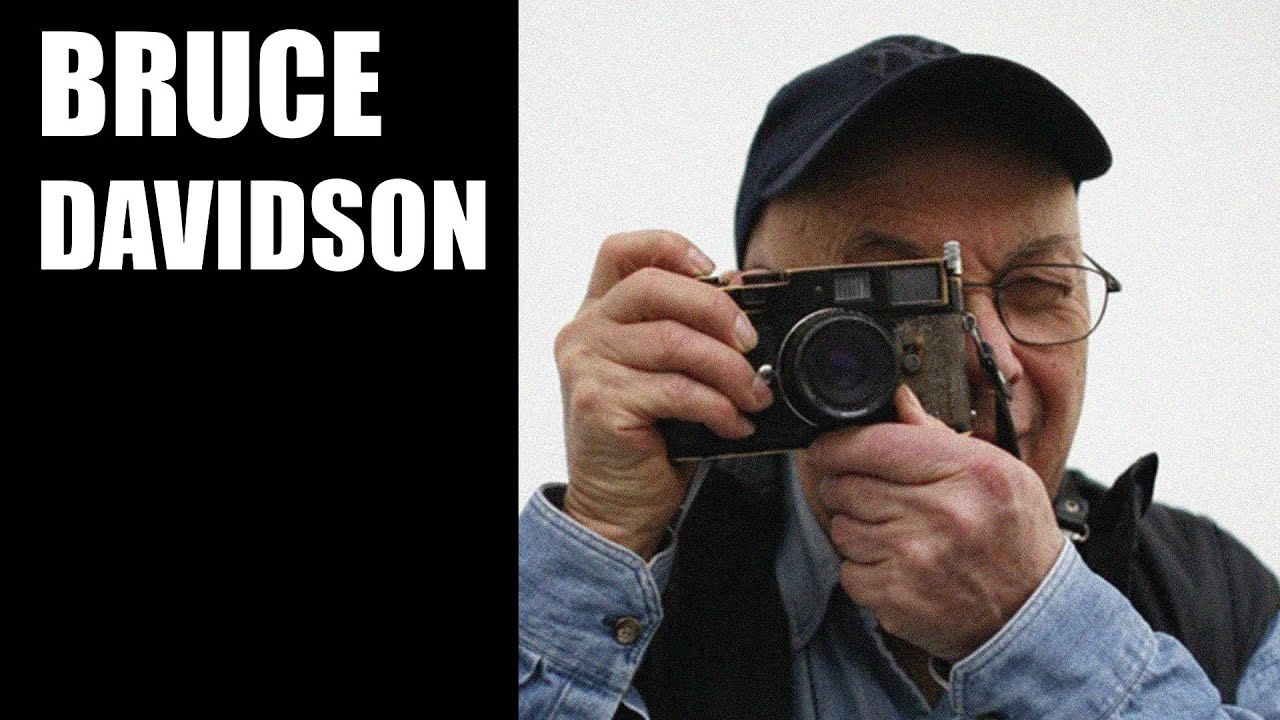
it in many ways there is a great responsibility to your subjects and to be aware of how the images might be used and to try to control that in some way but it's extremely difficult I like Davidson's work a lot he seems to work in as many photographers do in kind of series and as a project especially the East 100 Strait project was a very important one I started five in the morning sometimes the night before I stick then they get him in the enlarger so when I walk in here after having a strong cup
of expresso and necessarily coffee cake I'm ready to go and I go in here and I put from five to two and afternoon and that's it some days you're not in the mood you just can't print other days you you can work through things and sometimes I get excited if I can't wait to print this negative and I get it 4:30 surgeons start operating at 4:30 why can't I I read in a newspaper that there was a gang called the Joker's we had a big rumble in Prospect Park so I went down and looked him
up I took the subway to Brooklyn and then I took the head wounds you know and they had lawyers and I don't know what good the lawyers were going to do but they large so I took pictures of their wounds and that was my first encounter with him a Benji says me and the social worker were only people that paid any attention to them they were not only abandoned but the whole community was abandoned and their children really and they're depressed and they're deprived and they are withdrawn and they need to be seen that's what
became Universal about it at that time in 1979 New York was more or less in default and the subways weren't running they were unsafe and so I felt compelled to explore the subway I didn't know the subway very well it was early in the project and I didn't know where I was or somewhere in Brooklyn and I looked up and I saw this guy with this great scar I always carried the camera out and open but you clean a day time he looked at me so don't take my picture mister I'm going to break your
camera and I said oh I never photograph anyone without their permission let me show you my work and I crossed over a sat down room next to him and he looked at my little white album that I carried with my pictures samples of my work and he looked at the pictures carefully and he said you do good work you can take my picture so I crossed back to where I was and took his picture but those kind of things were happening to me all the time in the subway because I was making contact with people
I'm going to take a longer time exposure that's great I feel that my work has a cumulative effect that is the body of work that's the picture the same thing with Easter on the street because they have a cumulative effect body's a worker like cubistic paintings that you're trying to see the whole cycle and circle the double helix of the work I believe in that I believe in my work has a cumulative effect that if you want to see the work you have to see all of it so it's little fragments and fractals where one
image blends into another image and moves on it's kind of a a kind of chain reaction right now I'm interested in foliage I'm in my green period I'm in love with leaves I never thought it would happen trees I mean trees excite me I just finished a project where I photographed old trees and Paris they're like elephants they have an intelligence they know so much and I'm interested in what they see as opposed to what I see I find I'm working much simpler I feel happier going retro now going back to silence an equilibrium of
concentration and a focus that I might not have been able to do years ago I'm going to just burn in the corner of this a little bit and over here a little bit a little bit better when I make it a little larger and a different day this has some detailed right now a little bit gonna touch but I think this face is good if it's open the good friend they call him Big Foot his name was Ed Bragg he really knew the part is there all year round in the park different places from the
beginning of art of photography this has been always a subject there you know and the other human but the other person in the world with you trying to capture that person as vividly and truly as possible you