He is the only person whose baby picture was flown into space, and whose body has been preserved for decades after his death. He pushed his version of Communism so far, and for so long, that he was able to overthrow the government of the largest country in the world. To some, he is a hero, and to others, he is one of the most evil villains in history.
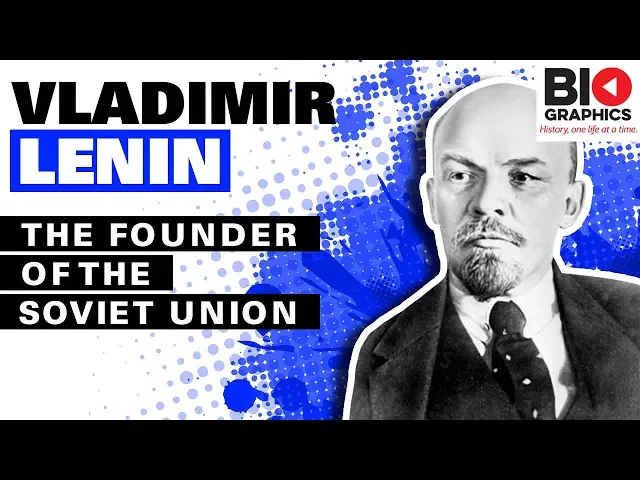
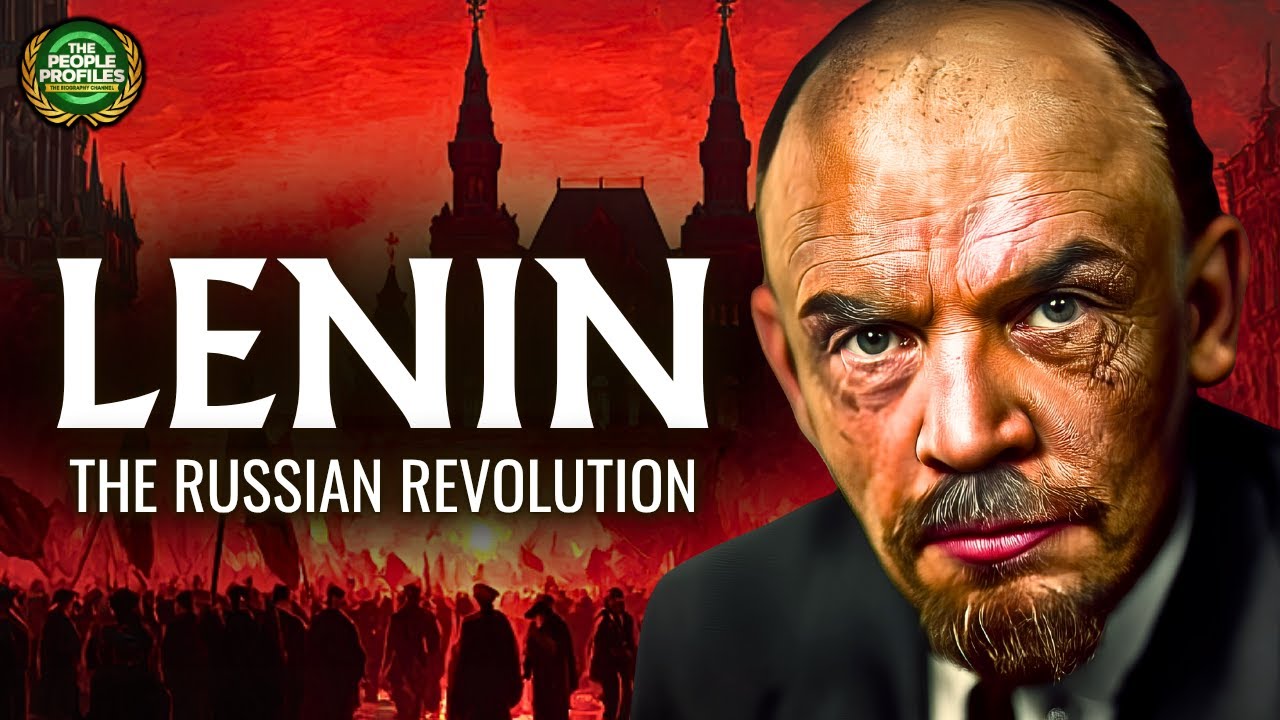
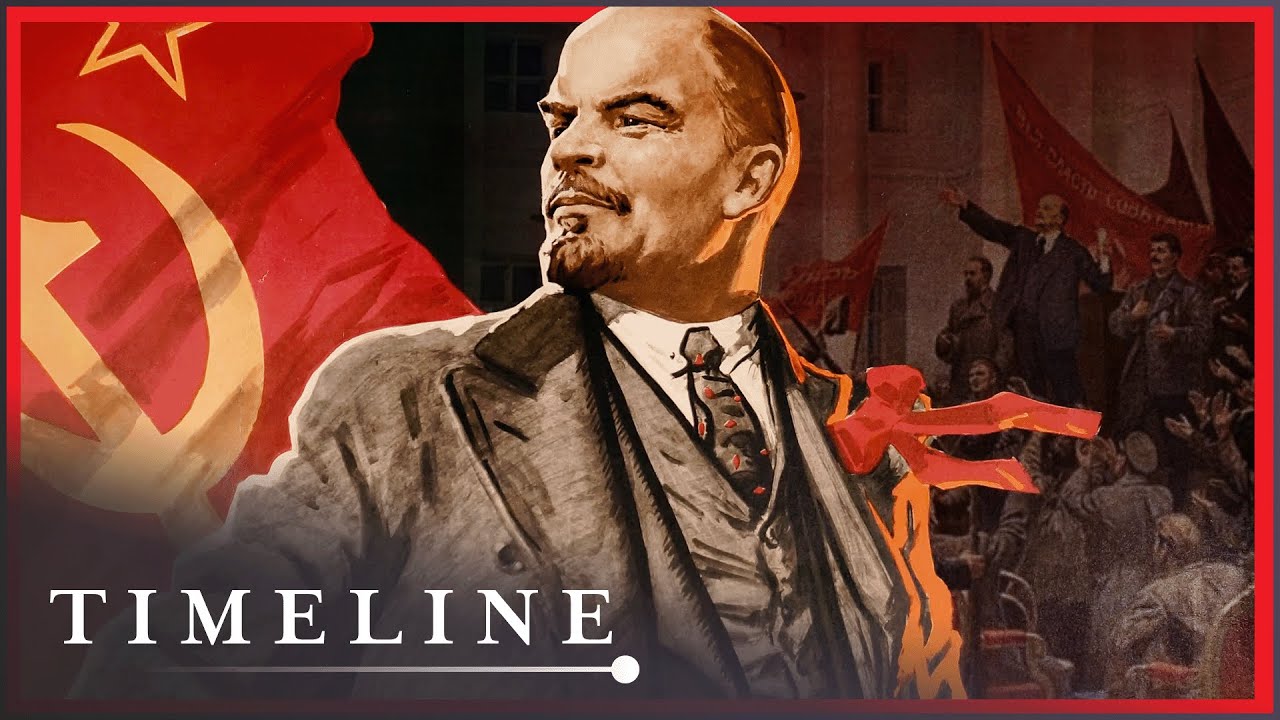
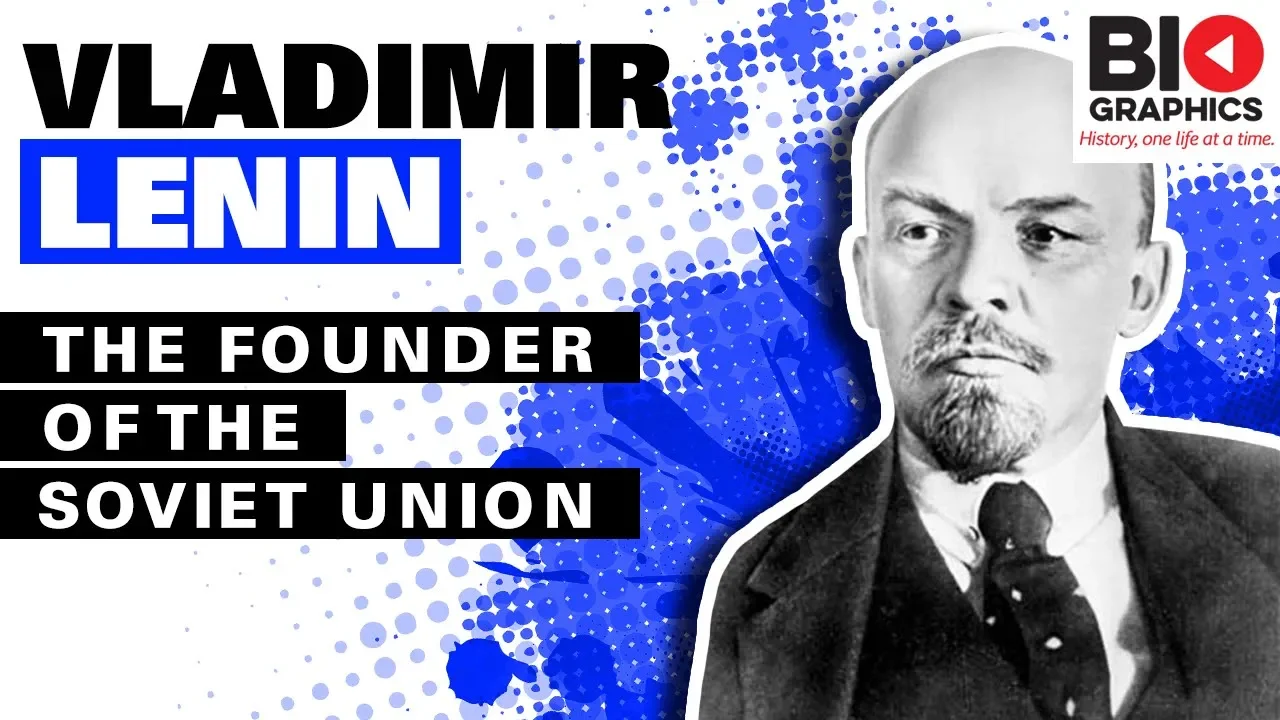
On Today’s Biographics, we are talking about Vladimir Lenin- The man behind the Bolshevik Revolution, and the founder of the Soviet Union. Early Life The year was 1870, and Vladimir Ilyich Ulyanov was born in a Russian provincial town called Simbirsk. He would eventually grow up to be most known by his alias, “Vladimir Lenin” later in life, and we will explain the origin of the name later.
Most revolutionaries have a tragic backstory of a young life of hardship, rising from the lower classes to demand better treatment for the downtrodden. And many people are taught that this is the case with Lenin, as well. They try to say that his parents were descended from serfs, and that he had to study hard to break into the middle class.
Buxt the truth was that Lenin’s parents were actually financially comfortable, and by all accounts, he had a happy childhood. His mother, Maria, was descended from a wealthy Jewish family who was Swiss-German, so she taught him French and German at home. His father, Ilya, was the Director of Public Schools for the entire province.
They were considered to be “hereditary nobility”, and they were far more educated than the average Russian. This placed his parents in a group called the “Intelligentsia”, who would debate over philosophy and politics in their spare time. Many of the members of the Intelligentsia became politicians who helped shape the new laws of the nation, while others devoted their life to pushing for a Russian revolution.
Vladimir and his older brother Alexander were no exception. His brother loved studying science in High School, but there were no opportunities to become a scientist in his small Russian village like Simbirsk. So Alexander moved to St.
Petersburg to attend university. During this time, he joined a political study group, and they began to discuss the failures of the Romanov empire, and they believed that the only way to save Russia would be to remove them from power. When he was 21 years old, Alexander joined a terrorist group who attempted to assassinate Tsar Nicholas II with a homemade bomb.
The terrorists were caught, and Alexander and his friends were hanged for their crime. Vladimir Lenin was 17 at the time that his brother died, and just about to graduate High School. Even though he had gone through such a shocking tragedy, he still managed to become the valedictorian of his graduating class.
He went to law school with the intention of becoming a lawyer. But just a few months into his first semester, he joined a demonstration of students who were protesting against the school rules. Since the Russian police were already watching Lenin closely to see if he was also a terrorist like his brother, the school saw his participation in the demonstrations as a sign that he might cause a lot of trouble.
So, he was expelled, and decided to educate himself, instead. The Sparks That Ignited a Revolution The Tsar, Nicholas II, released the peasant class from their serf status, meaning that they no longer had to be indentured servants to wealthy landowners. While this helped relieve the difficulties of a lot of people, it wasn’t a perfect solution to the problems that the peasant class was facing.
People were still in debt, and many struggled to make ends meet. The vast majority of people were illiterate, and Russia was decades behind in progress compared to the western world. Members of the Intelligentsia were very unhappy with the way things were going, and wanted their country to move forward with progress, just like the rest of the human race.
Lenin studied at law school, but he realized that with his bad nerves, and his family’s bad reputation from his brother being a terrorist would make it impossible for him to get a job as a lawyer. Vladimir Lenin began his self-education by reading Karl Marx and other revolutionary writers. He joined a Marxist study group, where intellectuals met and discussed philosophy, and the possibility of a Russian Revolution.
It was around this time that a major famine spread through the land near his home. Records of the 1891 famine vary drastically, with some stating there were 300,000 deaths, while others say it was closer to 5 million people dying of starvation. Lenin was fine, of course, since his family was well-off, and he had plenty of money to buy food.
He did nothing to offer aid to the people dying around him. He was actually happy about this, saying that the worse things got in Russia, the better it will become. He knew that people needed to start dying in the thousands before people angry enough to want a revolution.
Karl Marx wrote that he believed that an industrialized society would be most likely to create a revolution, because he believed they will want to rise against commercialism. Vladimir Lenin rewrote a lot of what Marx was actually saying. Lenin wrote the idea that the revolutionary Intelligentsia will guide the uneducated peasants.
Even though the philosophy was labeled as “Marxism” all throughout the reign of the Soviet Union, it is now called “Leninism”, because it really was his own personal ideas, not those of Karl Marx. Lenin joined a socialist group that gained access to a factory, where they started handing out fliers to factory workers. They were trying to make people angry about their work situations, and want to demand shorter hours and higher pay.
They were caught, though, because they accidently let a police informant join the group, and they were all arrested. At the time, any form of revolutionary activity was taken very seriously, and they all had to serve time in jail. He was 26 years old at the time he went to prison, but it was nothing like what we imagine a Russian prison to be.
Since he descended from a noble bloodline, he was given a very comfortable place to live, where he could wear whatever clothes he wanted, read books, and received daily visits from family and friends. He was even allowed to continue writing his revolutionary pamphlets and essays while he was behind bars. After 14 months in jail, he was exiled to Siberia for three years.
In a way, this was actually great for him, because he was given a government pension for his living expenses. He spent all of his time reading and writing about the revolution, which is what he wanted to do, anyway. So, for him, this time in Siberia was more like a very long writer’s retreat, and he was actually very productive during his time away.
His girlfriend was also arrested, and sent to Siberia, too. They got married, so that they could live there in exile together. While Vladimir Lenin was writing his revolutionary ideas in Siberia, he would send them back to his socialist friends, who would publish his essays in their secret newspaper.
He made up a variety of pen names, so that it seemed like multiple intellectuals were all pushing for the same revolution, but it was really just him. The pen name he eventually stuck with was “Vladimir Lenin”, which is what he is remembered as today. After being released from his time of exile, he was 30 years old.
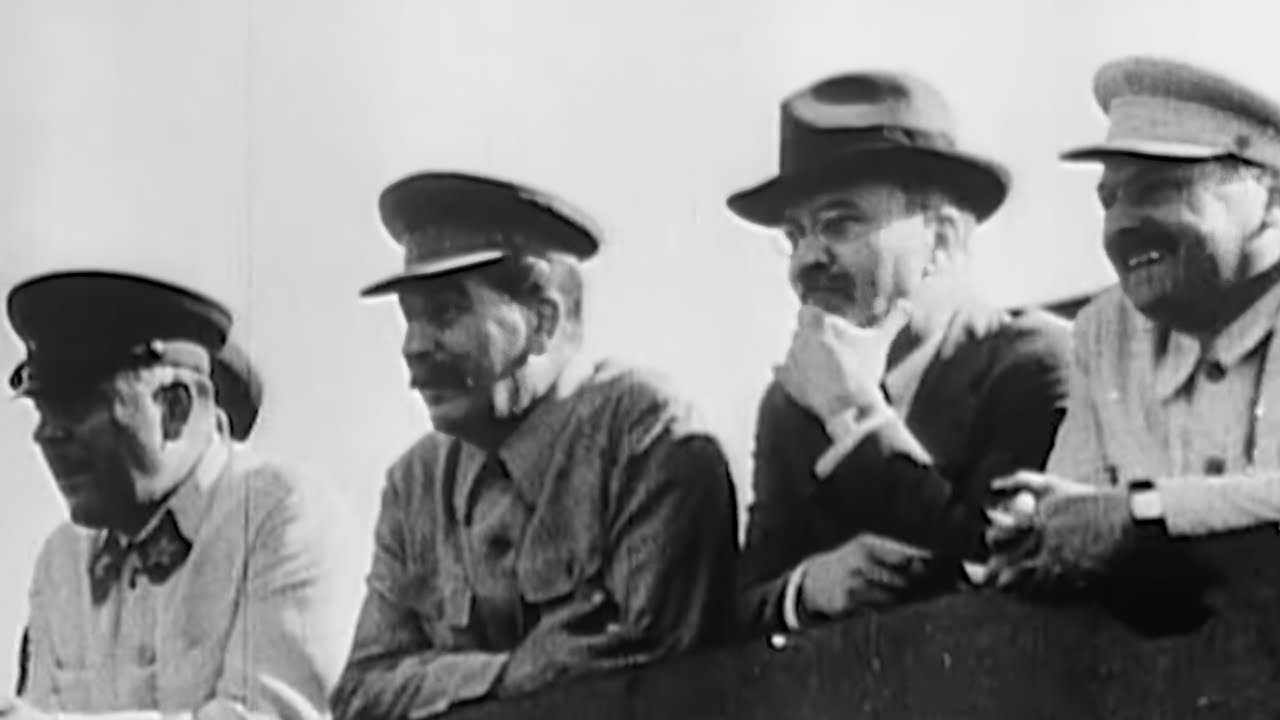
He and his wife moved to Munich, Germany, where they could print their revolutionary newspapers in Russian without getting in trouble with the German police. He would then have the papers smuggled into Russia, with the help of fellow revolutionaries who carried them in their luggage. One of these co-conspirators was a young man named Joseph Stalin, who was equally passionate about the coming revolution, and would eventually take Lenin’s place.
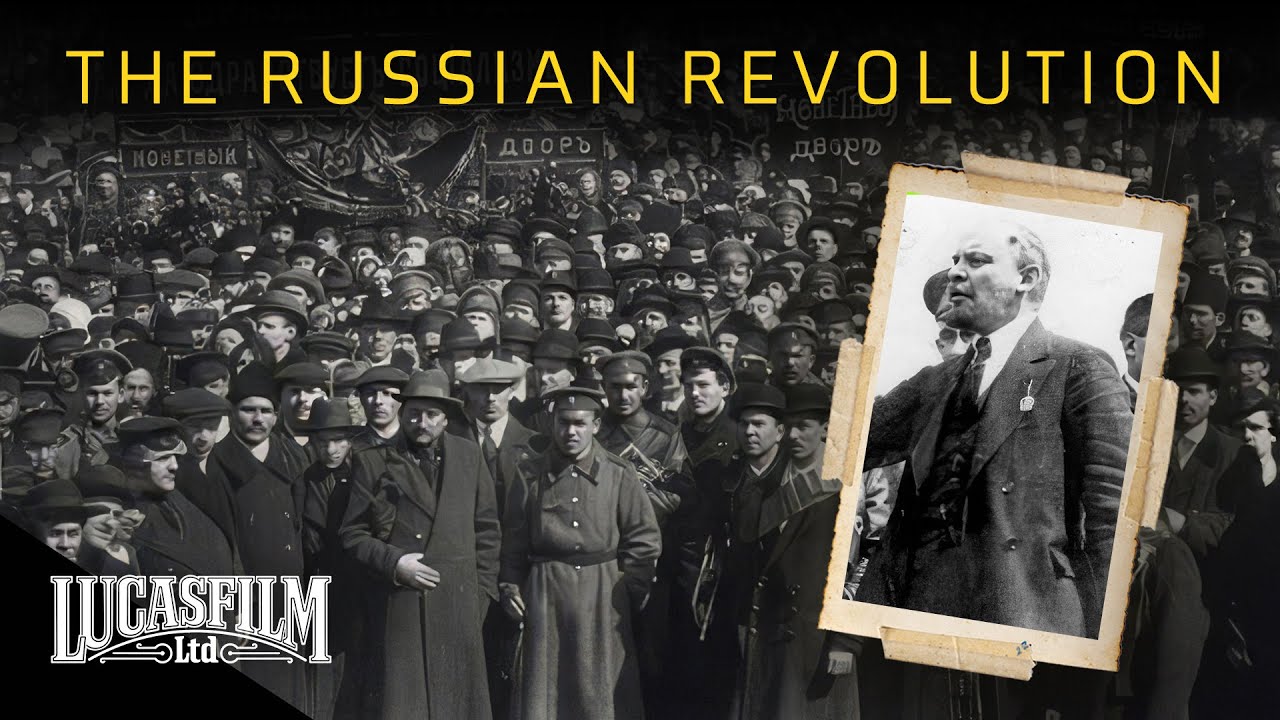
The Bolshevik Revolution In most tellings of the Russian Revolution, Vladimir Lenin’s rise to power always seems very straight-forward. He is always depicted as a well-respected intellectual who was able to rise to power almost immediately. But that’s very far from the truth.
His revolution was a very long process, but he never gave up trying to slither his way into a place of power. Vladimir Lenin had a real talent for stirring up trouble. Even amongst the Intelligentsia, he would call anyone who disagreed with him his “enemies”, and the sniveling “bourgeoise”.
Even though they were all middle-class socialists, he had absolutely no patience for anyone who did not agree with him 100%. During one of their meetings, to discuss their strategies about the revolution, he insulted some of the socialists so strongly, they got up and left. While they were gone, he declared that his ideals were the “Bolsheviks”, or the “Majority”, while everyone else was the “Menshevik” or “minority” party.
The name “Bolshevik” stuck from then on. In 1904, Lenin got a bit stressed out from all of this debating and discussing his philosophy and handing out pamphlets which made him ill, so took any entire year-long hiking holiday in the Swiss alps with his wife, but the Bolsheviks continued to do their own revolutionary work while he was gone. In 1905, there was a peaceful protest in St.
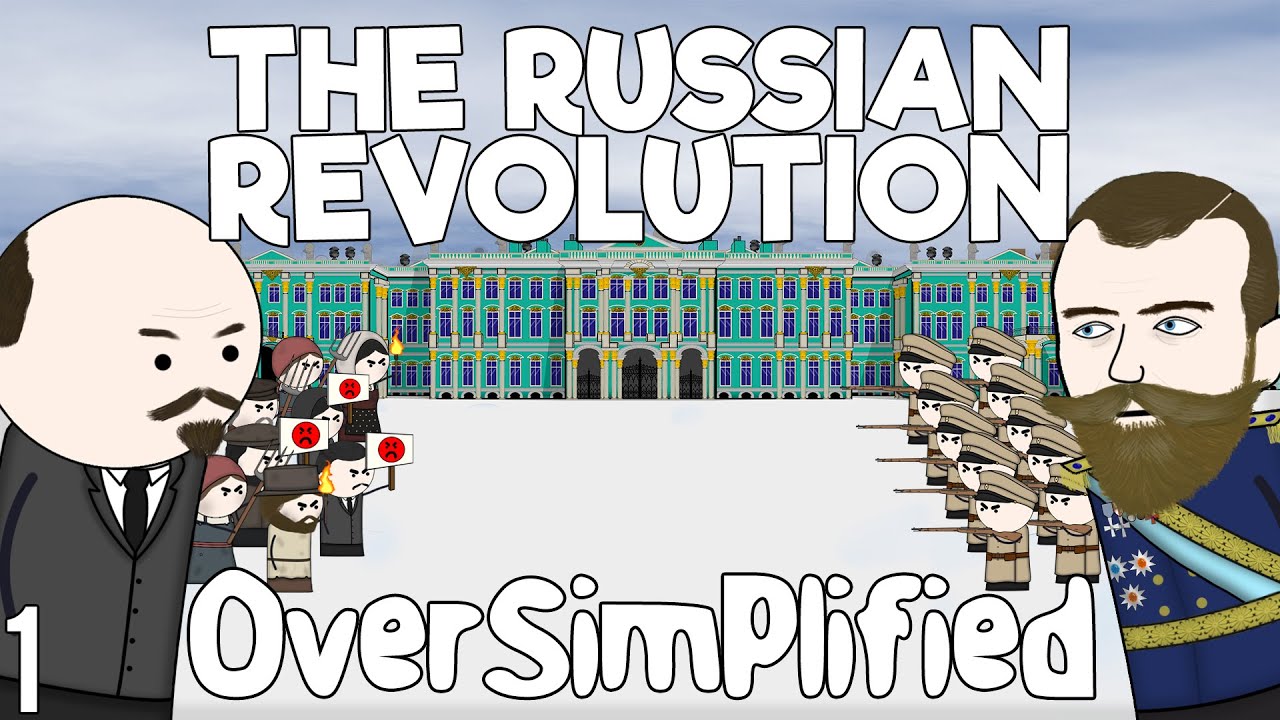
Petersburg in front of the winter palace. People held up signs pleading for better working conditions. All they wanted was an 8-hour work day.
They even sang “God Save the Tsar” to show their love and support for the royal family. But instead of listening to their request, Tsar Nicholas II ordered his guards to shoot at the crowd. Thousands of people died, and it became known as “Bloody Sunday”.
People were outraged, and began protesting for workers rights all across Russia. When Lenin heard the news, he abruptly ended his vacation in Switzerland and decided to come back to Russia. He finally had the opportunity he had been waiting for.
He began to preach to people that they needed to organize and take action against the Tsar. He got a little too excited about the idea of a bloody revolution, and wrote how they should pour hot acid on the royal guard, and got into specific details about how to murder someone. .
. which was something that no other revolutionary writer had done before. However, there were still not enough revolutionaries willing to fight and kill people on Lenin’s behalf.
Many of the Bolshevik revolutionaries were exiled to Siberia, and Lenin fled to Switzerland before he could be arrested, too. World War I put a pause on everyone’s revolutionary plans. Tsar Nicholas II left St.
Petersburg behind to join his men on the front lines. Nicholas left his wife, Alexandra, in the care of their spiritual advisor, Grigori Rasputin. This man believed that he was the second coming of Christ, and he believed that he had magic healing powers given to him by God.
Many of the decisions Rasputin made were harshly criticized, like putting his unqualified friends in powerful positions. Lenin still continued to write about his revolutionary ideas from Switzerland, and encouraged soldiers to turn their guns against their officers during the war. But almost no one was actually reading the underground newspapers, except for the handful of active Bolsheviks.
The vast majority of the Russian people were eager to defend their country, but the war was truly a disaster. Millions of people died, inflation ruined Russia’s economy, and women were standing in long bread lines. Tsar Nicholas II renamed St.
Petersburg to “Petrograd”, as a symbol of his devotion to the Russian people. For years, people had criticized the name “St. Petersburg” because it sounded too German, and “Petrograd” was much more Russian.
Tsar Nicholas believed that this would somehow prove his loyalty, but that gesture wasn’t enough. For the first time, thousands of Russian people were trained in the military and knew how to use guns. Soldiers and police officers were just as angry as the rest, and people were swarming the palace to take over the Tsar all on their own….
And Lenin had nothing to do with it. He wasn’t even there. He was still in Switzerland, and he was panicking, because the revolution was starting without him.
The political parties were split into two groups- the provisional government, which was made up of the representatives called the Duma, and the Worker’s Soviets, who were controlled by the trade unions and made up of the peasants, soldiers, and factory workers. Lenin knew that he was no match for the provisional government’s leader, Alexander Kerensky. He was a seasoned lawyer, and a master of public speaking.
Kerensky resonated with the Duma, and since Lenin was not actually a lawyer, he knew he would lose in a political debate against him. So he focused his efforts on trying to manipulate the lesser educated Worker’s Soviets, instead. When he arrived at the train station, Lenin’s friends were there to greet him, and he hardly said “hello” before standing up on a pedestal to shout at the crowd that they had done an awful job with the revolution, and that it wasn’t going to be over until they took down the provisional government.
Almost no one actually agreed with him, and went about their business. Even his fellow Bolsheviks no longer wanted to print his essays, because it was such an unpopular opinion. The provisional government was leading Russia back to war against Germany, and World War I was still going on.
But soldiers were not happy to serve. It was the reason why they had overthrown the Tsar in the first place. People wanted the war to be over.
Many of them abandoned their posts on the battlefield, or completely refused to go in the first place. Lenin tried to stand up again and lead the crowds of peasants, but someone from the provisional government shouted that he was a German spy. This made the crowd turn against him, and he had to run away.
Alexander Kerensky could see that he was going to cause a lot of trouble for the authority of the provisional government, so he outlawed the existence of the Bolshevik party. Lenin needed to escape. He put on a bad wig, shaved his beard, and got on the next train to Finland.
Vladimir Lenin spent a very long time hiding on a Finnish farm, continuing to write his ideas and send them back to Russia. Since no one was actually listening to him or agreeing with his ideas, he decided to take it by force. One night in October of 1917, he snuck back into Russia, and met up with his commerads in Petrograd.
By this time, he had convinced more members of the Worker’s Party to join his side. He convinced his Bolshevik followers of the Red Guard to break into the Winter Palace for a coup-d’etat. They captured the members of the provisional government at gunpoint.
The Duma were arrested, taken to jail, and Vladimir Lenin became the new leader of Russia without ever being voted in. Lenin’s Violent Reign Vladimir Lenin addressed the crowd of Russian peasants the morning after storming the winter palace, and introduced himself as their new dictator, and the leader of The Soviet Union. Lenin promised them exactly what they wanted, in the simplest words possible; “peace, bread, and land.
” One of his first acts as leader was to end the war with Germany. People were happy, because that’s exactly what they wanted all along. Right from the beginning, he isolated himself at the Kremlin in Moscow, so that he could continue writing.
The Bolshevik party wasted no time spreading propaganda that Vladimir Lenin was like a kind old grandfather who only wanted the best for the Russian people, and that they didn’t have to worry anymore, because he was there to take care of them. In reality, he was bloodthirsty, and wanted his revolution to be as violent as possible. He told tenants to kill their landlords, and encouraged violence against the upper classes.
He gave out the order to his Red Guard to remove the Romanov royal family from their palace. At that time, the number of men who joined in Lenin’s Red Guard had grown to 200,000, and he had a small army to stand behind him. Many of the Russian people protested, because they loved the Romanovs, especially the young children.
At first, Lenin lied, saying that they would be kept somewhere safe. But once he realized that they were too much of a threat to his power, he ordered their execution. Since the family was being held in Siberia, it took a very long time for the public to learn about their deaths.
At first, people believed it was just Tsar Nicholas who was killed, and that the women and children were spared, it would take years for the public to learn the truth of his brutality. Lenin began implementing his communist government. He proclaimed that every Russian citizen should have good rations, but in order to do that, the farms needed to be controlled by the government.
Farmers were not allowed to keep or sell the food they grew, and all of the crops were spread out among the entire nation. People could no longer choose their jobs, and were given employment in newly constructed factories based on the needs of the country. Some people were very happy about this, and it gave them a sense of security.
Statues and paintings of him were erected around Petrograd, and many called him a hero. Not everyone was drinking Lenin’s kool-aid, of course. Plenty of people were furious with him for ordering the death of innocent Romanov children.
In 1918, a woman named Fanya Kaplan attempted to assassinate Vladimir Lenin. She shot him twice at close range. He was seriously injured, but he still managed to survive.
Kaplan was arrested, and she refused to give up the name of any of her co-conspirators. She was executed in September of that same year. Lenin would recover from his injuries in the hospital, but from that day forward, he showed no mercy to anyone who expressed even the smallest opinion opposing his rule.
Even though he always encouraged the peasant class to stand up for their rights and rebel against their government, it was no longer okay to do so once it was his government. Any time peasants or farmers tried to protest against his new rules, they were killed without mercy. Those who opposed Lenin didn’t go down without a fight, though.
In 1918, a group called The White Army battled against the Red Army in a civil war, fighting to take down the Soviet Union. However, the White Army was not organized very well, and they lost the war. In 1920, farmers were angry that their grain was being stolen from them for the “greater good” of the Communist nation.
This began what is known as the Tambov Rebellion, but they were all gassed by the Red Army, and their crops were taken away from their dead hands. At least 50,000 people were interned, mostly women, children, and the elderly - some of them sent to the camps as hostages. There were several other incidents like this, and any rebellion among the Russian people was quickly squashed.
Even after trying to make his political philosophy work through threats of death and destruction, Lenin knew when to call it quits. When millions of people were on the brink of dying from drought and famine, he decided to temporarily stop communism, and allowed farmers to keep the food they planted, and sell the excess food for profit…. Y’know, a little thing called Capitalism.
This was a huge success. People were no longer starving, and the economy improved. Once things had stabilized again, Lenin went back to forcing food rations.
Unfortunately, not every leader who followed in Lenin’s footsteps knew to take a break from communism during times of famine. And Lenin’s successor, Joseph Stalin, would be remembered as one of the worst dictators who ever lived. Death and Legacy When he was 54, Vladimir Lenin’s health began to decline, and he had multiple strokes.
But even when he was in poor health, he was trying to write in a journal to give commands from his bed. When he died in 1924, people were shocked, and they were not expecting him to die so young. Hundreds of thousands of people showed up to his funeral, even though it was well below freezing temperatures.
People were sobbing, upset that the one man who truly cared about them was now gone. He did manage to make some improvement in the economy, and there was so much pro-Lenin propaganda that had been circulated, that people believed that he was truly their savior. Five days after Lenin passed away, the city of Petrograd was renamed “Leningrad” in his honor.
His body was embalmed so that people could continue to visit him and pay their respects. Vladimir Lenin’s reputation only became more powerful after his death than when he was alive. He was like a legend who managed to change not just Russia, but several other countries throughout the world.
Communist leaders looked to him for inspiration to run their own dictatorships. The USSR continued for decades after his death, and despite all of its setbacks, the system lead to more progress than Russia had seen in hundreds of years. Before Lenin, the country was very far behind the rest of the western world in terms of industrialization, education, and modernization.
If it were not for all of the reforms made by the Soviet Union, they may have never gotten so far with the Space Race against the United States, and they still may be lagging behind today. In 1991, the Soviet Union collapsed, and all of the statues of Lenin were torn down. Instead of seeing him as a hero, he is now remembered as a villain.
Leningrad became St. Petersburg once again. There is no telling how far the nation would have progressed if it were not for the creation Soviet Union, but one thing is for sure- Without Vladimir Lenin, the world would be a very different place today.