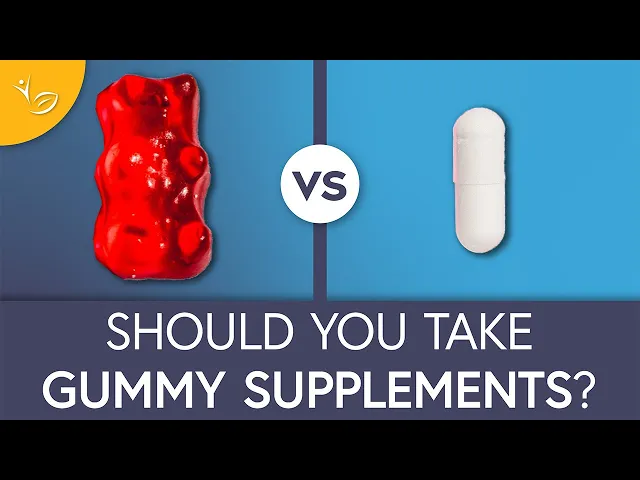
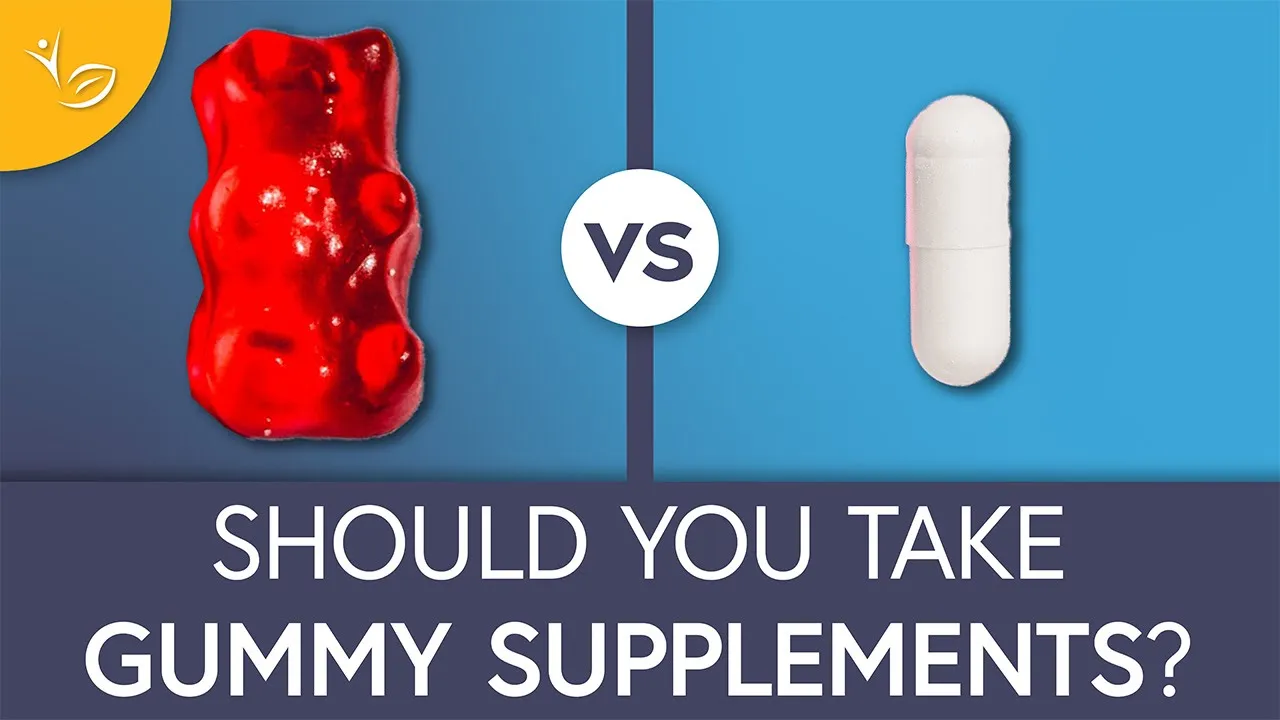
The idea of keto gummies is kind of silly to begin with, since keto requires you to avoid carbohydrates, and by eating keto gummies, you’re doing the exact opposite of keto by essentially eating gummy candy, which is eating carbohydrates in the form of sugar. If you’re taking a gummy supplement for weight loss, whatever small amount of benefit you may be getting from the ingredients are completely canceled out by the sugar and empty calories you’re taking with it. So right off the bat, it already seems completely counterproductive to take a gummy supplement for keto or weight loss.
Now you might ask, could you make the ingredients in the gummy so beneficial that it actually benefits keto or weight loss overall? Realistically, the answer is not likely. And to understand why, you need to understand the main issue that all keto and vitamin gummies have in common.
The issue is in manufacturing. Supplements can be delivered in a number of different formats. For example, you have capsules that contain dry powder, you have tablets that are just the dry powder compressed into a pill, and you have gelcaps that contain some liquid.
These different delivery methods have upsides and downsides to each, and some ingredients are better delivered by different means. For example, gelcaps already have the ingredient dissolved into a liquid, and this tends to allow for faster delivery of the supplement since the body can absorb the liquid quicker. But at the same time, if the ingredient itself is too high or too low in pH when dissolved in the liquid, the gelcap can break down, and containing it via gelcap won’t be possible.
And then you have gummies. There are no real technical upsides to delivering supplements via gummy format, other than the fact that it tends to taste better. In fact, there are many challenges to putting supplements into gummy format that generally make gummies a bad way to deliver supplements.
The creation of the gummy portion of a gummy supplement requires quite a bit of processing. To create the gumminess, an ingredient like pectin or gelatin needs to be melted, poured into molds, and allowed to harden into a gummy. This process requires very specific levels of heat and acidity.
If you don’t have enough heat, the gummy won’t dissolve properly. If you don’t have the right acidity, the gummy won't harden properly. The problem is that a lot of vitamins and nutrients are highly heat and pH sensitive, meaning that if you’re adding these nutrients into the gummy, and exposing them to too much heat or acidity during the creation of the gummy, it can cause these vitamins to degrade or even destroy them, reducing the effectiveness of the gummy supplements.
One of the quick and dirty methods used by manufacturers to deal with these issues, is by simply spraying vitamins and other active ingredients onto the surface of the gummy candies. However, there are also problems with this method. One being that it can lead to uneven distribution of the active ingredients on the gummies.
Active ingredients will rub off onto the bottle and other gummies. Some gummies may have more active ingredients than others, which can affect their effectiveness and cause large variations in dosage from gummy to gummy. Another is that, because the active ingredients are completely exposed to air, they’re less stable than they would be if they were incorporated into the gummy formula during the manufacturing process.
This can lead to the active ingredients oxidizing easily, and breaking down or degrading quickly over time, again reducing the effectiveness of the gummy supplements. Some gummy supplement manufacturers try to combat this by adding what we call an overage. An overage is an extra amount of a vitamin or nutrient added to a supplement, so that if some of the vitamin or nutrient breaks down, there is still enough in there to meet the labeled amount.
Because the ingredients in gummy supplements are much more prone to degradation, manufacturers have to add much larger overages than normal supplements. Now this leads to problems with overdosing, as degradation is hard to predict. Additionally, large overages run into other challenges.
Gummies are meant to be tasted. Supplements in pill and capsule forms are simply swallowed, so manufacturers don’t really need to worry about how they taste. But this is not the case with gummies.
And unfortunately, not every vitamin and nutrient tastes good. Many of them taste terrible, and it’s hard to mask the taste, especially if large overages have been sprayed directly on the surface or mixed into the batch. Now you have to decrease the dose again so you won’t be able to taste nutrients.
So when gummy supplements are manufactured you’ve got two competing factors: either you manufacture it so it optimizes the taste, shape, and form of the gummy, or you try to retain the vitamins and nutrients. Manufacturers are going to prioritize the taste and form of the gummy, since this is what the consumer sees and tastes. Consumers aren’t going to be able to detect how accurate the actual doses of active ingredients are.
So what you get is essentially just a gummy candy. The nutrients are more of an afterthought, to allow them to market it as a health food. But these gummy supplements are not, and should not, be considered a health food.
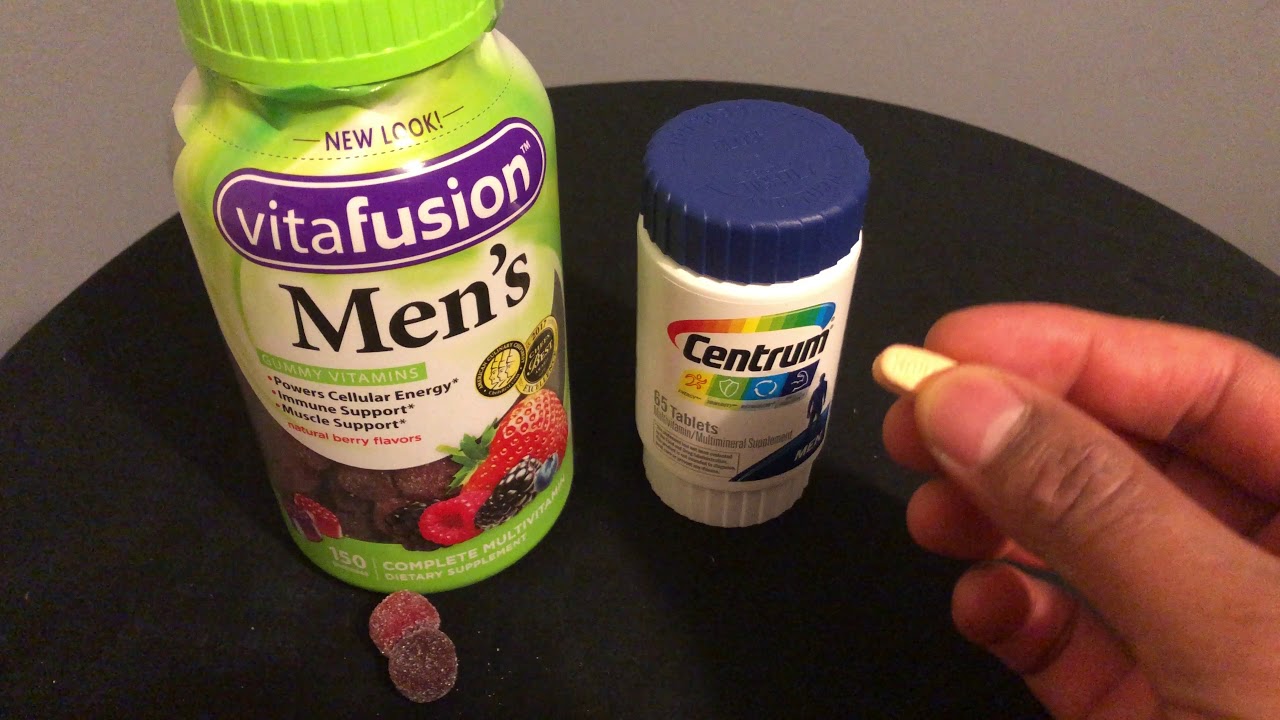
It’s because of all these limitations, that gummy supplements have practical upper limits to how much they can contain. For example, you’ll find it difficult to find a gummy with more than 125 mg of Vitamin C per gummy, compared to tablets that you can easily find that contain almost 10 times as much. Compared to regular supplements, gummies typically contain less active ingredients, have a poorer active ingredient stability and shelf life, and have a less equal distribution of the active ingredients over each gummy, leading to unpredictability in dosing.
It literally makes no sense to take gummies over pills. However, gummy supplements have become increasingly popular in the past few years, as a new way to take supplements. Some people point to what they call “pill fatigue”, in which people taking supplements are tired of taking so many pills, and seek alternative methods of delivery.
Pills are boring and overused. Gummies are tasty, and provide at least some partial benefits of a pill. Fair enough, however it may be worth exploring whether the issue lies not in the need for more new and novel supplement delivery methods, like gummies, to take all your supplements in, but rather in the fact that you might just be taking way too many supplements.
Supplements are meant to supplement a healthy weight loss diet, not replace it, and if you find yourself taking handfuls of supplements to correct any perceived nutritional deficiencies or to support your weight loss, maybe you need to take a step back, and focus on your diet and lifestyle instead, rather than looking for more supplements to take. Hi, I’m Dr Brian Yeung. Do you think gummy supplements are helpful?
Let me know in the comments down below, and if you found this video helpful, please subscribe to the channel and leave me a like! Hit the notification bell if you want to stay up to date, and share this video with someone you know can use the info.