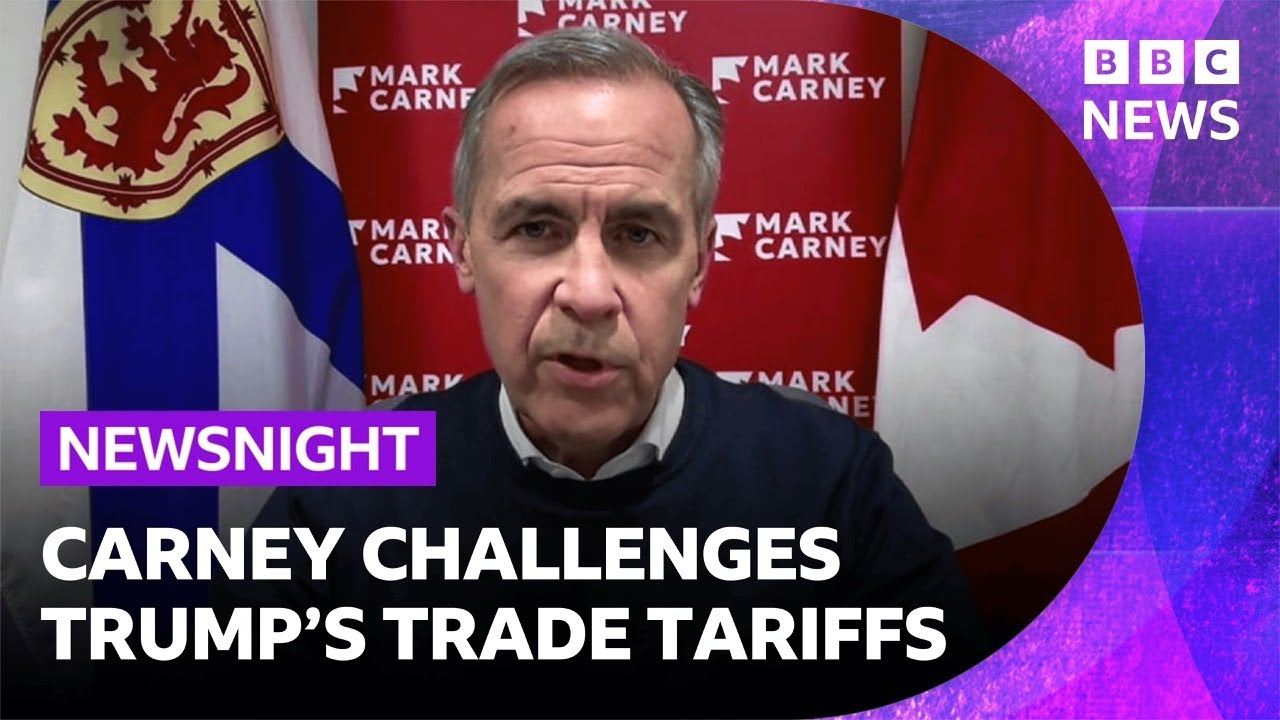
for many years the United States and the European Union were the symbols of the transatlantic Alliance common defense policies NATO cooperation trade agreements they formed the backbone of the western block however the events of recent years especially the disputes over tariffs have seriously shaken this seemingly solid framework including the imposition of tariffs on All Imports from America's biggest trading partners promises on the campaign Trail which was to end inflation to lower prices you are now proposing tariffs against the United States I had a lot of tariffs on a lot of different compan countries that Trump
have just emerged from Washington because Donald Trump has said he would impose a 25% tariff the tariffs imposed by the United States with an America First approach have provoked a huge reaction on the European Union front Brussels decided to retaliate and raised its tax wall against American Products Washington on the other hand is sending a message to it own public opinion that we had to because of unfair competition from Europe the mutual accusations have deepened to the point of raising the question is this the end of the Western Alliance so much so that the spirit
of partnership and solidarity between the two sides is increasingly being overshadowed is there really a risk of a permanent rupture in such a deep rooted relationship the wave of protectionism that Peak with the Trump Administration has Unleashed longb built resentment in the European Union the United States Administration has imposed tariffs on a wide range of products from steel and aluminum to automotive and agricultural products while the rationale is often National Security the European Union calls it political manipulation and economic bullying the United States on the other hand claims that it has been running a trade
deficit with Europe for years and that the European Union is disadvantaging American companies with non-tariff bar barers the European commission fed up with the back and forth decided to if that's the way it is then that's the way it is and impose additional tariffs on American Goods the move which Washington did not expect was headlined United States shocked by European Union decision after Trump's tariff pressure this was because it was generally expected that Europe would not retaliate in such a strong way the term trade war is not only used for the tensions between the United
States and China this showdown between Europe and the United States is also destabilizing the global economy these two giants who once set the rules of World Trade together and emphasize the importance of free markets and competition are now acting with mutual tariffs and barriers the first question is is it really economic or political calculations behind this for populist politicians protectionism looks like protecting the domestic economy in the eyes of Voters but in the long run it can create a spiral where every everyone loses United States manufacturers lose export potential when they face retaliation from Europe
and European Union companies struggle in the American market so how realistic is the question the end of the Western Alliance there are still common defense mechanisms like the North Atlantic Treaty Organization and a block that acts together on many military and diplomatic issues but as trade Wars deepen Mutual trust is being shaken if the political environment becomes tense cooperation on defense polic may also become more difficult why is our Ally the United States treating us like this the European press asks while the American Media may make populist statements such as Europe has been exploiting us
for too long the transatlantic bond is thus fraying under the pressure of domestic politics it is also difficult to distinguish who is right as agreements that seemed balanced at the bargaining table for decades are now rejected by one side as unfair the European Union's retali steps include High tariffs on everything from American agricultural products to motorcycles famous Brands and steel products these products were chosen to coincide with the political base associated with intensive production in some United States states in other words the logic is let's respond to your tariffs on our Industries but at the
same time put pressure on your domestic politics in this way the European Union hopes to extract concessions from Washington a section of the United United States public is upset this is a weapon that should be used against China why are we fighting with the European Union on the other hand Trump aligned economists argue that we are taking these steps because we have been facing unfair competition from Europe for so long that eventually the European Union will have to come to the table and offer us better terms so far however the search for a compromise has
not yielded results across sectors the automotive issue is particularly tense countries like Germany and France were shocked by the threat of additional United States tariffs on their cars the German automotive Giants are very strong in the United States market and have already opened factories in the United States such a tariff could be devastating for everyone yet the political climate is so heated that no one can say let's give up as a matter of logic similarly in the steel and aluminum sectors reciprocal tariffs have raised prices increased production costs and hurt consumers the European commission comments
on these developments as protectionism will collapse the trading system as it spreads around the world the United States on the other hand maintains that if we don't protect ourselves we will go out of business this is undermining the idea of common values and economic Unity that underpins the Western Alliance at North Atlantic Treaty Organization Summits for example American and European leaders act together on issues such as defense spending the Russian threat and Middle East Affairs but on economic issues they are now positioning themselves as Rivals diplomatic circles are raising the question at this rate could
North Atlantic Treaty organization's political Spirit also suffer because an alliance is not just about tanks artillery and joint exercises but also about Mutual trust harmonious policies and sympathy between peoples if Farmers industrialists and and even consumers suffer because of tariffs the complaint is why are we at war with a country we call an ally this feeds the perception of mistrust and makes it harder for politicians to find compromises the United States's use of the National Security argument when imposing tariffs is another factor that angered the European Union how can you call your ally a national
security threat that's an insult Europe says but the United States Administration has long argued that outsourc ing Iron and Steel weakens our defense industry we must protect our strategic stockpiles the European Union argues that this approach is also contrary to World Trade Organization rules because it is an abuse to use the guise of national security for the sake of trade protection the debate thus shifts to international law unfortunately the World Trade Organization is ineffective in such cases of protectionism because the United States does not pay much attention to World Trade Organization decisions and the European
Union cannot find a complete solution so what is the future of the Western Alliance if this conceptual rupture continues and retaliation continues to escalate in some scenarios the European Union could develop an independent defense policy and economic strategy to fend for itself this would weaken United States Global Leadership the idea of strategic autonomy is already on the rise within the European Union it is debatable whether this would also make the future of North Atlantic Treaty Organization uncertain because Europe's defense power is still highly dependent on the United States but economically the European Union Giants rival
the United States to some extent if the spirit of Alliance is completely lost the United States and Europe could pursue different global missions this could play into the hands of actors like Russia and China Beijing could easily continue to grow while the Western World melts in its internal strife some experts say likewise Russia could gain from transatlantic fragmentation many Russian strategists hope the rift within North Atlantic Treaty Organization will widen the imposition of tariffs by the United States on the European Union could lead countries like Germany and France to question whether Washington is a reliable
partner likewise European companies which have suffered huge losses in areas such as Automotive May Lobby their governments to rethink relations with the United States seeing this American business circles May criticize the administration saying why are we losing our allies ultimately domestic political factors are decisive the Trump Administration as well as the Biden era can maintain similar protectionist reflexes we are creating job opportunities for you and reducing foreign competition everyone tells the domestic public during the elections but these approaches can damage common interests for many years Defenders of the Western Alliance reminded us that transatlantic relations
were based not only on trade figures but also on shared values human rights and the ideal of spreading democracy now that tariffs and retaliation are at the top of the agenda these ideals are being pushed to the background the headline United States was shocked by the European Union's decision after Trump's tariff Crackdown is not an overnight occurrence but an explosion of accumulated anger the European Union is trying to take the stance that we will no longer submit to unilateral positions Washington is saying cooperate with us or pay a heavy price it is not yet clear
where such Mutual acrimony will lead maybe a compromise will be found maybe the trade Wars will continue to escalate even after the Cold War the Western Alliance survived many crises Bosnia the Iraq War even the Deep divisions in 203 but even then there was never so much friction over trade Europe and the United States generally grew by supporting free trade now we Face a climate of rising protectionism and nationalist economic policies this climate May set us on a course to leave behind the era of European union-united States domination of the global order some see this
process as the West shooting itself in the foot but competitors like China can capitalize on this vacuum by expanding their own production and trade networks so what is the way out in fact options such as negotiations involving both sides High dash level agreements like the Customs Union and reforms within the framework of the World Trade Organization are always mentioned but when politics is fueled by populism instead of negotiations it can turn into continuing the fight meanwhile companies consumers and economies suffer in the medium term prudent politicians in the European Union and the United States may
decide that without compromise the losses will grow and turn to a new diplomatic move because the transatlantic economies still account for the bulk of world gross domestic product like Waring Brothers if this tension continues not only China and the others will be in turmoil but also the world economy it is a conflict of such magnitude that it could trigger a major economic recession as a result the statement the United States was shocked by the European Union's decision after Trump's tariff Crackdown sums up a period in which both sides are shouting at each other the European
Union's retaliation was met with unexpected harshness in Washington it sparked a debate about the end of the Western Alliance but to say that the political and Military dimensions of this Alliance will not collapse completely because of trade tensions is not to underestimate the seriousness of these disagreements if the parties do not find a compromise in the short term the already fractured ground of common values and interests could weaken even further in the shadow of the United states- European Union conflict the world could see even more sharpening blocks perhaps in order to get through this period
and return to the spirit of Alliance leaders would have to sacrifice domestic politics but at the moment politicians are prone to populism this closes the door to cooperation in short while the Western block is still not completely broken the concepts of friend and Ally have been battered by this trade dispute even if the European Union and the United States share a common stance on geopolitical issues the trade dispute is undermining the trust experts are in favor of saying that in time rational reason will prevail and the parties will come to an agreement but populist waves
make this less likely if concerns grow further the question of the end of the Western Alliance could turn from rhetorical to a real possibility let's hope that the Clash of economic interests does not destroy security and political solidarity altogether for now though transatlantic relations are more uncertain and fragile than ever before