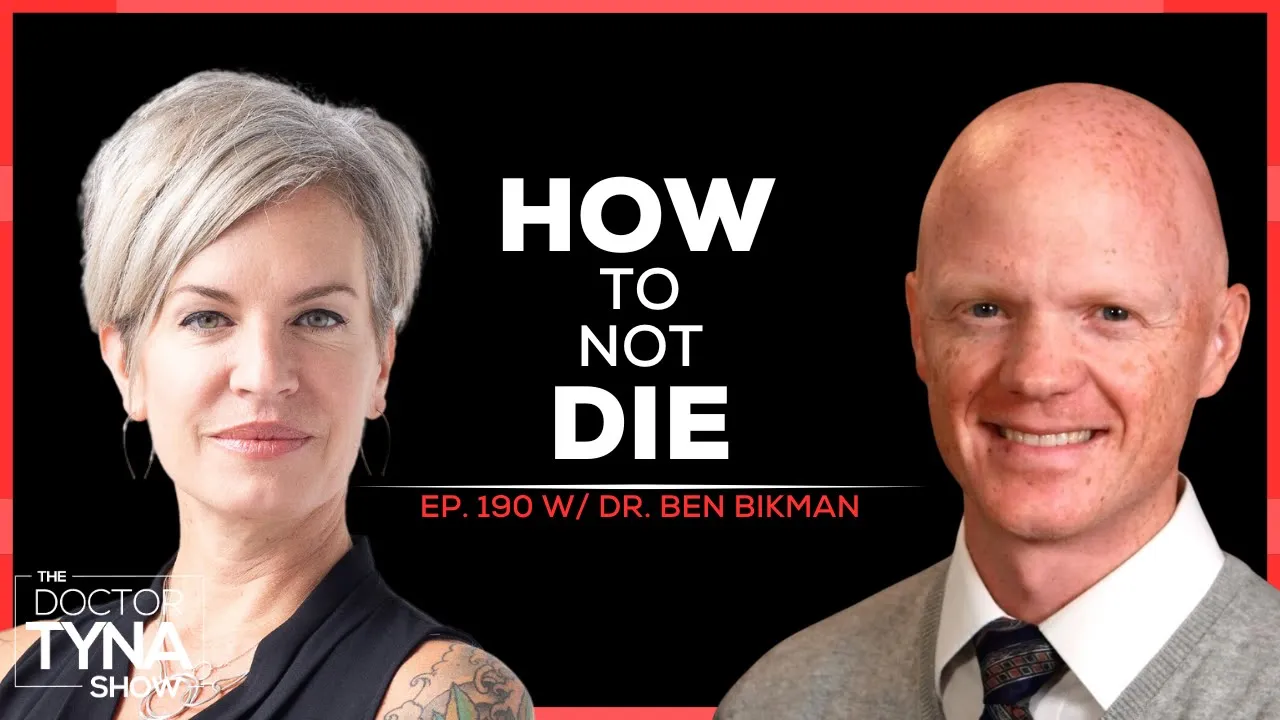
People don't crave fat they don't crave protein there's zero evidence in humans to support that they crave carbs and so that's what these medications can help with you are tuned into the Dr Tina show with Dr Tina Moore for more visit Dr tina.com on this episode of the Dr Tina show I am so excited I got to have Dr Ben bman join us for this episode and I could not be happier Dr bman is an expert in metabolic health and in Resistance he wrote the book why we get sick wonderful read if you haven't read
it yet he's a professor at BYU and the man knows a and we I missed him I missed my opportunity to have him on the show months ago when my Instagram got taken down and I was so heartbroken so we finally got him on and we had the most spectacular conversation I know you're going to love it we even talked about gp1s and I think I maybe taught him a few things that he's going to look Into in his research at BYU so stay tuned anyway without further Ado let's jump in Dr Ben bman I
am so excited to have you on the Dr Tina show I have tried and tried and I messed up with our last appointment and we didn't get to have our our interview so thank you so much for making the time today to be here oh my pleasure yeah I'm glad you finally got done standing me up it's time we got together I know I know like to my Defense I was deplatformed from Instagram that week so I was having some drama yeah there was like you know the cortisol face you see on the internet people
are like that's not real and I there's videos of me from that week I'm like there's there's your cortisol face I'm round as round could be from from stress so uh you are just a legend in my book and I love everything that you say and you really tease out the Nuance of things and you're not ever painted one Way or the other you're just a really good professor so let's start with that you're a professor where do you teach what's your background on that yeah yeah right yes so I do love being a professor
I'm in the cell biology department and I have been at BYU briam university up tucked up in the Rockies of Provo Utah for almost 15 years and I do love being a professor and in particular I like being a professor at a private religious University not for the reasons people Would think yes I'm religious but I actually like being at a private religious University because I can just teach science I don't have to worry about the infusion of any political iology or not worrying about being beholden to any state funding it's just teach science teach
the topic and that's what I get to do and I really do enjoy it yes and you are always so diplomatic and just objective and I think it's beautiful I know I bring a lot of fire And passion to my opinions and I I I can't help myself but I am truly I was trained my degree as uh my bachelor's in biology from uh U ofo and I I am a biology geek and so I do get impassioned because I feel like the last several years basic Sciences has just been thrown to the Wayside and
redefined with dogma and ideology and I just uh my heart broke a little bit over the last few years watching that happen a lot actually because I just truly believe in Good old basic sciences and there's good and bad to a lot of what we're hearing on the internet and you always just bring the straight facts so thank you that good yeah no we're totally LED on that yes awesome okay so you have written a book called how to not die right is that the title well yeah so a couple yeah first why we get
sick was basically just meant to be a primer on on insulin resistance something at the time no one was talking about and I'm Thrilled that it's become so much more common of a topic and then that was a follow there was a follow-up called how not to get sick was essentially just implementing some lifestyle changes to help address insulin resistance yeah yeah good good stuff and you really break it down in there I think that even your opening chapter of the uh why we get sick I mean you within a chapter two you're just you
dive right into the cardiovascular impacts of insulin Resistance which I don't think people appreciate truly and this is something my mentor taught me about insulin resistance way back in the early 90s and so I have been beating this drum with my patients and with the you know my fledgling online following when I first started and nobody wanted to hear it nobody cared and I feel feel like I can't believe it's been this many decades that people are finally starting to get it he was teaching me to keep Your waist circumference low to not eat you
know loads of carbohydrates at lunch he told me in 1995 he told me to bail on so much cardio and start lifting weights really ahead of his time yeah but just as a testament to what you're saying with regards to the disregard for the topic when I was even proposing titles and this about 2018 um I had a variety of titles for the book including just sort of insulin resistance what it is and why you should Care or something like that but I knew no one would care people see the word insulin and immediately just
think well I'm not diabetic so that doesn't apply to me little knowing that now this is the single most common health disorder worldwide not just an American problem and so I had to think of something a little more provocative just to get people to stop and actually be interested in the book yeah yeah no it's perfect it's great it's a great read for Anyone who hasn't read it it makes all the sense in the world and it breaks it down for you in a really digestible way so why don't I know I've probably beat this
into my listeners way too many times but in your definition can you describe insulin resistance oh yeah my pleasure yeah I think it is there's an obvious component to it and then there's a less obvious component to it but they are both components you cannot have one without the other and it's important Just to State this upfront because uh people may hear other instances where insulin resistance is invoked improperly um in in various contexts where it has no business being brought up so with all of that weird Preamble in mind we can think of insulin
resistance as a coin with two sides or a pathology with two parts on one hand is the obvious aspect which is that the hormone insulin isn't working quite as well as it used to now I'm deliberately being a Little soft in my language because there are some tissues or cells of the body that are still responding to insulin perfectly well but then there are others that are not and that's where the insulin resistance component has come in where some cells are indeed resistant to the hormone insulin's effects and Insulin does a lot of things throughout
the body literally every single cell of the body has insulin receptors so it does more than just control glucose Which is all some people even very well-trained clinicians don't know that insulin does more than regulating glucose levels that's just its most famous effect but even far from its most important now that's one part of insulin resistance and again the most obvious for something called insulin resistance but the other part is very important to really understand why insulin resistance is so problematic which is hyperinsulinemia or elevated Insulin you never have one without the other that if
you have insulin resistance it doesn't matter the reason whe whether it's pathological insulin resistance like we're talking about when it's causing diseases or whether it's physiological insulin resistance which is when the bodies become insulin resistant for a purpose to fuel growth like puberty and pregnancy even then if it's insulin resistance you will always have elevated insulin and then just to Really put a fine point on that um bringing these both together one of the most compelling examples is looking at infertility just to use it as an illustration here where in women the most common infertility
is polycystic ovary syndrome well one of the interesting features here is that the cells the the Thea cells and the granulosis cells of the ovaries that are responsible for making estrogens the female sex hormones of course your Audience I need not go any further into that topic you guys are so well formed informed because of what you've taught them so estrogens were once androgens or testosterone and there's an enzyme called aroma that will mediate that conversion and those cells maintain their insulin sensitivity and so as insulin levels have been going up in insulin resistance throughout
the entire body those ovarian cells are responding really really well to it now we would Say they're responding too well insulin's inhibiting the aromatase which is preventing her body from converting testosterone into estrogens and thus her estrogens don't go high enough to have a normal ovulatory cycle now on the other hand though is the most common form of infertility in men which is erectile dysfunction in that instance it's actually less a problem of the hyperinsulinemia like PCOS is and now it's really a problem of the insulin Resistance but in this case it's because his endothelial
cells have become insulin resistant so the cells that line the blood vessels normally insulin will tell those cells to dilate now the cells aren't listening so in the case of male infertility it's actually the resistance part in the case of female infertility the most common form in both now it's a problem of the hyperinsulinemia but both of them happen in a body that is experiencing insulin resistance wow I Had never thought of it that way I wish I I wish you were my professor in undergrad well I'm delighted to be your honorary Professor for the
next hour or so and everyone listening I know I I woke up and I was like I get an interview Ben bman and my husband my husband knows nothing and my husband's like who's Ben bman and I'm like seriously I could talk to this guy for like six hours if I could just Co-op his time like pull him over here and say Give me the download we could we could nerd out um yes okay so I think that folks I'm I'm guessing my audience has a general idea of why insulin resistance is a problem can
you give us the kindergarten version and then I want you to share what happens when you have all this excess insulin floating around in the bloodstream and what it does to fat cells oh yeah I'd love to get onto that topic yeah so insulin resistance to help people appreciate um why a scientist Would devote his career to it why your Mentor focused on it well ahead of his time I would say 30 years ago no one I thought people weren't talking about it 10 years ago let alone 30 so insulin resistance is the most common
health disorder like I mentioned evidence within the US suggests that potentially up to 88% of all adults in the US uh have some degree of insulin resistance manifest based on markers of the metabolic syndrome these five features That Clump together while the metabolic syndrome used to be called the insulin resistance syndrome and and and I wish it still were because it's a more accurate name now I found as a Canadian American um I found that no one disrespects America like Americans you Americans want to think that America is the fattest dumbest uh worth worth worthless
country on the planet and as a person who's traveled the world and is not born here that couldn't be further From the truth even metabolically so in fact the most insulin resistant countries on the planet more than the US are actually several countries through the Middle East and Southeast Asia so as bad as we think we have it you know we don't actually take top spot we're not even in the top 20 probably uh to be perfectly Frank so nevertheless it is an extremely common problem and and it is probably the leading contributor if not
one of the main leading contributors to Virtually every chronic disease heart disease you mentioned Alzheimer's disease fatty liver disease the most common liver problem type two diabetes of course and infertility and so on so that just helps people put things in perspective now to my great Delight one of the topics that my lab has focused on like literally growing fat cells in Petri dishes right down the hallway in incubators in my lab right now um has been to focus on the the the variables That influence fat cell Dynamics or what is it that makes a
fat cell grow and then when when we when we know that we can appreciate the variables that we can leverage to help fat cells shrink so there are in fact two essential variables one is a variable that is the only one anyone has ever heard about namely calories and and energy does matter those little carbons that we call calories which don't even get me started on why we ever invoked thermodynamics And biology I think it's one of the dumbest most egregious directions biology ever took we're not eating units of heat you know we're eating carbons
and so why are we calling them units of heat why are we calling them calories anyway it is the game that's we're playing and so we'll play along so we eat calories and calories do matter however the calories need to be told what to do at the fat cell so or to say that all another way in order for a fat Cell to grow it must be told to grow and then it needs to have the fuel for that growth they're not the same thing k for example um just at the level of the cell
we have fat cells if they're they they can be swimming in a sea of calories lots of glucose lots of fats and they stay skinny little small fat cells they don't even look like a fat cell until we start spiking in a little bit of insulin then we can check four hours later they're bigger check four hours later Again they're bigger still check 24 hours later and they're big fat juicy fat cells just like you'd think about now even at a human level we see this um albeit somewhat tragically there people who get diagnosed with
type 1 diabetes when they are in their early teenage years when we're very fragile emotionally we're very um prone to being susceptible to peer pressure people learn that they can skip their insulin injections and be as skinny as they want This is in fact so effective and so common that it has a name called diabulimia anyone can look it up this is absolute proof that there is another component to why fat cells get big in addition to just calories because these people can literally eat 10,000 calories a day of pure chocolate cake they don't have
to throw it up they don't have to starve themselves they can eat it and enjoy it and they just look at that needle I mean imagine the Temptation They look at that little syringe and say you know what I don't want to poke myself with you right now because I I want to be skinny now they will there's a metabolic storm raging in their body because of this and it is very harmful and lethal and yet by directly controlling their insulin levels allowing it to stay low when it should have gone High um they cannot
store fat the so as much as we ardently pound the table and claim that calories are all That matters no I can prove that wrong and I just did all you do is Wipe Out the insulin and the human body has no potential to store fat so the relevance of insulin with the fat cell is that that it's like the fat sells like a naughty kid it has all these calories around it and it doesn't know what to do with it it needs to be told insulin is the signal that tells the fat cell it's
time to grow but then the fat cell says okay I'm ready to go but with what okay Now I pull these calories in if you have one variable up without the other it's death it's incompatible with life that's why insulin for reasons that for the sake of time perhaps I won't get into but I'll follow your lead but that is why insulin is referred to as the hormone of the FED State when Dr George Cahill famous fasting starvation physiologist was asked about the difference between the fed and the fasted states he said it's all a
matter Of insulin if insulin's high it's the FED State and in a Fed State the body the fat cells will say all right hey there's energy to store I'm going to hold on to this because we might need it later when insulin is low even if calories are coming in the fat cell doesn't know it in the absence of an insulin stimulus the body thinks it's still in a fasted State and thus cannot the fat cell is going to say well I'm not going to store energy if insulin Isn't telling me to because I don't
want to be pulling it in if other parts of the body if we're fasted then the then we need to be mobilizing energy not storing it so that's a long winded way of answering your question about the relevance of insulin on the fat cell and the short answer is it's utterly critical yes this is why I say that when middle-aged women start getting the middle-age middle and they go from that gynoid curvy shape to that Android shape That is insulin resistance starting that is that is when we have to nip it in the bud and
we live in a society where we have normalized that because the estrogen waning so they're becoming more insulin resistant and society's like oh just you know we don't do anything until people get into some severe state or until these secondary pathologies start showing up you know like the cardiovascular disease and the you know all of it it's it's the it's just Bizarro land why we don't address these things I you know going back to what you said about metabolic syndrome my mentor taught me about that when it was called Syndrome X like that was the
very first title way back when and he diagnosed my mom with it it my tiny little petite mom just gained a bunch of weight out of nowhere seemingly nowhere it was menopause and he was like Hey we've got we've got insulin resistance here you know and that's when I learned about it And it's just it's been mind-blowing that all these years have gone by all these decades I really thought that during the past few years with the virus that shall not be named I really thought that people would take it seriously because I was like
you guys metabolic disease is what's driving the poorest outcomes with this and we need to is something we have control over this is something we can do something about and through trying to educate people I was Just heavily censored and I that's when I knew I was like something is ared because I was I was telling people to go for walks outside in the sun eat meat and lift weights and I was getting censored so yeah in fact I couldn't I even to this day I'm surprised that the role of the fat cell hadn't come
up more there are multiple reasons just to touch on this topic lightly just like you are and I I appreciate that but in order for a virus to work it needs to get into a Cell and one of the ways in which the unnamed virus gets into cells was through a receptor called ace2 and guess which cell type expresses more of that than almost any other cell type the fat cells and so it stood to reason that if someone had more fat cells there were more potential factories to pull in and start reproducing the viral
partic the virus so yeah there was a huge from the very very beginning we knew of that and yet you're right you could not you could Not talk about it no no God forbid we Empower people to yeah take their health treat them like adults yes exactly all right so we've talked about insulin resistance we've talked about fat cells uh let's talk a little bit more about fat cells so it's the big inflamed full fat cells that are the problem right yeah yeah in fact the hypertrophy that's exactly right yeah so there are more and
more as I think about insulin resistance I think that I ought to have if I could Make one edit to my why we get sick book I would have described insulin resistance uh kind of along two paths fast resistance and slow insulin resistance so this is literally the first time I've ever articulated this um in in public because I've just really been wondering how I can present these ideas in a in a more precise way so there are these the fast causes like too much insulin stress inflammation those are things that will cause insulin Resistance
literally within hours but as the stimulus goes away so too does the insulin resistance so it's fast on Fast off then there's a slow insulin resistance that will settle in over time and take longer to go away and that's the fat cell so even even the example you just mentioned where what is it about the woman going through menopause where she goes goes from the gynoid fat pattern to the Android fat pattern and that happening to I basically say that When when a woman goes through menopause she becomes a metabolic mortal that prior to that
she's sort of bulletproof she's she's a Superhero when it comes to metabolism the the chances of a premenopausal woman getting things like like heart disease and type 2 diabetes are so fantastically lower than her male counterparts as to make her almost you know a demigod and but with the loss of the sex hormones in her favor now she becomes a mortal if you will and and a Lot of that is I mean estrogens have Myriad metabolically favorable effects one is to tell her where to store fat and now back to the fat cell when we
store fat subcutaneously or beneath the skin and more of the gynoid pattern that is a healthy place to store fat because those fat cells have the ability to multiply in in part thanks to estrogens and progesterone and that means that the potential to store fat is higher but it means also that the size of the fat Cells are smaller and that's what matters most uh people like to focus on fat Mass no it's the size of the fat cells and the problem with the male pattern of storage Android particularly fat that is stored within the
abdominal space is that those fat cells will almost only grow through hypertrophy so that brings us to the size size Matters here small fat cells are very anti-inflammatory and very insulin sensitive big fat cells are in fact this Is worth elaborating because it's just so fascinating there's two there's two things that go wrong so firstly as the fat cells getting bigger and bigger and it can get like 20 times bigger than the small fat cell there's no cell in the body that is capable of this much growth but it's almost like a balloon we've been
you know the kids's been filling the balloon on the tap with the with a making a water balloon now it's reaching a point of Maximum Dimension but they're Still dripping in water and so rather than bursting the fat cell says you know what insulin you are high that's why I got big in the first place I can't listen to you anymore if I continue to be insulin sensitive I'm literally going to burst my membrane because like like a balloon there's only there's only a finite capacity for a volumetric expansion and so it says I have
to stop listening to you I'm going to become insulin resistant and it starts leaking Out its fats so that is one of my favorite clinical tests that can measure this right at the level of the fat cell it's not easy to do because you have to do two uncommon measurements but that is to look at the insulin and to look at the free fatty acids because free fatty acids or nonesterified fatty acids nefas or ffas and they can be measured in a blood test it's just kind of very rare and a little more expensive those
uh if you see that insulin's high which should Be inhibiting the release of free fatty acids from the fat cell but if insulin's high and free fatty acids are high that is proof positive that the fat cell is insulin resistant so you're getting it right at that kind of first cell level and that's a test called the atopos insulin resistance index or score but nevertheless so that's one thing that happens now where you have the fat cell leaking out its fats with all these free fatty acids going into the blood and the High insulin now
the body can start to experience a high degree of ectopic fat storage so tissues like the liver or even muscle are starting to or the pancreas are starting to store a lot of fat and you'd say well why don't they burn it because High insulin won't let them burn it insulin is forcing other tissues of the body to store it so that's one thing that is wrong it took me longer than I intended to explain it then the second thing is totally Unrelated which is that as the fat cells getting bigger and bigger remember like
20 times bigger than it used to be it starts to push fat cells further and further away from blood vessels from capillaries and in so doing the blood the the cells start to become hypoxic or they start to suffocate they're too far away from the blood to get that lifegiving oxygen and in order to try to correct that problem the hypertrophic suffocating fat Cell starts leaking out these pro-inflammatory cyto kindes which are basically just pro-inflammatory hormones because some of those among the dozens of pro-inflammatory cyto kindes being released some will get to the capillary and
tell it to follow the trail of breadcrumbs and start budding off a new capillary in order to feed the big fat cell so it doesn't have to continue to suffocate so it's a way so in both instance now this inflammation though of Course starts to lead to this subclinical chronic systemic inflammation which contributes to increased heart disease and insulin resistance in type 2 diabetes but lest we blame the big fat cell too readily we have to have some sympathy because both of these things becoming insulin resistant and becoming pro-inflammatory are efforts of the fat cell
to prevent its own death that it's becoming insulin resistant so it doesn't burst because That would be very messy for the body to have to clean up and then second it's becoming pro-inflammatory to once again prevent its own death to try to correct the lack of blood flow it's just that the rest of the body ends up paying a metabolic or cardiometabolic price in order to keep those overfilled fat cells alive this is what I call fat cells gone Rogue yeah because your immune system gets completely screwed up in this process and it all just
kind of Goes to Hell in a hand basket it's it's a big mess and it's hard to come back from this is one of the places where I really think that appropriate low personalized dosing of gp1s can start to clean up the milu and pull people back from the brink of this Edge because people just don't understand it this whole oh it's just calories in calories out you know eat less and move more that whole group on the internet I'm like you tell me you don't understand metabolic health Because that is a difficult place for
some folks to come back from and and I'm all for giving folks a leg up to get them to start unwinding that and obviously bringing in you and I both talk about this like you have to do the lifestyle stuff or it's a moot point but you have to do it the correct way like you're just saying like as much as we you and I both are beating the drum lifestyle lifestyle well the conventionally trained individual Including with illustrious degrees after their name when they hear lifestyle they think eat less exercise more and yet just
to really help see how wrongheaded that is and to help us have some empathy for those who' tried it and failed you know if Tina and I everyone listening if if we were hosting a really amazing buffet lunch and we had the best chefs in the world and there's going to be tons of food for people to come and eat and we tell people you're going to want To try some of everything come really hungry what are you going to do like everyone listening think about what you do before you go to a Thanksgiving dinner
or your Christmas dinner you do two things you eat a little less than the days before before or at least the day before and you exercise a little harder and it will work you will go to that event very very hungry well why then do we expect any different outcome when we give people that advice who've Been struggling with obesity for decades we tell them eat less exercise more sure you're going to lose a little bit of weight in the very very short term but that is the perfect recipe for hunger and hunger always wins
and so on that long journey of weight loss there are two variables those two variables that both cause fat cells to grow are the two variables you leverage to get the fat cell to shrink rather than having the first step be the low calorie step if You haven't addressed your high insulin that's going to make you very hungry very soon and you'll fail you right before you know it you'll be right back where you started so take a low insulin approach control carbs first and foremost don't count your calories that will start to take care
of itself and then you'll start to go further down the road metabolic rate will go up when insulin comes down which it does you'll start making key kones and every time You're breathing or urinating you're getting rid of the calories that come with those ketones and so you're literally wasting energy from from your body further reconciling the calorie problem and then eventually if you need to then you can start looking at your calories through some sort of structured fasting but even then so I'm very much an advocate of people getting the right information to help
them but as as simple as that sounds control carbs Fortunately all of the research into the neurobiology of addiction in humans suggests that humans display addictive Tendencies towards only one of the three macronutrients it's not fats it's not protein it's carbs and so as simple as the idea sounds control carbs it's harder to implement than it would seem because that's what some people may have an addiction for and that's where I you and I are very much aligned on this that's where I believe glp1 receptor Agonist medication micro doing comes in in my view it's
essentially a way of saying you're an addict to carbs and as much as you know you should be stopping them you just can't stop this is going to help because one of its effects is to act centrally to reduce cravings and again people don't crave fat they don't crave protein there's zero evidence in humans to support that they crave carbs and so that's what these medications can help with Al like like you though the Lowest possible dose combined with the proper nutritional coaching and you and I are again aligned on this doing anything you can
to keep your muscle mass yep and just move I mean that's at this point I just want folks moving and it does seem to get folks moving it's one of the I don't I don't entirely understand the mechanism but it's something that my friends who my clinician friends who are prescribing it and I've got a lot of folks who are in My course now that are help professionals that are working with people on gp1s or they're prescribing gp1s and they have concluded with me that there is something about it that in the brain centrally gets
people wanting to move more I don't know if it's the anti-inflammatory mechanism and it's decreasing pain because I'm hearing crazy Amazing Stories on its reduction of pain for all sorts of different types of conditions but it gets people wanting To move and once that starts to me it's all about instincts I think if People's instincts turn on they start to make better choices but some sometimes it's really hard to reset that lever to get those instincts to turn on because it could even be epigenetic they could have been bathing an insulin and utero and and
come out just marked for you know just marked for obesity and typ dietes the thermostat gets Set uh in utero no doubt about it and that's why I would Hate for anyone to ever hear me talk about this kind of thing and think that I'm just an absolute ball busting authoritarian I actually have a lot of sympathy because people's genes and circumstances matter in enormously and and that's why as much as I'm glad I don't feel like I need any kind of pharmaceutical help I'm not going to begrudge someone else if they do need it
yeah talk about that study you brought it up on one of your reels it's one of The first ones I found when I I have a theory about functional glp1 deficiency but that's a whole other conversation um I mean I just really think that just like functional hypothyroidism functional uh hypoadrenal functional I mean you can you can sort of eat and lifestyle your way into your hormones not working correctly and whether it's them being produced correctly or them converting correctly or them being received correctly I think that you can Functionally get yourself there and I've
always supplemented hormones on that premise and this is to me just another hormone right the glp1 is a signaling peptide hormone it's not a steroid hormone but I think that that's where I I think it can really Shine for folks and then you did talk about this story on a reel about how obese individuals when fed fat had the same glp1 response endogenously but when fed carbohydrates yes oh I'm so I'm so glad you brought That up that was one real you know social media for me is a real chore uh it's just it's just
me you know like I sit in my office and and the whole reason I even got involved in social media just as a funny little aside and I promise I'll come right back to this um was after I got tenure as a professor I thought I I just was struck by how irrelevant Academia is how content science has become to just publish a paper in a peer-review journal and and Have no regard or concern for whether that actually is Meaningful you know it's it's almost as if publishing these papers which we prize so dearly in
Academia it's it's like a currency that is fake it's like we're printing counterfeit bills because if we go into the real world and try to use this peer-reviewed publication for any value someone would look it and say what the hell is that what am I going to do with this and and so I was very humbled by This realization that that I didn't want like I literally asked myself looking out the window I said self Ben do you actually know a topic that is valuable and and I thought in all humility yeah I think it
is valuable I think my knowledge on Obesity and diabetes is important then that was a there was a logical followup which was is is it sufficient then to just publ a peer-reviewed paper no I have to find another way to share and that was the Beginning of the book in social media so that post was one that I I wanted often I don't care I don't really know how to manage social media and I'm not very good at it or or I don't really know what to do and I'm bumbling along that was a paper
where I thought this is really impactful and it's really important and it and I don't I I worried that it didn't really catch on but it did for you and so now I'm happy to elaborate on it but it was just like you Said where if you give as much as we blame fat you take an obese person and a lean person they're both going to sense a satiety from that fat in other words they would equally say I'm done I don't want anymore you gave me I I ate I ate a quarter of a
stick of butter and I just do not want any more um but give them carbs now all of a sudden that's where the difference was and and so this is a drum I just cannot beat loudly enough a lean person could be defined by the Person who can eat the most addictive of the macros carbs and have at least in one instance a such a sufficient glp1 response that their brain says I'm done I'm good whereas the obese person one way of defining them could be you eat the most addictive of all of the macronutrients
and you do not have an equal gp1 response and so you're going to Crave it more and so you ate that handful of gummy bears or a full half a pound of them whereas the lean person Would have stopped at 10 pieces you haven't gotten that signal yet your brain isn't saying it's time to stop and so you just keep going now there's more complication to it than that but that is absolutely a part of it if if we can if we claim that glp1 is a satiety signal and thus should be leveraged in Pharmaceuticals
you at the same time have to look at that study and I'm okay making that claim then you have to look at that study and have a lot of Understanding for the individual who who literally may not be making as much glp1 as you and so let's give him a leg up absolutely that's exactly why I talk about gp1s to give them a leg up I am one of those people I am a complete carbohydrate addict and I have a very so I used to be an anorexic I I learn I very specifically learned how
to control my appetite as a young person and interestingly I lost the ability to have appetite control when I hit per Menopause it was just gone it was just gone one day and I was like what is happening here what what is going on and I know it was the estrogen waning and the shifts and all of that but when I took the tiniest little amount of gp1 I of course Guinea pigged myself up first for this experiment and I took the tiniest little bit and boom that appetite control I'd had my whole life that
I had ingrained in me was back and not to the point of anorexia of course Cuz I like my muscle too much but I I always tell people I dose to appetite control not appetite suppression I have no interest in suppressing people's appetite good for you that is that's a brilliant way of stating it um because it allows you to help at least prevent some of the reason why lean mass may be so hit with these high doses one of the things I worry about is is the like true malnutrition yeah and so you don't
want to get rid of that you still want to Have an appetite for eating at least some good proteins and good fats I think that it's actually a little bit anabolic at tiny Doses and I think it's catabolic at High doses that's just my hypothesis and talking to a lot of people because I have a pretty sizable audience so I've heard from a lot of people I've heard from a lot of clinicians I've heard from a lot of folks using it personally and clinically and when given to a metabolically optimized individual such As myself who
just was starting to get that littleit I was just going into that Android body shape it's almost anabolic and then when you just a little bit too much can be a lot too much in those folks and all of a sudden you get into catabolic my hair starts falling out I start wasting it's like that so and it's the difference between the most minuscule amount and so I think there's a sweet spot you know you're going to get a kick out of this so we are we have Been growing muscle cells in my lab treating
them with doses of semaglutide in part to actually try to find out is it you know with that that paper finding that with the normal dose regimen in uh used that 40% of the weight lost was from fat-free Mass which would include some muscle although they didn't measure muscle mass but we're actually trying to determine whether it's a direct effect of the semaglutide or whether it's an artifact of the poor Nutrition and so I actually literally just made a note we've been using the high dose that's used in all the clinical studies and so and
showing that it's actually this is unpublished data so it's too early to really State this but it's not been good for muscle viability um but I we're going to do a low dose yeah I'm I'm talking Low Low Like a fraction of the starting dose and it really depends on the individual's state of muscle as well so I I've talked To some of the more like you know the the gym guys the strength and conditioning guys they might be utilizing it now for because I've consulted with a whole lot of people I'm not treating them
but I'm Consulting with them because they want my insight and they'll do the tiniest little dose and I have had so many people come back who were already very physically fit they're like they're like you like they're they're cut and they've come Back and said it's almost anabolic it's like the same feeling I get when I use testost I was like really and then I think you know there's some data showing that gp1s and I don't know what doses they use but it'll shut down adapost Drive stem cells I think that's where we're seeing the
OIC face the OIC butt it's not just weight loss it's not just rapid weight loss I think it's actually catabolic at higher Doses and hairfall will happen um The usually in mice I mean they from what I could tell it was like 10 12 times the regular dose in a human and then they did it very rapidly so they induced very rapid intense weight loss in in a short amount of time and then they were like oh their heart cells shrunk and I'm like well no yeah like you can't put somebody into this catabolic State
and so that's just what I suspect and I think it's of course different for each Individual and depending on what their needs are and I'm not trying to go against what big Pharma is saying that we need to do but I just really want my whole goal with this is to get Physicians who are prescribing to understand that we need to use a more personalized dosing approach and you don't just have to keep cranking people up to the highest dose to get the weight to come off I've got my dad at the halfway point of
s actide and I just Waited I waited I waited I waited I waited and about seven to nine months in the weight just started melting off and he was having very very tiny incremental weight loss which I wanted it to go slow for him because he's really conditioned and I didn't want to have any wasting but all of a sudden it started I had to pull the dose back so I think it it's a timing thing too you know I think it for me I have Hashimoto and I was up to two grains of Armor
Thyroid a day for like a Decade that's how much thyroid I was taking and I am now barely able to tolerate half of a grain Wow since I've been micro doing gp1s so I think it's healing I think and it's time it's time under treatment you know that leads to some of these healing anti-inflammatory regenerative impacts yeah well it sounds like you're doing it the right way which is uh more personalized approach rather than just saying hey everyone just take this one Dose uh without any regard to their individual circumstances I think that is the
best version of using these these powerful drugs yeah I I I I like that with any drug but particularly I mean we wouldn't crank somebody up on insulin and expect great things to happen or leptin or grin right so right why would we do it with the um okay so I'm going to jump back for a second because we were talking about hormones uh menopause and such you made A great statement I used the audio on a reel and it really caught fire and not everybody was happy you talk about how menopause you actually don't
have a decrease in your metabolism during menopause yeah you don't yeah don't shoot the messenger yeah so that was Dr um Herman poner I think is his name who wrote wrot that who was the lead author on that study yeah it it essentially determined in men and women from around the age of 20 to 60 or so um metabolic Rate stayed the same um now men have a higher metabolic rate uh than women at an absolute level but when you control for um fat-free Mass which is I believe how they did it it's it absolutely
just leveled right out and it was essentially a flat line now women have like a pregnant woman and even through some lactation that is like Peak metabolic rate you know you are literally burning energy for two people um you know the the the busy work of growing a human so Metabolic rate hugely spikes during pregnancy which is a confounding variable of course but yeah it doesn't um it didn't slow down um until about the 60s so yeah I mean menopause itself which would have started well before then did not correlate with a drop off um
of metabolic rate but this is such a one of the reasons I found that study very gratifying is because I have long railed against people blaming metabolic rate Like I'm a college professor I hear all kinds of silly conversations one of them between students an often one is one over one chubby individual complaining about a lean roommate a skinny roommate who just says oh they can eat whatever they want and yet in reality when you actually look at what these people eat they don't eat as much as they think they do and in contrast the
overweight person usually eats more than they think they do but but they would say oh well This roommate the roommate would brag and well I got a high metabolic rate I can eat whatever I want no that's just not true um or or the person that isn't true actually but I realized I'd kind of gotten onto a different topic but the person would graduate and I'd see the student 10 years later and now they're 50 pounds bigger than they were 10 years ago oh well I got married and my metabolic rate slowed down right no
it didn't you might have slowed down but You sure as hell started eating very very differently so that's what I what I don't like what I found gratifying again is that it it removes the the kind of passive excuse of well my metabolic rat slow down so there's nothing I can do about it it ends up giving someone an opportunity to not be responsible for themselves and this study among many other cool findings was kind of a reputation of that idea it said to me no you can't blame your metabolic Rate for gaining weight in
your 30s or 40s or even 50s late 40s early 50s through menopause it's not metabolic rate um it's I would say it's Endocrinology uh yes it's further evidence that that our thermodynamic or caloric Centric view of obesity is is wrong that it is not complete that there is a broader um inclusion here that that absolutely involves hormone yes most especially insulin nothing is as powerful as insulin but other Hormones like estrogens estrogens are fascinating at fat cells really accelerating fat cell turnover yes facilitating the storage of fat but really facilitating the burning of fat which
is why women at any moment are burning about 40% more fat than men as a function of her body weight it's all because of estrogens then there's the kind of wild card of progesterone which is basically the body's way of making a brief check and pausing and saying hey We might have just gotten pregnant so let's get a little hungrier and store a little more fat and that's what happens progesterone will have a central effect at the brain telling the woman that she's hungrier than she normally is for that you know that period of time
when progesterone spikes and then either there was fertilization and implantation in other words pregnancy and then that progesterone signal just keeps going wanting her to store that fat for the Metabolic marathon of pregnancy or the signal goes away because it says oh actually false alarm we didn't get pregnant let's go right back to normal and sure enough she does so that's my rambling way of just saying hormones matter when it comes to metabolism which and that is one reason why as a professor when the opportunity came up for someone to take over our graduate course
in endocrinology I was willing to burn every bridge with every Colleague to just ensure that that became my assignment because it allows me it allowed me to it allows me to go I have a whole lecture devoted to the Endocrinology of metabolism that these students will have learned some biochemistry this is lipolysis this is ketogenesis this is glycolysis without ever realizing that which of all of those processes is turned on can be completely dictated by hormones you need to make that course at in the Jordan Peterson Academy I'm going to do it on my own
in fact just kind of early announcement on my Ben ban.com site I'm actually in the process of making my metabolic Science Academy and I'm going to just start taking like the best of my lectures that I've ever prepared and just start offering them um there so that's GNA be one yes I can't wait that's so great it's so true it's just this the Symphony of of the hormones gets completely skewed through as we go Through big shifts and that impacts the fat cells oh yeah there are fewer shifts as big as menopause I'm much to
the Chagrin of every gal who has to deal with it of course it is it is a Monumental shift you know as a guy of course I observe it um just as a scientist but yeah I mean these are extremely powerful hormones and I meant what I said with the advantage of the female sex hormones a woman is kind of a superhero that she can handle all kinds Of metabolic abuse and kind of shrug it off but if she what worries me is that if she's in if that has enabled her to adopt bad habits
the bill comes due when those hormones go away now buckle up because you're in for a hell of a cardi metabolic ride so true I think of it this way we we turn into little potato shapes when we're twins when we're pre uh you know we're just in that pre-teen mode we're we're like we haven't really hit menes yet and we're just little Potato shaped girls we go from skinny little girls to potato shaped girls and then we get C curvy mhm and then we go back to potato shape when we hit menopause and it
really sucks cuz I was a total potato in sixth grade and then I turned into a total potato shaped C like a year ago and here's why I again why I like GP 1's because it if you take a very inflamed low muscle mass High atap POS High visceral fat High inflamed you know High body fat uh specifically that visceral fat and you start throwing estrogen replacement therapy at that woman the conversion into estrone is going to be it's already happening right because the fat turns the testosterone into estrone via aromatase and things don't always
go down the pathways we want when we put estrogen in that body shape and so to me glp 1's again are a beautiful way to clean up the milu and get some of That body fat and that body composition shifted and that metabolic Health revved and then we add the hormone that they so desperately need because it needs to be in there but it doesn't always go well if we put it great way that's a great perspective uh not only do acknowledge good for you for acknowledging the relevance of the fat cell in the Endocrinology
of the menopausal woman because it does the adrenal gland and the fat cells essentially start to try To pick up the slack albeit poorly from the ovaries but yeah I mean if a woman has expanded her fat too much then it's not going to it's not going to cooperate like she thinks it is yeah yeah and then I would would see on Labs you know I'll do I'm not a huge fan of the Dutch test for diagnosing or for finding out base levels but I think or Baseline but I think that it's great to see
what Pathways things are going down and I just think you know it's the estrone is The problem it's the problem child in the equation and menopausal care up until recently has really been led by too many and no disrespect for you for being a guy but too many old guys saying oh well you've got your fat to convert into estrone so you'll be fine you don't need any HRT and the Women's Health Initiative obviously just through a wrench and everything and I never stopped prescribing my mentor taught me how to do it right and we
knew that that Study was busted so I've been I've been prescribing HRT for two decades with no problems but I think that it really does matter the body you put those hormones in right we really we need a metabolically sound body to get the optimal uh effects and Pathways going so well I think you're doing it perfectly thank you thank you that means a lot actually um okay let's talk about another subject which you and I were talking about Offline amk CER one mtor will you please explain because I know you can do this better
than I what what those pathways are why they're important and then why it's so important to have them in Balance because we see so many influencers or supplement companies trying to drive one end or the other yeah yeah boy what I like about that question is it brings up the whole whether people um acknowledge it or not it really touches on the deeper question Of longevity because those are the targets the of invoked targets of longevity to ver to in one way or another so to put it um succinctly ampk and mtor represent they each
represent the opposite of metabolis uh of of the two features of metabolism so metabolism is the sum of all of the biochemical reactions in the cell and those biochemical reactions the metabolic reaction can be broken up into the reactions of breaking things down or Catabolic or building things up anabolic so metabolic is both of those things ampk is the penultimate catabolic signal if ampk is turned on the cell is breaking things down now that is not a bad thing because that's for example activating autophagy so it's just wanting to take all the things that are
built up including fats and glycogen and start breaking it down and burning it activating autophagy to clean some things out so it's the process of Breaking down and cleaning whereas mtor is the penultimate or the poster child signal for anabolic promoting the building up um unfortunately mtor has become a villain um the the bordering on bizarre longevity gurus that we see out there nowadays will be doing everything they can to vilify mtor and keep it down including taking drugs like r aasin well if you are inhibiting mtor too much it's no surprise that you're going
to have a hard time building things up and that's Why in human studies people who are using rapamycin they find that in response to protein their ability to induce or activate muscle protein synthesis is demolished or what about workouts after a workout you normally have a period of building back up unless you're on rapamycin then that effect is inhibited so now someone may hear that and think well okay then I want mtor turned on all the time well that's a good way to cause a cancer because then That's just NeverEnding growth and so the balance
of these two it's really an elegant kind of yin-yang variable where you in order for proper growth which is what we care about you and I share an affection for building and maintaining muscle there if you have too much mtor activation you actually start to get diminishing returns and you have an mtor resistance or an anabolic resistance but of course if you have too much am PK you have no growth it's constant breakdown And so you need to have these periods of going on and off on and off it is that is the key in
order to have sustainable muscle growth and and bone growth and maintenance so you need to be able to turn mtor on insulin will turn mtor on but so too will amino acids and I would argue that amino acids are going to be a better signal because it turns mtor on and then it allows it to turn off the problem with insulin is that we eat an overwhelmingly carb heavy diet we Eat every two hours insulin is never allowed to come down during the day for most people and so insulin is activating mtor every waking moment
of the day so we don't want an insulin induced mtor activation because it may go too long we want a protein induced or amino acid induced mtor activation because it'll turn on to facilitate muscle protein synthesis and then it will turn off to facilitate autophagy and fat burning and gly and glycogenolysis and then later on We'll turn it back on and so to me the ideal method of maintaining muscle which is critical to longevity critical I mean just to add one more comment on that when I see older people just jogging jogging jogging I put
my head in my hands that is not it is that is how how quickly you run 10 miles is in on no radar of longevity by way of predictors how strong you are and how much muscle mass you have every single study on longevity Shows that those are significant variables in predicting so you want to longevity so you want to do whatever you can to build and maintain muscles so you do need to work out but you may as well get as much help as you can by making sure you're activating mour with the workout
and some good protein and then you're turning it off by doing generally low carb or some fasting Etc yeah I love this that's that's a great way to explain it I was taught a long time ago To keep mtor activated after after a workout so don't go drink alcohol after you lift weights because you'll shut off mtor and you'll shut off that great building response uh make sure you get enough protein around your workout so that you have that mtor but you don't want mtor on you know non-stop no going back to gp1s it drives
ampk CER one pathway so it does maybe that's why it's causing I said earlier when it gets too high and it goes it's too catabolic it's Shifting that balance so the whole metabolic millu is Shifting more towards catabolic than anabolic when it goes too high which isn't surprising I mean the the the poison is the dose makes the poison here yep and and as much as glp1 is a good thing insulin's a good thing leptin's a good thing but when we have too much of a good thing it's become a bad thing absolutely no 100
per. okay I think I because that was my last question was problems with rap aasin It's funny I've never wanted to take that and I've been asked by so many people my thoughts on it and I'm like I don't have a lot of good thoughts on it I I feel like messing I feel like the whole met foran Rapa mein I feel like messing with all of that is not my fave thing oh no no in fact yeah even met foran thank you for mentioning it where even in met foran a very compelling study published
out of Colorado State University found that um people who Exercised in this case aerobic they did aerobic exercise looked at muscle mitochondrial function and biogenesis and found it no surprise it went up um but when they took metformin it totally negated it it literally wiped out all of the mitochondrial adaptations of the exercise and so those two should never go together um if if someone's on Metformin I'd say as you start to be able to exercise more not that I'm giving any medical advice here but talk To your clinician about weaning off the metformin because
those two do not play nicely but it's been a bit of a um kind of dark humor for me to see some of these longevity gurus who go on rap amiin thinking they're being so clever only to find out that it's actually destroying their body and then to make a thoughtful post about how my clinical team and I have really looked at this and decided I shouldn't be taking it yeah you think uh just eat some meat get This guy a steak and he's gonna be just fine always steak and dark chocolate and deadlifts those
those are always the solution and sunlight that I mean you're you're probably not loving the Sun as much as I do but well yeah I'm not well I'll say this when you have my ction a little bit of sun goes a long way I just had a basil cell carcinoma taken off from here but I think that was from all the tanning beds in my teenage years well in fact what's so funny is I had One taken off my head about a year ago oh man it's just a bummer right to hit this age and
you're like oh I guess this is when we start carvon yes um okay I want to leave the men with something you always sum it up so beautifully in all of your content talk about one of the easiest ways to increase natural testosterone fre testosterone what are some of the top ways that you like yeah well I appreciate you bringing this up I just Had made a mention of this recently and I think that's on your mind um yeah so I've been always uh once again kind of found a grim Amusement in the radio ads
and the ads men are you overweight you you're low te you need to increase your testosterone and I always sort of chuckled that the order of events as a scientist I always want my students and myself to be thinking of the p pathway what is the series of events what is the Domino that's falling into the other That's falling into the other and the traditional view of obesity and testosterone in men or just metabolic health and testosterone in men is totally backwards the traditional view is your testosterone's low and that's making you gain weight now
to be clear if a man actually does have hypogonadism it will facilitate weight gain it will make it harder for him to be metabolically healthy but that's not common what is much more common Is that he's eating a lot of insulin spiking foods with sufficient calories to tell his fat cells to get big and like you'd mentioned earlier with menopause when fat cells get big they actually start to act like ovaries and so now he has fat cells that are lit it's literally taking in his testosterone and converting it into estrogens that's not a good
change for a dude and it's going to make him start to store fat in an uncomfortable way and He'll get man cans or man boobs potentially um but also he's he's going to feel lower energy his drive his libido all of these which women also benefit from when it comes to testosterone mind you of course both sexes have both of these sets of hormones just in different ratios but yeah it as much as the man may be told he has low testosterone before you go on a therapy not that I'm opposed to um pharmaceutical help
in this regard but I Do think it's in his best interest to say well how can I just give my my testes a break and let the testosterone that they're making just stick around a little longer and that is just getting the fat cell out of the way so the fat cell is is almost working against the testes in this case and the smaller the fat cells get the more they have retreated and the testes are allowed to win the war for testosterone and do what they want to do which is make a manly Man
more manly that's a really great way to put it I make all of my male patients sign a contract if I give them trt saying that they will eat a low carbohydrate diet that they will strength train good for you several times a week that that who knows if they follow it that they will uh not consume a lot of alcohol because it's just it's not a get out of jail free card none of these are glp 1's none of them that you don't just get to like shoot your tea And it's all good because
what I have seen clinically is these men if they continue down that aromatase pathway and their estrogens start going up and they start becoming very difficult that is a very interesting Behavior that comes out of these men so they start that is where I see the aggression of testosterone when people say oh Roid Rage it's not it's actually they they just get kind of I hate to say it but it's like an aggression with sort of a bitchiness and That's a really difficult patient to deal with so I share that because it's it's true and
I I think for women I mean just if we want balance we have to have muscle mass and we have to have our adipocytes smaller as you know little bit smaller at least in that midsection of the body we have to be cognizant of that if we want our hormones to work right yeah yeah a well said amen awesome okay well I want to be respectful of your time and I could ask You questions for hours but we'll do that another time um where could everybody find you your Instagram is phenomenal I'll just say that
right now everybody go follow him it's phenomenal information every single day I wake up to like a little awesome biology lesson so where else well if I only knew how to manage it better yeah so I I try to be active social media um but yeah more and more I'm trying to create a central hub for my content and that is now just Benman domcom and bman is B no benman docomo lectures basically series to try to give people as much education as they want on all things metabolism awesome well I will send everybody to
the right places in the show notes I am so honored you came on and that you spent time today and I after I stood you up especially after I stood you up thank you Ben thank you so much for coming on the show today my pleasure thank you thanks for listening to the Dr Tina show This is a wellness loud production produced by Drake Peterson and mixed by Mike fry theme song is by John the guilt you can watch the full video version of this podcast inside the Spotify app or on YouTube as always you
can email the podcast at podcast ata.com that's DRT y na a and if you like this episode please rate review And subscribe on your favorite podcast app you can also find all of my offerings on my website at Dr tina.com for more shows by my team go to Wellness loud.com see you next time and thanks for listening this podcast is for General informational purposes only it does not constitute the practices of medicine nursing or other professional health care services including the giving of medical advice I am a doctor but I am not your doctor no
doctor patient relationship is formed the use of this information and the materials linked to this podcast is at the user's own risk the content on this podcast is Intended not to be a substitute for professional medical advice diagnosis or treatment users should not disregard or delay in obtaining medical advice from any medical condition they have and they should seek the assistance of their Health Care Professionals for any such conditions