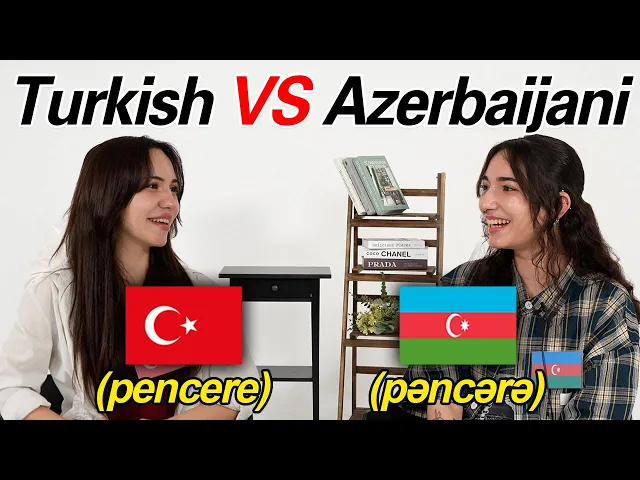
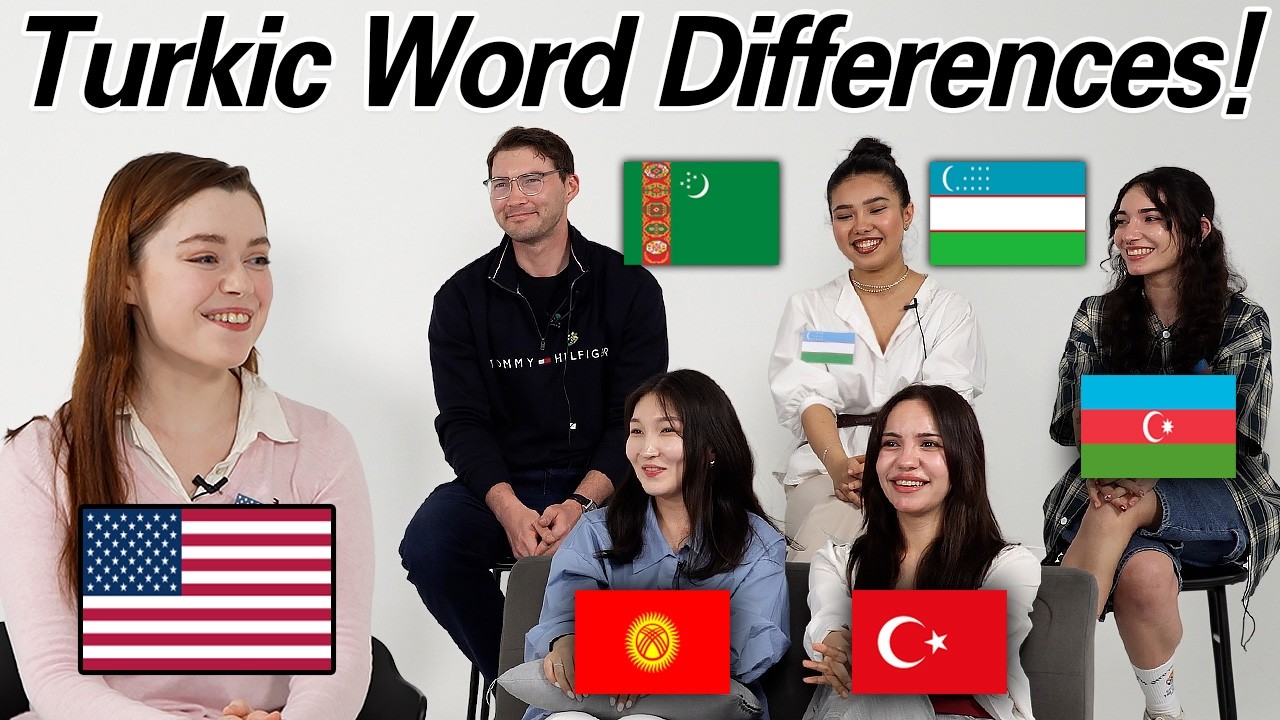
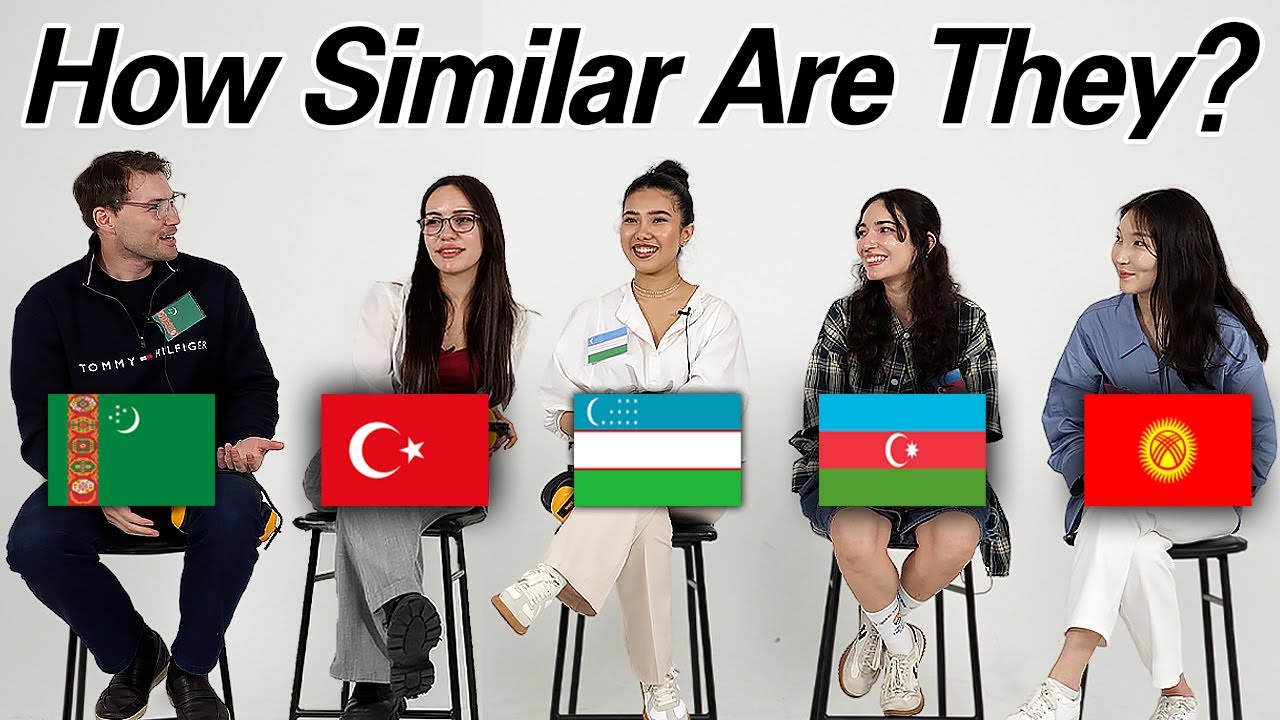
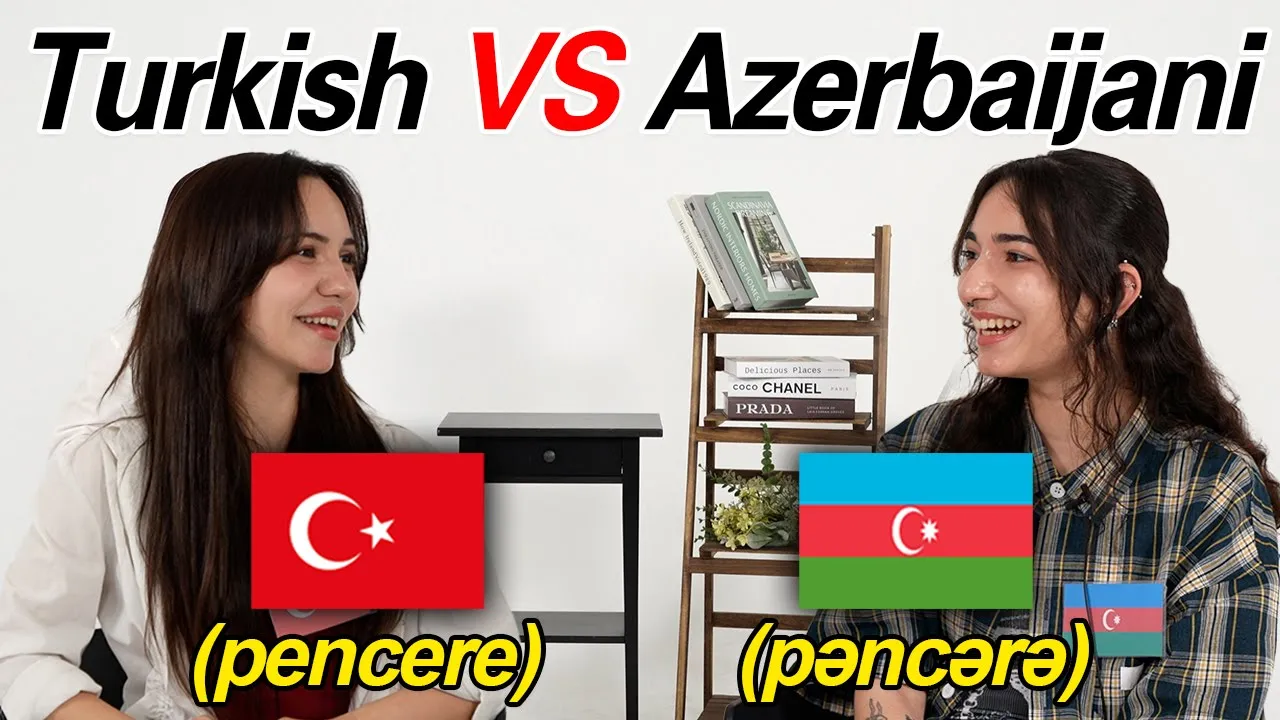
Azar Bejani is most similar to Turkish among the Turk language family. Well, I think I understand understood 90%. 100 is aar.
Yeah. What? We have the same thing.
It's even the same letters. You guys don't really understand this. You wanted to prove that.
Why? Hello. Yes.
Azarbjani is most similar to Turkish among the Turk language family. What do you think? Do you do you agree?
I also think Yeah, I think Azarani is the most similar to Turkish. We don't really need to study to be able to understand each other. I feel like 60% 70% we will be able to understand each other without like needing a translation or something.
Yeah, for me it's 100%. Yeah, I feel Yeah, I just gave a little like you know. Yeah, for me I think growing up also We had a lot of we watched a lot of like Turkish dramas and stuff.
Oh, okay. Okay. Drmas and stuff.
So, I grew up watching Turkish TV. Okay. So, that probably influenced your Turkish skills as well.
Okay. So, it wasn't like I never questioned even like, oh, can I understand Turkish or not? It just like was natural.
And when you said to me, you sounded like like really Turkish. You had like Turkish accent almost because like you know with Turkish and Nazar Bejani we have the difference of accents right? Yeah we also have a lot of different words I would say.
Okay. Yeah we understand each other. I listen to a few um Azar Aarani songs back in the day.
So I actually really like Azarani music. Okay nice. Just tmi too much information from me.
No that's cute. Which Turkish dramas have you watched? I think the the most memorable one was Mutes Museum.
I knew you were going to say that. Everyone knows that. Everyone knows it.
Especially like all the Turk people. I feel like they all grew up watching that. Yeah.
But we also had like a lot of different stuff like I remember like that's my favorite. Yeah. Fun facts.
But belong to the O brands of the Turk Turk language family but use SOV which is subject object word order the lexical similarity between Turkish 60% to 70%. Yep. Depending on the type.
Yeah I think so. Yeah. It's kind of funny to me that Azer don't really need to try anything like to understand Turkish but uh it's been like so many instances where I used to talk to my Turkish friends they don't understand me.
Yeah, I feel like that's why I said 60 to 70 because I don't feel like I would understand you 100%. And as well, you grew up watching a lot of Turkish channels and stuff, but I don't really remember watching a lot of other Beijian like I don't think I have that like TV like social media that type of influence. So, I think that's why.
But then it's really interesting that grammatically we're also really different. Turk language family is really big but you know have like our languages are really similar and then there's different branches to Turkish family so those languages are like more Mongolian Russian influence so I think they understand themselves better not but then for us I think we're really similar that's why we called each other kes kite um you have three more letters uh which are a c and D. And there are also spelling differences.
Um, often a P b u oq kx swaps. For example, like in Azeri it's but in Turkish it's and then in Turkish is but in Azeri it's so we have like so the X is pronounced as he like H sound like oh right the X is yeah like sound oh okay yeah because like we don't have those letters So I think that's what's make it more difficult for Turkish people to maybe understand 100%. But since you have all the letters, you get to understand.
We have more letter. We have like 32 letters. Yeah.
Yeah. Ooh, that's interesting. Okay, let's talk about our favorite food.
I don't know that soup like ah Okay. Okay. I got so excited about food.
Well, I think I understand. I understood 90%. 100.
Isn't it so interesting? There are a lot of words that I don't know. Like for example, she said small.
we don't have that word in Turkish. So I had to ask her like what does that mean? But then other than that to me azarani sounds like like a different dialect of Turkish almost.
So like I do understand but there is a bit of like accent that I have to get past that. For me I really understood everything but I think it's because we are more influenced by Turkish culture like it be songs, movies, dramas and stuff. So I think we're more accustomed to understanding Turkish for Turkish people.
Um especially for me I don't really grew up hearing a lot of Azerbani. So dolma is the same. But dolma isn't only a Turkish food.
Exactly. That's why told dolma is like known by a lot of countries that are not even Turk. Yeah.
Dolma is like a dish that a lot of people make like it kind of belongs to more like a lot of cultures. I don't think we can just say it's like a Turk food exclusively. And there are also like a lot of variety of dolma how they make.
How about sarma? Sarma is like in my country we make it in a square form. It's not like Yeah.
rolled. I like in Turkey it's rolled but we make it in a square form for example. That's different.
Foreign speech. Foreign speech. Foreign speech.
Kitchen. foreign. Okay.
Oh, okay. Mhm. foreign.
Okay. Normal. Normal temperature.
Did we understand each other? There was like some words that I didn't understand especially when we were talking about the seasons and like those type of terminology I didn't really I guess it's different. Yeah, those are different.
So like for example in in Azerbaijani for spring we say yas but that that's the word for summer summer in Turkish. So that's why I was confused and other seasons are also kind of different kush. So winter is the only like really similar one similar one.
So the word for wind is really also different. In Turkish is but in Azerbaijani it's kulk. I also think Turkish is more softer.
We also have like Yeah. Yeah. Turkish doesn't have but other Turk languages have it which is kind of like we are more similar to them than Turkish is.
Exactly. Yeah. We don't have that sound.
We don't have the sound. Yeah. We have like kind of like rough but I think like in some Turkish districts you also have Exactly.
I was about to say that with dialects it also differs right. So they use throat more than person from like the south you know. Yeah.
I think like people from those areas like from the southern part understand a better because we are more similar. It's really important where you're from and which languages are like closer to you. We also have some districts in Azarbaan that are more rougher than what I'm talking.
Oh, really? This is actually really similar. We say in Turkish we say it means hospital.
we use. So it's my throat's you really have to use your throat to say this letter. So and my throat is not in the best condition.
So I'm like since it has this like H sound and in hastah we say with H. So I think the sound is still it's pretty similar if you say it. I think it's pretty similar like when it's like written as H.
I think the way it's written is really different. We also don't have the like upside down E. Is it?
It's E. Yeah, the upside down one. We also don't have that letter.
A and something between E kind of. Yeah, we don't have that letter. So, anar in Turkish.
Yeah. Anatar is key. Um, achar.
In other literally means in Turkish can open. Yeah. So, so which is like still makes it's literally can open.
It's um different in in Azarbaijani it's four letters and it has like ch but in he in anar it doesn't have ch and it also has seven letters also like anar I don't think it means like it's not like achar because achar literally means to open achar to us it can be both it can be a verb and it can be a noun do you have anatar the word no we don't have anatar we we say achar oh I can't tell where is which is window in English. I think it's only the difference is like a Yeah. We don't have upside down.
Mhm. So you would say it since this is like a softer word. Per in other way it's panger.
Per. Yeah. Per.
So it's like instead of e it's a in other words it's the same word. It's um same amount of letters but the only difference is that we use e and they use e the letter e. Mhm.
Uh I know what it means. It means fridge. Y but in my language we don't say we actually say so it literally means to freeze or something that can freeze.
Yeah. I was thinking but I don't think we have is it a Russian word? No.
So is a s we have s which is to mean to make it colder. So yeah that is similar. Ah okay.
Okay. So it's like something that can make it cold. Okay, we have that word too.
But we don't really use No one would call. But if you were to tell me Elena, do you have to at your place? I will say, do you mean I think?
Yes. Which is country? Yes.
So in Azerbaijani we say we use or letter. Do you have U? Yeah, we have it.
So, we use u which is a letter that is not in a lot of languages but in both of our languages we use it but instead of uh we use and the letter at the end is also different. Do you know what it means car? Yeah.
But in Azeri we don't say araba we say mush. So it's like machine. Yeah I think so.
Well it's it's a whole completely different word. Ooh. Is it interesting?
I don't think we have something similar. Oh, shish. Shish.
Do you know what shish means? It can mean a lot of things. Yeah, it can mean a lot of things.
So, I'm like confused as to which shish it is. Yeah, that is it means both things. I mean, you're you're the one guessing this.
So, no, this is Turkish. No, it's Yeah. What?
We have the same thing. It's even the same letters. I did Araba, so it's your turn.
Okay. Okay. All right.
I thought this was Turkish one. Shish can mean like shish like I ate so much now I'm like too full that can mean and we have so have shish for example shish kebab that is like on this like thin little how do you call that like a stick shish kebab shish kebab like shish is that thing also can mean shish is like kind of like attacking like yeah shish that's why I'm like you with that thing so that's why it's like shish does it mean the same thing in it means yeah exactly the same thing it can mean either like even when you're like hurt it alo can mean like oh there's like yeah there's like um scar we can say like it's shish scar you not scar it's like shish like there is like a little like it's elevated right elevated yeah mhm it means bridge but in Azarbaijani we change the letters we say kuru so P and are exchange their places. Yeah, is bridge for us, but for her it's different.
Oh, I'm not looking. She's going to explain in my language, right? Uhhuh.
Yes. Oh, the the word was para like money. Oh, I got it.
What is para in pool? Pool. Ah, we use pool, but pool means something different.
Do you know how like we have letters and then we put something this is that's pool. Like we don't say it. Oh.
Oh. At first I didn't get it. Yeah.
I was like, "Oh, she's not going to know what this means. " But then the more she explained and I think you kind of dumb dumbed it a little bit like explained it in easier way. I I kind of like started explaining in more detail.
Yeah, that's when I got it. Yeah. Yeah.
Hoping that you would maybe like get the other words cuz I don't know which words you know and don't understand. So true rice. We say yeah.
Okay. Okay. Yeah, it would say do you.
So, cuz I understand what she's saying like 100%. So, Azarbaijani understands Turkish more than Turkish can understand. Yeah.
But then do you know what they say about Azarani and Turkish people? We're two which means like we're two different nations but then together we're one. Yeah.
Two nation, one people. Two nation, one Yeah. One region maybe.
I don't know. But yeah, we're really like our relations are also really good. We're like Kardesh.
Yeah, we call each other like brother um brother nation kind of. So it was really interesting because I've never met anyone in Korea that is Azarani. So it's really nice to like to have met you.
I know Azar Jan, right? I know the language. I hear the language all the time, but it's not like I never really met another person in Turkey as well.
like I'm glad to have made a friend and like hear some something similar and speak my language too. Yeah, for me too. It was very fun.
Um I do know a lot of Turkish people so I'm just one of them now. Yeah, you're you're not the first one but it's always a good thing to meet more people especially from countries that are close to you or like countries that you can understand the like the mother language of. Exactly.
So, it's always a very nice experience and it was also very fun for me to also kind of like prove you guys don't really understand this. You wanted to prove that why I didn't understand you. Come on.
So, it was it was it was very fun. I would say today in this video we compared Turkish to Azarbani. If you like this video, please like, subscribe, and comment down below.
And we will see you in the next video. Bye bye.