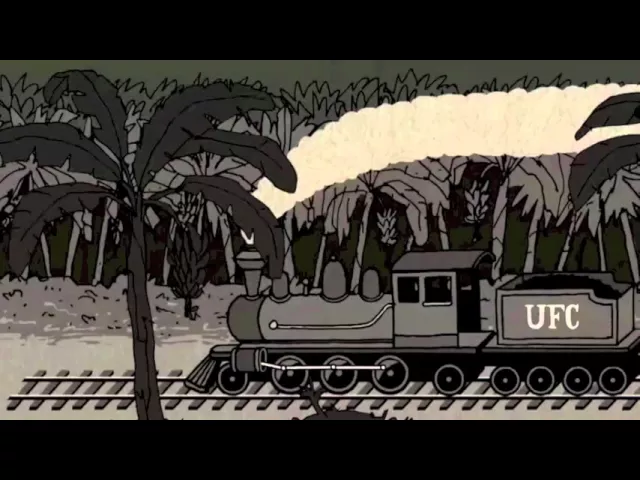
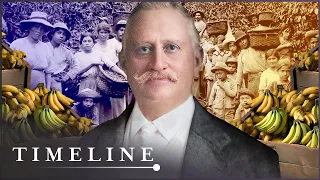
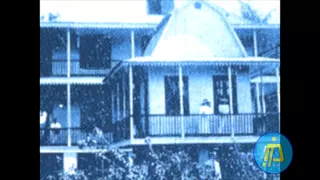
Island down equates to a big abundant today the banana is enjoyed globally first delicious sweetness however little known to most people the company that fueled the banana craze has a history that isn't it's quite so sweet the story begins in 1871 with the construction of a railroad in Costa Rica by an industrious 23 year old from Brooklyn named miner Keith Keith signed a contract with the government of Costa Rica to build a railroad connecting the capital city of San Jose to the port of lee-moan but when the Costa Rican government defaulted on its payments they
agreed to give Keith eight hundred thousand acres of tax-free land along the railroad in exchange for him renegotiating the government's debt Keith began experimenting with the planting of bananas as a cheap source of food for his workers Keith soon discovered the profitability of his bananas and brought them to market in 1899 Keith merged with Andrew Preston's rival Boston fruit creating the United Fruit Company the company continued to buy more than 20 rival firms by 1930 and acquired a capital of 215 million dollars it was soon the largest employer in Central America but as the company's
profits grew its influence on the countries it was station didn't grew with it the United Fruit Company was frequently accused of bribing government officials exploiting its workers King little by the way of taxes in working ruthlessly to consolidate monopolies in fact the companies reached was so ubiquitous that it became known as el pulpo or octopus in Spanish the United Fruit company's grass was perhaps the strongest in Guatemala there the company found unconditional support with the Guatemalan dictator Manuel Estrada Cabrera Cabrera gave them his full support he promised to maintain the company's power and terrorize and
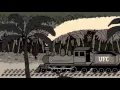
rested anyone who opposed Cabrera granted the United Fruit Company the exclusive right to transport postal mail between Guatemala knighted States the United Fruit Company was given hundreds of miles of railroad they controlled all transportation and charged a tariff on every item of freight that looped in and out of Guatemala they were given control of the ports in the countries they operated in in return for money and arms that local governments could use to crush resistance they were also given a monopoly on radio broadcasting in Guatemala the United Fruit Company created the tropical radio and telegraph
company which owned all of the radios and telephone lines in Guatemala and use them to spread the propaganda they did not have to pay any taxes to the government and since they owned a very large percentage of the land these countries were often left with the little money they would later become known as banana republics the United Fruit Company strictly opposed any attempts at the formation of unions it would abandon entire areas of unionism began to gain a foothold tearing down any housing and schools they've built there in December of 1928 the workers on United
Fruit Company plantations in Colombia went on strike at the time it was the largest labor movement witnessed in the country a Colombian army regimen was ordered to shoot into the crowd of protesters by the US Army who were eager to defend American interests in the United Fruit Company an estimated 2,000 protesters were killed and what would later be known as the banana massacre this became the start of a greater US intervention in South America and attempts to help protect the United Fruit Company America would use the newly created Roosevelt Corollary to justify their actions the
United Fruit Company had influence in the United States as well as Latin America the company provided 90 percent of the United States bananas and used 11 white steamships called the Great White Fleet to ship their produce the United Fruit Company was an important part of the US economy and it was vital the company kept its strong influence in Latin America after the dictator of Guatemala and his government overthrown during the Guatemalan revolution and was replaced by the democratically elected Jacobo Arbenz the United Fruit Company saw itself as a target people refused to work and soon
only 15% of the 550,000 acres of company owned land in Guatemala was being cultivated the United Fruit Company responded with intense lobbying to US congressman in Gotham to condemn they got the Guatemalan government but the worries of the u.s. increased when our bends announced the enactment of as agrarian reform law which would expropriate several hundred thousand acres of uncultivated land owned by the United Fruit Company the CIA set up propaganda networks in Guatemala saying the government was led by communists under President Harry Truman operation PD fortune was set into place in 1952 but its plan
to smuggle weapons in on a produce ship failed the next operation set place in 1953 was called PB success in this mission the CIA secretly trained and armed a group of 450 mercenary watt Guatemalan rebels that would overthrow President our bends with the help and funding of other Latin American dictators the CIA invasion of Guatemala began June of 1954 - the government of our Benz the mercenary army of the CIA was not a significant threat but our bends still let them advance deep into Guatemala because he feared US military intervention the CIA army was defeated
in on June 27th 1954 our bends resigned the presidency of Guatemala for the United Fruit Company business went back to usual once all the company land was returned by the communists but for the indigenous people all hope they had to escape the grasp of the United Fruit Company was gone in the banana republics remained economically devastated the United Fruit Company would later merge in 1968 to become the United brands company and again to become the name we know it as today Chiquita Brands International although not under the same name anymore the United Fruit company's impact
can still be seen on Latin American countries today the economic and social devastation these countries faced in the twentieth century is a direct result of the United Fruit company's monopolistic and tyrannical grasp over the lives of the people so the next time you see a banana in the supermarket know the history of how it came to be there isn't as sweet as the fruit itself