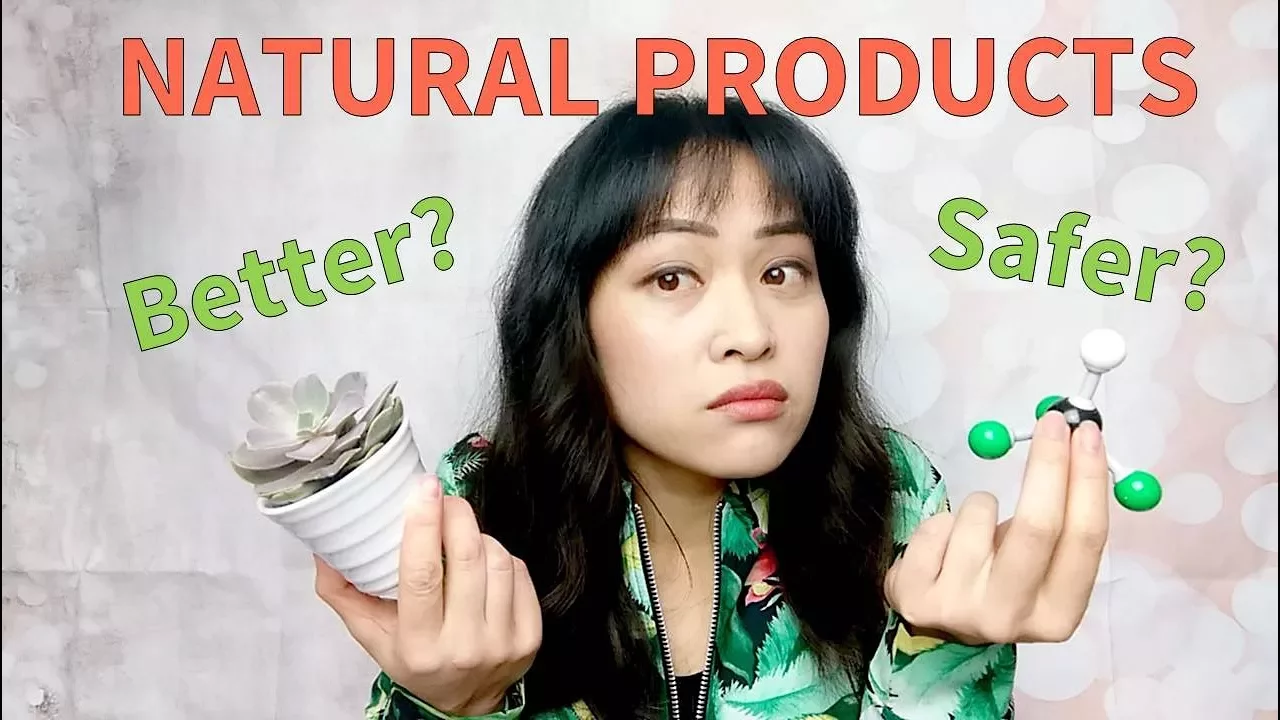
Hi it's me Michelle from Lab Muffin again with more beauty and science! Today I'm going to be talking about one of the most common questions I get asked: Are natural beauty products safer? Or the variations: Are the ingredients in my products toxic?
Should I avoid chemicals in my products? It's not surprising that this question is so common. Walk into any store and you'll see products declaring themselves to be "natural".
All over the internet you'll run into loads of bloggers and celebrities talking about how they're "going all natural" and "detoxing" from the synthetic chemicals in their lives. Since I have a PhD in chemistry and I worked on natural products during my research, I'm pretty qualified to talk about both nature and chemicals. Let's start with chemicals.
If you believe what Natural News and the Environmental Working Group say you'd think chemicals are man-made toxic substances that are going to kill you, probably by giving you cancer. You might even be convinced to start looking for chemical-free products. But the truth is, everything is a chemical: the water you drink, the food you eat, the oxygen you breathe.
Even an all-natural pineapple contains thousands of chemicals - this is just a selection of them. In fact the only thing that's truly chemical-free is outer space, because there's nothing there, not even air. As humans we have a bias to think that things that are natural are good, and things that are man-made or synthetic are bad.
Unfortunately a lot of natural brands try to take advantage of this unfounded bias to make their product sound better. Let's have a look at some of the most common misconceptions around natural and man-made products. The idea that safety is based on where something comes from, whether it's natural or man-made, is very widespread.
But here's the truth. While not all chemicals are the same in terms of safety, the idea that a chemical is safer just because it comes from nature is a lie. This graph compares the most toxic natural and man-made substances - the higher the column, the more toxic it is.
It turns out that natural substances are way way more toxic than man-made ones. They're so toxic they had to cut the graph off to fit them in. If it wasn't cut off and you're watching this video on a five-inch phone screen, the one on the far left would be three times the height of Mount Everest!
Let's go back to a chemical we're all familiar with: water, also known as dihydrogen monoxide. Scientists have gotten really good at making things to the point where we can synthesize a lot of the natural chemicals we come across. Water is pretty easy.
We can make a water molecule in a lab; we can get a water molecule from the cleanest glacier in the world. But if you gave the two molecules to the smartest scientist with the best instruments and all the time in the world, she wouldn't be able to tell you which was which! So where something comes from doesn't tell you much.
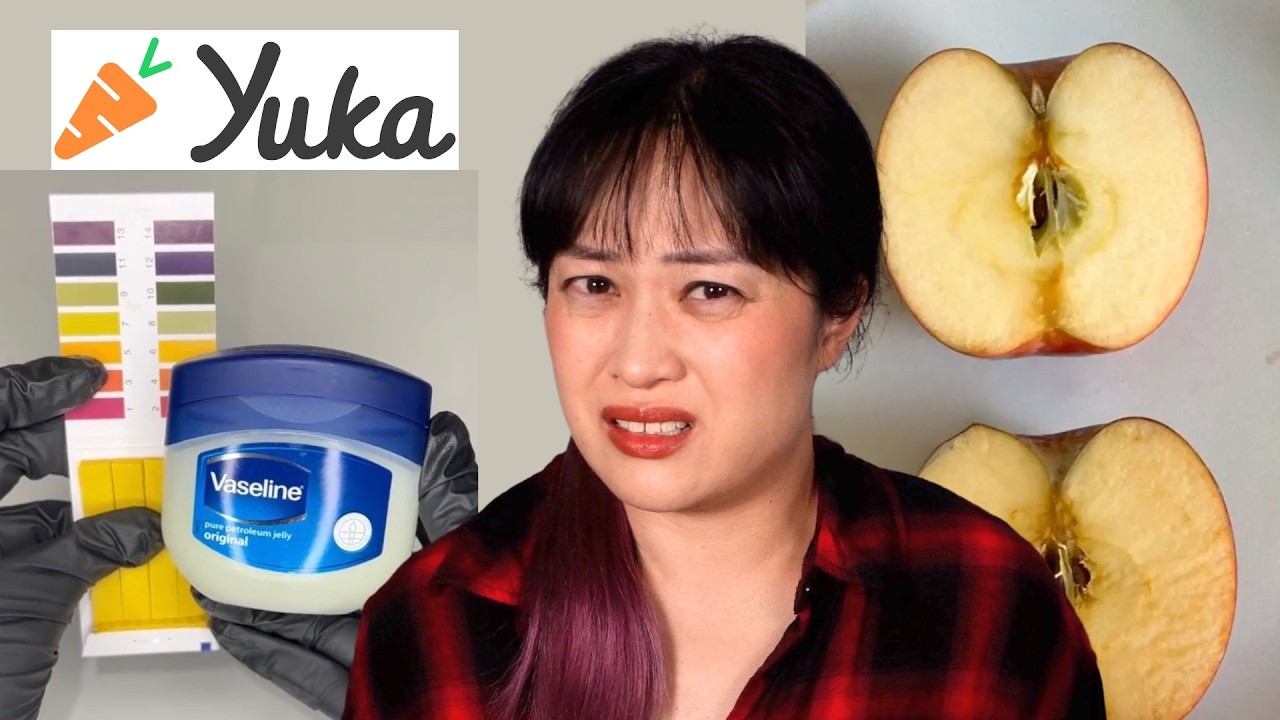
A related argument you'll often hear go something like this: Petroleum jelly is a byproduct of petroleum! You're rubbing petrol on your face! Again this might seem to make sense at first, but it makes less sense when you think about it.
Do you know what else comes from petroleum? Plastic. And carbon dioxide and water when you burn it.
And if that isn't enough to convince you, do you know where petroleum comes from? Nature - ancient plants and animals which were around way way earlier than humans, and so by this natural is better logic, petroleum is super super safe and we should all do petroleum cleanses. The reason petroleum jelly is fine is that it's purified to take out the potentially unsafe chemicals before it gets put into cosmetic products.
The same thing happens to natural castor oil before it gets sold. Castor beans are poisonous and contain ricin, one of the most toxic chemicals on earth. But because it's been purified, the oil is fine and you can even drink it - though not too much.
"If you can't pronounce it don't eat it or put it on your face" is another idea that sounds sensible when you first hear it. But the only reason pineapple extract is easier to pronounce is because they didn't put the full ingredients of the pineapple in the ingredients list. Here are some of the proper names for the chemicals in pineapple: methionine, octadecadienoic acid, ethyl 3-methylthiopropanoate, 2,5-dimethyl-4-hydroxy-3(2H)-furanone, ethyl 2-methylbutane, sesquiterpenes.
They're just as hard to pronounce! Sometimes you'll see scary statistics like: Women apply an average of 168 chemicals to their skin every day. But here's another interesting fact: did you know that natural things usually contain more chemicals than synthetic, "chemical- laden" things?
Here's that list of pineapple ingredients again. When was the last time you saw a beauty product with an ingredients list that long? And here's the ingredients list for Vaseline.
Surprisingly short! The thing you might not have expected about natural and synthetic things is that almost everything in nature is a mixture of chemicals. Synthetic chemicals tend to be pure because the mixtures have been separated or the ingredient might have been made from scratch.
It might make you feel better to see "pineapple" on a label rather than "ethyl 3-methyl thiopropanoate". But the truth is, ethyl 3-methyl thiopropanoate is only one of the many different chemicals in a pineapple. And yes, it's a very safe ingredient!
So what matters isn't the number of chemicals you're exposed to. What does matter is how harmful those chemicals are, how much you're exposed to, and how you're exposed to it. For example I'd rather be exposed to these 10 ingredients than this one single ingredient, even though arsenic is a 100% pure and natural ingredient.
Unfortunately there's no easy shortcut or blanket rule that we can use to decide which products are the safest and most effective. Wven though going "all natural" might be tempting on a gut level, the reality is far more complicated. We have to look at each ingredient and decide based on its own merits.
Both natural and synthetic chemicals can be safe; both natural and synthetic chemicals can be dangerous. Oatmeal is natural and fantastic for irritated skin; poison ivy is natural and the exact opposite. Vitamin C in beauty products is usually synthetic and great for skin, but sodium lauryl sulfate is a well-known irritant.
Sometimes even the same ingredient is safer from a particular source. For example, iron oxide pigments are found in nature but they have to be synthetically produced to be used in beauty products because the natural versions contain higher levels of toxic heavy metals. In summary, don't get sucked in by marketing.
Natural ingredients aren't safer. Synthetic ingredients aren't more toxic. And pretty much everything is made of chemicals, including everything you find in nature.
I hoped you liked this video! You can subscribe if you want to see more from me, or you can go through the 830 blog posts on my website. You can also find me on Instagram Twitter and Facebook.
See you next time!