hey guys it's Justin here I wasn't actually planning on making a video today but I was sitting here studying and I had this weird thing now where every time I start studying I feel like I should be showing other people how I study because I mean it's it's not often that I'm sitting here studying a completely new topic that I have really no prior knowledge of and in this case right now I'm learning about artificial intelligence and I don't know anything about artificial intelligence really at all so I'm trying to familiarize myself and it's a
pretty dense textbook and I just want to show you a very simple way that you can immediately upgrade your studying going from a level where you may have been relatively passive with your learning so passive learning is when we're not really thinking very deeply about a topic we're not using our cognitive resources too effectively we're just not being very active about our learning the way that passive learning will feel is that we may feel sleepy drowsy we may be feeling disengaged and not interested in what we are learning about we may catch ourselves thinking what
is the point of learning this and for me I know that one of those big ones is that I start reading and I'm getting hazy I'm losing focus I'm not really sure what I'm reading or why I'm reading it I'm just reading because I have been reading and I get halfway down a page and then I can't remember what's happening passive learning is incredibly inefficient you can spend a lot of time doing passive learning and I've just given you an example with reading but it can also be with writing notes you can be passive in
lots of ways listening to someone speaking you could be passive right now listening to me groaning on and on the key first step is you have to have awareness of when you're entering into that passive learning state so figure out what those cues are for most people it is that disengagement feeling that this is irrelevant the glazing over and then the drowsiness the feeling like you're sort of falling asleep as you read or as you listen so these are the signs of passive learning and if you do too much passive learning you're not going to
be activating efficient encoding processes and therefore have good memory of it you're going to forget very quickly you're not going to know it very deeply and partially because of the fact that you're forgetting it so quickly it means that to get to the point where you are able to use your knowledge effectively you need to repeat it and go over it again and again and again to fill in those gaps but obviously if every time you go over it again it's still passive you can see it's you know it's like trying to lay around different
sort of it's like a Swiss Cheese model you know if you imagine a slice of cheese with lots of holes in it you're trying to layer on lots of these slices to stop there from being any holes but if every slice is full of holes everywhere then you're gonna have to have a lot of layers so obviously reducing the size of those hoses is key to efficiency on the other hand Active Learning is where we are using our energy and our cognitive resources we're spending a little bit of effort to try and hold on to
the information a little bit better we're increasing the amount of effort that we're putting in so that we can store it into our memory and therefore activate and utilize information at a higher level of Mastery as well so that's the overall goal of what we're trying to do so let me just go through exactly what it would feel like as I'm reading through this now I know that you're not going to be able to really see what I'm doing so much but I mean it's a book and I'm reading a book I'll speak out loud
in terms of what's going on inside my head so let's say I'm reading this and I'm just reading it normally you know there's a chapter here there's a there's a chapter heading and I'm gonna read down this page and I'll tell you exactly what I'm going to do let's say that I just started reading this and I'm starting to feel that passiveness sitting in for a lot of you this will happen very quickly for a lot of you you'll feel that this is just normal but it's important to understand what those cues are so I'm
feeling okay I'm starting to glaze over I'm starting to feel a little bit drowsy a little bit sleepy with this okay at this point I need to create an interjection because if I let it go on further than this then I'm gonna it's gonna be harder and harder I'm gonna sort of sink into this pit of inefficiency and I'm gonna get more and more and more passive until I just fall asleep and I don't want that so as soon as I notice that I'm going to try to flick into a higher order by doing a
few things now the easiest things that you can do to really completely transform the way that you think about this it takes a long time but some really easy things that you can just do is Skip ahead like literally just skip halfway down the page or even to the next page your purpose here is to skim through until you land on something that feels a little bit more interesting just inherently or that makes you feel a little bit more Curious so I might be reading through and I'm thinking um board bored bored okay I'm gonna
just skip boom boom boom uh still not very interesting okay I see the word cognitive science now for me personally cognitive science that's interesting for me but what's just happened and for you obviously it could be something completely different but what's just happened is that I've skipped a bunch and then I've landed at this word I have no idea how cognitive science fits in with the rest of this so I've got these question marks while I was just reading about this thing before which I'm kind of hazy on because I was passive and now I'm
reading about cognitive science so now I'm incentivized to read a little bit around the word to see okay well what's the context in which this word is here and now I can think about well how does that fit into what I was reading before so now I'm going to use that as a springboard to come back and now when I come back to where I was before my mindset is a little different because I'm thinking how is that leading to cognitive science how did it connect the dots what was the flow what is it saying
here that allows me to connect it to that so you see in doing that I've created a little bit more curiosity and so I'm giving myself a pathway towards higher order learning in this case it's that relational level learning so that's one technique that you could do you can just skip through until something catches you read a little bit about that and then come back to where you were to see and connect the dots between them to see how it all fits together another thing that you can do if that's not working for you or
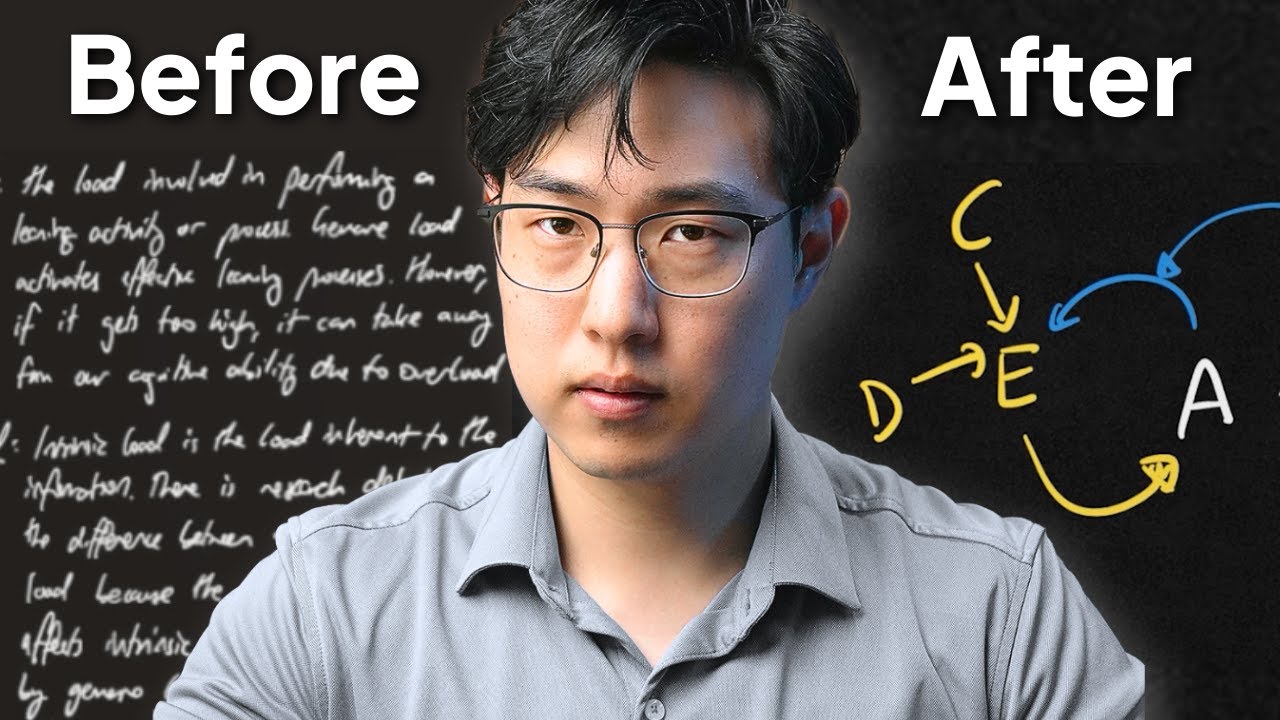
sometimes it works and sometimes it does doesn't another trick that you can pull out of your tool belt is to just start skimming through keywords and just write down some of those keywords and as you write down those keywords think about what you already know about that keyword and then how you think maybe it's going to be explaining it so for example it's this natural language processing here now natural language processing I actually do generally understand what natural language processing means but for example knowledge representation I don't know exactly what that means but the words
knowledge representation make me think about certain things and I can at least guess what that might mean so I could write down I've got my tablet here I'm using an infinite in canvas I use the concepts apps personally because it's got Infinite Canvas so here I could write down knowledge representation natural language processing I can write down the next you know a few keywords and I can try to think about how I think this book is going to be linking those ideas together I'm creating a hypothesis so again it's activating that relational level of thinking
it's creating a scaffold for me and I could be completely wrong in my idea but it doesn't matter because what matters is that I tried I expanded effort to build a schema that I think could work and whether I'm right or wrong is kind of irrelevant because if I'm right good I've got a scaffold that I can keep building on and that's going to create a stronger knowledge schema that deepens my knowledge and improves my memory or if I'm wrong that's all good because now I have more data points okay I thought it was this
way but it's not I'm wrong why am I wrong where did I go wrong well what does it saying instead so do you see now it's a little bit more relevant and with that relevancy that again builds a stronger schema to improve our memory and our depth of knowledge Mastery so those are two very quick techniques that you could use skimming through until something catches you this is using your prior knowledge innately to find areas of relevance that you can use as a springboard you can almost think of it kind of like if you're at
a party and then you meet a bunch of new people and these people are irrelevant to you initially you don't know who they are they're total strangers but then you meet someone and you realize that they have a mutual friend with you and now that person is a little bit more relevant maybe they came from the same country as you or they have a similar Hobby and so this person as an entity is becoming more relevant through something that was already relevant to you so when you're studying anything you're bringing in with you a prior
set of knowledge and that is diverse it's not just about you know AI whatever topic you're studying it's about your hobbies it's about your culture it's about random things that you've read on like it's about anything your prior knowledge that you bring in with you is an important tool that you need to learn how to leverage off of and so finding ways to tap into your prior knowledge like looking for relevance and looking for points of interest and then using that to connect back to the parts that feel less relevant through this relational thinking that's
an important skill and if you really can't think of something that's innately relevant like you've gone through four or five pages six seven eight nine pages worth of material and you're thinking man I there's nothing on this that feels more interesting more innately relevant to me at all well in that case we can't use that as a springboard so we have to use the alternative which is to write down at least the key Concepts the key keywords that we have covered maybe there's a few more later that you can see that you might put down
as well and we're going to try to form a web based on our logic and our reasoning and that forces us to again use our prior knowledge to build a hypothetical whip we're creating a hypothesis using our prior knowledge because we're not letting ourselves read every single thing about it we're just writing on the keywords so we've got very very little to work with we barely know what the words even mean and therefore the only way that we can possibly create some kind of relationship or network between them is by using our logic intuition and
prior knowledge and again that helps to build that schema and preferably you do both of these techniques at the same time you find the relevant areas and use it as a springboard when you can when you can't you you create a network just within what you've got and you know there might be certain points within that Network that become more relevant to you as you learn and you can continue to build out from that very very simple techniques that you can do very easy to implement there's there's not really much of a learning curve here
it's actually kind of hard to do it wrong really as long as you follow the instructions but it trains your brain into thinking relationally and it's a great stepping stone towards even more effective more advanced higher order learning strategies which obviously I talk about in other videos as well but I just thought I'd share a very quick tip before I get back to studying myself so thanks for joining me on this random little video and I'll see you in the next one [Music] thank you