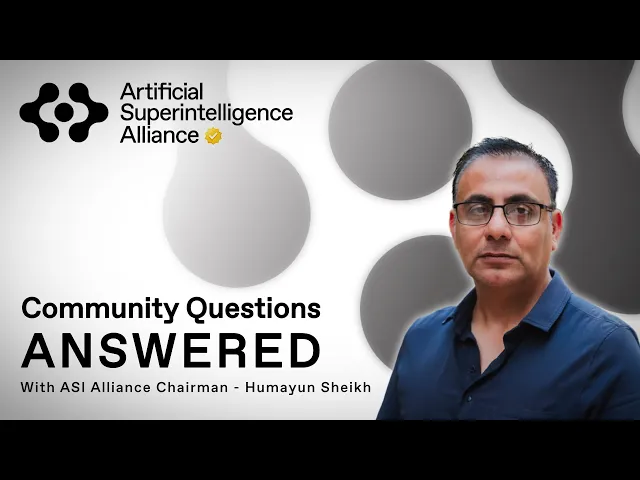
Right thank you for for joining us heray um thank you for joining us for first in a series of various interviews that we'll be doing with yourself and hopefully other alliance members obviously with yourself being the chairman of the ASI Alliance it's um your position to answer a lot of the questions that we want to position to you about what's been going on lately so just to begin with and what's gone on You know what what was what's the thinking Behind These merges as we've recently seen uh a failed merge attempt um and I'll let
you elaborate on the on the phrasing it failed um but what was the idea behind it and what what happened yeah so thank you and I think uh this is really um an opportunity for me to kind of really address the community directly and so I'm I'm quite happy to be here and I'm hoping that uh this will give Clarity to the community For a lot of things which I've heard which I've seen uh people don't understand so so let's let's kind of before we get to the current merger attempt let's get behind and let's
get kind of roll back some timeline so we uh put in together three uh kind of mature projects which was fetch AI uh Singularity and ocean um and what so what was the reasoning and what was the thought behind it so if you look at what's happening in the web three space Um and and I'm going to park the the bull run the height to talk about you know going to the moon and all of that aside but let's look at it very uh L logically and and look at what's been happening what's been happening
is uh crypto Market was stalling it is stalling still I think in my opinion the use cases are missing the utility the true utility of things are missing we have we have BTC we have ethereum which has true utility we have the defi space But anything after that which we keep um trying to throw around and keep testing has been struggling um AI is a technology which I believed along with all the ASI alliance members is really got the opportunity to actually change that you can actually bring true utility to web 3 using AI so
what what we did was we looked at three projects who were mature the teams were good we felt we we had we had a very compliment uh communities we had complimentary Technologies what the thought process be behind that was uh two problem one we actually create this text stack which people can use but also what is quite interesting and what is quite important is you have two sides you have a supply side and you have a demand side yeah so you need to build those two sides if you want traction or utility true utility what's
if you look around in the whole crypto space what you'll see is uh one project will tend to build a component Of this and would probably if successful would get both supply side and demand side uh but if not successful they will sit on either supply side or demand side and they would struggle to kind of put the two together so the the the premise behind merges is in this I mean the web 3 toonomic merg and the tech merger is to actually not have the conventional merge problems bringing the team together too closely kind
of getting the finances Together too closely so leave that aside just build the ecosystem so if you now think about it you have three ecosystems even if they were equal some some was more some was less and they were complimentary they were not overlapping too much I mean if you look at the first three merge entities our overlap was around 6% so 6% of people held uh for example F token ocean token AG token or one or the other so so only 6% so now if you think about it if You think about the token
holders now holding um let's say the ASI token which is the Fe token that's trebled in the first instance so now all the token holders so now you've just kind of added and built this huge Community now what with Community comes interaction with Community comes either supply side or demand side um in this case let's just say we have a community so depends in in tokenomics terms communi is valuable right so what we've just done is we've Actually added those three communities now what what does that actually mean so if you think about how many
projects have these big communities uh they they they're Limited in number right so you kind of start from that point and you put these communities together then you look at the text stack you have multiple various text stacks and you have multiple tokens so if you want to use one or the other you have to kind of integrate with each other you have to go Through the bridges which is a risk which is all of that uh what we are looking at is building a text tack which actually is Loosely integrated so it actually runs
together so you have a customer who wants to build a solution can use the whole Tex stack you know AI doesn't just work on data AI doesn't just work on models AI works on doesn't just work on user interface it works on all those things so how do you go about in web3 space and actually do a kind of A combined joint integration it makes it very very difficult so you actually put all these Technologies together and that was the really the premise of this whole merger which we initiated and that went well right so
we got all those three but what we didn't have is if you if if I just kind of give you an overview we had the data layer we had the algorithms which was s uh so that the data was ocean Singularity was the algorithms and the application layer was fatchi which Is the agentic network I'll keep them light where we can when we have our next interviews we can go more deeper into the products so so you had those but but what is is a very important thing here is also compute right so without compute
as you have seen all these large llms they all need compute for every everybody's talking about gpus they need compute now you try and integrate that compute um into the stack with other um providers Of that it's it's a complexity it's it's it's a value which sits outside our ecosystem so the so what we did was we we I mean Kudos and we kind of got together we've been we've been looking at what is around and seeing how uh kind of um an undervalued supplier it's a supply provider Kudo is like a supply provider of
compute what it enables you to do is build a a a a layer where you can actually distribute uh compute to all The gpus and compute provid providers so um I mean after discussions after meetings it became very clear there was a very complimentary reason to actually add them to this whole thing now I I just want to kind of touch on that um if you look at Prem merger um Revenue pre merger utilization of their Network um Prem merger actually valuation uh it's like they were they were valued FTV was around 80 something million
right so now if you look at the Current numbers which Kudo I think published a few days ago um you have a 470 per increase in Revenue you have um 200% increase in utilization of the networks so what what that the reason for that is because when you add this to these communities the utilization and actually look at the ecosystem projects which will use that same um product you just trebled it you quadrupled it which they didn't have that reach so so an equivalent if you look at those numbers In equivalent terms Kudos uh compared
to its industry um kind of competition is valued at 80 million and some of them are valued at 2 three four and 5 billion now if you look at the comparison what you've done is you've taken an 80 million value you merged it in here and actually unlocked 2 to3 billion dollar worth of value so it makes sense to do it because that value I mean it it might not have flown into the ecosystem right Now but it will flow into the ecosystem because token value depends on community it depends on utilization token velocity um
and really the ecosystem who is going to be the supplier who's going to be the consumer of it right so the revenue has to flow through so now since the Kudos merger the revenue through our Network which is the ASI network has doubled our validators has gone up by 25 30% uh the value sitting in staking contract has Gone up by 250 million 300 million so you can see value is Flowing what what it's not doing at the moment is not actually translating it into the token price increase right so that was going to be
my next question to you just just yeah sorry just to to so with the the the brand value and the tech value that you're that you're building within the tech stack and how does that bleed into the token for the community to feel how how how how do you how can you get it For us to feel like it's tangible value yes so so I think that's but but as you can imagine this is not a small task nobody's done it nobody understands the the Dynamics of it we're doing it first time uh it's a
you know it's not as fast a process as minting a meme coin and sending it to moon so this is true value that we're trying to bring and that True Value will just take slightly longer to come in but let me let me explain how um how this will actually flow into this so The way it will flow into it is um the revenue will increase the revenue increase means the token velocity will increase the token velocity increase will actually talk about utilization of the token will increase um and ultimately what that would enable you
to do is there is there is going to be an earning which is just like if you think about a a company a share you know you have earnings per share what in this case it's a utility token so you won't See that earnings per share but that's the method we have introduced now which is I mean there was no point doing it previously because the earnings we had we hadn't proven the earnings to come in so the method is going which which we're introducing is called earn and burn so there's no point just going
and burning some token and expecting the value to go up you can do all these um you know little tricks um and and we've all seen them but but the true earn and burn Would mean that you earn them the value and then you translate that value to the Token holders by burning it so really the same um I think bance did that quite well with BNB and it's it's you have to earn it first before you start burning things so that's the process we're introducing but we can talk about it a bit more um
but I think coming back to your question so hopefully I've explained to you what the philosophy of the merge is why we Feel it's going to bring value to the Token holders and then now let let's look at what happened recently which was the pal merger uh and that merger I mean we say pal merger because that's how Community looks at it but it was a proposal for a merger now this is a web three space and one thing we have we are committed to as an ASI council is to bring any project which we
feel fits with the community fits with the tech stack feel fits with The ethos that we're trying to bring and the components of what we're putting together which we we discussed that so the tech stack plus the supply side plus the demand side you build the whole ecosystem so you're not relying on people to just come and use it you're actually adding the mass so people actually you have a customer you have a supplier so you know when the customer comes you don't have the supply then what do you do if you have huge amounts
Of Supply but you have no customer what do you do so you have to think of it as a whole system and True Value is going to only come when we actually become serious about this and not do just basic let's let's pump the token price to the moon and that's it we move on to the next one we're trying to do here is actually build this uh ecosystem with Revenue models and with a architecture which kind of grows as you progress through utility that's that's really the The point so pal merger we we we
get plenty of projects approach us um especially uh when it's not bull run because you can imagine in in bull run every every token is a billion plus dollar token every expect everybody's expecting it to be to the Moon is going to go 2,000% we we can't do that because we are running a real project with real utility and we have a token which is not going to do 1,000x in two minutes but we have to build value slowly I'm not Saying it can't do it but I'm just saying it it needs to build up
to anything meaningful and and we are making huge progress on that so pal merger uh the team came we spoke we felt we did some due diligence they did some due diligence we felt the communities were complimentary so we our community was quite different to their community so it would add value and their product was very much facing the customer in web 3 so They had these agents in telegram channels which had a very interesting um you know interaction with them I mean there's plenty of bots coming but we felt they there already understood the
requirement they were already out there it would add a good uh entry point to bring the the the actual utility into the ASI ecosystem right so that's that's that's that was the premise and we of course because it's a decentralized web3 merger though and we And we made it we we have to take the proposal and give it to the communities and to say okay do the communities want it or do they not want it so here's when it started the fud which is oh they've already agreed the merger the merger is happening it's going
to dilute us we're going to go down the drain no this was a proposal it's our responsibility to bring the proposal to the community for them either to start voting on even just by saying no we don't want it which is What happened so I I actually see this as a positive perhaps there's uh too many death threats which come along but if you park those it's a it's a good process because the process is you know you communities tell us if you want this or you don't want this it's a proposal we we didn't
even get to a tokenized voting uh we just put it there so that we can open up a discussion but of course uh that discussion uh was not taken in the way way that it was meant To be which was here's the proposal now let's discuss and then we will vote so people felt that there was no discussion well that was really meant for the discussion so that's what had happened was effectively EV evident of um you know active discussion if you know what I mean so it was a case of a merge opportunity was
on the table that you that both parties thought this is you know this is a wise fit um and you thought okay we'll let's put It out to the community so it wasn't a case of we're doing this uh we just want you guys to we just want validation it was a case of hey we think this okay what do you got what do what does the community think and the community went no and you went okay that's fine that's all we needed that's so effectively it didn't yeah so it wasn't a merge failure it
was a proposal that was agreed by the community they didn't want and then so ASI didn't do so We have two we have two stages so one stage is we put it to the community in a social media we discuss we we let Community talk about it what what I mean what does the community see the problems are what does the community see the benefits are there's obviously going to be people who are pro and you can try and convince them both both projects either come in and say yes this is why we're looking to
do it and we can answer all your questions so let's open that Discussion and then from there on you go to the next stage which is the voting stage if if we had seen very close match or yes or yes and the other side is no and it was very close we would have gone to voting but there was no point going to voting because it was predominantly a no because the community didn't feel that it will unlock the value that they are expecting in a bull market for the token to perform but that doesn't
mean there was no value actually to create by The the two kind of projects and multiple projects coming together it was more I think a knee-jerk reaction which was H yeah this they've already decided it they're going to merge it they're going to uh do something bad to us which wasn't the case and and and the proof is that it wasn't the case because it didn't go through well another kind of question just off the back of that that I do see you know the community are asking is um that why why merge you know
Why why do we want to merge someone else into our token as opposed to partnership you know what's the pros and cons why why is a merge more um advantageous than a than just a normal partnership that everyone's used to see in you know where there's no dilution or or or scene of dilution um yeah why merge well let let's let's I mean this this is no criticism or this is no pointing fingers to anybody if this is just my general Opinion this my opinion um when you just talk about Partnerships they are very meaningless
kind of partnership they're just announcements 90% of them are just announcements um it's okay to do one that's fine we actually we we did actually do a partnership with pal a year ago as F fetch when we were fetch before the alliance this was and we actually worked on it and they actually built the agents and they put them on Agent verse on our agent exchange we did Do all of that already we that's why why there was a trigger to do more but what you realize is that um so what's the objective of the
projects the projects want to build their ecosystem they want to build their product so they're not interested in um kind of for for a short period you can have a a burst of interest to create an announce the partnership and build something uh small to actually showcase it but if you really want to do it and and this is why One of the reasons why these Partnerships in web three are very weak is because the objectives are never aligned that well so you kind of want to build agents yourself fetch wants to build your agents
yourself and we want to go into competing with each other so what would happen is generally the the partnership is not necessary because fetch has an agent framework we just don't have the customer base which pal had the customer base but our Technology was stronger in terms of what we have in the backand I mean of course they can build the technology and we can also go in and compete with them in uh building these agents but rather than do that what we felt was more interesting was to bring the communities together and do a
more deeper and more meaningful partnership where we don't have to keep exchanging tokens between the product so I mean the agent uses pal token the pal token that gets converted into fat token The fat token gets converted into some other token uh you know rather than having those I mean it's not efficient if you're building a product it's inefficient so the deeper call it partnership but the deeper merge in terms of token makes sense it also brings all the communi so now if you think about it if if um the biggest Community is let's say
10 million people and we we are at 2 three million people and pal brings another million you now Just added complimentary Community to the whole thing and which means that your Marketplace is just increased exponentially as well for them so the com the the project which is merging they now just gain another 3 million people to sell to so so obviously it widens the exposure to obviously the projects and the token it keeps things um instead of moving between exchanging between tokens and then incre in sort of gas fees and other and time we um
but Obviously by bringing more people in uh more audience more community in it within a merge isn't there a risk of value dilution like or token dilution um within bringing more in well that's that's that's a that's a great question because that's a question I think Community has been asking constantly but let's let's uh just do a thought experiment here I mean you have 10 glasses you have one jug of water you distribute the jug of water to 10 Glasses you now add 10 other glasses you still have the same jug of water you distribute
it to 20 people you have done value dilution understood but if you have 10 glasses of water you have two jugs instead of one um the next jug gets distributed to the next 10 that does not have that value dilution you don't actually dilute value because what you've done is you brought in some new community you're only adding tokens of the new project to Distribute to that Community just the name change effectively because you've you've minted those tokens which are equivalent in value to what they already hold and that value does not dilute anyone but
ultimately what should happen is because of the EXP exponential increase in the reach of the project the actual combined value should start to increase exponentially so that's really the concept behind it but but initially you think oh you've just minted more Tokens and you but but we've just added X number of people who didn't own that token they didn't hold that token so your community has gone I mean the law of communities if you if you think about it as the communities grow the value of of those communities start to Showcase in the token so
ultimately what would happen is as you grow the community exponentially your token value increases expon so there's no actual dilution it's a perceived Dilution so that be the same as um so let's just say when uh when when a when when you merge a project merge your tokens yes to us it looks like there is more tokens in circulation but what we're saying here is the funding to maintain a market cap to to create an equivalent price is also provided so actually there's no value dilution with it much like within history when you looked at
uh countries merging into the Euro so to think would That be a good example sort of thing so like if you had I think it was France was it Franks with within France um you know you would yes you 10 Franks wouldn't be 10 euro but you could you if you had sort of EX the value that was in your bank would be the same value that would be um once converted to Europe is that we said even though there was multiple parties coming into it there was no you didn't for every country that joined
you didn't have dilution sort of Thing is it quite a similar but but but in this case what is quite interesting is that because it's a it's a technical Technology based solution the value of Technology increases exponentially as you get utilization as you get better technology into it so you know if you think about what projects uh there are at the moment and I think I I gave you an example of Kudo I'm uh there is also example of some agent based systems but but let's let's just take Kudo because That was the first merge
which went successful if you think about what Kudo is it's it's a decentralized uh compute platform right and I think if you look around you have three or four five more other uh platforms of similar elk so and if you now start comparing the number of gpus number of uh you know Revenue coming into the system and if you compare all of them uh the other projects might have valuations of two to Three to 4 billion now where where do you think that value is gone it's not disappeared you've now got a project which is
doing twice as much in the revenue twice as much in GPU compute Supply twice as much in utilization so ultimately the market will see the value flow back into the token so let's say if I set if I merged a we merged a project or worth 80 million in or 100 million into a two billion uh market cap ASI and if that true value of that 80 million is a billion then that billion ultimately will flow back into the token holders because you you've got value creation rather than value dilution yeah and this and this
value goes to all token holders not just a you know compartment off yeah but just to go sort of touching on to that value and and revenue with the you know the the ASI alliance with your sort of product development that we've seen recently What are your primary revenue streams for the alliance you know that will bring those inflows in and you know we've dis we've discussed kind of like brand value and all that but this is like from a revenue value contract value standpoint how is the ASI making money yeah so so let's let's
let's let's look at what we are building and then look at what we already have and what is coming very soon so what do we already have so we have a network which is a Cosmos based Network which is ASI Network that has I think uh around a 100 validators roughly 93 94 validators I don't know the exact number but there's validators uh we have a um State amount of roughly uh 500 500 million approximately um which is sitting there now even if I even if I just look around and compare with all the other
Cosmos based ecosystems I mean that that Network just alone has some value right So that's one kind of value and it generates uh fees for transactions it generates fees for staking the then you have deployments of smart contracts on it which are which I'll come back to in a minute but but they're they're AI based um agent based AI based machine learning based so we'll come back to that um so you have this network so now let's go back to what we actually trying to build here what we're trying to build here is Is a
tech stack which actually brings people to use it from the people who actually going to be the consumers of this tax stack and the people who going to be supplying uh real world assets it will be supplying the deepen assets it will supply the machine learning models it will supply the intellectual resource into it so that's that's on the side but let let me go through it again so you have let's say a a large language model right large language model on its own Has a huge value so when people train like uh there's several
projects with several valuations if you have a large language model which is trained which people can start using I mean you know generally they're starting from a valuation although they are starting to become commoditized I mean starting valuation is a couple of billion right a decent large language trained model why because when people people start using it and that's the key that's What open AI did quite well utility of it became the value of it so if you bring in um if you look at let's say open AI they have a large language model which
they they didn't just have a large language model because if they had it on a computer hidden away no nobody using it there's no value what they have is a compute infrastructure underneath it because they could train this huge language model underneath it so you need that compute resource so in our case if You think about it Kudos provides the compute resource or or a platform to provide the computer resource on which to train these machine learning models so large language models have value so that's and they generate Revenue okay so so that's the revenue
generator in this case how do you use these models you need a way to use these models uh the way to use these models is the agent Network because the way we're going to move Forward is not going to be websites it's going to be agents it's going to be agentic Networks you're going to communicate with your agent who will uh capture your uh intent and it will execute based on that but can't just do that on its own it needs the whole infrastructure to do it it needs to go down it needs to use
the machine learning model to tell you what the intent is it needs the machine learning model needs the compute to kind of give View that insight and that goes back to the the the agent which then decides what to do and then it has to go out either to the community to respond or it will have to go out to the supplier to do something so you need the whole infrastructure to actually unlock the True Value if you do just small components it's quite a lot of work to bring all of it together especially in
the decentralized space so hopefully I tried to explain it but please just come In with any questions if it's not clear I was just thinking that you know very recently we've seen quite a lot of news um uh a lot of information about ASI create which is one of your sort of products um that's been working towards and and recently been announced at the snet um the ecosystem Conference of Devcon um Ben gzel recently mentioned about ASI learn and then very recently we've seen within our content there's references of ASI train which has been Kind
of uh recently which is soon to be properly announced but how do these align with your long-term sustainability goals um that we just kind of touching on with with with revenue and product yeah I think that that makes perfect sense we we'll go deeper into this in our next kind of uh iterations of this kind of discussion but let me start right from from the basics um the the create is the more um consumer customer facing uh product um But before I get into the detail let's let I mean as we discussed what are we
trying to build we're trying to build a way where we can build machine learning models ASI is a AI initiative right so everything we do needs to bring AI to life AI to commercialization keeping a long-term view of AGI we need to to go there we need to have we we need to have the resource to actually train AI machine learning models we have to have Interfaces to actually go out and actually bring utility into the system so all these things is what we are kind of working with so it's not it's not a small
uh task that we have taken on but it's a task which I think it's worth taking on so let me start from create so what create is it enables you to build applic ations which are going to be the new wave of applications which is going to use agents which is going to use underneath Agent technology the network of agents to execute tasks to carry out things uh to make payments to receive payments to actually um do a booking on travel or find some something that you're looking for so it kind of covers the search
but but just by having like fetch agents doesn't solve the problem because why because you need to go a little bit underneath you need to have the cognitive layer you need to understand what the objective is you need to Actually then orchestrate the task so you need Knowledge Graph to actually do the search and Discovery in the right way you then need to go underneath another step where you're actually going to actually build these machine learning models for reasoning which bring Singularity kind of adds to it and underneath that that all of that doesn't happen
unless you have data um so you have to bring data so ocean brings the data Uh none of this works unless you have compute because you have to train with the data to then generate those inferences which then get used into the agents so now that's the whole stack so we' kind of broken it down where create is where users can build applications where developers can build app applications using all the technology that is under underneath without going into the technicality of it so you can just say Okay I want to use this this I
Want to deploy the graph I want to deploy this agent I want to host this agent um and I'm going to run it that's create so you create you're creating applications you're creating value you're actually bringing different use cases into this because you're a developer you're going to create it and and then on top of that you can actually fund it because you want to try because that's the objective right so now you have the Tex tack don't worry about the Text stack you can get everything you need to build it here and then you
can actually even raise money against it now it could be web three funding it could be just grant funding it could be Web Two funding I mean it doesn't matter but you do need funding to commercialize something right so that's where we kind of going with create um in terms of learn you have okay you you you have this reinforcement learning uh loop why because your applications are going to Bring some data in because you're now capturing the whole stack so when somebody Builds an application the data it generates needs to go and you need
to learn back from it so that's what you're kind of bringing into learn agent to agent learning uh reinforcement learning so you kind of all those uh different elements which can do um perhaps not too interactive with the user but underneath it's doing the learn um and and we will involve the community To kind of come and actually have ownership there as well it can have ownership on the create side you can have ownership on the learn side and then underneath it which is the starting point really uh we kind of we go we're going
for the consumer side but really a tech side this is the starting point which is um ASI learn um a ASI train so what that means is you you build these machine learning models and we going to be Building foundational models so if you look at llms llm is a foundational model but for language but but that's the beginning we kind of that's not we haven't even kind of done anything we it's the tip of the iceberg really because to do anything either research and science the which is Discovery I mean you need to build
foundational models for each and every vertical and we I've talked many times about different verticals and Bringing value to those verticals so this is a so train is a platform where you'll be able to train and actually part participate financially economically to build these valuable machine learning models or AI models which are going to run different verticals so for example robotics as a vertical you will build a foundational model because if you think about llms there are large language models they're foundational models which can be used in Millions of ways so the same applies to
robotic models physics models how do you do physics computation llms can only take you in terms of language but to actually execute something you have to go down and actually dig into the vertical same as protein folding model like Alpha fold 3 which helps you this a foundational model to take molecules to take proteins fold them uh all these models themsel is a huge huge value each Single model is billions of dollars of value but they need to be trained they need to be fine-tuned they need to provide inferences so you need to build the
whole stack to actually not just train them but to provide an pipeline where people can actually take the inference a a pipeline where people can actually use it and what do they use it for for example one of our foundational models we're going to be deploying on train is drug disc Discovery models What's the value if you can actually get an inference without training the model so that's that's the train so this the stack at the moment looks like and then then you have the the SI compute which is which is what we have added
as Kudos and that's already there so now that is the stack um and that stack we will we will of course discuss this in more detail you'll you'll see plenty of documentation but the initial we've done the compute the compute platform is Already there we will now release ASI train so that you can see how we're going to build these machine learning models these machine learning models we already have fetch already has a agent uh framework agent platform so you can spin them out in terms of actually building the application so that's already happening uh
there's going to be plenty of tools which are going to come along uh but that's a completely new conversation a very DET yeah with the Tech stack and and product and that we'll take into a a future conversation um that we can you can elaborate on a lot deeper but sort of question that I I have seen mentioned in something I just remembered was with the these kind of products that are coming out now is and obviously in relation to the tech stack I would imagine this would be a bit of a hybrid but is
this something that is are these products just reactively being created because of the the the merges That you've managed to to do or is it or more the merges are proactive based on long-term goals of these product ideas that you've had you're like we need this need that what tech do we need what do we need what would make sense so is it yeah basically is it more proactive or reactive based on what you've got or what you need yeah I mean if you listen to any of my interviews from two years ago or five
years ago or and even even just after Deep mind I came out of Deep Mind you'll hear the same conversation so that that concept the conversation hasn't changed if you listen to um you know B gzel Singularity same conversation um just different alignments you know because because we all looking at it from our point of view this is why this Alliance is so powerful if you you speak to Trent I mean his ideas ocean he's got great ideas he they focused on data they focused on Something which they felt was the start the core of
AI so we are all coming at it from different angle what is amazing is to bring all these thinking heads together and start building something I mean if you look I mean if you speak and I'm sure you probably there is plenty of videos from Kudos uh CEO Matt he's talked about compute how he's going to bring compute uh why does he need to bring compute so all again all these ideas exist in their Own way but this is the power which I'm saying the merge brings we now trying to build a coherent stack which
which is a multiplier in terms of your consumer base your customer base it's a multiplier in how much Supply you can build and it's a multiplier how much value you can create because imagine I mean I give you an example mistol right mistel um was it's just a large language model train hugely uh valuable raised a billion dollars at like 10 billion Valuation we we're nowhere near these kind of valuations but imagine having a stack where you have not just one uh large language model you have foundational models which each has a valuation of you
know uh the market which is going to use it has valuation of 2300 billion where would you put the the value of such a stack which actually works which you actually can use which when people pay for a protein folding problem they're going to pay thousands Of dollars they're not because they don't have the resource to train another foundational model spending 10 million on it but now make that available how do you create these new uh e-commerce Solutions right who's going to build all that and use tens of millions of dollars to build it when
you actually have this so what you do is you pay for the utilization of such a stack to build application and that's the objective with the with the um kind of merge with Pal not being approved by community and and and not happening does any of that hinder any of your prod current product look or any of your kind of um future ideas with with issuing of road map and stuff like that is is there anything hindered now not not necessarily and then I'll explain explain the reason why I said that um so as I
said in the beginning as I was saying to you we we looked at pal pal the the the the main value they bring is The fact that they understood the market for telegram users so the biggest product is actually having bots in telegram channels and they did it really well because we were not focusing on the commercialization we were focusing on building the backend technology so the reason why we wanted to kind of bring them in is to give them the better technology in the back end which obviously that wasn't their focus Initially and but
they they they felt that they needed if they want to keep up with the pace because their pace is pace of development is huge right you you can you can build a bot today uh it could be out moded and useless tomorrow because there's 10 others so so really the idea was that because they already had captured that user base we will give them more and more features to feed into that user base so that the user base doesn't start looking for other things So user base stays with pal we get the user base and
they get the technology and then then the whole cycle is complete because you're kind of bringing the user using the technology which they already have we give the backand which improves the the kind of reinforcement Loop so that was the benefit of it what what is now happening what will happen is that we might still be able to sell them the technology that's fine because they they will charge the customer they Will pay us something to use our technology and we will pay them something thing what well they they will be the the front end
we will be the back end so we can still split the revenue but the the the friction to actually get that moving is going to be a lot higher so you're saying so even though the obviously the the merging of of ping to ASI obviously is is will not happen there's still a strong affinity and Alignment between the two parties any Between between the alliance and and pal so there's probably fut ways you see of us working with pal absolutely they could be our customer right we could we could charge them they could they could
use the technology and they can they can attach it to their uh their bot and they can deploy that on Agent verse so that you can have um you know different uh multi-channel Communications you can have cross Channel Communications so all those Things can happen which they don't happen right now but they can using the technology in the back end and that was one of the objectives um but so that we keep on top of it so I mean what happens to to those agents to those Bots which are sitting in telegram if they fail
to bring new technology somebody else will come and take them so so so for them it was quite useful to actually be part of a much bigger backend technology player who can keep churning out new technology To make them uh you know stay relevant in the market what what happens if they can't build that much technology because their focus was not that they have a small team we have much bigger team we have much bigger resource we could actually spin out more and more technology to them but in the short term perhaps uh exactly they
they they stay they become our customer we become their partner we kind of share the revenue and that's it discussing kind about revenue And re reactives and Proactiv and that you mentioned earlier about um earn and burn mechanism and it's been you mentioned it on the recent spaces is there how does this kind of tie in with the with the with the long-term product road map and also is this something that you've just injected as a a kind of claw back to get community incentive happiness back up Community morale because of what's happened recently or
was it something that you Already was was in place existing and it's something you were just looking to work towards so so let me let me evidence my thinking in the sense that I I mentioned to you what we said we want revenue from various places so we have the compute platform for Revenue we have the network for fees we have on top of that the algorithms or machine learning foundational models which be I mean I announced train well I didn't announce It I hinted it to the community three weeks ago way before pal merger
happened again train uh was to build these foundational machine learning models which we're going to sell the inferences from and then on top of that we have uh the Agent verse which is already kind of starting to have PL of Agents starting to generate Revenue there's utility already there ocean has already got like thousand plus nodes out there so they they they're doing the revenues coming In Kudos already has the revenue coming in so all the revenue is coming in and and we wanted to scale it even more before uh we kind of fully fully
announced the earn and burn so the the point is that the whole idea of of translating revenue and the earnings of this whole Alliance as an ASI Alliance has to somehow be translated to the Token holders this is not a security token so we can't do dividends doing dividends is not possible so how do you Do that so what you do is you take a portion of your earnings and you take that portion of the earnings and then you burn it so that what that does is it creates a def inflationary pressure on the token
so this is not something you know I I've come up with like yesterday this is this has been tried and tested and it works the problem you have is when you just go out and for no reason start burning the token right the so what you do is you actually lay out the Value first you you kind of merge these projects together then you take the revenue and then you start burning the the tokens to distribute value back to the Token holders so that was always going to happen um the the reason why it happened
in the spaces is because somebody said you know why don't you do the burn mechanism why are you not announcing a burn mechanism so my point was we were going to announce it in the following day or so we might as Well discuss it there and then so that people can even ask the question so the perhaps the the sudden announcement was reactionary but I felt it was the right time to announce it uh but the mechanism has been right with us from the beginning of the merge because you do the merge to to create
revenue streams and the revenue streams kind of multiply and the only Val the way to distribute that value is either by giving people rewards which creates an inflationary Pressure or you do a token burn buyb and burn earn and burn and that creates a deflationary pressure so you actually want the token holders would prefer a deflationary pressure I think with the sort of reactive nature like with within the question in I think the reason that exists is because quite evidently ASI the ASI Alliance does not have a public facing road map at the moment for
people to see you know where they would see these things on why Hasn't ASI released an official road map yet and when when can we expect to to to see one again I think perhaps this is a oversight from our side which is we like to be a little bit more exact I can I can put a line and I can give quarters and I can write three lines on top of it and say Here's the railroad M uh and you see again plenty of projects will do that and everybody will be happy the community
will be happy we I I'm I'm Telling you as it is right so we knew that's what we're going to build you know we all knew ASI alliance members all know where are we going with this because that's our first discussion when we start started the whole merge process how do you position it in the right way how do you actually create the products which actually connect with each other properly and what are the actual timelines we can think we can deliver against is a time consuming Process we have come we we've kind of done
it we have been doing it we are actually at a point where we will be releasing something but I didn't want us to just do a knee-jerk again in terms of well just because the Community is slightly unhappy we should just release something we're going to do it we're going to think it through and we're going to release it it expect a road map within the next two weeks uh we've already given you uh all the the things That we talked about we talked about you know we we talked about compute we talked about train
learn we talked about create all of those are the road map products which you're going to see what what what you what the community wants to see is exactly when is it coming now we have to be we have to be realistic we have to be aware and I don't want us to overpromise underd deliver I would like us to you know deliver it on time so for doing That I think everybody in our team uh felt that we need to we need to do up the project plans properly before we start announcing it to
the market and that that's that's the reason why it has taken so long it is going to be released very soon as I said I mean you know you can yeah hold me to two weeks that should be fine so it should be F we can catch back up in two weeks when uh and discuss a freshly released road map fingers crossed um so of just touching On the on the road map um obviously the alliance has been around for majority of in discussion within the majority for the year and that and OB so obviously
a road map would have been discussed and planned and that in the background anyway but what kind of are there any challenges that obviously the the the alliance is faced while in trying to align the road map across your your initiatives um and obviously what opportunities have have emerged from From doing so from from a line in I think I think we're getting better at it so imagine day one when there's three projects who have existed for four years five years coming together they have their own way of working they have their own own products
you can't just you can't you can't just bring them straight together although they're are complimentary products you still have interfaces to deal with you have uh the ability to connect from one to the other To deal with and as as we were saying we had Partnerships amongst each other in one way shape or form but these are not very deep Partnerships so you still need to kind of say okay here's the core of this product we need to take that core how do we put it in a way that it kind of makes sense with
the whole tax stack so that those were challenges and I think we kind of become much better at them uh in terms of how we approach it uh teams were never a problem because we Don't uh in the merge we don't actually take the teams on together we do a very much independent uh kind of teams we just we just talk project we just talk technical deliveries and we talk about the product itself that's all we do so who delivers it how they deliver it every team manages their own side the revenue when it comes
in also goes to the teams who built it so so that that side is quite pretty straightforward and the framework we put together is very Clear so that doesn't cause us any issues there there of course there will always be uh discussions disagreements agreements about what the product needs to look like but once what what I've realized is once you have the full vision you have the long long-term Blue Sky Vision you have the medium term vision and you have the shortterm um kind of now Vision then you actually align it all together it actually
adds up quite well because then you you kind Of when you even when you're doing shortterm uh now you still think okay in a 12 months time what do I need from it so actually development process is in my mind very much better now in terms of design DES in developing putting it together um we did have that challenge initially and I'm sure we'll we'll have more challenges like that uh but I think we're overcoming them uh by setting a framework which makes sense but we do have some benefit because we're not We're not we're
not like um a combination of a def5 project from metaverse and into Ai and into something else we are and let's just throw in a meme coin in there as well um but we we're not we're not that we we're very focused on what we are we're very focused on delivering AI based uh Tech stack uh applications and we're very focused on kind of decentralized AGI at the at the highest end of it which is the the more The vision so we know where we want to be we know how we going to get there
of course you're going to have slight adjustments in when you launch a product sometimes the product works sometimes it doesn't work but we are not relying on one product the we have a an array of products so which means we can do some tweaking but revenue is going to start coming in and it's already starting to come in so we can see the traction is starting to build well just I just Touched on the subject of obviously Revenue coming in and the commercialization and capitalization on the on the work that we're doing how does the
alliance itself differentiate itself from large centralized uh entities doing the same or emerging web 3 competitors aiming to do the same um and what unique value do um do do do we have to to position to us the ASI you know in in compared to the centralized and and web through capacitors so well Let let me kind of kind of put the question in three different places so first one is how are we competing with big companies well that that was one of the reasons like centralized entities one of the reasons why this merge kind
of came about was that that that was the reason that they have and as I was saying to you before that you know when you have a company you the company goes off and it kind of builds it like open AI they had the compute they bought the Compute they did this uh they built the modules they had all the people the employed all of that and the application so they build the whole thing now if you try and do that with web3 three you know and you're trying to look um at raising um$ 10
billion which is what they kind of had um you know you're kind of most most projects are not of that value right so you need something of substance which can actually not only just commit to such a big F but also has market Capitalization the valuation the understanding the actual amount that the team and you know building the team is not easy in this kind of space where you're not you're not going to find people again you know in C even in centralized entities you're struggling so what was a really natural way to doing it
is that these projects which are running themselves and they want to run their own spin outs I mean it's like the same in centralized you have all These startups you kind of bring them together and you align on the goal and you deliver something which a centralized entity can do but in a very decentralized man so that's that was the premise that's of course that has worked I mean it might Community might not feel that way because the token price hasn't appreciated for them uh that will come uh but the product itself building that in
it's it's not a competition it's a Viable alternative I always call it a viable alternative because when you when you it's your choices either you're going to use Amazon or Google cloud service right it's your choice you can actually provide a viable alternative then you have a chance of doing something the problem we have in web3 space and crypto is there is no viable alternative because you have these little tiny pockets of very um kind of insular token communities which don't Want to really you know they just want the token price to go up and
that's about it um so you to build that whole stack together and then actually provide that viable alternative is what we are aiming for so there are challenges and we saw one recently with the the merger right it's a democratic system you know people can say yes or no you have to observe it you have to obey it and that's what we're doing makes it slightly more difficult but then you Have the positive sides which is you are bringing these teams together who are motivated they want to do it uh they they know what they're
doing in that little piece and if you let them go and do that that accelerates the process so it's quite it's quite an interesting Dynamic there although we have challenges we do think the smaller teams who are motivated to do exactly what they want to do and if you align them with the vision then they can deliver Way way better value so that's kind of what puts us into the web 3 and then of course there's going to be competition in web 3 but but you know we call it coopertition right that's uh you know
Cooperative competition so we don't yeah I I think I think the market is so big I don't think web 3 has anything to worry about because we're like you know biggest project is what 10 billion you know I mean nothing it's nothing that what is Coming what is one of these models on ASI train could be valued at 10 billion on its own that's the kind of scale we're looking at we're not even thinking at this point in the scale would there be are there any plans for future Partnerships collaborations or D I say it
merges um that would further strengthen the what the alliance can offer um but also to to or just to accelerate your existing road map or plans yeah so I think once the Market understands the dynamic and sees the value um flow through in the merge then we will still look to do more merge I think for the minute we've just said okay the market does not believe in it Market does not agree with it so we we're going to pause that Partnerships are are quite an interesting thing we touched upon it before uh you're building
a web three space what you're what we all keep like to say is oh no this the centralized Entity they're the Bates we're going to do do this decentralized and then we get obsessed about forming Partnerships with centralized entities now it's an oxymoron it's like I don't how would you get that both sides you know we get very happy if some partnership with a centralized entity materializes um but then we in the same breath we say we are decentralized so we don't want control from anybody so I think it's it's quite yeah I don't I
Don't really think that makes too much sense some and some Partnerships are valid and true as long as they're bringing some use case into the space as long as they're bringing some um you know consumer into the space and that really is where our core Focus needs to be how do you bring utility to web 3 because there is not that much of a utility our biggest utility Today Is MeMe coins I mean we have to be right really serious with ourselves where is This going I mean Science and Technology dii you know all of
that has got so much potential and it fits in AI fits in but this whole web three space we need to make a concerted effort to bring those use cases with the kind of m coins just touching on obviously this is not ASI related this is more position question position to your thoughts and feelings do you think um obviously with the amount of inflows going into meme coins but then the amount of you know wealth That they're creating for people and that do you seeing this as a something longterm or do you see tulip Mania
era if you get the reference kind of thing I again I think we have some di hard fans I am I'm not I'm not saying okay let's just start from first principle there is something which people want it's a product so so I I can't say anything negative about it there is huge demand for a mean coin so it's a product so obviously it's it's okay I mean it is What it is it's a product and um so that's how I see it is a market which is a product this is not ASI's product this
is not what I want to buy as a product I mean there are 10 cars you know I choose one car against all the other nine you know it's my choice right so it's the same with the either buy a meme coin because you believe in meme coins it's going to make you rich or it's I don't know what other value it has maybe it does have um some you know you you you You people smoke cigarettes right what value does it add it just gives you that satisfaction maybe that's the value I don't see
it but that doesn't mean I'm right I'm I'm just seeing it as a product and it's no true it's like I suppose you know why would you wear a Rolex as opposed to a Casio and the reason is because of the way it makes you feel that's the only reason the way it makes you feel and it's the same with with with this kind of stuff as well It's a huge market right so luxury goods huge Market you know preferences huge market so I mean it's the same as nfts I mean nfts do they still
have value do they still have value I don't know maybe they do for somebody they do yeah I suppose about individual but I think anything that kind of positions puts web 3 S of blockchain on the map to outside money coming in I suppose is is you know um is important and then that's where we see start to see runs and stuff like That you know when you've got your cab driver or your Barber talking to you about a meme coin or something like what the hell like same way what we saw with nfts that's
when you know that you know okay we're running now you know this is this is we're going sort of thing so which I don't think we're there just yet but it's it's yeah at some point it'll happen um I to be honest you everything so detailed and I could sit and listen to you talk to you for hours um sort of Being very kind of conscious of your time um what I just want to kind of close with is obviously there's so much demand from the community for you know for the chairman sea level devs
do something you know why what's what's happening kind of thing for us to help benefit ourselves as token holders and for the price of token where we can all benefit what do you think we can do you know as a community you know obviously there's there's obvious ones about you Know don't fud just you know push pump you know Shi yourselves and all that which is it's hard work um but as s of community members in that what what would be your advice what would you what would you advise we do to help okay so
so what would I do I mean I can't I mean everybody's different um token holders are token holders who have spent money to buy the token uh it's a utility token for some use for for Speculation there is no judgment here right so what would I do I mean and I tend to do that all the time when there is fud it's my job I jump in I give clear and precise response to something I'm not scared of answering your questions because there is nothing which we're doing which should be we should not be doing
we should be doing it because we believe in it so as a community what my my request is that please please please Look at the information look at what is actually being said not by some individual fers but more what we have said if it's a proposal it is a proposal it is not a done deal I mean that's my my really my request to the community please look at what has been said by official channels before you jump on on to the F and then I mean you can imagine you know there are there
are plenty of other tokens who want you to dump one thing to buy Something else that's what they're Shing you I don't I'm not going to sh you ASI I'm not going to sh you fet it is what it is and I said you know we're not we're not a meme coin we're not going to do a,x like a mean coin we are building something which will over time a crew value maybe we're not you know we are maybe we're not as fast as the value acral in a meme coin but trust me when I
say we're building stuff and building takes time uh we have proven it again And again look at where fet started from 6 cents 3 cents 2 cents look at where we are today and that comes by building value we're building the value for the right vertical this vertical is here to stay it's AI it's only getting bigger it's only getting started we haven't even started seeing its impact in science in uh in building uh technology properly we we the exploration new technologies this is all coming and we need to bring it to Web3 because the
ownership sharing of web3 is really is really the way to go in my belief and that's what I'm going to say is you you have to assess what this project does it might not be the best project in terms of the THX that you're expecting in a bull run but we we were there in the bare Market too we've seen when the whole thing crashed and we were still there and we're still here well it's it's not only that it's it's a case of you know in two or three further Ball runs because as we
know everything's cyclical um not just this ball run but you know the the next one after that in x amount of years and the one after that what's going to be here you know is it going to be what would you put your money on would it is know is it is fet still going to be here or is it going to be dog wearing slippers or whatever coin pops up you I mean that's the kind of that's that's how I kind of look at things but like what you Said look where kind of fetch
has come from um you only have to look at the look at the chart over the last 15 16 days to see but people don't zo you know we always say if in doubt Zoom Mate A lot of people are still fixated on 24 hours or even seven days and that but you only have to come out just just twice that a mate just come out by 15 16 and you can see you know fetch was at 110 to now we're sitting at 130 that so you know we've seen up from there but You know
sometimes people just need we just yeah need to need to gather thoughts and if in doubt zoom out yeah I mean I I I obviously can't comment too much on on the price itself but what I can tell you is what we're building is valuable I can tell you that uh as a guarantee it's what we have and what we're building is valuable for what's coming uh and that the once the application start generating revenue and they're already starting to and it Starts to flow in you know it'll surprise you yeah I think it's a
question where people say oh what you know will will will it be here for the ball run I think it's a question of how many ball runs will it will it will it will it see through and I think that's a more important question that's why when you kind of look at fair look at you know the Alliance and all that yes it's going to be it's going to go through a few Cycles to it's going to be it's Going to be here for a while sort of thing which is good that's that's you know
so yeah no that's great um yeah heran thank you so much for your time um and on the next one we will probably dive more a lot more into more the product and hopefully we'll have a road map um which I'm still holding you to after quoting you so uh well we'll make sure you have it we'll follow up we won then yeah thank than you Greg no worries at all thank you ever so much