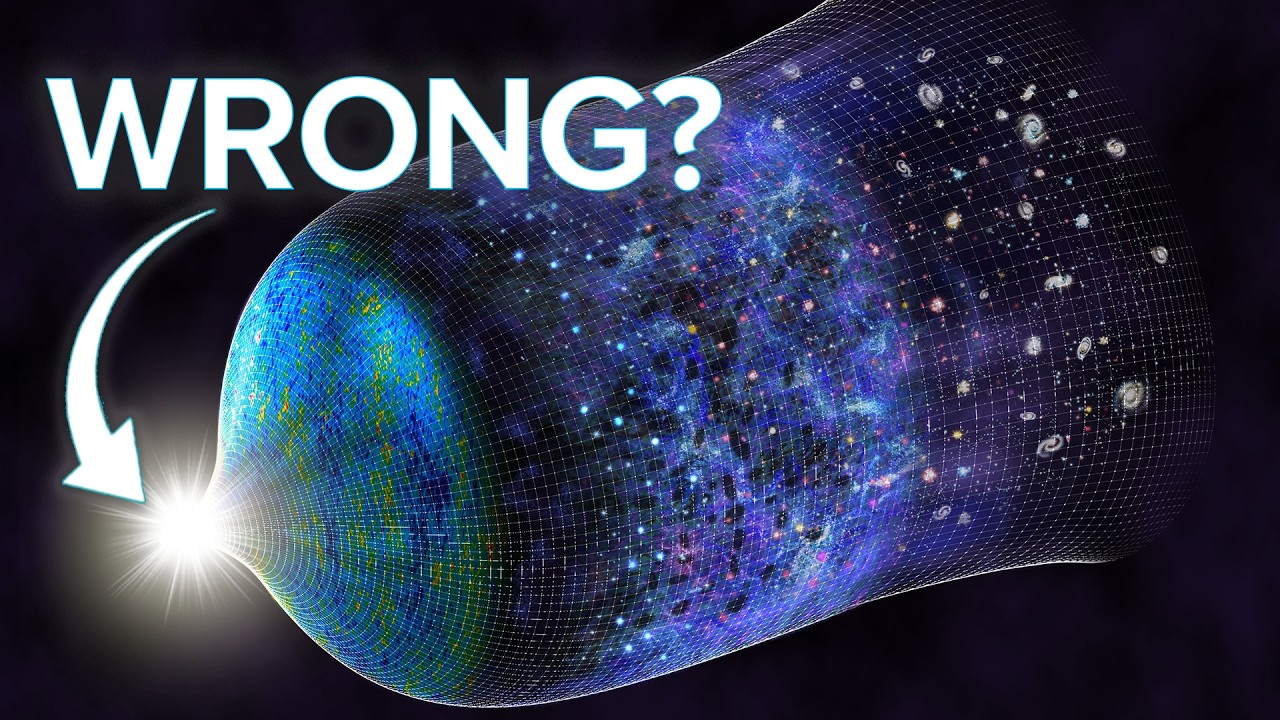
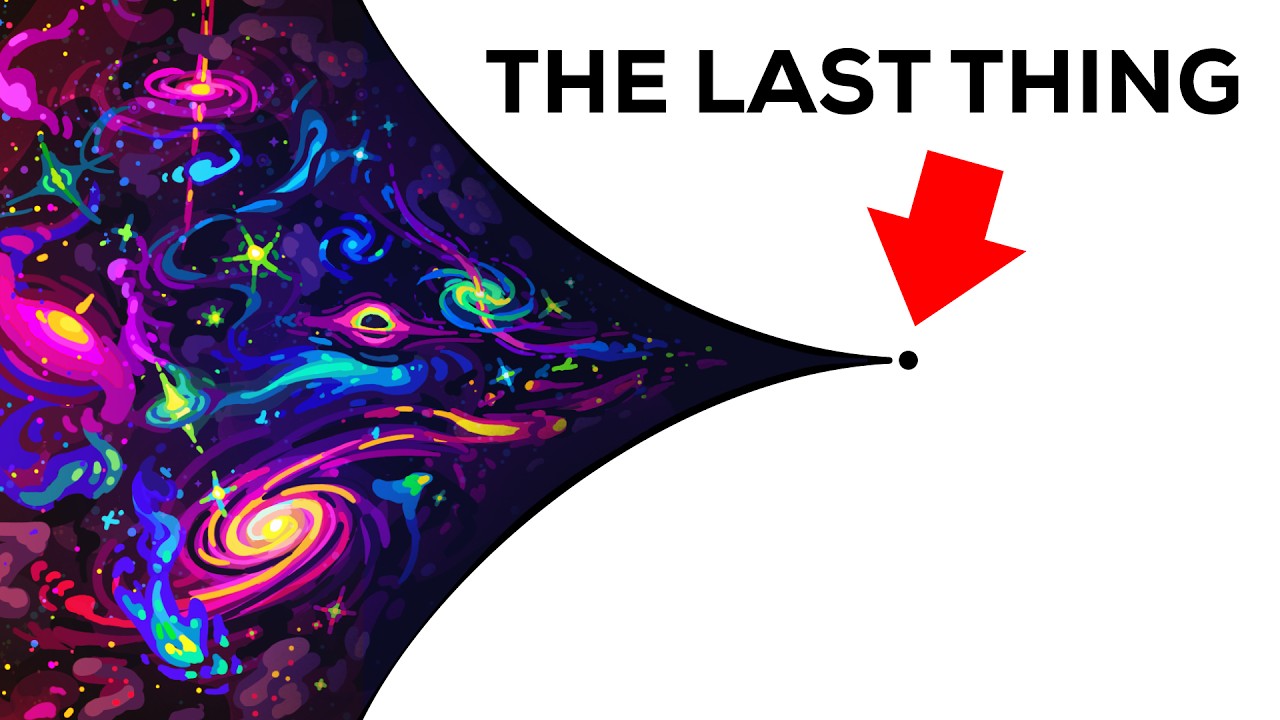
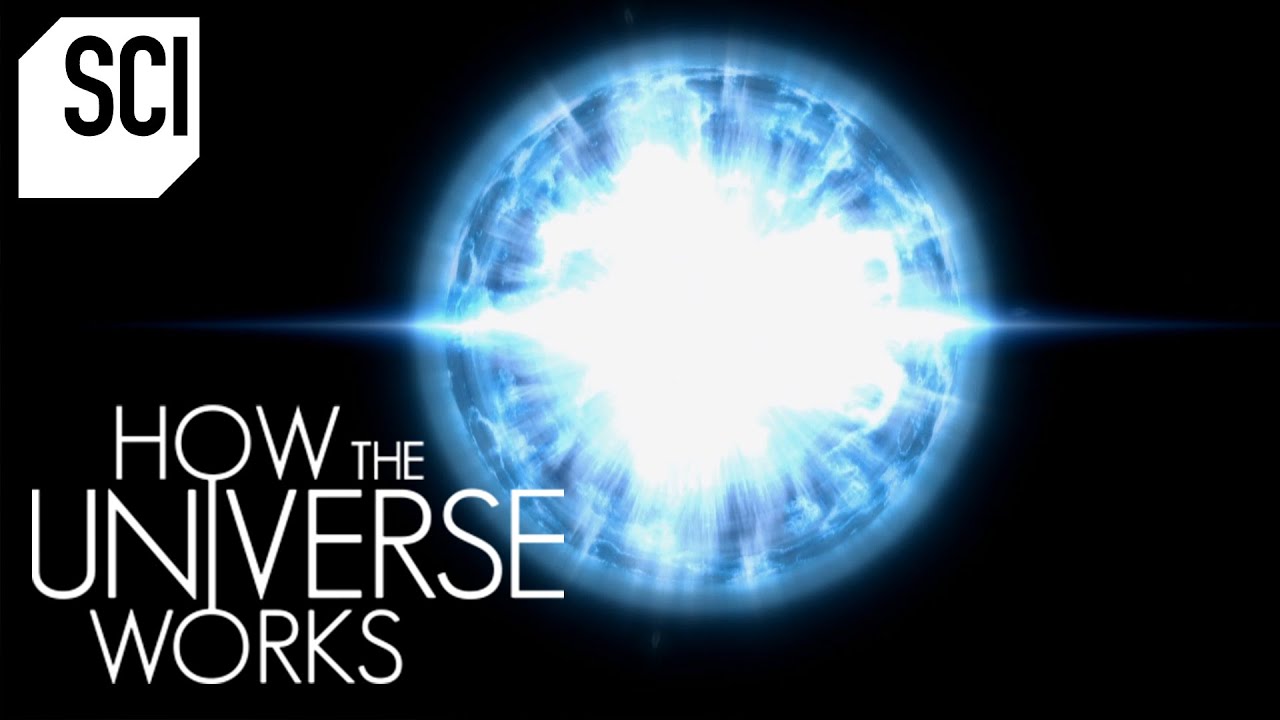
The Big Bang. No space. Total darkness.
Nothing. Suddenly the universe sparks into life. Really?
Surely everyone knows you can't get something from nothing. It's really the ultimate question How did the universe come into being? And the thing is, we don't want just everything to come from nothing.
It seems like a trick, but here we are. We exist. So something must have happened and we just don't understand the physics of it yet.
This is one of the big open questions in cosmology, the origin of the universe. And I think that people have variously said stuff like, Oh, the universe has come from nothing like, Ta. Da, now there's a universe.
But remember, we don't have data about the earliest moments of the universe. We don't know what was going on. We're struggling in the dark to get insight into what may have happened before the Big Bang.
That period of apparent nothingness. Physicists look to empty space. But does empty really mean there's absolutely nothing there?
It's not that there's something coming from nothing, because that old fashioned idea of nothing just doesn't apply to what we think of as empty space. It turns out empty space is far from empty. The vacuum of space is really a writhing sea, awash with charged quantum particles and electromagnetic fields.
The vacuum of space itself can be a very dynamic thing. Matter can spontaneously appear out of the vacuum and then spontaneously annihilate. The vacuum is full of particles and antiparticles that are whizzing into existence and then disappearing, colliding with each other.
Space is full of virtual particles popping in and out of existence. And there's no question that they're real. Their effects are absolutely visible.
We can see them. In extreme physics, things can get strange. Maybe nothing is something after all.
If empty space contains particles that apparently come from nothing, Could some sort of similar process have triggered the Big Bang? The quantum vacuum itself can randomly, spontaneously, without any input, just have a lot of energy, perhaps enough energy to spark something that we would call a big bang. There are many speculative theories about the origin of the universe, but is its sudden appearance out of nothingness the only trick it pulled off?
It also made matter from energy. The universe is full of galaxies, stars, planets and comets. Where did they all come from?
According to the Big Bang narrative from one tiny dot. When the universe began, there was actually no room for matter at all. The temperature was so high, the spaces were so compressed that matter couldn't exist.
So how did the universe manage to become full of matter? In the primeval atom. There was no room for matter, but it was crammed full of energy.
And as Einstein tells us, all we need to create matter is energy. According to E equals MC squared, energy and matter are interchangeable. Einstein taught us with special relativity that energy and matter are two sides of the same coin.
You can convert matter into energy by, say, blowing something up. The most fearsome example of converting matter into energy was the atomic bomb developed in the 1940s. But with the big bang, this process was reversed.
Energy created matter. Matter that expanded out and out to fill a whole universe. And in cosmic terms, the universe where matter would develop grew remarkably fast.
Right after the universe was born, it had an unbelievable growth spurt, basically going from being a toddler to a teenager in the single tick of a clock. How could the universe get so big so quickly? If we believe the Big Bang story, it appears to have broken one of the most fundamental laws of physics.
Did the early universe really grow faster than the speed of light? Parts of the universe that are now separated by 93 billion light years once had the same cosmic zip code. To have expanded so quickly, inflation must have broken one of the fundamental rules of physics.
We all know that one rule the universe sticks to all the time is that nothing can travel faster than the speed of light. So how can we possibly say that the universe expanded faster than the speed of light? But inflation says the universe expands into nothingness.
There was no outside of the universe. The universe was everything. So space itself was inflating and space can move as fast as it wants.
You can't go faster than the speed of light through space, but space itself is allowed to stretch and expand as fast as it wants, and that's what our universe is doing. The idea of inflation smooths out the universe in kind of a peculiar way. You can kind of think of it as having a sheet with a lot of wrinkles in it.
And if you take that sheet and snap it really hard, those wrinkles very suddenly flatten out. The theory of inflation is one of the craziest sounding ideas in the history of science. So crazy that it might just be right.
Inflation helps us to understand the inexplicable. But there's a problem. We don't know what triggered or powered inflation.
The inflationary universe idea imagines that the universe was suffused with some kind of ultra dense energy at early times, something that pushed the universe apart. What caused there to be that hot, expanding stuff? We have to be humble and acknowledge that we don't know for sure.
But whatever started it, inflation was over in a split second. It didn't last very long. And this is difficult to understand.
How did inflation stop? We don't know. We got nothing.
Folks. Well, we got some things, but it's tough. It's tough.
But has the process of inflation really stopped? One radical theory proposes if the force called inflation kick started the expansion of one universe, then why not another? And another and another?
Is inflation creating a whole series of new universes? Is there a multiverse?