[Applause] [Music] [Music] hey [Music] gallant choirs [Music] in many amphibian species the males sing to attract the females that release their eggs in temporary pools of water where the tadpoles have to develop these pools are sometimes very short-lived puddles that dry up before the tadpoles have finished developing in the case of the midwife toad the males have taken charge of solving this problem mating occurs on land and when the female arrives they adopt the mating position she releases her eggs and he fertilizes them but then they don't leave them in the pond but rather roll
them up like a string of beads between the male's hind legs from then on the male takes care of the eggs usually hidden underground for about a month when the tadpoles begin to emerge from the eggs the male chooses a pond or stream that has a large enough quantity of water for the tadpoles to develop [Music] these busy dads spend a month caring for the eggs but they're not satisfied with the eggs laid by just one female normally they try to attract several females as long as they can carry all the eggs on their backs
the females loaded with eggs hear the male's calls and have to decide which female to approach mate with and trust their eggs to dr rafael market and his team are carrying out some interesting experiments to find out whether the females prefer certain characteristics of the sounds that the males make by recording the sounds of numerous toads in the field they discovered differences in parameters of their calls the largest toads emitted deeper sounds using computers they generated sounds similar to those of the males and changed their frequencies making them deeper or higher they then carried out
a field experiment with these sounds they installed seven loudspeakers that reproduced sounds ranging from very high to very deep most of the females approached the deeper sounds but within the range of those existing naturally in their own population that is to say they weren't attracted to the abnormally deeper sounds that indicates that females appear to prefer the larger males within the range of sounds that is normal in their population [Music] as they don't depend on water during mating midwife toads unlike other amphibians don't gather in ponds to attract the females normally each male stays at
a fair distance from other competing males [Music] nonetheless sometimes more than one male coincides in a place while trying to attract females in such a duet the male with the higher pitched voice feels he is at a disadvantage to compensate he speeds up his rhythm and calls more frequently since he can't change the pitch of his song dr marquette wondered to what point the females would be more attracted to the deeper sound or to the faster paced calls to answer this question he designed an ingenious experiment he placed a series of females one after another
on a wheel that allowed them to move in one direction or another while staying in place next he reproduced a high-pitched call on one side and a deep one on the other the deep call ought to attract more females in the next step of the experiment he gradually decreased the pace of the deep sound to see at what point the females would turn toward the high-pitched call in this way he demonstrated that female midwife toads are more attracted to males that can sing at a faster pace even though their song isn't particularly deep male midwife
toads have never been seen to fight each other directly like other toads the way in which they compete amongst themselves is by increasing the pace of their calls to beat their rivals and attract more females initially the females prefer the deepest calls probably because being larger indicates greater age and experience and perhaps better abilities for survival but at the same time females appear to value even more the call rate of the male's calls expressed in the number of calls per unit of time which may reflect in addition to his ability a greater drive to attract
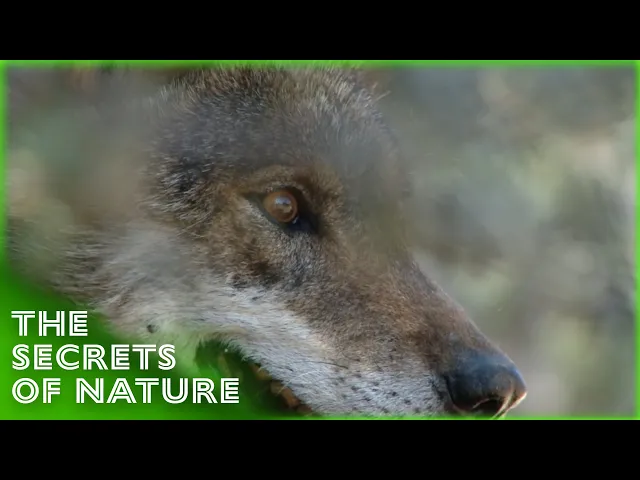
her the result is a new generation of tadpoles which in the future will form more gallant choirs of toads serenading in the night [Music] the price of power the wolf a phantom of the forest and a real treasure among the fauna of the iberian peninsula the eternal villain in popular culture it is both harassed and admired the fight against wolves has even led some people to build pits and drive walls into them to kill them sometimes even exhibiting them publicly they were considered harmful and dangerous surrounded by a halo of mystery and almost supernatural abilities
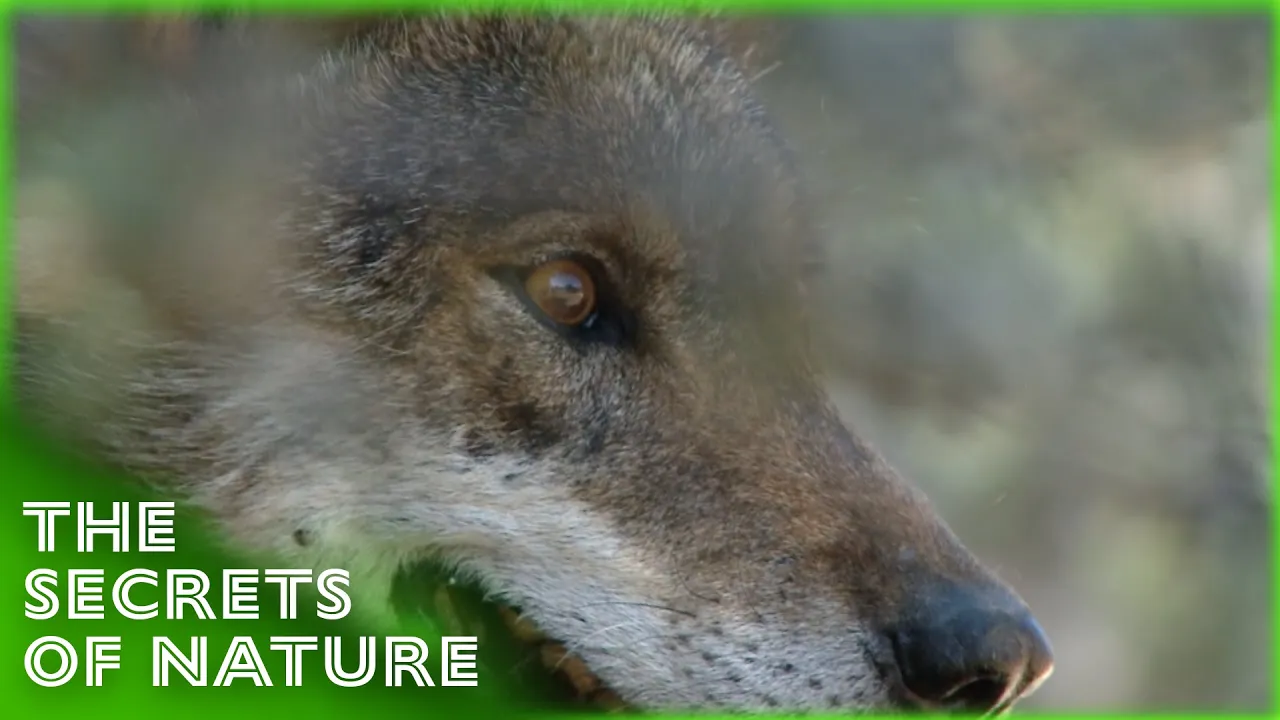
now rigorous scientific studies are revealing their true nature dr isabel barca of the autonomous university of madrid is studying the wolves in the northwest of the iberian peninsula she carries out her work in spectacular virgin landscapes like those of osmontesto invernaledo natural park as with most mammals their excrement represents a valuable source of information the characteristics of the hair and bones that it contains allow scientists to identify with certainty what the wolves ate five years of work and the collection of close to 600 samples have revealed that wild ungulates like rhodey red deer and wild
ball are their preferred prey even when they live in areas with domestic livestock but besides defining their diet the wolves excrement provide many more data about their fascinating behavior [Music] the fecal markings left by walls can contain valuable information for their fellow walls dr barca and her associates studied the volatile chemical compounds present in these markings when they compared the samples from young wolves with those of adults they found that the feces of adult wolves contained a greater number of chemical compounds 77 different compounds as compared to only 26 in the pups in addition the
samples from pups do not include compounds secreted by the anal glands all this indicates that adults use their feces to send information to others wolves place some of their feces in conspicuous and elevated places this behavior makes it easier for other walls to locate them and spreads their scent farther the research has shown that they choose the plants they mark but not just any plants the size and species of the plant are decisive their ideal plant is about 60 centimeters high and 60 centimeters across and if it is also roughly textured and hardy then it
is the perfect support the hormones present in these feces samples can even provide information about the level of stress of the animal that left them when she analyzed this aspect dr barca found an unexpected result the dominant wolves were under greater levels of physiological stress than their subordinates until then the results of studies with wolves in captivity had shown the subordinates to be under greater stress in their natural environment however the opposite seemed to occur if the steps to pacify the dominant wolf didn't work they could always move away from it but that wasn't so
easy to do in captivity the social relationships among members of this species are tremendously elaborate only the dominant pair the so-called alpha pair reproduces but maintaining their dominant status in the wild represents a significant effort for them by placing unobtrusive cameras with movement sensors the team obtained photographs and videos of these elusive animals wolves engage in cooperative breeding and all the members of the pack provide food for the alpha pairs pups by using these cameras it is even possible to observe the nocturnal behavior of the pups hidden in the depths of the forest [Music] day
by day studies like these reveal to us an ever clearer image of the behavior of this fascinating animal that was once our companion and ally for much of our journey as a species we were hunters and wolves helped us to obtain our food but when we settled down and became farmers we turned our backs on and considered them our enemies now we have the opportunity to discover them anew before our modern world pushes them to the brink of extinction [Music] living on the edge the gravitational pull that the moon exercises on the bodies of water
that surround the continents is what produces the tides twice a day the water level rises and falls exposing an area that is inhabited by a diverse group of species that have adapted to this continuous change in their environment this strip of land between two worlds is home to some mollusks that grip the rocky bottom so firmly that they can withstand the pounding of the waves without moving an inch among these mollusks called limpets one mediterranean species in particular stands out because its populations have suffered such huge losses that it has been classified as being in
danger of extinction the ribbed mediterranean limpet or patella ferriginia has a very characteristic star-shaped shell and can reach a surprisingly big size maybe that's why humans have eaten them since the times of the neanderthals today it is one of the 14 species which because they are at risk of becoming extinct enjoy a national conservation strategy in spain like the iberian links or the cantabrian capacity although most of its populations are thin at present one of its safest havens is in the city of dr jose carlos garcia gomez and his team at the university of seville
were the first to describe the ribbed mediterranean limpets biology and behavior they have detected that this species is more sensitive to water pollution than any other species of olympic in fact when they studied the distribution of species around an outlet that discharged urban wastewater the ribbed mediterranean limpet was the species that first appeared at the greatest distance from the outlets therefore they are bio-indicators of clean water [Music] although they don't seem to move from the spot they are clinging to if we speed up the images we can see that when the tide comes in they
make a series of movements to clean their brain and then start to move over the surface of the rocks limpets are herbivores that graze on the layer of microscopic algae that form a fine film over the rolls as they feed they follow specific routes and always end up back at the same spot where they started which is called a footprint each limpet has its own footprint which gradually forms over its lifetime and in which it fits perfectly if for some reason it didn't manage to return to its spot when the tide went out again it
would face serious problems of dehydration during the long hours under the sun dr garcia gomez's team has confirmed that the ribbed mediterranean limpet is a protandrous hermaphroditic species that is when they first become adults they are all males but as they grow they transform into females so the largest ones are usually females this may have played a role in the species decline because since ancient times humans have logically preferred to catch the biggest lipids to eat in addition the females reproductive capacity increases as they grow larger the researchers found that a female measuring eight centimeters
produced approximately the same number of eggs as ten females measuring six centimeters but since prehistoric times the ribbed mediterranean limpet has also adapted to the pressure of having humans catch the largest females one of the most interesting discoveries made by this team of marine biologists is that when females become scarce in a particular area some of the males turn into females even though they haven't reached the usual size for that transformation the interaction of limpets with other species is also a problem sometimes they may even take over their footprint despite being smaller than the limpets
which weakens the chances for survival of large ribbed mediterranean limits the researchers have also evaluated how the different kinds of artificial substrates used to build dikes in ports may affect these limpet's ability to colonize them thought this port with its special configuration has become one of this species main refuges water enters the port in two places renewing the ports ecosystem with clean waters from the strait of gibraltar and a military zone that is closed to the public all this has allowed the development of large reproducing females that strengthen the local population with new juveniles each
year this species makes it clear that development can be compatible with the conservation of biodiversity and in fact ports play a very important role in its conservation dr garcia gomez and his team have proposed to the scientific community and to the unesco that a new protective category be created called an artificial marine micro reserve which if put into place would allow the incorporation of specific port areas their objective is the conservation not only of this endangered and beautiful star-shaped limpet but of its whole environment [Music] harems in the arctic [Music] [Music] [Music] each year the
sami herd together all the reindeer in their territory and drive them into some large enclosures the aid of all-terrain vehicles they managed to bring together more than two thousand animals that run frantically in a circle as a defense [Music] whole families work all night marking the mothers and offspring to be able to recognize them and establish who they belong to [Music] they also select the animals that will be slaughtered to make use of their meat bones and high although it looks chaotic everything is calculated down to the last detail the children catch the smallest range
with tremendous skill they identify each animal [Music] high over the village the aurora borealis frames a ritual that has barely changed over thousands of years as is evident from these images carved in stone near the shore of a fjord in northern norway [Music] these arctic peoples have based their lives on following the reindeer as they migrate they even made them their mode of transport giving rise to a process of semi-domestication of these animals [Music] reindeer live in groups that travel about in search of the lichens on which they feed it's not easy to find areas
like this one with an impressive white mantle not of snow but of lichens [Music] traditionally the sami have managed the populations of the herds to include a lot of females and only a few males just a handful of bucks are enough to successfully fertilize many does generally it has been assumed that among polygamous ungulates the males always play an insignificant role in the population dynamics and so they have been selectively sacrificed but recently this hypothesis has been questioned [Music] the research team of dr oystein holland has carried out experiments to clarify the consequences for the
herd when the number of males is reduced [Music] they compared herds of reindeer with the traditional structure which includes more does than bucks with other herds in which they balance the proportion of the two sexes the research team is monitoring the herds closely the animals are identified with numbered tags and collars with radio transmitters they live in conditions of semi-freedom in large enclosures covering some 15 square kilometers so far they have obtained some interesting results in the herds with few males the does give birth later this is of no little consequence since even if the
fawns are born only a few days later they miss the times when the lichens are most abundant if they lag behind in their growth they will suffer that handicap throughout their lives they have also found that the reproductive efforts of the young males are lesser in a balanced population the big bucks limit their access to the females and so the smaller males compete less amongst themselves and improve their chances for future reproductive success [Music] the role of the males and the demographic models has traditionally been ignored under the assumption that the fluctuation in the number
of bucks doesn't influence the reproductive rate of the females this has been true not only for reindeer but for all the ungulates that breed in harems these recent studies by dr holland's team show that in fact very subtle mechanisms are involved [Music] ungulate management should take these aspects into consideration and maintain balanced populations similar to those that exist in natural conditions and under which these species have evolved [Music] dance with me [Music] these birds are called babblers and although they may look like they're preening in reality they're dancing this peculiar dance almost always takes place
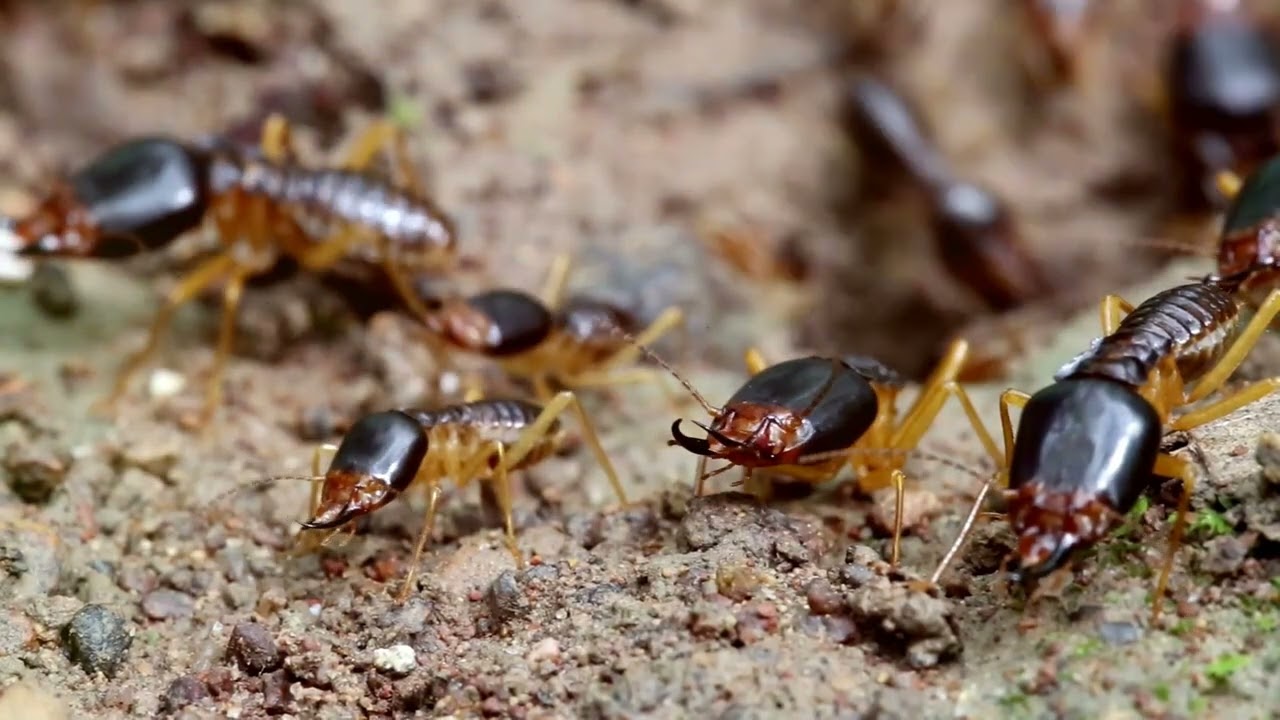
before sunrise at this moment the danger from raptors is the greatest since raptors can exploit the low light to surprise their prey with relative ease nonetheless they dance usually in the open rather than safely under a tree this is also the time when babblers should want to feed after spending the whole night without eating and since many of the small night creatures on which they feed such as termites are still active [Music] ahmad zahavi has studied these birds for over 40 years in the arava desert in southern israel and he discovered this curious dance which
is made up of awkward movements made in a risky time and place [Music] babblers live in groups in fact they are the only social bird species in this desert belonging to a group has its advantages there is always a century on guard that alerts the rest in case of danger the birds also receive help in tasks such as raising chicks or foraging for food amits and avishag zahavi have accustomed to babblers to their presence by offering them small gifts of food hence the babblers lost their fear of them and the zahavis were able to observe
them at a short distance without interfering with their behavior babblers can decide to leave the group thus one of the most important parameters that may decide whether to go or stay is the motivation of their partners to invest in them the eternal questions do you still love me and how much do you love me when they invite their partners to dance they can assess the motivation of their partners to invest in them the information about the commitment of each of its companions is useful on several levels in the most extreme cases it may lead to
a decision to break off the relationship most of the time though it helps individuals to choose how much to invest in a relationship and how much they can reasonably expect from the other partner clearly there is no point in asking for something from a partner who has no interest in the relationship the only way to obtain reliable information about the partner's commitment to bond is to ask him to involve himself in an uncomfortable activity all the mechanisms used to test the social bond involve imposing something on the partners the most impressive social activity of babbler
groups is the morning dance dr zahavi believes this ritual is the way in which babblers test the motivation of their group members to invest in them [Music] an individual who is willing to undertake all this with its partners reliably shows its commitment to the group and especially to the individual that invite them [Music] there are other ways to test the strength of the bond babblers often gather close together but this is not the norm among birds the individuals of most bird species tend to keep a certain distance from the others this makes sense birds need
a certain amount of room to spread their wings and fly off one who does not keep its distance from the others cannot take immediate flight to avoid a predator or catch a prey that may appear another method babblers use to test their social bond is alloprine or preening one another's feathers babblers often form tight groups and preen each other the babbler being preened poses before the preener's beak feathers fluffed and eyes often closed to let the other preen its facial feathers fully the recipient of the preening can hardly see in that state and is obviously
not prepared to fly or flee the preener tests the other's will to cooperate with it and the one being preened shows that it trusts the other to warn it in case of danger both by coming close and allopriny assume greater risks than birds resting alone in the 1970s zahadi proposed an ingenious theory that explains not only these but all the signals used in animal communication the handicap principle according to this theory any communication signal is associated with a handicap that ensures its reliability a babbler's commitment to the group is measured by its motivation to accept
the burden imposed by the other group members like dancing under risky conditions which reliably demonstrates the commitment to the partner that invited [Music] coral caretakers coral reefs are one of the richest ecosystems on the planet their biodiversity is enormous they are home to a fourth of all the species in the oceans while occupying only a tiny part of their surface area [Music] the second largest barrier reef in the world is found in the caribbean sea and the island of rothan in northern honduras is one of its richest enclaves but these forests of the sea are
in danger pollution climate change and fishing with explosives or cyanide are only a few of their main threats [Music] the links that form the trophic chain are similar to those of any terrestrial ecosystem algae are the primary producers at the base followed by the plant-eating fish that consume them and then the predators that feed on them [Music] corals play a role as producers but also as consumers most corals feed on organic matter produced by microscopic algae that live within the coral's body but many eat plankton and even small fish scientists have a lot of data
about the importance of the diversity of the primary producers to the health of an ecosystem but little is known about the influence of the diversity of the consumers on the overall biodiversity and on coral reefs they can be especially important [Music] the research team led by dr mark hay of the georgia institute of technology in atlanta studies the fish that feed on algae and coral reefs and their importance in the preservation of the reef [Music] these herbivorous fish are disappearing as a result of destructive fishing practices and the research team has carried out a study
to analyze the consequences [Music] they isolated two large areas of the coral reef keeping only one species of these herbivorous fish in one area and a group of several species in the other area after several months under these conditions the results were evident on the reef with the greater diversity of plant-eating fish the coral cover grew by 22 percent while the reef on which only one species lived shrank by 30 [Music] dr hayes team has also conducted research into the reasons that lie behind this effect on the health of corals before their studies it wasn't
clear if the algae damaged the coral directly or if a chain of events was taking place with the algae colonizing those areas where the corals died due to other causes but the results of these studies have also been conclusive the algae produce a hydrophobic chemical substance that bleaches the corals reducing the photosynthesis of their microalgae associates and eventually killing them fish therefore are the coral's best allies when they feed on algae and control potentially harmful populations thus contributing to the preservation of coral reefs the importance of these living barriers goes far beyond the beauty that
they contain they are also a defense against danger as corals protect these coasts from the beating of the waves it is in our hands to preserve the diversity of fish life in order to prevent the disappearance of the coral reefs in the planet's warm seas [Music] [Music] wings over the pyrenees the pyrenees mountain range is home to the most important population of bearded vultures in the western part of the paleoarctic eco zone this impressive bird of prey also known as the lammergate is the only species a bird on the planet that feeds on bones and
like other very specialized animals it is threatened with extinction in the late 20th century the bearded vulture disappeared from all of the iberian peninsula except for the pyrenees where an intense conservation effort has managed to double the population in the last 20 years the foundation for the conservation of the bearded vulture and the regional government of aragon are working together to keep this natural treasure from disappearing one of the keys to the recovery of this species is supplementary feeding which assures these birds of prey the minimum consumption of bones that they need even during the
harsh winter months although the much more abundant griffin vulture is usually the first to arrive on the scene the bones are left for the bearded vultures which are true osteophagus specialists able to eat bones whole the plumage of the two sexes is similar although it is easy to distinguish the adults with their orange-tinged bodies from the juveniles with their dark bodies the sub-adults display a black neck given the great mobility of the species the increase in the pyrenean population may allow the bearded vulture to expand again into other territories where it became extinct decades ago
but in order for these new colonizations to be successful scientists require detailed knowledge of their needs and above all of their dispersion behavior [Music] the researchers at the foundation for the conservation of the bearded vulture have used various systems to mark close to 100 of these birds and are monitoring the individuals in detail a combination of wing markers makes it possible to identify them in flight and some of the birds have transmitters that allow scientists to keep track of them by radio or even by satellite [Music] the monitoring of marked individuals over a period of
more than 20 years has made it possible to gain a deeper knowledge of the bearded vultures biology and behavior their reproductive system is complex bearded vultures not only form mating pairs but it is even common to see trios that cooperate in reproductive tasks at six months the juveniles enter a dispersion stage throughout the pyrenean mountain range this stage lasts until they are at least seven years old when they establish themselves in a territory but this time relatively close to where they hatched about 50 kilometers away in the case of a female and a little closer
in the case of a male this species doesn't usually manage to breed successfully until it is at least 10 years old [Music] the work of the foundation for the conservation of the bearded vulture has not only achieved a deeper knowledge of this species but it has made it possible to propose specific conservation measures one of the most interesting conclusions to come out of this study is the desirability of providing food on the borders of their distribution area which encourages the birds in dispersion to colonize those new territories [Music] the bearded vulture population in the pyrenees
is growing while the majority of the species populations are declining in the rest of the world research such as this contributes to this success and makes it possible to identify the keys that can help to apply the most effective conservation measures lunchtime kids [Music] the period of reproduction is the most important time in the lives of birds their short lifespan and their high mortality forces them to make the greatest effort possible to raise successfully the largest possible number of chicks but the parents capabilities and the amount of food are limited when they reach the nest
there are lots of mouths to feed and the parents must decide who to give each people to one option is to feed the strongest chicks while the rest receive only the leftovers [Music] another option is to distribute the food equally among all the chicks according to their needs the chicks have developed a special form of behavior to let their parents know when they need to eat they open their beaks and flap their wings in the nest to get their helping since their lives depend on them but these signals can be costly and can attract predators
[Music] dr jerry porker is studying this complicated relationship in the common red star a bird that breeds in nest boxes in pine forests in the czech republic to analyze the chick's feeding demand behavior and the parent's responses he has developed an ingenious system he places over the nest a cover that houses a video camera and puts a digital recorder and the batteries to power the system in another box on the same tree with this setup he is able to record the parents and chicks behavior throughout the day he can even record in the dark by
filming the infrared light to identify each of the chicks he marks their heads with different geometric shapes both the female and the male which is very colorful tend to feeding their offspring dr porkert's recordings have revealed some of the secrets of this complex behavior [Music] the hungriest chicks demand food more frequently and they do so before their siblings when their parents reach the nest the position they occupy in the nest is also important as the chicks closest to the entrance to the nest box get the most food what's more a curious rotation takes place too
when the chicks are full they move to the back of the nest allowing their hungry siblings to move into the more advantageous spots at the front surprisingly the little common red starts are able to employ complex signals thus increasing their reliability and precision the parents can rely on at least two factors to decide which of their chicks to feed when they open their beaks and where the chicks have positioned themselves these are two of the mechanisms involved in this complex communicative context but there may very well be more there is still much to unravel in
this relationship between parents and offspring that determines reproductive success or failure [Music] so family secrets far north close to the arctic circle winter is long and cold and only a few bird species are able to cope with these hostile conditions an adaptation that helps them to survive this barren part of the year is storing away food during the lush summer and autumn [Music] the researcher michael greaser of the university of zurich takes advantage of the food storing behavior to observe the siberian jay close up each autumn he travels north and offers the birds a natural
source of calories whistles readily attract the birds to feast before the lean time arrives dr greaser's particular research interest is the evolution of family living in birds and his study species is ideal as they live in family groups throughout the whole year the individuals are identified with the help of colored rings attached to their legs and as the birds are not shy it's easy to record their behavior in detail many animals live in groups and the general benefits of group living are well known being in a group provides protection from predators as more eyes are
more likely to detect a predator and being in a larger crowd dilutes the risk of being killed however in siberian jays that live in family groups dr greaser has found more ways in which inexperienced offspring in particular benefit from being in the family group [Music] in siberian jays almost all birds die due to predation [Music] thus when feeding together parents are especially alert and increase the rate at which they scan for predators but only went together with their own offspring while unrelated group members do not benefit from this extra safety thus offspring that remain with
their parents have a much higher survival rate during their first year than offspring that leave the family group making family living a highly adaptive strategy [Music] protection from predation is of such importance that siberian jays have evolved an elaborate language specifying the precise nature of the threat using taxidermic models of different species of predators the researchers discovered that siberian jays not only used different calls for owls and hawks but they also communicate the type of behavior of their main predator hawks giving different calls for when the hawks are searching for prey attacking or resting such
impressively accurate warning calls surely must make life safer as suggested by the higher survival rate of family members nonetheless linking the warning calls to increased survival had until recently remained only an assumption dr greaser however conceived an ingenious experiment that made use of the fact that breeders sometimes also give warning calls to unrelated group members with the aid of an attacking goshawk model and a lot of patience to get the right combination of a breeder and an offspring or an unrelated group member on the feeder he could test whether the willingness of a breeder to
give a warning call affects subsequent survival returning to the groups the following spring and observing the survivors revealed that almost all the juveniles living with breeders that give warning calls had survived the winter while over 50 percent of the juveniles that did not benefit from those warning calls had died thus staying with parents beyond independence makes a great difference there is still a lot to learn from these family living birds and undoubtedly dr greaser's discoveries reveal interesting facets of family life that we also find familiar [Music] you