How do you emphasize nothingness in a building. How do you design complex spatial circulation while maintaining the appearance of simplicity. How do you become an architect, when you never get a day of conventional architectural education.
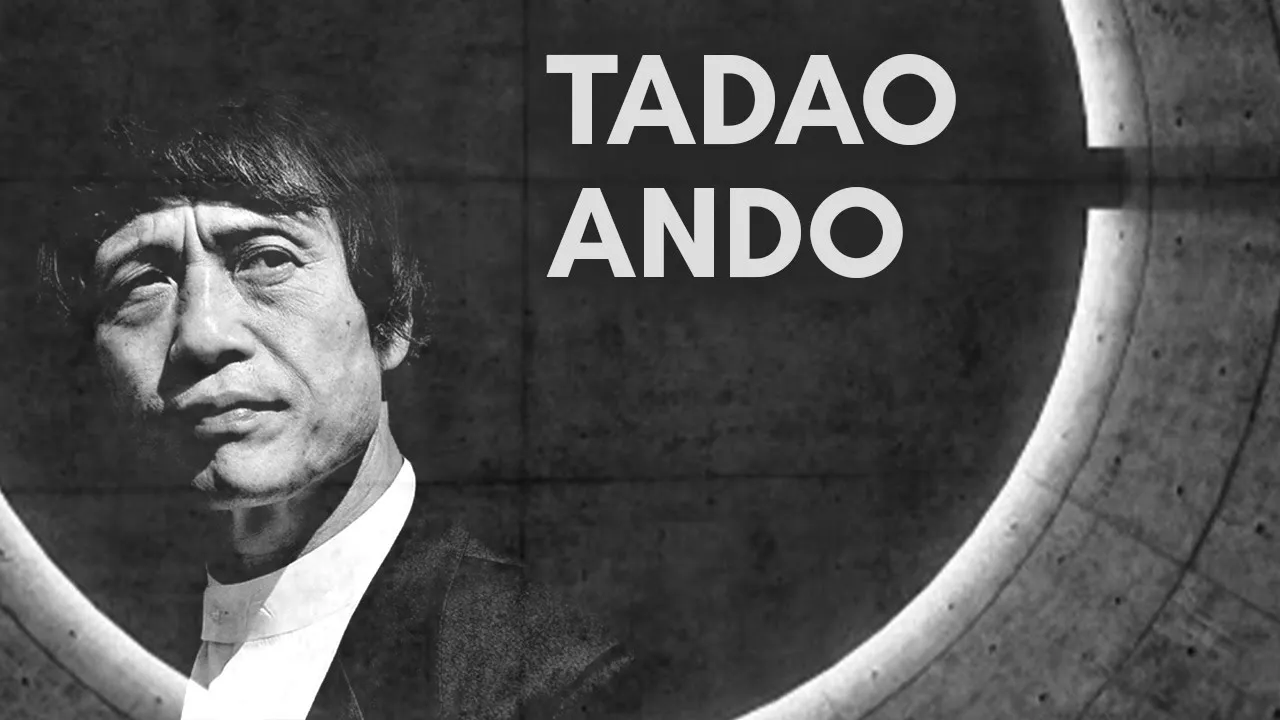
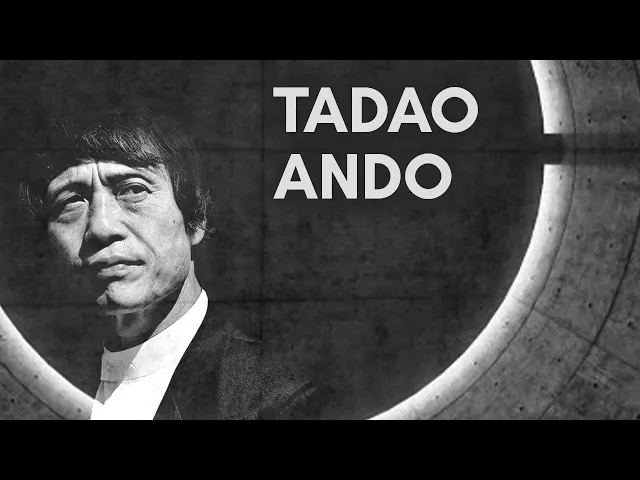
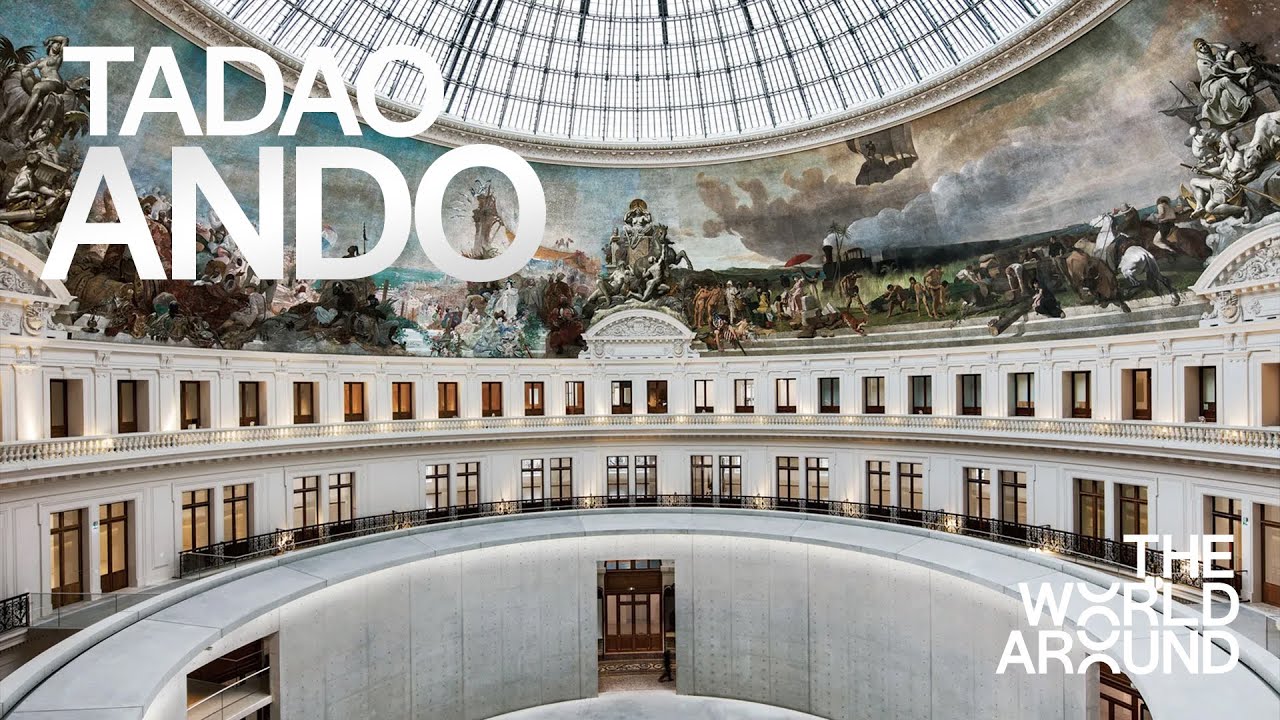
The answer perhaps lies in knowing the life of one of the most celebrated architects of the 21st century. Welcome to Blessedarch and today we are looking at the life and designs of Tadao Ando. Vincent Scully, who was an American art historian, writer and architect, defined architecture as a continued dialogue between generations, which creates an environment across time.
If you go by this definition, then every architect who has ever built a building has added to this dialogue. And while different architects take up different approaches creating buildings that have loud and bold statements, the works of Tadao Ando seem to master the art of silence. When you move through a space designed by Tadao Ando, you are made to experience simplicity.
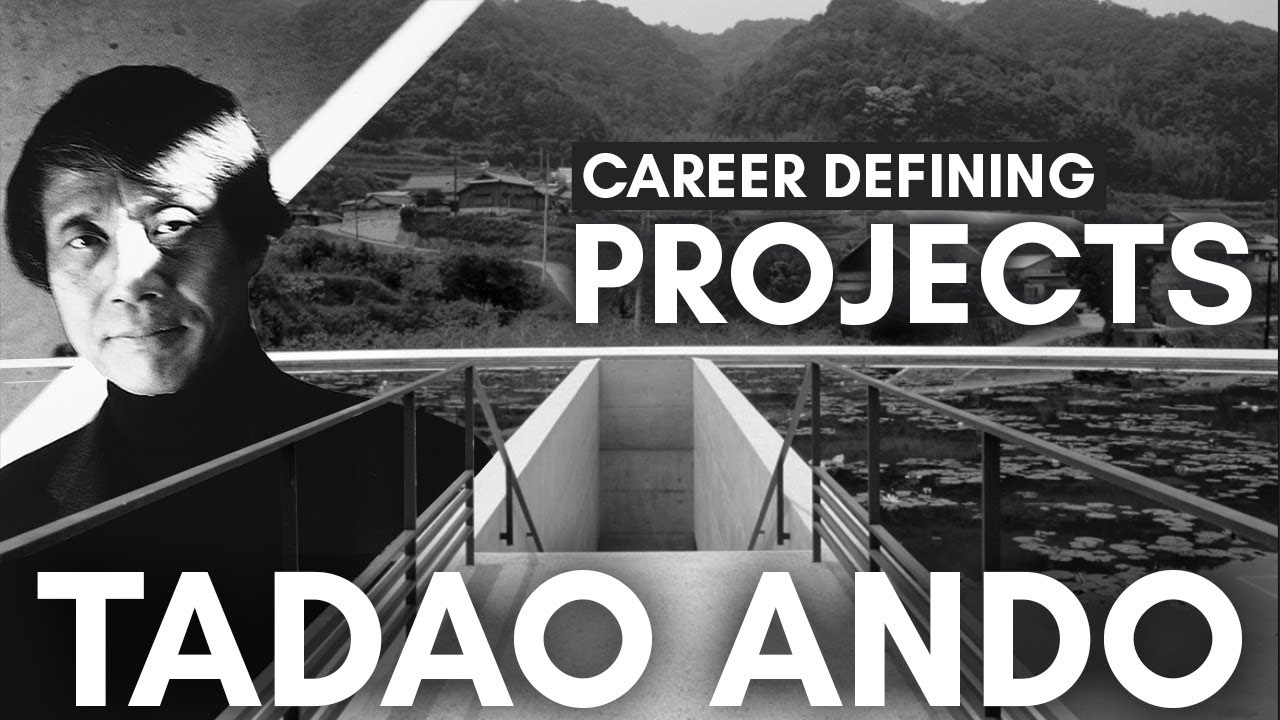
Tadao Ando has mastered the art of creating spaces that dare I say force you to be meditative & be present. But this world famous Pritzker winning architect, did not have a conventional entry into the field of architecture and maybe that’s because his whole life has been very unconventional. To understand Tadao Ando’s work, we need to understand where he comes from.
His story began in 1941 in Osaka Japan. Tadao Ando was born along with his twin brother Takao Kitayama. At an early age, his family chose to separate them, and have Tadao live with his great grandmother.
So this was around 1943, when the world war 2 was in full momentum. And in 1945 it happened. When he was 4 years old, two bombs were dropped in Japan.
We all know the story of the devastation that it caused. And so Tadao Ando spent his early years in a Japan that was recovering from these bombings and trying to build itself back up. While he lived with his grandmother, just across from his house was the shop of a carpenter.
A young Tadao spent a lot of time at this shop learning how to use and model from wood. His first introduction to architecture was at the age of 15 when he picked up a book by Le Corbusier. Ever since his childhood and even to this day, Books have held a great significance in his life.
His hunger for knowledge was so ravenous that to save for books he cut out a meal each day to afford them. Even though there was a spark of architecture within him, he still had a long way to go, before he actually became an architect. So as he approached adulthood, Tadao had a lot of off beat jobs.
One of them was a boxer. But even his profession as a boxer was taken to serve his true calling. He said in an interview with Tatler that to be the best architect “It’s vital for one to take in a lot of scenery – travelling makes an architect.
I became a boxer because the matches allowed me to travel overseas and experience different architectural styles. ” When Tadao was about 18, he started to visit temples, shrines, and tea houses in Kyoto and Nara. His architectural education did not happen in classrooms but in the actual spaces he visited.
He kept detailed sketch books of all his travels which he still does to this day. One of the biggest qualities that sets him apart in the world of architecture, is he spent a lot of his time learning not from the masters of architecture, but from their creations. Two of the biggest people to influence him deeply were Le Corbusier and Frank Lloyd Wright.
In fact Tadao finally decided to leave boxing and pursue architecture when he saw the Imperial Hotel in Tokyo built by Frank Lloyd Wright. This hotel, which is no longer standing, was completed in 1923 with the aim to showcase Japan's modernity and entice western visitors. As Ando puts it ‘I was overwhelmed by the immense beauty and richness of the space.
My response to the building was a purely emotional one as I had no knowledge of the technical and cultural complexities of architecture. I was shocked yet intrigued to know that architecture could induce a feeling akin to exploring a whole new world. ’ He eventually decided to end his boxing career less than two years after graduating from high school to pursue architecture.
After this he then attended night classes to learn drawing and took correspondence courses on interior design. He visited buildings designed by renowned architects like Le Corbusier, Mies van der Rohe, and Louis Kahn and finally in 1969, he was confident enough in the self-taught skills that he opened his one-man design studio, Tadao Ando Architect & Associates. A lot of his early works were a series of houses.
The most significant of these houses was Azuma house in Osaka (1976). This two-story dwelling was conceived as a megaron inserted within a row of traditional terrace houses. In this early project itself Tadao already established the essential principles of his architecture; the basic concept of creating meditative enclosures to stand against the urban chaos of the world.
This is a theme that you will see repeating in all of Tadao Ando’s work . As he puts it “I create enclosed spaces mainly by means of thick concrete walls. The primary reason is to create a place for the individual, a zone for oneself within society.
When the external factors of a city’s environment require the wall to be without openings, the interior must be especially full and satisfying. ”Coming back to the Azuma House, It consists of three equal rectangular volumes: two enclosed volumes of interior spaces separated by an open courtyard. The courtyard's position between the two interior volumes becomes an integral part of the house's circulation system.
This house was one of the early works by Tadao Ando that won many awards in Japan and springboarded him into international acclaim. In much of Andos’ work you will see a deep understanding of the site. A project that perfectly encapsulates is the Rokko Housing.
Built of reinforced concrete with a rigid frame, the units are embedded in the side of sixty degree sloping hillside with a panoramic view of Osaka Bay, and provide such amenities as a swimming pool and a rooftop plaza. Ando received Japan's Cultural Design Prize in 1983 for this project. But more significantly, was Ando's noteworthy engineering achievement in these clustered buildings.
These structures survived undamaged after the Great Hanshin earthquake of 1995. And this is the true testament to Ando’s education of learning by observation. In his travels and in his yearning to take in the buildings around him, he saw the relationship that buildings have with the air, the light, even with the ground that they stand on.
And in understanding these relationships and harnessing them to create beautiful spaces is where the true beauty of his works lie. One of the biggest natural resources that he beautifully harnesses in his designs is natural light. He intends for people to easily experience the spirit and beauty of nature through architecture.
One of my favourite structures by Tadao Ando is the Church of the light. Now Ando has deep Japanese roots and even though Japanese and Christian churches display distinct characteristics, Ando treats them in a similar way. In the small town of Ibaraki, 25km outside of Osaka, Japan, stands the Church of the Light.
Completed in 1989, the Church of the Light was a renovation to an existing Christian compound in Ibaraki. The structure is a minimalist concrete structure with slits in the wall in the shape of a cross. When daylight hits the outside of this wall, a cross of light is generated within the interior.
As you sit in the space, and light shines through the cross, it is as if you get a glimpse into the divine. Tadao went to create more and more beautiful structures. As his reputation spread, Andō received a number of commissions outside Japan that allowed him to continue his aesthetic in more-public spaces.
Important works from the 1990s include the Ando Gallery at the Art Institute of Chicago ; the Japanese Pavilion at Expo ’92 in Sevilla, Spain; and the UNESCO Meditation Space in Paris. He continued to design large-scale projects in the 21st century. Like the Giorgio Armani Theatre in Milan; the Pulitzer Arts Foundation in St.
Louis, Missouri; the Modern Art Museum in Fort Worth, Texas; and the Chichu Art Museum Naoshima, Japan. One of the greatest things that you will find in Tadao’s Ando’s work is the use walls. You might be a little taken aback by this statement.
Did I really just say walls? We have them all around us, they are basic building blocks of any space, how are Tadao’s Ando’s walls any different? The significance is not just the element itself, but how it is used.
As he puts it “At times walls manifest a power that borders on the violent. They have the power to divide space, transfigure place, and create new domains. Walls are the most basic elements of architecture, but they can also be the most enriching.
” Ando’s work stives to create sensory experiences and that is where his walls are important. They are the words that he uses, to finally string together his beautiful poems. Btw Ando doesn’t just focus on the form of his buildings, he even works tirelessly to perfect the material.
His concrete is often referred to as “smooth-as-silk. ” But its not just about whats in the concrete, but about how it is poured and the form work surrounding it. His form molds, or wooden shuttering are even varnished to achieve smooth-as-silk finish to the concrete.
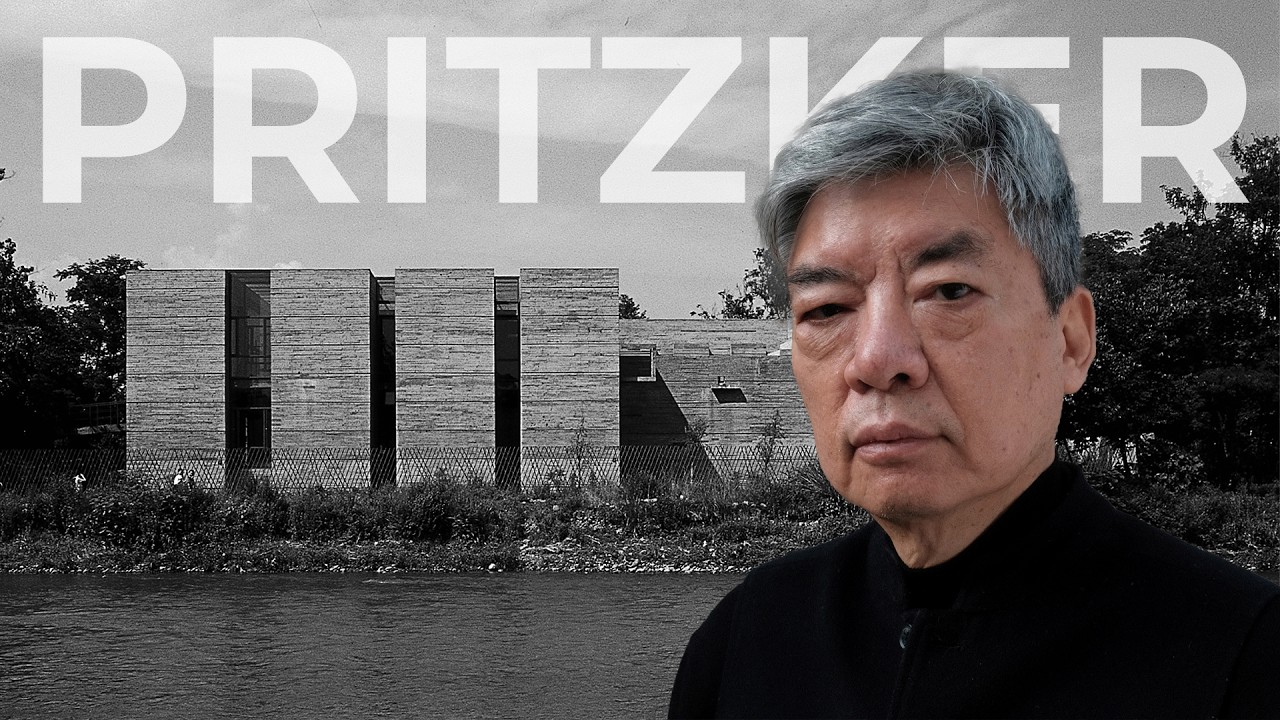
The evenly spaced holes in the concrete, that have become almost an Ando trademark, are the result of bolts that hold the shuttering together. When he was being given his Pritzker prize in 1995, the jury cited, "Ando conceives his projects as places of habitation not as abstract designs in a landscape. It is not surprising that he is often referred to by his professional peers and critics as being as much a builder as an architect.
That emphasizes how important he considers craftsmanship in accomplishing his designs. He requires absolute precision in the making and casting of his concrete forms to achieve the smooth, clean and perfect concrete for his structures. " When he won his Pritzker prize in 1995, He donated the $100,000 prize money to the orphans of the 1995 Kobe earthquake.
To me it seems Tadao understands that the central idea in all his work is very human centric. Even in his structures it is not just about the end users and their experiences, it is about the people who bring his work to life. In an interview he once talked about going on the site he said, ‘An architect needs to make everyone take ownership for the work.
To be successful, you need to ensure that every carpenter, plumber, and so on, in every project, is doing their own project. Every time I go to the construction site, I try to take a photograph of every worker. It's a symbol that we're all working together with a shared goal.
It's very important for me that everyone feels that way. ’ Tadao Ando today is 80 years old and has created a Legacy that very few come close to. Remember the quote Vincent Scully, who defined architecture as a continued dialogue between generations?
Well in these dialogues, Tadao Ando has contributed some of the most brilliant poems, frozen in form.
![Can we REALLY build on Mars? [SPACE ARCHITECTURE]](https://img.youtube.com/vi/N3KxgUxPhqI/maxresdefault.jpg)