Miranda: The Frankenstein Moon Orbiting Uranus Sure, it's a matter of taste. . .
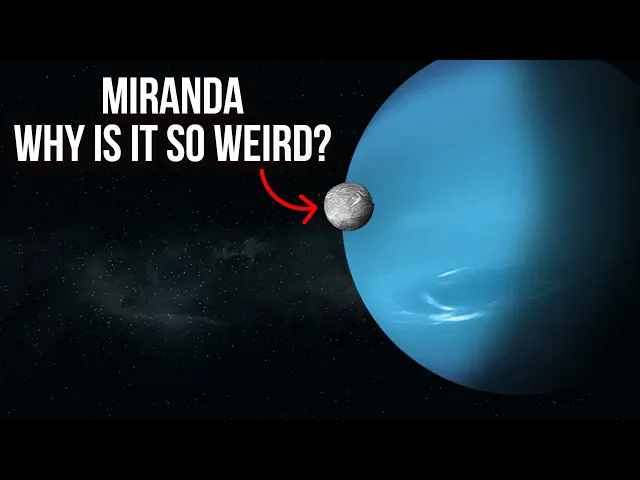
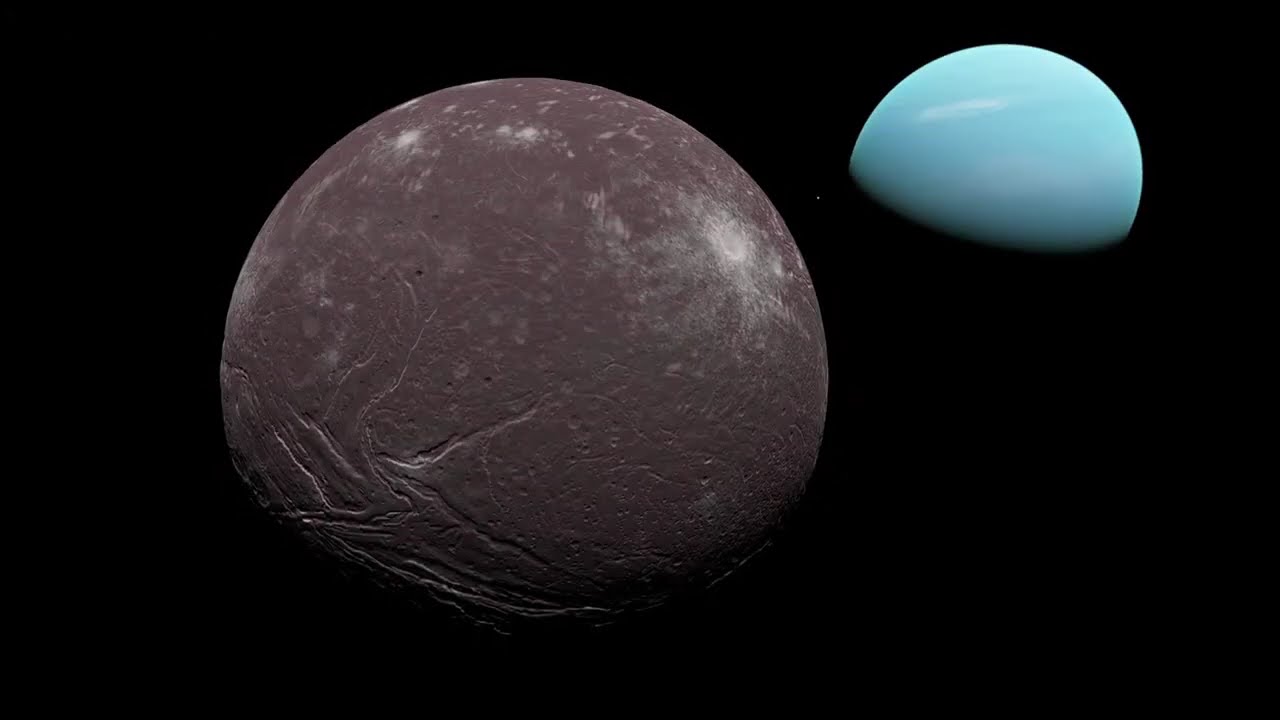
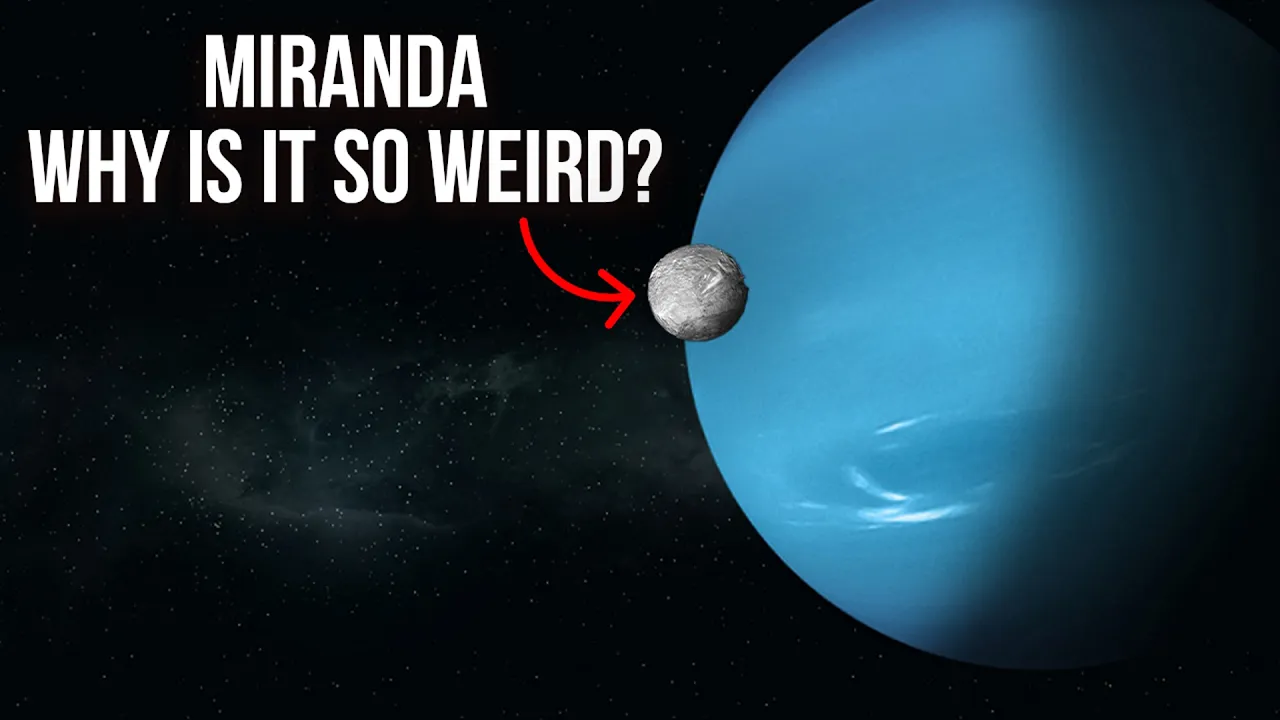
but many agree that one of the strangest moons in the solar system is the misshapen Miranda, the smallest and innermost of Uranus's five major moons. Discovered by Gerard Kuiper on February 16, 1948, it was named after a heroine from Shakespeare's "The Tempest. " However, the Shakespearean Miranda is a young and beautiful woman, while this moon looks like it was pieced together, much like Frankenstein's monster.
This small, lumpy moon, features a surface covered with skewed and intersecting ice slabs, oddly rugged terrains, pockmarked plains, and dark, irregular canyons. How did this deformed landscape come to be? Was the moon bombarded by meteors?
Did it survive a massive collision? Is it the result of stretching and squeezing caused by Uranus's gravity? We don't know yet!
Or maybe we do. . .
Follow along and let's try to uncover the truth together! The renowned astronomer Gerard Kuiper identified the elusive Miranda in a photograph taken with the two-meter telescope at the McDonald Observatory in West Texas, which was the second largest in the world at the time, after the 2. 5-meter Mount Wilson telescope.
It had been over 100 years since the last discovery of one of Uranus's moons. The first two, and the largest, Oberon and Titania, were found in 1787 by William Herschel, the same astronomer who discovered Uranus in 1781, then the seventh planet in the solar system. In 1851, William Lassell discovered Umbriel and Ariel.
Each of Uranus's moons is named after a character from Shakespeare, and Miranda, for whom the moon is named, is the protagonist of "The Tempest," the obedient and virtuous daughter of Prospero who was exiled with only her father from the age of three, never interacting with other humans until her teenage years. Fittingly, the moon's name is a good metaphor for the moon itself. Like Shakespeare's Miranda, who spends most of her youth obediently in her father's shadow, Uranus's Miranda is the closest of the planet's moons.
And like all the others, it always shows the same face to the planet. To give you an idea of Miranda's environment, Uranus has five major moons, whose mass is sufficient for their gravity to shape them into spheroids. The four largest moons are Ariel, Umbriel, Oberon, and Titania, with diameters ranging from 1,200 to 1,600 km (745 - 1000 miles), less than half the size of our Moon, while the smallest of the large moons is Miranda, with a diameter of 470 km (292 miles) The moons have similar compositions, consisting of a rocky core and an icy mantle, with rather dark surfaces.
Miranda is an exception, appearing to be mostly ice without a differentiated core and having a brighter surface. The two largest moons, Oberon and Titania, might have a layer of liquid water between the core and the mantle. The moons seem to have formed together with the planet or shortly thereafter, sharing Uranus's bizarre axial tilt, indicating a common formation.
In addition to the so-called "classical" moons, Uranus has other smaller, irregularly shaped satellites divided into two groups. The first group consists of 13 moons that orbit closer to the planet than Miranda, with diameters ranging from about 15 to 150 km (9. 3 - 93 miles), closely linked to the formation and maintenance of the ring system.
The second group consists of nine more distant moons that move in retrograde orbits compared to the previous ones, with diameters ranging from 10 to 190 km (6. 2 - 118 miles), likely Kuiper Belt objects captured long ago by Uranus's gravity. Miranda's surface appears to be composed of water ice mixed with silicate and carbonate compounds, with traces of ammonia.
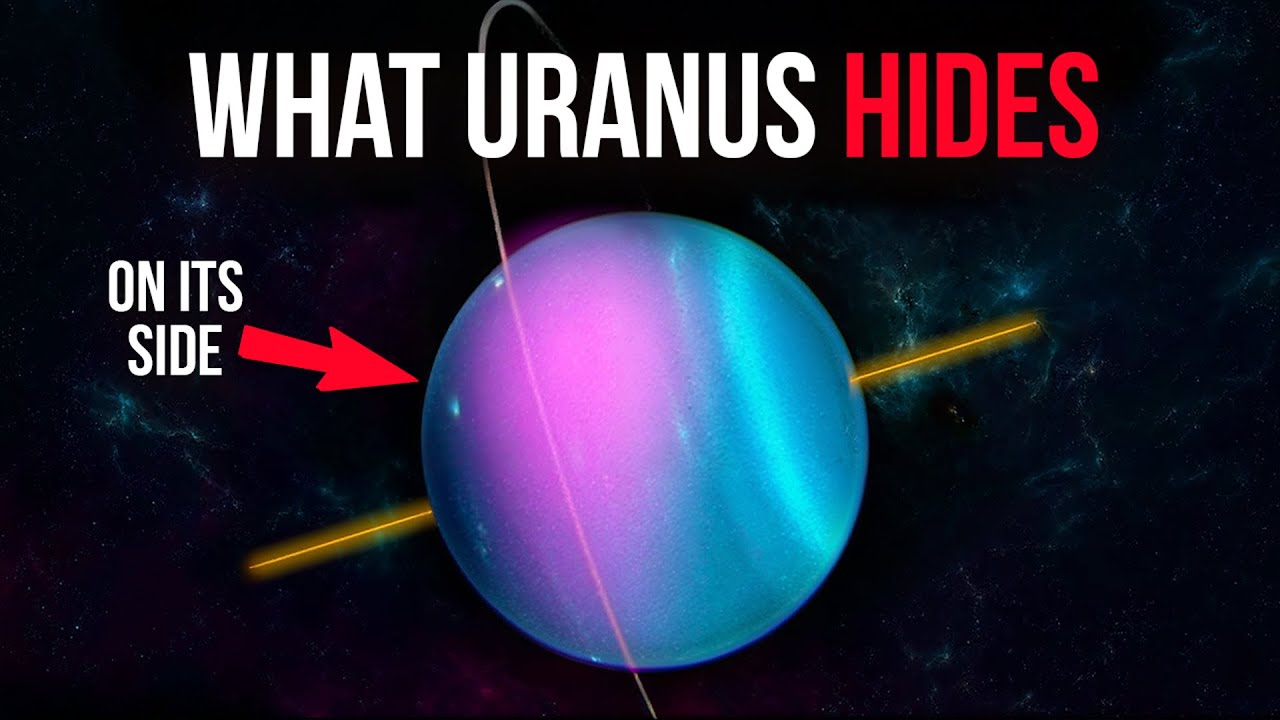
Like the other moons of Uranus, its orbit lies in a plane perpendicular to the planet's orbit around the Sun, and like the planet, it is subject to extreme seasonal variations. Like Uranus's other four major moons, Miranda likely formed from an accretion disk that surrounded the planet shortly after its formation, or after the catastrophic event that caused its unusual tilt. However, Miranda is tilted 4.
3° relative to Uranus's equatorial plane, the most pronounced tilt among Uranus's major moons; this, as we'll see shortly, might have had some consequences. We mentioned Miranda's discovery in 1948. .
. Well, it would take 38 years before that faint dot of light photographed by Kuiper could become a world to explore. And the credit for revealing the true face of that world didn't go to new generations of telescopes, but to one of the first interplanetary probes.
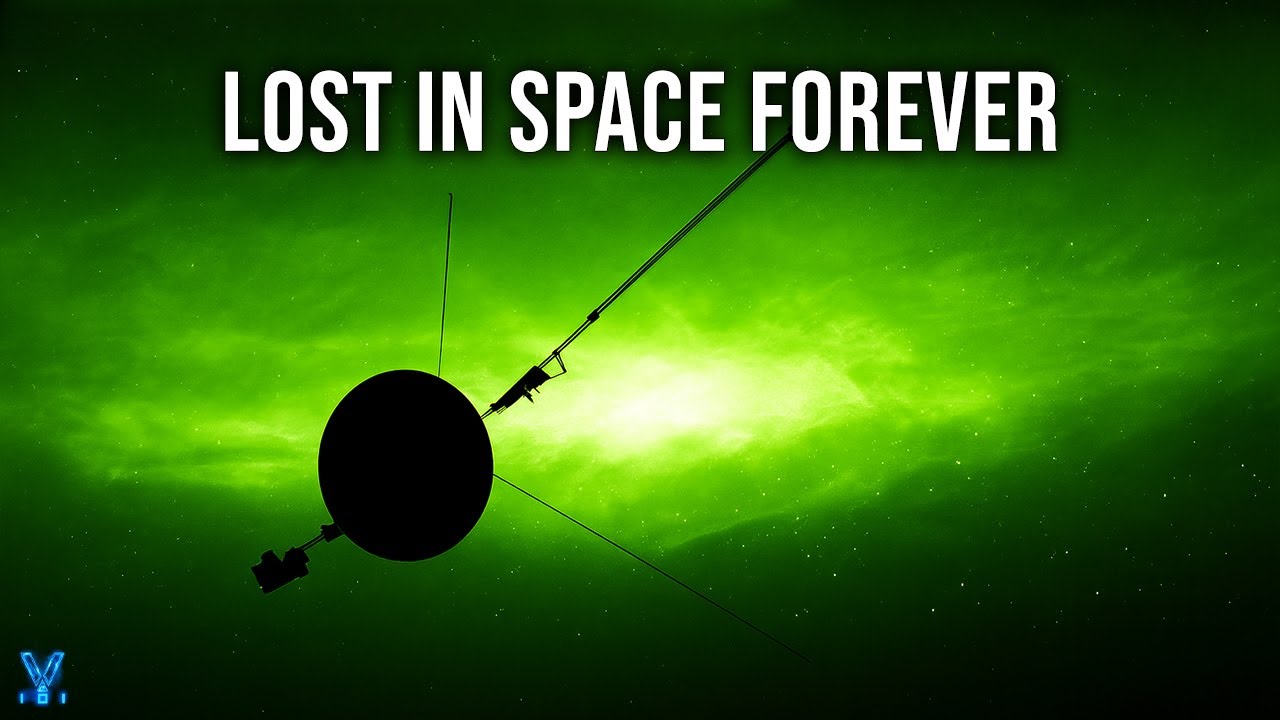
It was Voyager 2, during its flyby of the planet in 1986, that had the opportunity to study Miranda more closely than any other moon of Uranus. And here's a curious fact. .
. The first and only spacecraft to ever visit Uranus chose the worst possible time to do so. .
. Think about it: on January 24, 1986, Voyager 2 passed through the satellite system of the seventh planet in the solar system; and just four days later, the tragic Challenger shuttle explosion occurred at launch! Suddenly, as you can imagine, distant Uranus and its moons didn't seem so important to the public anymore.
. . and the amazing discoveries made by the probe were overshadowed for a long time.
"Hey, guys, just a moment before we continue. . .
BE sure to join the Insane Curiosity Channel. . .
Click on the bell, you will help us to make products of ever-higher quality! " Did I say amazing? Well, yes, the adjective is strong, but not exaggerated.
. . during its brief and fast flyby, Voyager discovered 11 more small moons and confirmed the existence of the rings.
Not only that. . .
passing just 29,000 km (19,000 miles) from Miranda's surface, the probe managed to take several photographs of the small moon. This wasn't an easy task because the cameras had to rotate automatically with precision during each long exposure to the faint sunlight to compensate for the spacecraft's rapid speed, otherwise the images would have been blurred. Yet, when the photos were shown at NASA's Jet Propulsion Laboratory, jaws dropped.
The images were all perfect, but Miranda's surface was like nothing anyone had ever expected. Voyager's photographs revealed that Miranda's surface is a bizarre patchwork of winding valleys, parallel grooves, fault scarps, and cratered plateaus. These topographical features were a surprise because the moon was thought to be too small, being only a third the diameter of its much less topographically diverse siblings, Titania and Oberon, to have experienced the extensive tectonic activity needed to shape such varied terrain.
That world looked like a sample of geological oddities, as if some omnipotent being had used scissors and glue to combine features from different places. Absolutely random! Huge canyons cross its surface, apparently created by tectonic faults.
Some of these are 19 km deep (11. 8 miles), dwarfing our planet's Grand Canyon, which measures about 1. 6 km (1 mile) at its deepest point.
Terraced regions connect younger surfaces with seemingly older ones in a mix that makes no sense, appearing to be built from the inside out. It's as if, at one time, lighter density materials emerged from below instead of flowing from above. But what about that tectonic behavior?
How does such a small body acquire that kind of internal heat? Experts say that nearby Uranus "must" have heated the small moon through tidal forces, and that the plastic material "somehow" found a way to ooze out, creating a carnival of disparate features. How this small moon became so is still a mystery.
One theory suggests that shortly after its formation, Miranda was just a smooth ball of ice, but then it was repeatedly destroyed by collisions during the period over 4 billion years ago when solar system bombardments were the norm. Researchers think Miranda might have been completely destroyed and then totally reformed, using blocks of various sizes from its previous incarnation, four or five times during its tumultuous history; until one or more impacts shattered it. Eventually, the pieces would have come back together, but not in a way that made much sense.
An almost acceptable scenario, if it weren't for some of Miranda's surface features that defy any explanation. And I'm referring to the structures known as "coronae," absolutely unique in our solar system. These coronae—essentially polygonal regions that differ significantly in appearance and color from the surrounding areas—are visible in Miranda's southern hemisphere, each extending at least 200 km (124 miles) in diameter.
The largest, Arden Corona, features parallel ridges and troughs (resembling a ski slope! ) that reach up to 2 km (1. 2 miles) in elevation.
Elsinore, the second corona, has an outer belt about 80 km wide (50 miles), relatively smooth, and rising about 100 meters from the surrounding terrain. Finally, Inverness has a rectangular shape with a large, bright "V" figure in the center. It's worth noting that Voyager's quick flyby didn't allow for photographing Miranda's northern hemisphere, which was in complete darkness; so we can't know if coronae are present all over the surface.
There are hypotheses about their origin, of course, but the data is still too scarce to favor one in particular. The oldest and most immediate suggests that the coronae are sites of large impacts from rocky or metallic meteors that partially melted the icy subsurface and caused episodic periods of muddy water rising to Miranda's surface and then refreezing. Another theory proposes that these regions are simply the outcropping points of ancient hot spots in the 160 km (100 miles) thick ice crust.
The evidence of volcanism and tectonic phenomena within the coronae suggests they formed over hot plumes rising from Miranda's core, expanding as they approached the surface, fracturing the crust, and triggering local volcanism. There's a problem though. .
. Miranda is currently an incredibly cold moon. .
. but the upwelling of material from the depths can only happen with some form of heat and tectonic activity! It's true that in recent decades scientists have identified volcanoes on Jupiter's moon Io, ice geysers on Saturn's moon Enceladus, lakes on Titan, plate tectonics on Europa, and more.
But to have all this, you need some source of heat, and there doesn't seem to be one for Miranda, which is frozen at about -212°C (-350°F). After much thought, planetary scientists have found a loophole. You might remember that we mentioned Miranda's unexpected orbital tilt, about ten times greater than that of the planet's other major moons.
. . Well, this could have happened if its orbit was originally much more eccentric than it is now.
This would have led to close encounters with other moons, which could have increased its tilt. And if Miranda's orbit was indeed stretched, it would have greatly increased the difference between the moon's maximum and minimum distance from Uranus. Thus, Uranus's gravitational pull would have been sometimes stronger, sometimes weaker, causing Miranda to compress and relax repeatedly, just like a stress ball squeezed in your hand.
This would have heated it up. And the heat would have melted and pushed the ice upwards, in a process physicists call convection. Each periodic upwelling of ice would have tried to spread out as it reached the surface, crumpling into the ridges and valleys that characterize the coronae.
The fact that these regions are relatively crater-free fits perfectly with this scenario. The coronae can't be more than a few hundred million years old: peanuts compared to the rest of the surface, which dates back billions of years, consistent with the idea that Miranda probably acquired a circular orbit and lost its heat generation around the same time. Everything fits, but since it is based on a handful of images taken almost 40 years ago, it might be difficult to prove definitively.
Another mission is needed. . .
but there doesn't seem to be much on the horizon immediately. . .
One proposal from NASA to visit Uranus and its moons is OCEANUS, which would launch around 2030 and arrive in the Uranian system in 2041. On the other hand, ESA has proposed ODINUS, which would launch in 2034 and arrive 9 years later. There's also MUSE (Mission to Uranus for Science and Exploration), which would launch in 2026 and arrive near Uranus in 2044.
But it's all still on paper. Both NASA and ESA agree that future missions should include an orbiter that could study the Uranian system and its moons for a long time, yielding results that would be far more significant than those of missions involving only a close flyby, like Voyager 2.