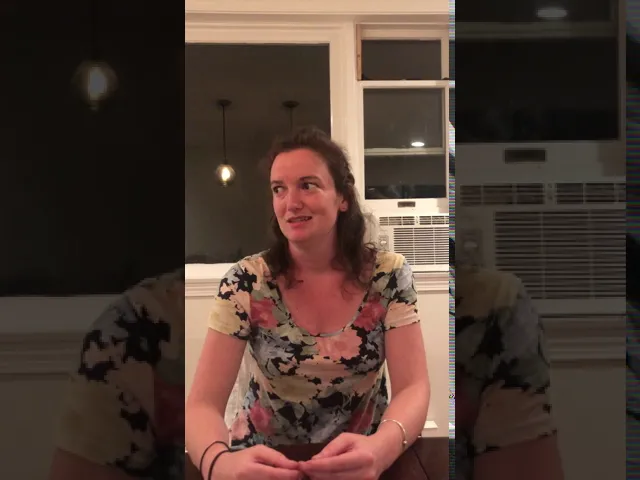
hi can you explain who you are and what you do uh i'm sarah i am a researcher at princeton and i study how climate has changed in the past to inform how it might change in the future and how did you get into that um well i was really good at science and math in high school and i started learning about climate change and was convinced i was like gonna get into policy it turns out i was not very good at government classes so i went back to my roots in chemistry and then found out
about kind of uh earth sciences and and the opportunity to learn about like climate change and things like this and decided to go in that route and what did you study in college a chemistry major and i guess i was a environmental studies minor and yeah so i didn't actually end up studying exactly what i got my phd in um yes where was where did you go to college uh wesleyan university sorry i guess i understood the question now um and how did you decide to go directly from college to grad school school that's a
great question and to be honest with you i kind of regret not taking a couple years to figure out if i wanted to continue in school but i had a really good mentor in college um where i did i was able to do a little bit of research with him and he told me kind of how to apply to graduate school and so yeah i had someone who kind of helped me along the way in terms of like where you should apply and how you should apply and what is the coolest thing about your job
um for sure the coolest thing i get to do is i get to go to antarctica every once in a while to collect ice samples um that was definitely like one of the biggest drives for me to apply to go to grad school and yeah it's just nice being able to like get out side for part of your job it's not the biggest part and so you have to kind of keep that in mind if you're like oh right if i'm going to be a scientist in earth science like i get to just dig in
holes all the time and do cool stuff maddie but that's not the biggest part but it's definitely a perk what is living in antarctica like um it's pretty barren so they have one main station it's about like a thousand people there actually during the summer but we're based outside of that station like about 60 miles away and then it's eight people we all live in tents don't take showers it's pretty barren um but it's kind of nice you have no internet which is actually a blessing you don't have email um but i think that's like
one of the biggest perks for sure what advice would you give to high schoolers who think math and science are cool or are interested in them but aren't sure about continuing in them yeah i feel like just follow what you're interested in like i was good at math and science and kind of was like okay policy is my thing um and lost interest in that or just figured that wasn't like the best direction i could go but just explore what you're excited about and you'll figure something out but like engineering is a really good option
um you don't have to like be in like mainstream science and continue on get a phd like there are definitely plenty of jobs outside of just doing academia forever so i feel like yeah if you love math and science just continue in it if it's your calling um what advice would you have to high schoolers who are trying to decide what to do um yeah just figure out what you're interested in um it just because like someone says like oh there aren't any jobs there doesn't necessarily mean that there aren't jobs there i think you
should figure out what you're passionate about and like you'll figure out how to do that i don't know great thanks