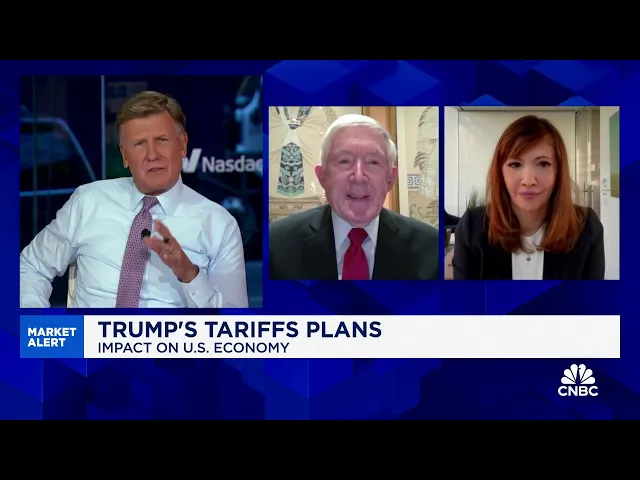
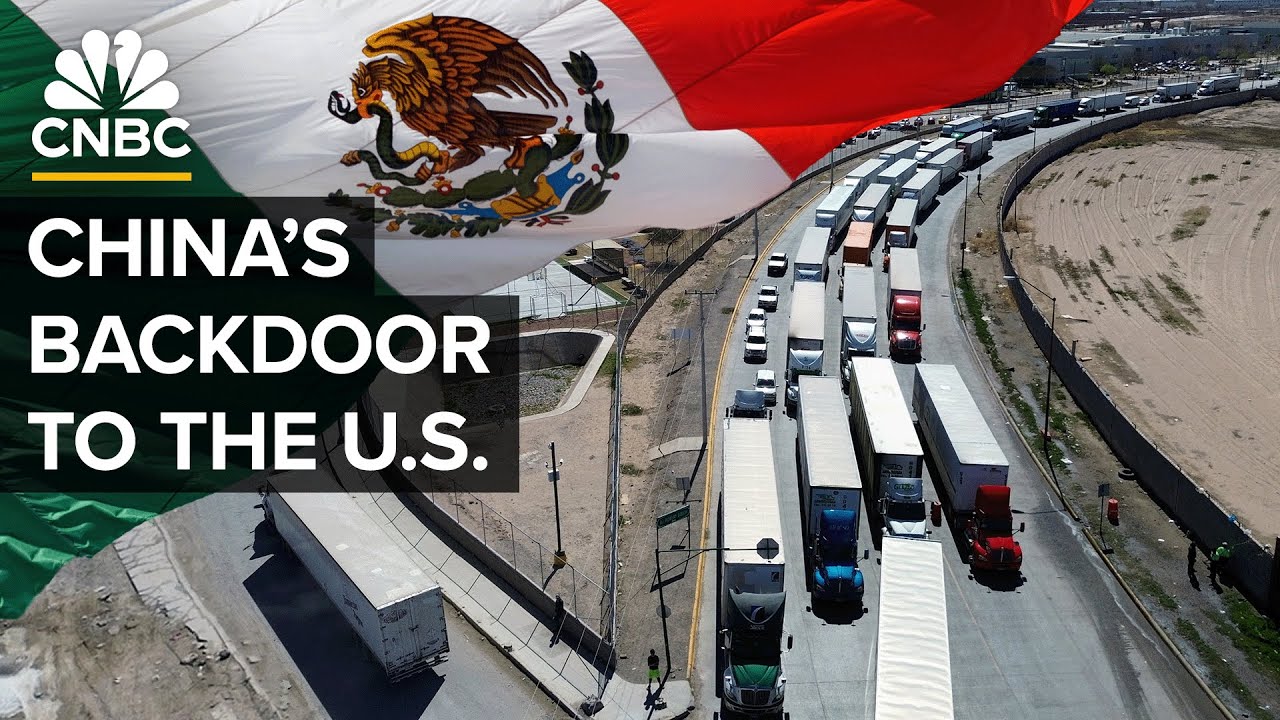
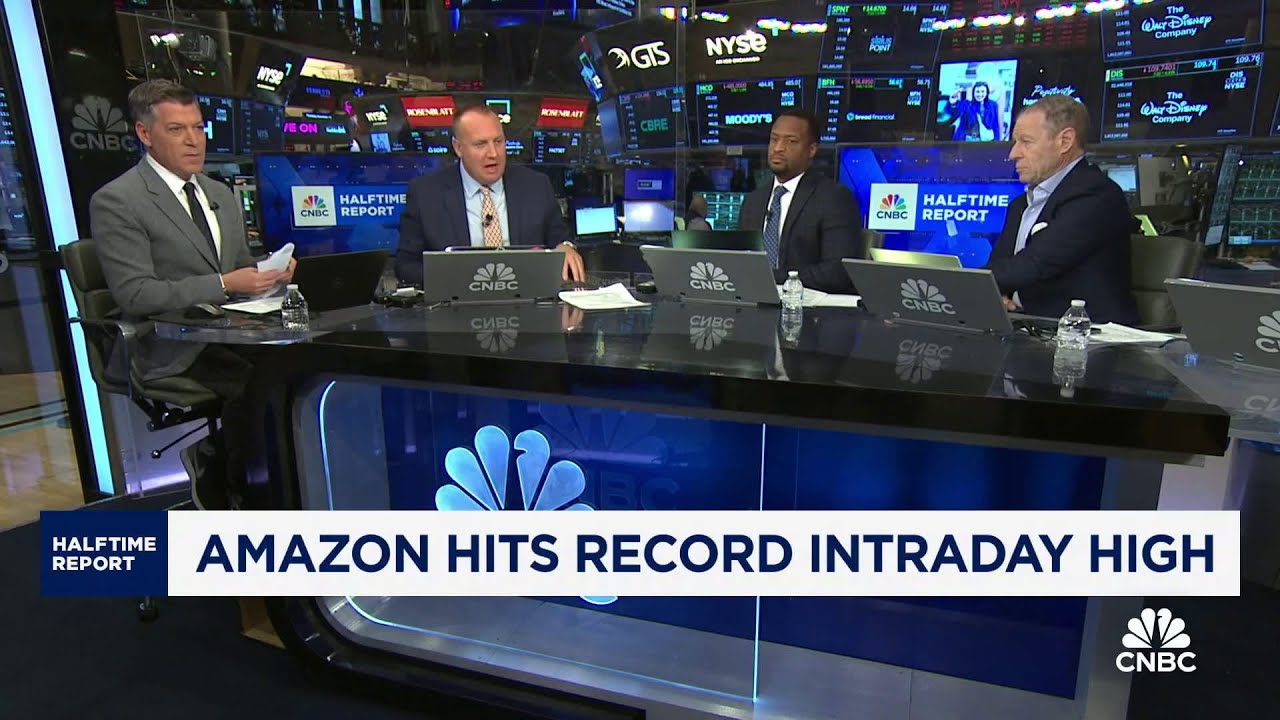
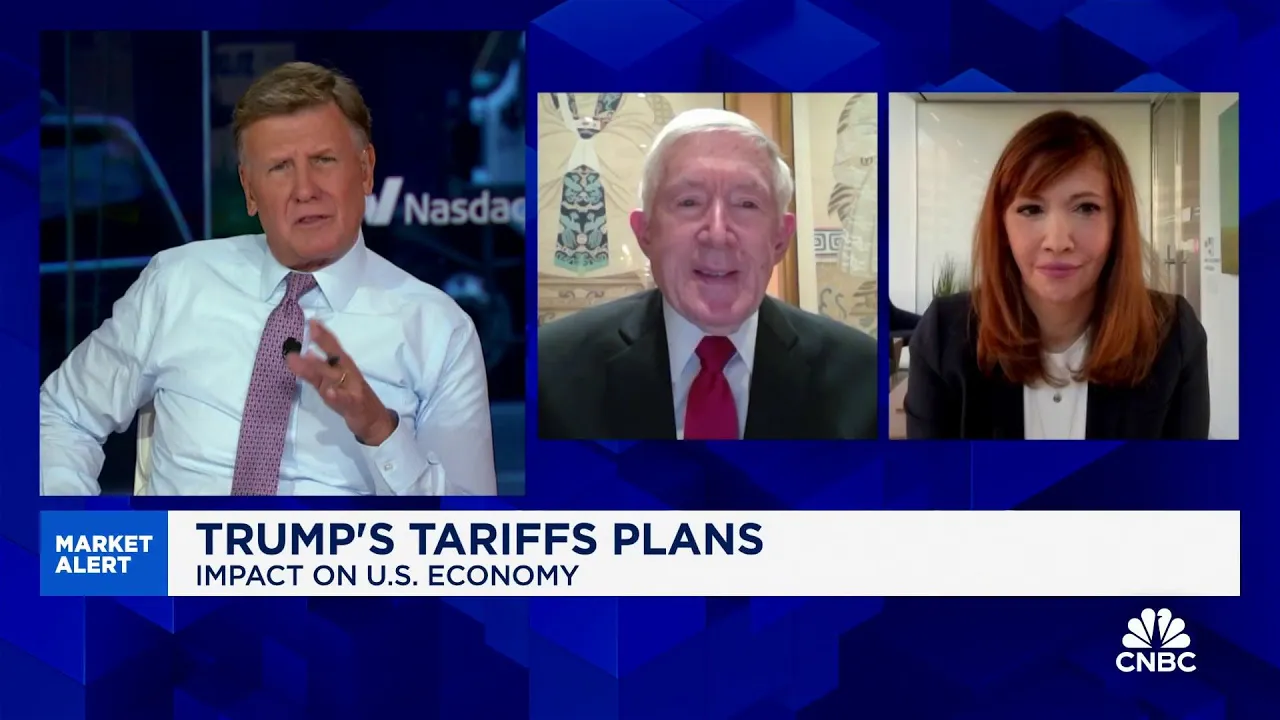
President elect Trump vowed during his campaign as you know now that if he won he'd hit China and other countries with some tariffs let's talk about what those could look like uh and their impact and um Bob we've talked about this before it sounds like the first time we're let's talk about so he's mentioned tariffs I don't know if you're familiar with that but Bob horm matz Goldman Sachs International uh but let's talk about it uh okay this is great move up uh and also uh nazak nikar did I is that that good pretty good
pretty close enough um you you are welcome and na Zak you were uh obviously an under Secretary of Commerce in the Trump uh Administration uh during the first uh the first one now National Security Law Practice chair at Wy uh law can you make the case uh nazak that this is going to help in terms of the trade imbalance and not be inflationary is it possible to walk that fine line absolutely and thank you for having me look in the first Trump Administration we introduced tariffs to correct for the distortions of the market uh and
those tariffs the US International Trade commissions we impose tariffs on a range of Chinese Goods to counter IP theft and uh steel and Aluminum Products to counter China's incredible overcapacity that's been that had been destroying the US market the bipartisan um unit of the government the US International Trade Commission did a comprehensive study and found just a couple years ago and found that the tariffs that the president Trump had imposed had zero inflationary effect and at most an infinitesimal impact the reason we see that is because when you are introducing corrections to the market to
correct for price distortions you're actually going to get Improvement in the markets and not the arbitrary inflation pressures that folks keep talking about there's no basis to infer that Bob you have you know had so much so many dealings with China over the years you're fully aware of of the of of the positives that we get from our relationship with China and the negatives is there any other way to to get their attention well let me first say I I agree that there are opportunities and there are purposes for utilizing tariffs for what we call
safeguards or if other countries are violating International Trade rules or their national security reasons for it those are perfectly appropriate and legal under American law and international law the issue that I think is going to be uh broadly important is whether these safeguards are across the board and whether they are for tactical purposes or strategic long-term purposes in other words he's going to keep these broad-based tariffs for many many countries for a very long time that would have inflationary purposes but I particularly I want to make the point that for specific purposes um they are
appropriate and probably don't have very much inflationary impact with China the question is going to be what is his goal is his goal to put uh 50 or 60% long-term tariffs on and keep them on or is going to use them for tactical reasons to renegotiate the old Trade Agreement or to get China to make changes in intellectual property protection in other words are there specific objectives that he wants to get by either threatening to impose these tariffs or actually imposing them and then going to China and say well if you want to get these
reduced or eliminated then we've got to renegotiate the old trade agreement so it works which the current one doesn't or we've got to work on a whole range of other trade issues and so he would use them as leverage we don't know the answer to that but broad based long-term trade agreements on a whole lot of countries including our allies um I think would be counterproductive specific ones for specific goals have been used are appropriate and I'm sure he's going to use them again NE go ahead I I want to add something we have we
we can't just the US government the US laws we can't just arbitrarily impose tariffs on things there's certain legal requirements the the statute provides mechanisms to introduce price Corrections into the market and that's the way we impose tariffs so this notion that anybody is just going to impose tariffs arbitrarily is inconsistent with the law the laws give us certain Pathways to impose tariffs and when those statutory criteria are met to correct for price to store that's when they're imposed so every single tariff that President Trump will introduce will be in accordance with the law as
it has been before and the law mandates the imposition of tariffs or allows for the imposition of tariffs when there are price distortions so again I want to refute this notion that they're going to be arbitrary absolutely not the law doesn't allow for that and president Trump is going to follow the law well that's verying because the law does you're exactly right there's section 201 section 301 section 232 all are within the law of the United States we've used them before for other countries and it's perfectly appropriate to use them again to achieve exactly the
kind of objectives you want it's not just price Distortion it's National Security issues it's countries uh taking advantage of us by uh surging uh particular Goods in the American Market we have a a program for doing that called safeguards it it it's mandated the the what he was talking about during the campaign is across the board tariffs um in general and the fact that you've uh reassured me that it will be done on a specific uh issue by isue basis under the laws that we've got and we've got quite strong and effective laws that doesn't
trouble me in fact that's appropriate it's the broad uh use uh of very high tariffs against the a lot of countries that he talked about and I'm wondering if he's going to do that or not do that or if that's a tactic in order to get something we're out of time uh we're out of time nazak but the total that has been proposed or or worried about in in the media wherever versus what actually happens what percentage do you think actually happens we only got uh 20 seconds but you think 50% 10% what do you
think I think look the the tariffs on China are going to be substantial because of China's over capacity industrial subsidies Etc China I want to China has distorted the global markets in terms of trade of goods so there's going to be instances where tariffs on the entire Global Market to to correct for those issues will be appropriate