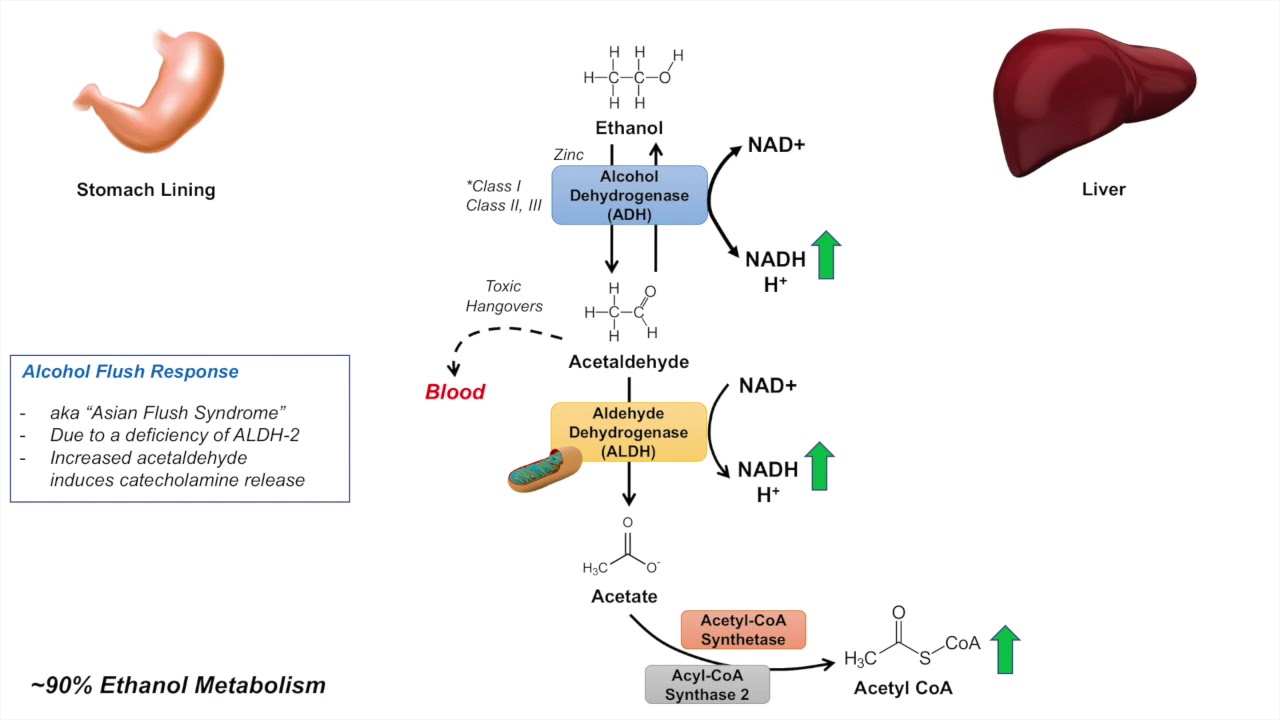
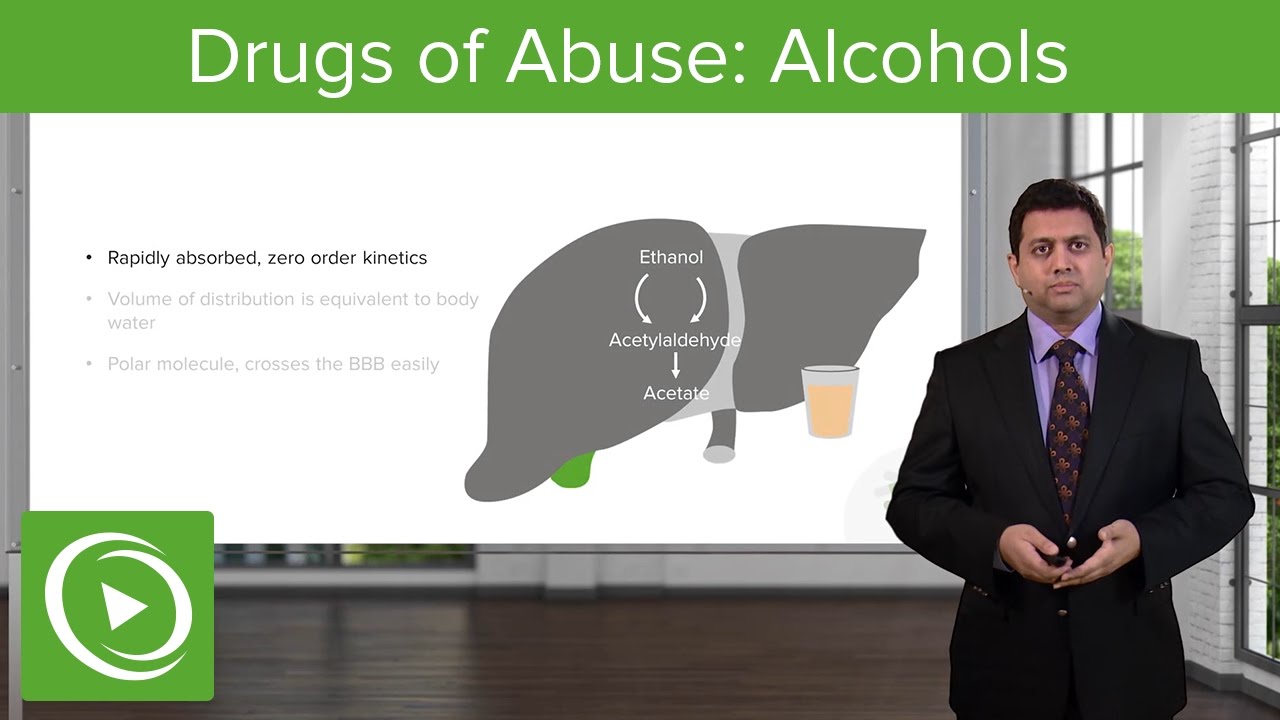
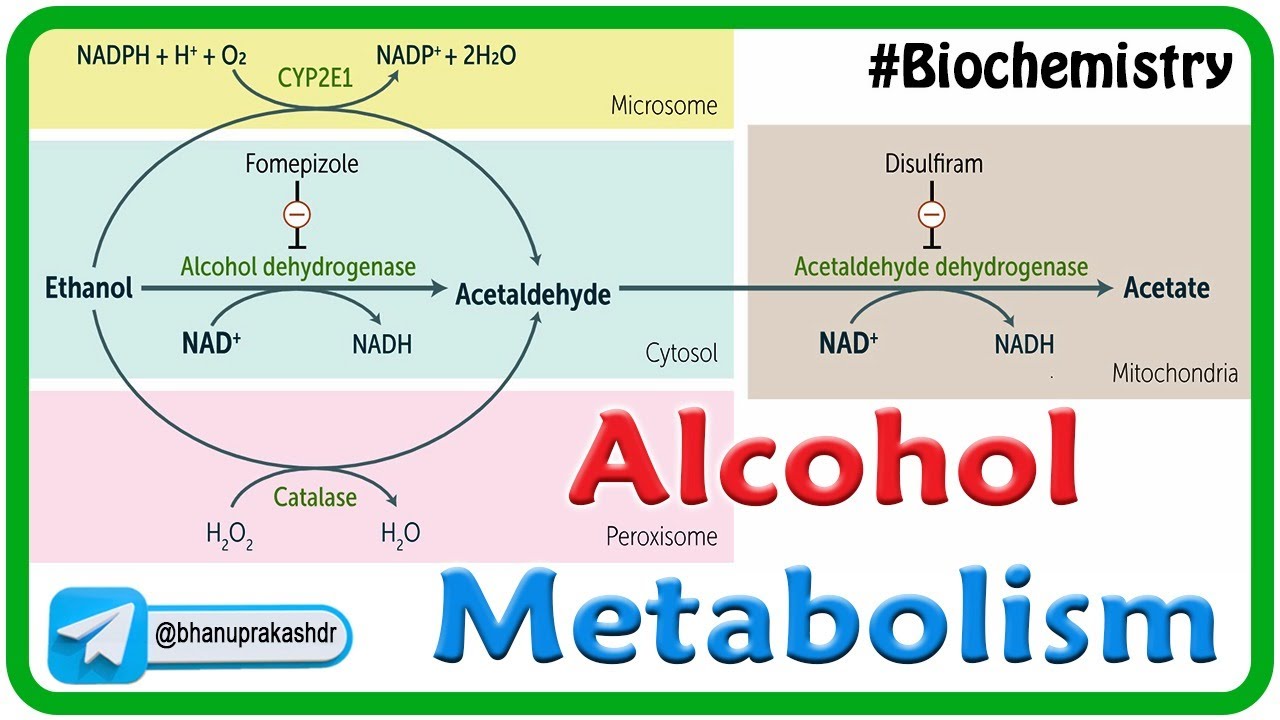
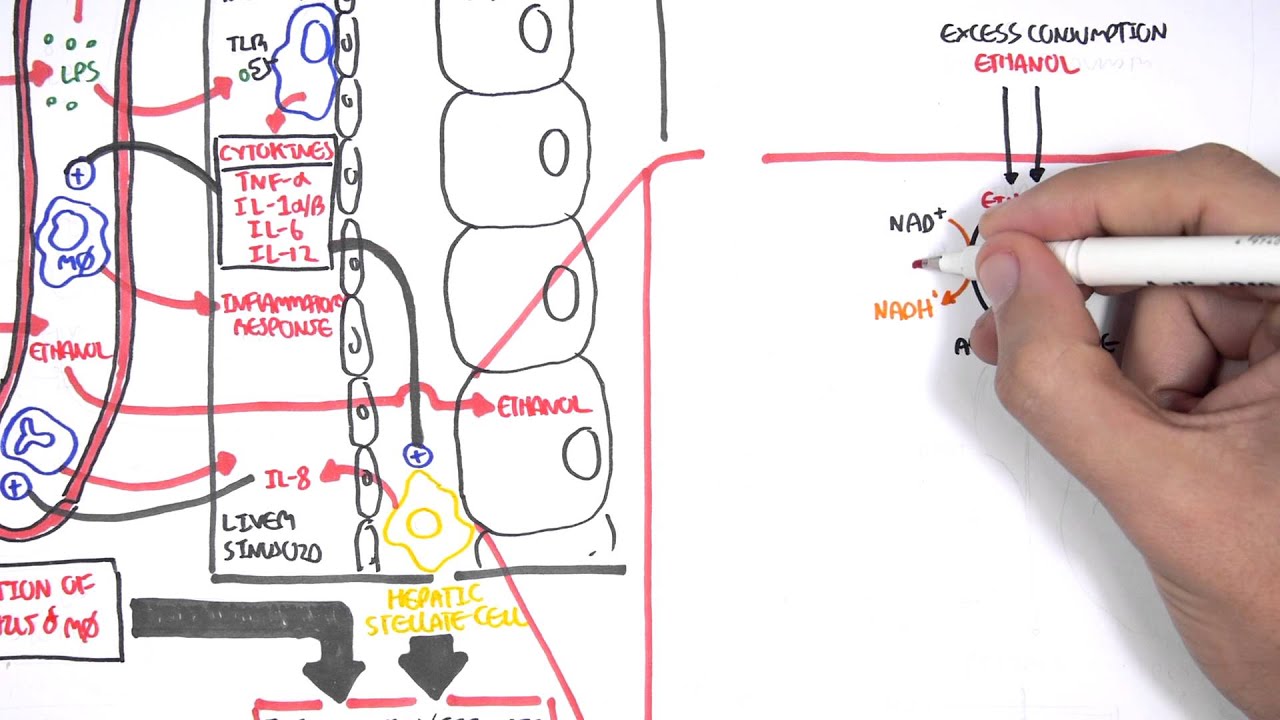
so in the last lesson we learned that ethanol metabolism leads to large increases in NADH and with the alcohol dehydrogenase reaction this leads to an increase in cytosol ik NADH now with the aldehyde dehydrogenase reaction which occurs in the mitochondria this leads to an increase in mitochondrial NADH and finally ethanol metabolism eventually leads to increases in acidic away as well so the increases in NADH in increases in acidic away from ethanol metabolism lead to specific consequences in problems in other metabolic pathways and we're going to get into what those metabolic pathways are in a moment
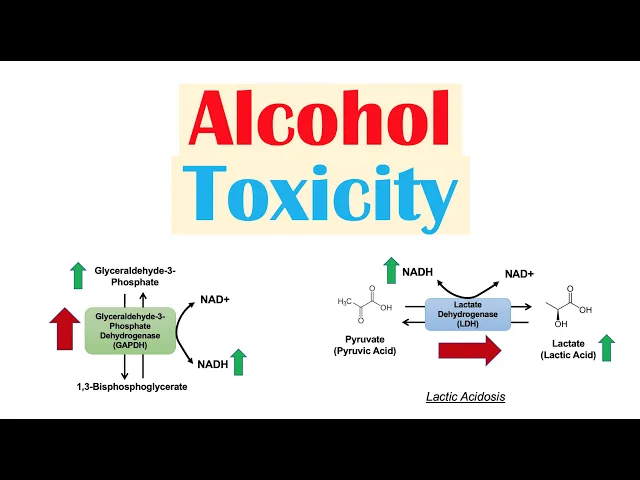
so since ethanol metabolism leads to an increase in NADH a decrease in NAD+ to NADH ratio and an increase in acidic away what are the consequences to other metabolic pathways well some of the consequences are that it causes dysregulation in glycolysis and some of those dis regulations can lead to lactic acidosis it can alter an effect TCA cycle it can suppress gluconeogenesis and it can actually suppress fatty acid oxidation so it causes a multitude of problems on other metabolic pathways so we'll focus on the first two in this slide so how does it affect glycolysis
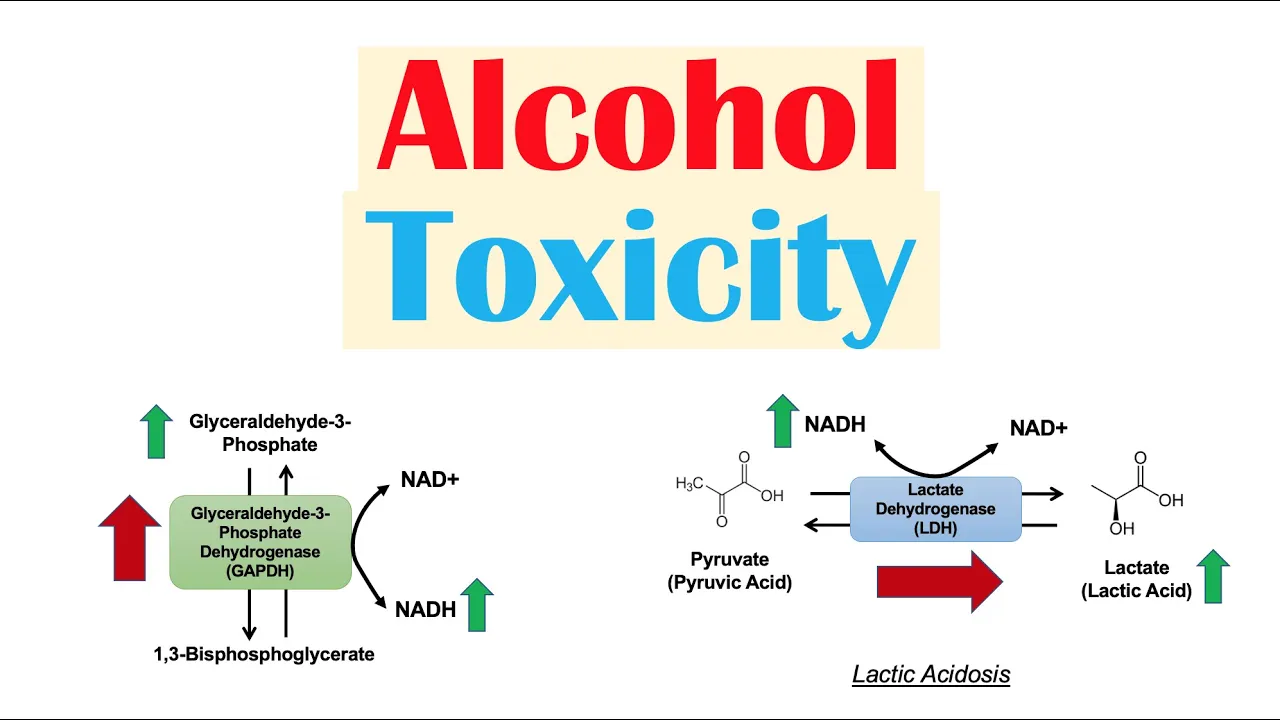
well in the glycolysis pathway there's a reaction involving glyceraldehyde 3-phosphate and that reaction involves the enzyme gap th or glycerol glyceraldehyde 3-phosphate dehydrogenase and this enzyme processes glyceraldehyde 3-phosphate into 1 3 bisphosphoglycerate now this is a reversible reaction and it requires nad plus in the nad plus gets reduced to NADH however in the case where we have too high or an excess amount of NADH this can cause this reaction to go in the opposite direction leading to increased glyceraldehyde 3-phosphate so this can actually affect the glycolysis pathway at this step and this ultimately dueces glycolysis
so what about lactic acidosis well that thing acidosis occurs because pyruvate can be metabolized into lactate via the enzyme lactate dehydrogenase and this enzyme again converts an NADH to an nad plus and because again we have high levels of NADH this can push this reaction to the side of lactate leading to increased in lactic acid and leading to lactic acidosis the TCA cycle is affected at the level of malate dehydrogenase and in normal TCA cycle functioning malate is actually metabolizing process into oxaloacetate and in doing so it reduces NAD+ to NADH now during ethanol metabolism
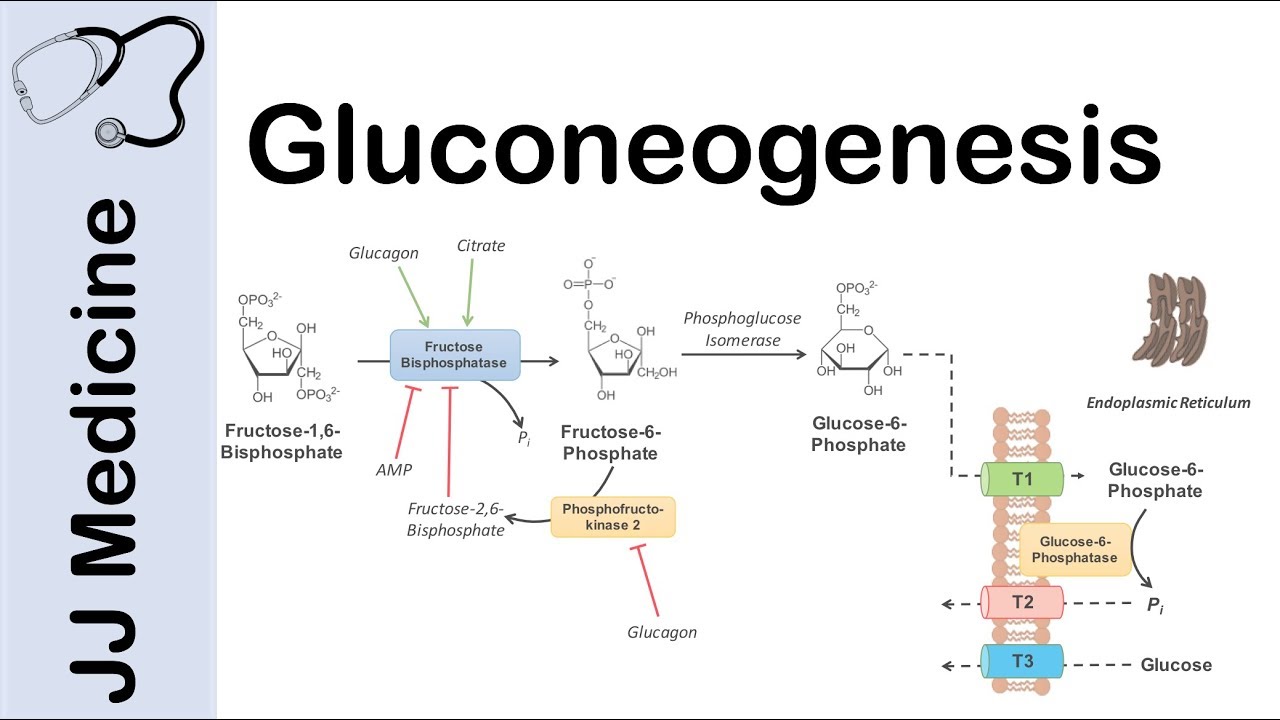
the acetaldehyde is processed by the enzyme aldehyde dehydrogenase which occurs in the mitochondria and this leads to increased NADH in the mitochondria so what happens is the increased NADH in the mitochondria will shift this reaction backwards from oxaloacetate to malate leading to increased malate and this actually will suppress TCA cycle function now the effects on gluconeogenesis are a bit more complex and require a bit more explanation so this slide is actually from my gluconeogenesis lecture so if you haven't watched that lecture I would suggest you watch it to better understand this concept so what happens
is in order to utilize pyruvate for gluconeogenesis pyruvate has to be processed through several steps and it does that by getting processed to oxaloacetate and then malate in the mitochondria the malate then gets transported out into the cytosol back process back into oxaloacetate and then the oxaloacetate process into pep which then can be undergo several more steps and then finally can be processed into glucose now again during excessive ethanol metabolism we get high levels of NADH the high level high levels of NADH again alter this process high levels of NADH in the mighty Khan from
aldehyde dehydrogenase reactions lead to an increase in malate in mitochondria but when we come out of the mitochondria so if you pump malate back into the cytosol through the malate aspartate shuttle there's actually also increased NADH in the cytosol as well from the alcohol dehydrogenase reaction which takes place in the cytosol so the increase NADH in the cytosol will actually cause this reaction to push back toward malate so we are nun unable to adequately process malate into oxaloacetate to be used for gluconeogenesis so this means that cytosol ik oxaloacetate actually decreases as well as pep
so all of these actually reduce gluconeogenesis and this leads to hypoglycemia so the reduction in gluconeogenesis function in the liver leads to systemic hypoglycemia and finally ethanol metabolism has effects on fatty acid oxidation and synthesis and it does so because of the high levels of acidic away which we've talked about before so again ethanol metabolism leads to high levels of acidic away and this pushes the reaction of Siddall co a carboxyl aids to producing more Malin Alcoa so the increases civico and increased melanin Kawai will lead to increased fatty acid synthesis now on the flip
side the increased melanin Khoi will actually lead to in an inhibition of fatty acid catabolism so fatty acid metabolism actually decreases this all leads to triglyceride accumulation in the liver leading to fatty liver disease or hepatic steatosis anyways guys that was a lesson on the metabolic consequences of ethanol metabolism I hope you found this video helpful if you did please like and subscribe for more videos like this one and as always thank you so much watching and I'll see you next time