i want to talk about barcelona's cubes because they represent one of the most fascinating human centered attempts at urban planning in history in the 1800s barcelona was not a pleasant place to live in order to reduce the pressure of a rising population density which increased the likelihood for disease and general displeasure the old walls of barcelona that caged its population were torn down and the council had to organize a competition for planners to decide how the city should expand one of those planners was a man named ildefons serda he was an engineer that had his
toes dipped in politics he had a deep respect for the working class wrote the book on the general theory of urbanization before urbanization was remotely cool and even a thing and he was an active member of the national militia and city council of barcelona in order to craft his magnum opus of city planning he ended up writing one of the most exhaustive studies on working-class living conditions ever he did extensive surveys of rich and poor people he identified a relationship between class and space with the bourgeois having an average of 3.6 cubic meters of space
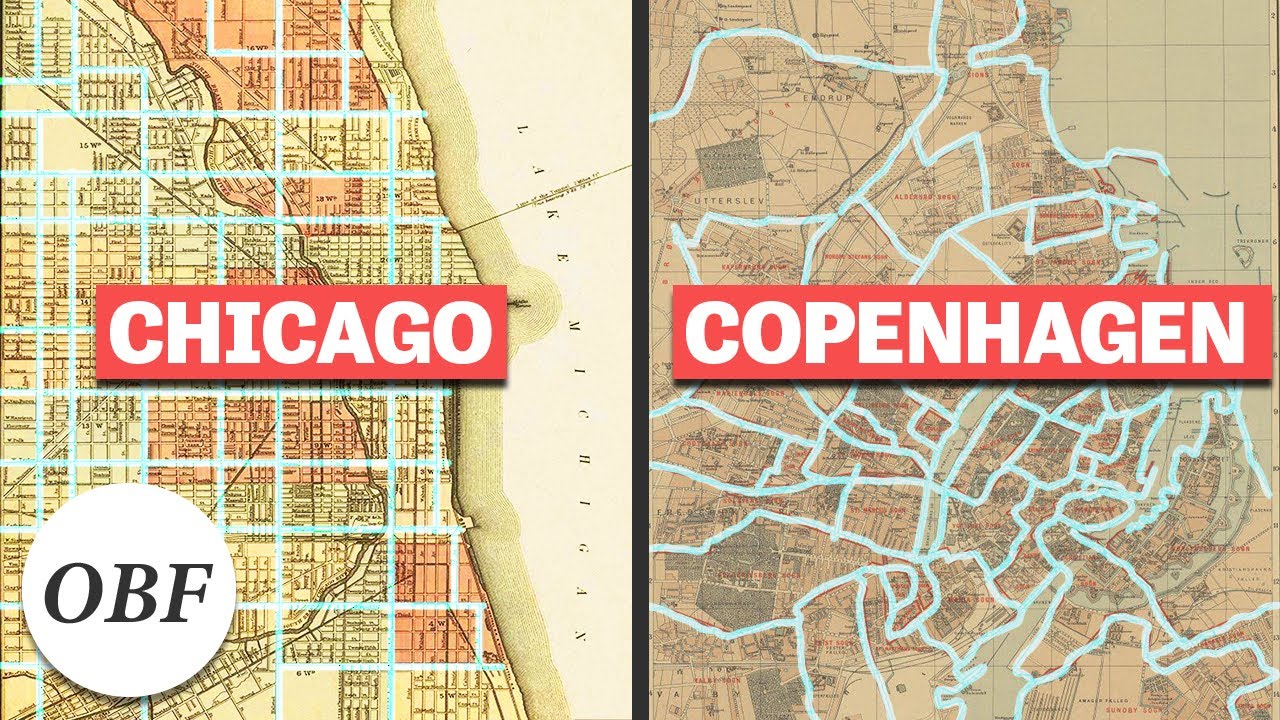
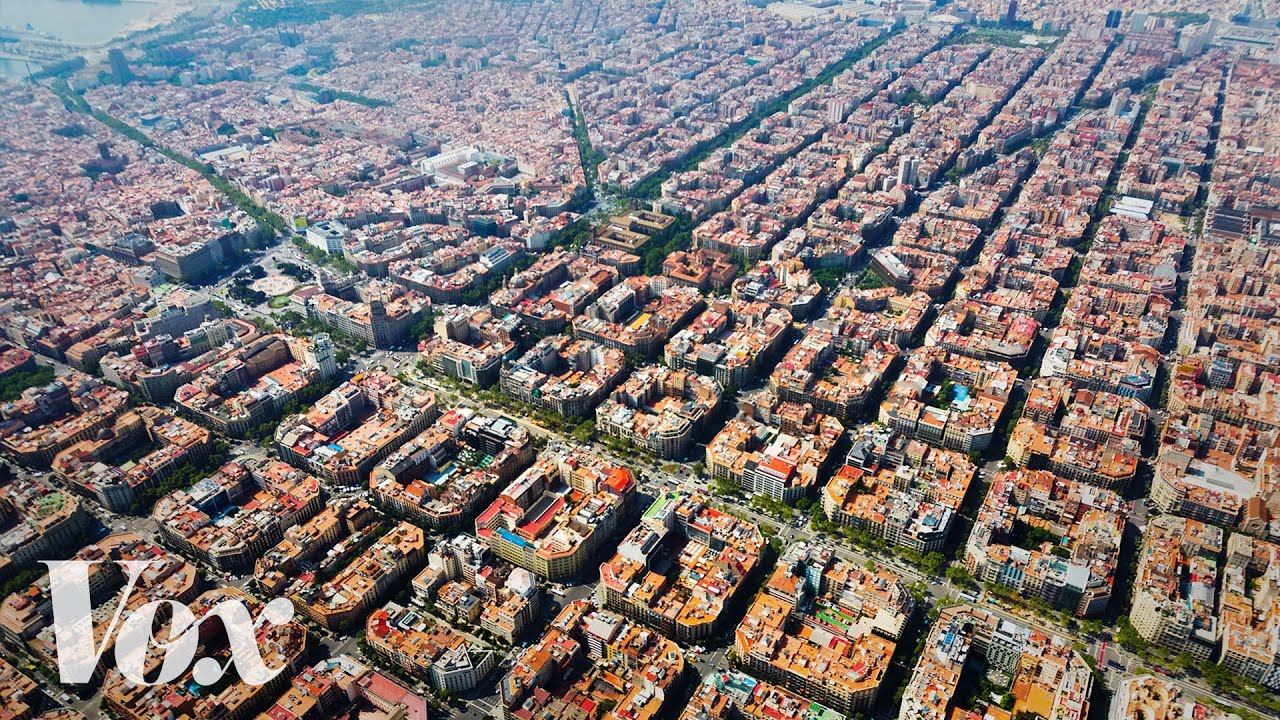
per person while the working class had 0.9 he analyzed interiors of homes and studied ventilation to try and determine optimal street widths for airflow but his largest goal unconventional at the time and increasingly vogue now was to have an empirically backed rigorous view on how to create a city centered around public health an independent of your taste and design or view on urban planning it's a marvel of human ingenuity one of the first things you'll notice is the straight grid pattern which is different from traditional radial city designs this was a practical choice grids are
easier to navigate than circles and they're also probably easier to build on but it also tells you something about serda's focus on equality instead of making the new blocks an extension of one main hub the old city which would establish a hierarchical relationship all roads point to the old serda instead focused on uniting the older city with seven peripheral villages which weren't much at the time but are now the new city wasn't really an extension and so much that it was just the city this is something a radial city design can't really do justice to
like for example in a city like paris now that being said it would be wrong to say he invented grids no that would just be wrong but sardar's grid was unique compared with other cities his proposal was unique for laying out large city blocks and spacious well-organized intersections he deliberated over multiple different types of street but decided on one mainly uniform width according to him it wasn't a planner's task to create artificial preferences privileges and monopolies to the detriment of others but what makes the topic of street design even more fascinating and captivating than it
already is is that he predicted the rise of the motor car and so he designed the minimum street with as well as the chamfered edges so that it could meet the advances of the next century not only because it looked cool and yes facilitating lots of cars is not necessarily always seen as a good thing especially by youtubers who like to project their reviews on urban design to the rest of the world but it was still impressive that he predicted a highly mobile form of transport and he built a plan to match the challenges of
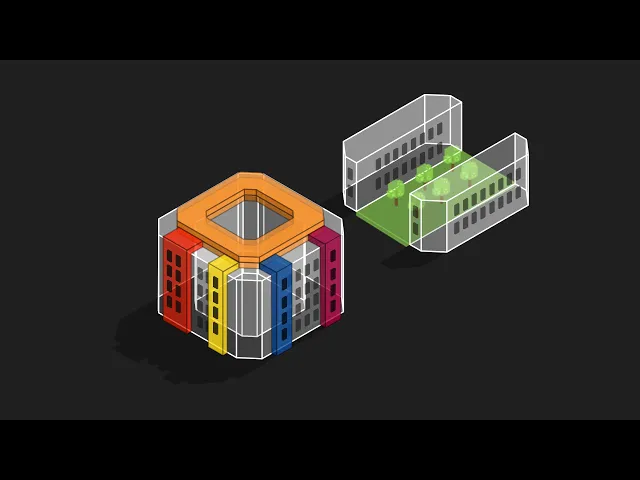
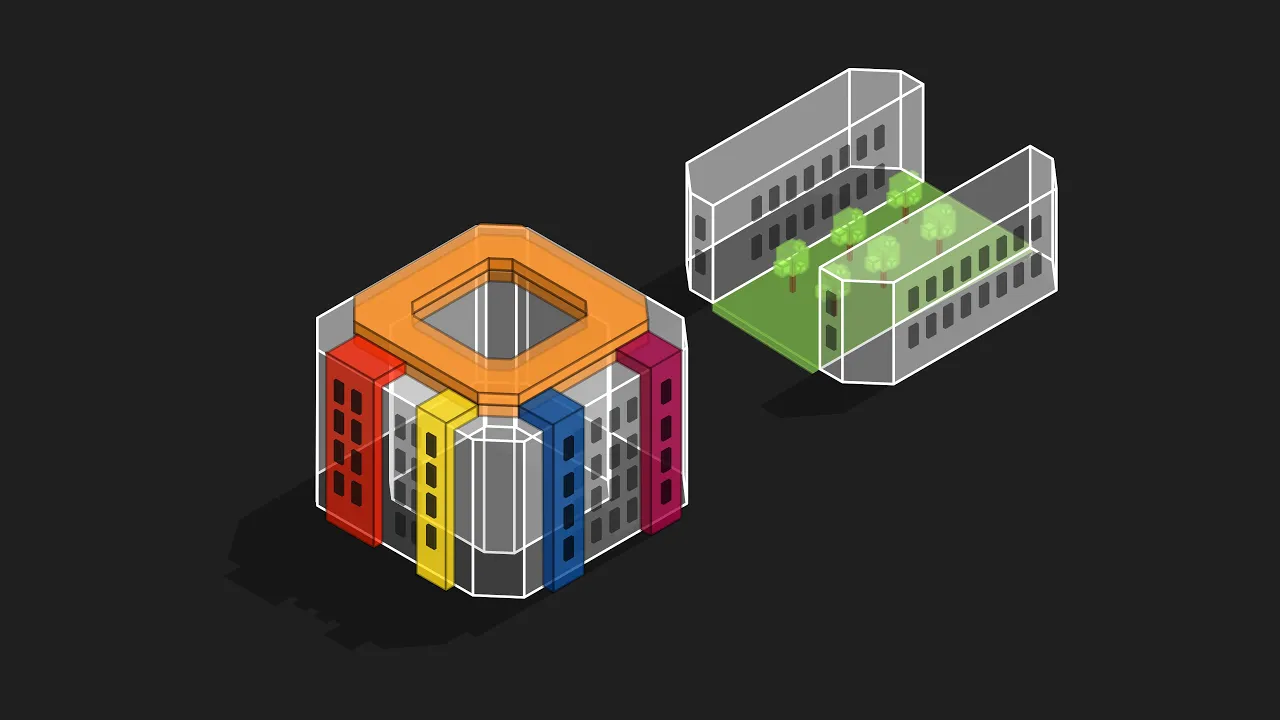
the next century he had also designed provisions for underground trains and elaborate sanitation plans but the most remarkable part of his plan were city blocks the goal was to define the boundaries of buildings on each plot of land and also design a space that could provide sufficient air renewal sufficient sunlight introduce aspects of role into urban life and allow for easy relaxed movement for pedestrians it was not only the edges of the blocks that would allow for movement but it would also be within them blocks would also have the benefit of being modular and easily
attachable and each block generally would have no more than three buildings in total with an expectation that many of the city blocks would have two open sides the plan presented mainly three types of block middle courtyard the u and the l which are incredibly advanced names i came up with myself in the middle of each city block would be plenty of room for green space designed for you know you a human it would provide high quality air make people feel better and it was based off of sardar's ground values to make as much of urban
life as rural as possible so the green space was also intended to help produce connections for the people living inside the buildings he also recommended height requirements in order for there to be adequate sunlight but of course he had to go a step further see when you place these individual blocks next to each other you can begin to construct different types of permutations the grid block combination allows you to order much larger complex shapes in order to create special areas for public institutions like administrative and industrial buildings cemeteries parks and hospitals the blocks could also
be placed in a manner so that the individual parts would create a better hole which would encourage ventilation and mobility across the entire city now all of this said if you've been to barcelona or live there you might be a bit confused you're probably thinking sardar's vision with plenty of green space is not how barcelona looks but someone random on the internet who i always unconditionally trust no matter what is telling me something different but your doubts are actually justified accessible courtyards with plenty of green space and open sides were the rule in sardar's vision
but today they are the exception instead barcelona has the luxury of having a bunch of four-sided blocks and a lot of drunk tourists and that's because sirda's plan was modified multiple times due to external pressures most buildings were first extended parking garages were constructed the sides would be filled up and the height requirements would be ignored the result is multiple four-sided courtyards across the entire city filled with parking garages rather than green space as opposed to having multiple open courtyards that could allow people to walk across the entire city the sidewalks on the side of
the blocks are practically the only option the plan was also intended to be anything but hierarchical but today it actually is for many the negative repercussions of these modifications may seem obvious but there is a silver lining for one the cubes of barcelona today got me to make this video in exchange for high quality air pedestrian mobility and a stronger sense of community you instead get a superficial youtube video essentially inspired by one wikipedia article with a reliance on much smarter academics for my own gain but it would also be incorrect to say that sardar's
vision failed cities evolve and barcelona is still changing and it's safe to say that he laid a groundwork for where it's headed as barcelona attempts to greenify its city which isn't a word but still sounds right so daw's original intentions come in handy not only are the courtyards being reclaimed albeit slowly bringing back some communal green space but the blocks make policies such as superblocks a lot easier which means segmenting off large areas of city where there will be requirements for maybe slower cars no cars at all an investment in green infrastructure if the citizens
of barcelona were not able to thank serda in the 1900s and early 21st century for the values he tried to craft a city around perhaps they'll be able to thank him in the coming future before any of you attention deficient apes click off this video i want to give a special thank you to professor newman i do agree with you plannings it's not rocket science that's correct it's much more complex this guy is qualified and he knows his stuff about sir and so i would really highly recommend you read his papers um well just generally
a lot of papers on this you should be an informed person anyways you get the point uh thank you professor newman again for helping me with this video and thanks for watching i just repeated that because that's what everybody else said