Hello, in this video we will learn about receptors. Let's get started. As we have seen in the video of a cell to cell communication, a cell speaks by releasing chemical messengers and another cell listens with receptors.
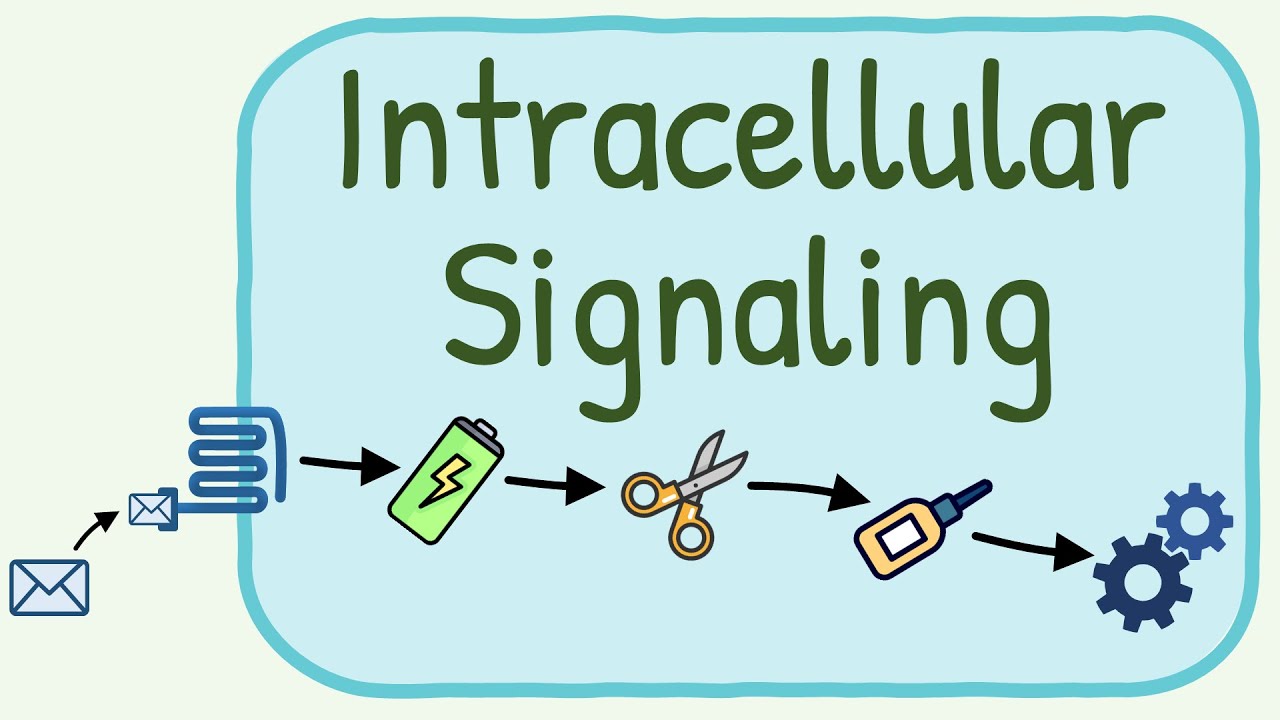
The binding of the messenger with receptor triggers the downstream events that ultimately lead to the response by the cell. So this is the overall position of receptors in cell to cell communication. They are the first people in the cell to contact external messenger.
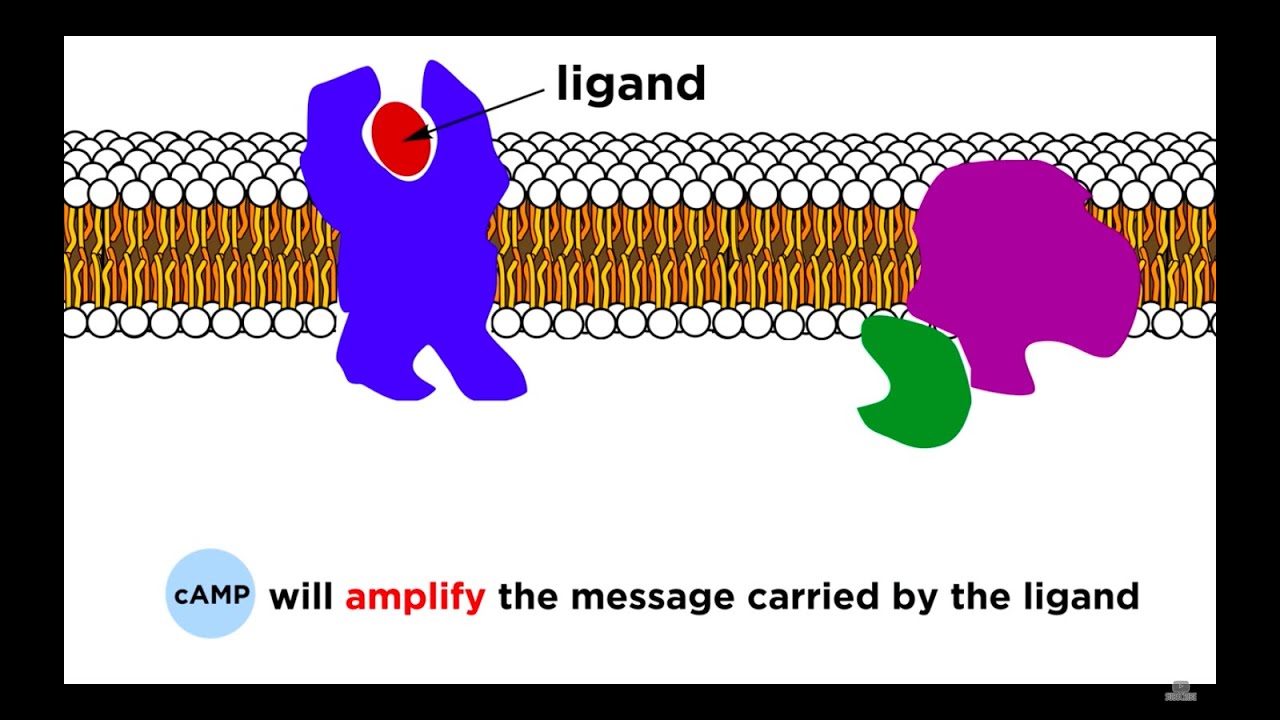
They receive a signal from an external messenger and transduce it into a response. Accordingly, receptors have two domains. A ligand-binding domain that recognizes a specific ligand molecule and an effector domain that undergoes conformational changes that produce some downstream effect.
So this is the general theme with all the receptors. Now, although I have been showing the receptor on the cell membrane, it's not the only place where receptors are found. They are also found inside the cell.
The membrane receptors are for hydrophilic messengers. For example peptide hormones. Such molecules are too big and also being hydrophilic, they cannot cross the hydrophobic lipid bilayer.
So receptors for such messengers are expressed on the cell surface. Intracellular receptors are for hydrophobic messengers for example steroid hormones. Such molecules are smaller and hydrophobic.
So they can pass through the lipid bilayer and bind with receptors inside the cell. So this was some basics about the location of receptors. Now let's see different types of receptors.
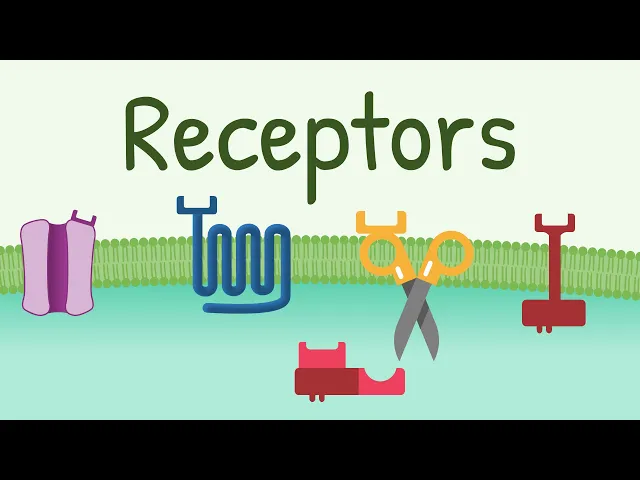
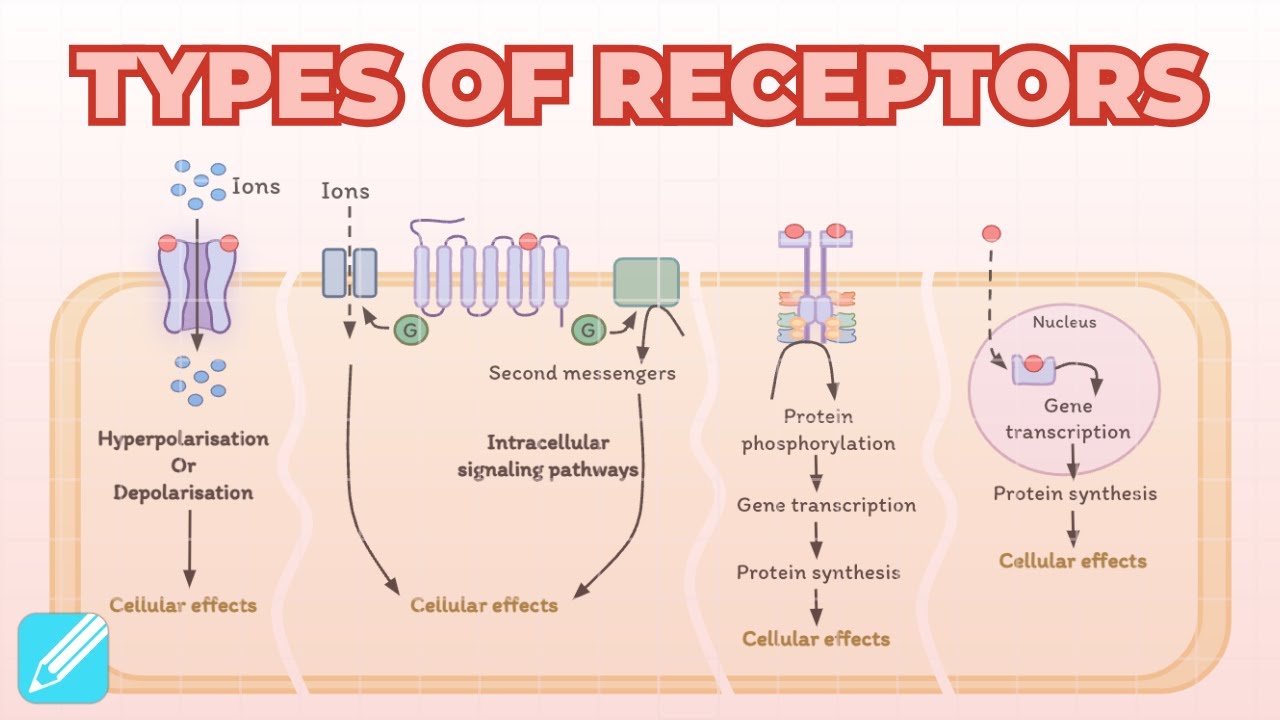
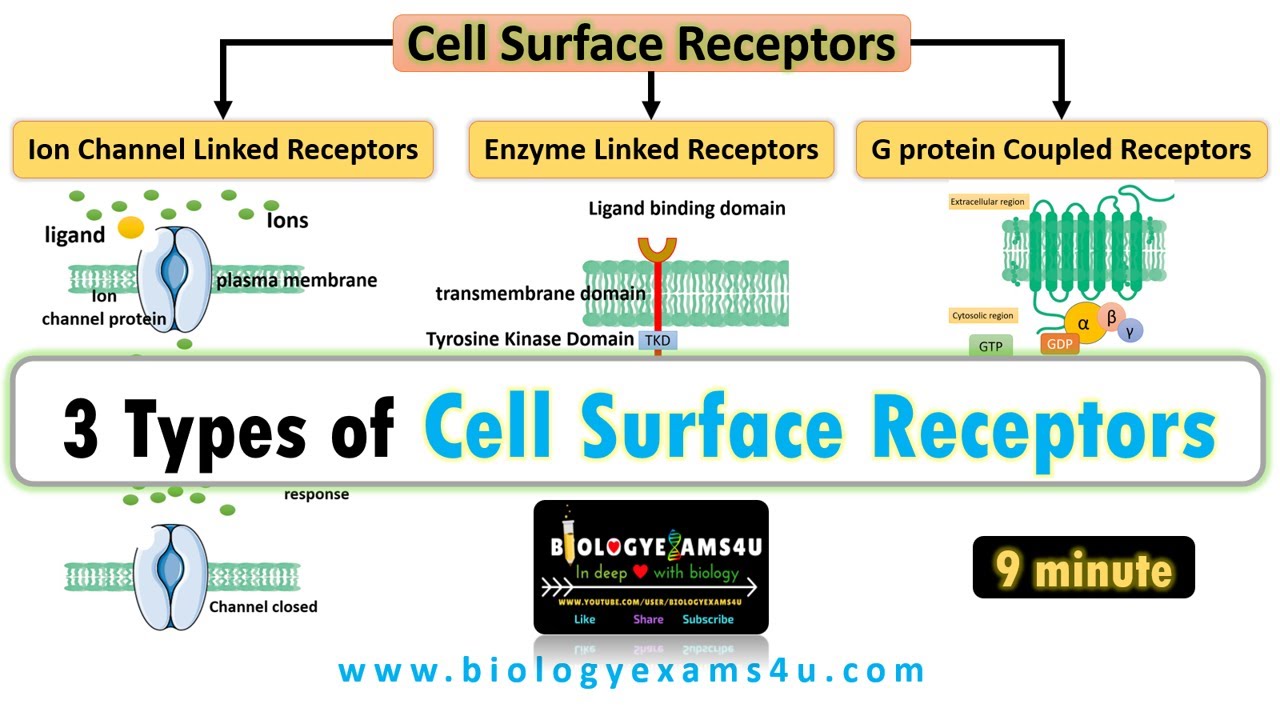
Broadly, receptors can be divided into ligand-gated ion channels, G protein-coupled receptors, catalytic receptors, nuclear receptors, and receptors that undergo cleavage. Let's see each type one by one. First ligand-gated ion channels.
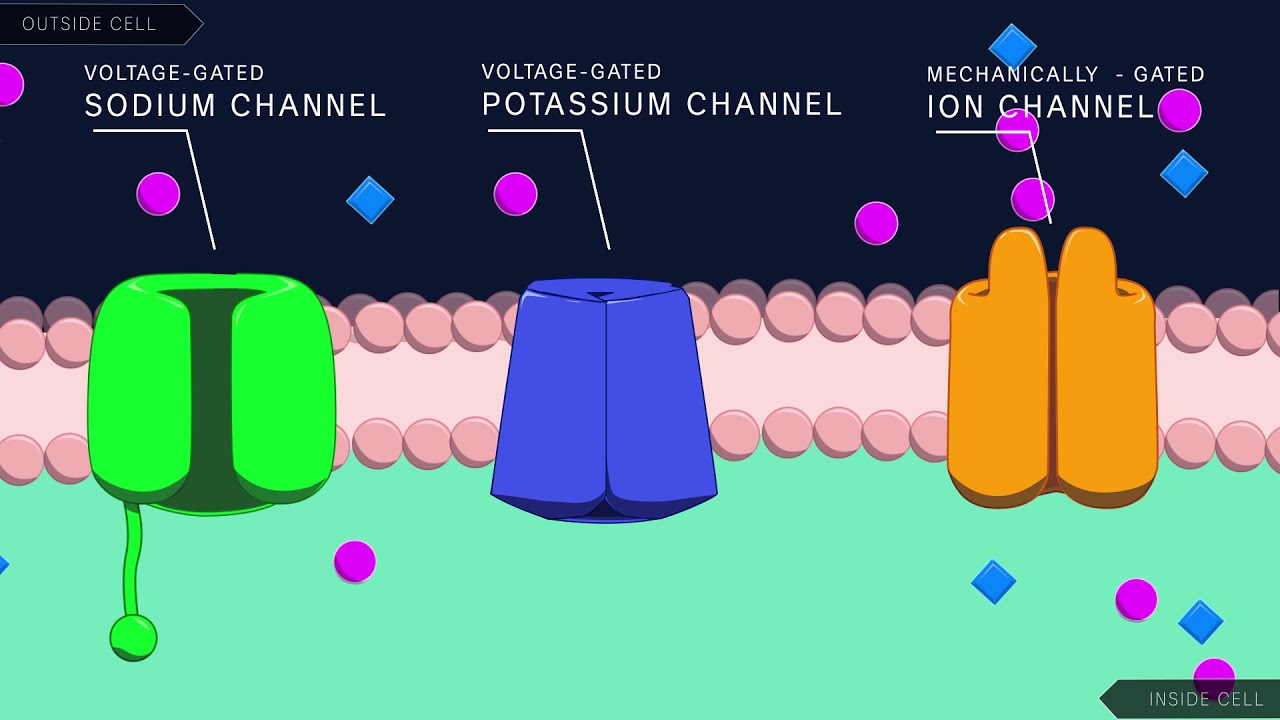
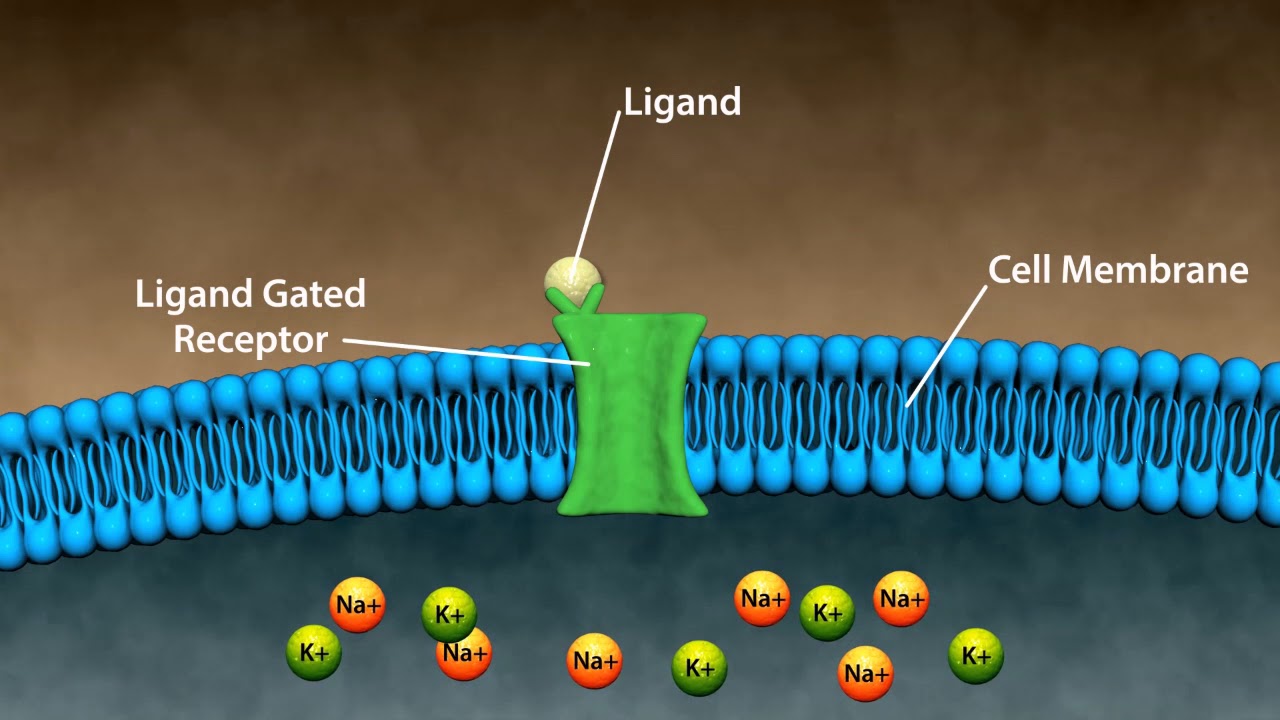
They are basically ion channels that allow the passage of small ions like Na, Ca, K, etc. A receptor is just a part of the channel. So the same molecule works as a channel as well as a receptor.
They are also called ionotropic receptors. The binding of ligand opens or closes the channel. They are involved in signaling between electrically excitable cells like neurons and muscle cells.
For example, acetylcholine receptors found on muscle endplate are Na channels. Next, G protein-coupled receptors. They are the largest family of cell surface receptors.
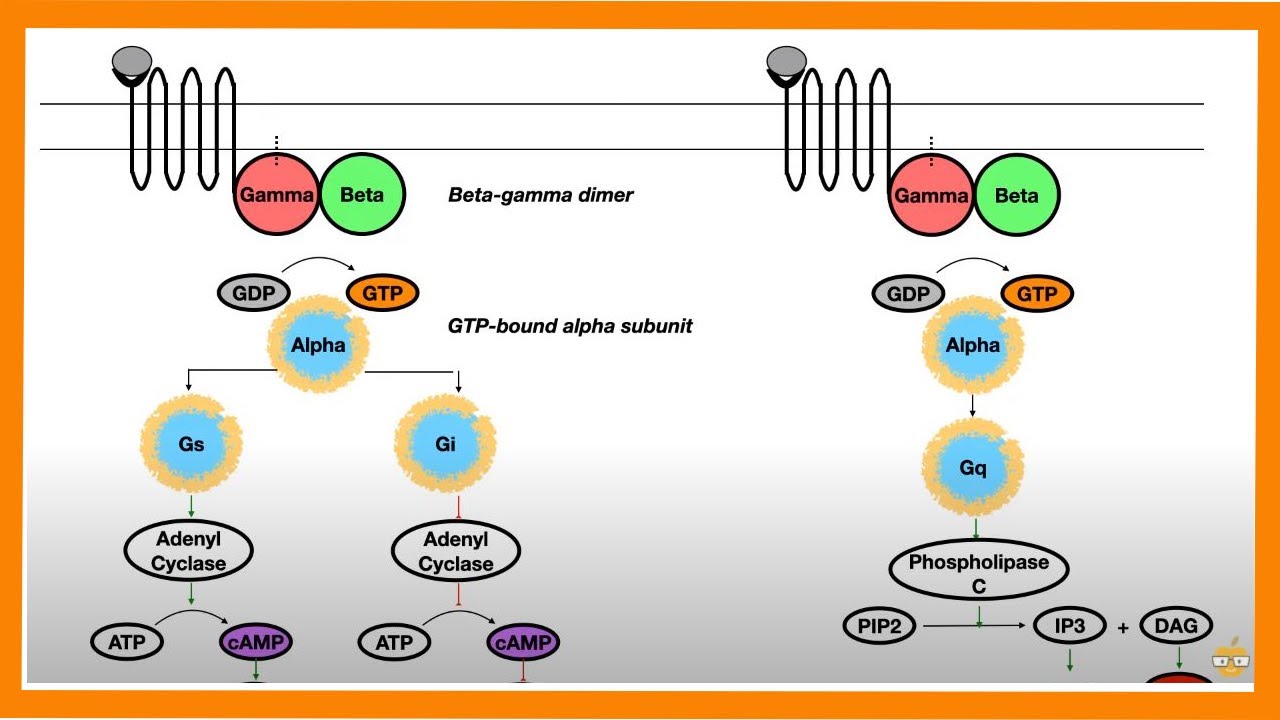
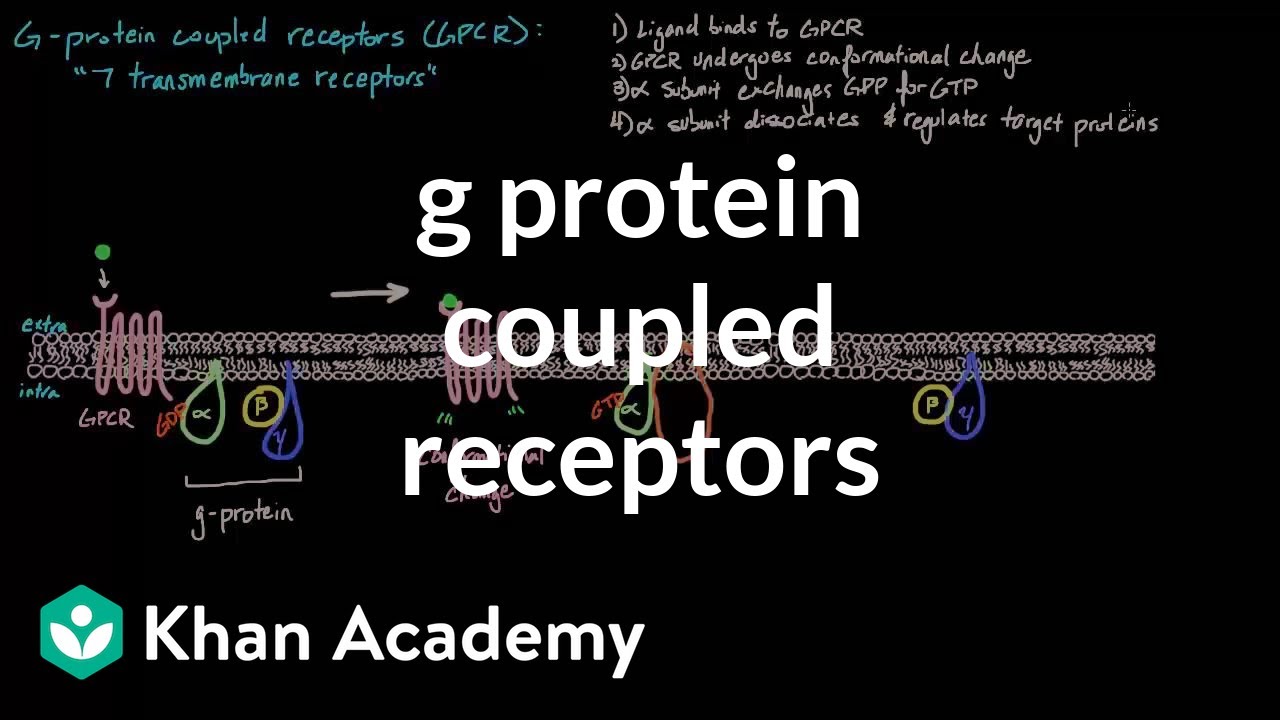
They mediate response to a wide range of signaling molecules. On the cytoplasmic side, they associate with G proteins. G proteins are named so because they bind with GTP or GDP.
So this is GDP, this is G protein and this is a G protein-coupled receptor. The binding of a ligand with such receptors initiates a series of intracellular events that ultimately regulate the functions of various enzymes and ion channels. For example, adrenergic receptors found in cardiac muscle cells are G protein-coupled receptors.
Now catalytic receptors. As per the name, they have enzymatic activity. Some of them are catalytic themselves.
Like insulin receptors are catalytic themselves. While others are not catalytic themselves but associate with other proteins that are catalytic. For example receptors for erythropoietin.
Such receptors catalyze a wide range of reactions but mostly the catalytic activity is kinase which adds a phosphate group to substrate or phosphatase which removes the phosphate group. This Addition or removal of the phosphate group works like a switch that activates or inactivates the substrate protein. So this was about catalytic receptors.
Now nuclear receptors. In contrast to previous receptors which are located on the cell membrane, these receptors are located inside the cell. And as we have already seen, such receptors are for hydrophobic messengers like steroid hormones.
They serve as transcription factors. Transcription factors are basically proteins that regulate gene expression. Upon binding with ligands they go to DNA and either induce or suppress gene expression.
As protein synthesis takes time, the effect of these receptors take longer to appear than other receptors. Now, the location of unoccupied nuclear receptors varies. Receptors for glucocorticoids and mineralocorticoids are mostly located in the cytosol.
Receptors for estrogen and progesterone are located primarily in the nucleus and receptors for thyroid hormones and retinoic acid are bound to DNA under resting condition. So this was about nuclear receptors. Now the final one.
Receptors that undergo cleavage. They are not typical receptors but they work like receptors. Upon ligand binding, they undergo regulated intramembrane proteolysis (RIP).
Released cytoplasmic fragments go to the nucleus and regulate gene expression. For example, sterol regulatory element-binding protein found on the endoplasmic reticulum are of this type. So this was all about the receptors.
Let's have a quick summary. Receptors receive signals from the cells exterior. They have a ligand-binding domain to recognize a specific ligand and an effector domain to produce the downstream events.
Receptors for hydrophilic signal molecules are located on the cell membrane and receptors for hydrophobic molecules are located inside the cell. Various types of receptors are ligand-gated ion channels that regulate opening or closing of the channel. G protein-coupled receptors act through G proteins and ultimately regulate the function of a wide range of enzymes and ion channels.
Catalytic receptors mostly activate or inactivate a protein by phosphorylating or dephosphorylating them and Nuclear receptors serve as transcription factors. That's it for this video. If you feel this video will help your friends and colleagues, please share it with them too.
And don't forget to subscribe because lots more to come. At Nonstop Neuron, learning medical concepts is as easy as watching cartoons. Thanks for watching, see you in the next video.