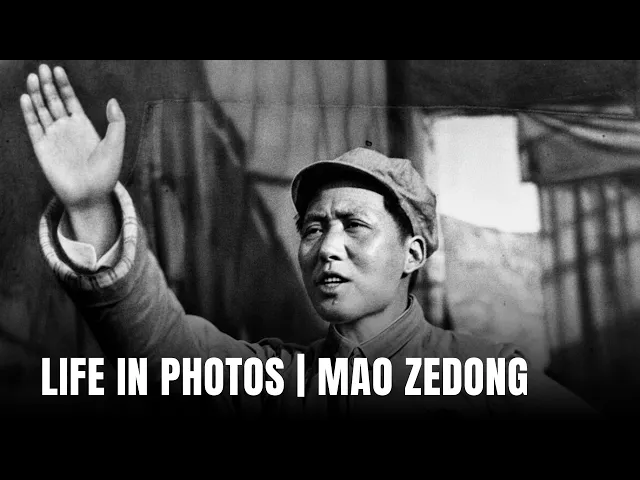
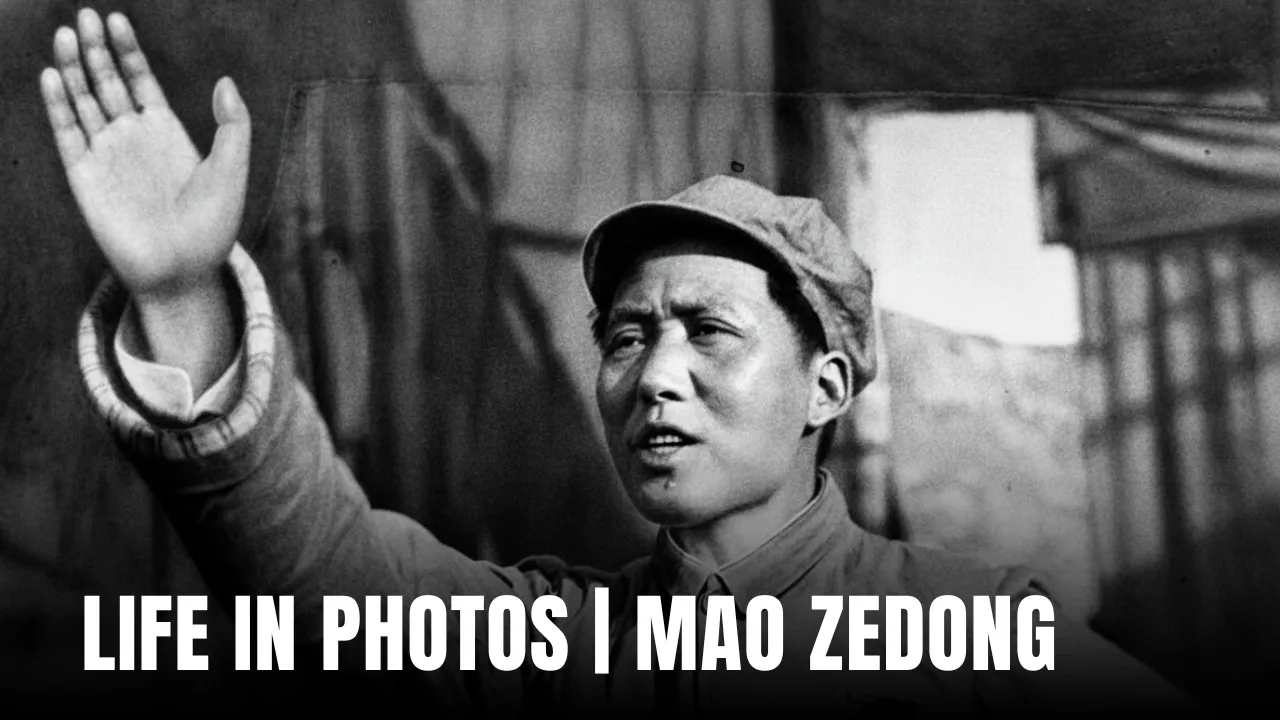
What if a boy born in a remote village rose to reshape the largest nation on earth? What if his dream promised hope, but his road demanded sacrifice? This is the story of Mao Dong, the peasant's son, who became the architect of modern China.
But every revolution builds its temple on both stones and shadows. [music] Mao was born on the 26th of December 1893 in Shiaosan, a small village in Hunan Province, China under the twilight of theQing dynasty. His family tilled a few acres of land.
[music] They weren't the poorest, but life was still hard. His childhood witnessed discipline, struggle, and early exposure to agrarian hardship. At age 13, while many of his peers accepted fate, Mao left home.
He enrolled in a secondary school at Chang Sha. He rejected a forced arranged marriage, a rare act of personal defiance for someone of his social background. Change was in the air.
In 1911, theQing Empire collapsed under the Shinhai Revolution. The monarchy fell. Republic was born.
Young Mao saw with his own eyes that history [music] could be torn up, rewritten. He began working as a teacher, but the city's political winds drew him [music] in deeper. Beijing University, where he briefly worked as a librarian assistant, exposed him to Western ideas, the works of Marx and Lenon, and to revolutionary thinkers.
In 1921, Mao officially joined the newly [music] formed Chinese Communist Party, CCP. The boy from Shiaoan was now part of [music] a larger story, one of class struggle of hope for the peasants and [music] workers of a radically new China. Picture a dusty Hunan village, clay roof huts, red earth, green hills surrounding a small patchwork of farmland.
A boy with curious eyes, [music] modest clothes, not fancy but steady. There is no grandeur, just a humble childhood shaped by soil, seasons, [music] and toil. Then imagine a classroom in Chong Sha, wooden benches, chalk dust in the air, old textbooks, a teenage Mau, thoughtful, hungry for ideas, reading, questioning, scribbling.
Later, a narrow street in Beijing, lanterns, flyers pasted on walls, youth crowded [music] around pamphlets discussing revolution. Mao passing through carrying dreams, discontent, [music] and a burning imagination. And finally, a small gathering of idealistic youths founding a party.
Their faces eager, hands shaking in solidarity. The future hanging in balance. This visual journey from village lanes to student halls to secret meetings.
That is Mao's early canvas. The red soil of Shiaosan. That red earth beneath his feet.
Every step, every plow taught him what poverty, class, and unspoken injustice meant. It grounded him. It made him real.
the forbidden books and western ideas. When Mao read Markx Lenin, not in grand libraries, but borrowed, passed quietly among friends, it lit a different fire, not just academic, but a fire of anger, hope. The leaf, the cracked benches and blackboards [music] of Chang Sha's school, they represent more than education.
They represent awakening, a place where a peasant son learned that ideas might travel faster than tyranny. The posterlined walls of Beijing, slogans in bold ink, the hum of student voices. That was the first public pulse of change.
That was hope in motion. Youth refusing silence. The handshake in the founding meeting of the CCP 1921.
More than a gesture, a pact, a promise for equality, for revolution, for re-imagining a nation. Mao's early life is a metaphor for China itself. Torn by tradition, oppressed by class, yearning for change.
The red soil stands for centuries of peasant suffering, unspoken, unrecorded, yet foundational. The borrowed ideology, smuggled pamphlets, secret meetings. They show that revolution begins not with armies, but with whispers.
His transition from farm boy to student to revolutionary encapsulates the journey [music] from inertia to insurgency. The founding handshake, it symbolized a new dawn, but also a loaded promise. Because revolutions are not just about dreams.
They are about violence, risk, upheaval. Mao's early life, humble, restless, curious, helped him redefine revolution for China. In a world where Marxism emphasized the urban working class, Mao reimagined it for rural China, putting the peasant at the center of revolution.
This reinterpretation would later define Maoism, a theory claiming that in an agrarian traditional society, peasants could be the vanguard, not factory workers. Mao inspired millions, students, workers, peasants, showing that regardless of birth, an idea can make history. For many in China's countryside, Mao became a symbol of hope, a hope for justice, land, recognition, dignity.
But this early promise carried the seeds of future contradictions. idealism clashing with power, [music] revolution turning into state control, hope into terror. In the early 1920s, many intellectuals dismissed Mao as a provincial [music] upstart, urban elites, city workers.
They believed the future belonged to industrial China, not to mountain villages or [music] struggling farms. But Mao's commitment to mobilizing peasants slowly shifted perceptions. Communists began to see China's revolution not through European lens, but through Chinese soil, Chinese reality.
Local landlords, warlords, and traditional elites responded [music] with repression. Many early communist experiments failed. Many comrades died.
But Mao persisted. That persistence earned him respect among peasants, among guerilla fighters and fear [clears throat] among those who profited from inequality. Today's China is unrecognizable from the land of 1893.
Skyscrapers replace huts. Highways replace dirt paths. Education is ubiquitous.
Yet the shadow of Shiaosan runs deep. Mao's experiment of combining ideology plus rural mobilization influenced revolutions globally from Vietnam to Latin America. The model was studied, imitated, debated.
But more than geopolitics, Mao's early story reminds us of a universal truth where injustice is normalized. Transformation begins quietly in classrooms, in whispers, in small choices. A boy leaving home, a borrowed book, a roughened soil.
Sometimes that's enough to shake empires. Every revolution begins with a promise, and almost every revolution breaks one. In the early 1920s, Mount Sidong still believed change could [music] be negotiated, that alliances could hold, that power could be shared.
History would soon teach him a harsher lesson. By the mid 1920s, China was not a country. It was a battlefield pretending to be [music] one.
TheQing dynasty was gone, but stability never arrived in its place. Regional warlords controlled [music] provinces like private kingdoms. Foreign powers still dictated trade, ports, and politics.
And the Republic of China existed more on paper than on the ground. For Mao, theory was no longer enough. The Chinese Communist Party was small, fragile, and inexperienced.
To survive, it entered an uneasy alliance with the nationalist party, the [music] Quuomo Tang, under Sununyatsen. On paper, it looked practical. Communists would help nationalists defeat warlords.
National unity would come first. Ideology could wait. Ma believed in this alliance cautiously.
But history was already loading the gun. In 1927, the illusion shattered after Sununyatt Sen's death. The Quuoman Tang fell under the control of Chiang Kaishek, a man who saw communists not as allies but as threats.
In Shanghai, without warning, nationalist [music] forces turned on the communists. Workers were rounded up, activists executed. The alliance ended in blood.
This moment changed Mao forever. What Mao learned was simple and brutal. Power does not negotiate with weakness.
It eliminates it. From that point onward, Mao would never again trust coalitions without force. Most communist leaders fled to cities or abroad after the purge.
Mao went the opposite way. He went back to the countryside. While others believed revolution lived in factories and cities, Mao looked at China and saw something different.
Hundreds of millions of peasants, poor, armed with tools, angry, forgotten. Urban workers were few. Peasants were everywhere.
This was Mao's divergence, the birth of Mauism. Revolution would not march from cities to villages. It would rise from villages to cities.
And peasants would not just support the revolution. They would become the revolution. Later in 1927, Mao led the autumn harvest uprising in Hunan.
It was poorly armed, poorly coordinated, [music] and quickly crushed. Many rebels were executed. Others fled.
By conventional standards, it was a failure. But Mao did something unusual afterward. Instead of abandoning the cause, he analyzed the failure.
He concluded that revolutions don't fail because people lack [music] anger. They fail because they fight the wrong kind of war. The enemy had armies.
Mao needed mobility. The enemy had cities. Mao needed terrain.
And thus, guerilla warfare re-entered Chinese history consciously, strategically. Mao retreated to the Jing Gang Mountains, remote, forested, and difficult to [music] access. From there, he began building something unprecedented in Chinese history.
A peasant-based revolutionary army. This was not a traditional military. Soldiers farmed by day, trained by night, shared food with villagers, protected peasants from landlords.
Mao insisted on discipline. Don't steal from villagers. [music] Don't abuse civilians.
Pay what you take. This was radical in a land [music] accustomed to brutality. Slowly support grew, not because people loved ideology, but because for the first time, someone protected them.
Mao saw war differently. For him, war was not just combat. It was education.
Every skirmish taught discipline. Every retreat taught patience. Every defeat taught humility.
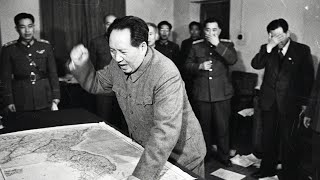
He believed armies must think before fighting. Famous later, but formed here was Mao's central belief. The enemy advances, we retreat.
The enemy camps, we harass. The enemy tires, we attack. This was not bravado.
It was survival logic. Against a stronger enemy, endurance is victory. Through the late 1920s and early 1930s, Mao and other communist leaders consolidated their forces.
The Chinese Red Army was born. But unity [music] was fragile. Ideological disagreements fractured leadership.
Some leaders still wanted conventional warfare. [music] Others distrusted Mao's rural focus. Politics inside the revolution grew deadly.
Power struggles weren't philosophical. They decided life and death. Chiang Kai-shek did not ignore Mao's growing base.
The nationalists launched a series of encirclement campaigns attempting to crush communist strongholds. Early attempts failed. But by the fifth encirclement campaign, the pressure became unbearable.
Blockades tightened. Starvation spread. Bombardment intensified.
Remaining meant annihilation. [music] So Mao's forces made a decision that would become legend. They would walk.
In 1934, around [music] 80,000 communist soldiers broke out and began what history would call the long march over mountains, across rivers, through snow, jungle, and enemy territory. It was not heroic at first. It was chaotic, deadly, desperate.
Within months, thousands died from starvation, exhaustion, combat. By the time the march ended a year later, fewer than 10,000 remained. But those who survived became the revolution's core.
Loyal, hardened, indoctrinated, and Mao emerged not just as an ideologue, but as a supreme leader. The long march was a military retreat, but politically it was Mao's ascent. This phase explains everything Mao becomes later.
Why he valued force over compromise. Why he trusted peasants more than elites. Why he believed suffering forged loyalty.
Why disscent became dangerous. Mao learned his lessons early and the world would later pay for them. Every leader is shaped before they rule.
For Mao, betrayal taught distrust. Failure taught warfare. Poverty taught ideology.
He didn't just inherit chaos. He was forged inside it. Revolutions do not announce [music] when they change character.
They don't switch banners. They don't sound alarms. They simply harden.
By the time Mao Zidong arrived in Yanan in 1935, the revolution was no longer fragile. It was wounded, cautious, suspicious. The long march had not made Mao kind.
[music] It had made him certain. And certainty in revolutions is rarely innocent. Yanan was poor, dusty, and [music] remote.
Cave dwellings carved into rock. Limited food, little comfort. But Yanan had something Mao needed more than cities.
Time. For the first time, Mao was not running, not retreating, not improvising. He was thinking.
And thinking is where power consolidates. Yanan became more than a base. It became a laboratory where Mao tested not just [music] strategy but ideology, loyalty, and obedience.
In 1937, a new enemy forced China into a fragile pause. Japan invaded. The threat was existential.
Cities fell. Millions died. Faced with annihilation, Mao and Chiang Kaishek entered another uneasy alliance.
Officially, China was united again. Unofficially, the civil war never stopped. It simply waited.
Mao knew something crucial. Japan could destroy China's cities, but it could never control China's countryside. And Mao already owned the countryside.
While nationalist forces fought setpieace [music] battles and lost them, Mao did something different. He avoided direct confrontation. Instead, communist forces harassed Japanese supply lines, organized rural resistance, expanded influence quietly, recruited endlessly.
Every village became a node, every farmer a potential ally. To peasants, the CCP didn't speak of ideology. It spoke [music] of land, protection, respect, and it worked.
By the mid 1940s, communist controlled territories had expanded dramatically, sometimes without a single battle. But outward strength concealed something darker. In Yanan, Mao began a campaign known as the rectification movement.
Officially, it [music] was educational, a process of self-criticism, of ideological clarity. In reality, it was a purge, subtle but devastating. Cadres were forced to confess errors.
Friends denounced friends. Thoughts were policed. Fear became administrative.
The goal wasn't punishment alone. It was alignment for Mao. Ideological deviation wasn't disagreement.
It was betrayal. This was the moment when Mao's leadership transformed from persuasion to discipline, from strategy to control. Ideas began to change tone.
Marxism was no longer something China interpreted. It became something Mao interpreted. Mao Zidong thought emerged not as theory but as authority.
To question Mao became equivalent to questioning the revolution itself. This distinction mattered because revolutions [music] forgive disagreement. Authorities do not.
In 1945, Japan surrendered. China was free but not unified. The fragile alliance collapsed instantly.
Civil war returned. But this time everything was different. The communists were no longer hunted survivors.
They were [music] disciplined, experienced, and unified. The nationalists, meanwhile, were corrupt, exhausted, and distrusted by civilians. Mao had waited, [music] and now history leaned his way.
The final stage of the Chinese [music] civil war was not decided by battlefield brilliance. It was [music] decided by legitimacy. The communists distributed land.
Nationalists demanded taxes. [music] The communists punished corruption. Nationalist officers exploited power.
Slowly cities opened themselves not out of fear but resignation. When communist forces entered Beijing in 1949, there was no dramatic collapse, just inevitability. On October 1st, 1949, Mao Zidong stood and proclaimed the People's Republic of China.
The crowd roared, flags waved, history clicked into place. To millions, Mao was liberation. To others, stability.
to some redemption. But revolutions don't end when power is seized. They begin their most dangerous phase then.
Because now Mao no longer needed consensus. [music] He had control. The habits Maformed in Yanan did not disappear.
suspicion of disscent, fear of plurality, faith in ideological purity, a belief that suffering was transformative. These would shape everything that came next. He had learned that hardship creates loyalty, that enemies justify unity, that ideas enforced become movements.
China was about to experience all of it at scale. This period explains why Mao did not rule like a traditional statesman. He ruled like a revolutionary who never stopped [music] fighting.
He distrusted peace. He believed struggle maintained clarity. And he saw ideology not as guidance but as command.
What followed the campaigns, the disasters, the cult did not emerge randomly. They were prepared here in the caves of Yanan in confessions in fear disguised as discipline. Mount Sadong did not simply win China.
He reshaped how power justified itself. By the time the revolution triumphed, disscent had already been redefined as treason. Revolutions are loud when they rise.
They are quiet when they settle. By the early 1950s, China was no longer fighting for survival. It was rebuilding, reorganizing, re-imagining itself.
Mount Sadong was no longer a gorilla, a theorist, or a hunted leader. He was the state. And states do not dream, they decide.
China inherited by Mao was exhausted. Decades of war, foreign occupation, famine, illiteracy. The Communist Party moved swiftly.
Land was redistributed. Landlords were publicly denounced. Property was seized.
Industry was nationalized. For many peasants, this felt like justice. Centuries old hierarchies collapsed almost overnight.
Villagers who had never spoken in public now judged those who once ruled them. Power changed hands publicly, [music] violently, and deliberately. Mao believed destruction was necessary before construction.
History, he thought, could not be [music] patched. It had to be rewritten. The early years of Mao's rule were paradoxical.
On one hand, literacy rose. Healthc care reached rural areas. Women gained rights unknown before.
On the other, fear became administrative. Campaigns were launched to cleanse society. Counterrevolutionaries, corruption, wrong thought.
Enemies were named broadly. Mao believed fear educated faster than persuasion. And for a while, it worked.
The Korean War changed Mao's psychology. China entered the conflict poorly equipped and held its ground against global [music] powers. To Mao, this was proof of something dangerous.
That willpower could replace resources. That discipline could overcome reality. That belief itself was a weapon.
Victory did not just strengthen China's global position. It strengthened Mao's confidence in his intuition. From this moment, advice began to matter less.
By the late 1950s, Mao believed China could skip stages [music] of development. Why follow the West's slow industrial path? Why wait generations?
Why not leap? The Great Leap Forward was designed to transform China overnight from agrarian poverty to industrial power. Communes replaced villages.
Private farming was abolished. Steel production targets were imposed everywhere. Even farmers were ordered [music] to smelt steel in backyard furnaces.
Numbers replaced reality. Reports [music] exaggerated success because failure felt dangerous to admit. Truth became optional.
Fields were over reported. Grain was confiscated. Farmers went hungry, but statistics looked healthy.
Officials feared being labeled rightest more than being wrong. Mao believed criticism slowed progress. Dissent was [music] framed as sabotage.
Nature did not comply. Harvests failed. Food vanished.
[music] Silence spread. Between 1959 and 1961, millions died of famine. Not because food didn't exist, but because reality could no longer speak.
When the catastrophe became undeniable, Mao withdrew from daily governance. Technocrats stabilized the system. Communes were loosened.
Food production recovered. But Mao did not accept [music] blame. In his mind, the vision was correct.
only execution had failed. This distinction mattered because Mao now saw danger not in policy but in people who questioned it. And soon he would return.
As China stabilized, Mao felt something unfamiliar. Not opposition, obsolescence. Pragmatists were gaining influence.
Ideology was softening. Order was replacing struggle. To Mao, this was decay.
He believed revolution must be permanent [music] or it rotted. And so he prepared his most radical move. This period defines Ma's paradox.
He genuinely transformed China. He genuinely improved millions of lives. and he presided over one of the deadliest policy failures in human history.
Not out of hatred, but out of certainty. This is the danger of revolutionary power. When loyalty matters more than truth, when belief replaces measurement, when silence becomes survival.
Mao did not lose his humanity. He subordinated it. The great leap forward was not a mistake of ignorance.
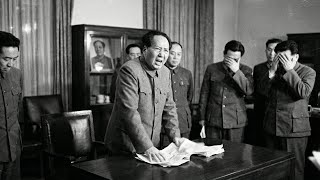
[music] It was a mistake of absolute belief where disagreement became betrayal and reality became negotiable. Mao did not see himself as cruel. He saw himself [music] as correct.
Mao did not return with an army. He returned with an idea. If the party was becoming bureaucratic, if leaders were becoming comfortable, if revolution was turning into routine, then the revolution had failed.
And Mao believed only chaos could cleanse it. What came next was not a policy. It was a purge disguised as renewal.
In the mid 1960s, Mao called upon China's youth not to study harder, not to prosper, but to destroy. destroy old customs, old ideas, old culture, old habits. Teachers became suspects.
Books became enemies. Statues became crimes. Young people organized themselves into red guards.
They were told they were history's chosen generation, and they believed it. Teenagers judged professors. Students [music] humiliated elders.
Children denounced parents. Public struggle sessions became common. Confessions were forced.
Apologies were meaningless. Truth was irrelevant. Mao was distant, physically removed, yet omnipresent.
His image watched from walls. His words were memorized. His approval was assumed.
Violence did not come from orders. It came from permission. Libraries burned.
Art was smashed. Music was erased. Entire professions vanished overnight.
To be educated was suspicious. To remember was dangerous. China was not just being reorganized.
It was being erased and rewritten simultaneously. Generations were severed from each other. History itself became contraband.
[music] Ironically, Mao had lost formal control by allowing disorder. The Red Guards began fighting each other. Factions multiplied.
Cities descended into instability. Even Mao became alarmed. Eventually, the army had to intervene.
The same youth who were encouraged to rebel were now sent away, exiled to villages to learn from peasants. A generation was fractured. They lost education, careers, and certainty.
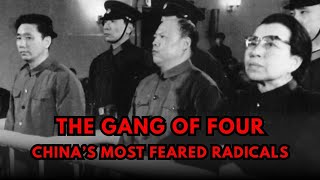
They would never fully recover. Every revolution needs a successor. Lin Bao was Ma's chosen heir.
He elevated Ma's cult of personality. He promoted the Little Red Book. He seemed loyal beyond doubt until suddenly he was declared a traitor.
Official accounts said Lynn planned a coup and died fleeing. The truth remains murky. What mattered was the message.
If even the closest ally could fall, no one was safe. Trust dissolved completely. By the early 1970s, Mao was aging, ill, isolated, watching the consequences of years of upheaval.
China, [music] exhausted by constant struggle, slowly turned pragmatic. Diplomacy reopened. Moderation returned.
Mao remained symbolic, revered, unquestioned, but real governance slipped away from him. He had reshaped China permanently, but not [music] cleanly. When Mao died in 1976, the country did not erupt.
It paused. Millions mourned. Millions stayed silent.
Millions did not know what to feel. How do you grieve someone who is both savior and destroyer? China chose not to decide.
Instead, [music] it preserved him. His image remained. His mausoleum stood.
His mistakes were acknowledged vaguely carefully. After Mao, without denouncing him, China did something rare. It moved forward without erasing the founder.
Mao was declared 70% correct, 30% wrong. A calculation, not a verdict. Markets reopened, ideology softened, life stabilized.
But Mao remained untouchable because removing him entirely would destabilize the story of China itself. Today, Mao is many things at once. a revolutionary icon, a political warning, a portrait in villages, a controversy in classrooms.
He unified China. He modernized it. He traumatized it.
His ideas liberated millions and crushed millions more. History cannot simplify him. Was Ma a monster or was he something more dangerous?
A man who believed so deeply in transformation that he forgot to protect human beings within it. Mao did not rule through greed. He ruled through conviction and conviction when unchecked can be more lethal than cruelty.
Maadong proved one [music] enduring truth that revolutions do not end when power is seized. They end when certainty is questioned. China survived him.
China moved on. But the shadow of absolute belief still lingers, not just in China, but anywhere ideology replaces humility. Can a nation fully move forward without fully confronting its founder?
Subscribe and watch the next [music] story. History is never as settled as it looks.