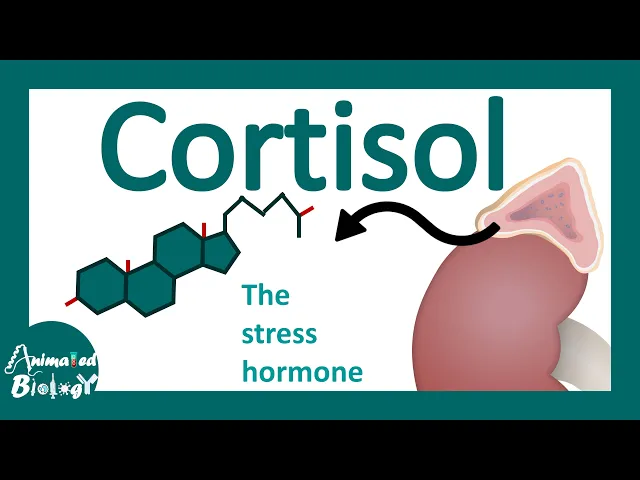
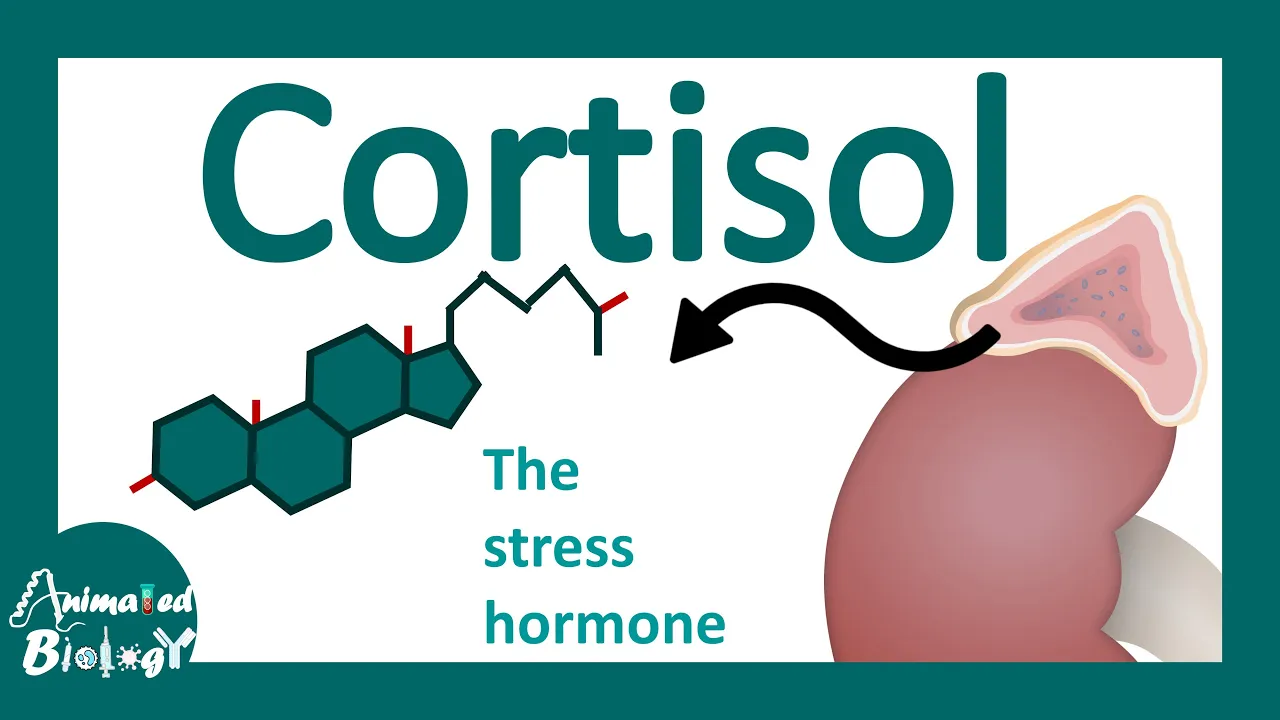
in this video we'll talk about cortisol aka the stress hormone cortisol is secreted by the adrenal glands present on the kidneys and this is a steroid hormone cortisol helps our body to fight stress that's why it is also known as a stress hormone let's talk about the functions cortisol is relevant and important for body's response towards stress other than that it regulates metabolism it suppresses inflammation and regulates blood sugar level these are the major functions of cortisol let's talk about the biosynthesis of cortisol it's a steroid hormone so it would be synthesized from cholesterol now
it's not that straightforward cholesterol gets converted to intermediates like pregnenolone eventually it gets converted to seven hydroxy progesterone and then ultimately in sequential step it gets converted to cortisol so overall it's a cholesterol derivative now if we look at the adrenal cortex there are three different layers Zona glomerulus granulosa Zona fasciculata and Zona reticularis so the outer layer secretes mineralocorticoid the inner layer secretes um the androgens and the middle layer the Zona fasciculata secretes glucocorticoids like cortisol so the secretion of cortisol follows a diuronal pattern that means it has higher secretion during the days and
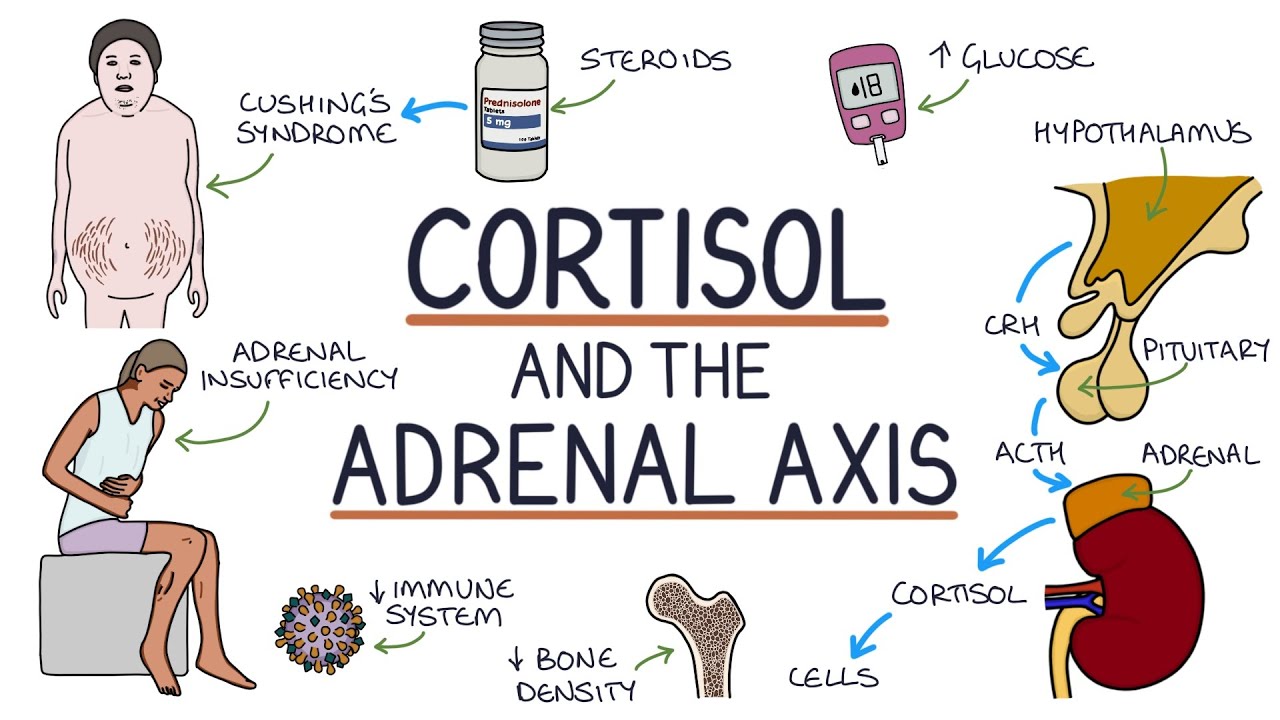
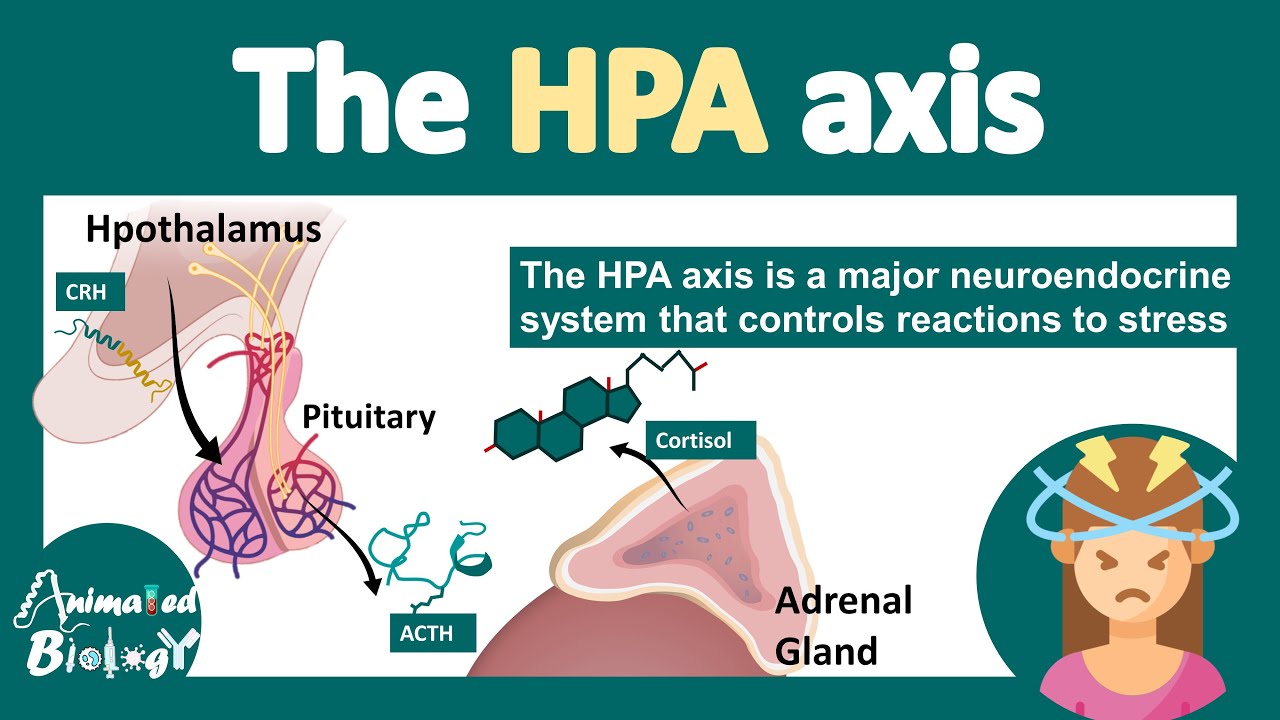
lower secretion during the night cortisol secretion is regulated by a hormonal axis so first the corticotropine releasing hormone from the hypothalamus instruct the pituitary to secrete ACTH ACTH acts on the adrenal gland to secrete the cortisol when cortisol levels are abruptly high in the blood there would be a negative feedback which would act on pituitary for short term and for a longer term it would act on the hypothalamus to reduce the level of crh and ACTH this is how a nice secretion Loop is maintained let's talk about the biological actions of cortisol in bit more
details cortisol can act on various tissues majorly it works on liver adipose tissues and muscle in the liver cortisol ensures that glycogen lysis takes place so glucose level would be increasing in an action of cortisol it also prevents the formation of glycogen from glucose now in adipose tissue cortisol ensures that fatty acids are freed up from the fat and these can be utilized to generate energy and in muscles it breaks down proteins to form peptides in short form it activates catabolic responses and suppresses anabolism and think about this in this way when your body is
undergoing stress it needs energy so it needs all building block that can produce energy cortisol ensures body has enough amount of energy when it needs now cortisol level in the blood Rises during stress and when we are under stress cortisol ensures that other organs like liver muscle does not take up glucose and this would result in an increase in blood glucose level which can be channeled towards our brain and our brain should be active in this kind of Crisis moment in the liver it also ensures glycogen can be broken down and glucose can be increased
in the blood also amino acids can be converted to glucose via new glucogenesis so moral of the story cortisol increases the blood glucose concentration so simply to put it cortisol antagonize the work of insulin another major work of cortisol is to suppress the immune system and it kind of regulate the balance between inflammation and risk of infection because it decreases the risk of inflammation but also increases the risk of infection by other organism so it's a potent immunosuppressant now cortisol is useful after a graft grafting uh surgery so let's say this is a tissue graft
and this tissue graft can be rejected by the host and that is why your immune system need to be suppressed generally the doctors prescribe cortisol injections which prevents or suppress the immune system to reject this kind of graft so cortisol actually inhibits the inflammatory mediators and several inflammatory cytokines such as like interferon gamma tnf Alpha Etc and it also promote the formation of interleukin 10 which is an anti-inflammatory cytokine so moral of the story cortisol is an immunosuppressant and it reduces inflammation by producing anti-inflammatory cytokines when it comes to Bone formation cortisol impedes the bone
formation by increasing the osteoclast activity and it prevents the osteoblast activity so let's talk about the molecular mechanism of cortisol action cortisol is a steroid derivative so it can easily pass through the membrane and it can bind to intracellular receptors The receptors for cortisol are present in the cytoplasm but when the ligand is not bound it was bound to a heat shock protein which gets removed when the cortisol binds to it eventually it moves to the nucleus dimerize and it can activate several genes responsible for glucose metabolism protein catabolism and fat metabolism now when there
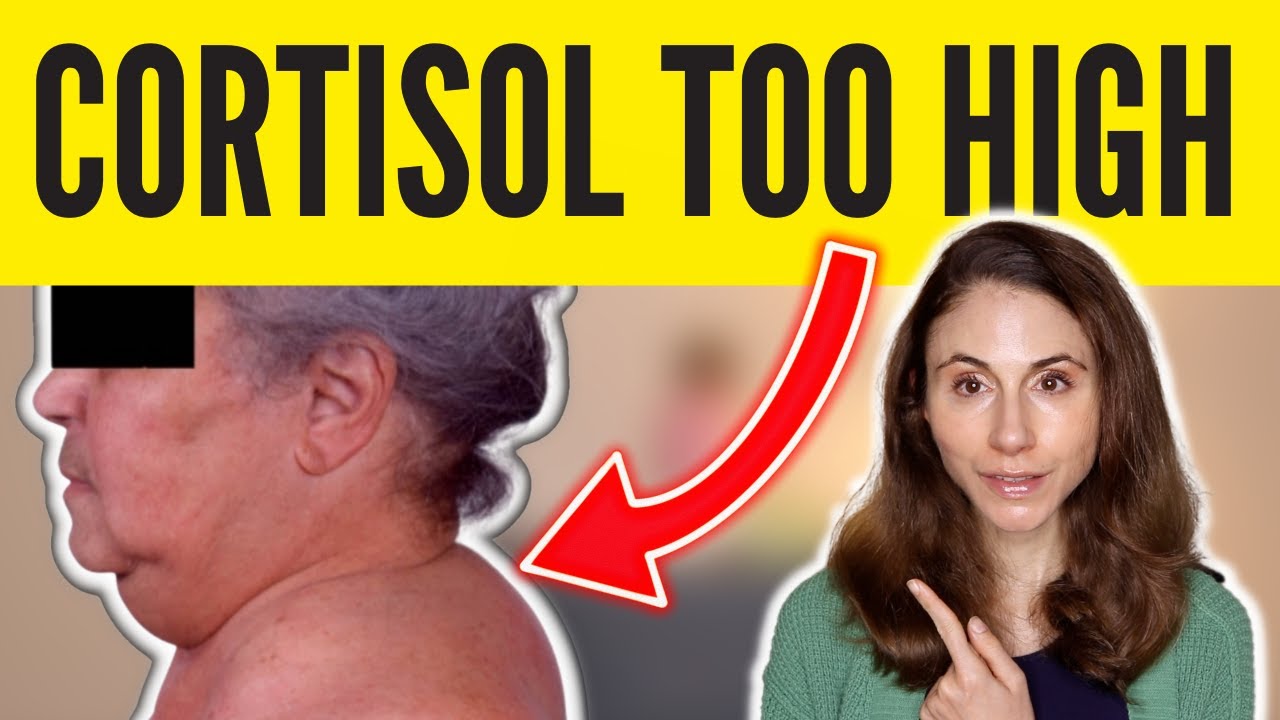
is a very high level of cortisol in blood it's not really good because there are several conditions such as the Cushing syndrome where you have abnormally high level of cortisol it can cause problem other reasons of high cortisol in blood might be due to adrenal gland tumors which is overproducing cortisol also when you take corticosteroids that might lead to an increase in the blood cortisol levels so as per summary we looked at the important functions of cortisol and how it regulates physiology as a take-home message I should say cortisol is an potent immunosuppressant and it
has a widespread effect on metabolism overall it promotes catabolism breaking down of glucose breaking down of protein and breaking down of fat and it ensures our body has the source of energy when it needs the most under stress situation right and also it works as an with a intracellular receptor so it can lead to several gene expression changes you can get more notes and flashcards in my Facebook page you can also follow us on Instagram links are in the description you can support our Channel by super thanks you can pay via paytm Paypal UPI see
you in next video