welcome back to the channel today we will be going through the concepts present in the united station the five build examples the reasons for why eco was here renounced to the authorship of one of the buildings and why the project failed as a concept i think i can already hear the rage how dare you criticize like always yeah but hear me out i will unpack some thoughts and then we can have a discussion but before we start if you like architecture and you enjoy the content please consider subscribing only 17 of you are subscribed to
the channel and that would make a massive difference on the other hand we just reached 18 000 subscribers and i would never thought we would come this far so thank you if you are already subscribed to the channel okay so i will cover some precedence of the project marseille as a case study and some of its design fundaments the other unites with a special focus on the berlin building and the close of the video i'll give you my opinion on why the united failed as a project and what went wrong so the united was both
a solution for the housing problem in europe after the second world war and an exploration of life possibilities in an industrial system to understand the project better i will give you some references both within the computers architecture and from others that are visible and used in the unit test let's start with two urban proposals from le corbusier those are the contemporary city and the radiant city from 1922 and 1932 respectively and in these proposals he uses three main building typologies that will influence later the concept of the united we have skyscrapers collective dwellings and villa
buildings in this plan for example the skyscrapers are used for the business area of the city and they are in the center collective dwellings they surround the skyscrapers and the villa buildings as the last ring of the city one of the concepts that appears in the first building typology which is the collective dwellings and that will be translated later into the united is the increased density and the growth of the city or the neighborhood in a vertical direction and he does this to free space around the buildings and creates green spaces and leisure spaces for
the inhabitants the second concept appears in the villa buildings and that is the inclusion of the nature in the apartment so a truly hanging garden appears in each apartment and also the relation with the landscape through those big openings another concept that will be appearing as well in the united is that double height space in the living room that we can see over here that same space is also visible in the citra hand that was built in the weissen hall in stuttgart it's exactly the same space that you see in the united states so double
height in the living room space another building that influenced the umite is the anna monastery in the surroundings of florence in one of the trips that le covosia did to italy he visited this building and this building influenced the united in two ways the first one was the communal living within the monastery and the second one was the relation of the building with the surrounding nature and the landscape and that is captured here in this sketch that le corusia did another concept that appeared in his urban proposals and the translated related to other projects and
as well to dunite is the separation of the pedestrian traffic and the mechanized traffic in different levels and he also raises the buildings to free those views for the pedestrians and to make the street disappear and that can be seen as well in the swiss pavilion here in the picture on the right that is raised on pilates the same way that the united was and the last reference that i will give you is this narcoti building built in moscow in 1930 and even le corbusier admitted that this building influenced his united evidence on concept and
i will go really quickly through some of the concepts that they share so first of all is the communal services included in the building that can also be seen in donate the rooftop also has some spaces that can be used by the inhabitants both of them stand on pilates so they are raised and if you look at the section both of them have double height spaces and spaces that overlook the living room within the apartment so quite a lot of similarities so marseille is the ideal here is the overview of concepts that le corvus here
wanted to encapsulate in the building in just one sketch if you remember those urban proposals that i was mentioning earlier where he was separating mechanized traffic from pedestrian traffic that can be seen here as well he also raises the building the way he was raised in the city and it's supported by pilates and those two allowed to free the space for the pedestrian and free the views and there is no street as we know it in this proposal another thing that can be seen is the relation of the building with nature and the sun you
can see here the section type of the apartment and its relation to the outside and the views also those central corridors feeding the private and the common spaces within the building and at last that roof concept that is really important in the building i will cover each one of them in a bit more detail but really quickly as well so all the uniteds are aligned north south and you can see it over there all the apartments they run around that central corridor so east and west and the reason for this is to have fuse sunlight
and ventilation in all of the apartments so the section type you can see here that central corridor feeds two apartments and those are the ones you can see here along that corridor and then on the south end of the building an additional set of apartments there so as you probably know the modular is a system of proportions based on human dimensions in this case based on a 183 centimeter person and le corbusier uses that system of dimensions to define all heights and dimensions within the apartment in the common spaces and those define the dimensions of
the building so here for example you can see the seating heights are defined based on that system of proportions also the table top heights 183 is the height of that person and if that person raises the hand it reaches 226 and that's where he places the ceiling height and this can be clearly seen in the apartments that's the 226 that i was mentioning in the slide before that's how he defines the ceiling height and also the ceiling width of the apartment is based on that system of proportions so 336 and the three next concepts are
very interlaced to each other so i'll put them together for the video the first one is the interior corridor the second one commercial street and the third one is vertical city if you take a look here at the section you will see that that interior corridor is fitting all the private and public spaces in the building horizontally and also in level seven and eight of the building there is this public street with natural light which includes a shop a hotel in a restaurant as an additional equipment those commercial levels together with the rooftop equipment that
has a gym a pool and a nursery create that vertical city that i was mentioning before and this takes me to the next concept that le corbusier included in the building which is the very soleil he designed two types of resale in the building the horizontal and the vertical one the horizontal is present in the apartments that have a double height space and the vertical one is present in these commercial levels that i just showed you the bristol layer is used to control the temperature in those spaces that are hidden by the sunlight and this
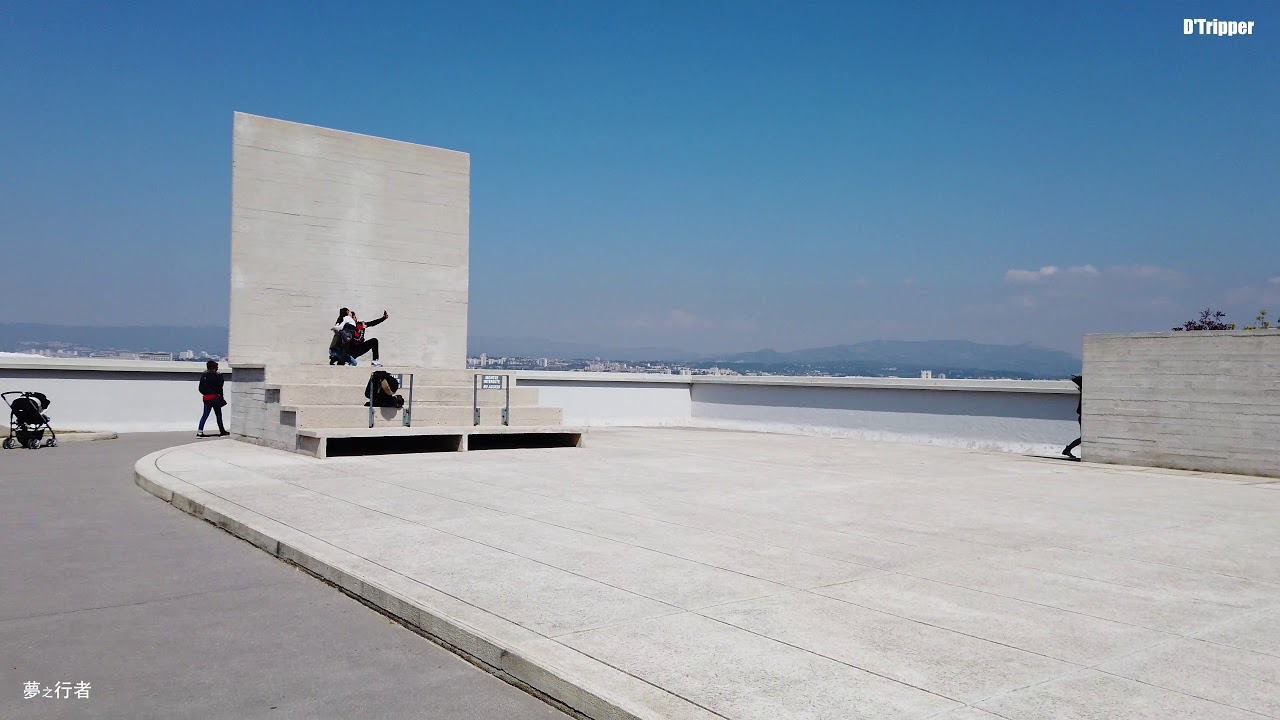
next picture you can see the construction of the brisalene in berlin which is exactly the same in construction from the one you could see in marseille so the roof is a very important concept in the united station project for several reasons the first one it's the end of the spatial sequence of the building second one it's a connection to the surroundings views nature ventilation and sunlight and the third one because it has a very extensive equipment that aggregates to that neighborhood life or common spaces that build the social aspect of the building i will mark
some of the equipments included in this level here we have a nursery next to the nursery is a small swimming pool next to that there is a salarium he also included a gym and even a theater there in the back and tying all those different equipments together there is a running track that goes around the building so it's a very very complete space a very fundamental concept in the building first of all from the aspect of it it has a lot of very recognizable spaces but also from the functionality and the representative meaning of that
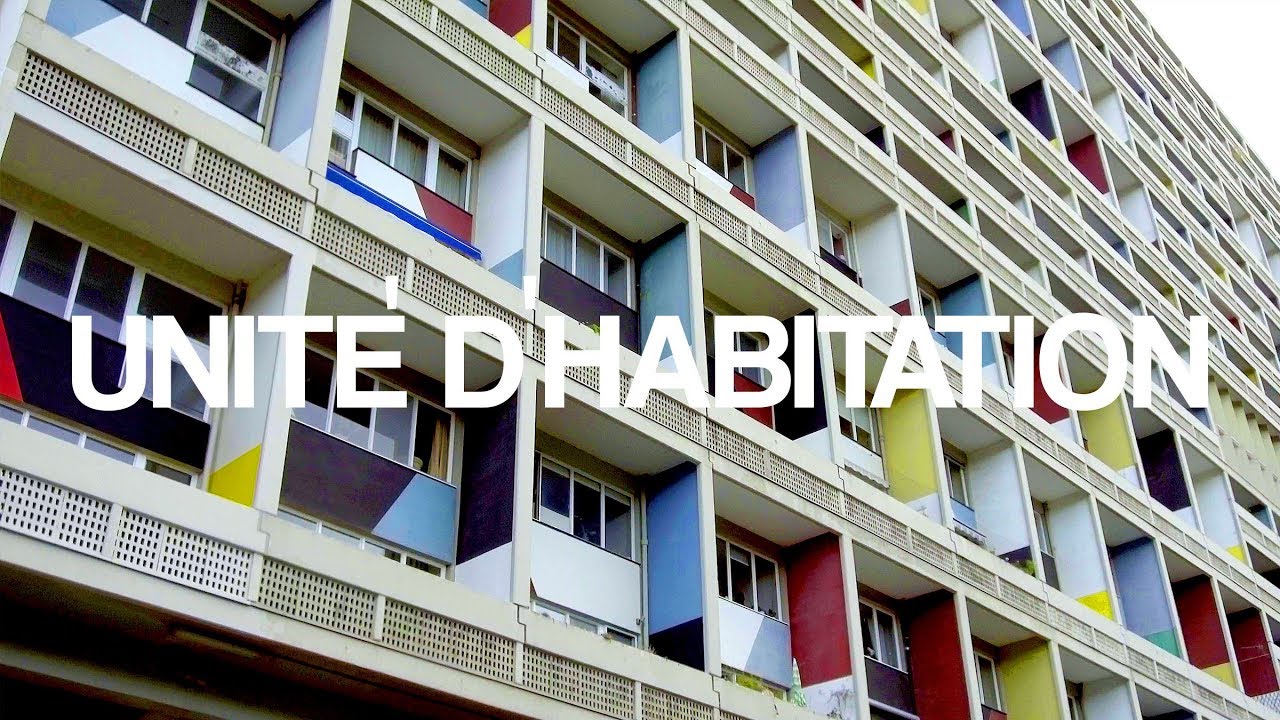
space within the whole project color is a very important concept in the combo series work and the united states have colors both on the outside and the interior spaces and le corbusier used his own color palette this one he designed in 1931 and he used until 1959 the one you see on the screen and in the case of the united of marseille was made in collaboration with nadi grafonsu the portuguese paint so besides the concepts that i just covered there were others like the bottler concepts or concepts related to prefabrication that i won't cover here
but they were really important in the building as well so marseille was the first united the prototype in the idea however that ideal would never repeat there were other four unit tests built in the span of around 15 years those were nantes reset one in berlin so if i go to the next page i created a table to have a good overview of how the unit has changed a long time those 15 years and basic differences between them so if we start with marseille here on the left in 1952 it has 17 levels and seven
streets so those horizontal or interior corridors that i just mentioned 134 meters by 24 by 56 337 apartments 23 layouts it has a commercial street and levels seven and eight so hotel shops and a restaurant and a nursery the gym roof garden swimming pool salarium and a running track on the roof and it responds to that 226 and 366 for the grid in the modular so the 366 is the grid width now if i go on to reset it was built in 1955 it has 17 levels and six interior streets 108 19 and 51.8 so
the dimensions were slightly smaller 294 apartments and 10 different layouts no communal services it has a kindergarten a gym and a swimming pool on the roof and also responds to the same modular berlin i will leave for the end now brie was built between 1959 and 1961 it can be considered the less successful united from them all it faces serious difficulties during the design phase and also a lot of budget cuts and it was abandoned by its promoters and its tenants at some point and it was in risk of being demolished as well so it
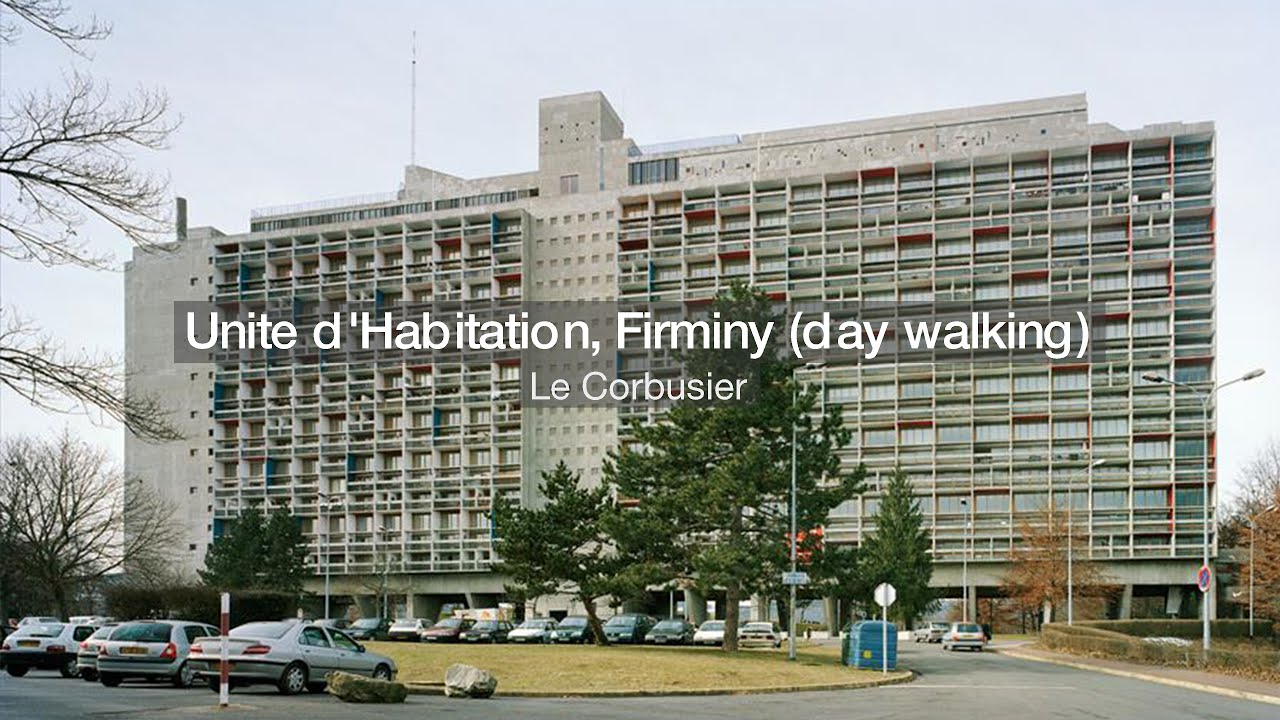
has 17 levels and six interior streets the dimensions are very similar to razer it has 339 apartments in 11 different variations no communal services and no roof equipment and it also responds the same dimensions for the modular so the same modular dimensions are applied for this building so firmini had plans to build three unit tests but only one of them was actually built and the inauguration date was 1967 so after the cause here had passed it has 19 levels and seven interior streets dimensions 131 by 21 by 56 so basically the same dimensions as marseille
has 414 apartments 32 different variations it has a nursery school in levels 18 and 19 and also a roof garden on the roof and it follows the same modular that i showed you for the other ones so 226 and 366 for the grid not for the apartment and at last we come to berlin berlin was inaugurated in 1957 so i'm going back in time here he has 17 levels and nine interior streets 141 by 23 almost by 53 557 apartments from the initial 530 that were planned it has five main type apartments commercial space in
the lobby so i included it here because there is a small newsstand shop in the lobby but if you compare it with the marseille unit there is no commercial level here and also no equipment in the rooftop and the modular in this case was modified to 250 and 406 so that was the ceiling height and the width so what were the reasons exactly for le corbusier to remove the building from its complete works so first of all some budget constraints and those budget constraints affected the rooftop equipment that i just mentioned there is none here
it has no commercial levels as well but the vertical very solid present in marseille in those commercial levels is still present here as well but it's linked to the single high departments so there is a disconnection between the pre-sole and the actual function that it does it also has a modified modular due to the german regulations that i just mentioned increased height of the apartments to 250 and increased width to 406 and it also this unit has modified plans and the apartments so there is more single height apartments and less double height apartments if you
look at it here you can see that those two apartments in the last are only happening on the upper levels of the united and the firms that built the building were actually too competent apparently because the finish of the exposed concrete was too fine and it didn't have enough texture according to le corbusier he called it licked by tomple all these factors together made him renounce to the authorship of the building and even at some point remove it from his complete works now this would be really surprising if it wasn't for like i was here
because the kobushi was somebody that used to edit himself from time to time and he had already removed some projects from these complete works like for example at the beginning of his career he removed some of the buildings that had those arts and crafts or human steel references and he started basically from the more mechanized and industrial solutions present in the citroen house for example so would i say that this one is not an definitely not it's a bit reduced in concepts and not so complete as the marseille one for example that's undeniable but it's
still at the same level as the other four now if we go on to the next slide we will see that they had big plans for the united s there were plans for 33 other united most of them built in france but there was one in switzerland a couple of them in spain one in san francisco in the us and also one that was temporary and none of them were built from all the plans that he had he only got to build five units in the span of those 15 years okay so what's my take
on these concepts let's start with the modular if you remember from the explanation allium i mentioned that the modulore is a system of proportions based on human dimensions based on centimeter person and that system of proportion defines all the chair heights table heights window heights door widths ceiling heights in the building those define the dimensions in the apartment and those define the building dimensions now my problem with this number the 183 is that the modeler was done in 1946 until 1946 the person height that le corbusier had selected was but if we take a look
at the height statistics from france in 1940 we can see that the average height in the country was 171.7 and actually in 1950 that average height went up to 173 so there is a disconnection between the actual average height of the person and the selected height that he did for the modular now i was looking for some reasons for why he selected 193 and i found a couple of quotes where he was talking about the modeler the first one is in english detective novels the good looking men such as policemen are always six feet tall
so if that is an explanation to define 183 i'm not sure about it the second explanation that i found or the second quote by him the right to adopt the height of the tallest man so that manufacture articles should be capable of being used by him now this is a better approach in my understanding the problem is that you don't take the tallest user to define share heights and table heights but the average user of the building or the specific user of the building in this case i think it's very good to take the highest
or the tallest user for the ceiling heights for example or the door heights or the door widths but not for the chair and the table heights so there is still a disconnection there in the approach from the system of dimensions to the end user in my understanding here you can see the plans of the apartment section type and in my opinion the modulo and four of the five units is too tight as i mentioned earlier the modular in berlin which is slightly increased it favors the living conditions actually in general the apartment if you look
at it it's a 366 apartment by 25 meter long the ceiling height is a 226 if you compare it with current norms it's definitely too low but at the time he also received some criticism for selecting the dimensions he did i know that these buildings are focused on efficiency and they were trying to solve a bigger problem here but i think the dimensions that he defined for the apartments they are still too tight now if you remember my villa video that i did there was a chapter in that video where i was mentioning that he
was a man of contradictions and here there is no difference i looked for a couple of quotes from le corbusier and he says the modular key to every dimension of the huge building but at the same time he also says to hell with modelor when it doesn't work you shouldn't use it so there is those two sides in this concept as well and i think it translates very well to all his work because it reflects the way he was basically now if i may go really quickly to the section type of the apartments you can
see here on the screen that i have that central corridor that fits the two apartments around it so one corridor feeds three levels and this is known as the e-section so we have an upper apartment and a lower apartment and they are in theory symmetrical or they complement each other but they are actually anti-symmetrical and there is a functionality difference between the two apartments really clear so the access to the apartments is in both cases through the public spaces of the apartment so next to the kitchen goes into the dining area and then it goes
into the living room and that double height space now the difference with the lower e apartment in this section is that the access is through the kitchen or next to the kitchen again through that dining room but to access this living room space the double height space you have to go down and out and that's not really a problem the problem is that you have to go through the master bedroom space to access that double height space and if you consider this space instead all the master bedroom you have the dining area of the apartment
overlooking the master bedroom so i think it's a bit odd this decision for sure le corbusier was aware when he made it but there is some functionality difference between the two apartments so regarding the natural lights natural light is quite a big concept in the united foreign he wanted all the inhabitants in all the apartments to have access to natural light but that didn't happen to the common spaces or this horizontal corridors that he had in this section and if you remember correctly the plan we had that central corridor fit in both apartments left and
right or east and west and an additional set of apartments on the south but the north end of the building had no apartments the reason for why he left that facade completely closed was the aggressive north winds that the building was hit by and i would accept that decision if there was some natural light coming in to the central corridor from any other points but in this case there is none and those corridors if you remember the dimensions of the building they are around 120 130 meters long there was no need for leaving this facade
completely close in my opinion he could have opened the skylight to bring some natural light in from that point or a double wall or some kind of technical solution if we take a look at the staircases those points they even have more natural light than the central corridor i still don't understand why he made that decision and he left the north assad completely closed he could have brought some natural light in from that point without sacrificing anything in the concept of the building was the project a failure in my opinion we have to look at
it in two ways if we look at it from the urban planning and as a solution for the housing problem in europe in the 50s it definitely was a failure because the buildings didn't achieve what liquor was here expected them to achieve and it wasn't accepted by the inhabitants and by the public the way he expected them to be and at the same time it wasn't a one solution fits all problems the way liquor was here planned it also this vertical city concept or the vertical neighborhood concept that le corsi applies in the building didn't
translate the way he wanted it to and if we take a look at current trends in the cities we actually went the opposite direction we are rebuilding and repurposing current spaces and improving the living conditions in the city in the current spaces that we have instead of building from scratch something new and going away from the street and the neighborhood if we take a look at it from the innovative and technological side of the buildings they're definitely not a failure i'm actually amazed that we have these five buildings with us today that we can admire
them and we can see all the technical solutions and the innovations that he put together just in one building and how these buildings influence the architectures that came after and all the solutions that came after cannot be measured so the impact of this building is enormous in today's architecture and this is all for today i really hope you enjoyed today's video please consider subscribing and drop a like and a comment down below i will be going through your comments and i'm really looking forward to see what you guys think i hope to see you all
in the next one thank you

![The Free Plans of Le Corbusier's Architecture [Villa Savoye]](https://img.youtube.com/vi/JBRmGUbUj3Y/maxresdefault.jpg)