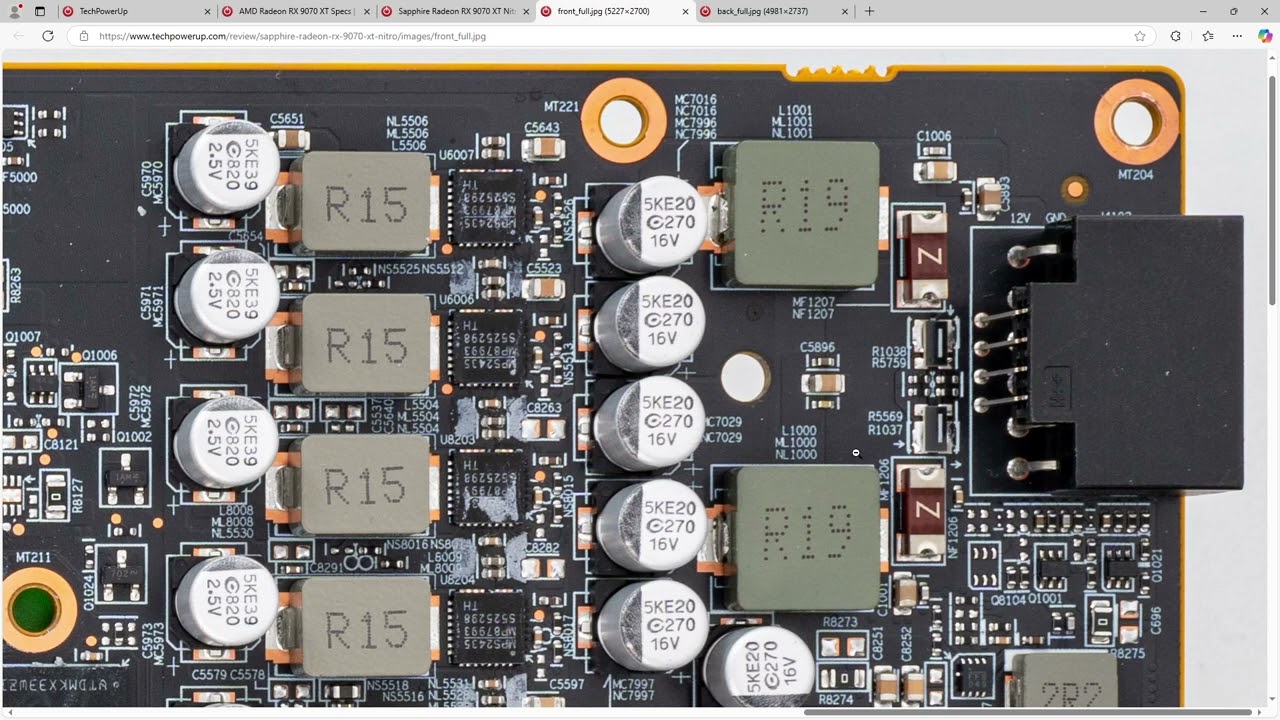
okay everyone so this is the big one amd's most ambitious attempt to reclaim Graphics market share so far and you know what well before I tested the rdna 4 powered RX 970 and 970 XT I was wondering just what else they could try I mean in the past we've seen good performance we've seen competitive pricing we've seen gigantic cost reductions on Legacy cards making them remarkably Valu rfic so what is it going to take to make rdna 4 any more successful well there's still going to be a mountain to climb in terms of Mind share I guess as the Nvidia brand is so dominant however going into this one I think we needed two crucial elements in the rdna 4 package a viable alternative to dlss and much much much improved rate racing performance rdna 4 starts that Journey with some highly convincing results and on top of that team red has delivered impressive pricing so I think out of the two cards the XT is the one to have and the cards we're testing today are the sapphire pure models in whites no less these are large quiet well-built cards with Factory overclocks they're also more expensive than MSRP the 970 XT here has a sticker price of $679 an $80 price premium while the non XT is $620 a $70 premium over the sticker price every modern Sapphire card I've ever had has been quiet and performant and I've no real quals with either of these twin PCI 8 Pin power inputs provide the juice while ports vary from the standard three display port with one HDMI configuration here it's two display port 2. 1a along with two HDMI 2. 1singles basically identical but to what extent do they differ internally quick look at um rdna 4 specs then and it's all pretty straight forward the 19970 has 56 compute units up against the full compl of 64 within the XT model a boost clock of 2.
54 GHz on the non XT up against 2. 97 GHz on the XT shows quite a divide but as you'll see shortly the gap on these Sapphire models is much tighter Sapphire seems to taken the non xt's boost clock up to 2. 7 GHz which is not insignificant while A Small Bump to just over 3 GHz on the XT won't have that much of an impact the power differential is certainly wide though based on the reference specs 220 wats on the non XT up against a curiously specific 304 Watts on the new AMD Flagship but expect those to go higher on these Sapphire models both cards get 16 GB of memory surfaced by a 256bit memory interface there's no gddr 7 like Nvidia AMD is sticking with G6 let's kick off with a look at power consumption on these Sapphire cards clock speed and some performance numbers um up against their immediate Nvidia counterparts kicking off with black myth Wukong here BMW we're seeing that 970 XT is knocking on the door of 5070 TI Performance Based on this sequence 91 % of the 5070 TI frame rates but requires 33% more power to do it that's a remarkably High 6.
3 Jews per frame against nvidia's 4. 3 Jews per frame on the 9070 non XT power drops significantly and performance across the whole bench is similar to the vanilla 5070 but AMD requires 133% more power to achieve pretty much the same result 5. 4 jws per frame on non XT versus 4.
8 on Nvidia clock speeds Ross the board here are in the 2. 7 GHz range with the exception of 970 XT which runs the gamut from 2. 8 GHz to just over 3 GHz depending on content Hitman with no rate tracing active tends to favor AMD architectures and here the 970 XT beats 5070 TI by around 5% but to do that it's requiring 16% more power two Jews per frame from AMD versus 1.
8 on Nvidia so the impression so far is that for am MD to get competitive with Nvidia on the higher end a good deal more power is required the situation in this game is much Rosier on the non XT though is 21% faster than the vanilla 5070 and requires just 2. 6% more power 1. 7 je per frame from AMD up against two JS per frame on Nvidia interestingly clock speeds are much lower on this title with the XT only rarely moving above 2.
8 GHz with non XT about 150 slower switching over to Hitman similarly maxed but this time with all RT features enabled the 97t XT has around 94% of the performance of the 5070 TI but requires 27% more power to get there so I'm continuing to get the sense that AMD pushed the XT really hard to get it as close to Nvidia as possible 4. 2 Jews per frame from the XT versus 3. 1 on 5070 TI again the situation flips on the 9070 non XT beating 5070 by 133% in frame rate terms but it is using 10% more power 3.
5 jws per frame up against 3. 6 on Nvidia looking at a game that does actually favor Nvidia Dying Light 2 here sees the 970 XT only delivering 82% of 570 TI's performance and requiring 20% more power to do so I'm measuring a remarkable 10. 4 je per frame on the XT versus 7.
1 on the ti next up the 5070 versus 970 Faceoff at 9. 1 J per frame the 970 has 94% of 5070 performance but still requires 7% more power that brings in Nvidia around 7. 9 Jews per frame also interesting to note here is that this heavy RT workload has sent GPU core clocks on rdna for tumbling ultimately it's difficult to avoid the sense that amds pushing the XT re really hard to get close to the TI's level of performance while non-xt is more efficient more competitive in that sense with the 5070 so at this point in a GPU review We crack on with benchmarks right but we've also been quite vocal about how relevant they are Beyond a raw apples to apples hardware test in a world where software where upscaling is becoming more important more crucial and where Nvidia has held a big big Advantage for getting on for 5 years now but at CES we saw FSR 4 and we were impressed seriously impressed and on the channel now we have a first look at the final version of the technology and it's really good really good perhaps not up to dlss Transformer model quality standards in all respects but marketly better than dss3 in key scenarios so I do recommend checking out that video and we'll have a more detailed analysis further on down the line and so with that crucial question answered for now it's time to look look at that Hardware performance via benchmarking Apples to Apples it is but obviously there are differences in the feature sets of both cards also as with any Benchmark don't take these numbers to mean that game X runs FPS Y for the whole duration it's all about the performance differentials at match settings with a view to establishing some kind of hierarchy here AMD calls these products 4K cards at 1440p pricing so we'll be using 4K as the primary resolution choice if you're into maxing out 1440p will be the better choice overall for all cards tested here and we have all of those numbers and More in our accompanying Euro gamer review complete with those interactive bar charts so looking at Avatar frontiers of Pandora first of all well a fascinating result between the fastest and slowest cards 570 TI and 5070 respectively there's a 30% differential 570 TI obviously comes out tops here but delivers just a 6.
6 6% increase in performance over the 9070 XT the non XT has 91% of the xt's performance while beating the 5070 by 11% yes this is a weaker game for Blackwell but it's rare to see Nvidia being beaten by AMD in a rracing title at the same price point now let's take a look at how rdna 4 compares to higher end rdna 3 and the results are intriguing 7900 XTX here is top of the pack commanding an eight-point lead over the 9070 XT rising to almost 19 points clear of the non XT the 7900 XT bound to be heavily discounted at this point beats out the 9070 non XT by three points while the 9070 XT is 7% faster than the old XT cyberpunk 2077 with psycho RT active now otherwise running fully maxed down this is a game toed for NVIDIA hardware and it shows with the 570 TI streets ahead of the9 1970 XT to the tune of 24% there's a 16% gap between 9070 non XT and the XT model but it's perhaps no surprise to see that the 5070 does inch ahead of 970 though the 5. 6% Gap isn't exactly huge right amd's RT enhancements for rdna 4 are clear to see in the Gen on gen comparisons well I say gen on gen but this is high-end rdna 3 versus mainstream rdna 4 of course both cards beat XTX and XT 970 XT beats out XTX by a remarkable 24% while the 9070 non XT also has a 24-point lead this time over 7900 XT Dying Light 2 next and we've had a preview of that already but the 570 TI keeps up its impressive RT Advantage with a 21-point lead over 9070 XT which itself offers up a 14o advantage over the non-xt in this one the 5070 has a 6. 6% lead over non XT an interesting note on this particular Benchmark though the first half is considerably more detail rich and Nvidia actually widens the performance differential in that part with AMD making up for lost ground in the secondary less detail intensive area of the sequence and meanwhile an interesting spread looking at rdna 4 versus rdna A3 970 XT does beat the older XTX but only by around 2.
5% the non XT can't beat the XTX here but it's 6. 5% clear of the 7900 XT f124 next bar rain in the rain all settings maxed RT features fully armed and operational interesting stuff here I noted a deficiency in performance on 5070 so the ramifications versus rdna A4 are intriguing RTX 570 TI and 9070 XT jle for position at the top of the table but ultimately by the the time the bench ends both have the same result that also means that the 970 non XT shines it commands a 16 percentage point lead over the RTX 55070 which doesn't quite make it to the podium on this one it's a game that performed surprisingly well on rdna A3 so perhaps no surprise that the percentage gains are relatively small the new XT is just six points to the better against the old XTX however the groupings are tight so the 7900 XT is beaten by the new non XT to the tune of 5% may come as no surprise to learn that there's a 14% differential between the two new AMD offerings Hitman world of assassination really is a tough workout so a really good Apples to Apples test between Nvidia and AMD 570 TI still wins but it's a 4. 8% lead which will surely ruffle feathers within Team Green bearing in mind the price differential by extension that's bad news for the Bas 5070 where the nonex beats it by just over 10% looking at prior generation high-end rdna 3 both the 9070 non XT and the XTX have a 14 to 15 Point advantage over 7900 XT which is pretty impressive non XT matching last gen XTX in turn that gives the 9070 XT 15 percentage point lead over the old AMD Flagship and that's pretty good going I'd say bearing in mind the price cut you're getting from the XTX to the new XT in this demanding test I'm seeing a 16o difference between the two rdna 4 cards in favor of the XT of course very similar to Hitman Indiana Jones and the great circle also shows very impressive numbers for AMD 19970 XT is beaten once again by the RTX 570 TI but will you actually miss that extra 5.
3% of performance bearing in mind the price differential this time the new XT only out scores the non XT by around 10% that strong performance which extends to the cheaper AMD offering beating the 5070 by 133% looking at the second group test rdna 3 versus rdna 4 it's no surprise to see the 7900 XT at the bottom of the pile XTX beats it by 14% with the new XT inching ahead of that ever so slightly this leaves 970 XT in Champion standing overall 16% ahead of XTX 15 points clear of the 97 non XT let's move on to Metro Exodus enhanced Edition now the first triaa game that required a GPU capable of Hardware accelerated R tracing and another game that has typically underperformed to a certain extent on nvidia's Blackwell architecture as it does here actually where the RTX 570 Masters a py 1. 7% performance advantage over RX 970 XT that spells trouble of course for the vanilla non on TI RTX 570 where the 9070 non-xt Powers ahead with a 13 a half percentage Point Advantage I mean this is an older catalog game where there is dlss support and where there is no FSR or xss alternative but even so as a test of raid facing prowess the claxons should be going off of Nvidia so how far has AMD come well Metro was developed to run nicely on rdna2 consoles remember and it did hold up on rdna A3 7900 XT is the weakest card here in the second group test and the 970 non XT only delivers a 5. 5% lead rising to 16.
8% against the XTX which is essentially running at the same speed overall as the 970 XT returning to an area where AMD has traditionally performed extremely well let's take a look at some rasterization benchmarks as we return to Blackmouth ruk Kong a highly demanding area of the game well there is the situation of Blackwell raster performance seemingly being more improved than RT so let's see how this shakes out I mean the numbers don't lie 570 TI has a 10 percentage point lead over 9070 XT but this time the non XT and the RTX 570 perform much the same across the duration of The Benchmark XT versus non-xt based on this snippet of action the higher end AMD card has an 11-point advantage on the second group test I'm seeing very very similar performance across the entire iry of The Benchmark when we're comparing 7900 XT against 970 non XT meanwhile XTX is emerging as the Victor overall though it's just a 3% lead over amd's new mid-range Flagship the 970 XT fors of horizon 5 next and a similar rasterization story a 10-point lead for the RTX 570 TI over the 19970 XT while the non XT does beat the vanilla 5070 but it's a mere here threo Advantage focusing on the new cards the XT is faster than non XT as you might imagine but the Gap is just 5. 3% based on other results also a sense of deja vu looking at the prior gen group test of course the 7900 XT is last with the 970 non XT delivering a Sixpoint lead over that however it's interesting to note that the XTX beats the new XT but you know it's only by around 2% our final rasterization test returns us to unreal Engine 5 uh this time for senu Saga hellblade 2 one of the finest Graphics showcases we've seen in this generation and while the Gap isn't huge across one of the longest Benchmark sequences we have 970 XT isn't just competitive with RTX 570 TI It inches ahead with a 2. 5 percentage point lead which leaves the vanilla 570 in a bit of a pickle the non XT batters it with a 16.
5 Point Advantage once again today's mainstream rdna 4 offers ballpark higher end last gen rdna 3 rasterization frame rates non-xt rdna A4 beats the 7900 XT by 2. 6% but the tables flip in a totally undramatic way as the XTX eaks out a 2. 2 percentage point lead over the 970 XT let's summarize a little bit here and break out Benchmark results focusing on RT exclusively first of all I don't make a habit of this uh because ultimately both AMD and Nvidia have been making RT cards for over four years now I consider RT to be an absolute fixture now but you know obviously this is an area where the radon cards needed to improve across all games tested to all resolutions I have the RTX 570 TI having an 8% RT advantage over the 9070 XT but remember it's MSRP is significantly higher meanwhile the tables turn with the non XT versus the 5070 AMD has a 5.