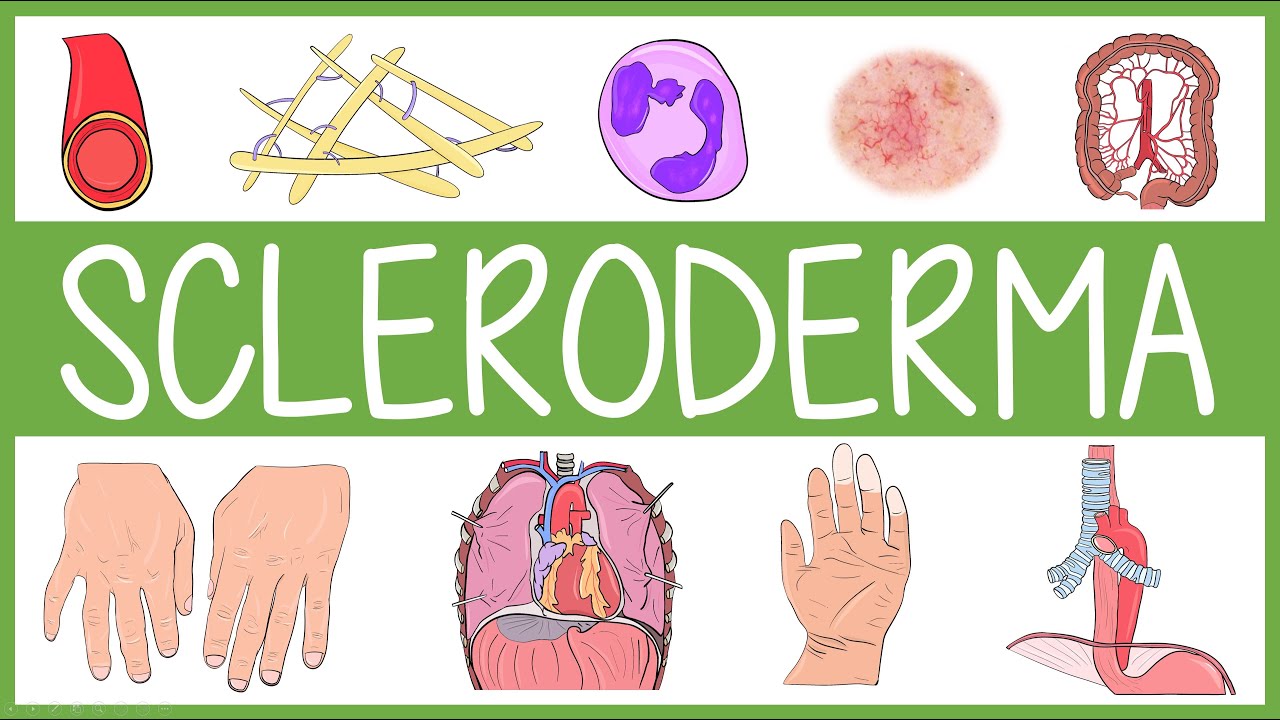
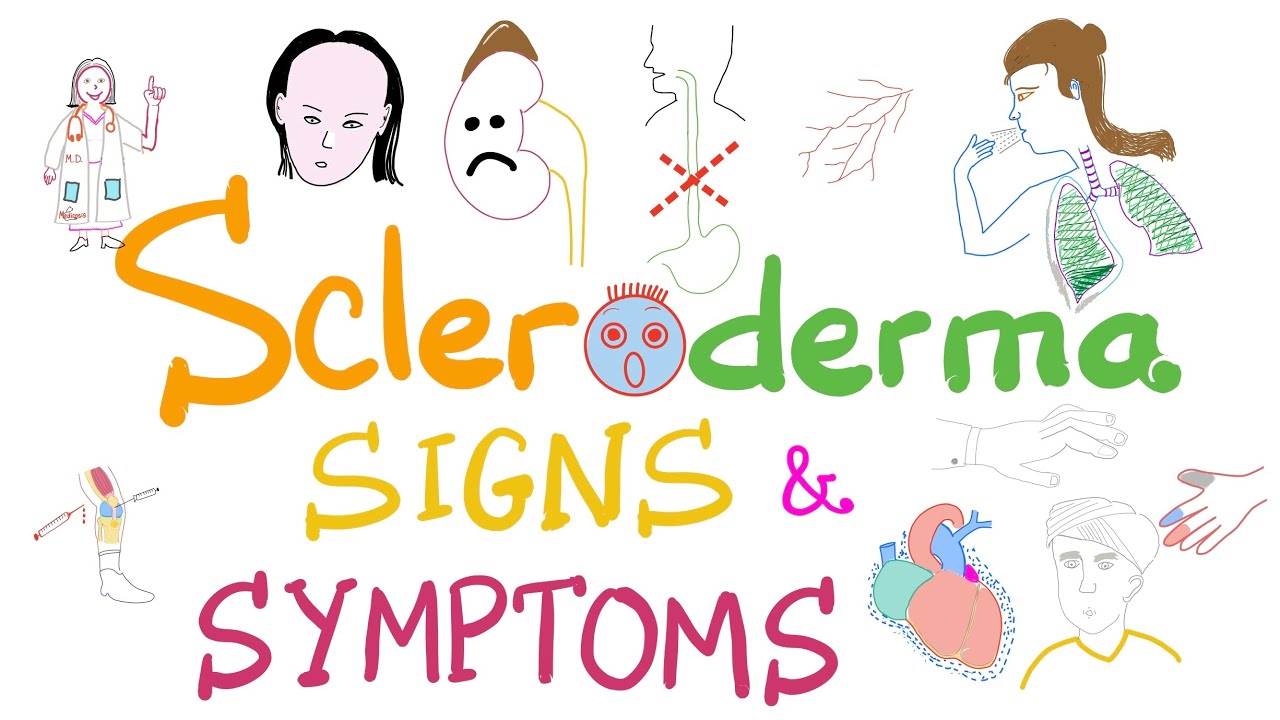
hi this is tom from zero finals calm in this video I'm going to be going through systemic sclerosis and you can find written notes on this topic at zero finals comm slash systemic sclerosis or in the Rheumatology section of the zero finals Medicine book so let's jump straight in the terms systemic sclerosis and scleroderma are often used interchangeably most patients who have scleroderma have systemic sclerosis however there is a localized version of scleroderma that only affects the skin and is not technically systemic sclerosis scleroderma translates directly to hardening of the skin systemic sclerosis is an
autoimmune inflammatory and fibrotic connective tissue disease the cause of the condition is unclear it most notably affects the skin in all areas but it also affects the internal organs there's two main patterns of disease in systemic sclerosis limited cutaneous systemic sclerosis and diffuse cutaneous systemic sclerosis first let's talk about limited cutaneous systemic sclerosis and this is the more limited version of systemic sclerosis it used to be called crest syndrome and this forms a helpful mnemonic for remembering the features the mnemonic is crest C is four kalsa gnosis and this is calcium deposits under the skin
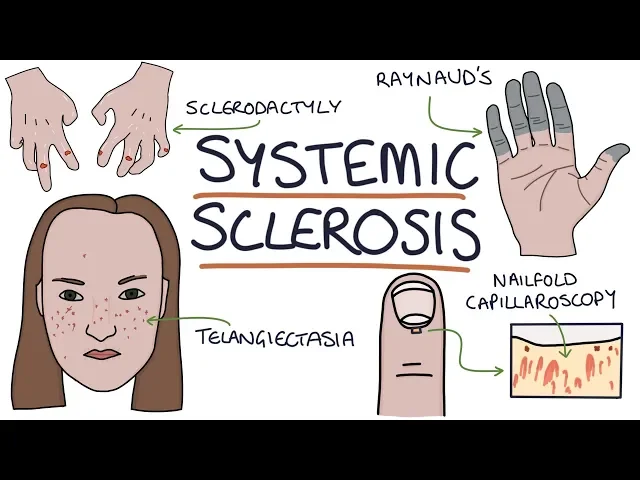
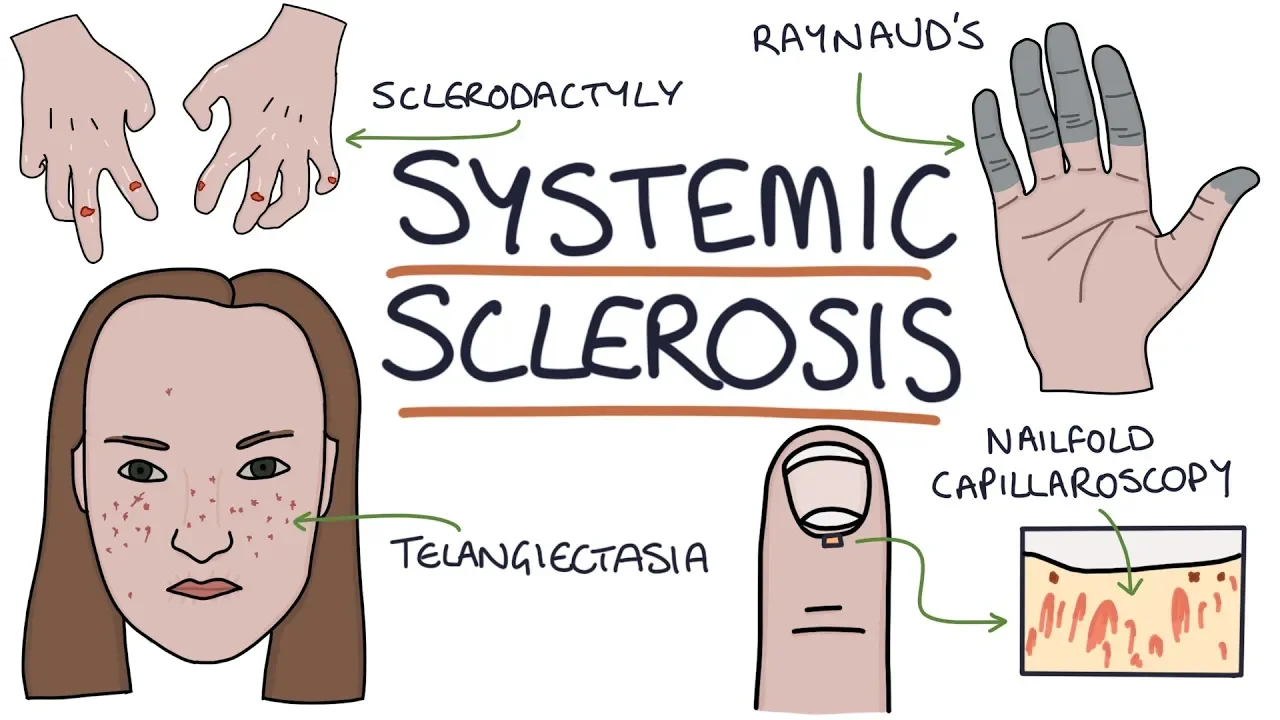
r is for reynard's phenomenon e is for esophageal dismay Tillet e S is for sclera dactyl E and t is for telangiectasia through what all of these mean just shortly next is diffuse cutaneous systemic sclerosis and this includes all the features of crest syndrome plus it affects the internal organs causing cardiovascular problems particularly hypertension and coronary artery disease lung problems particularly pulmonary hypertension and pulmonary fibrosis as well as kidney problems particularly glomerular nephritis and a condition called scleroderma renal crisis so let's go through all of these conditions one by one and explain what they mean
firstly scleroderma refers to hardening of the skin and this gives it appearance of shiny tight skin without the normal skin folds that you would find in normal skin these changes are most notable on the hands and on the face where you get tight shiny skin next is sclera ductal II and this describes the skin changes in the hands as the skin tightens around the joints of the fingers and the hands it restricts the range of motion in the joint and reduces the function of the hands as the skin hardens and tightened further the fat pads
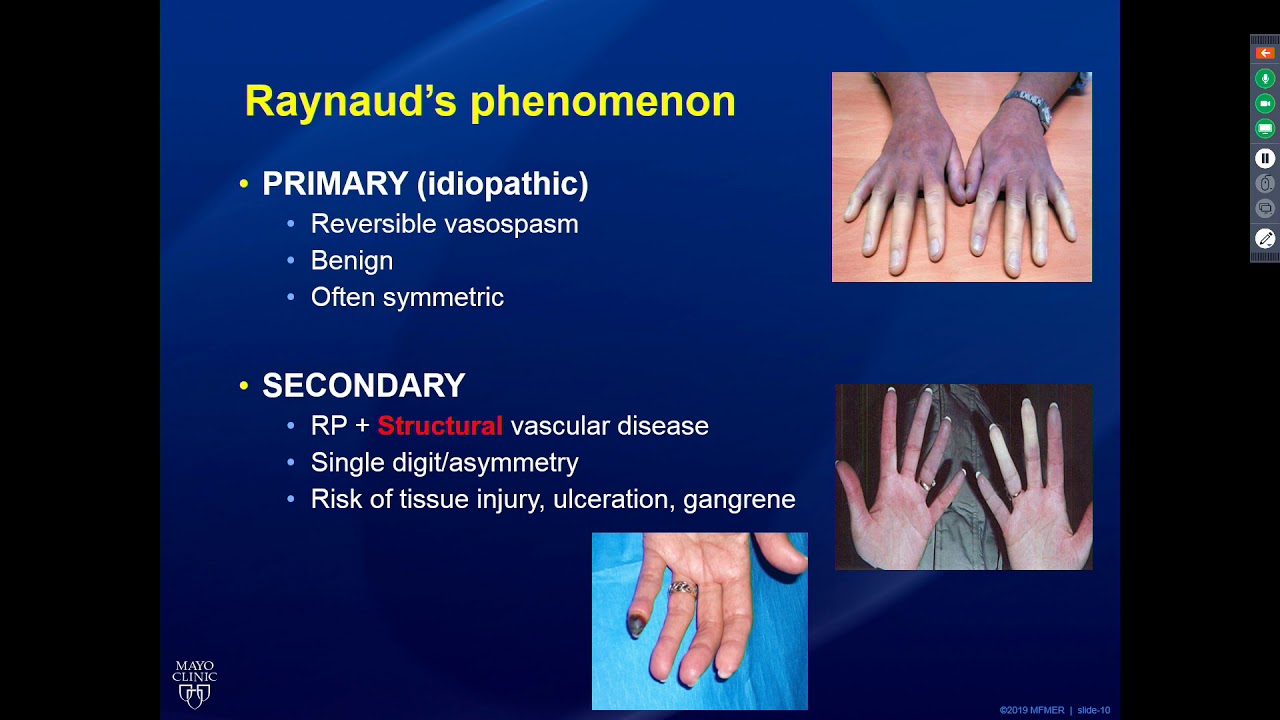
on the fingers are lost the skin can get so tight that it breaks and ulcerates and really struggles to heal and becomes a chronic problem next is telangiectasia and these are dilated small blood vessels in the skin they are tiny veins that are dilated and they have a fine thready appearance and you often see these on the cheeks or other areas affected by scleroderma cows enosis is where calcium deposits build up under the skin and this is most commonly found on the fingertips reynard's phenomenon is where the finger tips go completely white then blue in
response to even mild cold is caused by vasoconstriction and the vessels that supply the fingers and it commonly occurs without any associated systemic disease however it is a classical feature of systemic sclerosis esophageal dismay Atilla tea is caused by connective tissue dysfunction in the esophagus and this commonly associated with swallowing difficulties acid reflux and esophagitis systemic and pulmonary hypertension is caused by connective tissue dysfunction in the systemic and the pulmonary arterial systems and systemic hypertension can be worsened by the renal impairment pulmonary fibrosis can occur in severe systemic sclerosis and this presents with gradual onset
dry cough and shortness of breath as the lung tissue becomes harder and stiffer and less able to expand and take air in the final feature to talk about is scleroderma renal crisis and this is an acute condition where there is a combination of severe hypertension and acute renal failure next let's talk about the auto antibody is associated with systemic sclerosis and there's multiple auto antibodies in the condition and they're helpful for predicting the extent of the disease and also which organs will be affected it's not really worth memorizing all of them unless you want to
be a Rheumatologist but the ones to remember are below firstly anti-nuclear antibodies or AMA are positive in most patients who have systemic sclerosis and these are not specific to systemic sclerosis because you also get positive AMAs in other autoimmune conditions such as autoimmune hepatitis and SLE anti centromere antibodies are the most associated with limited cutaneous systemic sclerosis and anti SC l/70 antibodies are most associated with diffuse cutaneous systemic sclerosis they're also associated with more severe disease so the two to really remember for systemic sclerosis are anti centromere antibodies and anti scr 70 antibodies next let's
talk about nail fold Kapil Oscar P which is a technique to magnify and examine the area of the skin where the base of the fingernail meets the skin of the finger and this is called the nail fold this allows us to examine the health of the peripheral capillaries abnormal capillaries avascular areas and microhemorrhages can indicate systemic sclerosis it's useful to support a diagnosis of systemic sclerosis and also to investigate patients who have Raynaud's phenomenon to exclude systemic sclerosis now remember that patients with primary reynard's don't have any associated other conditions and they'll have normal nail
fold capillaries whereas patients with secondary Raynaud's due to systemic sclerosis will have these abnormal capillaries showing a vascular areas and microhemorrhages so how do we establish a diagnosis well there's diagnostic criteria that come from the American College of Rheumatology and the European League against rheumatism which were published in 2013 and these criteria involved meeting a number of criteria for clinical features antibodies and positive nail fold Kapil Oscar P it's not worth remembering the exact criteria but just being away there are criteria for the diagnosis so how do we manage patients who have systemic sclerosis well
they'll be managed and followed up by a specialist multidisciplinary team in a Rheumatology Department steroids and immunosuppressants are usually started with diffuse disease and when there's complications like palm-leaf fibrosis but there's no standardized or proven treatment for systemic sclerosis and there's ongoing research to try and find the most effective ways of treating the condition there's a number of very important non-medical components to management and this involves avoiding smoking gentle skin stretching regimes to maintain the range of motion in the skin regular emollients avoiding cold which could trigger the reynard's phenomenon physiotherapy to maintain healthy joints
and occupational therapy to find adaptations to daily living to help to cope with the limitations of the condition medical management focuses on treating the symptoms and the convocations a calcium channel blocker called nifedipine is often used to treat symptoms of Raynaud's phenomenon anti-acid medications such as a map Rizal lands up Rizal and ranitidine as well as pro motility medications like metoclopramide can be used to treat the gastrointestinal symptoms like acid reflux and esophageal dismay Tillet ii analgesia or pain medication can be used for joint pain antibiotics can be used to treat skin infections antihypertensive medications
can be used to treat that hypertension and usually we use ACE inhibitors we can also treat the pulmonary artery hypertension and provide supportive management for pulmonary fibrosis if you liked this video you can find a full-length version covering everything you need to know about the topic for your exams on the zero to finals YouTube channel you can also find written notes with illustrations on the zero to finals website at zero define as calm and on the website you can also find a podcast that can help you learn on the go question to test your knowledge
and the zero to finals books follow the link in the description to pick up a copy of the zeroD finals medicine book it contains detailed and concise notes on ten specialties in medicine and it's designed specifically to contain the key facts and guidelines you need to know for your medical exams with mnemonics and tom tips to help you learn exactly what you need to know for your exams without all the hassle follow the links to find out more