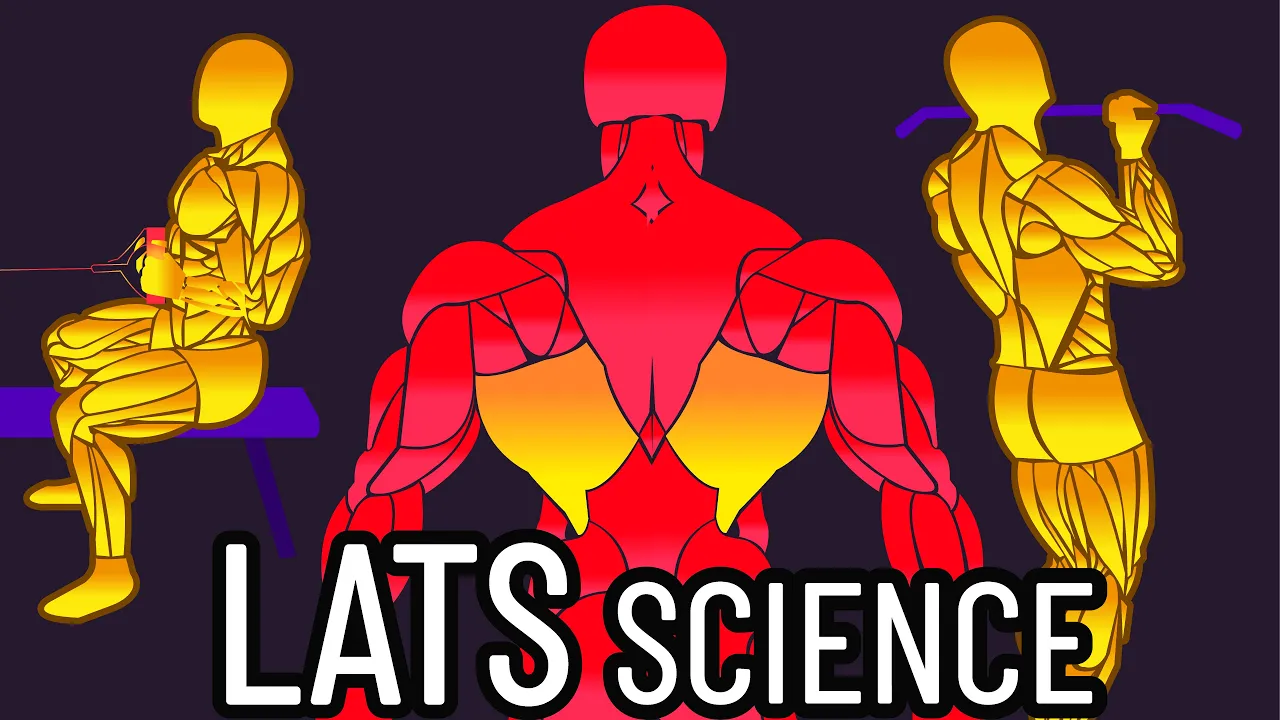
what range of exercises can help elevate your lat development to new heights if you've ever plunged into the depth of let training info on the internet conflicting info exists the validity of lap pulldowns and barbell Rose for Lati poetry has been questioned it's also been said freeway pullovers aren't even a let exercise in this video we're going to roll through the confusion and arrive at a clearer landscape of what the current scientific literature informs us about maximizing lat hypertrophy welcome to the house of hypertrophy foreign which cover a wide area across the back have subdivisions
a 2013 Canadian analysis divided the lets into two regions an upper thoracic region and a lower lumbar pelvis coastal region an Olden 1998 Australian analysis also noted the upper thoracic region but divided the lower region into transitional refi iliac and Coastal fibers finally a 2007 analysis also from Australia considered the let's have six regions predominantly based in the line of actions of the muscle tissue the findings of this same paper indicate that the central nervous system can somewhat activate certain regions more than other regions depending on the movement this tells us that different exercises May
grow certain regions of the lat slightly more this may come as a surprise to some but the notion that certain parts of a muscle May grow more than other parts isn't a myth the scientific research verifies this phenomenon called Regional hypertrophy exists as just one example we've previously seen at the house of hypertrophy that both barbell squats and hip thrusts predominantly grow the lower regions of the gluteus maximus more than the middle and upper regions foreign pull-ups and lap pull-downs are one type of compound exercise many people have some kind of vertical pull in their
training program vertical pools can be performed with different grip widths and this will likely influence let hypertrophy in different ways firstly vertical pulls involve elbow flexion so we'll train the elbow flexors moreover vertical pulls also tend to involve scapular depression and or downward rotation and since the majority of people's LEDs attached to the scapula the muscle May assist in these motions nonetheless if you're performing vertical pulls with a grip closer to being narrower searches close grip pull-ups and close grip lap pull-downs you're predominantly performing shoulder extension underhand vertical pulls searches chin ups and underhand lap
pull Downs predominantly tend to involve shoulder extension too alongside the lads the teres major teres Miner and rear delse are the main muscles that can pull on the upper and bone to enforce shoulder extension which of these muscles experience the best stimulus a classic analysis from the USA assists us it established throughout shoulder extension that both the Terry's major and let's possess the largest leverage whereas the rear delts and Terry's minor leverages were lower in case you're unaware leverage refers to a muscle's moment arm which is the perpendicular distance between its line of force and
the center of the joint it moves the longer the moment arm the greater The Leverage and ability of the muscle to move the joints multiple papers suggest that leverage plays an important part in how the central nervous system decides what muscles to recruit in a movement closer grip vertical pools tend to be most challenging near that contracted position so the rear tails are going to be involved relatively well but we're still getting an excellent Terry's major and lat stimulus are we potentially biasing a particular region of the let's with these closer grips this 2008 analysis
from Australia established a cross shoulder extension the upper region had greater leverage compared to the middle and lower regions particularly at the lower shoulder angles which is where vertical pools are quite challenging indeed recall we mentioned a 2007 Australian paper that split the lets into six regions this paper recorded that electrical activity of the six regions during an isometric shoulder extension contraction through surface electromography held at around zero degrees which is where vertical pools are challenging semg is far from perfect as I've discussed multiple times previously but the usage of isometric contractions in this case
likely enhances its reliability it was found that upper layer regions tended to display higher activity compared to the other regions thus based on The Leverage and active data it seems close to grip vertical pools are going to be particularly effective for targeting the upper region this isn't to be mistaken for saying the middle and lower regions aren't targeted whatsoever they certainly will be involved it's just that we're probably biasing the upper portion to some degree what about differences between underhand vertical pools and overhand or neutral grip close to grip vertical pulls well-controlled Research unsurprisingly indicates
that biceps are involved more with an underhand grip does this mean let activity is reduced I'm only aware of this 2002 analysis out of the USA that found comparable lat activity between close grip pull-downs performed with a neutral grip and underhand lap pull-downs so in the absence of other data this finding May preliminarily indicate that underhand grip does not reduce lat involvement wider grip vertical pools such as wide grip pull-ups and lap pull-downs likely train the lats in a slightly different way as you move from a closer to wider grip you transition to performing shoulder
adduction alongside the lands the teres major middle and lower pack Terrace major and rear delts are the main muscles that can pull on the upper arm bone to enforce shoulder adduction which of these muscles experience the best stimulus on the basis of this 2008 Australian analysis we can see the rear delts leverage rapidly drops off and throughout the angles that are most challenging in a wide grip vertical pull the rear delts do not have much leverage conversely all the other muscles the teres major all three let regions and the middle and lower pectorates major have
great leverage throughout the range of motion focusing on the lat regions we can see that the middle and lower regions have slightly more leverage compared to the upper region indeed the previously mentioned 2007 Australian paper that split the let into six regions established during an isometric shoulder adduction contraction the lower regions tended to display greater activity granted these isometric contractions were held at 20 degrees of abduction an angle not reached with wider grip vertical pulls but based on the leveraged data I'm assuming this lower region buyers still exists throughout the range of Motion attained in
wider grip vertical pulls therefore it seems wider grip vertical pulls will bias the middle and lower regions we just saw this graph from the 2008 Australian paper indicating the middle and lower let regions have slightly more leverage in the upper region but some of you may be drawn to another part of this graph the fact that middle and lower pecs have great leverage you may be surprised at this after all those couples are never recommended as a great chess Builder so what's going on to perform vertical pools as close to Pure shoulder abduction what I
describe as a very wide grip is needed interestingly I stumbled across this Reddit user reporting chess soreness after using a wide grip on pull-ups with their elbows all the way out to the side most people rarely do this instead a medium or slightly wider grip is more common these involve a mixture of shoulder adduction and extension presumably lowering pector s major contribution it's also plausible medium grip width vertical pulls do well to Target all regions of the lats fairly well so what does this mean for you in due time we'll provide trading recommendations but first
let's deconstruct the effectiveness of rows for building the Nets [Music] horizontal pulls including barbell rows dumbbell rows seated Rose and inverted rows are another type of compound exercise many people have at least one kind of horizontal pull in their training program as was the case with vertical pools the grip width is a notable Factor with a grip closer to narrower searches done with close grip barbell rows seated Rose and inverted rows shoulder extension occurs shoulder extension also occurs with one-sided rowing exercises that keep the elbow to the side of the body horizontal pulls tend to
be most challenging near that contracted position and recall the upper lats possess more leverage and display greater activity around here therefore similar to closer grip vertical pools close the grip horizontal pulls made bias the upper left region yet there are at least three distinctions between closer grip horizontal and vertical pulls the overall range of motion the lat length obtained and the degree of shoulder hyperextension and scapular retraction could any of them influence lead hypertrophy starting with range of motion close-up grip vertical pulls move the shoulder joint from around 170 to 0 degrees horizontal pulls move
the shoulder joint from approximately 75 to 0 degrees perhaps even entering negative degrees that is shoulder hyperextension depending on the execution your default assumption might be the greater range of motion with close secret vertical pulls means they're more effective for building Nets but I would argue this probably isn't true in multiple prior videos I've referenced emerging research suggesting larger ranges of motions are not necessarily better this study found partial leg extensions at a lengthened muscle position build the quads overall better than a full range of motion another paper found partial calf presses at the length
and position grew the gastrocnemius more than using a full range of motion finally the results of a study soon to be published indicate length and partial hip extensions produced overall more hypertrophy versus a full range of motion it's unclear how far this logic extends so for now I'm not confident in saying everyone must perform vertical and horizontal pulls with a lengthened partial range of motion at the very least this data just demonstrates larger ranges of motions aren't always better what about the the fact vertical pools attain a greater stretch of the lens could this not
mean they're better than horizontal pulls for building the lens although the lats are lengthened more with closer grip vertical pulls a key consideration is the exercise is not challenging near the most stretched position preliminary data indicates if that more length and position does not coincide with being challenging it might not be more effective for example this study from Japan compared partial range of motion Skull Crushers to full range of motion Skull Crushers full range of motion Skull Crushers involve lengthening the triceps more but it does not coincide with it being very challenging rather Skull Crushers
are most challenging when the forearm is parallel to the floor the researchers found those partial Skull Crushers grew the triceps more and more recent steady compared incline curls to preacher curls incline curls attain a great stretch of the biceps but are more challenging at the mid to contracted position the results indicate preacher curls through the elbow flexes more finally what about the fact horizontal pulls can involve bringing the arm behind the body upper extension and notable scapular attraction can occur positioning your arm behind you and retracting your scapular highly involves the upper back muscle area
but I'm skeptical this negatively interferes with the lat stimulus across the rest of the range of motion muscle activity isn't always mutually exclusive accordingly despite the distinctions I think closer grip vertical and horizontal pulls May comparably develop alerts As you move to performing wider grip horizontal pulls such as wide grip barbell rows seated rows and inverted rows you transition to performing shoulder horizontal extension one-sided Rose performed with the elbows fled away from the body also involve shoulder horizontal extension are these more effective for developing the lats based off the 1997 Australian analysis we can see
throughout shoulder horizontal extension the rear delts infraspinatus and supraspinatus possess the best leverage while the lats have a lot lower leverage as a result we can confidently say that if the goal is to maximize lat engagement with horizontal pulls close to grips maintaining the elbow to the body that necessitates shoulder extension best accomplish this thus far we've discussed the potential effects of vertical and horizontal pulls for developing the lens but we've yet to touch on the influence of modality that is does using a barbell dumbbell machine or bodyweight exercise matter for instance although we know
wider grip pull-ups and wider grip lap pull-downs predominantly involve shoulder adduction could one not be better or so although we know barbell machine dumbbell and body weight rows can involve shoulder extension are any better most likely not modality largely has little influence on hypertrophy outcomes this recent study involved comparing a free weight to machine program a poetry of the measured muscles was comparable between both a finding supported by other papers another paper indicates push-ups produce comparable chest and triceps gains to barbell bench presses that's not to say there is no difference whatsoever between the modalities
finer differences exist pull-ups May Engage The forearms somewhat more than lap pull downs one arm rowing exercises involve a greater rotational component compared to on variants but in the precise context of developing the lats with all the aforementioned exercises I can't see any strong reason to believe certain modalities are superior except for one that is some have suggested since barbell rows involve loading the lower back this means it is inferior for the Lance [Music] this 2009 analysis from Canada found LA activity was greater with inverted roads compared to barbell rows while lower spinal erector activity
was greater with Barbara Rose another 2005 analysis from Japan found a lot activity was slightly greater with seated rows compared to barbell Rose while trap activity was greater with Barbara Rose truthfully I'm unsure what to make of these findings you may suggest Barber Rose involved too much of a demand to stabilize the Torso creating higher activity in the lower spinal area and perhaps traps to the extent that involvement is reduced but a Counterpoint might be the findings are attributable to the multiple limitations of semg and that although there's a demand to stabilize the Torso with
Barbara Rose It ultimately should be limited by shoulder extension strength and thus we should expect lat involvement to be similar between barbell rows and other rows the only way to solve this is if we had research directly comparing let hypertrophy between Barber Rose and other rows since this currently does not exist I'm just going to say it's fine to train with Barbara Rose if you desire other factors May influence your decision of course perhaps you're trading plenty of other exercises that train the spinal Erectors and you don't want any further stimulus from Rose thus machine
or bodyweight rowing variations are going to be a better option [Music] so we know shoulder extension-based compound exercises closer grip vertical or horizontal pulls that may bias the upper leg region can be complementary to shoulder adduction compound movements that is wider grip vertical pools that bias the middle to lower regions if you have at least one shoulder extension based compound exercise and one shoulder adduction exercise I think there's an extremely high probability you'll see excellent lat hypertrophy over the long term I think it's also possible that only training medium grip vertical pulls since they might
involve targeting all that regions relatively well will do an excellent job at developing the latch in the long term it's not impossible to perform a program with a mixture of these either but do you need an exercise that isolates the lats to ensure maximal development unfortunately there isn't any directly related research although I will say there's this fascinating study finding with a barbell bench press not everyone experienced the same relative recruitment of the chest triceps and shoulders what I mean is some may see the highest activity in the chest while Others May see the highest
activity in the shoulders if we extrapolate this data it's possible someone experiences relatively lower stimulation of the lats from the exact same compound exercise compared to someone else here's my recommendation if you're not overly concerned about getting every ounce of last muscle mass from the lens isolated lat exercises may not be essential but if after a few months or even years of training your desired vertical and or horizontal pulls you're not satisfied with your lat development then it may be time to add in isolated exercises if you're someone who wants to do everything in your
power to squeeze out maximum hypertrophy then including isolated lat training may be worthwhile of course there's nothing absolute about what I just said there are other scenarios in which you'd want to have isolated lat training for example if for whatever reason you don't want to perform vertical and or horizontal pulls or you're performing them in a way sub optimally for the lats such as only performing wider grip horizontal pulls which we know are likely not great for the less than having isolated lat training can be worthwhile another case is maybe you're someone who still isn't
concerned with truly maximizing light hypertrophy but perhaps you just like some exercise variety and therefore desire to include isolated lat training but what are the most favorable isolated lat exercises foreign ERS are an isolation exercise that can train the lats and they can be performed with free weights cables or even machines recall earlier I stated that modality likely does not matter for light hypertrophy with horizontal and vertical pulls however pullovers are a rarer case there are actually some differences between the three-way cable and machine variations that may be important allow me to present the findings
of two studies at first you may be confused as to why I'm detailing them but it will make sense soon both papers had subjects before maximal isometric shoulder extension contractions at different shoulder elevation angles both of them indicate that let's display their highest activity at lower shoulder elevation angles and incrementally display lower activity at higher shoulder elevation angles in this event the usage of isometric contractions likely enhances its reliability these findings do make sense as you elevate your arm and get closer to the overhead position the lats are going to have progressively lower leverage here's
the important Point free weight pullovers are most challenging with arms overhead the point where the lats have their lowest activity as a result it's been speculated freeway pullovers are an ineffective lat exercise in fact at these higher shoulder elevation angles the middle and lower PEC regions likely have decent leverage indeed a few semg studies report the pectoralis major middle and low regions experience relatively greater activity compared to the leads during freeway pullovers so does this research conclusively mean freeway pullovers aren't a great lat exercise According to some on the internet their answer is a resounding
yes but I am less certain because there are other aspects of the scientific literature we shouldn't ignore the layers are stretched well in the overhead position the rebuttal to this is so what if the lats are stretched the fact is not going to be activated much renders this meaningless however it's worth understanding its leverage and activity are not going to be zero it's just limited but limited activity plus stretch might still produce a good stimulus four-let hypertrophy research on the back squat and glute Max depicts this bad exports are of course most challenging at the
lower portion and at these deeper angles of hip flexion the gluteus maximus is stretched well but it has much lower leverage ability to produce force and displays lower activity as measured through semg despite this a paper out of Japan established deeper scores through the gluteus maximus more effectively than 90 degree knee flexion squats another recent paper found back squats mostly to parallel produce similar upper middle and lower glute Max hypertrophy to hip thrusts thus stretch plus limited leverage and activity may still be a fine stimulus for hypertrophy may be suggesting crew weight pullovers may still
be effective for the let's at the end of the day if it's an exercise that interests you feel free to try it out from a regional perspective the lower lats are probably going to have a bit more leverage versus the other regions at the overhead position so pullovers might slightly bias this region cable pullovers involve a great stretch of the lat since they attain an overhead position comparable to freeway pullovers yet compared to freeway pullovers cables involve a greater active range of motion the arms will go through lower elevation angles which we know is where
the lats have greater activity thus actual electrical activity from the lats will likely be greater in the cable variation indeed there was this 2022 semg analysis from Spain comparing barbell pullovers to Cable pull-downs LED activity was greater with a cable movement the cable pull down isn't identical to a cable pullover but the shoulder motion and resistance profile are similar enough from a regional perspective since cable pullovers involve getting the arms near the side the upper region will certainly be involved well but since the movement is most challenging at that mid position the middle to lower
lat regions might be potentially biased for all these reasons we make speculate cable pullovers to be a bit better than freeway pullovers but understand this is hypothetical you could say since freeway pullovers are most challenging at that very length and position while cable pullovers are most challenging in the mid position freeway pullovers have the edge yet I'm unsure if this factor is enough to make it undeniably better than cable pullovers machine pullovers assuming the machine sufficiently provides High Resistance throughout the range of motion are probably more favorable compared to freeway or cable pullovers the high
tension throughout the range of motion means that the length and position is challenging and we have a potential slight lower lat region bias at this position like freeway pullovers but the fact we also have high tension at lower angles where the lats display greater electrical activity and the portions where the upper region possesses greater leverage means we get these benefits too so if you wish to have a pullover in your program to best train the lens go with the machine pullovers of course this isn't an absolute recommendation your gym may not have this machine if
yours does but the machine feels off then go with either the free weight or cable variant [Music] there is one more lat to exercise worth dissecting high rows where you roll with your arms starting at a slanted angle so not quite fully overhead this is a compound exercise as shoulder and elbow motion occurs but it is a movement that can effectively Target the latch nonetheless depending on the equipment and setup you can train one arm at a time and bring your arm across your body to some degree doing so will result in you attaining a
great stretch of the lats since the let's wrap around the rib cage if you have a machine that provides a solid challenge at the more lengthened position perhaps one with a more even resistance profile this will likely be excellent you could make the case these high rows are slightly better than machine pullovers we know machine pullovers achieve a great stretch of the leads but this is at the overhead position where the let's display their lowest leverage and thus activity conversely High Rolls involve comparatively lower arm elevation so the lats are slightly better activated in this
position but we still have a great latch stretch thanks to bringing the arm slightly across now whether this difference is enough to meaningfully impact let hypertrophy in the long term it's currently unknown ultimately if you have access to both feel free to go with your preference it's not impossible for you to incorporate both of them into your program either some may be curious about the technique and execution of the aforementioned exercises and all about precise details about programming for muscle hypertrophy I'm glad to see our high quality partner the alpha progression app can help you
containing a massive exercise database with more than 550 exercises video and text instructions come with each there's an awesome custom workout generator that can tailor a program to your needs enter the equipment you have how often and long you want to train for and if you want to focus or neglect certain muscles there are over a quadrillion input combinations on which your plan is based and the training philosophy is derived from scientific literature to top it all off Graphics unveil your long-term progression such as your strength progression workout consistency set numbers performed and circumference of
body parts if you desire the link in the comments and description lets you try out all these Premium app features for free for 14 days if you like it and choose to go beyond the link also gives you 20 off a subscription I sincerely believe the app is not things short of exceptional [Music] both vertical and horizontal pose can be highly effective for targeting the lens except for wider grip horizontal pulls which better Target the rear delts infraspinatus and supraspinatus nonetheless closer grip vertical and horizontal pulls will likely be highly effective for targeting the upper
leg regions wider grip vertical pools will likely be highly effective for targeting the lower leg regions medium grip vertical pools potentially involve targeting all regions fairly well if you're trading some of these compound exercises there's a high probability you'll see tremendous lat development over the long term there are a variety of cases where you may wish to add in isolated lat training pullovers are a great isolation movement that effectively targets the leads this is how I would rank the different modalities high rows performed with the arms slightly across the body to attain a great latch
stretch although actually a compound exercise nonetheless effectively targets the lats so is another option on the table remember to feel free to check out the alpha progression app and all feel free to check out our guides to developing the side and rear down