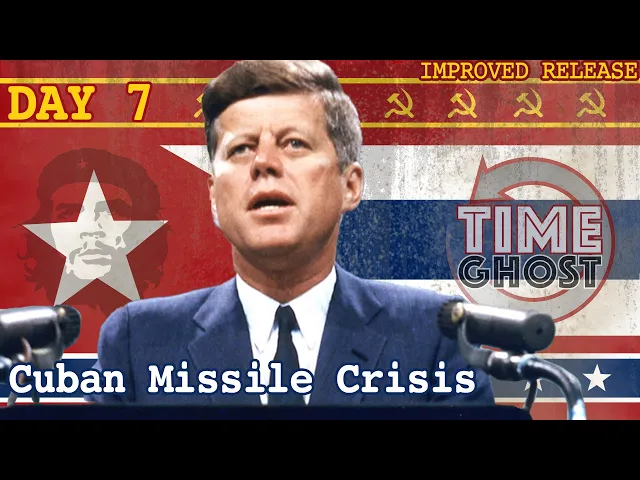
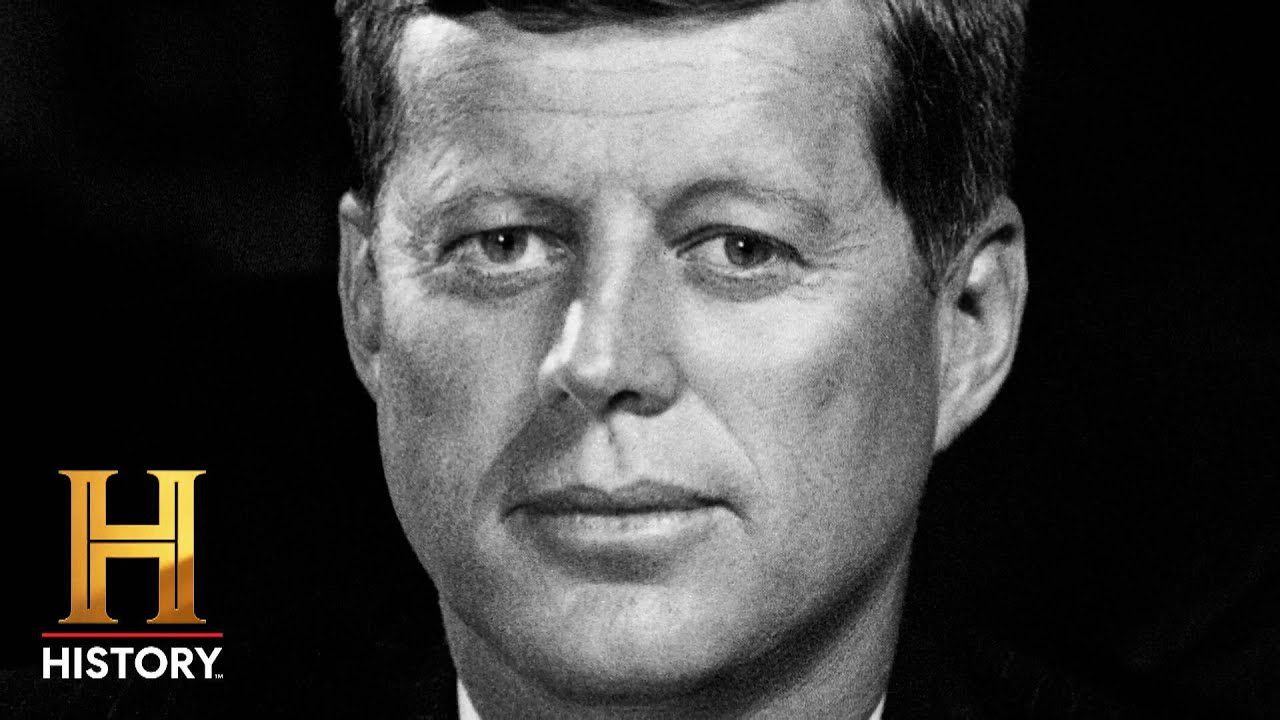
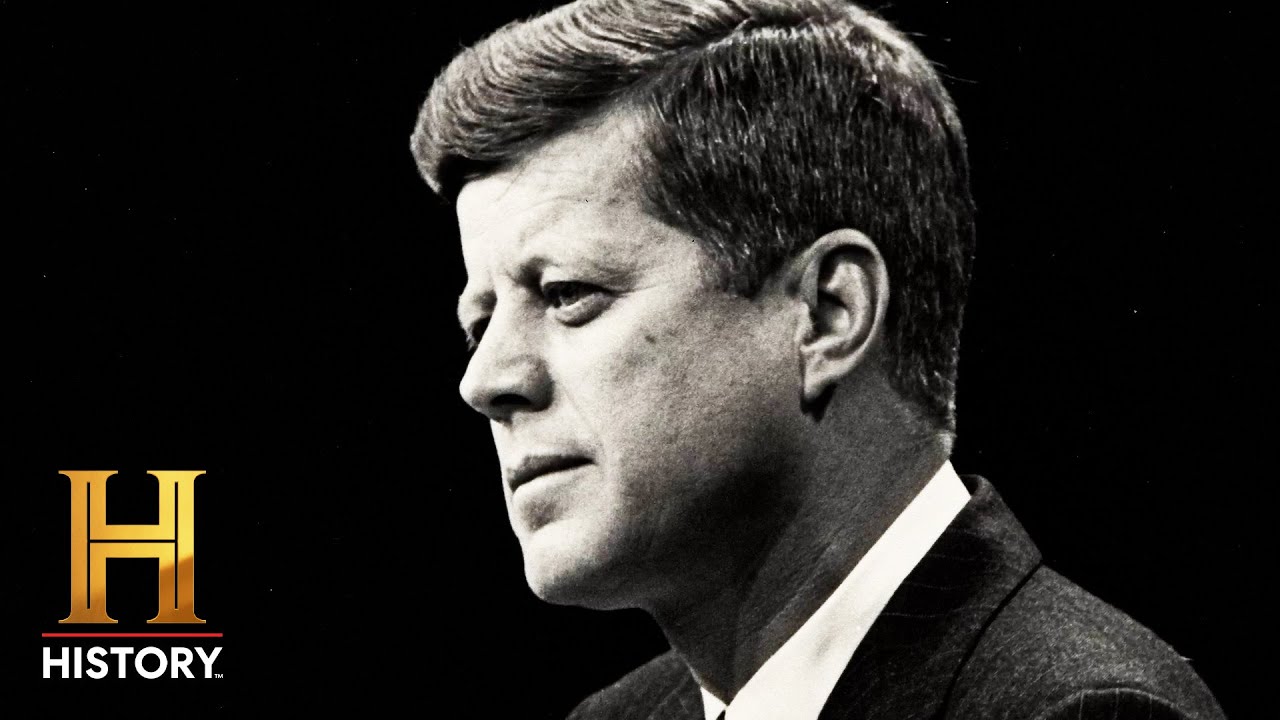
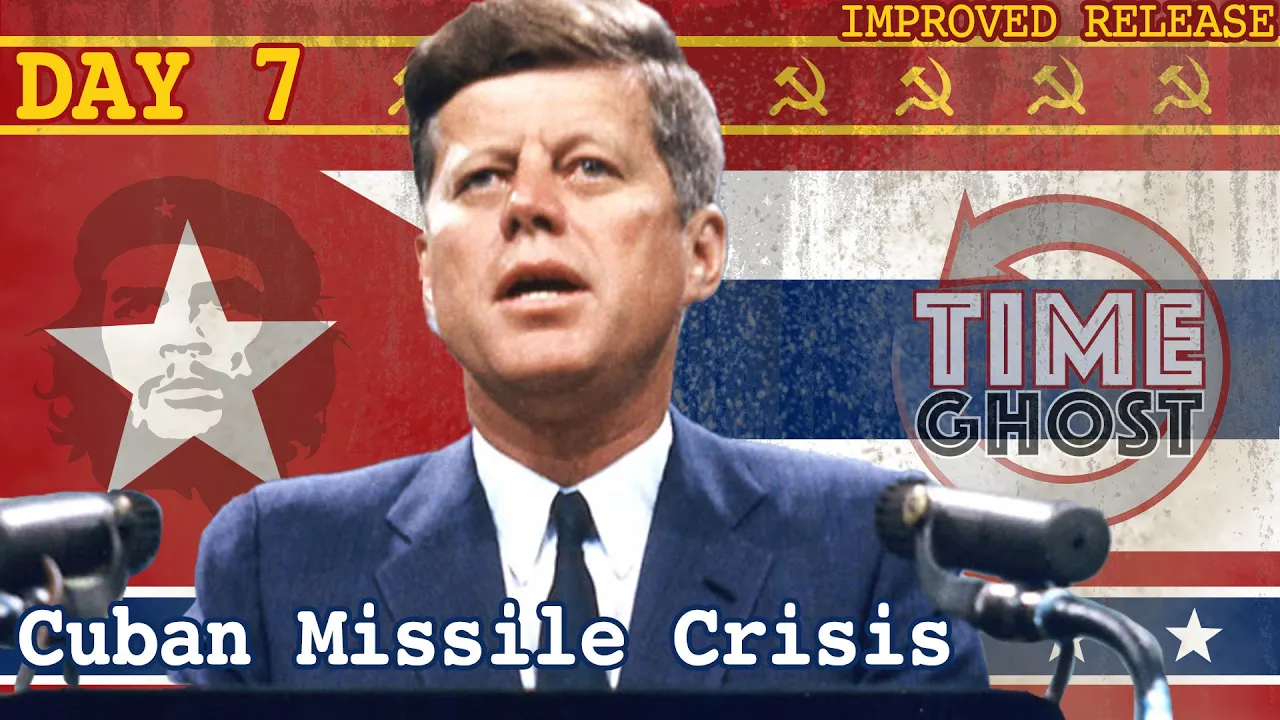
Day 7 The weekend when the Cuban Missile Crisis moves into an actual phase of war, the number one album in the United States is Peter, Paul and Mary’s debut album, featuring the song “If I Had a Hammer. ” It’s about the hammer of Justice, the bell of freedom, and a song about love between the brothers and the sisters. President John F.
Kennedy has a big hammer and he believes that it is the hammer of justice, he also has a bell of freedom that today he will ring loud and clear, and he will sing a song, but it’s not a song about love between brothers and sisters. This is TimeGhost, the Cuban Missile Crisis, I’m Indy Neidell Over the past weekend, Soviet Premier Nikita Khrushchev has gone from believing that the Soviets have deterred the Americans from invading Cuba to realizing that in fact they’ve done the exact opposite. President Kennedy has moved from leaning toward doing nothing at all about Soviet Missiles on Cuba to initiating an act of war against the Cuba and the USSR.
So on this Monday morning, October 22, 1962, the White House is buzzing with activity. In fact, the entire US administration and defense apparatus are working at high speed and with great intensity. The military preparations have been extended beyond the Atlantic and East Coast.
Troops and supplies are being moved towards the Caribbean from all over the world, and bu now, it is not only the Soviets that have noticed. This morning, the Washington Post runs a headline on the front page speculating that there is an international crisis pending, based on observations of these activities. It is high time for the government to act.
The public announcement is going to be made at 7PM Eastern Time. Before that, Kennedy will talk to the Congressional Leadership and key allies. To prepare for all of that he will convene cabinet members, and meet with military and civilian advisors throughout the day.
First, the White House press secretary contacts all major US news outlets and asks them to hold back on any reports until the end of the day. But there is also concern that the Soviets will make an announcement themselves, preempting the Americans. For a minute, the White House considers issuing an immediate written statement, but finally they decide to stick to the plan.
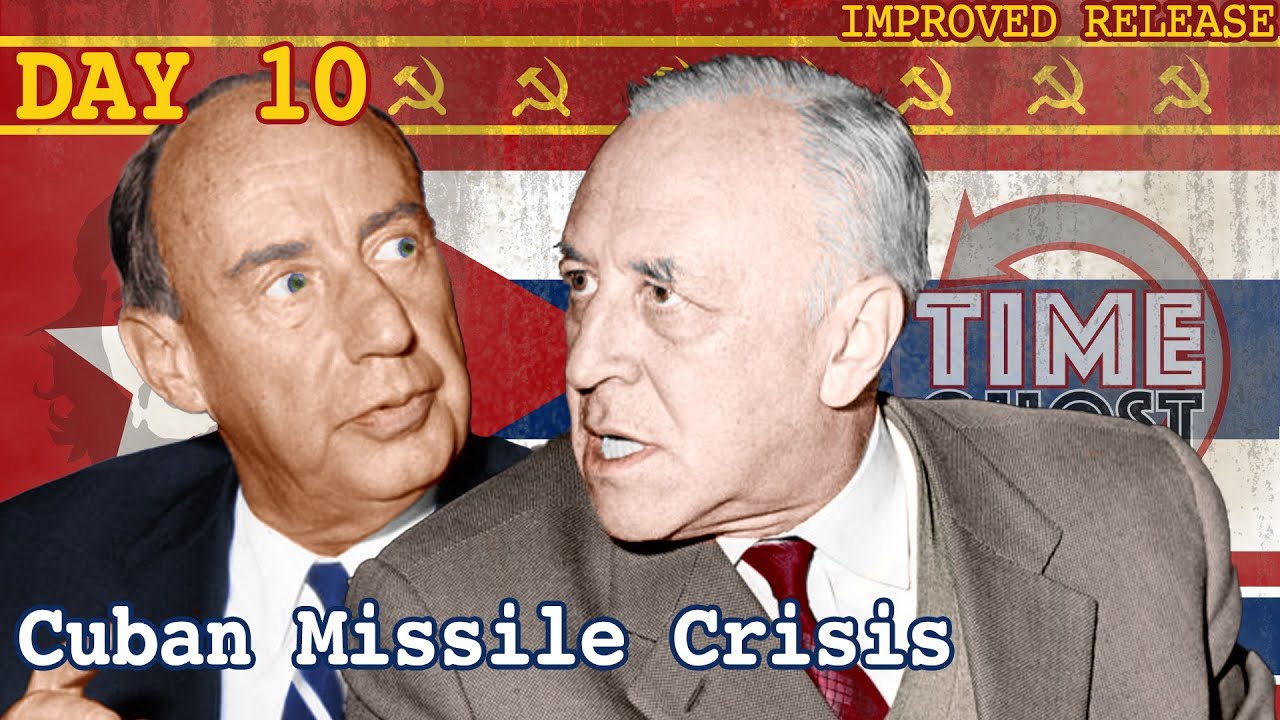
One of the first things to do is prepare the speech to be delivered to the United Nations by US Ambassador to the UN Adlai Stevenson. There is great concern that Stevenson will not be up to the job of sticking it hard to the USSR. Remember that he was the only one to openly voice strong opposition to the chosen path of action, so Kennedy is taking steps to make sure that Stevenson is up for the job.
At 6:30 in the morning, he calls an advisor in Frankfurt, Germany. It’s John J. McCloy, Chairman of the private think tank, the Council on Foreign Relations.
These two men will stay connected beyond Kennedy’s death, as McCloy will serve as Chairman of the Warren Commission that will investigate Kennedy’s assassination a little more than year from now. You say this is a difficulty at the UN? No, but it’s going to provide difficulty at the UN.
Uhu And… And you want me to come back to be of, of general help. Uh, well I wanted… I think we need someone there to sort of… of sustain Adlai and stiffen him and support him and… McCloy cancels everything and will take the first flight tomorrow. JFK continues.
No I’ll, I’ll check with my military, I’ll get my air aid on the thing. And then we’ll be back… …and I'll just wait to hear a further call from you, or some representative. I’ll be back in the next few minutes.
Thank you. Thank you, ok… But it’s not only Stevenson who has concerns. During a meeting of the National Security Council in the morning, Secretary of State Rusk makes a last ditch attempt to persuade Kennedy to call off the blockade and offer up the US missiles in Turkey and Italy as a trade for the Soviet missiles on Cuba.
The President reportedly flat out rejects the proposal and berates Rusk for restarting the discussion. Kennedy also calls his predecessor, President Eisenhower and leaves no doubt as to the true intentions of the United States regarding an invasion of Cuba. […] we have to assume as, as this surveillance continues… with the U-2s, that the SAM sites will shoot one down, At that point we were just discussing what actions we would take in uh, attacking the SAM Sites.
I would assume that this would uh, only be first in an increasing number of steps. We’re not going to be in any position to carry out an invasion for some days, because we have to move those troops around form uh, from San Diego, but we’re going to do all those things. And I’ll stay in touch with you this week as like I said, anticipate that it will get more intense.
Eisenhower supports him: Well I uh, I uh thank you for telling me and well I uh, I will uh, and personally I uh, I think you’re making the only move you can. Yeah I uh, this… it’s tough to, uh as I say we will uh, I don’t know… we may get into the invasion business before many days are out, but eh, but… Of course from a military standpoint that’s the clean cut thing to do now. That’s right… Because you’ve made up you mind, you’ve got to get rid of these things.
Right… Kennedy is worried about one thing though. General, what about if the Soviet Union… Khrushchev announces tomorrow, which I think he will, that if we attack Cuba that it’s going to be nuclear war. Uh, and what’s your judgment as to the chances that they’ll fire these things off, if we invade Cuba?
Oh, I don’t believe they will. You don’t think they will? No.
In other words, you would take that risk in the situation same as ours. As a matter of fact, what else can you do? Well, Eisenhower is correct as to the mindset of the Soviets.
They have now concluded their discussions regarding how much freedom they will give their commanders in the field to use their tactical nukes. An order now goes out to NOT use any nuclear weapons without prior consent from Moscow. There's only two issues with that - first of all, to launch the MRBMs and IRBMs Moscow has to provide the launch codes anyhow, but there is no way of stopping the use of the tactical nuclear arms remotely.
Second of all, the commanders have already been given the order that if they should lose contact with the state, they can deploy tactical nukes as they see fit. As we will see in days, this is not a hypothetical situation, but a real, direct threat. Meanwhile, the US armed forces are taken to the third highest defense readiness, DEFCON 3 - “Increase in force readiness above that required for normal readiness” - in practice this means that the Air Force is now ready to mobilize within 15 minutes, and that all other service branches are ready to act.
Hey, you know what? The mother of a school friend of mine contacted me on Facebook when we started this series. Well, she was also my 5th grade English teacher.
She told me that at this time she and her US army husband were stationed in Wiesbaden, Germany, and she was in hospital about to give birth to her first child in a matter of days. She then got a message that in case of a nuclear exchange, she should make her way to Spain to be repatriated. Nobody told her how she should go about doing this.
Anyhow, it might seem odd that President Kennedy has moved from considering doing nothing at all only three days ago, to heading to war with determination today, but if you think about it, it’s not really. The President is Commander in Chief of the armed forces. While Kennedy has personal doubts and fears that he might be starting World War III, once he has committed himself to a course of action, he really has no choice but to follow through.
For others in the administration, it’s different, like Attorney General Robert Kennedy. Now, RFK will later claim that he was the first one to oppose the hawks and that his line was always diplomacy. With the declassified records, we know now that this is not correct.
On the first day of the crisis he was a strong advocate for an immediate invasion, but six days later he’s changed his mind. We also know that it was Undersecretary of State George Ball that convinced RFK to reconsider during several discussions between the 17th and 19th of October. To what extent the Kennedy brothers discussed and planned this as a coordinated ‘good cop - bad cop” effort we will never know as they will both fall victims to assassin’s bullets before they can reveal the full story.
In order to understand what is about to happen, we have to consider for a moment the world of 1962. Television is a relatively new phenomenon, and there’s not even landline telephones in many homes in the western world. Outside of the West, the vast majority of the world’s population still doesn’t have electricity.
Nonetheless, President Kennedy is the first President to make extensive use of TV to communicate. Still, a great many of his viewers will catch him on TV in neighbors' homes, or standing in front of a television shop window. His television address will be the first time that an international crisis and the threat of world war is delivered directly to the people via TV.
Over the next 24 hours, it will be replayed again and again on TV and radio all over the world. It will have a stunning effect on the world population, many of whom are veterans, or civilian victims of the worst human conflict to date, World War II. Moreover, the Cold War is on everybody’s minds - even those of us who experienced only the end parts of The Cold War can assure you that we lived in constant fear of nuclear war.
Good evening, my fellow citizens. This Government, as promised, has maintained the closest surveillance of the Soviet military build-up on the island of Cuba. Within the past week unmistakable evidence has established the fact that a series of offensive missile sites is now in preparation on that imprisoned island.
[…] Our policy has been one of patience and restraint, as befits a peaceful and powerful nation, which leads a world-wide alliance. We have been determined not to be diverted from our central concerns by mere irritants and fanatics. But now further action is required-and it is underway; and these actions may only be the beginning.
We will not prematurely or unnecessarily risk the costs of worldwide nuclear war in which even the fruits of victory would be ashes in our mouth-but neither will we shrink from that risk at any time it must be faced. […] Our goal is not the victory of might but the vindication of right-not peace at the expense of freedom, but both peace and freedom, here in this Hemisphere and, we hope, around the world. God willing, that goal will be achieved.
Thank you and good night. See you tomorrow on day 8, when the diplomatic dance makes new twists and turns. We’ve uploaded Kennedy’s complete address and you can find it here.
Don’t forget to subscribe and please support us at patreon. com or tg. tv so that we can make more awesome history.
Good night and good luck.