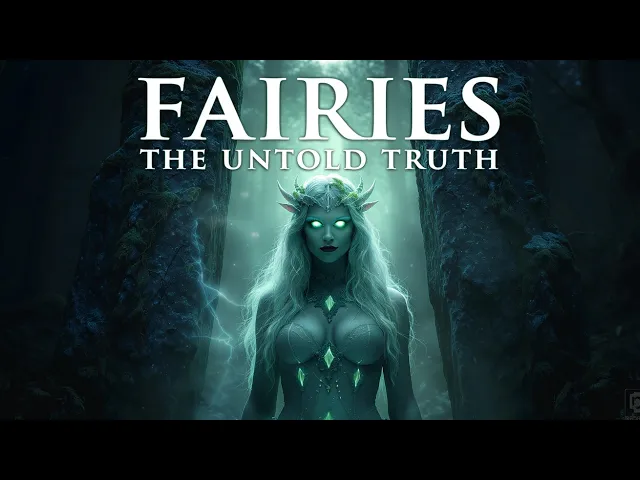
There are places where the world we know grows thin. Where the reassuring hum of modern life fades into an older, deeper silence. These are the borderlands found not on any map but felt in the soul.
It might be a stretch of ancient forest where the trees stand too close together and the canopy overhead blotss out the sun, leaving the floor in a perpetual state of twilight. It could be a remote mist shrouded hillside where great stones older than memory rise from the earth like the bones of forgotten giants. Or it might be the edge of a lonely moore at dusk when the fading light plays tricks on the eye and the wind moving through the heather seems to whisper a name you almost recognize.
In these places the veil between what is and what could be feels as fragile as a spider's thread. The air grows heavy with an unspoken presence. The silence is not empty but watchful.
It is the palpable feeling that you have crossed an invisible threshold, leaving the safety of the human world behind and stepping into the territory of something else. A world that runs parallel to our own, a kingdom hidden in plain sight. For millennia, those who lived on the edges of these places understood that they were not alone.
They shared the land with an unseen nation, a civilization of beings who were not human, but were possessed of a terrifying and powerful intelligence. To survive, one had to learn their laws and respect their boundaries. You did not speak their name aloud for fear of attracting their attention.
Instead, you referred to them with caution, with reverence, with a carefully chosen title that was both a description and a plea. You called them the good neighbors, the people of peace, the gentry, or in the hills of Scotland, simply the we folk. These were not terms of endearment.
They were diplomatic titles, a desperate attempt to appease a power that was ancient, unpredictable, and utterly indifferent to human morality. To name them was to summon them, and to summon them was to gamble with your soul. These names passed down in hush tones from one generation to the next are a fragile shield.
A defense against a power that is neither good nor evil but primordial, intelligent, and profoundly alien to our own. A power that dwells in the hollow hills and the shimmering air. The power of the fay, the fair folk, the beings we have come to call fairies.
The word itself now conjures images of gentle sprites with gossamer wings, of benevolent guardians of the garden who dance on dew drops and grant wishes with a sprinkle of glittering dust. But this is a modern taming, a profound and dangerous misunderstanding of the original terror. The stories our ancestors told were not whimsical tales for children.
They were warnings. They were field guides to survival in a world saturated with a magic that could bless or blight with equal ease. So, who are these beings truly?
Are they the memory of fallen gods from a forgotten age? The vengeful spirits of the land itself, or are they something else entirely? A civilization that has watched humanity from the shadows, operating by a set of rules so ancient and so alien that to break them, even by accident, is to invite absolute ruin.
To find the answer, we must part the veil of mist and memory and step into their world. Before the written word, there was memory. Before history, there was myth.
The stories of gods and ancient kings were not seen as fantasy, but as the deepest records of a world that once was. And to find the first and most powerful identity of the fair folk, we must travel to the Emerald Isle to Ireland where the mythology of a conquered pantheon still echoes in the landscape. The story of the fair folk here is not one of nature spirits born of the earth.
It is a history of a great and terrible war. A dynastic struggle and the story of a race of gods who lost their world. They were called the T de Dan, the people of the goddess Danu.
According to the ancient chronicles, they were a race of god-like beings, masters of art, science, magic, and war. They did not rise from the soil of Ireland. They descended upon it.
The legends say they came from four great cities in the north, arriving in a great fleet of ships, and that upon landing they burned their vessels, a final commitment to their new home. They shrouded their arrival in a great impenetrable mist that lasted for three days and three nights. An act of such powerful magic that the island's inhabitants believed the sky itself had fallen.
With them they brought the four great treasures of their people, artifacts of immense and terrible power. From the city of Falus, they brought the stone of destiny, the Leafile, which would cry out when the true high king of Ireland stood upon it. From Gorius came the invincible sword of light, wielded by the king, Nada, a weapon from which no enemy could escape once it was drawn from its sheath.
From Findius they brought the spear of laugh, which thirsted so deeply for blood that its point had to be kept in a cauldron of sleeping draft to quell its fury. And from Maras came the final treasure, the cauldron of the Dagda, a vessel of plenty from which no company would ever leave Hungary. These were not the trinkets of forest sprites.
They were the implements of gods and with them the two adan set out to claim island as their own. Their dominion was not won easily. They first clashed with the furbul the ruling people of the island in the first battle of Magtouiad.
The magic and marshall skill of the Tuar de Danan was superior and they triumphed establishing their reign. But victory came at a cost. Their king Nada lost his arm in the battle.
A mutilation that by their laws made him unfit to rule. This single act of violence set in motion. A chain of events that would lead to a far greater conflict.
For they were soon challenged by a more ancient and monstrous enemy, the Femorans. a race of grotesque semi- divine beings who represented the chaotic and destructive power of nature itself. The second battle of Magiad was a cataclysmic war for the fate of the world.
It was a brutal, desperate struggle that saw heroes rise and gods fall. Led by the brilliant young champion L of the long arm, the Tua Dean once again emerged victorious. driving the Femorans back into the sea and securing their golden age.
For generations, they ruled Ireland as gods on Earth. Their palaces were centers of music, poetry, and magic. But their age was destined to end.
A new kind of people arrived on the shores of Ireland. The Milesians, the ancestors of the modern Irish people. These were mortal men, but they possessed a new kind of power.
A destiny that the ancient magic of the Tuar de Danan could not overcome. A final war was fought. And this time, the gods lost.
The world of myth was giving way to the world of men. But the Tuar Dean were not destroyed. They were immortal.
And their defeat was not an ending, but a transformation. In a great council, they agreed to a treaty with the victorious mortals. They would seed the surface world, the island that could be seen to humanity.
In return, they would take for themselves the other island, the world that existed just beneath the surface within the ancient burial mounds and the great hollow hills known as the shei. This was their great retreat. They did not vanish from the world.
They merely stepped sideways into a parallel dimension, a hidden kingdom that mirrors our own. They became the Ishi, the people of the mounds. Their godly palaces were replaced by ethereal halls beneath the green earth.
Their gateways hidden in the ancient cans and rings of stone that still dot the Irish countryside. And it is here in this act of magical secession that the first great identity of the fair folk is forged. The Ishi of Island are not cute winged creatures.
They are a fallen pantheon, a race of powerful, intelligent, and often proud beings who remember a time when they ruled the world. They are the dispossessed nobility of a magical age, living in exile just beyond the veil of our senses. And when they interact with the mortal world, it is with the complex emotions of a conquered people.
Sometimes with kindness, sometimes with bitter resentment, but always with the memory of their lost divinity. They are not gone. They are simply hidden, watching from the hollow hills.
The hidden kingdom of the fay is not a monolith. To imagine it as a single unified people is to make a fatal error in judgment. Within the other world, there is a great and ancient schism, a division of power as fundamental as that between day and night, summer and winter.
It is a world governed by two rival monarchies, two great courts whose philosophies and allegiances define the very nature of fairy existence. To understand them is to understand the core conflict that drives the entire fairy narrative. According to the law of Scotland, they are known as the celely and the unseely courts.
First, we turn to the light. The celely court is often called the blessed court and its members are what we might consider the aristocracy of the fairy world. They are the embodiment of nature in its glory, the long golden afternoons of summer, the lifegiving rain, the beauty of a blossoming flower.
They are often described as tall, noble, and breathtakingly beautiful, possessed of a grace that can captivate the mortal heart. They are known to be fond of hunting, feasting, and riding in great processions through the twilight hours. But do not mistake their beauty for simple goodness.
Their benevolence is conditional, their kindness a matter of protocol and honor. The celely are not good in the human sense. They are a proud and powerful nobility who can be generous to those who show them the proper respect and merciless to those who do not.
Their kindness is not the selfless compassion of a saint. It is the conditional favor of a monarch which can be withdrawn in an instant. To slight them, to break a promise made to them, or even to thank them too profusely, implying they are mere servants, is to invite a swift and terrible retribution.
The nature of their conditional aid is best understood through one of the most widespread tales in British folklore, the story of the fairy midwife. The tale begins on a dark and stormy night when a mortal midwife is summoned by a mysterious, well-dressed stranger to attend to his wife's labor. She is led on a strange journey, often through a misty wood or into the side of a hill until she arrives at a great, brilliantly lit hall filled with noble and beautiful people.
She realizes she has been brought into the heart of a fairy mound. Putting her fear aside, she performs her duties with skill and compassion, successfully delivering a healthy fairy child. As a reward, the new father presents her with a pouch of gold and a small pot of ointment, instructing her to anoint the baby's eyes with it.
But as she does, a single drop of the strange substance accidentally touches one of her own eyes. In that moment, the world changes. With her anointed eye, she can now see the fairies in their true dazzling and ethereal forms.
With her other eye, she sees only the mundane world. She has been given the second sight. The story often splits here.
In some versions, the midwife keeps her secret and lives out her days with this strange new perception. But in the more common, more cautionary telling, her story ends differently. Days later, at a mortal market, she sees the same fairy nobleman she aided stealing goods from a vendor's stall.
Forgetting herself, she approaches him and asks after his wife and child. The fairy is stunned that she can see him. "Which eye do you see me with?
" he demands. When she points to the enchanted eye, he strikes it with his finger, and her sight of his world is instantly and permanently extinguished. She is left blind to the fairy realm forever.
A stark punishment for the simple crime of acknowledging their presence in our world. The celely court may be blessed, but their blessings come with a heavy price. They operate by a code of honor that is alien to our own.
And to break their rules, even unknowingly, is to risk losing everything. Their light is bright, but it casts its own long and dangerous shadows. And it is to those shadows we now must turn.
For every sunlit glade there is a lightless chasm. For every noble Seely rider, there is a monstrous hunter of the dark. We now enter the domain of the unseely court.
The name itself is a warning derived from the old Scots word for unholy. These are the fairies of our deepest fears, the shadow self of the fairy race. They are a malevolent and hostile host embodying nature not in its beauty but in its brutal unforgiving reality.
The howling winter storm the spreading plague the predator that stalks the night. Unlike the celely who may be reasoned with the fairies of the unseely court are driven by a pure and simple desire to cause harm and suffering to humankind. They are the source of blighted crops, sickened livestock, and the sudden chilling feeling of being watched in the dark.
Their ranks are filled with the most terrifying figures in all of folklore. Among them are the red caps, grotesque goblin-like creatures who haunt the ruined castles along the Scottish border. They are named for the woolen caps they wear, which they must keep soaked in the fresh blood of their victims.
For if the blood on their cap dries, they will perish. Then there are the Slar, the host of the unforgiven dead. These are said to be the most dreaded of all fairies, the spirits of the most sinful mortals who were denied entry to both heaven and hell.
They fly through the night sky in a great flock, appearing like a dark cloud or a swarm of birds. and they hunt for the souls of the dying, attempting to snatch them away before they can reach the afterlife. But the ultimate expression of the unseely court's terror is their great and terrible procession, the wild hunt.
On stormy nights, particularly during the turning of the seasons, a spectral hunt tears across the sky. A pack of ghostly redeyed hounds. They at the heels of shrieking supernatural horses ridden by a host of unseely fairies led by a fearsome lord or lady.
To witness the wild hunt is a terrible omen, a sign of impending war or plague. To be caught in its path is far worse. The unfortunate mortal is likely to be abducted.
Their soul ripped from their body to join the ghastly procession for all eternity. Forever hunting and forever hunted. The unseely court is the counterbalance to the celely.
They are the darkness to their light, the chaos to their order. They are a reminder that the world of the fay is not a place of simple wonder. It is a realm of profound and primal forces.
Some that create and others that exist only to destroy. [Music] To interact with the fay is to step onto a battlefield of ancient laws and forgotten protocols. The otherworld is not a lawless place.
It is a realm governed by rules far older and more absolute than any mortal decree. These are not laws of morality of good and evil as we understand them. They are the fundamental physics of a magical reality and to break them is not a sin but a catastrophe.
For generations this knowledge was passed down as a series of stark and simple warnings, a litany of thou shalt knots that formed a fragile wall between the human world and the terrible power of the faye. The first and most famous of these laws concerns a simple metal, iron. To the fair folk, cold iron is anathema.
It is a substance that burns their ethereal flesh, negates their magic, and drives them away in terror. A simple iron nail, a horseshoe hung over a door, or even a pair of scissors kept in a cradle were believed to be powerful wards against their influence. But why?
The reason is deeply symbolic. Iron is the metal of human industry. It is dug from the earth, smelted in fire, and beaten into submission by mortal hands.
It represents humanity's dominion over the natural world. The fay, as beings of pure, untamed nature, are repulsed by this symbol of human conquest. Iron is the mundane world made manifest and its very presence disrupts the fragile magic upon which their existence depends.
The second great law governs the simple act of sustenance. Should you ever find yourself within their realm, whether in a sunlit celely hall or a shadowed unseely grove, you must never under any circumstances eat or drink what is offered. The food of the other world, though it may appear as the most delicious fruit or the most tempting wine, is an enchantment.
To consume even a single crumb or a single drop is to bind your soul to their land forever. You become part of their world, a permanent resident of their kingdom, and the path back to your own life is sealed. The mythologies of the world are filled with tragic figures.
From the Greek goddess Pesphanany trapped in the underworld for eating a few pomegranate seeds to countless mortals in fairy tales who through a moment of hunger or weakness doomed themselves to an eternity of exile. The third law is one of secrecy and power. Never give a fairy your true name.
In the old world, a name was not merely a label. It was a distillation of one's true essence, a piece of one's soulgiven sound. To give your name to one of the fay is to give them a hook into that soul, granting them a direct and terrible power over you.
They can summon you at will, bind you to their service, or curse you with a word. This is why in so many tales fairies are obsessed with learning the names of mortals and why heroes like the miller's daughter in the story of Rumple Stiltskin must risk everything to discover the fair's own true name, turning their power back upon them. But perhaps the most terrifying and insidious of all their laws is the one over which mortals have no control.
the treacherous nature of time. The other world does not operate on the same temporal plane as our own. Time there is fluid, unpredictable, a great river that can slow to a near standstill or rush forward in a devastating torrent.
What feels like a single night of dancing in a fairy hill can be a century in the mortal world. To step into their realm is to become unmed from your own life. To risk returning to a world where everyone you have ever known is gone, your home is a ruin, and your own life is a forgotten memory.
This temporal distortion is perfectly illustrated in the legend of Thomas the Rhyr, a real 13th century Scottish le and poet said to possess the gift of prophecy. As the story goes, one day while resting beneath the Alden tree, a place known to be a gateway to the otherworld, Thomas saw a magnificent lady on a white horse. It was the queen of Elfland herself.
Utterly captivated by her beauty, he pledged himself to her service. She led him away into the hollow hills to her kingdom, a land of wonders beyond mortal imagination. There he feasted and celebrated with her court.
He believed he had stayed for a mere 3 days. But the queen, who had grown fond of him, knew the truth. She warned him that a tithe to hell was due, and she feared the devil would choose him, her handsome mortal pet.
To save him, she granted him a gift and a command. She gave him a tongue that could not lie, the source of his prophetic power, and sent him back to his own world. When Thomas emerged from the hill, he discovered that he had not been gone for 3 days.
He had been gone for 7 years. His return with the gift of prophecy was in reality a curse. He could see the future, but his time in the other world had forever marked him, setting him apart from his own kind.
He was a man caught between two worlds, no longer fully mortal, but never truly fay. His story is the ultimate cautionary tale, a reminder that even the most wondrous gifts from the fair folk come at a price. And that the greatest price of all is the loss of your own time, your own life in the treacherous, ageless lands of the fay.
The power of the fair folk is not confined to the wild, forgotten places of the world. Their influence can reach across the threshold of a home, past the hearth, and into the most sacred and vulnerable of spaces, the cradle. For all the tales of fairy bargains and otherworldly journeys, no aspect of their lore has inspired more intimate primal terror than the myth of the changing.
This is not a story of a hero's quest, but of a parent's worst nightmare. The quiet creeping horror of looking at your own child and realizing that the person staring back at you is not your child at all. The legend is brutally simple.
In the dead of night or during the liinal hours of twilight, fairies would steal a healthy human infant from its crib. In its place, they would leave one of their own, a sickly, illtempered fairy creature, or sometimes an ancient wized fairy disguised as a baby. This creature, the changeling, would then be raised by the unsuspecting human parents.
The reasons for this abduction vary across folklore. Some tales suggest the fairies coveted human children for their beauty or to strengthen their own dying race with mortal blood. Others claim they needed mortal infants to pay their tithe to hell, sacrificing a human child in place of one of their own.
But to the parents left with the otherworldly impostor, the motive was irrelevant. All they knew was that the child they loved had been replaced by a thing of profound wrongness. The symptoms of a changeling were a checklist of parental anxieties.
The creature was often described as being perpetually sick and frail, refusing to grow. It possessed an insatiable appetite, draining the family's resources without ever seeming nourished. Its cry was not the cry of a human baby, but a piercing, unearly shriek.
And most unnervingly, its eyes held a cold ancient intelligence, a look of cunning and malice that was terrifying in the face of an infant. These folkloric descriptions are a dark mirror reflecting the grim realities of a preodern world. In an age with no understanding of congenital disorders, developmental disabilities, or infant diseases, the changeling myth provided a supernatural explanation for a child who was different.
A baby who failed to thrive, who suffered from an undiagnosed illness, or who was born with a physical deformity, could be tragically recategorized not as a sick child in need of care, but as a monstrous intruder. The myth became a framework for explaining the unexplainable, a way to give a face to the random cruelties of nature. Disbelief born of fear and grief led to a host of grim and desperate rituals designed to expose the changeling and force the fairies to return the true child.
These were not gentle acts of persuasion. They were trials by ordeal. A suspected changeling might be left on a cold hearth held over a fire or dunked in a running stream.
The belief being that the creature in its terror would reveal its true form and flee. These practices, shocking to modern sensibilities, were born from the absolute conviction that the being in the cradle was not a suffering child, but a malevolent fairy spy. The devastating realworld consequences of this belief are not confined to the distant past.
They culminated in a horrific and well doumented tragedy in late 19th century Ireland. A case that has come to be known as the last witch burning in Ireland. This is the story of Bridget Clearary.
In 1895, Bridget, a young independent and respected woman from County Tipperary, fell ill with what was likely pneumonia or bronchitis. As her condition worsened and her behavior became erratic, her husband, Michael Clearary, and her extended family became consumed by a terrible suspicion. This was not Bridget.
The real Bridget had been taken by the fairies who lived in a nearby fort, and this creature in her bed was a changeling left in her place. What followed was a week of escalating horror. Michael and Bridget's relatives subjected her to a series of brutal folk rituals designed to exercise the fairy imposter.
They forced her to drink herbal concoctions, threw urine on her, and repeatedly held her over the fire, demanding that she reveal her true name and return the real Bridget. Her terrified pleas that she was his wife were dismissed as the cunning lies of the changing. The ordeal reached its ghastly conclusion on the night of March 15th.
In a final desperate act of madness, Michael Clearary, convinced the fairy would flee its vessel if confronted with fire, dowsted his wife in lamp oil and set her ablaze. Bridget Clearary was burned to death in her own home, surrounded by the family that believed they were not killing a woman, but destroying a monster. The subsequent trial shocked the world.
It was a brutal collision between the age-old beliefs of rural Ireland and the modern legal system of the British Empire. Michael Clearary was convicted not of witchcraft, but of manslaughter. His sentence reduced because the court acknowledged that he had acted out of a genuine, if terribly misguided, belief.
The case of Bridget Clearary is a haunting testament to the power of folklore. It is a grim reminder that these are not just stories. For centuries, the fear of the changeling was a real and present danger.
A belief that could turn a family's love into a fatal weapon and transform the sacred space of the cradle into a grave. As the shadows of the 17th century began to lengthen, a new kind of light was dawning in Europe. The cold, hard light of the age of reason.
Science, logic, and empirical evidence were beginning to dismantle the old world of superstition and magic. The belief in a literal physical otherworld was in retreat, its borders shrinking under the relentless advance of the modern mind. But on the fringes of this new world, in the misty highlands of Scotland, there were still those who walked the borderlands.
And one man, a figure caught between the encroaching light of reason and the deep twilight mysteries of the old world, would make one final fateful attempt to map the unseen kingdom. His name was Robert Kirk. He was by all appearances a respectable figure, an ordained minister in the Church of Scotland, a scholar of theology, and a man of letters.
But Kirk was a man of two worlds. He was the seventh son in his family, a detail that in the folklore of his time marked him as one born with the second sight. The innate ability to see the world of spirits.
He was a man of God who spent his days preaching the Christian gospel, but he spent his nights as an ethnographer of the fa. Kirk did not see the fair folk as mere superstition or the stuff of peasant tales. He believed them to be a real tangible and parallel society, and he dedicated himself to studying them with the meticulous care of a naturalist.
He interviewed countless people who claimed to have encountered them, collecting their stories and cross-referencing their accounts. The result was a remarkable and dangerous manuscript completed around 1691, which he titled The Secret Commonwealth of Elves, Thorns, and Fairies. This was not a book of fairy tales.
It was a scientific treatise, a detailed field report on the society, biology, and politics of the other world. Kirk described the fairies as being of a middle nature betwixed man and angel, their bodies made not of flesh and blood, but of congealed air. He detailed their social structures, their clothing, their invisible castles, and even their methods of abducting human children.
He was not a storyteller. He was a cgrapher. Drwing a map of a world he believed to be as real as his own.
But to map a secret kingdom is to betray its secrets. And the fair folk, as we know, are jealous guardians of their world. To reveal their ways, to write their laws down in black ink for any mortal to read was an act of profound transgression.
Kirk knew he was walking a perilous path, but his scholarly curiosity outweighed his caution. In May of 1592, shortly after completing his manuscript, Robert Kirk took his customary evening walk. His path led him, as it often did, to the Cythian, the fairy hill that overlooks the village of Abberafoil.
It was a place long believed to be a gateway to the other world, a place Kirk had studied with intense fascination. He never returned. His body was found lying on the hill later that evening.
The official cause of death was recorded as apoplelexi, a sudden collapse, a perfectly rational scientific explanation. But the people of Abberafoil, who had lived their whole lives in the shadow of that hill, knew better. They did not believe Robert Kirk was dead.
They believed he had been taken. They whispered that the fairies, in their fury, had punished him for his trespass. They had stolen his soul, leaving his body behind as an empty shell, and had made him a prisoner in their realm.
He was to be their eternal chaplain, forced to minister to the very beings he had exposed. The legend grew. It was said that Kirk's spirit appeared to one of his relatives shortly after his funeral, delivering a final desperate message.
He was not dead, the apparition claimed, but a captive. He would make one last attempt to return to the world of men, appearing at the baptism of his own postumous child. He begged his cousin to throw an iron knife, a durk, over his apparition's head when he appeared.
The touch of cold iron, he knew, would break the fairy enchantment and free him from his prison. But when the day of the baptism came and Kirk's spectral form appeared in the church as promised, his cousin was so overcome with terror that he failed to act. The apparition faded and Robert Kirk was never seen again.
The story of Robert Kirk is the perfect epilogue to the age of belief. He was the last scholar of the secret Commonwealth. A man who treated the fairy world not as a fantasy but as a fact.
And his mysterious end, whether by natural causes or supernatural retribution, became a final chilling legend. After him, the door to that world seemed to close. The fair folk retreated from the realm of ethnography and history.
vanishing back into the mists of folklore, waiting to be rediscovered, not as neighbors, but as characters in a story. The world that had feared the fair folk was beginning to disappear. It was being paved over by the relentless march of industry, lit by the cold, rational glare of science, and measured by the unforgiving logic of the machine.
As the 19th century gave way to the 20th, humanity's relationship with the natural world was undergoing a profound and violent change. The deep, dark forests where the fay held sway were being felled for timber. The lonely moors were being crossed by railways.
The mysteries of the earth were being explained away by geology and biology. Nature was no longer a powerful sentient entity to be feared and respected. It was a resource to be exploited.
In this new world, there was little room for the old gods of the hollow hills. The tall, aristocratic, and terrifying ishi had no place in a landscape of factories and smog. But the idea of them, the deep human need for a world touched by magic, did not vanish.
It was simply repackaged. The fairies of old were too dangerous, too alien, too morally ambiguous for the sentimental tastes of the Victorian era. And so they were demoted.
They were tamed. This transformation was driven by a new kind of magic, the printing press and the rise of children's literature. The grim cautionary tales collected by folklorists were sanitized and rewritten for the nursery.
The great and terrible fairy queen was replaced by the tiny, benevolent fairy godmother. The fay were put through a cultural filter that stripped them of their ancient power and remade them in humanity's own image, only smaller, prettier, and far less threatening. Their very appearance changed.
The tall human-like beings of the old law were shrunk down to a dimminative size. They were given the delicate insect-like wings of a butterfly or a dragonfly, a feature almost entirely absent from ancient folklore. They were dressed in clothes made of flowers and dew drops.
Their courts no longer held in magnificent subterranean halls, but in the cups of blue bells and on the tops of mushrooms. The raw, untamed power of the otherworld was distilled into a safe, sweet, and marketable fantasy. The terror of the fay had become the whimsy of the flower fairy.
Nowhere is this taming more complete than in JM Barry's creation of Tinkerbell. She is the archetypal modern fairy, tiny, temperamental and powered not by primordial magic but by the belief of children. Her famous line, "Every time a child says, I don't believe in fairies, there is a fairy somewhere that falls down dead," is the ultimate expression of this new fragile state.
The existence of the old fay was a terrifying and undeniable fact of the world. The existence of the new fairy was a delicate fantasy, a thing that could be destroyed by a simple word of doubt. The monster that could steal your soul had become a creature whose soul you could save with a round of applause.
This new, gentler version of the fairy was a creature born of nostalgia, a symbol of a lost pastoral innocence in an increasingly mechanized world. And it was this desperate yearning for a lost magic that set the stage for one of the most remarkable and bizarre episodes in the history of folklore. The case of the Cottingly fairies.
The story begins in 1917 in the small village of Cotttingly, West Yorkshire. Two young cousins, Elsie Wright and Francis Griffiths, claimed to have not only seen but photographed fairies at the bottom of their garden. The images they produced were stunning.
They showed the girls interacting with small winged figures, classic Victorian style sprites dancing in the air or sunning themselves on leaves. The photographs became a sensation. To understand why the world was so ready to believe, one must understand the time.
Britain was in the depths of the First World War. The relentless mechanized slaughter of the trenches had shattered a generation and created a profound crisis of faith. At the same time, the spiritualist movement was at its peak with millions, including some of the most educated people in the country, seeking proof of an afterlife, a sign that there was more to reality than the brutal materialism that had led to the war.
Into this atmosphere of grief and longing came the Cottingly photographs. They were a whisper of hope, a tangible piece of evidence that a gentler, more magical world still existed. The case was championed by one of the most famous men of the age, Sir Arthur Conan Doyle, the creator of the arch rationalist Sherlock Holmes.
Doyle, a committed spiritualist who had lost his son in the war, saw the photographs as incontrovertible proof of a spiritual plane. He published the images in the Strand magazine, lending them his immense credibility and turning a local curiosity into a global phenomenon. For a brief shining moment, it seemed the door to the secret Commonwealth had been kicked open once more.
It would be decades later in the early 1980s that an elderly Elsie and Francis finally confessed. The fairies had been a hoax. a charming and expertly executed prank using cardboard cutouts secured with hatpins.
Yet their story is not one of simple deception. The true power of the Cottingly fairies lies not in their authenticity, but in what their acceptance revealed. They were a reflection of a world so desperate for wonder, so starved for enchantment, that it was willing to see a miracle in a child's game.
It was the final poignant chapter in the taming of the fay. Humanity no longer feared them enough to leave out offerings of iron and salt. Instead, we missed them so much that we were willing to create them ourselves, just to feel for a moment that the world was still magical after all.
And so we returned to the threshold where our journey began. We have walked with the fallen gods of Ireland as they retreated into the hollow hills. We have stood in the blinding light of the celely court and weathered the terrifying darkness of the unseely hunt.
We have peered into the cradle of the changing and stood witness at the grave of the man who saw too much. We have seen the fair folk tamed, shrunk, and placed in the pages of children's books. The question, then is no longer what they are, but why they remain.
After all the science and all the centuries, why does the whisper of their name still have the power to raise the hair on our arms? Perhaps it is because the story of the fair folk was never truly about them. It was always a story about us.
It is a vast and complex metaphor for humanity's relationship with the one thing we have always sought to control and have never truly understood, the natural world. The fay in their original and most powerful form are the soul of the wilderness made manifest. They are the personification of a world that is not built for us, that does not care for our laws, and that operates by a logic that is both beautiful and terrifyingly brutal.
The duality of the two cords is the duality of nature itself. The celely court is the sun that warms the fields, the gentle rain that nurtures the crops, the breathtaking beauty of a wild landscape. The unseely court is the flash flood that scour the valley, the winter blight that brings famine, the predator that stalks the edges of the firelight.
They are not good and evil. They are two faces of a single primordial immoral power. A power that gives life with one hand and takes it with the other without malice and without mercy.
The retreat of the Ishi into the hollow hills is the story of the wilderness itself retreating from the iron and smoke of human industry. Their kingdom is the last echo of a world that was once entirely magical. A world that we have systematically paved over, fenced in and forgotten.
In this light, the old laws of the fay become not superstitions, but profound ecological warnings. The taboo of cold iron is a warning against the arrogance of industry. The peril of a fairy bargain is a caution against the endless desire to take more from the land than it is willing to give.
And the treacherous nature of their time is a reminder that the deep geological time of the earth is impossibly vast compared to our own fleeting human lives. To respect the fair folk was simply another way of saying that one must respect the land. For the land is alive.
It is intelligent and it has a very very long memory. The Victorian taming of the fairy was a symptom of our own changing belief. As we conquered the wilderness, we believed we had conquered its spirits as well.
We made them small, gentle, and harmless because we desperately wanted to believe that nature itself was no longer a threat. We put wings on them and placed them in our gardens because we had convinced ourselves that the wild world was now our private park, a place for our leisure and entertainment. We stopped fearing them because we stopped fearing the dark woods.
But the wilderness remembers the old world has not vanished. It is merely sleeping. And perhaps the true horror of the fairy myth is not that they might steal a child or curse a crop.
The true horror is that they might be real and that we in our modern arrogance have forgotten the old laws. We have forgotten the proper offerings, the words of respect, the fear that kept us safe. We have built our bright, noisy world on the very borders of their silent ancient kingdom.
And we have forgotten that a border can be crossed from both sides. So the next time you find yourself in one of those thin places, a quiet wood, a lonely hill, a misty shore at twilight, and you feel that old familiar sense of being watched, pause and listen. Listen for the sound of hoof beatats in the clouds, for the whisper of a promise on the wind.
The good neighbors have not gone away. They are simply waiting. waiting for our world to grow quiet once more.
Waiting for the forests to grow back. And in their timeless kingdom, they have all the time in the world. Thank you for parting the mists with me and stepping into the hidden kingdom of the fay.
My mission is to continue exploring these complex and often overlooked stories, searching for the truths hidden within our oldest myths and folklore. If you'd like to be a part of this journey and ensure you don't miss the next chapter, I would be honored if you would subscribe to the channel. As always, thank you for your time and attention.