welcome to watch Mojo and today we're counting down our picks for the most fascinating facts about our universe and the technology we've used to explore it the universe is really old in fact scientists have been able to determine the age of the universe to be 13787 billion years old unlike on Earth the atmosphere on Mars is mostly made up of carbon dioxide there is also lots of dust because of that the red planet actually has blue sunsets the red light gets scattered while the blue light pierces through and reaches our eyes we don't know if he's gone beyond Infinity but Buzz Lightyear has been to space on May 31st 2008 a buzz toy launched on a space shuttle and spent 468 days at the International Space Station returning to Earth on September 11th 2009 it's the longest time ever spent in space on a single Mission we all know or at least we all should know that it's not safe to drink your own urine however on the International Space Station that's a exactly what they do they even drink their own sweat albeit after both sources have gone through a filtration process that makes the resulting water cleaner than what many of us drink down here on Earth that makes the International Space Station its own self-contained environment that's a critical step towards living for long periods off of planet Earth the Sun might only be considered a medium-sized star but you could still fit 1. 3 million Earths inside it and medium more not the sun accounts for an amazing 99. 8% of the mass of our entire solar system while we only have one Moon orbiting our planet there are at least 290 moons in the solar system with Saturn having 146 there is a whole lot in our universe that we can't see in the form of dark matter and dark energy in fact 95% of our universe is invisible to us ooh dark matter we better bring a flashlight in the middle of our galaxy The Milky Way there's a super massive black hole and it's thought that this is the case for most if not all large galaxies it might feel like there's never enough time in the day but the truth is that due to the slowing down of the Earth's rotation our days are actually getting longer although only by 1.
7 milliseconds per Century on September 23rd 1846 German astronomer Yan Gala was the first to observe the planet Neptune 165 years later on July 12th 2011 Neptune completed its first full orbit around the sun since gala's Discovery a spoonful of sugar might help the medicine go down but a teaspoon of a neutron star is so dense that it weighs millions of tons do you wish you were a little taller well just become an astronaut in microgravity the spine stretches making an astronaut about 3% taller this is only temporary however and they return to their normal height soon after getting back to Earth well thanks to no gravity in space my spine stretched and I am now a confidence 63 so Lois I will be leaving you for a hot a woman never mind Lois I love you so much diamonds wouldn't be quite so valuable if you were living on 55 cancre e located 40 light years beyond our solar system the exoplanet might be made of about onethird diamonds speaking of diamonds scientists believe that it might rain diamonds on Jupiter and Saturn you think you had a long day just imagine if you lived on Venus where it takes the planet 243 Earth days to do one full rotation on its axis if you have to go somewhere that requires you to wear a space suit make sure you give yourself plenty of time putting one on takes about 45 minutes the International Space Station holds the Guinness World Record as the most expensive human-made object ever costing over $100 billion an unparalleled laboratory for cuttingedge research unachievable able in Earth's gravity for the benefit of all Humanity because of its massive gravitational pull Jupiter has often been seen as a protector of the Earth by pulling in comets and asteroids that might otherwise have reached our home planet however a more recent Theory depicts Jupiter as more of a sniper hurling dangerous projectiles at us the good news is that a leak in a space suit doesn't mean instant death the bad news is that it means losing Consciousness in 10 to 15 seconds boiling bodily fluids and death within a minute or two the explosion of a star is called a supernova when a star goes Supernova What's Left Behind is either a neutron star or a new black hole stretching 357 ft from one end to the other the International Space Station is about the size of a football field and weighs a massive 1 million lb on March 6th 2013 the messenger space probe completed a 100% mapping of the planet Mercury a trip to the the Moon this year will take longer than it did last year as the moon moves further away from us at a rate of 3. 8 cm per year when an astronaut poops in Space the waste is vacuumed up into canisters which are put on cargo ships that burn up in the Earth's atmosphere you know the rules new guy scrubs the toilet if you do a good job next time we give you a brush what planet in our solar system has the most moons well it depends on when you ask the question Jupiter and Saturn have been going back and forth as the moon King over the years Saturn has the current lead 146 to 95 in 2022 scientists identified a radio signal from a Galaxy 8. 8 billion light years away the discovery indicated that the signal would have left said Galaxy 4.
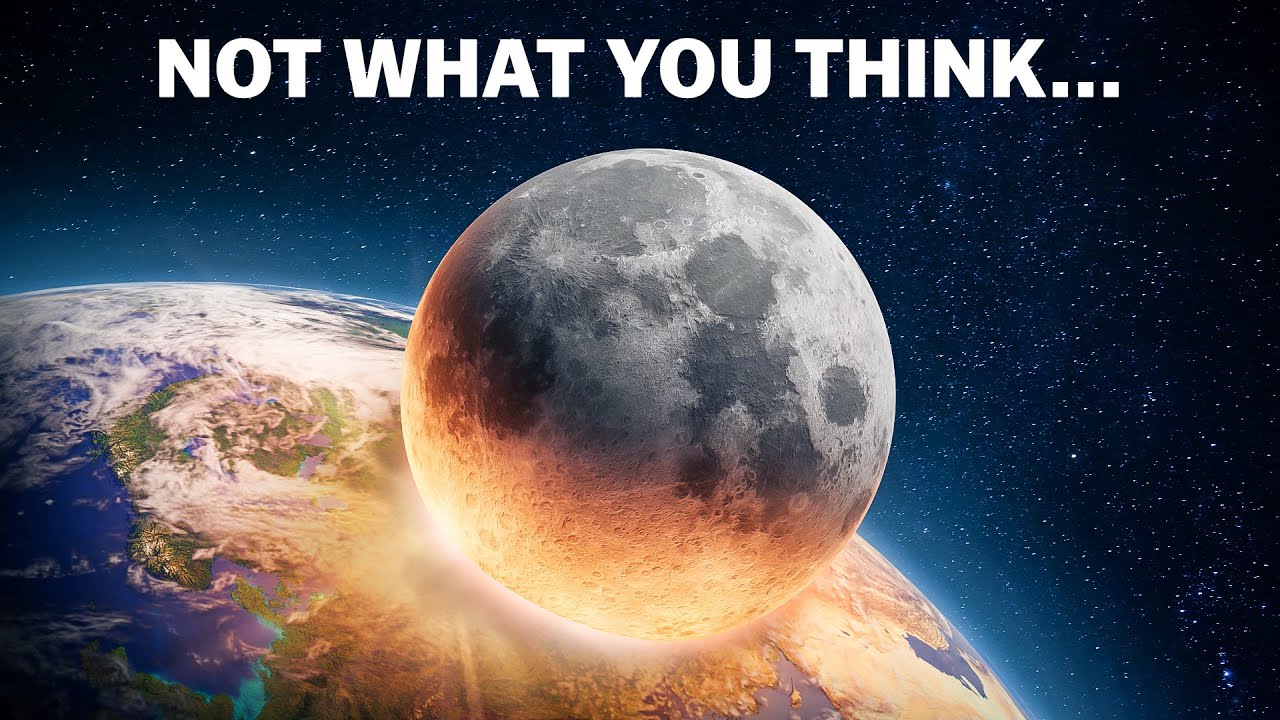
9 billion light years ago this isn't just a really long time ago it was about 400 million light years before our solar system was even formed according to our current cosmological model the Universe has no edges and as such it has no Center when wearing a space suit one obviously can't scratch their nose but thankfully some smart person thought of that and all space helmets come with a piece of velcro installed inside them for just such an itchy occasion was it a scratch or a pick it was a scratch Carl Sean wrote that the total number of stars in the universe is greater than all the grains of s stand on all the beaches of the planet Earth it's a quote that conveys the mind-blowing vastness of space there are approximately 100 billion stars in our galaxy alone and hundreds of billions of galaxies in the observable universe the exoplanet Kepler 22b 640 light years away in the Kepler 22 system is of great interest to scientists because it's similar enough to Earth that it might be habitable although it would take quite a while to get there in 1985 Coca-Cola's slog was America's real choice but on July 12th of that year it was space's real Choice as well when astronauts on the Challenger shuttle made Coke the first soda consumed in space we often think of larger objects weighing more than smaller ones but of course that isn't always the case just look at the planets in our solar system Saturn is the second largest and yet because it consists mostly of liquid hydrogen and helium it's also the lightest one Saturn is the only planet in the solar system that's less dense than water if the planet were placed on an enormous ocean it would be able to float it's impossible to know for sure how many stars there are in the universe but if we multiply the number of stars in an average Galaxy by the estimated number of galaxies we reach the jaw-dropping figure of around 2006on if you thought the Earth's 23. 5° tilted axis was a lot just take a look at Uranus at almost 98° the planet is pretty much rotating sideways imagine having a birthday every 88 days that's what would happen if you lived on Mercury where it takes 88 Earth days for the planet to make one trip around the Sun due to its extremely thin atmosphere mercury has no weather no clouds rain or storms unlike Chicago the moon doesn't have any wind it can be affected by solar winds though Australia is only the sixth largest country on Earth but it's still wider than the diameter of the Moon if you hate being caught in the rain on Earth just be thankful you aren't on on Venus where it RS sulfuric acid it doesn't actually reach the surface though evaporating from the extreme heat ever put on a new outfit and feel like a million bucks well imagine wearing a space suit in 1974 NASA revealed that a space suit cost between $5 to $22 million that's $83 to $122 million today if we ever do colonize Mars it at least one thing will seem very similar to people coming from Earth the length of a day which on Mars is 24. 6 hours before we continue be sure to subscribe to our Channel and ring the bell to get notified about our latest videos you have the option to be notified for occasional videos or all of them if you're on your phone make sure you go into settings and switch on your notifications the leading theory about the formation of the moon is that it was formed from the debris of a collision between Earth and a planet plan the size of Mars if you stood on the surface of that long ago Earth the moon would have looked 100 times brighter it was 10 times closer back then some neutron stars can spin at an unbelievable speed of up to 600 or 700 times per second the fastest ever recorded clocking in at 716 with a whopping mean temperature of 867 de F Venus is the hottest planet in our solar system a few moons in the solar system have a retrograde orbit orbiting in the opposite direction of their planet's rotation the largest of these is Neptune's moon Triton if two pieces of the same type of metal touch in space with significant Force they will bond together in a process called cold welding because it takes time for the light from objects in space to reach us on Earth what we see is actually not that object in the present but how the object was when the light left it when we look up at the stars we're looking into the past the Moon is tily locked with Earth meaning that it takes the same amount of time to rotate as it does to revolve around our planet it's for this reason that we always see the same side of the moon our Milky Way galaxy is on course to collide with the Andromeda galaxy but don't worry it won't happen for about 4.