so what happened again there was a screw-up and uh it's actually an alarm on my phone that set for a reminder every evening that went off in the middle of the lecture and i tried to stop it and come back and it just it was too much awkwardness so i just gotta try jumping in again this is new to me i would sometimes just restart making the video but at some point how many takes does one do um so i'm sorry for the interruptions um if we were in class and i got a phone call
or an alarm like that i i would be able to to address that joke about it look what just happened and on a video i feel like why would you do it again so i should where i left off was talking about the application of the oaks test in irwin toy we will talk more about irwin toy when we talk about freedom of expression but here the court was trying to assess whether or not the infringement on irwin toy's freedom of expression rights by limiting their ability to advertise to children under the age of 13
was a reasonable limit that infringement was it reasonable went to the oaks test so the first question the court assessed was whether or not there was a pressing and substantial objective and the court said yes that here the objective was to protect children who are vulnerable inherently vulnerable don't even understand always the images they're seeing or what they're trying to convey trying to protect them from advertising which at its core is intended to be a persuasive and at times deceptive medium so the court said yes this is a pressing and substantive substantial objective the second
test the court also said yes here the court was like well if the aim is to protect children from advertising and the infringement is is to limit or prevent advertising to children then they're rationally connected this was an easy assessment for the court and when it came to the minimal impairment the court here did something i think is actually really really important because it clearly articulated that minimal impairment does not mean the least in parent because the quebec legislature could have made the law be 13 12 11 15 17 9. it could have chosen a
number of ages and the court actually discusses how the court sorry the legislature has the ability to make a determination to make a reasonable basis for their limit they quebec decided 13 and under so really it's 12 year olds and younger but 13 and under um were more vulnerable and more susceptible to the influences of advertising and so that's the number they chose and the court said quebec could have chosen 12 and it could have chosen 14. and in each of these cases provided they could demonstrate it it might be reasonable the fact that it
wasn't the least impairing in that of course it could have been younger could have been five years old so it could have been less impairing in the sense that it would have impaired the rights of irwin toy less it didn't mean that that made it uh the answer here that there it was not it was a no the court still accepted that this is the least impairing way to achieve the objective in a reasonable way and so it doesn't always mean that it's the least possible it means that it's the least effective way of achieving
the objective and here the court said this was the least object the least impairing way because they didn't restrict advertising at 17 or 15. when it was 13 and they went with that based on the evidence before them and then the proportion defect test here the court pretty much just says yep that's fine everything else is good this is good and literally in a mere two or three sentences kind of ends the discussion and as a result the outcome here is that the the ban on advertising the children is deemed to be constitutional now really
importantly at any point in this test there was an x or no if at any point the answer was no then the the law fails you only need to fail one part of the test either has to not be pressing and substantial rationally connected merely impairing or having proportionate effect in any level it can fail predominantly they fail for not being minimally impairing but at any point they fail importantly as well though is that even if it failed at number one courts often go through the whole analysis to provide the context of what would have
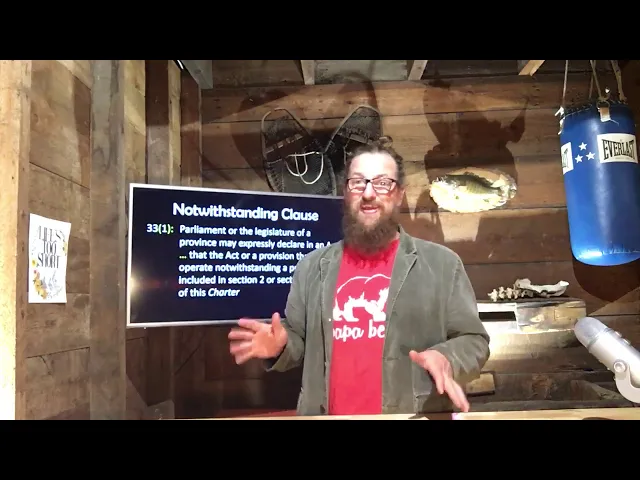
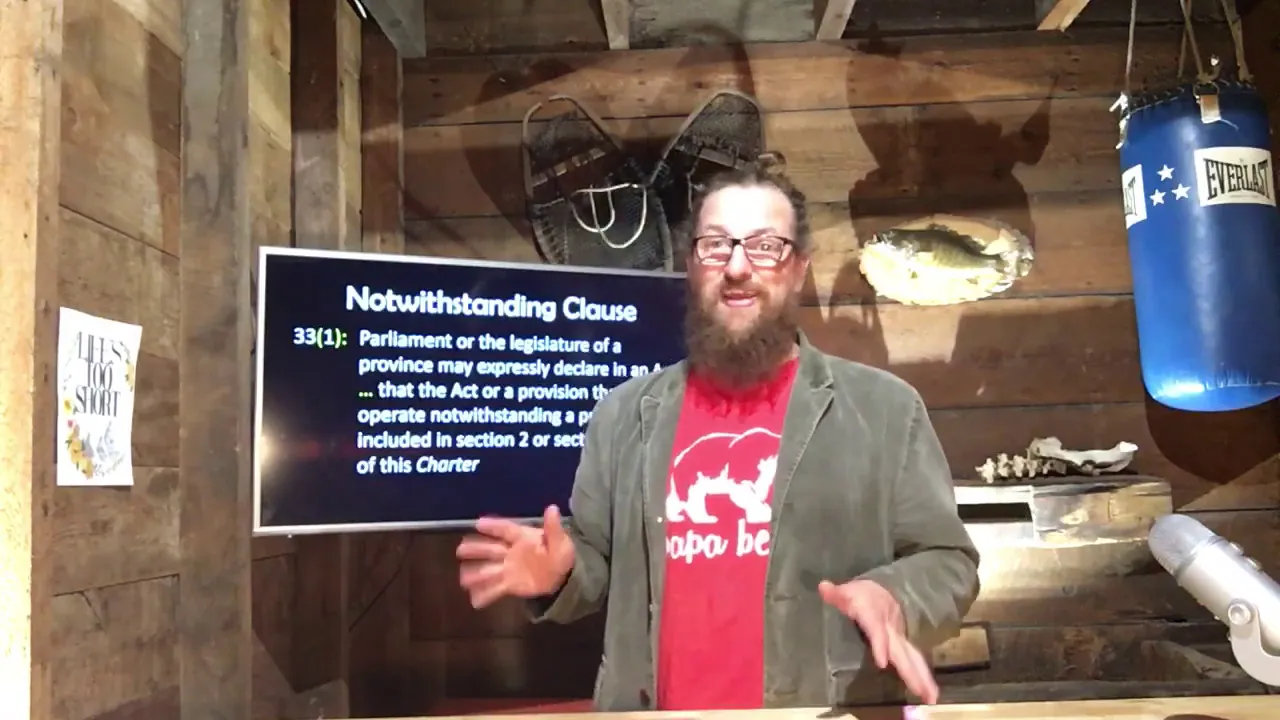
happened had it not failed or to provide guidance for future situations so the court often goes through the whole oaks test even when it doesn't actually need to the second way within the constitution where explicitly there's a limitation is the notwithstanding clause now the notwithstanding clause is a very very interesting tool and the notwithstanding clause essentially is a statement in section 33 that says parliament or the legislatures of the province may expressly declare in an act that the act or provision thereof shall operate notwithstanding a provision including this section uh 2 or 7 to 15
of this charter so very importantly the notwithstanding clause only applies to section 2 or section 7-15 and the reason for that sections 3 through 6 are all democratic rights or section 6's mobility rights so no government can take away your ability to vote or for the the the ability to move about or the for legislature to stand every five years etc so those democratic rights remain the section two in section seven through 15 of the federal government or provincial government can expressly state in in an act that they're they're gonna have this essentially this this
law they're putting in place operate notwithstanding but that that it may actually impact these rights and what does that actually mean so it uh we'll come to that in a second the second thing about this clause um i'm jumping ahead in my brain the second thing about this clause the nomic standing clause is section 33 part subsection 2 and it states that these kinds of provisions that they are made these declarations they are only going to have effect for five years and this is actually really really important this five year limitation so the minute that
it comes into effect it only lasts for five years and it expires and the reason for that is that every five years there has to be an election which means that the next government can decide whether or not they want to have it in place and so it cannot be a permanent removal of rights and this is actually a very very important part of the notwithstanding clause that we will discuss in just a minute so in effect it allows for otherwise unconstitutional legislation to remain constitutional the notwithstanding clause gives power to governments to say we
are going to infringe your rights and we're going to do it notwithstanding the fact that they're protected now it has to be expressly declared in legislation meaning that they actually have to pass it and there's a reason uh there's a reason for that because it's a very political tool to use and it's important that that that residents and citizens of the country understand that their rights are being removed so a government can't just slip this in under the carpet there is a consequence to using this act or this just provision sorry so imagine right now
that there was a provision put into place by the federal government that banned all reporters right banned the freedom of the press well section 2b protects the freedom of the press because the notwithstanding clause would allow for the government to enact legislation that would operate that would be constitutional not withstanding the fact that it's infringing a protected right and one of the reasons why this is in the charters because quebec in order to sign on wanted kind of a veto and so perhaps not surprisingly quebec is one of the only provinces that have actually used
the um the notwithstanding clause it has been used outside of quebec and it's been threatened to be used other times but quebec has used it a number of times including languages uh language acts requiring french only etc so quebec has used this as a way to kind of say we're not going to always abide by by these these requirements because of our distinct civil society and quebec has its own charter within its own civil code so it's not that they don't care about civil rights there's a lot of other things going on here but the
the reality is this is a political tool that can have real consequence because if a government said we're going to take away the rights of the press and we don't care that we're supposed to guarantee them chances are that government may not be elected again there's a real good hope that that a leader who has shows disregard to rule of law in disregard to to constitutional protections might not be elected we're going to see in november i suppose whether or not the theory that justice and what is morally and and and right you know uh
and what is legally you know a strong position is actually upheld uh in the us and unfortunately people may not care anymore about some of this stuff but the notwithstanding clause is an important tool that allows for unconstitutional laws we've brought into place so for example in alberta in 2000 the notwithstanding clause was used to protect the law that prohibited same-sex couples from marrying it was recognized that this would be a violation of equality and we'll talk about that in a subsequent lesson and the recognition that this would be a violation of equality nevertheless the
legislature said we don't care this is important to us we're going to pass this law which violates rights and we recognize that and this law will operate notwithstanding that violation of the rights for five years and that's what happened alberta has threatened to use another time other times but has never really followed through the yukon and saskatchewan have either used or threatened to use it as well but hasn't really been used now a couple years ago when i was teaching this class it was right around the time of this lecture when doug ford first newly
elected was threatening to use the notwithstanding clause and and there was an uproar in the legal community and people were writing this is not what it's meant for um and so there is a political element that could have consequences um uh for for individuals that are political parties that use it now one of the things about this is that it's prospective only it's going forward only can't take away rights previously so in alberta had there been a right to same-sex marriage prior to 2000 it would have nullified those marriages it's prospective only um and and
that is part of what makes it uh a very important but rarely used tool as well because there might be other ways of actually going about this type of discussion right so we have debates we sometimes governments will enact laws in other ways rather than trying to use this big tool i've been working on a renovation at my house the last few months and i have a number of different types of hammers and section one might be a regular framing hammer section 33 is a sledgehammer it's going to do a lot of damage it might
get you the results you want but there's going to be collateral and so it's often not used so while the charter protects your rights and protects them in very important ways there are built-in limitations things like it only applies to the government or how we interpret it but really importantly section one provides a tool where we can limit rights in a reasonable way we can have reasonable limits if they're demonstrably justifiable in a free and democratic society and section 33 allows for a government to run roughshod over rights in a way by saying we're going
to pass this law notwithstanding the fact that it's going to operate contrary to rights that are protected in subsequent lectures we'll go through the oaks test in further detail and hopefully that will help to make more sense but i would encourage you to think about those tests and try to remember the four tests because they're going to come up throughout this this term and in a variety of different situations because the charter is ever present in most aspects of law our next lecture will be about enforcing the charter