He seems like Officer Sarah Chen had been patrolling the quiet suburbs of Mil Valley for 3 years, but she'd never encountered anything quite like the calls that started coming in during the winter of 2019. It began on a Tuesday night in February around 11:47 p.m. when dispatch crackled through her radio with an address she recognized. A modest two-story house on Elmwood Drive where an elderly woman named Margaret Hoffman lived alone. Possible prowler. The dispatcher's voice cut through the silence of her patrol car. caller reports someone walking around her backyard, looking through windows. She's requesting immediate
assistance. Sarah pulled up to the house 5 minutes later, her headlights sweeping across the frostcovered lawn. The neighborhood was dead quiet, the kind of Suburban stillness that made every small sound seem amplified. She walked the perimeter of the property, flashlight beam dancing across the wooden fence and dormant flower beds. No footprints in the frost, no broken branches, no signs of forced entry. When she knocked on the front door, Mrs. Hoffman answered immediately as if she'd been waiting right behind it. The woman was in her late 70s, thin and nervous, wearing a faded floral Robe, pulled
tight around her shoulders. Her eyes kept darting past Sarah toward the backyard. "He was there," she insisted, her voice trembling slightly. tall man, maybe 6 feet, just standing by my kitchen window, staring in. When I turned on the porch light, he walked away real slow, like he wasn't scared at all. Sarah spent another 20 minutes checking the area, but found nothing. She filled out the incident report and marked it as unfounded, though something About Mrs. Hoffman's certainty stuck with her. The old woman hadn't seemed confused or disoriented. She'd been specific about details. The man's height,
his dark clothing, the way he'd moved with deliberate slowness rather than fleeing when discovered. 3 days later, the same address appeared on her dispatch screen again. Same time, 11:47 p.m. This time, Mrs. Hoffman reported the man had returned and he'd been trying the back door handle. Sarah Arrived to find the elderly woman more agitated than before, her hands shaking as she pointed toward her kitchen. "I heard the door rattling," she said. "Not like the wind, like someone testing to see if it was locked. I called out, asked who was there, and everything went quiet, but
I know he was listening." Again, Sarah found no evidence. The door was securely locked. No scratches around the handle. No disturbed ground. She began to suspect Mrs. Hoffman might be experiencing some form of dementia related paranoia. Though her medical history showed no cognitive issues. Still, living alone at her age with winter darkness settling in early could play tricks on anyone's mind. But then the calls started coming from other houses. Mrs. Patterson, two blocks over, reported a tall man standing in her driveway at midnight just watching her house. Mr. Rodriguez on Oak Street called about someone
Trying his car doors in the early morning hours. Each incident occurred between 11:30 p.m. and 1:00 a.m. Each involved a tall, dark-clothed figure who seemed more interested in observing than breaking in. And each time Sarah responded, she found absolutely nothing. The pattern continued for weeks. Different addresses, same mysterious figure, same time window. Sarah began requesting backup on these calls. Thinking maybe two officers Would have better luck spotting whoever was causing the disturbances. Her partner, Detective Mike Torres, was skeptical. Probably just some homeless guy looking for unlocked cars or easy targets, he suggested. Or maybe it's
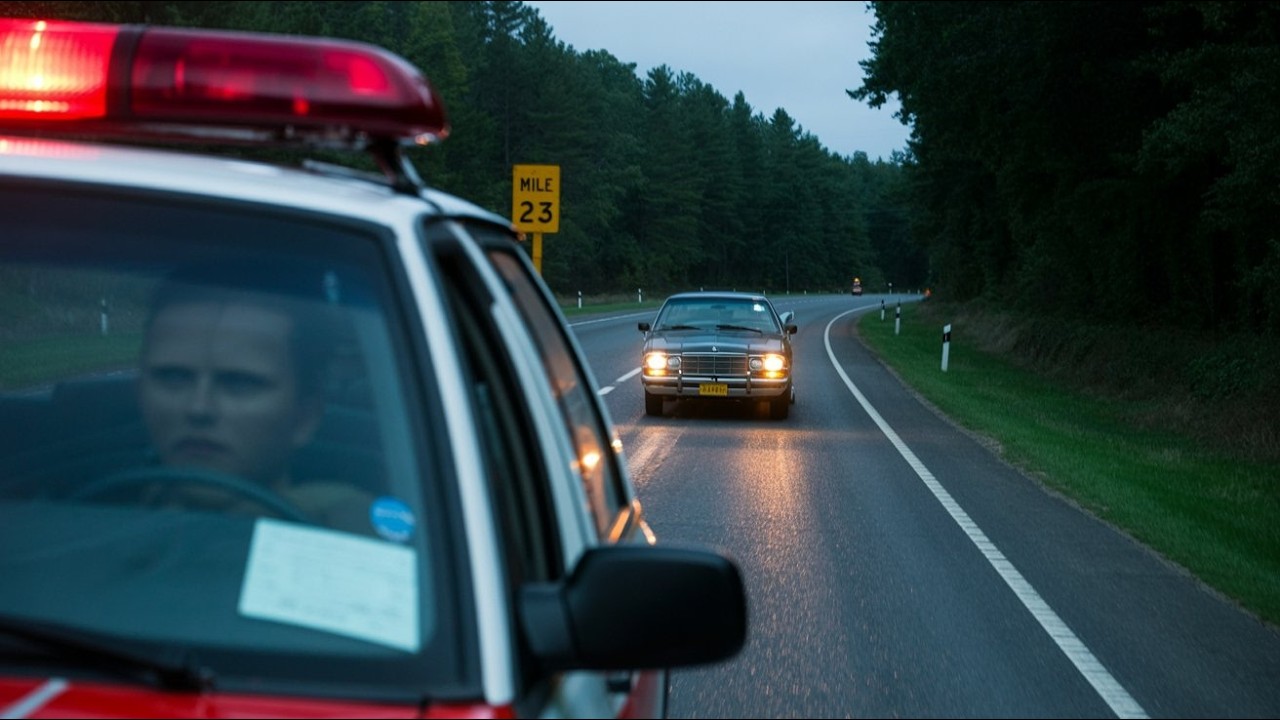
copycat reports. One person sees something, tells their neighbors. Suddenly, everyone's seeing shadows. But Sarah wasn't convinced. There was something too systematic about It, too precise. The timing never varied by more than a few minutes. The descriptions were remarkably consistent across different witnesses who didn't know each other. And there was something else that bothered her, something she couldn't quite articulate until the night she decided to park her patrol car on Elmwood Drive and wait. It was a Thursday in March around 11:30 p.m. when she positioned herself with a clear view of Mrs. Hoffman's backyard. The street
Was empty, porch lights casting weak yellow pools on the sidewalk. Sarah turned off her radio and rolled down her window, straining to hear any unusual sounds. The minutes ticked by slowly. 11:35 11:40 11:45. At exactly 11:47 p.m., she saw him. A tall figure emerged from between two houses across the street, moving with that same deliberate slowness Mrs. Hoffman had described. He walked directly to the Elderly woman's backyard, disappearing behind the fence line. Sarah's heart rate spiked as she quietly exited her patrol car, hand instinctively moving to her radio. But something made her hesitate. She wanted
to observe first to understand what she was dealing with. She crept along the sidewalk, staying in the shadows until she had a partial view of Mrs. Hoffman's backyard. What she saw made her blood run cold. The man was Standing perfectly still beside the kitchen window, not attempting to break in or steal anything. He was simply watching. His face was turned toward the lit window, and even from her position, Sarah could see that his attention was completely focused on whatever was happening inside the house. Sarah reached for her radio to call for backup. But in that
moment of distraction, the figure seemed to sense her presence. He turned his head in her Direction, and even though she couldn't make out his features in the darkness, she felt the weight of his gaze. Then without any sense of urgency or fear, he walked away, not running, not hurrying, just walking, as if his business there was finished for the night. Sarah followed at a distance, but the man seemed to vanish between the houses. When backup arrived 15 minutes later, they found nothing. No footprints, no evidence of his presence except Sarah's Own testimony and Mrs. Hoffman's
grateful confirmation that yes, someone had indeed been in her backyard again. The investigation that followed revealed the truly disturbing truth. The man Sarah had witnessed wasn't breaking into homes or stealing anything. He was studying the residents routines, learning their habits, noting when lights went on and off, which rooms they spent time in, when they went to bed. Security camera footage from several Houses eventually captured partial images of the same individual, always at the same time, always engaged in the same behavior, methodical surveillance. When they finally arrested him 3 weeks later, they discovered notebooks filled with
detailed observations about dozens of homes in the area. Times when residents arrived and left, which windows had the best views into bedrooms and living rooms, notes about which houses had security systems and which Didn't. The man, a 43-year-old drifter with a history of stalking charges, had been conducting reconnaissance for months. building profiles of potential victims for reasons that remained unclear even after his confession. What still haunts Sarah about that case isn't just what the man was doing, but how long he'd been doing it undetected. The precision of his timing, the methodical nature of his Surveillance
suggested someone who had been perfecting his technique for years. How many other neighborhoods had he studied? how many other residents had caught glimpses of him and dismissed it as imagination. The most chilling detail came from Mrs. Hoffman herself weeks after the arrest. She mentioned almost casually that she'd been having the feeling of being watched for nearly 6 months before she started calling Police. "I just thought I was being paranoid," she said. "You know how it is when you live alone. Sometimes you imagine things, but now I realize he'd probably been coming around long before I
ever saw him. Learning my routine, figuring out when I was most vulnerable. Sarah still patrols those same quiet streets, but she sees them differently now. Every shadow between houses could hide someone watching. Every routine that brings comfort to Residents, the same time they turn off lights, the same evening walks, the same weekly schedules could be valuable intelligence to someone with patience and dark intentions. The suburbs feel less safe when you realize how easy it is for someone to study your life from the darkness outside your windows, taking notes, waiting for the perfect moment to act
on whatever plans they're making in the silence of their midnight observations. Detective Ryan Walsh had been working the night shift for 8 years, but the call that came in at 217 a.m. on October 15th, 2018 would stay with him for the rest of his career. The dispatcher's voice carried an unusual tension as she relayed the information. We've got a welfare check request at 1247 Cedar Avenue. Caller says her neighbor hasn't been seen in over a week, and there's a smell coming from the apartment. Cedar Avenue was in one of The older parts of town, where
converted Victorian houses had been split into small rental units, the kind of neighborhood where people minded their own business, where you could go weeks without seeing your neighbors face to face. Walsh pulled up to 1247 just as his partner, Officer Janet Kim, arrived from the opposite direction. The house was dark except for a single porch light that cast long shadows across the peeling paint of the Front steps. The woman who had called, Maria Santos, lived in the ground floor apartment. She met them at the front door, wrapping a cardigan tightly around herself despite the mild
autumn evening. "It's Mrs. Garrett upstairs," she explained, pointing toward a narrow staircase that led to the second floor. "I haven't seen her since last Tuesday. She always says good morning when she goes to get her mail, but nothing for 8 Days now. And yesterday, I started noticing this smell." Walsh had responded to enough welfare checks to know what that meant. The distinctive odor of human decomposition was something you never forgot once you'd encountered it. As they climbed the creaking stairs, he caught the first hint of it. Sweet, cloying, and unmistakable. Mrs. Garrett, a 74year-old retired
school teacher, had likely passed away alone in her apartment. They Knocked on the door several times, announcing themselves as police, but received no response. The smell was stronger now, seeping through the gaps around the door frame. Walsh was about to radio for the medical examiner when Officer Kim pointed to something that made them both pause. The door wasn't just unlocked. It was slightly a jar, maybe an inch, as if someone had closed it carelessly without making sure it latched properly. "Mrs. Garrett," Walsh Called out as he pushed the door open. The smell hit them immediately,
but something felt wrong. The apartment was neat, almost pristine. No signs of a struggle, no indication that an elderly woman had collapsed from a medical emergency. The living room looked like it had been recently cleaned. Magazines stacked perfectly on the coffee table, throw pillows arranged with deliberate precision. They moved through the small apartment methodically. The kitchen was Spotless, dishes put away, no spoiled food in the refrigerator. The bedroom was equally tidy. Bed made with military precision, clothes hanging in the closet in perfect order. But the smell was definitely coming from somewhere inside the apartment, growing
stronger as they approached the bathroom. At the end of the narrow hallway, the bathroom door was closed. Walsh turned the handle slowly, preparing himself for what they might find. But instead of a body, they Discovered something that would puzzle investigators for weeks to come. The bathtub was filled with what appeared to be several large bags of ice, now completely melted, leaving behind a tub full of lukewarm water. Floating in that water were pieces of raw meat, steaks, chicken breasts, ground beef, all in various stages of decomposition. Officer Kim stepped back, covering her nose with her
sleeve. "What the hell is this?" she muttered. Walsh Was already on his radio, calling for backup and requesting a crime scene unit. This wasn't a simple welfare check anymore. Someone had been using Mrs. Garrett's bathroom as a makeshift refrigeration unit, and Mrs. Garrett was nowhere to be found. The investigation that followed revealed a disturbing sequence of events that had unfolded over the previous 2 weeks. Mrs. Garrett had indeed died, but not in her apartment. Security footage from the Building's entrance showed her leaving on Tuesday morning, October 8th, carrying her usual canvas shopping bag. She never
returned. The footage also showed something else. A man in workclo entering the building later that same day, carrying what appeared to be several heavy bags. The man was James Crawford, a 51-year-old maintenance worker who had been hired by the building's owner to do some repairs. Crawford had keys to all the units, Ostensibly for emergency access and maintenance purposes. What he'd been doing with those keys, however, went far beyond his job description. When detectives finally tracked Crawford down 3 days later, they uncovered a scheme that was as bizarre as it was disturbing. Crawford had been systematically
entering empty apartments throughout the city, units where tenants had died, moved away, or were temporarily absent, and using them as Personal storage spaces, but not for stolen goods or illegal substances. He was using them to store meat. Crawford worked part-time at a meat processing plant across town, where he had been systematically stealing large quantities of expensive cuts. Unable to store the stolen meat at his own residence where his wife might discover it, he had developed an elaborate system of using vacant apartments as temporary cold storage. He would fill bathtubs with Ice, store the meat for
several days until he could find buyers, then move on to the next empty unit. Mrs. Garrett's apartment had been perfect for his purposes. The elderly woman kept regular hours, and Crawford knew from previous maintenance visits that she went grocery shopping every Tuesday morning and spent the rest of the day running errands. What he hadn't counted on was that Mrs. Garrett would suffer a heart attack while waiting for the bus outside the Grocery store that Tuesday morning. She died at the hospital later that day, but by then Crawford had already moved his operation into her apartment.
The truly chilling part of the story emerged when investigators realized how long Crawford had been doing this. Building records showed he'd had unauthorized access to dozens of apartments over the past 2 years. Tenants had occasionally reported strange smells or sounds from supposedly Empty units, but most had dismissed these incidents as their imagination or problems with the building's old plumbing. Walsh interviewed several residents who described unsettling experiences they'd previously attributed to living in an old building. Mrs. Chen from the third floor mentioned hearing running water from the apartment above her, even though she knew the tenant
had moved out weeks earlier. Mr. Rodriguez reported a persistent smell of spoiled Food coming from the vacant unit next door, but assumed it was related to the building's garbage disposal system. The investigation revealed that Crawford had been essentially living parallel lives in these empty apartments. He would spend hours in vacant units, sometimes even sleeping in them when his shifts at the meat plant ran late. Neighbors occasionally glimpsed lights in supposedly empty apartments or heard footsteps from units they thought were Unoccupied, but the transient nature of the building's tenant population meant these observations were rarely reported
or investigated. What disturbed Walsh most about the Crawford case wasn't just the violation of these spaces, but the realization of how invisible such activities could remain. Crawford had been operating his meat storage scheme for years, regularly entering apartments where people lived, worked, and slept, using their most Private spaces for his own purposes. The fact that he'd chosen recently deceased tenants apartments added another layer of violation that went beyond simple theft. The case took an even stranger turn when investigators discovered Crawford's detailed notebooks, which contained observations about the daily routines of various tenants throughout multiple buildings.
He knew which apartments would be empty during certain hours, which residents Traveled frequently, and which units had the best access to running water for his ice storage system. He had been studying people's lives with the same methodical attention as a professional burglar, but for the mundane purpose of storing stolen meat. Mrs. Garrett's neighbor, Maria Santos, later told Walsh that the experience had changed how she thought about her own privacy and security. "You assume that when someone dies, their space becomes empty, unused," she said. "But knowing that someone was in there using her bathroom, walking around
in her apartment while she was lying in the morg, it makes you realize how little control we have over our own spaces. Even after we're gone, Walsh still drives past 1247 Cedar Avenue, occasionally during his patrols. The building looks the same as it always did. But he can't shake the feeling that in any of those lit windows, behind any of those closed Doors, someone might be living a secret life that the legitimate residents know nothing about. The Crawford case taught him that the most disturbing violations of privacy and security often come not from dramatic break-ins
or violent crimes, but from the quiet, systematic exploitation of the spaces where people are supposed to feel most safe. Sergeant Lisa Morgan had been working dispatch for the Riverside County Sheriff's Department for 12 years, but she'd never encountered anything like the calls that started coming in during the summer of 2017. It began on a humid Thursday night in July around 3:24 a.m. when her headset crackled with a voice she didn't recognize. A man calling from a pay phone outside a 24-hour diner on Highway 76. "I need to report an accident," the caller said, his voice
unnaturally calm for someone reporting an emergency. There's been a collision on Milfield Road about 2 mi east of the Old Grain elevator. One vehicle involved looks like it went off the road into the drainage ditch. Morgan immediately dispatched Officer Rodriguez to the location while keeping the caller on the line. Standard procedure was to gather as much information as possible from witnesses. Are there any injuries, sir? Can you see if anyone needs medical assistance? I can't tell from here, the Man replied. The car is pretty mangled. You should probably send an ambulance just in case. Rodriguez
arrived at Milfield Road 18 minutes later and radioed back with confusion in his voice. Dispatch, I've checked the entire stretch of road twice. No accident, no vehicle in any ditch. Roads completely clear. Morgan questioned the caller again, but the line had gone dead. She logged the incident as a false report, though something about the man's tone Bothered her. He hadn't sounded like a prankster or someone making a malicious false call. His details had been specific. The grain elevator was a known landmark, and Milfield Road was a legitimate location where accidents did occasionally occur. Three nights
later, at 3:31 a.m., the same voice called again. This time he reported a house fire on Chestnut Street, claiming he could see flames coming from the secondstory windows of a Blue two-story home. Morgan dispatched fire trucks immediately while keeping the caller on the line. But when the fire department arrived, they found no fire, no smoke, and no signs of any emergency at the address. The pattern continued over the following weeks. Always between 3qua and 4honquac. Always the same calm, measured voice, reporting different emergencies, car accidents, fires, medical emergencies, Breakins. Each report was detailed and plausible.
But when officers or emergency responders arrived, they found nothing. No evidence that the reported incidents had ever occurred. Morgan began to recognize the caller's voice immediately. She started keeping detailed logs of his calls, noting the precise times, the locations he mentioned, and the specific emergencies he described. What disturbed Her most was the caller's apparent familiarity with the area. He knew street names, local landmarks, and specific addresses throughout the county. These weren't random locations. They were places someone would know from driving the roads regularly. Someone who belonged to the community. After the eighth false call, Morgan's
supervisor, Captain Hayes, authorized her to attempt tracing the calls, but the caller seemed to understand how the system worked. He Never stayed on the line long enough for a successful trace, and he appeared to be using different payoneses throughout the county. Each location was isolated, gas stations, rest stop, rest stops, and diners along rural highways where security cameras were sparse or non-existent. The breakthrough came on a Tuesday night in late August. The caller reported a medical emergency at a farmhouse on County Road 12, claiming an elderly man had collapsed in his yard And wasn't responding.
As Morgan dispatched paramedics, she made a decision that went against protocol. Instead of letting the caller hang up, she kept him talking. "Sir, emergency services are on their way," she said. "While we wait, can you tell me more about what you're seeing? Is the man conscious at all?" The caller seemed willing to elaborate, describing the scene in disturbing detail. He talked about the man's blue work shirt, his Gray hair, the way he was lying near a red pickup truck. But as he spoke, Morgan realized something that made her blood run cold. The caller was describing
the scene as if he was watching it happen in real time, but he was also describing it with a detachment that suggested he wasn't actually there to help. "Are you able to approach the man and check for a pulse?" Morgan asked, testing her growing suspicion. No, the caller replied after a pause. I Can see him from where I am, but I can't get closer right now. Morgan kept him talking for another 3 minutes, asking seemingly helpful questions while secretly hoping to keep him on the line long enough for a partial trace. What she learned during
those 3 minutes would haunt her for months afterward. The caller knew details about the property that weren't visible from the road. the color of the barn behind the house, the fact that there were chickens in a coupe Near the back porch, the make and model of farming equipment stored in an open shed. When paramedics arrived at the farmhouse, they found no emergency. But they did find something else that confirmed Morgan's worst fears. The elderly farmer who lived there, Harold Kowalsski, was fine. He was inside his house watching television, completely unaware that anyone had reported a
medical emergency. But when officer Martinez Questioned him about the property details the caller had mentioned, Kowalsski confirmed them all. Someone had been on his property close enough to observe these details, but had chosen to report a false emergency instead of offering genuine help or simply leaving. The investigation that followed revealed a pattern of behavior that was far more disturbing than simple prank calls. The caller wasn't randomly choosing locations for his false reports. He was Conducting what appeared to be systematic surveillance of rural properties throughout the county. Using the emergency response system to test response times
and gather information about law enforcement procedures. Detective Williams, who took over the case, discovered that many of the locations the caller had mentioned in his false reports had been burglarized within weeks or months of the calls. Not immediately afterward, which might have Suggested the calls were diversions, but later, as if the caller was conducting long-term reconnaissance. The farmhouse on County Road 12 was broken into 6 weeks after the false medical emergency call. the Blue House on Chestnut Street, where he'd reported a fire lost several pieces of expensive farm equipment from their barn. Two months later,
the most chilling discovery came when Detective Williams mapped all the False call locations and compared them to a series of unsolved burglaries dating back 2 years. The pattern was unmistakable. The caller had been using emergency dispatch as an intelligence gathering tool, reporting false emergencies to observe how quickly law enforcement responded to different areas, which routes they took, and how thoroughly they investigated rural properties. Morgan realized that during those months Of taking his calls, she had unknowingly been providing the caller with valuable information about police response procedures. Her professional dispatcher questions, asking about injuries, requesting detailed
descriptions, keeping him on the line, had been training him to sound more convincing, and helping him refine his knowledge of emergency protocols. When they finally arrested David Hibair, a 47-year-old unemployed Construction worker, the evidence found in his trailer included detailed maps of the county with response times noted for different areas. radio frequencies for local law enforcement and logs of police patrol patterns he'd observed during his surveillance activities. He had been using the emergency dispatch system as a research tool for over 2 years, calling in false reports to study law enforcement response while simultaneously conducting reconnaissance
On potential burglary targets. What disturbed Morgan most about the Habber case was the realization of how the emergency system itself could be weaponized by someone with patience and intelligence. Every call she'd taken from him had been a violation of the trust that emergency dispatch depends on the assumption that callers are reporting genuine emergencies and seeking help for others. Instead, a bear had been exploiting that trust to gather Intelligence for criminal purposes. The case changed how Morgan approached her job. Now, when she receives calls from unfamiliar voices reporting emergencies in isolated areas, she finds herself listening
not just to what callers are saying, but to what they're not saying. The subtle signs that someone might be observing rather than experiencing an emergency. The kind of details that suggest surveillance rather than genuine concern for others Safety. Morgan still works the night shift, still dispatches officers to remote locations based on calls from strangers. But she knows now that sometimes the person on the other end of the line isn't calling for help. They're calling to study the very system that's designed to protect the community. The voice that sounds most helpful and cooperative might belong to
someone who's learning how to exploit the gaps in rural law enforcement response, Turning every emergency call into an opportunity to make the community less safe rather than more secure. Officer Thomas Bradley had been patrolling the industrial district for 6 months when he first noticed something was wrong with the overnight security reports from Clearwater Manufacturing. It was a Tuesday morning in September 2019 and he was reviewing the incident logs from his sector when he realized that for the past 3 weeks there had been Absolutely no activity reported from the sprawling factory complex on Industrial Boulevard. Clearwater
Manufacturing was a packaging plant that operated three shifts around the clock, producing cardboard boxes and shipping materials for companies throughout the region. The facility employed over 200 people and had its own security force of eight guards who rotated through different shifts. In Bradley's experience, a place that size always generated some kind of Incident reports, minor accidents, equipment malfunctions, employee disputes, or at minimum, routine security checks that needed police verification. But for 21 consecutive days, nothing. Complete radio silence from a facility that should have been bustling with activity. Bradley decided to drive by during his morning
patrol just to satisfy his curiosity. The parking lot had the usual Number of cars for a day shift and he could see movement through the office windows. Everything looked normal from the outside. But when he tried to raise the security office on his radio to do a routine check-in, no one responded. He tried calling their direct line from his patrol car, but the phone just rang endlessly. That afternoon, Bradley stopped by the main office and spoke with Carol Jensen, the human resources Manager. She seemed genuinely puzzled by his questions about the security reports. Our night
security team files their reports with the corporate office every morning, she explained. I don't handle that directly, but I haven't heard of any problems. Is there something specific you're concerned about? Bradley couldn't articulate what was bothering him. It wasn't that he suspected a crime had been committed. It was more like a growing sense that Something fundamental had changed in the normal rhythm of his patrol area, and he couldn't identify what it was. He asked Jensen for the contact information for the night shift supervisor, a man named Robert Kemp, who had been with the company for
8 years. When Bradley called Kemp that evening, the conversation only deepened his unease. Kemp sounded tired, almost distracted as he confirmed that everything was running normally during the overnight hours. "We've been having A quiet stretch," he said. "No incidents to report. Sometimes it's like that. Weeks go by without anything worth bothering you guys about. But there was something in Kemp's tone that didn't sit right with Bradley. The man sounded like he was reading from a script, giving answers that were technically correct, but somehow hollow. When Bradley asked about specific security protocols, how often guards did
their rounds, whether they'd Noticed any unusual activity in the surrounding area, Kemp's responses became increasingly vague. Bradley began making unscheduled drivebys of the Clearwater facility during different hours of his night shift. The building was always lit, cars in the parking lot, signs of normal operation. But he started noticing small details that seemed off. The same cars appeared to be in the exact same parking spaces night after night. The loading dock Doors that should have been opening and closing regularly for shipping trucks remained consistently closed. Most unsettling, he never saw any of the security guards who
were supposed to be patrolling the perimeter. Two weeks later, Bradley's suspicions crystallized into something concrete when he encountered Maria Santos, a woman who worked the cleaning crew at several industrial buildings in the area. She approached his patrol car outside a Nearby warehouse, looking nervous and uncertain. "Officer, can I ask you something about the Clear Water plant?" She said, "I clean their offices twice a week, and something's been bothering me. Last Thursday, when I went in to do the executive offices, there were papers scattered all over the floor in the security office. Looked like someone had
been going through files. But when I asked the day manager about it, he said everything was fine." Santos described Finding security incident reports from months earlier mixed with current employee schedules as if someone had been comparing old records with recent information. More disturbing, she'd found several employee ID badges scattered among the papers, badges belonging to people she recognized as night shift workers, but who she hadn't seen in the building for weeks. Bradley requested permission to conduct a formal welfare check at the facility. When he Arrived with backup, they were met by the dayshift manager, who
seemed cooperative, but increasingly nervous as Bradley's questions became more specific. The manager confirmed that the night shift was fully staffed and operating normally. But when Bradley asked to speak with specific guards by name, the responses became evasive. Robert Kemp. Oh, he's off tonight. Called in sick, the manager said. But when Bradley mentioned he'd Spoken with Kemp by phone just hours earlier, the manager's story changed. I mean, he's here somewhere, probably doing rounds. These guys move around a lot during their shift. The breakthrough came when Bradley insisted on checking the security office logs. what he found
there would lead to one of the most disturbing cases of workplace deception he'd ever encountered. The incident reports were being filed regularly, but they were all Written in the same handwriting and signed with identical signatures. Someone had been forging security reports for over a month, creating the illusion that a full security team was working normally when in fact most of the night shift guards had quit or been fired weeks earlier. The investigation revealed that Robert Kemp, the night shift supervisor, had been operating an elaborate deception to hide the fact that the company was severely Understaffed
during overnight hours. Rather than report to management that several guards had quit without notice, Kemp had been working alone, forging reports to make it appear that a full security team was maintaining normal operations. But the deception went deeper than simple employment fraud. Kemp had been using his knowledge of the building's security systems and patrol schedules to conduct his own unauthorized activities during the Overnight hours. Security cameras showed him bringing unidentified individuals into the facility, allowing them access to areas containing employee records, financial documents, and proprietary manufacturing information. What made the case truly disturbing was the
length of time Kemp had been operating without oversight. For 6 weeks, he had essentially controlled access to a major industrial facility during its most vulnerable Hours with no supervision and no accountability. The forged security reports had been so convincing that even the corporate security office hadn't questioned the sudden absence of any incidents or concerns from a facility that normally generated multiple reports each month. Detective Sarah Chen, who took over the investigation, discovered that Kemp had been selling access to the facility to individuals involved in industrial Espionage and identity theft. The scattered employee records that Maria
Santos had found were evidence of systematic data harvesting, social security numbers, addresses, bank account information from payroll records, and detailed employee schedules that could be used to target individuals for various crimes. The most chilling aspect of the case was how Kemp had exploited the trust placed in security personnel. His Position required him to protect the facility and its employees, but he had used that access to make them more vulnerable. The forged reports weren't just covering up negligence. They were concealing active criminal activity that put hundreds of people at risk. Bradley later learned that three Clearwater
employees had reported identity theft issues during the period when Kemp was operating his scheme. But none of them had connected these incidents to their Workplace. The theft of their personal information had seemed like random cyber crime, not something orchestrated by the person responsible for protecting their physical safety at work. When the case went to trial, prosecutors revealed that Kemp had earned over $30,000 selling access to employee records and allowing unauthorized individuals to use the facility for various criminal activities. He had turned his overnight Shift into a marketplace for information theft, using the authority of his
security position to facilitate crimes against the very people he was supposed to protect. Bradley still patrols the industrial district and Clearwater Manufacturing has implemented new security protocols with multiple layers of oversight. But the case taught him that sometimes the absence of reported problems isn't a sign that everything is working well. It can be a sign that Someone is working very hard to hide what's really happening in the places where people assume they're safe. The quiet stretches that once seemed like peaceful breaks in his patrol routine now make him more vigilant, not less, because he knows
that criminal activity often thrives in the spaces where no one thinks to look. Detective Amanda Cross thought she'd seen every kind of harassment case during her 15 years with the cyber crime Unit, but the complaint that landed on her desk in March 2020 was unlike anything in her experience. Rebecca Martinez, a 34year-old graphic designer from Portland, was reporting what she described as someone living in my computer. But the evidence she presented suggested something far more sophisticated and disturbing than typical cyberstalking. It started, Martinez Explained during their first interview with small things that she initially dismissed
as software glitches. Her computer would wake up from sleep mode in the middle of the night, the screen glowing in her dark bedroom. Files on her desktop would be moved into different folders, rearranged in ways that seemed almost deliberately organized. Her web browser would open to pages she'd never visited. Always closed by the time she sat down at her desk in The morning. "I thought maybe I was sleepwalking and using the computer without remembering," Martinez said, her voice carrying the exhaustion of someone who hadn't slept properly in weeks. But then I started finding things that
I definitely didn't create. Documents with my name on them, but containing information I'd never written. Photos edited in ways I didn't remember doing. Cross had handled dozens of cases involving unauthorized computer access. But Martinez's situation had unusual elements that immediately caught her attention. The intruder wasn't stealing files or installing obvious malware. Instead, they seemed to be using Martinez's computer as if it were their own workspace, creating documents, editing photos, and conducting what appeared to be business activities using her software and internet connection. The breakthrough came when Martinez showed Cross a folder that had appeared On
her desktop labeled Rebecca Projects. Inside were dozens of graphic design files, professional quality work that Martinez insisted she had never created. The designs were for businesses she'd never heard of, using fonts and color schemes that weren't consistent with her usual style. Most disturbing, several of the projects were marked as completed and appeared to be finished work ready for client delivery. Cross immediately suspected that someone had Gained remote access to Martinez's computer and was using it as a workstation for their own freelance projects. But as the investigation progressed, the situation revealed itself to be far more
complex and invasive than simple unauthorized use of computer resources. Martinez had begun documenting the changes she noticed each morning, taking screenshots and keeping detailed logs. The evidence showed that Someone was spending hours on her computer every night, not just creating their own work, but also accessing Martinez's personal files, reading her emails, and browsing through her photo collections. The intruder had viewed private conversations with friends, examined her financial documents, and even looked through personal photos dating back several years. It's like someone has been living my digital life alongside me. Martinez told Cross, "They know everything about
me, my work clients, my family, my relationships, but I know nothing about them except that they are apparently talented at graphic design, and they prefer to work between midnight and 6:00 a.m. Cross worked with the department's tech specialists to analyze Martinez's computer remotely. What they discovered was a sophisticated breach that had likely been ongoing for several months. The attacker had Installed custom remote access software that was nearly invisible to standard security programs, allowing them to control Martinez's computer as if they were sitting at her desk. But the technical aspects of the breach were less disturbing
than the behavioral patterns they uncovered. The intruder wasn't just using Martinez's computer for work. They were systematically studying her life. Browser history showed that Someone had spent hours going through Martinez's social media accounts, reading years of posts and examining photos of her friends and family. They had accessed her online banking, not to steal money, but apparently to understand her financial situation and spending habits. Most unsettling, the intruder had begun incorporating elements of Martinez's personal life into their own work projects. One of the mysterious graphic design files included Photos from Martinez's vacation the previous summer, edited
into a professional marketing brochure for a travel company. Another project used Martinez's own handwriting, apparently scanned from personal documents on her computer to create what looked like testimonial quotes for a business website. The investigation took a darker turn when Cross discovered that the intruder had been using Martinez's identity to communicate with potential Clients. Email logs showed conversations where someone pretending to be Martinez had been negotiating design contracts, setting prices, and arranging project deadlines. The impersonator had even created new email accounts using variations of Martinez's name to conduct this unauthorized business. Detective Cross realized she was
dealing with a case of comprehensive identity theft that went far beyond financial fraud. The perpetrator wasn't just stealing Martinez's money or credit. They were stealing her professional identity, her personal relationships, and her entire digital existence. They had become a digital parasite, living invisibly within Martinez's online life while using her identity to build their own career. The breakthrough in identifying the suspect came from an unexpected source. One of the mysterious design projects contained metadata that hadn't been properly scrubbed, revealing the Original creation software was registered to someone named Kevin Torres. Cross's background check on Torres revealed
a struggling graphic designer who had been sued by multiple clients for failing to deliver promised work and had been evicted from his apartment 3 months earlier. When they arrested Torres at a public library where he was using the free internet, his laptop revealed the full extent of his digital Parasitism. He had been simultaneously infiltrating the computers of seven different graphic designers across the country using their software, their internet connections, and their identities to run a freelance business. While living out of his car, Torres had developed a system where he would complete design projects using his
victim's computers and software, then deliver the work to clients using fake email accounts that appeared to Belong to legitimate freelancers. He was essentially operating multiple fictional design businesses, each backed by a real person's stolen identity and computer resources. What made Torres's scheme particularly insidious was how he had studied his victims lives to make his impersonations more convincing. He knew their work styles, their typical pricing, and their communication patterns well enough to Successfully conduct business negotiations while pretending to be them. Several of his clients later told investigators they had no idea they weren't dealing with the
real designers whose identities Torres had stolen. The case revealed a new form of cyber crime that combined identity theft, unauthorized computer access, and sophisticated social engineering. Torres wasn't just stealing His victim's resources. He was stealing their entire professional personas, using their reputations and relationships to build a criminal enterprise that left them vulnerable to lawsuits and damaged professional relationships. Martinez later described the psychological impact of learning that someone had been living inside her digital life for months. It wasn't just about the computer, she explained. It was knowing that someone had read my Private messages, looked through
my photos, understood my relationships and my fears and my dreams, and then used all of that knowledge to pretend to be me. It felt like the most intimate kind of violation possible. Cross still works cyber crime cases, but the Torres investigation changed how she thinks about digital privacy and security. The case taught her that sophisticated cyber criminals aren't just interested in stealing data Or money. They're interested in stealing lives, identities, and relationships. The most dangerous predators in the digital world are those who understand that the most valuable thing they can steal isn't what's in your
bank account, but who you are as a person. and how they can use that identity to build their own criminal enterprises while destroying your reputation and sense of security in the process. Officer Janet Martinez had been Patrolling the suburban neighborhoods of Westfield for 4 years when she first noticed something unsettling about the mail delivery on Oakwood Avenue. It was a Tuesday morning in April 2021, and she was responding to a routine noise complaint when Mrs. Elellanar Vance, an elderly woman who lived at 1428 Oakwood, flagged down her patrol car with obvious distress. "Officer, I need
to ask you something," Mrs. Vance said, wrapping her cardigan tightly around her thin Shoulders. "Have you seen our regular mail carrier lately?" Frank Morrison. He's been delivering to this neighborhood for 12 years, but I haven't seen him in over 3 weeks. There's a different man doing the route now, and something about him makes me uncomfortable. Martinez knew Frank Morrison well, a friendly, talkative man in his 50s who took pride in knowing every resident on his route by name. Frank always had time to chat with the Elderly residents, often helping them bring in heavy packages or
checking on them if their mail accumulated for several days. His sudden absence without explanation seemed unusual, but Martinez assumed he was probably on vacation or had been transferred to a different route. The new carrier, Mrs. Vance continued, he doesn't act like a real mailman. He takes too long at each house, and I've seen him looking through windows when he thinks no one's Watching. Yesterday, I caught him trying the handle on my back gate like he was checking to see if it was locked. Martinez took down Mrs. Vance's concerns and promised to look into the situation,
though she wasn't sure what authority she had over postal service personnel issues. She made a mental note to contact the local post office to inquire about Morrison's status, but the rest of her shift was consumed with more urgent Calls. 3 days later, Martinez received another complaint about the mail carrier. This time from Robert Chen, who lived six blocks away on Maple Street. Chen reported that the new carrier had been spending unusually long periods at each mailbox, and neighbors had noticed him photographing the fronts of houses with his personal phone rather than the standard postal service
device used for package deliveries. He told my neighbor, Mrs. Kim, that he was updating route information, but when she asked to see his postal service ID, he claimed he left it in his truck. Chen explained. Mrs. Kim used to work for the post office before she retired, and she said his uniform looked wrong, like it was a costume rather than official postal service clothing. Martinez decided to observe the mail delivery on Oakwood Avenue the following morning. She positioned her Patrol car where she could watch the route without being obvious, and what she saw immediately raised
red flags. The man delivering mail was indeed wearing a postal service uniform, but his behavior was unlike any mail carrier she'd ever observed. Instead of the efficient, practiced movements of an experienced postal worker, this man approached each house cautiously, looking around nervously before placing mail in boxes. At several houses, he Spent time examining the exterior, peering through windows, and taking photos with his personal cell phone. Most disturbing, he appeared to be reading the mail before delivering it, holding up envelopes to examine return addresses and postmarks. Martinez radioed for backup, and approached the man while he
was servicing mailboxes on the 1400 block of Oakwood. When she asked to see his postal service identification, his response confirmed Her growing suspicions. He claimed his ID was in his delivery truck, which was parked around the corner. But when they walked to the vehicle, Martinez noticed it was an unmarked white van rather than an official postal service truck. Sir, I'm going to need you to explain what you're doing with this mail," Martinez said, noting that the van contained hundreds of pieces of mail, apparently collected from the neighborhood, along with several bags of What appeared to
be packages and parcels. The man, who identified himself as David Kellerman, initially claimed to be a temporary postal worker covering for the regular carrier who was on medical leave. But when Martinez contacted the local post office supervisor, she learned that Frank Morrison had never taken medical leave and no temporary carrier, had been assigned to the Oakwood Avenue route. In fact, Morrison had been reporting for Work normally, but his mail truck had been arriving back at the post office empty each day with Morrison claiming he had successfully delivered all mail on his route. The investigation that
followed revealed one of the most elaborate mail theft schemes Martinez had ever encountered. Kellerman had been intercepting Morrison's mail truck each morning at a traffic light near the beginning of the Oakwood Avenue route. Using a fake postal service uniform and Fraudulent identification, Kellerman would approach Morrison's truck claiming to be a postal inspector conducting a route efficiency evaluation. Morrison, a conscientious employee who trusted officialooking authority figures, had been handing over his entire mail load to Kellerman for 3 weeks, believing he was participating in a legitimate postal service study. Kellerman would then deliver some of the mail
to maintain the appearance of Normal service while keeping pieces that contained valuable information, bank statements, credit card offers, insurance documents, and personal correspondence that could be used for identity theft. Detective Lisa Wong, who took over the case, discovered that Kellerman had been using the stolen mail to build detailed profiles of residents throughout the neighborhood. He had opened bank statements to learn account numbers and balances, examined Insurance policies to understand property values, and used personal correspondence to map family relationships, and determine which houses might be empty during certain periods. The scope of Kellerman's operation became clear
when police searched his apartment. They found filing cabinets containing organized dossas on over 200 families from the Oakwood Avenue area. Each file contained copies of financial documents, Family photos stolen from personal letters, detailed notes about residents daily schedules, and floor plans of houses apparently sketched during his extended visits to each property. Most disturbing, Kellerman had been using this information to facilitate other crimes. He had sold detailed household information to burglary crews, providing them with maps of valuable items inside homes, schedules of when residents would be away, and information about security Systems gleaned from insurance correspondents.
Several recent break-ins in the neighborhood could be traced directly to intelligence Kellerman had gathered during his fraudulent mail delivery activities. The case took an even darker turn when investigators realized that Kellerman had been intercepting and destroying mail that might have alerted residents to identity theft or fraudulent account activity. He had Systematically prevented bank notifications, credit monitoring alerts, and other security related correspondents from reaching their intended recipients, allowing identity theft to continue undetected for weeks. Frank Morrison, the legitimate mail carrier, was devastated to learn that his trust in what appeared to be postal service authority had
enabled such extensive criminal activity. I thought I was helping with an official evaluation, He told Detective Wong. The man had identification, new postal service procedures, and seemed to understand our delivery systems. I never imagined someone would go to such lengths to steal mail. Martinez later learned that Kellerman had spent months studying postal service operations before launching his scheme. He had observed mail delivery routes throughout the city, learning carrier schedules and identifying the most trusting and Conscientious postal workers who might be vulnerable to his false authority approach. When the case went to trial, prosecutors revealed that
Kellerman's mail theft operation had generated over $200,000 in fraudulent credit card charges, illegal bank withdrawals, and proceeds from burglarized homes. He had turned mail delivery into a comprehensive intelligence gathering operation that made entire neighborhoods vulnerable to multiple forms of crime. Mrs. Vance, who had first reported her concerns about the fake mail carrier, later told Martinez that the experience had changed how she thought about the everyday services she took for granted. You assume that when someone in a uniform comes to your door, they are who they appear to be, she said. But this man used our
trust in the postal service, our trust in Frank Morrison, and our trust in official looking authority to violate our privacy and Steal our security. Martinez still patrols the Westfield neighborhoods, and Frank Morrison has returned to his regular route on Oakwood Avenue. But the Kellerman case taught her that criminals don't always break into the systems that protect communities. Sometimes they convince those systems to hand over access voluntarily, using false authority and manufactured trust to turn the very services that connect neighborhoods into tools for Exploitation and theft. Detective Kevin Walsh had been investigating property fraud for 8
years. But the case that began with a simple landlord complaint in October 2020 would reveal something far more disturbing than typical rental scams. Margaret Foster, who owned a small apartment building on Riverside Drive, had called the police about what she described as impossible tenants in unit 4B. People who were paying rent and Utilities, but whom she had never actually seen. "The rent money appears in my account every month, right on time," Foster explained during their first meeting. "The utilities are being paid. There's no noise complaints from other tenants, but in six months of ownership, I've
never encountered these people. I've knocked on their door dozens of times at different hours, left notes, even tried calling the phone number from their rental application. Nothing. Walsh initially assumed this was a case of tenants who worked unusual hours or simply preferred to avoid their landlord. But Fosters's concerns went deeper than frustration with antisocial renters. She had inherited the building from her deceased aunt and was still learning about each unit's rental history. When she tried to research the lease agreement for 4B, she discovered discrepancies that suggested something more serious than shy tenants. The lease Had
been signed 18 months earlier by someone named Michael Torres, but the signature didn't match the signature on the rental application. The security deposit had been paid in cash, and the monthly rent payments were coming from a bank account that, according to Fosters's records, belonged to a different person entirely, someone named Jennifer Kim, who had no apparent connection to Torres or to the apartment building. Walsh decided to conduct surveillance on the building to observe the comingings and goings from unit 4B. What he discovered over the course of 3 days was deeply unsettling. No one entered or
left the apartment during normal daytime hours, but twice he observed someone using the fire escape to access the unit during the early morning hours. Not the tenant, according to the lease, but a woman who appeared to match no description from any of the Building's rental documents. When Walsh finally obtained a warrant to enter the apartment, what he found defied explanation. The unit was fully furnished and showed clear signs of regular habitation. Food in the refrigerator, clothes in the closets, personal items throughout the rooms, but everything appeared to belong to different people. The men's clothing was
sized for someone much larger than the Michael Torres described in the lease Application. The women's items suggested someone older than the Jennifer Kim whose bank account was paying the rent. Most disturbing, the apartment contained personal documents and identification belonging to at least six different individuals. driver's licenses, credit cards, bank statements, and medical records for people with no apparent connection to each other or to the apartment building. It looked like someone was using the apartment as a Storage facility for stolen identities. But the neat organization and careful maintenance suggested something more systematic than typical identity theft.
Detective Sarah Chen, who joined the investigation when it became clear they were dealing with organized crime, discovered that unit 4B was part of a sophisticated network of ghost apartments throughout the city. The operation involved renting apartments using stolen identities, then using Those addresses to facilitate various forms of fraud while maintaining the appearance of legitimate tenency. The breakthrough came when Chen traced the bank account payments and discovered that Jennifer Kim, whose account was funding the rent, had been dead for 2 years. Her identity had been stolen and used to open new bank accounts, which were being
funded through a complex web of fraudulent disability claims, unemployment benefits, and credit card Applications. The ghost department served as a mailing address for these fraudulent accounts, allowing the perpetrators to collect benefits and financial documents without using their real addresses. Walsh realized they were dealing with what amounted to a criminal infrastructure project. The apartment wasn't just a hideout or storage facility. It was a fully operational business address for dozens of different fraudulent enterprises. Mail was being delivered there daily for people who didn't exist, bank statements for accounts opened with stolen identities, and government benefits checks for
fraudulent disability and unemployment claims. The investigation revealed that the woman Walsh had observed using the fire escape was Elena Vasquez, a former social services worker who had been using her knowledge of government benefit systems to orchestrate the fraud network. Vasquez had been renting apartments throughout the city using stolen identities, then using those addresses to apply for benefits and open financial accounts for people who were either deceased or unaware their identities had been compromised. What made Vasquez's operation particularly insidious was how she had turned the normal rhythms of apartment living into a criminal enterprise. She would
visit each ghost apartment only when necessary to collect Mail and maintain the illusion of occupancy, timing her visits to avoid landlords and neighbors. The apartments appeared to be normally occupied, utilities were paid, rent was current, and there were no disturbances that would attract attention. Chen discovered that Vasquez had been operating this network for over 4 years, maintaining ghost apartments in 12 different buildings throughout the metropolitan area. Each apartment served as a hub for Multiple fraudulent identities, allowing her to multiply her criminal activities while minimizing her risk of detection. Landlords were happy because rent was always
paid on time. Neighbors were satisfied because the tenants were quiet and government agencies had no reason to suspect that the addresses they were sending benefits to were actually crime scenes. The scope of the fraud became clear when investigators found Vasquez's detailed records, which Showed she had stolen the identities of over 300 people, many of them elderly or deceased individuals whose deaths had not been properly reported to all relevant agencies. She had been collecting social security benefits, disability payments, and unemployment compensation for dozens of people simultaneously using the ghost apartments as collection points for the fraudulent
income. Margaret Foster, the landlord Who had first reported the strange tenants, later told Walsh that the experience had changed how she thought about the rental business. You assume that when someone pays rent and follows the rules, they're legitimate tenants, she said. But this woman was using my property as a criminal headquarters. And I was unknowingly enabling fraud that hurt hundreds of people. The worst part is that she was such a good tenant that I never would have discovered what was Happening if I hadn't been curious about never seeing her. The case revealed how criminals could
exploit the basic assumptions that make apartment living work. That tenants who pay rent and don't cause problems are legitimate residents who deserve privacy and minimal interference. Vasquez had weaponized the social contract between landlords and tenants using the expectation of privacy to create spaces where massive fraud Could operate undetected. Walsh still investigates property fraud cases, but the Vasquez investigation taught him that sometimes the most dangerous criminal operations are those that appear most normal from the outside. The quiet tenants who never cause problems, who pay their rent on time and keep to themselves might be using that
normaly to hide criminal enterprises that victimize hundreds of people while Flying completely under the radar of law enforcement and the communities where they operate. Officer Rebecca Stone had been working the downtown beat for 5 years when she first encountered Dr. Patricia Henley outside St. Mary's Medical Center at 2:30 a.m. on a cold November morning in 2019. Dr. Henley was sitting in her car in the hospital parking lot, engine running, looking distressed and Disoriented. When Stone approached to check on her welfare, the doctor's explanation for being there would launch an investigation into one of the most
disturbing cases of medical fraud she'd ever encountered. "I got a call," Dr. Henley explained, her voice shaking slightly. "Emergency surgery. A patient I've been treating for months needed immediate intervention. But when I got here, the Night supervisor said there was no emergency, no patient scheduled, and no record of anyone calling me. They looked at me like I was losing my mind. Stone had seen exhausted medical professionals before. The stress of hospital work could play tricks on anyone's perception. But Dr. Henley seemed genuinely confused rather than simply tired. She showed Stone the call log on her
Phone, which confirmed she had received a call at 1:47 a.m. from a number that appeared to belong to the hospital's surgical department. When Stone called the number to verify, she reached a voicemail system that sounded official, but seemed slightly off. The recorded message mentioned departments and procedures that didn't quite match the hospital's standard terminology. more disturbing when she asked Dr. Henley to describe the patient who Supposedly needed emergency surgery. The doctor provided detailed medical information about someone who, according to hospital records, didn't exist. Mrs. Anderson, room 314, Dr. Henley said with confidence, 73 years old,
diabetic, admitted last Tuesday for complications from a previous surgery I performed. I've been monitoring her recovery all week, but when Stone checked with the night supervisor, room 314 was empty and had been unoccupied For over a month. Stone initially assumed Dr. Henley was experiencing some form of medical emergency herself, perhaps a reaction to medication or extreme exhaustion that was causing confusion and false memories. But when she offered to call Dr. Dr. Henley a ride home or contact a family member. The doctor's response revealed something more troubling. I need to check on my other patients first,
Dr. Henley insisted. I have 17 people under my care Right now, and some of them are in critical condition. I can't leave without making sure they're stable. When Stone asked for the patient list, Dr. Henley provided names, room numbers, and detailed medical conditions for 17 different individuals who, according to hospital records, were not currently patients at St. Mary's Medical Center. The investigation that followed revealed that Dr. Henley had been treating patients who existed only in an Elaborate fictional medical system someone had created specifically to manipulate her. For over eight months, she had been receiving calls
about emergencies, updates on patient conditions, and requests for medical consultations regarding people who were not real. Detective Mike Torres, who specialized in complex fraud cases, discovered that someone had been systematically feeding Dr. Henley false Information about patients while simultaneously billing insurance companies for the treatments she believed she was providing. The scheme involved fake phone calls from hospital staff, forged medical records, and carefully crafted patient histories that seemed completely legitimate to Dr. Henley, but were entirely fictional. The breakthrough came when Torres traced the phone calls Dr. Henley had been receiving. They Originated not from the hospital,
but from a sophisticated call center operation run by Rachel Martinez, a former medical billing specialist who had been fired from St. Mary's 2 years earlier for insurance fraud. Martinez had been using her knowledge of medical procedures and hospital operations to create an entirely fictional patient care scenario. Martinez's operation was breathtakingly complex. She had created Fake patient files complete with medical histories, insurance information, and detailed treatment plans. She would call Dr. Henley at all hours, impersonating various hospital staff members, providing updates on these fictional patients, and requesting medical decisions that would generate billable procedures. Dr. Dr.
Henley, believing she was providing legitimate medical care, would authorize treatments, prescribe medications, and order tests For patients who didn't exist. Martinez would then submit insurance claims for these authorized procedures, collecting payment for medical services that were never actually provided. The fake emergency calls were designed to make Dr. Henley feel responsible for urgent patient care, ensuring she would respond quickly to Martinez's requests without questioning the legitimacy of the situations. What made the scheme particularly insidious was how Martinez Had studied Dr. Henley's psychology and professional dedication. She knew that Dr. Henley was a conscientious physician who would
never ignore a patient in need. So she created scenarios that played on the doctor's sense of medical responsibility. The fake patients were given conditions that required ongoing care and frequent monitoring, ensuring that Martinez could maintain the deception over many months while Continuously generating fraudulent billing opportunities. Detective Torres discovered that Martinez had been operating similar schemes with three other doctors in the area, creating entirely separate fictional patient populations for each physician. She had essentially built multiple parallel medical practices that existed only in the minds of the doctors she was manipulating while collecting real insurance payments for
imaginary Treatments. The psychological toll on Dr. Henley was severe. When she learned that the patients she had been worrying about for months, losing sleep over their conditions, and making critical medical decisions for were fictional. She experienced what could only be described as grief for people who had never existed. "I was emotionally invested in their recovery," she told Torres. I knew their families, their medical histories, Their fears about surgery. Learning that none of it was real felt like losing 17 patients all at once. The case revealed how Martinez had weaponized the medical profession's core values, the
commitment to patient care and the willingness to respond to emergencies at any hour. She had turned Dr. Henley's dedication to healing into a tool for fraud, exploiting the trust that makes medical systems function to steal hundreds of thousands of dollars from insurance Companies. Hospital administrator James Wilson later implemented new verification procedures after learning how easily Martinez had manipulated their communication systems. The scary part is how believable it all was. He told Stone, "She knew our procedures, our terminology, even the names of our staff members. If a doctor received a call that sounded official and involved
patient care, they would naturally assume it was legitimate." The scheme Exploited the very instincts that make good doctors good at their jobs. Stone still patrols the downtown area, passing St. Mary's Medical Center regularly during her shifts. But the Henley case taught her that some of the most sophisticated crimes are those that manipulate victims professional ethics and personal values. Martinez had essentially hijacked Dr. Henley's medical practice, turning her into an unwitting accomplice In insurance fraud by creating fictional scenarios that appeared to require the same medical judgment and ethical commitment that legitimate patient care demands. The case
also revealed how vulnerable dedicated professionals can be to manipulation. When criminals understand their psychological motivations and professional obligations, Martinez hadn't just stolen money. She had stolen Dr. Henley's sense Of professional purpose, using her commitment to patient care to generate fraudulent insurance claims while leaving the doctor questioning her own perception of reality and her ability to distinguish between real and imaginary medical emergencies. Detective Susan Blake had worked juvenile cases for 10 years, but the complaint that came to her attention in September 2018 started with something so mundane, she almost dismissed it Entirely. Carol Patterson, the principal
of Riverside Elementary School, had called about a parent volunteer who was exhibiting what she described as overly helpful behavior that was making other parents and some staff members uncomfortable. His name is Robert Chen," Patterson explained during their meeting in her office, surrounded by filing cabinets containing student records and administrative documents that she now realized might have been Compromised. He started volunteering here about 6 months ago when his daughter Emma enrolled as a third grader. At first, we were grateful for the help. He offers to assist with everything from playground supervision to after school tutoring. But
lately, several parents have mentioned that he seems to know an unusual amount about their children and their family situations. Blake had seen overprotective parents before, but Patterson's description suggested something more systematic and calculated. Chen had volunteered for every possible school activity, Halloween party planning, field trip supervision, library assistance, computer lab monitoring, even cafeteria duty during lunch periods. While his enthusiasm initially seemed admirable, teachers had begun noticing that he would position himself strategically to overhear Private conversations between parents and staff members, always finding reasons to linger near areas where confidential discussions took place. Last Tuesday, during
parent teacher conferences, he was supposed to be helping direct traffic in the parking lot. Patterson continued, pulling out a notebook filled with documented incidents that she had started keeping after the third complaint. Instead, several teachers reported seeing him Standing near conference room doors, appearing to listen to private discussions about students academic performance and family issues. When I approached him about it, he claimed he was waiting to speak with me about organizing the spring carnival, but he had no scheduled appointment and had never mentioned interest in carnival planning before. The situation had escalated the previous week
when Chen approached multiple parents during School pickup with unsolicited advice about their children's specific behavioral issues and academic struggles. information that should have been confidential between parents and teachers. Mrs. Rodriguez reported that Chen had mentioned her son's reading difficulties and suggested specific tutoring resources despite the fact that she had never discussed her son's academic challenges with anyone except his teacher during a private conference That Chen had no legitimate reason to know about. Even more disturbing, Chen had begun showing up to school events where his daughter wasn't participating, always with plausible explanations for his presence that
seemed reasonable until examined more closely. He volunteered to supervise the fourth grade science fair despite Emma being in third grade, claiming he wanted to help Emma prepare for next year's competition. He helped with the Kindergarten reading program when he had no connection to that age group, explaining that he was interested in understanding the school's literacy development approach. He attended PTA meetings for committees he wasn't officially part of. Claiming he wanted to stay informed about school policies that might affect Emma's education. Teachers had started comparing notes about Chen's behavior during faculty meetings, and a disturbing pattern
Emerged. He would arrive early to volunteer activities and spend time alone in classrooms, claiming he was setting up materials or organizing supplies. During these unsupervised periods, teachers later discovered that bulletin boards containing student information had been photographed, classroom files had been disturbed, and personal items belonging to teachers had been moved or examined. Third grade teacher Linda Walsh told Patterson that she had found Chen looking through her desk drawers during a Halloween party, claiming he was searching for construction paper for a craft project. But the construction paper was clearly visible on a supply table across the
room, and the drawers he was examining contained student assessment files and parent contact information. When Walsh questioned him more directly, Chen became defensive and claimed that Emma had mentioned her Teacher kept extra supplies in her desk. Blake initially planned to handle this as a routine background check, expecting to find either a legitimate parent with poor social boundaries or perhaps someone with a minor criminal history that would explain the inappropriate behavior. Her first step was to verify Chen's basic information and his relationship to Emma Chen. But what she discovered was far more disturbing than she had
anticipated. Robert Chen did Have a daughter named Emma enrolled at Riverside Elementary, but his custody arrangement specified that he was only allowed supervised visits with her due to a restraining order filed by his ex-wife 18 months earlier. According to the court documents, Chen had been prohibited from making decisions about Emma's education, participating in school activities, or having unsupervised contact with his daughter without explicit written permission from Emma's mother. Permission that had never been granted. The restraining order had been issued after a series of incidents involving Chen's obsessive monitoring of his ex-wife and daughter, including installing
tracking devices on their vehicles, following them to various locations and attempting to gain access to Emma's previous school records through fraudulent means. The court had determined that Chen posed a potential threat to both his ex-wife and daughter And had limited his parental rights accordingly. The forged documents Chen had provided to the school were sophisticated enough to fool busy administrators who processed dozens of custody arrangements each year. He had created fake letterhead from family court offices, forged judges signatures with remarkable accuracy, and even produced counterfeit notary stamps to make his fraudulent custody modification appear legitimate. The
documents Included detailed legal language that seemed authentic and referenced actual court cases to add credibility to the forgeries. Blake discovered that Chen had been studying the school's administrative procedures for months before implementing his deception. He had researched the names of local judges, court clerks, and family law attorneys to make his forged documents more convincing. He had even Created fake email accounts using the names of court officials to send verification messages to the school when administrators asked follow-up questions about the custody changes. When Blake interviewed Emma's mother, Jennifer Chen, the situation became even more troubling. Jennifer
explained that she had specifically informed the school about the custody restrictions when she enrolled Emma, providing copies of the actual restraining order and custody Agreement. She had spoken directly with Principal Patterson and Emma's teacher, explaining the legal limitations on Robert's contact with their daughter and requesting that all communications about Emma be directed solely to her. He's been picking up Emma from school twice a week, claiming it's his custody time," Jennifer told Blake, her voice filled with exhaustion and fear that had been building for months. "But according to our court order, he's only supposed To see
her during supervised visits at a family center with a courtappointed supervisor present. The school keeps telling me that their records show he has joint custody, but I've never signed any documents changing the arrangement. Emma comes home confused and upset after these unauthorized visits, asking why Daddy knows so much about her friends and their families. Jennifer revealed that Emma had been reporting disturbing conversations with her father during These illegal custody visits. Robert would ask detailed questions about her classmates families, wanting to know which children seemed sad or worried, which parents appeared to be having problems, and
which families seemed to have financial difficulties. He would encourage Emma to pay attention to conversations between adults and to remember details about her friend's home situations. Emma told me that her father asked her To draw pictures of her friends houses and to remember things like whether their families had nice cars or seemed to have money problems. Jennifer explained, "At first I thought it was just inappropriate curiosity, but now I realize he was using our daughter to gather intelligence about other families in the school community." Blake's investigation revealed that Robert Chen had been systematically manipulating the
school's administrative Systems to gain unauthorized access to his daughter and to information about other students. He had forged multiple sets of legal documents suggesting that the custody arrangement had been modified, created fake email accounts that appeared to belong to family court officials, and even impersonated attorneys during phone calls to the school's administrative office to provide verification of his fraudulent custody claims. His deception was so Thorough that he had managed to have himself listed as Emma's primary emergency contact, had been receiving copies of her report cards and school communications, and had even convinced the school nurse
to provide him with updates about Emma's health and any injuries she sustained during school hours. The school's computer system showed Robert as having full parental rights, despite the fact that the actual legal Documents in their files should have indicated his restricted status. But Chen's deception went far beyond gaining access to his own daughter. Detective Blake discovered that he had been using his volunteer position to collect detailed information about dozens of other families, apparently building comprehensive profiles of children and parents throughout the school community. His volunteer activities were strategically chosen to maximize his Access to confidential
information and to create opportunities for unsupervised data collection. He had volunteered to help with the school's free lunch program, which gave him access to applications containing detailed family financial information, including income levels, employment status, and government assistance participation. He assisted with medical form processing, allowing him to review children's health records, medication Requirements, emergency contact information, and family medical histories. He participated in parent teacher conferences by offering to provide child care for younger siblings, positioning himself to overhear sensitive discussions about academic struggles, behavioral issues, and family problems. Chen had also volunteered to help with the school's
afterchool tutoring program, which gave him access to Academic records and one-on-one time with children whose parents were often delayed picking them up due to work schedules. During these sessions, he would engage children in seemingly innocent conversations about their home lives, asking about their parents' work schedules, family vacations, living situations, and relationships between family members. Teachers later reported that children would mention things like, "Mr. Chen said he might be able to help My mom find a better job," or, "Mr. Chen knows a lot about my dad's business." Or, "Mr. Chen asked if my parents ever fight
at home. These conversations were presented as caring interest in the children's well-being, but they were actually systematic intelligence gathering sessions designed to identify vulnerable families and exploitable situations. The scope of Chen's information gathering became clear when police Executed a search warrant on his apartment and found extensive files on over 60 families from the school community. Each file was meticulously organized and contained photographs of children taken during school events, home addresses obtained from school directories, parent work schedules pieced together from overheard conversations, and detailed family dynamics that Chen had observed during months of systematic infiltration of
the School community. The files were organized with disturbing precision in a sophisticated filing system that included color-coded categories for different types of information. Red files contained families that Chen had identified as having financial difficulties, including details about job losses, medical expenses, and housing problems. Yellow files focused on families with marital problems, including information About pending divorces, custody disputes, and domestic conflicts. Green files documented families where children appeared to lack adequate supervision, including details about latch key situations, absent parents, and minimal adult oversight. Each file contained not just basic demographic information, but detailed behavioral observations that
suggested months of careful surveillance. Chen had noted which parents seemed overwhelmed or stressed, Which children appeared withdrawn or troubled, which families had irregular schedules that might create opportunities for unsupervised contact, and which households seemed to have minimal security awareness or protective instincts. Most disturbing, Chen had been using this information to approach families outside of school settings, positioning himself as a helpful community member while gathering even more personal Details about their private lives. He had shown up at family homes offering services like lawn maintenance, computer repair, or tutoring assistance. using the information he had gathered at
school to make his offers seem coincidentally relevant to each family's specific needs. He had attended children's birthday parties where he wasn't invited by claiming Emma had been invited and he was helping with transportation, bringing gifts that Demonstrated his knowledge of children's interests and family situations. He had followed families to grocery stores, community events, and recreational activities to observe their routines and interactions, sometimes approaching them with casual conversation that revealed his inappropriate level of knowledge about their personal circumstances. Chen's systematic approach included creating opportunities to be alone with children from families he had identified As vulnerable
or potentially exploitable. He had offered to provide free tutoring to struggling students, volunteered to supervise children whose parents worked late or had demanding schedules, and even suggested organizing playdates between Emma and other children at his apartment, where he would have unsupervised access to potential victims. Several parents later told Blake that Chen had made these offers during casual Conversations at school events, presenting himself as a concerned community member who wanted to help working families manage the challenges of balancing career and parenting responsibilities. His offers were always perfectly tailored to each family's specific situation, demonstrating his detailed
knowledge of their circumstances and making his assistance seem genuinely helpful rather than predatory. School counselor Maria Santos Later told Blake that several children had mentioned that Emma's dad seemed to know things about their families that they had never told him directly. Kids would come to me confused about how Mr. Chen knew that their parents were getting divorced or that they had been to the doctor or that their family was planning a vacation. Santos explained. At the time, I assumed the children were sharing information with each other during playground conversations, but now I realize he was
systematically extracting information from them during his volunteer activities. Santos also revealed that Chen had been particularly interested in children who seemed withdrawn, troubled, or lacking in adult attention, often volunteering to spend extra time with students who were struggling academically or socially. He had positioned himself as a mentor figure, gaining the trust of vulnerable children who were grateful For adult attention and support. This access allowed him to gather intimate details about family problems, financial stress, domestic violence, and other sensitive situations that parents assumed remained private within their households. The investigation revealed that Chen had been using
sophisticated social engineering techniques to manipulate both adults and children into revealing personal information without realizing They were being systematically exploited. With adults, he would mention partial information he had already gathered to prompt them to fill in additional details, making his knowledge seem less suspicious and more like the natural result of community involvement. For example, he might approach a parent and say, "I heard Tommy wasn't feeling well last week." prompting the parent to explain their child's specific medical issue, doctor's appointments, medication Requirements, and family history of health problems. Or he might mention, "It must be challenging
with your work schedule, leading parents to provide details about their employment, travel requirements, child care arrangements, and financial pressures. with children. He used games, art projects, and seemingly innocent questions to learn about family routines, financial situations, personal relationships, and household security arrangements. He would ask children to draw pictures of their families and homes during tutoring sessions, encouraging them to include specific details about room layouts, family pets, favorite possessions, hiding places for valuable items, and security systems, or lack thereof. He would engage them in conversations about their weekend activities, learning about parents' work schedules, family travel
plans, recreational activities, And social relationships. He would ask about their friends families, encouraging children to share gossip and observations, about other households in the school community, effectively using the children as unwitting intelligence assets in his surveillance operation. Chen had also been collecting physical evidence during his school activities, including photocopying permission slips that contained parent contact Information and emergency contacts, taking pictures of family information boards in classrooms with his phone, and even retrieving discarded paperwork from teacher workrooms that might contain confidential student information or administrative communications. His volunteer position gave him legitimate reasons to be in
areas of the school where sensitive information was accessible, and he had been systematically photographing and copying Anything that might be useful for his intelligence gathering operation. This included school directories, emergency contact lists, medical information forms, academic assessment reports, and internal communications between teachers and administrators about student welfare concerns. Detective Blake realized that Chen's volunteer work was essentially a form of comprehensive intelligence gathering that gave him unprecedented Access to a vulnerable community. His position as a helpful parent provided him with legitimacy and trust that allowed him to operate undetected while systematically violating the privacy and security
of dozens of families who had no idea they were being studied and cataloged for potential exploitation. When the case went to trial, prosecutors revealed that Chen had been planning to use the information he had gathered to facilitate various forms of exploitation And potentially more serious crimes against the families he had been studying. They found evidence that he had already used children's personal information to attempt identity theft, had detailed plans for approaching isolated family members, using the intimate knowledge he had gained about their personal situations and vulnerabilities, and had been researching methods for gaining physical access
to homes where he knew children Might be alone or inadequately supervised. The psychological evaluation ordered by the court revealed that Chen exhibited classic predatory behavior patterns, including an obsessive need to control and monitor others, a sophisticated understanding of social engineering techniques, and a calculated approach to identifying and exploiting vulnerable individuals within community settings. The evaluator concluded that Chen posed A significant ongoing threat to child safety and family security within any community where he might gain access to institutional settings like schools, daycare centers, or youth programs. Principal Patterson later implemented comprehensive background check procedures, volunteer supervision
protocols, and information security measures to prevent similar infiltration of the school community. "The terrifying thing is how normal and helpful he Seemed," she told Blake during a follow-up interview. "He was polite, knowledgeable about school procedures, and appeared genuinely interested in supporting the school community. If parents hadn't started comparing notes about his unusual knowledge of their family situations, we might never have realized what was happening. He had essentially weaponized our trust and our desire for parent involvement. Blake still works juvenile cases and Frequently visits schools throughout the district to provide training on recognizing predatory behavior and
protecting institutional boundaries. But the Chen investigation taught her that predators don't always target children directly. Sometimes they target the entire community structure that surrounds children using legitimate roles and institutional access to gain detailed intelligence about families most private vulnerabilities and Exploitable weaknesses. The most dangerous individuals are often those who understand that trust, helpfulness, and community spirit can be weaponized to gather intelligence that makes entire communities less safe while appearing to make them more connected and supportive. Chen had turned the school's reliance on parent volunteers into a comprehensive surveillance operation that put dozens of families at
risk while hiding behind The appearance of civic engagement and educational support. Sergeant Carol Martinez had been investigating theft cases for 12 years, but the pattern of break-ins that began appearing in her reports during the summer of 2020 seemed to defy every rule of criminal behavior she understood. The burglaries were occurring in upscale neighborhoods throughout the county. But instead of targeting obvious valuables like electronics or jewelry, the thieves Were stealing specific items that seemed almost randomly selected. A particular piece of furniture from one house, family photos from another, kitchen appliances from a third. What made the
cases even more puzzling was the timeline. Each burglary occurred exactly 3 to 6 weeks after the homeowners had moved into their new residences. The thieves seemed to know precisely when families would be settled enough to have unpacked their most Valuable possessions, but not yet established enough in the neighborhood to have developed relationships with watchful neighbors. The breakthrough came when Martinez noticed that all of the victims had used the same moving company, Reliable Movers LLC, a midsized operation that advertised extensively online and offered competitive rates for long-d distanceance relocations. When she began interviewing The burglary victims
more systematically, a disturbing pattern emerged that went far beyond simple theft. They knew exactly where everything was, explained Janet Morrison, whose home had been burglarized 5 weeks after her family moved from Chicago to Riverside County. They didn't ransack the place looking for valuables. They went straight to the master bedroom closet and took my grandmother's jewelry box, which was Hidden behind winter coats I hadn't even unpacked yet. They knew where we kept our spare cash, which drawer had our important documents, even which room our son slept in. Martinez realized that the burglars weren't conducting random break-ins.
They were returning to houses they had already been inside, houses where they had spent hours observing family possessions and routines during what appeared to be legitimate moving services. When she requested employee Records from reliable movers, the company's owner, Mark Stevens, claimed that all workers were thoroughly background checked and bonded. But detective James Wong, who joined the investigation when it expanded to multiple jurisdictions, discovered that Stevens's background check claims were fabricated. Several of the company's employees had extensive criminal histories, including convictions for burglary and identity Theft. More disturbing, the company was systematically hiring exconvicts without informing
customers, then using their moving services as reconnaissance missions for future crimes. The scope of the operation became clear when Wong obtained surveillance footage from several of the burglarized homes. The same individuals who had worked as movers during the family's relocations were the ones breaking into the houses weeks later. They weren't just stealing Random items. They were retrieving specific possessions they had cataloged during the moving process. Items they knew would be valuable and whose absence might not be immediately noticed. Wong's investigation revealed that reliable movers had developed a sophisticated intelligence gathering system. During moving services, employees
would photograph the interiors of homes, noting the locations of safes, valuable collections, and electronic equipment. They would observe family routines, listen to conversations about work schedules and travel plans, and even collect personal information from documents that families packed carelessly in unsealed boxes. The moving crews were particularly interested in elderly customers and families with young children, groups they perceived as less likely to notice missing items immediately or to suspect their movers Of theft. They would target items that might not be unpacked for weeks or months after a move, betting that families would assume these possessions had
been lost or damaged during the relocation rather than stolen. Martha Chen, whose family had been victimized 6 weeks after their move from San Francisco, later told Martinez that the violation felt worse than a typical burglary. They had been in our home for 2 days, Helping us move our most precious possessions, she said. We fed them lunch. Our kids played around them while they worked. We trusted them with our entire lives packed into boxes. Learning that they were studying us the whole time, planning to come back and steal from us felt like the most personal kind
of betrayal possible. The investigation took a darker turn when Wong discovered that the stolen items weren't being sold through typical fencing Operations. Instead, Reliable Movers was operating its own resale network, selling stolen furniture and household goods through online marketplaces and weekend garage sales. They had essentially created a circular economy where they would move families possessions, steal selected items weeks later, then sell those items back to other customers who were unknowingly purchasing stolen goods. Even more disturbing, the company had been using Information gathered during moves to facilitate identity theft and financial fraud. Employee handbooks found during
the investigation included instructions for photographing important documents, collecting mail from forwarding addresses, and noting details about family's financial situations that could be used for subsequent crimes. Stevens, the company owner, had been recruiting employees specifically from halfway houses and re-entry programs, Not out of charitable intentions, but because he knew that people with criminal backgrounds would be willing to participate in illegal activities and would be less likely to report the company's crimes to authorities. He had weaponized the legitimate desire of ex-offenders to find employment, turning their second chances into opportunities for victimizing innocent families. The case revealed
how Stevens had exploited one of life's most Vulnerable moments, the stress and chaos of moving to a new home. Families were naturally focused on logistics and settling in, making them less likely to notice the excessive attention that moving crews were paying to their personal possessions and private information. The trust that people necessarily placed in moving companies had been systematically betrayed for criminal profit. Detective Wong later learned that Similar operations were functioning in at least six other states, all using the same model of combining legitimate moving services with reconnaissance for future crimes. The network had been
operating for over 4 years, victimizing hundreds of families who had hired what they believed were professional, trustworthy moving companies. Sarah Williams, whose jewelry collection was stolen 2 months after reliable movers had handled her Relocation, told Martinez that the experience had changed how she thought about hiring service providers. You invite these people into your home during one of the most chaotic and vulnerable times in your life. She said, "You're depending on them to handle your most precious possessions carefully and professionally." The idea that they were actually cataloging everything for future theft makes you realize how much
trust we Place in strangers and how that trust can be weaponized against us. Martinez still investigates theft cases throughout the county, but the reliable movers investigation taught her that some of the most sophisticated criminal operations are those that hide behind legitimate business services. The criminals who pose the greatest threat are often those who have figured out how to turn the services that people depend on. The moments when they most need help And support into opportunities for systematic victimization and long-term criminal enterprise. Thanks for watching all the way to the end. If you enjoyed this story,
make sure to hit that subscribe and ring the so you never miss another horror story. Share your thoughts and any real life tales you've heard in the comments below. Until next time, stay safe and remember, you never know who's watching in the