These rackets are the best rackets in the world. And I think the clear baseline for a tier here has got to be the Pure Aero98. You feel like you're Carlos Alcraz.
>> To me, the Aero98 is an era defining frame and it's completely taken the tennis world by storm. >> I've been using the Aero98 is one of those rackets I think is just a stellar racket. Came out 2023.
So, that's a gem in the modern racket lineup. >> Well, it sounds like a lot of people like our current A98. I think like 15 professional players switched to it in the top 100 in the last few years.
So, got a great idea for the next one. Let's change it. Hey everybody, it's Luca from Rackets and Runners.
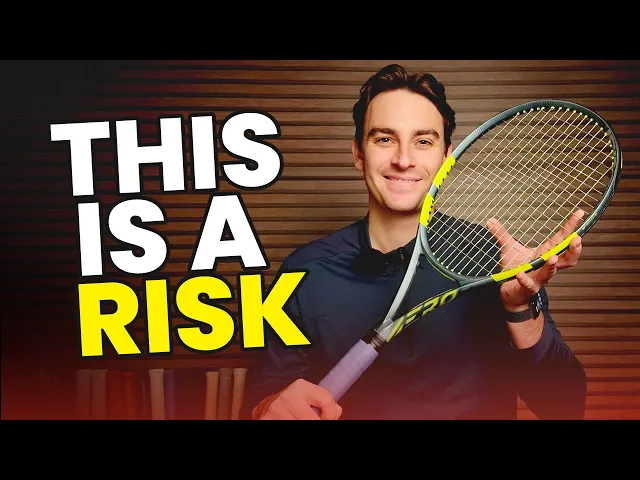
Hopefully you guys like that intro. I know it's a little bit tongue and cheek, but the truth is the previous A98 was one of the most popular rackets ever, and they did drastically change it here. I don't fully understand why.
I think maybe they weren't expecting the previous one to be that successful and this has been in the works for a really long time, so they didn't want to pivot back, but that's their call. And to be fair, we always have to give kudos to brands when they make an effort to change things. But changing a working formula can be a mistake.
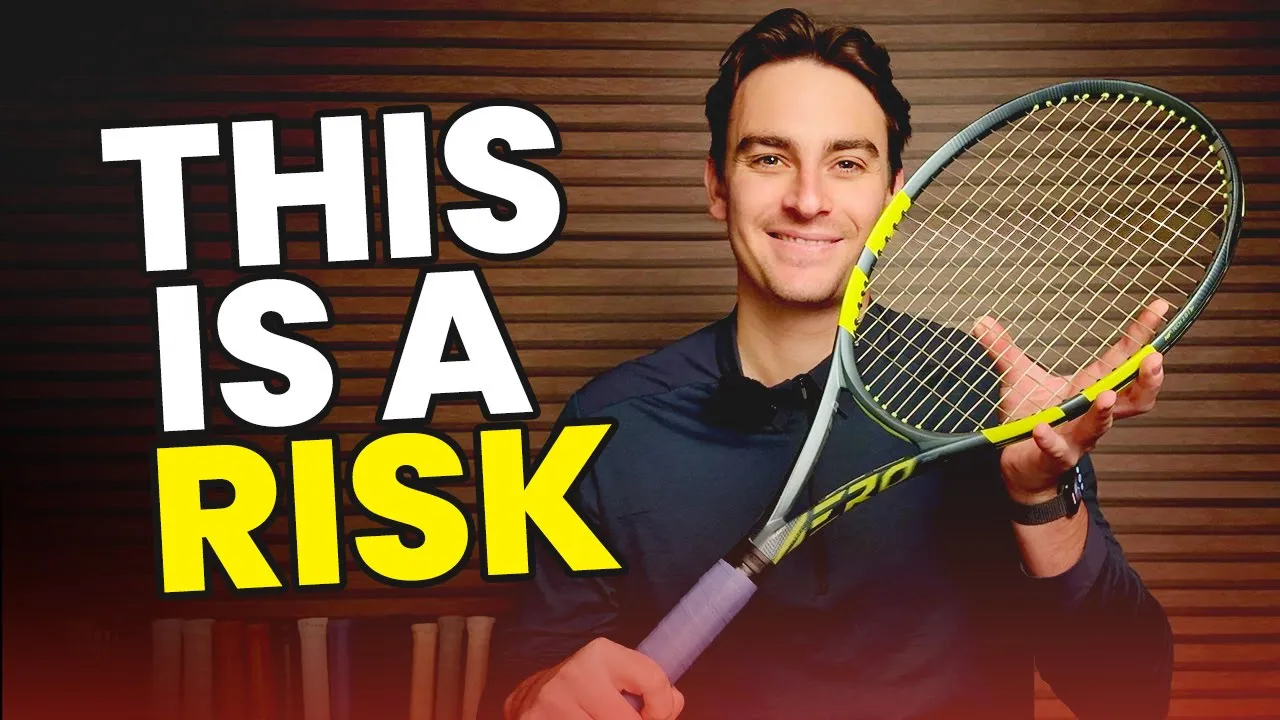
I'm not saying it is for this racket, but that is always the risk. Enough about that though, let's talk about this new A98. But before that, as usual, let me remind you that any of the rackets we talk about on this channel, you can check out on our website, racketsandrunners.
ca. Also, please remember to like the video, subscribe to the channel, follow me in the store on Instagram, and let me know in the comment section what you want me to cover next. So, what is all this change I'm making such a big deal about?
Well, you've probably seen it by now, but this new Aero98 has undergone a massive mold change. I've got two here, by the way. this blackout one that I've had for about a month and then this retail one that is identical just with a retail paint job.
And you can probably tell on camera just how different these are to this. This is the first time pretty much ever that Babalot has done a major mold change to their airline other than the Aeros Storms. And this applies to the 1002 by the way, which I will be reviewing at some point.
The simplest way to explain this mold change is by saying they ezoneified it, which is really, really funny and goes along with my theory that they started engineering this before they realized how popular the previous A98 was going to be. The Ezone is a racket that has been extremely successful for Yanx and really hasn't had a direct competitor, at least up until now. And I think Babalot probably saw that success and figured that would be a good direction to take the Airline.
But what makes it so funny is that Yonx with the new Vcore98 has clearly taken some inspiration from the outgoing Aero98, probably because they saw how popular it was and wanted a little piece of that pie. That racket is thicker, more powerful, and significantly less flexible in the throat. This is the exact opposite, which is why I'm saying I think they've clearly taken some inspiration from the Ezone.
What's interesting, though, is that you look at a spec sheet and Babalot is actually claiming the exact same beam thickness throughout. But it's not so much the thickness that matters. It's more so the amount of frame material in the throat.
It's just clearly less substantial here. To be honest, I think it looks thinner. But maybe that's just placebo based off of what I'm going to say about playability later.
But this throat looks more ezone than it does classic Arrow, the same throat that we've seen for over two decades now. Then you look at the yoke of the racket and it's a little bit straighter and the head comes down a little lower. They've stretched the face to make it less circular and more well, I'm not going to say it again.
Now, the actual beam design in the hoop does look very similar. That's one thing that hasn't really changed all that much, but overall, this is a completely new mold. And yes, it plays very differently to the previous one.
I will get into playability in a second, but first, let me finish up with the specs and technology in here. This is still a 305 g 98 square in racket with a 16x20 string pattern. Unfortunately, I think this demo came in a little bit under spec.
The swing weight is 280 unstrung, which is much lower than their claimed 295, but this pre-production model came in at 290. Then you've got the RA, which they claim is 70 unstrung. It's not.
Both of these came in at 63 strung, and this previous one that I tested 2 days ago was flexing at 65, again, strung. I'm starting to think their specs might be wrong on their website because they claim it's literally identical to the previous version, and that flex is obviously not identical. I mean, this was stiffer and it's been strung probably 15 times at this point.
And that beam thickness, again, they're claiming is the same. 21 mm in the upper hoop, 23 mm in the lower hoop, and 22 mm in the throat. So, yes, identical on paper, but again, it's a mold change just because the specs are the same.
That doesn't mean the flex pattern or the feel is going to be identical at all. Now, let's talk technology. And again, the major change here is going from this Aeromodular 3 design to the Aeromodular 4.
And apparently this rework throat is supposed to be 6% faster than this. I get that marginal increases are always a good idea, but there is something to be said about this classic pure arrow throat design that has lasted for so long without ever really feeling dated. And I will talk about how I think that affects swing speed and swing path.
The only other technology to note in here is NF2. 0 replacing the 1. 0 version that was in the previous one.
It's supposed to be better at filtering vibrations and enhancing mechanical strength. essentially meaning it makes the racket more stable. NF2 2.
0 was a minor but noticeable update in the Pure Drve. It made that racket a little more muted and a bit more solid. And this racket definitely feels different to the previous one.
Now NF2 2. 0 might have something to do with that, but most of it is down to the new mold. So let's start with feel.
Okay, so in this feel section, I'm going to talk about a number of things. how the racket flexes on contact, the actual feel and feedback that it provides, as well as the stability and sweet spot size. All of that is crucial to understanding how this racket plays compared to the previous one, as well as how it plays compared to some other modern players rackets like the Vcore98 and Ezone 98.
The most notable change here is how the racket flexes on contact. You feel it flexing significantly more in the throat. The previous 98 had a higher RA, so it was stiff.
But beyond that, the whole flex of the racket was rigid, very solid, and responsive. Here, you have more dwell time, and you feel the frame bending more. First of all, that makes it way more comfortable.
Not everyone had issues with discomfort on the previous A98, but of course, some people did. That was probably the number one criticism of that racket. Because this is flexier and provides more dwell time, it soaks up more of the brunt of the ball on contact and that makes it leaps and bounds more comfortable.
I still wouldn't say it's the most comfortable racket, but I don't think too many players will have issues. I used it with RPM blast and headlinks tour at 53 lbs and never had any problems. Now, to be honest, this flex pattern is a little bit reminiscent of the Ezone, but what I think this racket does much better than the current Ezone in terms of feel is the actual connection you have for the ball.
While NF2. 0 0 is more muted than 1. 0, it's still not very muted in the grand scheme of things.
So, while this racket is softer than the last one, I certainly wouldn't say it's mushy or has an ambiguous feel during ball pocketing. You do run that risk of making a racket mushy when you make it more flexible and you add dampening. And especially for Babalot, it's so important they don't do that because people associate their rackets with a more crisp, responsive feel.
I really wouldn't be too worried about that here. But do still understand that because of these updates, we're going from something with the previous Arrow that was very raw, firm, that had that explosive feel on contact to something more flexy, more chalky, but it still provides nice feedback. Now, which feel do I prefer?
Well, that's kind of a tough question. I'd say historically, I do prefer a more flexible feel like this, but a huge part of the allure of this racket was that instantaneous responsive feel. There is less of that now.
But I also said a bunch of times that as much as I appreciated the last A98, I could never mesh with it perfectly. And a big part of that was because I found it a little bit too punishing. So now let's talk forgiveness and sweet spot size.
Forgiveness. Forgiving probably forgivingness. In no way am I saying that the previous A98 had a small sweet spot.
In fact, for a 98, it was quite big thanks to that thicker arrow beam design, but it wasn't necessarily forgiving because of the thicker beam and the fact that it was quite raw and firm. It didn't have that forgiving feel that we associate with a lot of these rackets that have modern stabilization technologies. Essentially, what all these modern technologies do, whether it's vibration dampening mesh, auxic, and especially Wilson stable field, is that when you make contact offc center, the graphite still flexes to make those offc center hits more forgiving.
The previous A98 just didn't feel like that whatsoever. That's part of what made it so raw and responsive, but that's also why it wasn't forgiving outside the sweet spot and sometimes borderline jarring and uncomfortable. That's another massive change between these two rackets.
This new Aero98 is significantly more forgiving offc center because of the mold change and the dampening update and the more flexible soft feel that that creates. So that's kind of the trade-off here is you lose some of that raw feedback in exchange for a more forgiving string bed. And to be honest, it's not too surprising that they did that.
I was a little bit surprised by how popular this racket became. Not amongst big hitters, this racket is pretty much perfect for you guys. But for slightly lower level players, this is not what I would call an easy racket to use.
This is now a significantly more forgiving racket. And that's what a lot of brands are trying to do nowadays with their 98s. Now, there was another thing about this previous Aero98 that made it a little bit tougher to use, which I'll talk about now, and I'm going to tie it in with stability.
Part of what made this racket so stable and playable at a high level, despite the fact it only weighs 305 g, was that a lot of its mass is concentrated far up the frame, essentially making it play a little bit longer. They didn't do it like Yanx does with the Vcore or Head does with the boom by squaring off the upper hoop here. Instead, they just move the racket face to be about as far up the frame as possible.
If you look at where the yolk lies compared to a blade, for example, same head size, you can see it's a little bit farther up the frame. What moving the head so far up does is that it makes your point of contact a little bit higher. So, it's more stable and more powerful, but the drawback is that it swings a little slower.
So, it's not super easy to generate racket head speed. Now, of course, because of the aerodynamics here, it was still a relatively fast racket, but it was never something that I would call super whippy or super easy to bring quickly through contact, and that's a big part of why I struggled with it. I just found it felt a little long.
It's very important that they didn't completely go away from this on the new one. That would change the racket too much. But, like I mentioned, they did make the face a little bit more oval and brought the yolk down a little bit.
That along with this new throat, which is more aerodynamic, does make this whippier and a bit easier to swing fast, which goes along with what I was saying earlier about this racket being more forgiving. That said, in the grand scheme of things, this still has a fairly long swing path, but that also means that it keeps a lot of that signature stability that was on the last one. I do think that by softening it up and making it flex more in the throat, they sacrificed a little bit of that rock solid feel, but not to the point where I would say it's an issue and needs more customization or a higher swing weight than the last one did, especially because it's more forgiving off center.
That bigger sweet spot acts as perceived stability. So, on ground strokes, it's completely fine. The only area where I felt a slight drop off in stability was up at the neck.
That's where these modern layup texts really don't help all that much. What you need is mass, stiffness, and a responsive feel. It doesn't perform quite as well up at the net, but it's still very good.
So, I know that was a lot about stability, feel, flex, and all that, but it's super important here. The whole ball pocketing experience has changed a lot. So, now let's talk about how that affects performance in terms of power, spin, and control.
So, right off the bat, spin is definitely higher on this new Aero98. Spin was great on the previous one, don't get me wrong. It's an arrow, but it wasn't one of those super spin friendly rackets, especially compared to the 100.
You had way less easy spin modulation. You had to swing very fast and full to generate RPMs, and then it would generate a lot, but it didn't come easily, especially at lower swing speeds. That's where softening it up and extending that dwell time has really helped.
You feel the ball sinking into the strings more, and you can modulate your spin more effectively. If I want to hit a shorter spin shot where I'm not going full gas, this racket lets me do that. Whereas on the last A98, I struggled even compared to an Ezone or an Extreme Pro, for example.
And then, of course, because of this new throat being 6% faster or whatever, that helps you accelerate it through contact quicker to make it more whippy and in the end a bit more spin friendly and more easily spin friendly. And by the way, it is faster. I'm mocking the 6% thing a little bit, but it is definitely faster.
I'm just being facicious. Now, if you watched my Vcore review the other day, you'll know that I'm pretty much saying the opposite of what I said there. That racket got thicker, more responsive, and lost some easy spin.
This went in the other direction. This feels more like a spin racket. Now, honestly, the last Arrow, other than having the Arrow name, I didn't really think of it as a spin racket.
It was a solid, consistent, and extremely good all-around performer, but it makes sense that they would want to increase easy spin on an Aerrow branded racket. And in terms of topend spin, it's still incredible like it was on the last one. Don't worry about that.
Just because they made it more flexible doesn't mean it's losing anything there. And that's very important. The one thing I will say, and this is going back to swing speed with this new throat, and this is actually something I've been wanting to talk about for a while now.
I do find that these rackets that have these lowprofile throats supporting a thicker hoop almost create a slight disconnect between the two through your stroke. I don't struggle with this too much on the Ezone because it's so easy to swing fast, but with this racket, because it feels a little long, I do feel like I lose some control of the racket face through my swing. On the previous one, the throat matched the hoop a little better.
So, I had a very uniform swing path. This feels super fast through the throat. And then because that's going so fast and the hoop is a little clunkier, that's where I lose control.
It's definitely a tough sensation to describe, and I'm sure some people like this because it's fast through the throat and that extra mass in the hoop does help to produce a heavier ball, but I do struggle with it a little bit. You can even see with some of my footage here, I'll wind up for a forehand and just completely give up on wrist lag and hitting with the right technique and end up sort of pushing the ball back in. Honestly, this is probably a non-issue, especially for better players who won't find this racket slow in any way.
But it is important to understand because it is different to the previous one in that regard. Okay. So, was control good on the previous A98?
Yes, absolutely. It was super consistent, rock solid, and stable. And that's important because that's what makes a racket confidenceinducing.
Now, in terms of traditional control or soft control, zilch, nada, it was not that kind of racket in any way. With the updates here, especially the new throat, that is significantly better. The racket holds onto the ball for longer, which means you have more time to grab it and place it where you want.
This combination of being sort of a spin racket, power racket, but also providing that grabby sensation of a control racket is what's made the Ezone so popular over the years. And that's why I said it hasn't really had a true competitor up until now. That's what this does so much better than the previous one is give you an element of soft control if you want to vary up your shot selection.
And this actually reminds me more of the DR98 than it does the current Ezone for a couple of reasons. Number one is that this is a longer feeling racket than the current Ezone. They've done a lot of micro adjustments to the Ezones mold over the years to essentially make it feel shorter, whippier, and more forgiving.
This swings more like the DR did. And because it's also less muted than the current Ezone, its feedback is a little closer to the DR. Stiffer, but more feedback than the VDM Ezone.
So that along with the fact it plays long like this, it is a bit similar. Now, of course, control still isn't the best thing in the world here. It has a thick hoop and a really open string bed, so it's definitely not a control racket by any stretch of the imagination, but I don't think anyone was expecting that.
The one little criticism I have for control here compared to the previous one is consistency. I do think you sacrifice a little bit of that rock solid laser-like feel of the previous one in exchange for that softer, more guidy control. For me, that was a bit of an enigma on the previous A98.
And a big part of what made it so special is that despite the fact it had a thick non-constant beam, it just never sprayed the ball. It was consistent even when you flattened it out. Now, maybe that's because I love stiff rackets.
I just find them very responsive, but I never found the previous arrow to be launchy at all. I do have some issues with inconsistency here because it holds onto the ball longer and it's chalkier. It can feel a little bit sticky at times, so I'm more comfortable hitting big spin shots than flattening it out, but that is very nitpicky.
This still has a clean feel, especially compared to some other softer modern rackets, but I didn't find it quite as consistent as the previous A98, or at least not as consistent in the sweet spot. But because this has a more forgiving feel outside the sweet spot, you will hit a more consistent ball when you make contact off center. And that's super important because we can't all make perfect contact every time.
So, more soft control, a more forgiving controlled feel, less consistency. That's the small trade-off here in the control game. Think of it sort of like the difference between the current blade and the current Pro Staff.
And by the way, we do have a new Pro Staff this year. I mean, look at this thing. It is absolutely beautiful.
It is just a paint job. No new tech or anything, but if you want me to review it, I absolutely want to spend some time on court with this thing. Power is another area where there has been a noticeable change here, and it starts with what I was saying earlier about this frame being more forgiving.
The big thing is that you get more consistent easy depth here because it's more forgiving outside the sweet spot, but even in the sweet spot, it pushes the ball a little bit deeper. The launch angle is a little bit higher. I'm not sure exactly why.
The string bed does look pretty much the same in terms of density, but I did notice that early on that it was launching the ball a little higher. So, that's good for generating easy power. Now, yes, that launch angle is part of why I don't find it quite as consistent as the previous one, but that's again more for flat shots.
As long as you focus on spinning it, I really don't think you'll have issues with controlling the launch here. Top end power is a bit more confusing. And to be honest, I'm still not quite sure which one generates more.
But the good news is they both generate a lot. On one hand, because this new arrow is faster, you can generate more racket head speed on big shots, which does help you generate more power. But on the other hand, it is softer, and that means the ball doesn't feel as explosive coming off the strings.
One of the big things with these more flexible throats is that the harder you hit, the more they flex, the more of the ball's energy they soak up, which does technically mean less power. That's exactly what I was saying with the new Vcore comparing it to the previous one, is that because it's thicker, especially in the throat, it has a more direct transfer of power into the ball. It's basically the opposite here, but it's still very powerful because of its design with this higher sweet spot providing really good leverage over the ball.
I do just feel a little bit less of that oomph sensation when I go big compared to the previous one that just powered right through the ball, but it's very minimal. So, when you're rallying or hitting with margin and not necessarily going for a winner, this new one produces a heavier ball. But when you do go for a point ending shot, it is a little bit less powerful.
Now, from an enjoyment perspective, and that is important because the way a racket feels does affect your shot selection, this doesn't feel as satisfying on big shots. There was just something so nice about the rigid responsive feel that the previous A98 had when hitting with maximum power. And that just isn't quite the same anymore.
But that is a pretty normal trade-off when you soften up a racket to give it a bit more grab and control. So, it's just different. And that isn't really performance-based.
It's really just subjective. But I did figure I'd talk about it. So, one thing I want to say is that yes, this racket is quite different to the previous one, but it still feels like what an Aero98 should be.
It's very spin friendly, very solid. It's got lots of power, and that shift is just towards a slightly softer and more forgiving feel rather than that raw explosive playability of the previous one. I do think if you're using the last A98 and you want to switch to this one, I would watch as many reviews as possible, get as many opinions on it as you can, and of course, if possible, demo it because yes, it is different.
But like I said, the A98 DNA is still there. Now, more specifically about how it shifted for play style or player type. This is a more margin oriented racket.
Now, it's not quite as satisfying for big shots, but it performs better for softer shots, whether that's with margin spin shots or control shots where you're not swinging full speed. It is still excellent for aggressive play, though. I want to make that clear.
Just because it's maybe not quite as good as it was, doesn't mean it's still not one of the very best rackets for that. The last one was just a bit of a unicorn for that style of play. And I do think I need to compare this directly to the Eone 98 at some point, but that's the big difference between the two rackets.
The Eone 98 is better for rally balls. This still has bigger hitting potential. It's more solid and it provides significantly more leverage over the ball for power and spin.
So, it lies somewhere between the Ezone and the previous Arrow for that style of play. Now, does this update make sense? For me personally, yes.
Like I said, I had a huge appreciation for the previous A98, but I couldn't mesh with that racket on a consistent basis. The big problem I had was hitting the sweet spot consistently with a fast and full stroke. It was just a bit too demanding.
And that's exactly what's changed here. It's easier to hit a quality ball with this racket for me for those two reasons. A bigger sweet spot and a quicker overall swing speed.
And that's clearly what Babalot was trying to achieve. The only problem is that so many players at different levels seem to be fine with the previous A98. But if you did struggle with that racket like I did, this could be the perfect update for you.
And again, I can't stress how much more comfortable this racket is than the previous one. So, if that was a problem, again, definitely give this a shot. Now, whether or not I'd consider switching to this is kind of funny because I obviously just switched to the Ezone.
I have also said a lot of good things about the previous A98, and this is kind of a combination of the two. The thing is, it's still not quite as easy as the Ezone, and that's the main reason I switched to that racket. So, if I did want to switch to this because of its higher hitting potential, I'd need to spend a lot more time on court with it.
Now, in terms of my prediction of how popular this racket's going to be, well, if the previous one hadn't been so incredibly wellreceived, I would have said yes, this is the perfect change. But because it was, and because this is different, I guess we'll see. I really risked it all with that prediction there.
But like I said, it's definitely more accessible for me and I think that'll be the case for a lot of players. So, yes, I think it will be a very popular racket. Now, I have briefly hit the 100 and I have to say I loved it.
So, I'll get a review out as soon as possible. But with that said, that is going to be the end of this review. Thank you so much for watching and remember if you want to demo the brand new Aero98 you can come visit us in store or if you want to buy it you can go online at racketsandrunners.
ca.