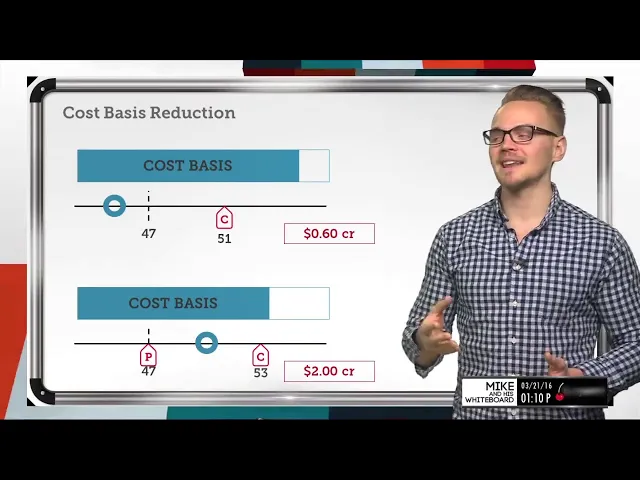
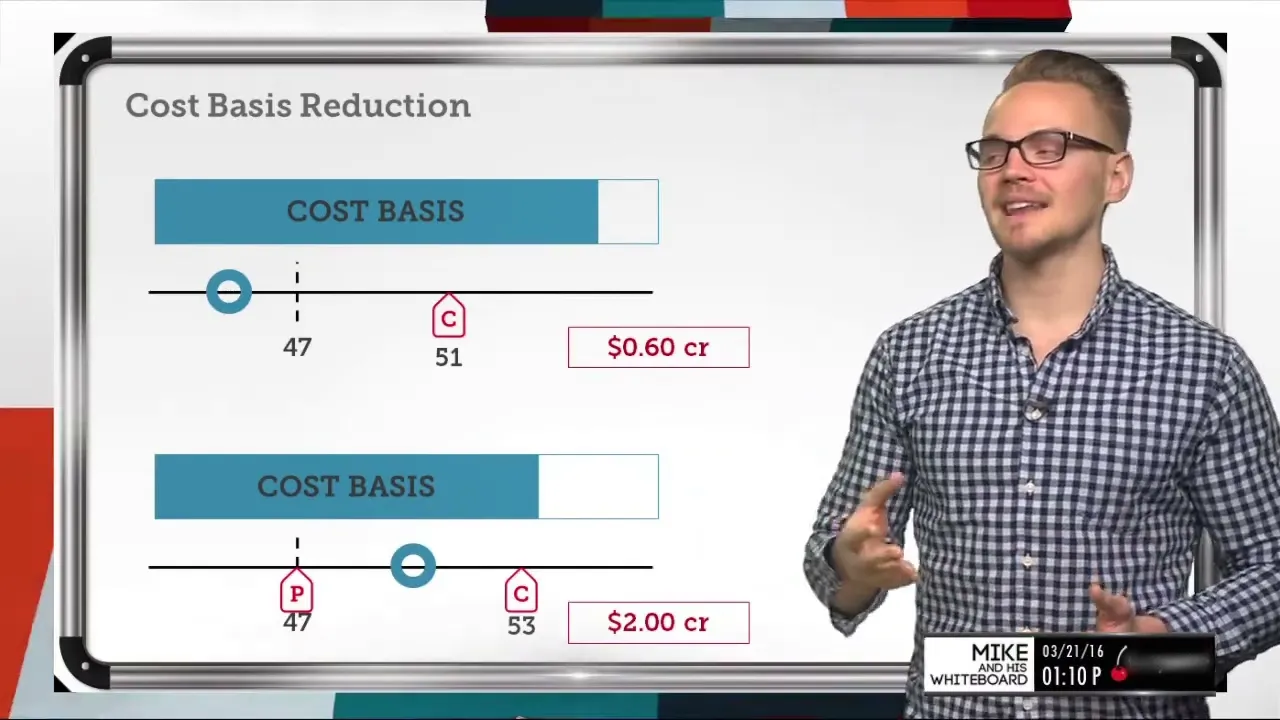
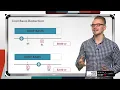
[Music] hey everyone welcome back to the show thanks for tuning in my name is mike this is my whiteboard hopefully everyone had a great weekend and today we're going to ease back into it we're going to talk about cost basis reduction so it's a a term that you hear all the time on tape even on dough when you're looking at follow trades people are talking about reducing their cost basis so today we're going to talk about just the theory behind that and how that plays into options trading the way we trade options at so there's a few things that i like to consider when i'm thinking about cost basis reduction and we'll get to those on the very first slide here so the first three things that i think are key to keep in mind when thinking of cost basis reduction are listed here so why should we think this way first and foremost is market uncertainty i never know what's going to happen in the market yes i can have an assumption but not all the time i'm going to be correct and even if i am correct for certain strategies i need to be correct in a certain amount of time et cetera et cetera et cetera so when we're looking at cost basis reduction the key is market uncertainty and the fact that we don't have a certain team we're uncertain of what might happen in the market cost basis reduction is something that we can use to offset that secondly when we're looking at cost basis reduction and just reducing our cost of trade entry we're inherently increasing our probability of profit and i'll start to talk about that a little bit on the next few slides here when we look at some examples of how we can reduce our cost basis continually which brings me to my last statement here and the fact that it's a sustainable mindset if i'm continually reducing my cost basis i'm able to continually put myself in an increased probability of profit scenario and i'm continually able to take this market uncertainty and put myself in a better and better position the lower i can reduce my cost basis the better if i can eventually own 100 shares of stock for a cost basis of zero because i've collected so much premium over time and i'm able to offset that cost then that puts me in a fantastic scenario to be profitable as you can imagine so when we're talking about cost basis we're really comparing one trade to another but specifically i like to start with comparing a short put or any other strategy that involves collecting premium to just buying shares outright so that's what we're going to start with on the next slide we're going to be looking at just buying shares outright and we're going to look at the cost basis associated with that and then we're going to compare it to a premium selling strategy and we'll talk about the benefits of each so we've got 100 shares of stock here and if we're looking at a stock trading at 50 that's going to give us a cost basis of five thousand dollars as you can see this cost basis bar is completely filled in because of the fact that if i'm just going out into the market and i'm buying shares i'm not giving myself any leeway and i'm not reducing my cost basis in any way it's just a traditional transaction so i'm taking those five thousand dollars i'm going out i'm buying one hundred shares of stock at a stock that's trading at fifty dollars so i don't have any benefit and i don't have any con when it comes to the cost basis nothing's hurting me nothing's helping me it just is what it is when i'm just buying shares of stock so what i can do instead is as you know one popular strategy on to get into stock or get long stock by the way of a short put so what we can do is we can sell a put instead of just buying the shares out right and we can collect a credit in doing so and reduce our cost basis overall so if we compare these two strategies this strategy up here my cost basis is going to be five thousand dollars and that's simply because of the fact that i'm just going out and buying 100 shares at fifty dollars which equates to five thousand dollars here though my cost basis is a little bit different so i've got two different scenarios that can happen number one is if my shares are put to me then my cost basis is going to be forty six hundred dollars now how did i get calculate that so quickly well really all i need to know is that if my stock price goes below my strike price in which case my strike price is 47 in this example then that would mean that i would be put shares at 47 or that would give me a cost basis of 4 700 but because i'm selling this put for one dollar credit i can use that credit to reduce my cost basis even further so if i put the shares at 47 because if i'm selling a put i'm selling the right for someone else to sell their shares to me and i'm able to use that one dollar credit to further reduce my cost basis then that would bring my cost basis down to 4 600. so now if you compare the two strategies and compare what would happen in terms of p l if i were to have purchased shares here at 50 and the stock price went down to 46 i would be at a loss of 400 on this trade whereas if i were to have just sold that put at 47 and collected a dollar in doing so and the stock price went down to 46 i would have a p l of zero i would be breaking even if that same exact move happened when i compare these two strategies now of course if i were to have purchased shares outright and the stock price went up i would have unlimited upside but in selling premium and giving ourselves the cost basis reduction effect and giving ourselves a higher probability of success in this strategy here of course i can only profit to the tune of 100 because i'm selling premium and i'm selling this put and when i'm selling that put naked the most profitable position is when i'm going to be able to have that put expire worthless which would let me collect and keep that premium and the position would just disappear but when we're taking away the home run and we're effectively reducing our max profit to increase our probability of profit then this strategy is the one i would go with when i'm looking at cost basis but let's say that i did go ahead and choose this strategy because of the things we just talked about but i'm looking for different ways to further reduce my cost basis down the road so on the next slide here we're going to look at another thing that we can do with puts in this specific example so what happens if the stock price actually does move down well if i know that i originally corrected collected a credit here and the stock price is well below my strike price so let's say it drops down to 46 like we said well what i can do is allow myself to be put that stock so now i would own the shares at 47 which is why i've got this dotted line here so now what can i do well if i'm long 100 shares i can sell a call against those shares and i can take on no additional risk if i already own the shares and i sell a call the brokerage does not require any additional margin on that trade because i already own the shares and i would be selling a call and it would create a covered call scenario it's just it's designed and called a covered call because of the fact that i'm long those shares and i'm not selling a naked call because i'm long those shares it is considered to be a covered call so i can just sell premium here cap my upside again sell it for another 60 cents and reduce my cost basis even further so let's say in this specific specific example i'm selling a 51 call so i went a dollar higher than where the stock was originally trading and i'm able to collect a pretty decent credit for selling a call this far out of the money so now the best case scenario is number one if the stock price does in fact move back up because i'm going to be able to see profit on that position where i'm long stock down here at 47 even though my current cost basis is at 46 and i'm able to collect additional premiums so even if the stock price doesn't move at all my cost basis at expiration if i'm able to keep this 60 cents of credit is going to move from 46 down to 45. 40 i'm just taking that credit and subtracting it even more so as you can see the more and more credit i collect against my shares here it's going to put me in a better scenario and reduce my cost basis over time which basically allows me to profit even if the stock price doesn't move so now if we compare the original strategy of buying 100 shares of stock at the 50 strike price what do we have well if the stock price does end up coming back up to 50 and i can take into consideration that i've collected this additional credit here on my original trade if i would have just purchased those shares outright i would be breaking even i would have purchased those shares at 50 i would have seen it go down to 46 and then come back up to 50.
so i would have seen losses and i would have recouped those losses just by doing nothing but what would i be at in this scenario well if my no if i know that my cost basis is actually down to 45. 40 and the stock price comes back up to 50 i would take the difference there of 4. 60 or four hundred and sixty dollars and that would be my profit so in a situation where the stock price was at 50 went all the way down to 46 and came back up if i were to have chosen the strategy that reduced my cost basis and gave me a better situation from the get-go i would actually be profitable compared to just buying shares outright so this is why we harp on cost basis reduction so much but i'm going to show you another step that we can take even if this position goes up back here so on the next side we're going to be looking at what we can do if maybe implied volatility is increased a little bit so let's say the stock price did come back up to 50.
so as you know in the previous example this was our last strategy that we deployed we sold a call against our shares for 60 cents of credit but now i'm really liking what this stock is doing i like that it's kind of moving back and forth in this small range and i want to get long even more shares so what's a situation that i can use to go ahead and do that well maybe one thing would be to sell a strangle so i'm already long shares at 47 and what i can do is instead of instead of just selling another put let's say that my 51 call expired completely worthless because we stated that the stock price went up to 50. so let's say this call expired worthless and we were able to keep that 60 cents of credit well now what can i do i'm long 100 shares i've got no options there so but i want to continue to reduce my cost basis and i want to potentially get long 100 more shares so for me maybe i would choose something like laying on a strangle on top of those shares that i already own so what might it look like well maybe i'll sell another put on my 47 strike and let's say i'll move my call up just a little bit to keep an equidistant zone of profitability for this stock price to move so let's say i sell another put on the 47 strike and i sell a call on the 53 strike and i'm able to collect a two dollar credit now because as i said let's say implied volatility is increased which basically reflects the option prices so if i know implied volatility has increased that must mean that the option prices are a lot more they have a lot more premium than they would have in the prior examples so let's say i'm able to collect a whopping two dollars for this now so best case scenario is that the stock price stays somewhere in between this range since i'm already long the stock i would love it if the stock price went all the way up to 53. if it didn't breach 53 both of these options would expire worthless since i'm selling just out of the money options here against my long shares i would be able to keep that two dollar credit and reduce my cost basis even further but even if the stock price goes back down i'm able to get long another 100 shares i'm not just buying shares out right in the market and my cost basis is going to continually drop and be dropped as i continue to sell premium so as you can see with these bars here we started with the stock price being at 50 and we were looking at just buying shares out right in the market the cost basis bar was completely full but instead of going that route we decided to use options as a way to effectively reduce our cost basis and increase our probability of success so the more we sell premium against our options and take on a little more risk and reduce our max profit overall and take away the unlimited profitability we're able to reduce our cost basis lower and lower and lower if i'm able to do this over and over and i'm able to maneuver these strikes successfully and continually reduce my cost basis i can effectively own shares with cost basis close to zero of course it would take a long time to do that but that would be the goal for me the goal is to own shares outright for free rather than purchasing them out in the market and we can do that by using strategies like this which increase our probability of success over time the lower i can move this bar the better off i'm going to be because that allows me to be profitable in situations of non-movement especially when we're talking about options or like the original example where we had the stock price at 50 drop down 46 and come back up if i were to purchase shares at 50 i would be at breakeven a p l of zero but since i looked at the option strategies where i would have gotten long at a much lower price that would have actually given me a profit so let's wrap all this together with some takeaways here so i compiled all the information for these trades and in just a few trades we would have been able to reduce our basis by three dollars and sixty cents or three hundred and sixty dollars so in just a couple of trades i would have been able to collect 360 dollars just by pretty much doing nothing i'm just holding that position holding the risk along with the shares that i was put and i was able to reduce my basis by three dollars and sixty cents however if i was put all the shares i would be able to be long 200 shares at 45 20 instead of just buying shares outright in the market of 50 so i'm actually reducing my cost basis much lower here i'm collecting 360 dollars but because i have that the ability and benefit of strike selection my cost basis is actually going to be much lower because i was selling out of the money options i wasn't selling at the money options so here i would be able to be long shares at 200 because if you remember i was long 100 shares at 46 then i sold another call against it that brought it down to 45.