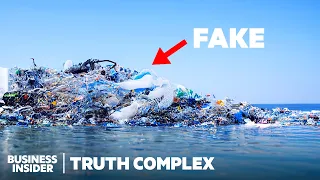
in 2019 American Explorer Victor vovo descended further into the ocean than anyone in history he took his submarine down into the Mariana Trench to the Challenger Deep the deepest place on Earth 10.9 km below the surface three km further from sea level than the peak of Mount Everest he saw species of crustation previously unknown to science brightly colored outcrops and then in possibly the most isolated place on Earth he saw a plastic balloon showing characters from Disney's Frozen and next to it a heavyduty plastic bucket the remains of plastic bags containers and packaging man-made Plastics
have been around since 1855 and have been created in ever greater numbers last year it's estimated that over 400 million tons of plastic were created and it's because plastic is a Wonder material it's lightweight it's flexible durable doesn't break down over time so it's perfect for things like packaging and like a million other things but while useful once used plastic sticks around it takes a long time to break down a plastic bottle for example like this made out of pet Coca-Cola make 200,000 of these a minute that's a million every 5 minutes will take 500
years to break down a polyethylene bag like this will take twice that long and at the moment we are adding 50 kg of durable plastic to the the environment per person on Earth per year 50 kilos is equivalent to 2,500 Coke bottles for every person on Earth every year and if it ends up in a river or an ocean it doesn't disappear for half a millennium if Henry VII littered one of these things it would still be around it's how we end up with scenes like this and this and this the buildup of our non-degradable
Plastics is causing an obvious environmental problem but not just an environmental problem those Plastics leech tiny particulates called microplastics that have been shown to build up in various places including our agricultural soil where they leech chemicals like cadmium into our food all the microplastics themselves just end up in our food especially in root vegetables like carrots and over 4,200 toxic chemicals of concern have been identified in Plastics that then build up in biological systems I feel like I shouldn't have to tell you this but it's not good for you to eat plastic scientists have defined
nine planetary boundaries these are ways that we impact our environment with a certain level of interaction being considered sustainable activities crossing a planetary boundary however results in degradation of the planet these boundaries range from climate change to fresh water system changes to uh atmospheric Aerosoles to biogeochemistry and looking at this you'd expect Plastics to interfere with some of them you're probably looking at biospheric Integrity biodiversity biogeochemical flows through leeching into the soil and freshwater changes in rivers and yes Plastics have been shown to interfere with all of those boundaries but not just those boundaries here
are all the areas where Plastics have been shown to contribute to the crossing of planetary boundaries all of them when we think of plastic pollution we tend to limit ourselves to thinking of microplastics in our food plastic bags in our Rivers where plastic ends up but the truth is Plastics have environmental impacts at every stage of their life cycle the overwhelming majority of plastics are made from fossil fuels especially oil and so as well as propping up the fossil fuel industry both the extraction of their raw material and their Manufacturing processes are carbon intense in
fact in 2019 plastic production accounted for over 5% of all greenhouse gas emissions then once Plastics enter the environment either through deliberate use or as waste they interfere with biological and chemical processes change the reflectivity of the earth directly and through microplastics interfering with cloud formation Al to the drainage of freshwater systems transport pathogens and slow Marine carbon sinks to name just a few impacts and these impacts are only going to grow between the year 2000 and 2019 Global plastic production doubled and it's expected to double or even triple Again by 2050 this is an
enormous environmental problem probably second only to carbon emissions causing climate change and while there have been efforts to date to limit plastic pollution clearly they haven't been enough consumers have been encouraged to buy nonplastic Alternatives or to reuse their plastic items or recycle them you may have been wondering what about plastic recycling this whole time well what percentage of plastics globally do you think are recycled like 50% 25% come up with a number in your head cuz the answer is 9% half of plastics globally end up in landfill 20% are incinerated contributing to atmospheric pollution
and a little over % are just lost to the environment in rivers and oceans though that varies pretty massively by region Solutions so far have focused on individuals changing their behaviors and has assumed that the market will price the environmental impact of plastics into their products and that's clearly not happened the problem has got much worse but next week as of the time of this video coming out all of that might just change next week in Busan South Korea the intergovernmental negotiating Committee created by the UN environment assembly is meeting to conclude negotiations on an
international legally binding treaty on plastic pollution this work started 2 years ago when in Nairobi the UN environment program passed a resolution to negotiate this treaty and so far there have been four rounds of negotiations with Busan set to be the grand finale this is the big moment for the Plastics crisis this tree has been described as the most important piece of environmental legislation since the Paris agreement for climate change because we know that these International environmental agreements can work look at the ozone layer for much of the 20th century the Earth's ozone layer our
planet's fueled against ultraviolet radiation was being degraded by chemicals like cfc's and hfc's that were commonly used in aerosol cans and Refrigeration units but the Montreal protocol a UN treaty signed in 1987 phased out the use of these chemicals and since then the ozone layer has been steadily recovering by the late 21st century it will probably be back where it used to be the treaty prevented a Global Environmental disaster actually more than one I made a video about its incredible climate impact as well also in the mid 20th century it was realized that an additive
to petrol Tetra lead was causing lead poisoning in children so first at National levels and then internationally led by the United Nations leaded petrol was phased out doing so it's been estimated has saved over a million premature deaths a year increased Children's Health and save the global economy some $2.5 trillion dollar in both of those cases and there are others we could have looked at such as industrial sulfate emissions causing acid rain it was legislation that made the difference companies were unwilling to change on their own because it would cut into their profits and they
resisted the adoption of policies that forced them to change but those policies were enacted and change those companies did and the associated environmental problems were solved that's what's at stake in Busan a real solution to the Plastics crisis so what's being considered well at the first four rounds of negotiations nothing concrete has been agreed but on the one hand you have the high ambition Coalition of countries led by Rwanda and Norway who have been pushing for a treaty that intervenes at every stage in the life cycle of plastic from manufactur to disposal and Randa has
also tabled with Peru a 40x40 proposal which would see global plastic production cut by 40% by 2040 on the other hand the global Coalition for plastic sustainability created by countries such as Russia Iran and Saudi Arabia all of whom produce significant amounts of petrochemicals that become Plastics have been trying to dilute and stall the treaty negotiations are going to come down to this so that first group as I mentioned once Sun interventions down here in the life cycle of plastics to prevent them from entering the environment improved waste management but think that the emphasis should
be put down here or should I say up here Upstream with manufacturers reducing the amount of plastics that we produce eliminating single-use Plastics and preventing certain chemicals from being used in any type of plastic the other group however don't want any restrictions being put on plastic production instead they think the emphasis should be put down here here on waste management and specifically want National voluntary measures to fight plastic pollution not Global measures the fight is between these two groups and where the treaty should intervene in the plastic life cycle environmental groups and scientists are extremely
clear about where they stand on this you cannot solve plastic pollution without massively cutting plastic production circularizing the plastic economy recycling EX exting Plastics improving Waste Management especially in the global South should absolutely be part of the solution but past experience has taught us that in order to fix an environmental problem like this you have to go to the source at the moment Plastics are so ubiquitous that even the most environmentally conscious consumer can't help but contribute to the problem Plastics and especially single-use Plastics are just everywhere consumer Behavior through recycling isn't going to fix
the problem reducing the amount of plastics produced and finding Alternatives not made from fossil fuels is the fundamental part of a real solution and recent experience with the Paris agreement has taught us that voluntary National contributions which is the case in that agreement can work but they're slow and they can allow countries to get away with doing basically nothing if this agreement is going to have real teeth it needs to impose a global winding down of plastic production as worked previously with cfc's with the Montreal protocol quite obviously though as in previous cases fossil fuel
producers plastic manufacturers and countries that host both will attempt to oppose this type of legislation they will almost certainly attempt to slow negotiations and muddy the waters and both in public and at the negotiations use their internal scientists to cast doubt on the idea that we should be reducing plastic production despite the plentiful evidence of how plastic are impacting our planet across the board they'll claim that there are no viable alternatives to Plastics and that they need more time to develop them just as companies that produced ozone destroying chemicals in the 80s claimed and were
proved wrong and we can't ignore the very long Shadow being cast on these negotiations by a pair of very small hands Donald Trump was reelected this year to serve as president of the United States in one of the Electoral decisions of all time and the United States happens to be the world's largest producer of plastic waste these negotiations are taking place while the Democrats are still in power and the state department has showed signals that they'd be willing to cut Plastics production but even if the US signs on to the treaty it will still need
to be ratified in the Senate by 2/3 majority which um I don't see happening so realistically I think we have to count the us out of this treaty for the time being hopefully in the future different leadership will be elected and they will then sign on to Whatever Gets agreed so it's imperative that we don't water down the ambition of the treaty and put the emphasis Downstream to try and satisfy the USA if this is going to work it needs to be ambitious and we must just hope that in the future the USA will sign
on to the treaty that's obviously far from ideal but I see this as the least worst option in fact here's what I hope the treaty ends up looking like I hope this treaty globally phases out overtime plastic manufacturing and that should be a global requirement not dependent on National commitments alongside that there should be some support mechanisms and financial instruments to support those countries currently dependent on plastic manufacturing allowing for some kind of just transition there should also be some support for the development of plastic Alternatives and as well as focusing on winding down plastic
production it should also have some Provisions for improved Waste Management especially Recycling and especially providing support for developing economies allowing them to build out Waste Management systems and then finally I hope there's some kind of provision for the clean up of existing plastic in the environment now dilution from this wish list is obviously going to happen but I cannot stress enough how important it is that this treaty does not focus on just waste management it needs to also wind down Global plastic production post on your socials about this either this video or any number of
references that I included in the description if there was ever a time to use your voice to try and improve the planet to try and keep microplastics out of your descendants it's now if we don't get this right we lose years if not decades in the fight to keep this planet livable to keep us within those planetary boundaries around the world there is a thin layer of rock known as the kpg boundary this layer of rock was laid down around 66 million years ago and contains an unusually high amount of idium idium is an element
very rarely found on Earth but is abundant in asteroids the KP boundary is geological evidence of the asteroid that killed the dinosaurs the idium in the asteroid was scattered all over the world and preserved a layer of rock that communicates an environmental catastrophe on a planetary scale if we don't tackle the Plastics CR crisis then we risk leaving behind our own geological layer but instead of one full of idium it'll be full of plastic a layer in the Earth's crust globally choked with the remains of plastic and maybe millions of years from now alien archaeologists
might land on Earth and find this strata this distribution of Petra chemicals all over the planet and they might wonder what happened was it perhaps connected to even a cause of the mass extinction event that they observed let's not make that our Legacy this topic really matters to me and I couldn't have made this video without the support of my patrons if you would like to support me making more videos but also get early access to videos get exclusive content every month and vote on a video topic a month then please consider signing up at
like all of these lovely people thank you so much for supporting my work with a special thanks to grince ker Daniel ker and Brian Richard thank you for supporting my work fingers crossed we get something with teeth out of Busan I will be reporting on it in my end of year climate recap if you're not subscribed please do drop a subscription to the channel to get notified when that goes out if you'd like to watch something else from me next then here's two videos I prepared earlier if you enjoyed this video please do the YouTube
pleasantries drop it a like and that just leaves me to say thank you again for watching I'll see you in the next one