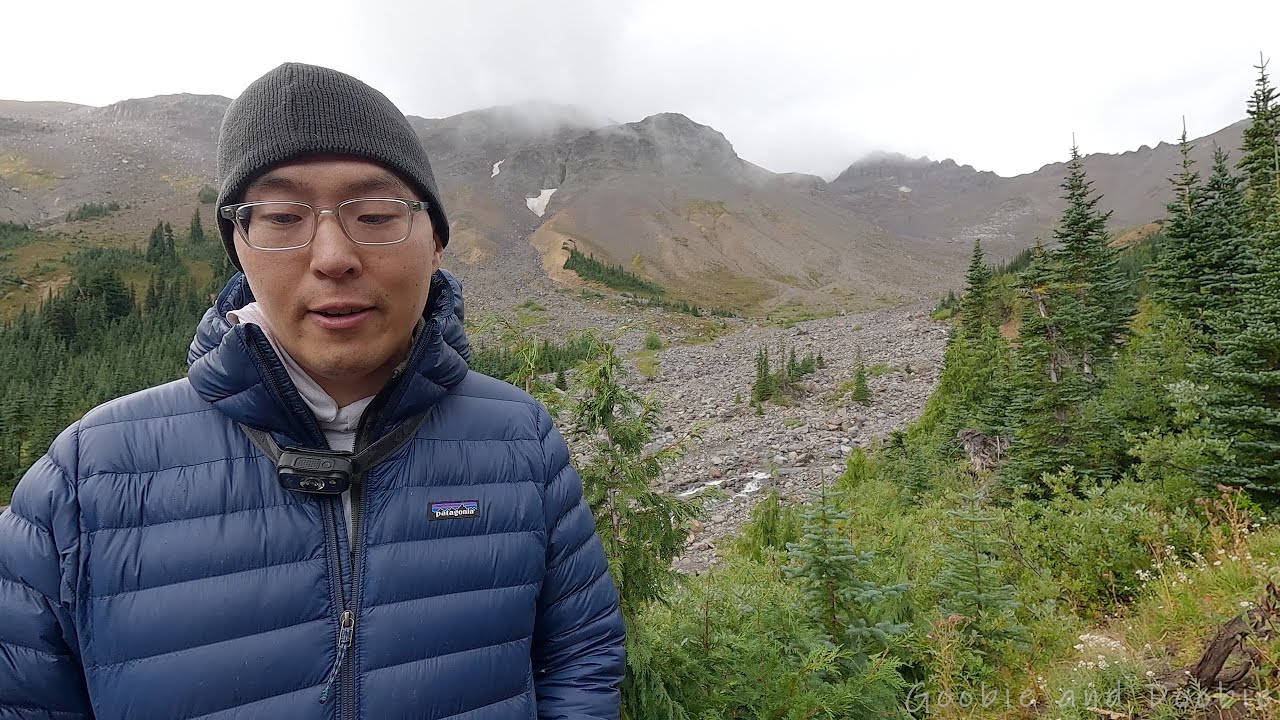
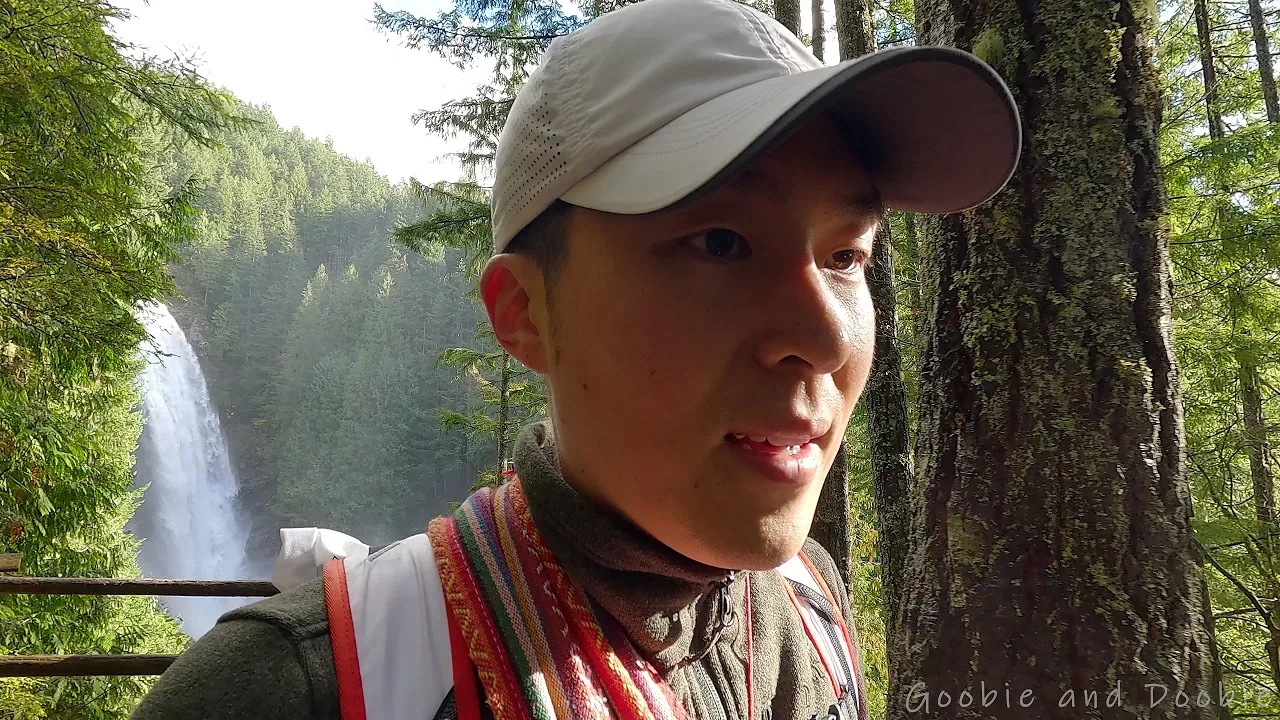
hello Dobie and I are out on our first mushroom hunting trip together and we're out uh we're out on the trail here's duie it's um it's a little bit chilly today so she's got her uh she's got her uh Pink vest on and we're at the start of the trail and I'm just trying to figure out what kind of trees we have because we are looking for mushrooms that like to hang out with Hemlock and fur and mad Madrones madon but madon uh is not that common around here it's more like Douglas fur and Hemlock
so I I'm looking at this and I'm still learning how to identify trees but I'm looking at this guy a lady this tree and these needles kind of go out to the sides and they're flat they're flat needles they're not very pointy either they've got two stripes on the bottom those are the those are the the mouth the stamata of the leaves that's how they breathe in uh CO2 and exhale oxygen that's how we we get our oxygen through these little tiny lines here the white lines they're actually lines of uh little tiny mouth openings
that's how the tree breathes and the way that the needles are attached to the stem looks like they come from Little Pigs rather than suction cups maybe we'll find a Douglas fur that has suction cup attachments uh but I think this is a hemlock so um I don't know if you can tell if I have my I if I take my iPhone out um actually I will I'll just take it out right now and I'll show you the peg like attachments all right so that was the closeup of what I believe is a Hemlock it's
okay girl it's okay and then we've got a bunch of salal baby girl okay it's okay okay uhoh here here you go oh there you go good girl got a bunch of salal here no leave it leave it good morning leave it yeah she she's aggressive yeah doie doie is not doie is not a nice doggy to other doggies um we've tried very hard we've taken her to aggression class but that's just who she is I I I've just come to accept it all right girl hey girl girl it's okay it's okay all right so
so we're I think we're in the right environment to find chantells um and so I'm GNA just keep my eye open and try to keep an eye on Dobie make sure she doesn't get in trouble cuz I worry with her aggressiveness that she'll try to pick a fight with a really big dog and get hurt or something but that hasn't happened that's why I always keep around a leash um it used to be more stressful than it is it's not that stressful anymore I just uh just keep her on a you know short Rel leash
and when other dogs come by I just keep her closer to me try to reassure her that nothing bad's going to happen but you know she gets all worked up that's okay I have a come to accept the way she is she's 7 years old I tried to help her but that's just the way she is so NBD no big deal all right girl let's go this way come here okay we are entering we're entering the top of the trail where you can see beautiful River beautiful River down there we're going to follow the river
trail uh we're going to follow the river trail up to a waterfall but in the meantime I'm going to be keeping my eye out on the side of the trail um for a clearing that maybe we could look and see if there are mushrooms and I'm going to try to pay attention to the types of trees that we're surrounded by too because we just got into a stand of uh Western red Cedars so that that's not going to help us find the mushrooms that we want um so so yeah this is kind of fun it's
kind of fun to uh actually it's a lot of fun I'm grateful to be alive with my dog walking in the forest and learning about plants and trees and mushrooms and where they grow uh this is a pretty this is a pretty area here can see this um I like this area ah this is also one of the first areas that duie and I made a video so if you look back to like maybe our second video I'm not sure if it was our second video one of our one of our first five videos we
came here to this very spot about 7 months ago 6 months ago and it is beautiful it's so pretty here's the water that's a very peaceful sound guys bring that all right let's see so this is Western red cedar it looks very different than the Hemlock and this one's not doing too hot you can see the orange and brown in the leaves but you can see it's more like a fan um and the Le the the leaves are not like straight needles they're like this plate braided appearance a braided flat appearance this is a western
red cedar um that one looks like it suffered a little bit this summer um ah for contrast we have this tree let's look at this all right this looks very similar to the tree the tree that we were looking at earlier two stripes on the needles the needles are flat kind of rounded tip they kind of go out well kind of outside to side yeah pretty much and uh looking for any cones I don't see any cones but yeah this is the kind of tree that I I that the mushrooms that I I want to
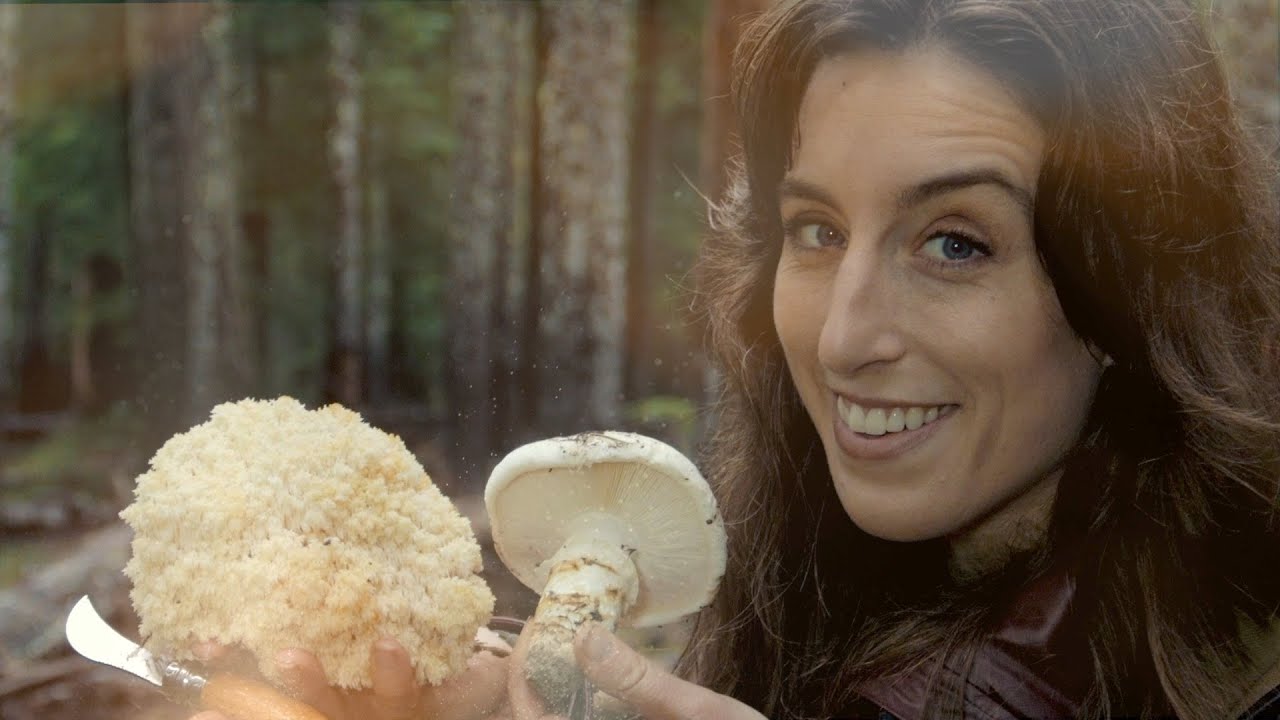
find like and you know there I I already see some mushrooms but they're they're not they're not the ones that um I'm looking for I'm looking for oh my gosh holy smokes that's a lot of mushrooms wow wonder what kind they are let's look underneath okay now they got gills um I don't know I don't know what they are I know that they're not the ones I'm looking for ones I'm looking for are white and they grow on the ground and they kind of have like a oh sorry girl you're a good girl um yeah
I'm oh wow holy smokes that's a lot of mushrooms too dang it looks like some creature was nibbling on this one so that one might actually be edible but I because mushrooms are so varied and some are incredibly toxic I mean deadly uh I'm sticking with mushrooms that are easy to identify and have very few lookalikes that are poisonous so that would be Chantell oyster mushrooms I could probably identify too pretty easily oh this is pretty oh being out here is is healing let's see how du's doing how you doing her Tails all the way
up all the way up and over her back so that that means she's having a good time and she seems very energetic now oyster mushrooms they grow on a different kind of tree they they grow on Alder trees that are dead so Shantal uh live symbiotically with living trees living conifers Hemlock and Douglas fur and they work together to make each other's lives better uh but oyster mushrooms um they just live on uh Alder trees that have died and fallen over and they decompose the dead tree trunk and so they don't live symbiotically with the
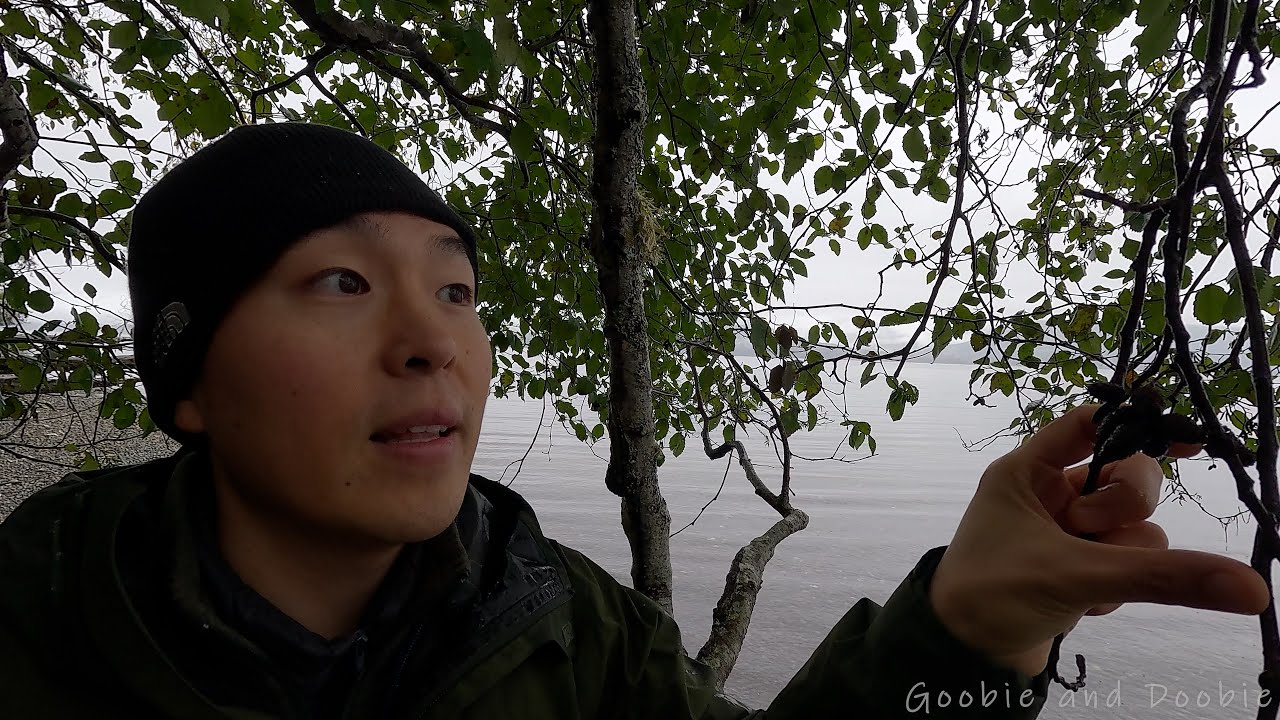
alter tree but they rely on alter trees after they die for their own life just uh many different ways of living um but I I haven't seen any Al I have not seen any Alder trees here uh just the conifers and the cedar trees um oh wow check this out I love seeing these little little ferns growing on the side of the tree and you can see the MS on on these guys a little bit more clearly the little red reddish orange yellowish dots those are the mouths of the F breathing the air on the
other side those two well so far we've seen a lot of mushrooms but not the kind we're looking for and I I'm just learning how to do this so I'm setting my expectations low I may not find any today but even if we don't find any today DB and I are outside together with the trees and all the life out here and the water so it's a win-win situation well oh oh the other thing is um I have this I'm going to show you how I learned how to use it it's a compass uh but
I I'll show you once we find a clearing and then I can uh I can um yeah okay I'll show you I'll show you in a little bit once we find a clearance all right duie actually found us a little bit of a clearing here the river is down that way we we just went up a steep embankment so I'm going to actually show how I learned how to use a compass so Compass here it's kind of hard to do one-handed but just do the best I can all right so let's see how am I
going to do this going to take this off my me show you all righty here's a compass so I I duie and I we came from that direction okay and then we um this is useful if you're going off Trail cuz it's very easy to get turned around so when you go off Trail you you look at the direction you're headed so we're not going to go too far this way but we're going to go that direction and you want to figure out what direction that is so that you can come back the opposite direction
when once you you've gone that way and you've done whatever you want to do like find a mushroom or or you you tried to find a mushroom and you couldn't so that's the direction we want to go and you got to pick a point like there's a stump over there right above where the compass is okay so that's the direction I want to head now we have to figure out what direction that is so um the red needle here the red needle is north magnetic north and so I just turned the uh I turned the
dial until the red line is matched with North and I'm still pointed in the direction I want to go and you can you can uh close the lid and then use the uh the mirror in there to aim and there's a little hole there a little hole peep hole you can aim it towards the stump and then use the mirror to line up the outliner red with the actual red needle so so here I'll show you so you can see the outline of the red needle I'm going to actually I'm aimed at wherever I want
to go and I'm going to rotate this until the red outline surrounds the red needle cuz the red needle is North now now I know I look here and I know that that heading is 2 14° about that's what it says here 214° so that's the direction I'm headed as long as I keep heading that way now say I get get there and I want to turn back all I got to do is pull out my compass and then uh subtract uh 180° from that so we'll just make it easy and say this was 210°
okay uh so minus 180 is 30° cuz there's 180 is the opposite end of the circle so actually it's easier to just look here and say oh the opposite is 30° it's opposite direction that's where I came from and so say I'll standing say say I wanted to turn around now and I wanted to figure out what direction I came in on all you got to do is change this to the 30° so change it to 30 30° and I got to line up the red line up the red uh arrow with outline and then
look and look through the peole like oh that direction is 30° so there's a bridge there that's the trail yeah this is how this is how I'm going to keep from getting lost this one's kind of cool too cuz it's got an incline uh an incline uh measurer um you turn it over and then you can I'm going to try to get in the shade so that there not so much glare there we go um you line up does a little red line you can line up the slope and then The Black Arrow says that
that slope is is 50° uh no 40° now that's that's useful um if the slope was covered in snow because uh Avalanche safety classes say that Avalanches are more prone to happen I think between 30° and 50 or 45 I I did my Avalanche safety online course over the winter and I don't remember the exact numbers but I think it's between 30 degrees and 45 degrees um you're at very high risk of avalanche so um that's that's a useful tool to uh know if you're walking into a dangerous area now we came up here looking
for mushrooms we found some Coral mushroom can't eat those this is a huckleberry Bush that's shed its leaves uh you can tell us a huckleberry Bush because of the green stems uh but there's more coral mushrooms there we're going to walk in a little bit farther see if we can see what trees are we under we are under a shoot we're under Western red cedar so we're not going to really find the mushrooms we're looking for here uh we'll just walk just a tiny bit and then see uh but one thing I learned from mushroom
weekend is don't spend too much time if you don't see what you're looking for then go somewhere else cuz this wherever you are is not the right habitat for what you're looking for these are these are cedar cedar treats and I don't see I don't see any mushrooms here and sometimes they're underneath this kind of Mossy stuff but I don't don't see anything all right we're going to keep walking but that that's a little tip for the uh for how to use a compass duie and I ventured off Trail just a little bit and we
found these large mushrooms here but they're not the ones we're looking for uh this one is gild and it's got a sticky top to it it's also gild I think it's a different mushroom than that one but it it doesn't have the folds of a chanto so we did find some but not the ones we're looking for so we're going to we're going to leave those alone uh let them spread their spores on the soil and keep growing and then we are going to keep looking um if we were Hunter gatherers today uh we would
have expended some energy so far for zero calories of gathered food this is uh well first of all we don't have much experience doing this but it's it's difficult if you don't have any experience to try to gather the food that you need these look yummy I don't know what they are let's see what this one someone someone picked this one already um really cute color on top like a pinkish orange peach peach color let's see what it smells like H can't can't discern a particular smell but they're they're really cute yeah so hunter gatherer
life man you need to know a lot of stuff you got to be able to recognize patterns man if if uh if all of us had to live like this boy I I don't think we'd fa very well especially with lives that we live all cooped up in a office building or working from home on a computer station all day this this this is um very different kind of life but this is the kind of life that I want to learn more about so that's why I'm out here okay I'll I'll uh I'll fire up
the camera again when we find some mushrooms or uh get to the waterfall well we've found some mushrooms but I think only one was edible and that one was a bolit that was uh un unusual color that I I think the mushroom group told me it wasn't very tasty so we didn't grab that but I do see a very big mushroom right there we're going to go examine what this is I don't know what it is let's see here going to try to peek underneath without hurting it uh it's not it's um might be an
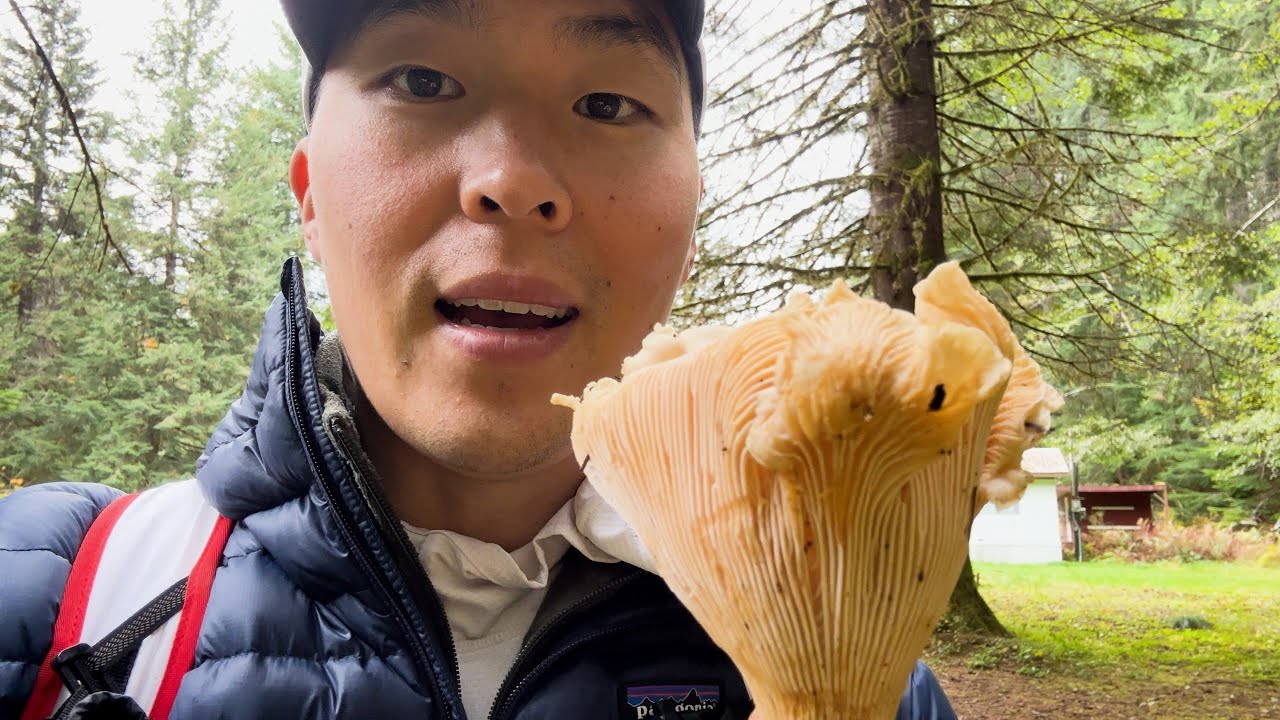
edible one but it's not one that I am looking for the one I'm looking for has folds that go down the stem here and then the rim is kind of uh wavy that's the Chantell so that's not quite the one but it's interesting to see all the different mushroom life forms out here we going to keep going here we got a beautiful Cascades with uh all the rain rain we've gotten recently oh there a bunch of poly for mushroom throwing on that tree it's like little handh going up that's a dead tree it's dead that's
why the mushrooms are decomposing it [Music] D is looking a little tired we in the month of October we we didn't go out hiking much and so this is like the first hiking she's been on um like like real hike more than like a mile uh in over a month so she's a little out of shape I'm going to have to carry her in a bit let's see how much he wants to go further we've gone about I think a mile and a half now that's pretty good for her for well we're at the end
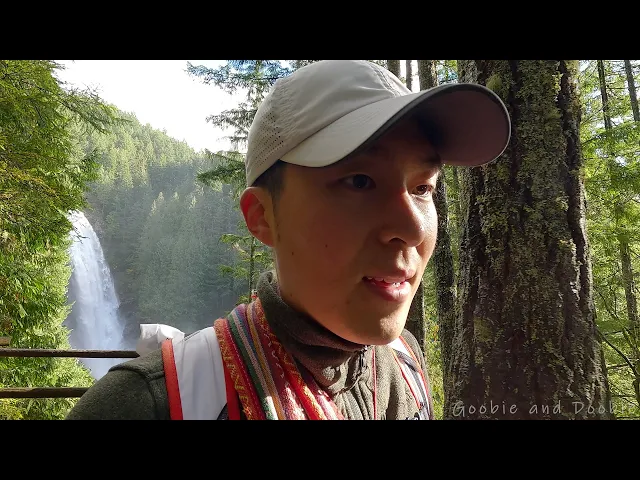
of how far we're going to go on the trail D be called it quits about a half mile ago but he enjoying the ride and this is this is the end that we're coming to what a magnificent waterfall so beautiful we go down this way and check it out out here well it was really good to be on a hike again and I kind of took it easy in October and uh I'm out of shape too so feels good to sweat and get some sunshine and smell the forest air feel be with my friend see
her happy smelling and barking at other dogs we found several different kinds of mushrooms but uh not the ones that we were looking for that are easily identifiable as edible so um I know that some of them we found probably are edible but I don't have the expertise to safely identify them and eat them so no mushrooms on our first outing together it's okay toy there's a lot to learn and it's uh it's challenging wow granted I stayed on on the trail most of the time and we only went off the trail maybe like five
times um but uh yeah I know it's not it's not easy to find edible foods at this time of year when there's no berries out berries are pretty easy to find makes me wonder if like it makes me wonder if people that lived as a hunter gatherer here would like just like gorge on a whole bunch of berries and build up fat stores before the winter time in anticipation of having less food availability uh during the winter season or maybe they just went down to the coast and ate like fish and and uh uh shellfish
I very curious about that because um this we we expended a good amount of calories looking around and uh will not be bringing back any mushrooms unless we get lucky and find a patch on the way back so yeah it's really eye openening honestly uh finding food outside a berry season is a little bit is a little bit harder I mean there are edible ryom underneath these sword ferns there's a bunch of Sword ferns so I mean there is food but I would have to uproot that plant and kill it in order to get at
that uh the few little romes that are there and apparently that um they're not that tasty so I mean there there is food but I'd rather eat the fruit of an organism like the mushroom or the berry or the nuts and seeds uh so that the organism can still live and I can eat the fruit again next year um oh these are these are the things I'm trying to figure out how do you live how do you get food from the forest how do you get food without relying on our uh fossil fuel driven infrastructure
and our agricultural food system uh that we've had for about 10,000 years it seems it almost seems impossible but I I know that people lived this way for like 290,000 years so it is possible and people have been doing it a long time but from where I am right now it seems impossible but that's the task that I want to try to figure out in my lifetime it may be impossible but only one way to find out is to try thanks for joining me and dubie on our waterfall hiking SL uh mushroom hunting Adventure uh
we'll we'll we'll definitely do a lot more because this is what I'm interested in and duie likes being outside that's that's her that's her uh number one favorite thing right see you next time now this is pretty cool this is a a board at the end of the trail that shows some mushrooms that are found here we saw this guy that is edible but easily confused with poisonous mushrooms um we saw this one it's called sulfur tough that's poisonous and then we saw I saw this one bolita zeler and that is edible so we we
did find some of those maybe next time I I'll bring it home and eat it and then we saw this guy this ashy Coral mushroom and this is edible um un unfortunately we did not see these guys shentell uh let's see oh we did see this one lactarius deliciosus delicious milk cap next time I'll try that I did see this one too says rousa zerel well I ran out of batteries on my grpro while looking at that poster board that's okay because um hopefully duie and I will live to explore a lot more and learn
a lot more about mushrooms and we will share them with you I hope you have a great day