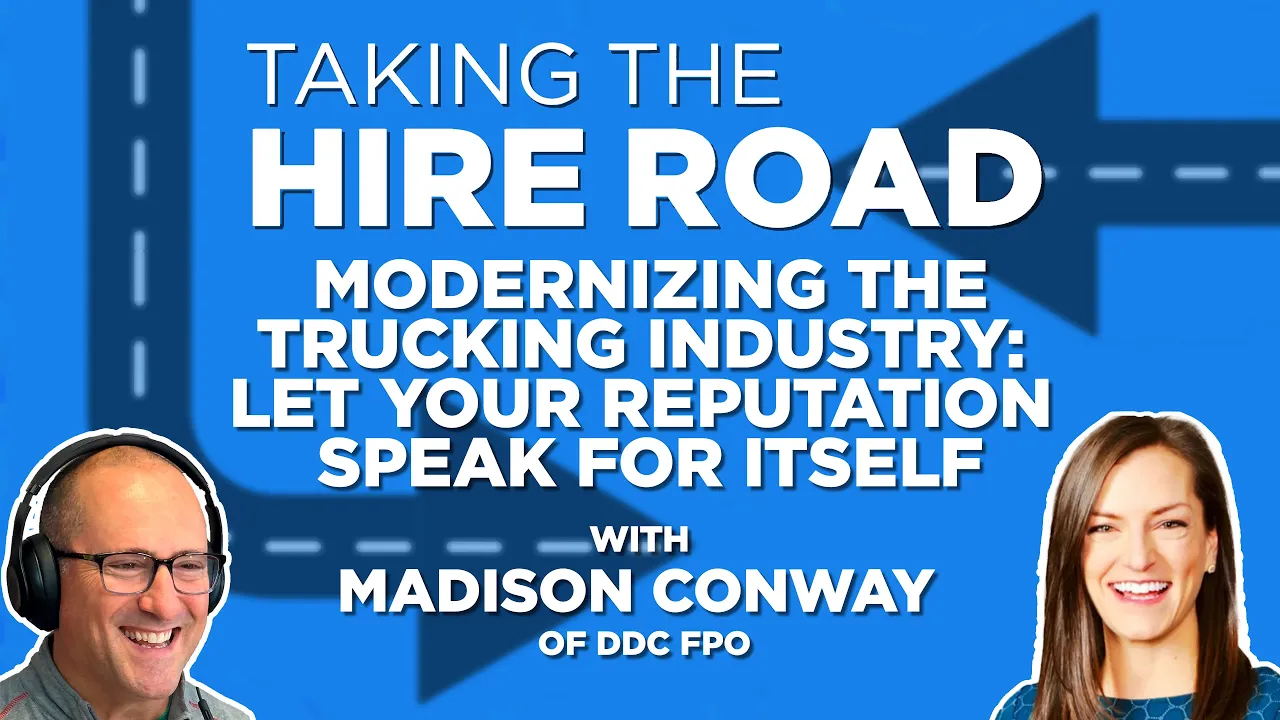
[Music] welcome to taking the high road a special show dedicated to the trucking industry specifically at the Confluence of recruiting retention and compliance in the fourth year as the host of the show I bring over two decades of Industry experience both on the carrier side as well as the vendor side and each week I interview industry experts and thought leaders who bring their insights to the driver life cycle as we discuss the industry's greatest challenges I always appreciate your feedback good or bad don't forget to leave a rating and a review I'd also like to
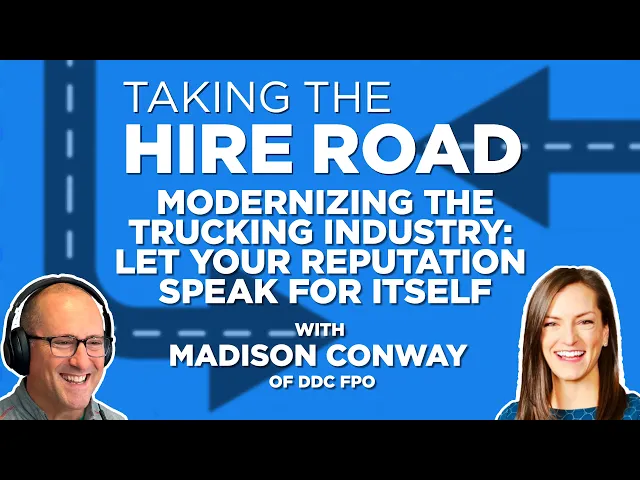
thank and highlight the show's valuable sponsors their dedication and commitment to the industry and to the show is greatly appreciated if you're interested in being a sponsor of the show or joining me for an interview please email Jeremy at taking the high.com this week I'm honored to be joined by a great friend a young industry leader who along with the company she works for is very active and engaged in the trucking industry Madison Conway Global VP marketing and Communications for the DDC group thank you so much for joining me Madison thank you Jeremy thrilled to
be here well I'd love to learn about your journey into the trucking industry uh your take on the you know where we're at currently when it comes to you know modernization and Innovation across the industry and perhaps you can share a little about the DDC group and how you're helping companies succeed uh I definitely want to touch on your industry engagement especially as it pertains to the industry's image and uh and highlight a prestigious award that you were presented with at this year's ATA mcne conference and then lastly I'd love to hear what's on the
horizon for DDC perhaps you can share some you know suggestions as we prepare for 2025 and Beyond does that work for you sounds great yeah awesome well as you know I uh I generally start each episode with a book recommendation I'm curious if there's a particular book you've read that's been especially impactful to you sure so one that I would re I usually recommend to any of my friends in family and business is exponential organizations and when I say uh in business it really is any business uh even if it's a small business if it's
a health care practice um or something like what DDC does or if you're in trucking um exponential organizations by slim asail is a fantastic book so highly recommend I think it's it's it's very uh you know cost affordable on Amazon you can get it Prime so I would say definitely check that one out I think that one has been foundational in my mindset towards business management collaboration approaching different personalities on teams setting goals um so I would definitely recommend that one one I'm reading right now though which if anybody in your audience is a Malcolm
Gladwell fan he did recently come out with the Revenge of the Tipping Point in September so I am reading that one right now and that one is a lot of fun awesome well uh exponential organization is that what you said organizations by awesome so I I'm not familiar with it so I'll add that to my good reads list I'm not sure if we're connected on good reads but we should be because I know you read a lot too um I'll add that one and then I have not read the the Malcolm Gladwell book The The
Tipping Point I know but I saw that a new one just came out so that's that's on my list already so I'm glad that you're reading it and anxious to hear your thoughts on the other side of that yeah for sure so uh so let's uh let's start with you um can you share you know your story and how you made your way into the trucking industry sure so um my Trucking industry experience started with GDC um so I was working in marketing Communications as a young professional at different public relations agencies and marketing agencies
and I was actually on the global Commerce team with the state of Georgia and the Georgia Economic Development Department working in uh marketing for the state you know for site selection forign direct investment and I wanted to move into a corporate role and so I found the position opening with DDC and this is in just at the turn of the year at the end of 2012 and the beginning of 2013 so I started with DDC in January of 2013 and that was when I first was introduced really to the trucking industry I had not worked
with any Logistics professionals before and so I I came into to DDC and I learned a lot about their clients and what they do and the services that they provide and um it was it was I guess put what people call baptism by fire right so I was just thrown right in and I absolutely loved it and then in 20 fall of 2050 I actually left DDC so I actually decided to bounce around to a few different Industries and and explore a little bit more um and so I want to Telecom I did some branding
in telecommunications and I also did some partner Marketing in e-commerce until I came back to DDC in March of 2019 so right after my first maternity leave I rejoined the DDC team and I was able to come back into the trucking industry and it was exactly what I missed it was exactly what I loved about the industry from the first time I met everybody and I was excited to be back and excited to be back with the clients that we love to serve and the partners that we love to work with and so since then
I've gotten more and more involved from as you know working in um with the ATA I've got participated in the lead ATA program which was wonderful I was actually first recommended to participate in lead ATA in 2014 before I actually left DDC the first time a friend a a fellow me a mentor and a friend and um a fellow colleague in the industry Don Lynn had actually said you should really really check out the lead at program so when I came back to DDC that was one of the first things I did let's check it
out and I'm so happy I did I grew so many relationships with that and now I've just continued my involvement from my State Association my local chapter and then several other associations um and groups within the industry so it's been quite quite a journey yeah it's funny that you say uh a couple things you you left the industry and then realized I kind of missed that you know and uh and I think it's special I'm glad that you noticed that I'm glad you came back but I think it says a lot about the industry in
general that it's not uncommon that if you leave first of all most people a lot of people don't once they get in and they submerse you know themselves but if you do that you you want to come back and that you you do end up coming back so I'm glad you did and I think the first time we met was uh through the lead ATA program your involvement the company that I founded driver reach was a sponsor uh when you were going through that that process that program and I'm a huge proponent of it so
uh I'm glad that you you were involved with that let's uh let's talk a little bit about just just where the trucking industry is currently especially when it comes to you know modernization and and Innovation I'm guessing you have you know some uh some idea and some thoughts about kind of where we're at today yes yeah absolutely so Trucking really has made massive strides to catch up with other Industries in the last 10 to 15 years there is a long way to go um but when we're looking at other Industries and comparing them to trucking
it's not Apples to Apples right it's kind of like when you have one child say to you well so and so gets this and you want to say well you're not so and so right so we do need to be very careful when we're comparing ourselves and our industry to other Industries um to not have a negative sentiment about where we line but rather what should work best for Trucking and why haven't we grow haven't we grown as fast and with as much fervor as maybe some other Industries have why haven't we seized the opportunity
to invest in technology and to innovate in the way that other Industries have some of those are inherent some of those are things that cannot be changed because they are part of the trucking engine they are part of what makes us tick they are part of what keeps this industry going so they cannot be compromised but um there are some things that that we've been able to adapt to to in to leverage to innovate um not only our fleets but also the ways that we work right so I think there's you know groups like The
at do a fantastic job I think of telling the story about how Trucking has innovated in regards to emissions and becoming more environmentally friendly and and they have to tell that story right because of different legislation that's that's coming down on motor carriers and different challenges we're facing that Arena but beyond that we're innovating in safety and um not just for incab but also for the for the general public right so there's a lot of Technology that's being implemented within each Fleet to help actually create safer roads um and then also optimizing routes improving operations
um improving the way that the different employees and within the organization work together so I think that Trucking really has done a fantastic job and they don't toot their own horn companies are innovating like I said not just not just fleets not just incap technology not just cameras not just Predictive Analytics but we're you also see innovating in ways of working and hiring needs and marketing initiatives so I really think that as the generations are moving through the workplace you're starting to see some of those fresh new ideas come in that are allowing the trucking
industry to embrace some of those ideas that other Industries maybe have already executed maybe five to 10 years ago yeah you've just told my story I mean that's part of the reason why I started building technology for myself I mean I'm going back to like 2009 you I ended up founding driver reaches just because of the the technological deficiency that I noticed across the industry now again this is in the area that I was operating in recruiting and compliance um and to your point you can't just compare when you compare that to other more Innovative
or Progressive Industries we were so far behind um it's not always the same and I think that's a really good analogy about you know you can't just compare you know it's not it's apples and oranges sometimes um but I also think you're it's it's relevant and it's a really good point that newer the newer generation that's coming up into the trucking industry is helping to close that Gap anyway and so um I know I have conversations with with with Trucking you know leaders carriers and uh vendors and suppliers all the time on this show every
week and uh I've noticed you know majority of just the leaders out there in the industry they've identified the need to innovate or they risk the success of their company right their business continuity you know I know you touched on some of the uh other initiatives that that are that companies are taking outside of you know investing in technology can you expand a little bit uh more on those and maybe how you know these can help move the need yes absolutely so um this year I think we all have witnessed the economic impact that Trucking
has faced so even if you're not a carrier you can see it you can feel it when you go to the trade shows as exam as an example not everybody's showing up not everybody's able to travel to everything anymore um so it's been difficult to adjust to justify some additional expenses specifically um technology and investment right so I think looking at some of those um in the midst of these challenging times you have to be able to think about planning for the future without without compromising the now so you don't want to just shove everything
out ofs side out of mind because you know you can't do it right now you still want to be able to make sure you're you're kind of planning on how you will tackle these in the future but for now you still need to make progress so just because you don't have a a check that you can cash right now to invest in some of these Technologies or uh major projects to innovate internally there are other things that you can do right so I would suggest looking inwards looking at your operation looking at your teams looking
at your processes and your in in your efficiencies to see where can you improve where can you optimize your operation so asking questions like do we have sop standard operating procedure if not let's create some let's make sure that we are maximizing our efficiency in our use of our company resources right so do we have service level agreements do we have slas with all of our vendors are we protecting our spend are we holding our vendors accountable right now that's a pretty easy way to put your foot down and make sure that you are able
to continue improving without having to spend more but rather protecting what you've already spent so I would say that is is a that's a key to make sure that you're maximizing again those Roi on that those Investments that you've already committed to um and then looking at your looking inward at your staff how are you evaluating your current staff members how are you engaging with them how are you driving productivity there so all three of these are things that you can do not only to improve while you can't necessarily invest in a big fancy technology
uh project right now but these are also mechanisms that you can use to then info you then um bring inbound recommendations on how to optimize how to innovate and how to improve so all of these will create opportunities for you to modernize all of these mechanisms will allow communication inbound and up the chain so that the people can flag this isn't working this needs to change I have an idea right so that when you're and you can start the internal research now so when the timing is right you have a better context and understanding of
when and how you may want to make those investments in the future and also it's a great way to actually think about the ones that you had planned on and match them up against some of this other feedback you're getting internally against your broken Sops against your missing slas and against your employee feedback you're able to say oh well we were planning on this huge implementation but what we're finding by just looking inward is maybe the that's not such a great idea maybe we should look somewhere else first and it helps you reprioritize maybe some
of those Investments for innovation in different ways well I'm guessing that uh you know you you you know all of this because you sort of probably do this yourself right like can you speak to you know how DDC is like implementing some of the just some of the strategies that you're talking about um to ensure your own success I mean this has been a last a challenging last couple years to say the least sure yeah absolutely so I mentioned Sops um DDC fpo part of the DDC group is a business process Outsourcing provider so we
do um Outsourcing and Technology Solutions for business processes so Sops are a big part of the way that we work um organizing processes and operations we can't just deliver it externally right we have to do it internally so for example we rely very heavily on project management software I can speak to our marketing department as as my department very well organ organized um anyone can jump in at any point in time in our project management tool see exactly where a project is who uh whose Court um is the ball in where's the delay where are
the risks see the feedback back and forth um so relying on tools like these allow us to have visibility into the way things are working help standardize processes it allows us to be more Nimble so if we need to change something like a deadline line or maybe a deliverable or an asset we're able to do it in a holistic manner so you're able to look at the entire project or the entire program and by leveraging something like a like a project management software allows us to to again tackle in a holistic manner so it's not
just a oneoff um solution or oneoff Amendment to the to the project we're able to actually look at it in comparison to the overarching goal and making sure that we're all align the entire team slas I mentioned as a provider we um prioritize slas service level Agreements are performance-based with DDC um so we leverage those to ensure that the expectations between client are clients and ours are agreed upon and when I say agreed upon I think agreement with expectations is very important um in fact I worked in places where you didn't say expectations you said
agreements however agreements to me when it comes to expect Pati I'm not saying like it is not a Kumbaya moment I'm saying an agreement equals commitment and it and it equals understanding so someone needs to understand and be and understand what they're committed to and also be dedicated to delivering that on all sides right so we'll have performance B based slas they could be incentivized so that team members are encouraged to go above and beyond not only just for the themselves or for DDC but also for our clients and that also allows our clients to
know that we are actually in invested in their business and their success and allowing them to achieve their goals so again those slas are really important so we use them for all of our clients um and it also enables us to very easily make suggestions to projects when we see opportunities as we're encountering um those as we're encountering some of those outcomes just before we deliver them we may uncover some opportunities that might improve the client's operation a little bit better or how we or how we are delivering that service right so how we're actually
executing that so it allows Improvement on all sides I mentioned current staff um you know Employee Engagement is absolutely key I think when you're looking at not only trying to get the inbound feedback on what can be optimized or improved but also just driving productivity right so you want to make sure that all employees are fully engaged fully on board with what you're trying to accomplish as a company so we hold weekly one-on-one meetings for example between manager and employee we have quarterly reviews um this enables us to create enough time and enough channels between
the employees and their managers so that it's not just housekeeping it's not just checking the boxes but we're able to allow that time for new ideas opportunities discuss challenges cover ideas for professional growth things like that um but you know in modernization in general and how DDC looks at modernization and imp improving our ways of working you know once we actually have that short list of ideas I would say before adding a service or a product um the number one key for me is the goal so what is the goal and this is not just
a technology right so when somebody comes to me as the leader of marketing and says we need to invest in this event we should be here we should be there we should advertise XYZ I say what is your goal because maybe that's not maybe that's not not what you should be doing right maybe there's another way to achieve that goal that's smarter that's more efficient that's stronger that's better that's faster so when we're looking at modernizing first you need to set the goal and then figure out what the strategy is to meet that goal and
then start looking for the right solution so just because you see an advertisement for a very exciting technology that is promising the world that doesn't mean that you should get it right now right you need to look at your corporate goals and adjust the corporate goals if it's if it's necessary but don't prioritize the product or service make sure that you have the goal first because otherwise you will spend all this time and money in this technology or or whatever it is that's promising you this transformation and if it doesn't align to align to your
goal then you're just in a in a whole heap of hurt right so so that's probably my number one um suggestion on modernizing that that we do and then of course making sure that it works with your internal systems that's another um something that we see sometimes with our clients but we we have we prioritize is making sure that you know if we before we invest anything is it duplicative as we're doing that exploratory work on what is going to meet that goal do we already have something in house that can help us with this
how can we maximize our existing resources um so that we're not creating churn and we're not creating waste yeah that makes a lot of sense you you live and breathe what you what help and teach what who you partner how you partner with people uh and and speaking of Partnerships I you know back to your uh involvement in the industry commitment to the industry from that perspective you know I I mentioned the award uh the the Mike Russell industry image award uh which was it was great it was so encouraging and it was I know
that that was a big deal to you um I've seen you know your commitment ddc's commitment to the industry just increase over the years U through Association involvement you know you know services offered and and growing and just support through industry branding initiatives what what would you say and especially for those who I I always encourage and I know you do too to get involved in the industry and be more engaged uh and active what value does this commitment uh that you have how what value does that you know bring to you and and why
do you invest in these ways right it's a good question so um we are not you don't you do not just jump into the um the industry associations just to say that you do it right I think it has to be much deeper than that so for DDC for example for myself I am able to learn so much more about the industry when I am with members of the industry when we are in working groups when we are in sessions together serving on committees when we are in the environment where somebody is asking a peer
but that works at a trucking company is someone's asking them specific questions about what they're investing in what they're rolling out what challenges they're experiencing that is when I get the most benefit right because I'm able to hear firsthand what is bothering them did not just for DDC but any Allied member any uh supplier service provider we would be absolutely ignorant to think that our point of contact at a motor carrier who owns like for example the DDC agreement we would be absolutely ignorant if we thought the only thing that they had to worry about
was their back office processing right we need to understand if we're going to be a true strategic partner we need to understand that there is so much more on their plate there are so many more phone calls that they're getting there are so many more people that are demanding things of them they've got when we're like for example the when we went through the program with lead at I was learn I was able to learn so much about all the different legislation that is impacting trucking companies right now the fact that they have got these
deadlines about um electrification and um other other serious um legislation that's on them and regulations that they have to meet and they have to face let alone just the capacity issues that are not coming from Capital Hill but when we're looking at um whether it's hiring enough technicians or finding the parking spots there is so much that the service provider is would be unaware of if they didn't get involved I mean look at the conversation around nuclear verdicts right but knowing that a lot of times the same people who sign off on our agreements and
our Partnerships and who we need to to to remind them that they can trust in us as their strategic partner those same people have to deal with all of those other other issues right so being a part of the industry allows us to learn so much more about our clients and the different challenges that they are facing it also allows us to uncover opportunities of benefits that we are currently providing but we're not vocalizing right so when you're looking at DDC and how we market and how we talk to our customers and you know and
and the different slas we provide right so turnaround time getting their data faster so that they can optimize their routes being able to cut hours out of their line hall you know all the benefits that DDC touts as an example something we normally wouldn't tout until recently would be data security we have robust data security and business continuity and that's something where we have had carriers deal with data breaches from other parties in the past and we have been the ones that they call DDC has been the ones who has who has staffed up and
been able to get them over the hump and get them back on their feet after they had a security breach right so we've been able to protect them from those issues worsening and we've been able to prevent some of those issues from happening but that's something that is not really talked about right because unless until recently it hasn't been a very serious issue until recent years but having after getting involved you realize oh no this is a real serious issue this isn't just happening to the two or three clients who called us we're realizing this
is so much more so we're able to tell them hey we can help ease that pain too right so as a service provider you're able to really be that partner and say it's not just these five core benefits that we you know can recite to you it's also all of these other issues that we now see that you're dealing with right these carriers that are onboarding U major you know new ELD software Ware and platforms and unless I got involved in some of these um groups I wouldn't have learned about the significant increase in back
office work that some of these carriers are having to deal with and all of this the surgeon data that's now hitting their desks and we're I'm able to say oh we didn't know that you needed help with that but we can help with that right so I think there's there's a lot of things that you uncover in in supporting industry that you're able to learn um but then of course just pushing the industry further right I think it's um when you're when you are able to then share your expertise and share your experience to help
everybody continue to improve then the industry as a whole will become more competitive and that only benefits that only benefits everybody who's involved right so I think I think being able to give back in that way is key um but you know we're able to be involved and we're lucky enough to be involved in um several Industries associations and committees I know a lot of companies can't so I would just say that um really try to lean into that if that's something that you feel that you may be called or compelled to do and if
it comes at a cost try and make a case for it but there are several ways where you're able to just volunteer your time and your expertise by joining some sort of committee um some sort of council like the digital LTL Council for example we're able to join that push the digitization of the industry um but it doesn't cost anything so there's a lot of things like that that you're able to I think if if if anybody's interested in getting more involved and realizing some of these benefits it doesn't necessarily mean it comes at a
cost yeah it may be your time but that's in a good way that's an investment of your time you're going to learn a lot as you just as you just uh elaborated on and also um you build relationships that's you know again kind of full circle with some of the things that most special about this industry and I know you and I both share that sentiment and I think most of the people certainly they go through the lead ATA program but but also just in general that have been around the industry for at least a
few years know how special it is um I do want to talk about the future though um I I'm curious kind of to know what's what's next on the horizon for uh for ddcf yeah so um so much so much is on the horizon for GDC fpo so and I would say the Global Group so if anybody is is not familiar ddcf is a part of the DDC Group which was established in 1989 as direct data capture so that's what we were founded upon was accurate timely reliable capture of data um and then we grew
globally so um there is there are some very exciting plans and unfortunately I cannot share them all with you um but we are excited to grow our commitment to this industry and really um invest more in Our Roots and continue to bring new and exciting offerings to this industry as well as others um so it is it's definitely an exciting time um we will be continuing to build out our Auto extraction structuring solution which um has really taken off this year and the carriers that we're working with are seeing fantastic results um which is a
a tool that leverages unstructured that is able to structure unstructured data and put it straight into a TMS right so there's a lot of things like that that use machine learning um we are not going to be um you know diluting our um our Legacy Services though we'll be continuing to invest in those and make those even stronger and better and more efficient and and enabling those with more technology so you know traditional Freight billing raid auditing pod processing Customs Brokerage we're going to continue involving our customer care so some people might uh be familiar
with our Nearshore announcement that happened in April of this year we announced our locations in Colombia and Costa Rica so we're going to be continuing to grow our customer care offering to really refine and improve and optimize the customer experience that our trucking companies are able to offer off for their customers so a lot of investment a lot of growth we're going to be bringing on new technology Partners which I'm very excited to announce once I can um to really improve our offering but it's it's 2025 is already off to an exciting start I would
say um here at DDC well so for for as companies are kind of thinking about that for 20 for their own plans you know for 2025 any thoughts you know what suggestions do you have for just how they can continue to either modernize you know ongoing or even just getting started if that's not kind of where they're at yet and they're still sort of unsure sure so modernization can be a daunting task I think the word itself um can either strike fear in some hearts or just complete completely be a turnoff right but when you
look at modernizing and innovation again you need to think about the goal why are you doing that and then what actually has to be done right so that you can so ddc's DDC fp's mission statement is to um allow companies to focus on core competency so they can achieve their goals right so we provide Solutions so you can focus on your core competencies and achieve your goals so that may not always be the very sexy machine learning data processing tool right sometimes it's less obvious so for example a lot of trucking companies are in the
as400 right does everybody have the bandwidth right now to move off of it let alone the let alone the R&D funding right we talked a little bit earlier about how tight the market has been and it's difficult to get justification for expenses but when you're looking at maintaining some core systems that your service delivery and your organization is Reliant upon so that you can continue to grow and you can look to the Horizon and you can see what's next and you can set those goals with optimism sometimes it's okay how can we make sure that
we're able to get what we need internally to keep things moving business continuity at the very least how can we ensure that right so knowing that RPG programming is a is hard to come by DDC for example was able to to offer that right and so sometimes it's not that's not necessarily the shiniest thing on the Shelf it's not the DDC sync mobile app right but it's something that people need to be able to continue moving forward and I would say look at that as when you're look at what you need to continue moving forward
and Achieve those goals again and then find the solutions to find those so that's what I would suggest um I definitely would say also get involved as I mentioned before there are so many benefits to getting involved um don't be afraid of competitors when you're getting involved because if they're a competitor today they could be a partner tomorrow okay iron sharpens iron we're all getting we all improving when we're in this together and obviously you don't want to show your full hand you don't want to give away all your secrets but sharing your expertise and
your experience and allowing others to do the same with you will only push us all forward so I would say as you get involved don't be too fearful about competitors and partners and think about that that long-term ecosystem and then I would also say making sure that you're bringing people internally along for the journey so of course you'll need Buy in you'll have to get permission from your CFO right and that is its own its own project right if my CFO sees us I'm sure he's going to chuckle um but making those business cases but
not only just to the CFO right you need to make sure that the people who will have expectations of them it's an agreement right it's not just an expectation you need to make sure that those people understand and are committed to delivering what it is that you're signing up for because if you're looking at a new project or initiative that's going to require other people you need to make sure that they're on board or at least that they understand what what sort of commitments are on the line for them so I say bringing people along
for the journey is key for a success um if you want the tool to be adopted if you want to make sure that again that it's in the interoperability and that the Integrations will work you need to work with those other departments in advance do the internal research get the internal Buy in um because otherwise the implementation will be a lot Messier and you'll have a lot more CH in your processes then if you start on the right foot by getting the right people involved and in the room on the decision-making process wise words Madison
uh first of all thank you so much for joining me uh I I really uh appreciate the fact that you're a champion for the industry you raised the bar and honestly just for being a great human being oh thank you you too you too I learned from the best thank you for joining me on taking the higher Road uh once again special thanks to the sponsors of the show we really appreciate you if you're interested in being a sponsor or joining me for an interview please email Jeremy taking the.com until next time thank you for
taking the road [Music]