Okay, so we all know that sleep is good for us, right? But did you know that sleep also plays a crucial role in maintaining your eye health? That's right!
Getting a good night's rest is not only essential for your overall well-being but also for keeping your eyes in tip-top shape. So, kudos to all of you out there, like myself, who consider sleeping one of your favorite all-time hobbies. In today’s video, we're going to be talking about how sleep deprivation can affect your eyes and vision, especially in the long term.
We’ll be covering topics such as how sleep affects dry eye disease, retinal conditions like macular degeneration and glaucoma. Plus, stick around until the end for some practical tips on how to develop healthy sleep habits. Oh, and remember REM sleep (Rapid Eye Movement)?
It turns out it may not be just for dreaming; it could also play a major role in your eye health too. Let’s take a look. Let’s first start by talking about how sleep helps the eyes.
While you’re sleeping, the eyes go through essential repair and recovery. This includes rehydrating the eyes and removing toxins that build up throughout the day. There’s also improved blood flow to the eyes, which is really important for delicate tissues such as the retina and the optic nerve, which connects the eye to the brain.
In one recent study from Nature and Science of Sleep, researchers found that people who had more sleep disturbances at night had reduced tear production, leading to a greater risk of developing dry eye disease. This finding was worse for people who had less deep sleep, ultimately resulting in symptoms like dryness, grittiness, and red, burning eyes – you know, all the typical symptoms of dry eyes. Now, speaking of dry eye, let's break this down a little further.
Several studies have found that not only can one or two nights of reduced sleep affect the tear film, but on a chronic scale, where people are sleep-deprived for many nights or even months, individuals not only have reduced tear production but also reduced tear film quality. This means that tear osmolarity increases, leading to higher salt content in the tears. Combined with reduced tear production, this results in more friction between the eyelids and the cornea, causing burning, irritation, and that painful, gritty feeling every time you blink.
No wonder a recent meta-analysis found that people who are either sleep-deprived or have sleep disorders are almost two and a half times more likely to develop dry eye disease than people who get proper sleep. In fact, the findings are so clear that eye doctors, like myself, are now being advised to ask patients about their sleep habits when diagnosing dry eye disease. Let me know in the comments below if you’ve experienced dry eye symptoms after one or many nights of poor sleep.
Or, if you’re someone who only gets a few hours of sleep every night, this might be something to consider to help alleviate those dry eye symptoms. Now, let’s talk about the retina. The retina is the delicate tissue in the back of the eye that receives light and sends visual information to the brain via the optic nerve.
Lack of sleep doesn’t just affect the front of the eye, like with dry eye, but also the back of the eye, especially the delicate tissue of the retina. Several recent studies have suggested a link between poor sleep quality and the development of age-related macular degeneration (AMD). People with reduced sleep time or disrupted sleep patterns tend to have a higher risk of developing the disease over time.
The idea is that poor sleep increases reactive oxygen species (oxidative stress) and reduces blood flow to the eye, both of which are risk factors for developing macular degeneration. Another condition that may be linked to poor sleep is glaucoma. Glaucoma is a group of eye diseases that affect the optic nerve.
While glaucoma is often associated with elevated eye pressure, some people have normal-tension glaucoma, where eye pressure is otherwise normal. Even if you feel like your vision is fine, it’s still important to get your eyes checked annually to catch any signs of glaucoma. It’s widely accepted that poor sleep patterns can increase the risk of developing glaucoma.
A recent study from Korea found that people who slept for fewer than six hours or more than eight hours per night had a higher risk of developing the disease. Interestingly, people with glaucoma seem more susceptible to sleep dysfunctions, including obstructive sleep apnea, snoring, and insomnia. Sleep apnea, which causes breathing fluctuations during sleep, is also a known risk factor for glaucoma due to reduced oxygen and blood flow to the optic nerve.
Now, here’s an interesting side note I discovered while researching for this video: there’s a theory about REM sleep, the part of our sleep cycle where we experience deep dreams. The theory suggests that we didn’t evolve the need for REM sleep just for dreaming. The rapid eye movements during REM sleep might help the eyes by shaking the aqueous humor (the clear fluid inside the eye) to ensure the cornea gets enough oxygen during sleep.
This theory could explain why people who don’t get good REM sleep may have a greater risk of developing metabolic stress in their eyes. It’s an interesting idea, and I'd love to hear your thoughts in the comment section below. Before I wrap up, I want to leave you with some actionable tips to improve your sleep habits and, by extension, your eye health: Stick to a sleep schedule – Try to go to bed and wake up at the same time every day, even on weekends.
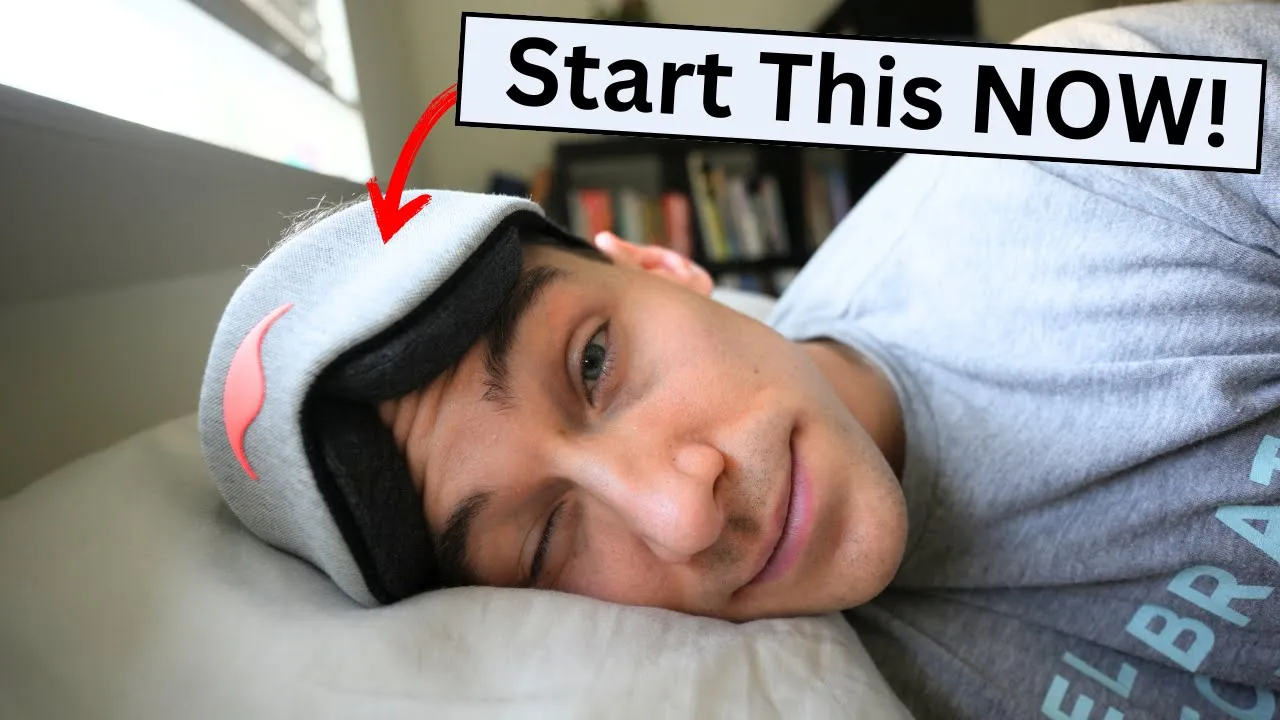
This consistency can help you get regular, restorative sleep, which in turn supports memory formation and overall health. Create a restful environment – Make your bedroom a place of rest. Keep the room dark, quiet, and cool.
Avoid blue light exposure from screens for at least an hour before bed, as blue light disrupts sleep patterns. I’ve even stopped using my smartphone as an alarm and now use an analog clock, which helps me avoid late-night screen time. Limit caffeine and alcohol – Caffeine can stay in your system for up to 6 hours, or even longer if you’re sensitive to it, so try to avoid it after noon.
While alcohol may help some people fall asleep, it reduces sleep quality, leaving you feeling groggy in the morning. Exercise regularly – Physical activity can help you fall asleep faster and enjoy deeper sleep. Just avoid exercising right before bed, as it can wake you up.
Manage your sleep-wake cycle – Expose yourself to natural sunlight in the morning, as this helps regulate your sleep-wake cycle and melatonin production. In the evening, be mindful of artificial light exposure, as it can interfere with melatonin production. Finally, if you wake up with red, irritated, or dry eyes, it could be because you’re not sleeping with your eyes fully closed.
Check out my video on that topic, which you can watch right here. Thank you so much for watching. Keep an eye on it, and I’ll see you in the next video.
Peace!