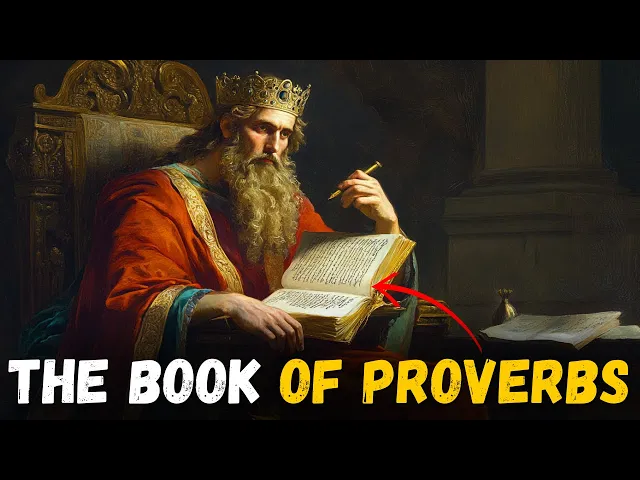
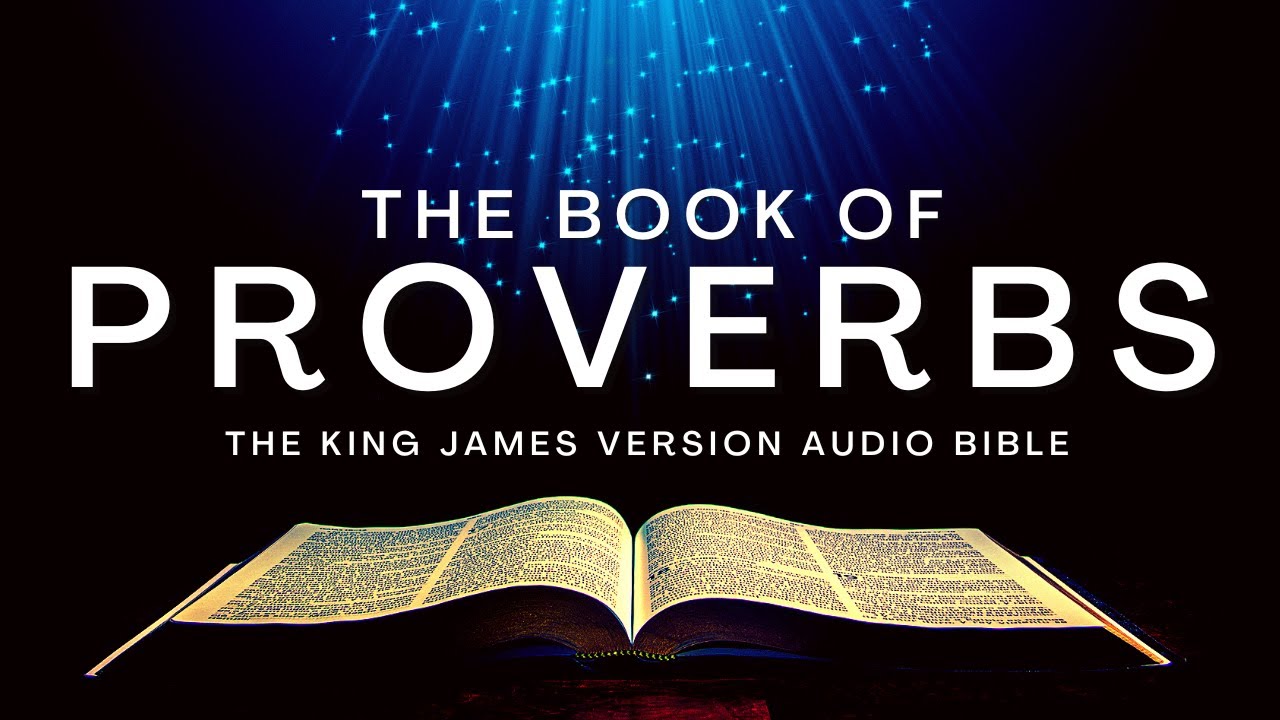
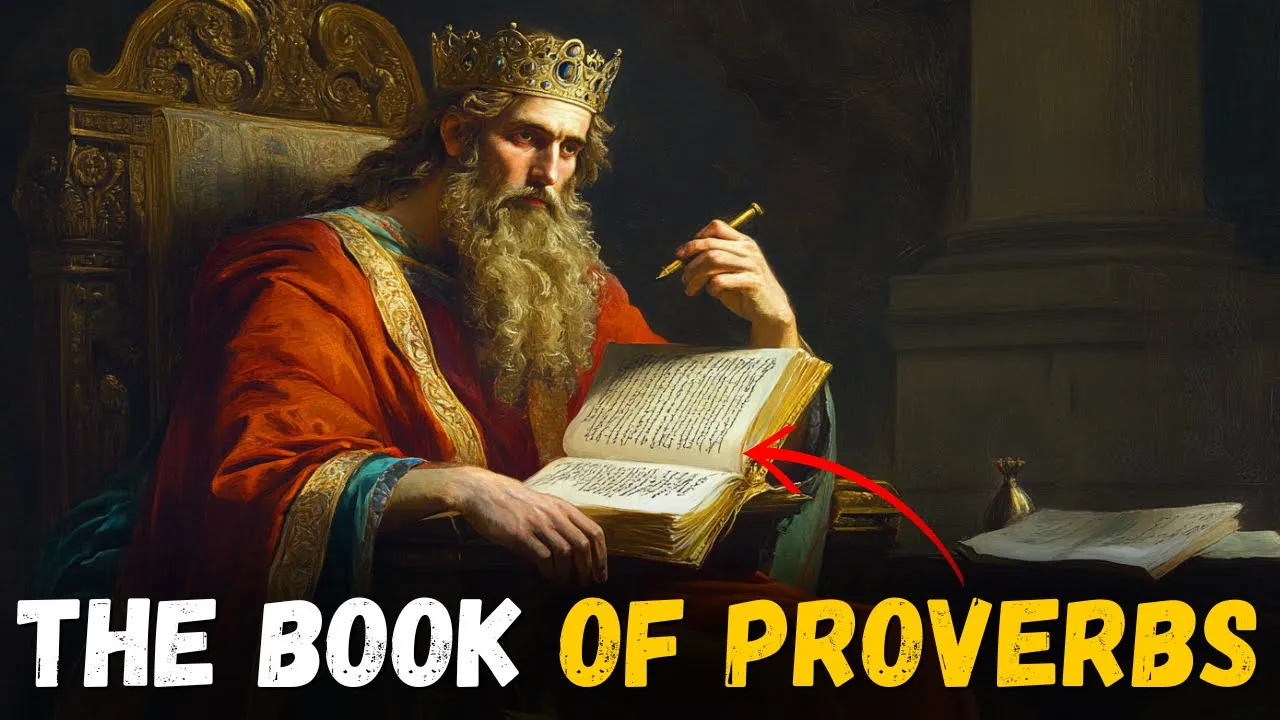
The Book of Proverbs is one of the literary Treasures of the Old Testament situated within the context of the wisdom literature of the Hebrew Bible this literary genre not only presents Reflections on life but also seeks to offer practical and spiritual answers to human questions the wisdom portrayed in Proverbs transcends mere intellect focusing on how to live rightly and piously aligned with God's will historically the book Book of Proverbs is associated with the reign of King Solomon renowned for his unique wisdom in First Kings 4:32 we read that Solomon composed 3,000 Proverbs and 1,5 songs
this biblical testimony positions Solomon as the main author and central figure behind the Israelite wisdom tradition his wisdom which was a subject of admiration among neighboring Nations had divine origins as narrated in First Kings 39-12 where he asked God for understanding to govern justly this wisdom was not confined to political leadership it encompassed a broad view of life from interpersonal relationships to spiritual reverence Proverbs in their origin were transmitted orally the ancient world relied on oral Traditions to preserve and disseminate knowledge and the Israelite Society was no different maxims and teachings were repeated in in
family settings among circles of wise individuals and at Community Gatherings memorized as guides for life this oral character allowed wisdom to be shared dynamically and adapted to the circumstances of each generation however at some point in history these oral Traditions were recorded in writing this process of compilation and preservation occurred gradually and involved various authors and scribes Solomon as a prominent figure was primarily responsible for establishing the foundational content of the book but other important names such as agur and Lemuel also appear indicating that the book is a collective effort of sages over Generations in
Proverbs 251 we are informed that these also are Proverbs of Solomon which the men of Hezekiah king of Judah transcribed this specific reference points to a later moment in Israel's history during the reign of Hezekiah 88th Century BC when scribes gathered and organized many existing Proverbs this demonstrates the ongoing appreciation for wisdom teachings and the commitment to preserving the writings for future relevance the cultural context of the Book of Proverbs reflects a period when the near East valued wisdom as a tool for practical living and spiritual understanding texts from neighboring cultures such such as the
Egyptian instruction of amop show parallels with Proverbs indicating an exchange of ideas between Israel and other nations however the Book of Proverbs stands out for its theological Foundation practical wisdom is intrinsically linked to the fear of the Lord presented as the beginning of all understanding the Israelite culture placed great emphasis on education and the teaching of moral values in the family context Proverbs were often taught by parents to their children reflecting the patriarchal structure of society at the time this practice is evident in the early chapters of the book where the Father Figure urges the
son to seek wisdom and avoid the paths of the foolish this model of instruction not only shaped individual character but also ensured social cohesion and Fidelity to the Covenant with God the production of the Book of Proverbs was shaped by Israel's historical experience during Solomon's Reign the kingdom enjoyed a period of prosperity and stability providing the ideal environment for reflection and the pursuit of wisdom however the later preservation of the book especially during hezekiah's time demonstrates that its relevance transcended times of Peace even in moments of Crisis the Proverbs continueed to offer moral and spiritual
guidance the compilation of the Book of Proverbs was not merely a cultural Endeavor it was profoundly religious each proverb reflects the conviction that wisdom is a gift from God and that living wisely is to live in accordance with Divine will this theological perspective is a distinctive trait that separates Proverbs from other sapiential collections of the time the relevance of the Proverbs also extends to their impact on Israelite Society they were used to educate the young guide leaders and promote Justice through these maxims the importance of hard work honesty Justice and reverence for God was taught
the content of the book was not just for the intellectual Elite but also for the common people offering practical advice for all spheres of Life moreover The Book of Proverbs is a testament to the universality of the human search for meaning although rooted in Israelite tradition its content resonates with the experiences and aspirations of many cultures this is evident in the Timeless wisdom it conveys which continues to inspire readers today the Book of Proverbs was strategically organized to facilitate understanding and practical application of its teachings it consists of different sections each with its own style
and purpose but all United by a common goal to impart wisdom in a clear and accessible manner the structure of the book reflects not only the diversity of its authors and contexts but also the commitment to convey teachings that transcend Generations the first section covering chapters 1 to9 serves as an introduction to wisdom here we encounter a nearly paternal tone with direct advice and exhortations that personify wisdom as a feminine figure calling out in the streets inviting listeners to follow her in Proverbs 8 for example wisdom is portrayed as a companion of God in creation
emphasizing her fundamental importance in the universe these chapters have a more narrative and poetic character addressing themes such as the fear of the Lord the choice between the paths of wisdom and Folly and the importance of avoiding bad influences this part of the book stands out for its emotional appeal and its effort to capture the attention of a younger audience inviting them to embrace a wise life from an early age chapters 10 to 24 Mark a shift in style and content entering what many people associate as the heart of the Book of Proverbs this section
is composed of short phrases often in contrasting formats such as in Proverbs 10:1 which states a wise son brings joy to his father but a foolish son brings grief to his mother this direct and concise format was ideal for memorization making the teachings more accessible and easier to apply here the Proverbs are more varied covering themes such as Justice work the use of words interpersonal relationships and morality these chapters are largely attributed to Solomon and represent the essence of his practical wisdom in chapters 25 to 29 we find an additional collection of Solomon's Proverbs which
according to Proverbs 251 were compiled by the men of King Hezekiah this section demonstrates that Solomon's wisdom remained relevant even centuries after his death organized by scribes to meet the needs of the time in this part the Proverbs delve deeper into issues related to leadership Justice and how to handle conflicts the wisdom here is not just individual but also social showing how a nation can prosper by applying God's principles Chapter 30 brings a significant change in tone and style here we encounter the words of agar a sage whose teachings reflect a more contemplative and philosophical
tone aor admits his own limitations and highlights the greatness of God stating in Proverbs 33:4 I have not learned wisdom nor have I knowledge of the Holy one who has ascended to heaven and come down who has gathered the wind in his fists this section is marked by profound Reflections on humility dependence on God and the pursuit of balance in life as seen in aurk famous request give me neither poverty nor riches feed me with the food that is my portion Proverbs 38 chapter 31 concludes the book with the words of King lemel who reportedly
received teachings from his mother this section is particularly famous for the poem about The Virtuous Woman which begins in Proverbs 31:10 this poem celebrates the qualities of a woman who lives wisely demonstrating diligence kindness generosity and a fear of the Lord while it is often interpreted as a model for women it also serves as an illustration of how wisdom manifests in Practical actions and positive Community impact this organ Iz structure into distinct Parts reflects a careful effort to preserve different styles and perspectives of wisdom while the early chapters appeal to emotion and Imagination the central
sections offer direct and objective advice and the final Parts present more philosophical and specific Reflections this diversity allows the book to address readers at different stages of life and with varying needs moreover the prog regression of the book from introductory teaching to practical application and deep Reflections shows that wisdom is a continuous Journey Proverbs is not merely a random collection of thoughts but a carefully structured text meant to guide the reader from the beginning of Learning to the more advanced stages of understanding and practice it is a work that combines instruction exhortation and reflection into
a cohesive whole The Book of Proverbs is filled with recurring themes that address fundamental aspects of human life these themes not only guide practical conduct but also reveal deep moral and spiritual principles connecting everyday Behavior to God's will each teaching seeks to shape character and guide choices that promote Justice Harmony and wisdom one of the most prominent themes is the value of wisdom from the early chapters Proverbs presents wisdom is the most precious asset one can acquire in Proverbs 4:7 it says wisdom is the principal thing therefore get wisdom and with all your getting get
understanding here wisdom is not something superficial or secondary it is the foundation for a full and successful life throughout the book The Pursuit of wisdom is encouraged as an active Endeavor that requires dedication humility and the recognition that God is the source of all understanding standing another recurring theme is the danger of foolishness foolishness is often presented as the direct opposite of wisdom leading to ruin and destruction in Proverbs 14:12 the text warns there is a way that seems right to a man but its end is the way of death this verse encapsulates the idea
that foolishness may seem attractive or even logical at first glance but its consequences are always disastrous the book constantly contrasts the wise and the foolish showing that the foolish despise correction reject the fear of the Lord and choose paths that bring shame and pain The Power of Words is another central theme in Proverbs the text acknowledges that speech has a profound impact both positive and negative on people's lives in Proverbs 18:21 it says death and life are in the power of the tongue and those who love it will eat its fruit this teaching highlights the
importance of carefully choosing words as they can build up bring healing and Reconciliation or cause destruction and division languages presented as a reflection of the heart used wisely by the righteous and recklessly by the foolish the importance of work is also extensively discussed in the book diligence is praised as a virtue that leads to prosperity and satisfaction while laziness is condemned for its negative consequences in Proverbs 6611 we find the famous lesson of the ant go to the ant you slugged consider her ways and be wise the ant with its diligence and preparation is presented
as an example of how consistent effort and discipline result in lasting benefits on the other hand the lazy person is portrayed as someone who wanders opportunities and ends up in poverty and shame Justice and Equity are also recurring themes in the Book of Proverbs the text emphasizes that God loves Justice and that acting righteously is a reflection of divine character in Proverbs 213 it states to do righteousness and Justice is more acceptable to the Lord than sacrifice this teaching shows that ethical conduct is more important to God than external acts of religiosity the book continuously
encourages the reader to treat others with honesty compassion and respect especially the vulnerable such as the poor and needy the theme of self-control is frequently addressed highlighting the importance of mastering one's passions and emotions in Proverbs 16:32 it says he who is slow to anger is better than the mighty and he who rules his Spirit than he who takes a city this verse illustrates that true power is not in physical strength or external Conquest but in the ability to control one's impulses self-control is essential for living wisely and maintaining healthy relationships another significant aspect is
the relationship with others Proverbs teaches about the importance of cultivating loyal friendships avoiding associations with Wicked people and treat treating others with respect in Proverbs 17:17 it states a friend loves at all times and a brother is born for adversity true friendship is presented as one of life's greatest treasures while Bad Company is often associated with danger and ruin the reverence for God or fear of the Lord is perhaps the most encompassing theme of all it appears as the foundation of all wisdom and the key to living a righteous life in Proverbs 9:10 it is
written the fear of the Lord is the beginning of wisdom and the knowledge of the Holy one is understanding this reverence is not fear in a negative sense but a deep recognition of God's sovereignty and a willingness to obey his will this attitude is the foundation that connects all other themes of the book uniting The Practical with the spiritual finally the impact of choices is a recurring theme that permeates the entire book Proverbs consistently presents two paths the path of wisdom and the path of foolishness the path of justice and the path of iniquity the
path of the fear of the Lord and the path of rebellion each choice has clear consequences and the reader is challenged to reflect on their decisions and align their life with God's principles The Book of Proverbs was produced within the rich cultural and historical context of the ancient East a region where wisdom was highly valued as an essential resource for life and governance During the period when Israel thrived as a unified monarchy under Kings like David and Solomon Proverbs played a central role in education and the formation of leaders however this quest for practical wisdom
was not unique to Israel neighboring peoples such as the Egyptians and Mesopotamians also developed wisdom Traditions that influenced to some extent the content and format of the Israelite Proverbs one piece of evidence for this cultural connection is the parallel between the Book of Proverbs and Egyptian wisdom texts such as the instruction of amop which dates back to approximately the 13th century bcee some passages from Proverbs especially in chapters 22 and 23 exhibit notable similarities with this Egyptian text for example both emphasize the importance of avoiding greed being just in judgment and treating the poor with
compassion however while a mopy seeks to instruct based on General ethical and social principles Proverbs distinguishes Itself by anchoring its wisdom in a theological perspective the fear of the Lord is the beginning of knowledge this distinction underscores the uniqueness of Israelite wisdom which always points to a personal relationship with God as the foundation for all decisions moreover the practice of gathering and transmitting Proverbs as a form of teaching was deeply rooted in the societies of the near East in Israel Proverbs were often used in family and Community contexts to educate the young the father frequently
depicted in the texts as a teacher conveyed essential truths about morality ethics and the importance of choosing the path of wisdom this reflects the central role of the family in preserving cultural and spiritual identity something particularly important in a society marked by Oral transmission the historical context is also crucial for understanding the content and purpose of the Book of Proverbs during Solomon's Reign Israel experienced a period of political stability and economic prosperity ity this Golden Age allowed for greater focus on intellectual and cultural matters including the production and organization of wisdom texts Solomon's renowned wisdom
attracted leaders and emissaries from other nations such as the Queen of Sheba who visited Israel to witness the depth of his understanding First Kings 10110 in this environment Proverbs emerges as an expression of Israel's commitment to relating practical wisdom to faithfulness to God although Solomon is traditionally identified as the primary author of the book contributions from other writers such as agur and Lemuel and compilations made by the men of King Hezekiah indicate that the final text was formed over a long period this diversity of authors reflects the influence of multiple historical and cultural contexts from
Solomon's Reign to later times when Israel faced more intense political and spiritual challenges another important characteristic of the cultural context of the Book of Proverbs is the use of Proverbs as pedagogical tools the short and direct format was ideal for memorization an essential practice in predominantly oral societies these teachings often took the form of contrasts wisdom versus Folly Justice versus wickedness diligence versus laziness facilitating understand understanding and practical application this not only made the Proverbs useful for everyday life but also ensured that their lessons were passed down from generation to generation Additionally the use of
metaphors and images from daily life is a Hallmark of the Proverbs common elements of agrarian life such as harvesting the work of ants and the vigilance of shepherds appear repeatedly in the text these references to daily life make the Proverbs accessible connecting profound spiritual truths to situations that anyone could recognize however these images also reveal the cultural roots of Israel as an agrarian society where work family and Community were Central it is important to note that despite external cultural influences The Book of Proverbs maintains a unique and distinctly biblical perspective its wisdom is not merely
a set of of practical rules but an expression of faith and devotion it reflects the belief that God is the source of all wisdom and that living according to his principles is essential for a meaningful life this theological perspective differentiates Proverbs from other wisdom traditions of the time and establishes it as a work deeply rooted in the faith of Israel finally The Book of Proverbs reflects the UN IV verality of wisdom while born in a specific cultural context IT addresses human issues that transcend geographical and temporal barriers its teachings on character discipline Justice and reverence
for God remain relevant demonstrating that the pursuit of wisdom is a universal aspect of The Human Experience wisdom in the Book of Proverbs is not merely a set of teachings or an abstract quality it is personified and presented as a central theme especially in the early chapters this figure is described as an active presence that cries out in the streets instructs and even invites people to follow her path she plays a fundamental role in The Narrative of the book connecting human teaching to divine order and appears prominently in texts such as Proverbs 12033 and Proverbs
8 in chapters 1 to9 wisdom is depicted as a woman who raises her voice in public places calling the simple and foolish to learn and follow a path of righteousness in Proverbs 1: 12021 we read wisdom calls out in the street raises her voice in the public squares at the head of the noisy street she cries out and at the entrance of the city Gates She Makes Her speech this imagery demonstrates that wisdom is not something hidden or reserved for the the elite it is accessible and available to all who wish to hear and accept
it the figure of wisdom gains special prominence in Proverbs 8 where she is presented in an almost Divine manner as an entity that existed before the creation of the world in Proverbs 8:22 to 23 wisdom declares the Lord brought me forth as the first of his Works before his deeds of old I was formed long ages ago at the very beginning when the world came to be here wisdom is placed alongside God actively participating in the creative process and being a witness to his work this passage suggests that wisdom is not merely a human attribute
but something that reflects the very essence of God the personification of wisdom in the early chapters also contrasts with another symbolic figure Folly often represented as a seductive and deceitful woman who leads the unwary to destruction this contrast is especially evident in Proverbs 9 where wisdom and Folly make parallel invitations but with opposite consequences while wisdom offers life and understanding Folly leads to death this opposition reinforces the choice that the reader is constantly called to make throughout the book to follow the path of wisdom or fall into the traps of foolishness a notable aspect of
the personified wisdom is her connection to the idea of divine order in Proverbs 8:30 wisdom States then I was constantly at his side I was filled with delight day after day rejoicing always in his presence this description not only reinforces her pre-existence but also positions her as a mediator between God and creation a force that gives meaning and structure to the world this suggests that living wisely is to align oneself with the order established by God from the beginning wisdom is also presented as a practical guide for life in Proverbs 31318 she is described as
a source of happiness peace and security blessed is the man who finds wisdom the man who gains understanding for she is more profitable than silver and yields better returns than gold here wisdom is not just a spiritual Pursuit but also a path to success and prosperity in the material world however this Prosperity is not presented as accumulated wealth but as a life of Harmony and balance resulting from sensible choices aligned with Divine principles the personification of wisdom also reflects God's role as the source of all knowledge and discernment by attributing in almost human characteristics to
wisdom the book creates a tangible connection for readers making spiritual Concepts more accessible and understandable additionally wisdom is presented as something that can be actively sought in Proverbs 4:7 we read the beginning of wisdom is this get wisdom though it cost all you have get understanding this invitation emphasizes that wisdom is not automatic it requires effort humility and a genuine desire to learn another central point of the figure of wisdom is her emphasis on the relationship with God although her personification may seem independent she is always linked to Divine will wisdom never acts apart from
God but as his manifestation and reflection this relationship is reinforced by the recurring phrase in the book the fear of the Lord is the beginning of knowledge wisdom can only be fully attained when an individual recognizes and submits to Divine sovereignty finally the personified wisdom reminds us that the pursuit of wisdom is an active and ongoing Journey she calls exhorts teaches and even warns about the consequences of rejecting her her invitation is open to all but the response depends on each individual wisdom does not impose but Waits For The Listener to choose to follow her
voluntarily this Dynamic reinforces personal responsibility in the Quest for a life aligned with Divine principles The Book of Proverbs was written with a clear purpose to teach practical and spiritual wisdom that can be applied to all aspects of life this intention is outlined right at the beginning especially in Proverbs 1 17 where it is stated that the book aims to empower readers to live with discernment prudence and righteousness it is not merely a collection of moral maxims but a guide designed to transform lives by aligning human values with Divine principles the text is intentionally directed
at a broad audience it targets the simple as mentioned in Proverbs 1:4 referring to those who lack the experience or maturity to make wise decisions the book aims to provide prudence and good sense establishing a solid foundation for character development at the same time it does not exclude the wise and experienced instead it challenges them to grow further in understanding and knowledge as stated in verse 5 a wise man will hear and increase in learning and a man of understanding will acquire wise counsel the main purpose of the book is to guide human conduct based
on principles of Justice righteousness and Equity Proverbs 1:3 highlights that the wisdom taught in the book is practical applying to real life situations the text does not limit itself to theories but instructs on how to make just decisions act with integrity and navigate the complexities of Human Relationships this reflects a hope istic view of life where every choice big or small should be grounded in God's will the most important foundation of wisdom as revealed in Proverbs 1:7 is the fear of the Lord this fear does not mean a common kind of fear but rather reverence
deep respect and recognition of divine sovereignty this is the key that unlocks all true knowledge without this spiritual connection human knowledge is limited and incapable of producing a full life by stating that the fear of the Lord is the beginning of knowledge the text positions God as the Bedrock of all genuine understanding another clear objective of the book is to help its readers discern between wisdom and Folly this contrast permeates the entire content of Proverbs in Proverbs 1:2 the author emphasizes that the book was written to know wisdom and instruction to perceive the words of
understanding this discernment is not only intellectual but also moral allowing the reader to identify what is right and avoid the ways of foolishness that lead to destruction this aspect makes the book especially relevant for character formation in young people who are just beginning their Journeys in life the instruction contained in Proverbs also emphasizes the importance of discipline genuine learning does not occur without correction at various points the text uses exhortations and warnings to alert against the consequences of Disobedience and negligence discipline in this context is not viewed as punishment but as a means of growth
and maturity the purpose here is to shape individuals who are not only wise but also responsible in self-controlled moreover Proverbs promotes the formation of essential virtues such as patient humility diligence and honesty these values are presented as foundations for a successful and harmonious life for example in several passages honesty is exalted as a reflection of God's character while laziness and dishonesty are condemned for their destructive consequences applying these principles in daily life results in healthy relationships and the building of a more just Society the book's purpose also includes the idea that true success is not
measured by wealth or power but by the ability to live according to God's standards the prosperity taught in Proverbs results from wise choices diligent work and faithfulness to Divine will the pursuit of this Prosperity is presented as a journey that requires constant effort but rewards the individual with peace contentment and Lasting Joy the moral and spiritual teachings of Proverbs are deeply rooted in the idea that all human decisions should reflect God's character this means that the right choices are those that promote Justice goodness and Truth by aligning human behavior with Divine Commandments the book seeks
to build a bridge between the material and spiritual worlds showing that both are interconnected Proverbs also presents an intergenerational Vision the teachings contained in the book are designed to be passed down from parents to children as a Heritage of accumulated wisdom over time this transmission is not just of knowledge but of values and principles that shape the identity of a family and Community the idea is that each generation learns from the mistakes and successes of those before avoiding the repetition of foolishness and strengthening the foundations of faith and character ultimately the Central purpose of Proverbs
is to point to the need for dependence on God in all areas of life the wisdom as presented in the book is not something that man can achieve on his own it is a Divine gift that must be sought with humility and recognized as essential for True success this aspect gives the book Eternal relevance as its message transcends cultures of eras speaking directly to the human heart The Book of Proverbs holds a spiritual relevance that transcends the context in which it was written making its teachings applicable across all ages more than just offering practical advice
for daily life it connects human actions to the divine plan showing that true wisdom is rooted in a deep relationship with God this connection between the Practical and the spiritual is what makes Proverbs a unique enduring work the spiritual foundation of the book is established by the concept that the fear of the Lord is the beginning of wisdom Proverbs 1:7 this phrase summarizes the central idea of Proverbs all true wisdom begins with the recognition of God as Sovereign and the source of understanding this fear is not a paralyzing dread but a reverence that shapes all
areas of life it teaches that without without God human knowledge is limited incapable of bringing true peace Justice or lasting meaning a striking aspect of the spiritual relevance of Proverbs is its emphasis on character the book challenges readers to pursue virtues such as honesty self-control patience and diligence all presented as reflections of divine character in Proverbs 10:9 we read whoever walks in Integrity walks securely but whoever takes crooked paths will be found out this teaching shows that Integrity is not just a moral choice but also an Act of Faith a way of living aligned with
God's values moreover Proverbs guides the reader to understand that spiritual decisions are not separate from practical Life Choices related to work finances relationships and speech are all viewed through the lens of spirituality for example Proverbs 11 W States the Lord detests dishonest scales but accurate weights find favor with him this verse illustrates that even the most mundane actions such as being honest in business have a spiritual Dimension and can either please or displease God another central point of the spiritual relevance of the book is its emphasis on the impact of personal choices Proverbs frequently presents
two paths that of wisdom and that that of foolishness that of life and that of death that of the fear of the Lord and that of rebellion every decision no matter how simple it may seem is presented as an opportunity to align with Divine will or to stray from it this Duality not only invites reflection but also challenges the reader to live with purpose and intentionality knowing that their choices have eternal consequences the relationship between wisdom and happiness is also an important spiritual theme in Proverbs 3:13 we read blessed are those who find wisdom those
who gain understanding this wisdom however is not presented as a means to acquire material wealth or social status instead it is seen as a path to true peace and joy which come from living in harmony with Divine principles the happiness that Proverbs promotes results from a life grounded in righteousness Justice and the fear of the Lord Proverbs also highlights the role of spiritual discipline in Proverbs 3112 to12 it is written my son do not despise the Lord's discipline and do not resent his rebuke because the Lord disciplines those he loves as a father the son
he Delights in this view of divine discipline as an act of Love teaches that the challenges and Corrections in life have a greater purpose to shape character and strengthen Faith this teaching offers comfort and perspective especially in times of difficulty the spirituality in Proverbs is also deeply relational the book does not focus solely on the individual's relationship with God but also on how that relationship influences interactions with others it teaches that living wisely means reflecting Divine character in relationships promoting peace respect and love for one's neighbor in Proverbs 19:17 we read whoever is kind to
the poor lends to the Lord and He will reward them for what they have done this verse connects acts of kindness to one's relationship with God showing that human actions reflect spiritual commitment another significant aspect is how Proverbs addresses the use of time and resources diligent work and planning are presented as ways to honor God and demonstrate gratitude for His blessings in Proverbs 668 the example of the ant teaches that constant effort and preparation are virtues that please God this teaching encourages the reader to use their gifts and opportunities responsibly and productively always with a
spiritual perspective Additionally the book reinforces that true wisdom leads to peace in Proverbs 16 167 it is written when the Lord takes pleasure in anyone's way he causes their enemies to make peace with them this verse reflects the belief that living according to Divine wisdom brings Harmony both in relationship with God and with those around this peace is presented as a fruit of wisdom and a sign of divine approval finally the spiritual relevance of Proverbs lies in its timelessness although written in a specific cultural and historical context its teachings continue to guide people across all
ages and cultures they offer a road map for a life rich in meaning deeply connected to God and aligned with Divine principles Proverbs not only teaches how to live well but also how to live purposefully reflecting God's glory in all areas of life the compilation of the Book of Proverbs reflects a meticulous process that extended over several Cent centuries involving different authors editors and historical contexts while King Solomon is traditionally recognized as the primary author of the book its final organization resulted from later efforts including the work of scribes and compilers such as those mentioned
in Proverbs 251 these are also Proverbs of Solomon which the men of Hezekiah king of Judah transcribed this mention of hezekia scribes in indicates that about two centuries after Solomon's Reign there was a conscious effort to preserve and reorganize the Proverbs attributed to the wise king during hezekia Reign the late 8th Century BC the kingdom of Judah was undergoing a period of spiritual and political reform this compilation effort likely formed part of a broader movement to reaffirm the religious and cultural values of Israel especially in the face of external threats from Empires like the Assyrians
the work of these scribes demonstrates that the Proverbs were not merely transmitted orally across Generations but were also organized in a way that facilitated their use in various contexts this organization allowed the teachings to be more accessible for personal instruction moral formation and even for application in administrative and legal matters by transcribing and preserving these proverbs the scribes were not just Gathering practical wisdom they were perpetuating the spiritual Heritage of Israel in addition to the collections attributed to Solomon The Book of Proverbs includes contributions from other authors such as agur and Lemuel whose teachings appear
in chapters 30 and 31 these additions reflect the diversity of voices and perspectives within the wisdom tradition for instance Chapter 30 attributes Ed to agur presents a more introspective and reflective wisdom while the words of lemu in chapter 31 include practical instructions on leadership and the famous poem about The Virtuous Woman the inclusion of these sections shows that wisdom in Israel was not viewed as the exclusive domain of Solomon but as a collective good shared and recognized by various sages over time the final compilation also reflects a concern for grouping the Proverbs thematically or stylistically
while the Book of Proverbs might initially appear to be a random collection of maxims its structure reveals careful organization some sections such as chapters 1 to9 are more discursive and poetic presenting wisdom as a personified figure who calls out to listeners other parts like chapters 10 to 29 consist of short Direct Proverbs often based on antithetic or synonymous parallelisms which facilitate memorization and practical application the preservation of these teachings was crucial for the spiritual and cultural formation of the people of Israel in a society that valued oral transmission the written record of the Proverbs ensured
that their lessons would not be lost over time this effort of writing and organization also reflects the recognition that the wisdom contained in the book was more than a collection of advice it was an expression of divine revelation worthy of being passed down through generations the Jewish tradition and later the Christian tradition continued to use the Book of Proverbs as a source of instruction and meditation its inclusion in the biblical Canon demonstrates the lasting value that these words of wisdom held not only for anci ient Israel but also for the faith communities that followed this
canonical recognition also shows that the Proverbs while practical in essence were seen as divinely inspired and therefore spiritually authoritative ultimately the process of compiling The Book of Proverbs highlights the concern for preserving Divine wisdom in a format that could be accessed studied and applied continuously this finalized work with its ious contributions and styles became a spiritual and practical guide for the people of God transcending eras and historical contexts in the next section we will explore how the Book of Proverbs interacts with other biblical texts and how its influence can be perceived throughout the scriptures The
Book of Proverbs exerts a profound influence on other parts of scripture both in the Old Testament and the New Testament it's practic iCal and spiritual wisdom permeates biblical texts providing a foundation for broader Reflections on the relationship between God humanity and creation this interaction demonstrates the centrality of Proverbs in shaping biblical thought concerning ethics character and spiritual life in the Old Testament Proverbs engages particularly with other wisdom literature such as Ecclesiastes and job although each presents a distinct perspective while Proverbs is optimistic and straightforward asserting that the application of wisdom leads to success and peace
Ecclesiastes explores the limitations of that wisdom highlighting the futility of life without God amid the uncertainties of existence The Book of Job on the other hand challenges the simplistic cause and effect ideas suggested in Proverbs B illustrating that suffering can occur even for the righteous these contrasts enrich the understanding of biblical wisdom offering a more comprehensive picture of life's challenges and God's sovereignty moreover the ethical principles of Proverbs appear throughout many historical and prophetic texts for instance the call for justice and honesty in Proverbs is echoed by the prophets who frequently condemn corruption and oppression
in in Micah 68 we find the instruction he has shown you oh mortal what is good and what does the Lord require of you to act justly and to love mercy and to walk humbly with your God although this is not a direct quote the spirit of this verse reflects the values that permeate Proverbs in the New Testament the influence of Proverbs is evident in the words of Jesus in the apostolic writings and in Christian wisdom literature James in particular demonstrates a deep connection with the teachings of Proverbs in James 31318 he describes wisdom as
pure peaceloving considerate submissive full of mercy and good fruit echoing the description of wisdom found in Proverbs James also warns against the dangers of the tongue in harmony with teachings such as Proverbs 18:21 which speaks of The Power of Words over life and death the teachings of Jesus also resonate with the principles found in Proverbs The Sermon on the Mount for example reflects values such as humility Justice and self-control which are Central themes in the wisdom literature although Jesus transcends the practical wisdom of Proverbs by pointing to a higher Heavenly wisdom he often uses images
and metaphors reminiscent of Proverbs a seen in the case of the houses built on rock and sand Matthew 7:2 24:27 illustrating the contrast between wisdom and Folly the Apostle Paul also applies principles from Proverbs in his teachings in Romans 12:20 Paul directly quotes Proverbs 25 2122 saying if your enemy is hungry feed him if he is thirsty give him something to drink in doing this you will Heap burning coals on his head this citation demonstrates how the ethical and moral principles of Proverbs remain relevant in the context of the New Testament especially in the practical
application of love for one's Neighbor In addition to direct references the influence of Proverbs can be seen in the overarching values promoted throughout the Bible the emphasis on Justice diligence honesty and the fear of the Lord as the foundation for wisdom permeates biblical writings from the Psalms to the Epistles the Practical and spiritual wisdom of Proverbs serves as a starting point for understanding how Divine principles can be applied in daily life another manifestation of the influence of Proverbs is in the construction of an ideal virtuous life the poem about the noble woman in Proverbs 31
has become a model of character and devotion for many Christians inspiring not only family life but also leadership ship and service in the community this figure of virtue is frequently cited as an example of how Divine wisdom manifests in concrete actions the breadth of Proverbs teachings is also reflected in Christian ethics principles such as love for one's neighbor diligent work control of the tongue and the pursuit of Peace align with jesus' commandment to love God above all and to love one's neighbor as oneself Proverbs provides the practical foundation for living according to these Commandments demonstrating
that spiritual and practical wisdom are inseparable ultimately the impact of Proverbs in the Bible reveals how its message is universal and Timeless its teachings not only influence other biblical books and authors but also point to the ultimate wisdom found in Christ described in 1 Corinthians 130 is the wisdom of God this connection reaffirms that Proverbs while situated in the context of ancient Israel is part of a larger framework that reveals God's plan for Humanity The Book of Proverbs is not merely an ancient work confined to its historical or cultural context it continues to be a
Timeless source of wisdom inspiring and guiding people in their practical and spiritual decisions today its message is profoundly relevant because it addresses Universal issues character choices relationships and our relationship with God in the world where technological and social changes occur rapidly the truths of Proverbs remain constant teachings on Integrity hard work control of the tongue and discernment not only withstand the test of time but become increasingly essential in an era marked by instant information and impulsive decisions the principle that the fear of the Lord is the beginning of wisdom Proverbs 17 is especially significant in
a society where Divine wisdom is often replaced by fragmented and temporary knowledge the Practical relevance of the book can be seen in how IT addresses everyday life in concrete ways for example the advice on diligence in work continues to be applicable in a modern context where balancing effort and rest is crucial the warning against laziness in Proverbs 243 33-34 which cautions that a little sleep can lead to Poverty still speaks to the need for discipline in a world filled with constant distractions moreover the teachings on Words and their influence are extremely timely in an age
where social media amplifies every individual's voice the wisdom of Proverbs 151 which teaches that a gentle answer turns away wrath underscores the importance of of careful and respectful communication words have power and Proverbs reminds us that they should be used to build up not tear down another point that makes Proverbs relevant is its guidance on relationships in a world where human connections are often superficial the book teaches the value of deep and loyal friendships as described in Proverbs 17:17 a friend loves at all times a brother is born for adversity this perspective contrasts sharply with
a culture that frequently prioritizes personal interest over genuine commitment to others The Book of Proverbs also applies to the realm of leadership and decisionmaking for leaders in any context advice on Justice fairness and humility is essential in Proverbs 16:12 we are reminded that it is an Abomination for Kings to practice evil for the throne is established by righteousness this teaching serves as a reminder that Authority should be used to promote good not for selfish interests a Timeless lesson for rulers Business Leaders and influencers spiritually Proverbs continues to be a powerful tool for aligning daily life
with God's will it offers a practical view of how to live according to Divine principles in areas ranging from morality to financial stewardship the wisdom of Proverbs is grounded in the idea that God is deeply interested in every aspect of human life and living wisely is a way to honor him Proverbs also offers hope in times of uncertainty in a world full of challenges and difficult choices it reminds us that Divine wisdom is available to those who seek it with humility in Proverbs 3:5-6 we read trust in the Lord with all your heart and do
not lean on your own understanding in all your ways acknowledge Him and He will make straight your paths this invitation to total trust in God resonates deeply in an era of uncertainties and complexities finally Proverbs challenges us to see Life as a journey of continuous growth it invites us to seek wisdom not only to solve immediate problems but to shape our character and build a life aligned with Divine purposes its lessons do not age because they speak directly to the human heart with its aspirations struggles and desires and so we come to the end of
this journey through the Book of Proverbs a treasure Trove of wisdom that continues to guide us in all areas of life if you enjoyed this content don't forget to subscribe to the channel and hit the notification Bell to receive more studies like like this share this video with your friends and family so that they too can be inspired by these Timeless lessons let's spread wisdom and the message of the Bible together until next time