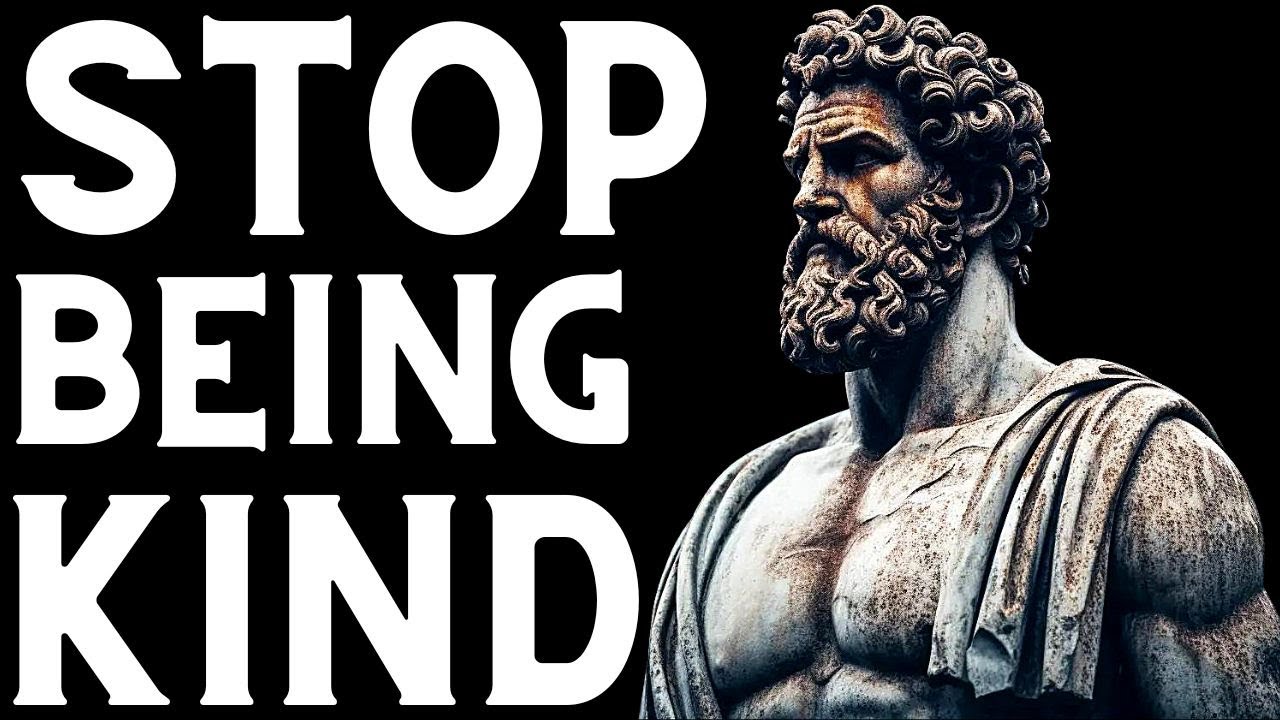
Imagine being the kindest person in the room, always putting others first, and yet people treat you like a doormat. Ever wondered why? What if the very thing you think is your strength is actually making you more vulnerable to disrespect?
Sounds crazy, right? But it's true. Let's dive into why kindness might actually be causing people to disrespect you.
Kindness is often hailed as one of the highest virtues. We're told to be kind, treat others well, and give without expecting anything in return. But what if I told you that kindness could backfire?
That the more you try to be kind, the more people might disrespect you? It might sound counterintuitive, but there's a deeper truth here. Today, we're exploring why kindness can lead to disrespect and how understanding this paradox can actually make you stronger, wiser, and more in control of your relationships.
**Number One: The Stoic View on Kindness** Stoicism is all about self-control, rationality, and the pursuit of virtue. But when it comes to kindness, stoics take a different approach than most. They believe in being kind not because you want to get something in return or because you expect others to treat you the same way, but because it's in line with your virtue.
Kindness, in the stoic sense, isn't about being overly accommodating or self-sacrificing; it's about acting from a place of wisdom, understanding, and equanimity. But here's the catch: if your kindness comes across as weakness, people might take advantage of it. **Number Two: The Law of Reciprocity (or Lack Thereof)** Kindness doesn't always get returned, especially in an unbalanced world.
We expect people to respond to kindness with respect or gratitude, but that doesn't always happen. In fact, some people might just see your kindness as something to exploit. This is where we dive into the psychology of human behavior.
Studies show that when people perceive you as too kind, they might start to view you as predictable and less powerful. The balance of respect and authority shifts, and suddenly they feel they can walk all over you. Let's talk about a real-world example: think about that one coworker who always shows up with coffee for everyone, always helps others, and always says yes when asked for favors.
At first, they're seen as a great person, right? But over time, they become the one people go to when they need something, and everyone else starts to take advantage of their kindness without thinking twice. They become the go-to helper—and not in a good way.
Eventually, their kindness turns into a trap, and they start getting overlooked or even disrespected. Sound familiar? **Number Three: The Power Dynamic** Now let's talk about power.
A big part of why kindness leads to disrespect has to do with power dynamics in human interactions. Power plays a huge role in how we treat others. When you're constantly kind and giving, you might unintentionally place yourself in a lower power position.
People, whether consciously or not, are likely to respect those who they see as strong, capable, and confident—traits that are often associated with being assertive or even a little firm. Kindness without boundaries, however, can often be mistaken for weakness. The Stoics were all about understanding power dynamics and making sure they didn't fall into the trap of being overly accommodating.
**Number Four: Boundaries Matter** One of the biggest lessons Stoicism can teach us about kindness is the importance of boundaries. You can be kind and respectful while still setting clear, firm boundaries. Without these boundaries, people won't know how to treat you; they'll push until you assert yourself, and that's where the disrespect can creep in.
Stoics believed in having control over their emotions, not letting others manipulate or dictate their behavior. When you set boundaries, you protect yourself while maintaining your integrity. Think about Marcus Aurelius, one of the most respected Stoics and emperors.
He could have easily been taken advantage of by others in his court, but he was known for making firm, rational decisions that were in line with his values. He never let kindness compromise his authority or control. It's a delicate balance: be kind, but don't let that kindness become a weakness.
**Number Five: The Role of Self-Respect** If you don't respect yourself, no one else will. It sounds harsh, but it's true. Self-respect comes from knowing your worth and not tolerating disrespect, no matter how kind you are to others.
Kindness should never come at the expense of your self-respect. The Stoics emphasize the importance of inner strength: knowing who you are, what you stand for, and never compromising on your values. If you respect yourself and know your worth, others are more likely to follow suit.
So, next time you feel like your kindness is being taken for granted, remember this: kindness is powerful, but it needs boundaries. Like and subscribe if you've learned something new today. Let's keep this conversation going in the comments.
Have you ever felt disrespected because of your kindness? Share your thoughts below. Stay strong, stay virtuous, and remember: kindness is about wisdom, not weakness.