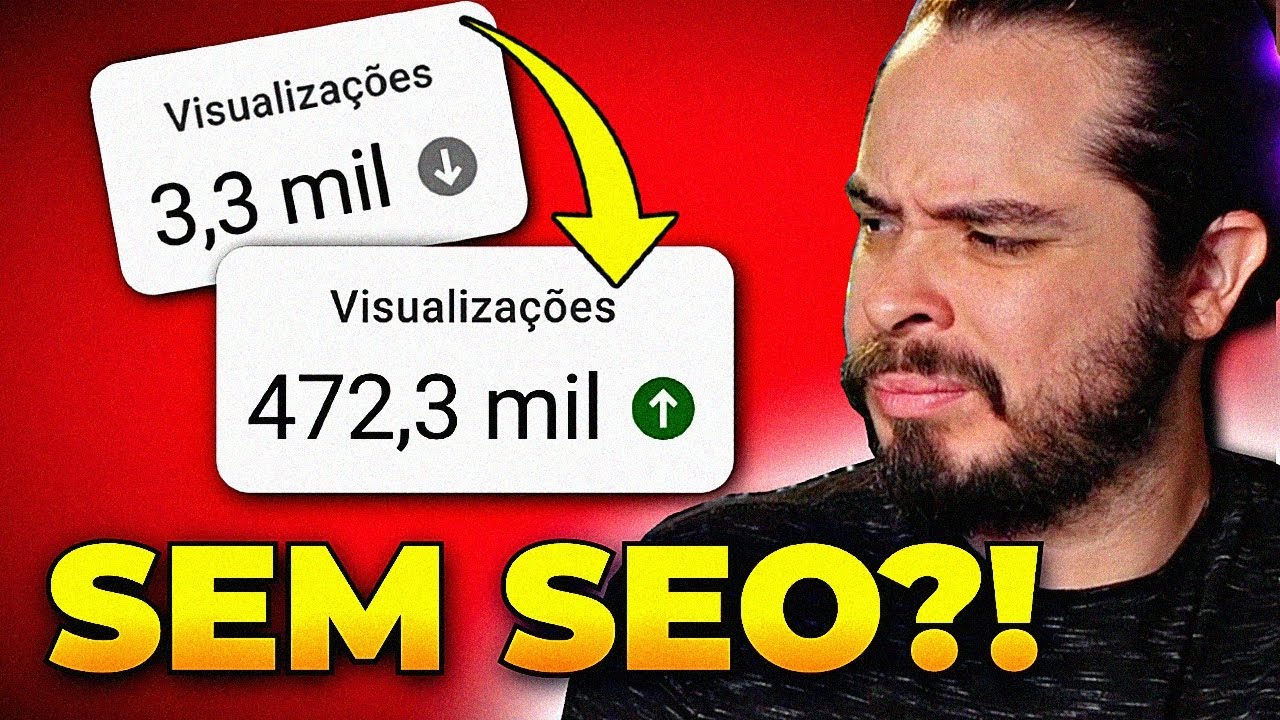
Anyone who is telling you that your videos aren't worth optimizing is wrong. Anyone who's speaking out, no matter who they are, anyone who says YouTube doesn't pay to optimize, it's not just about creating search result friendly content, it's not just about creating engine friendly content or algorithm friendly content. Optimizing means making your content easier to understand, both for viewers and for the algorithm, to know what's best when suggesting your video.
It could be in the sidebar, it could be on the YouTube home page, it could be a search result. Every time YouTube prints/displays your video as a suggestion, as a result, as a choice, YouTube will need a lot of information about your video. He needs to know what it's about, he needs to know what the topic is, he has to know what the subject is, what niche.
Because without that information, the algorithm doesn't know who to recommend. That's the basis, there are other factors. That's the bottom line: how does the algorithm know what a video is about?
The title, what you say inside your video, because the algorithm transcribes the subtitle that is generated and that you correct. If you're able to do that kind of thing, the words you use in speech, what you show within your video, the algorithm can identify. If you write on the screen, he can identify these things.
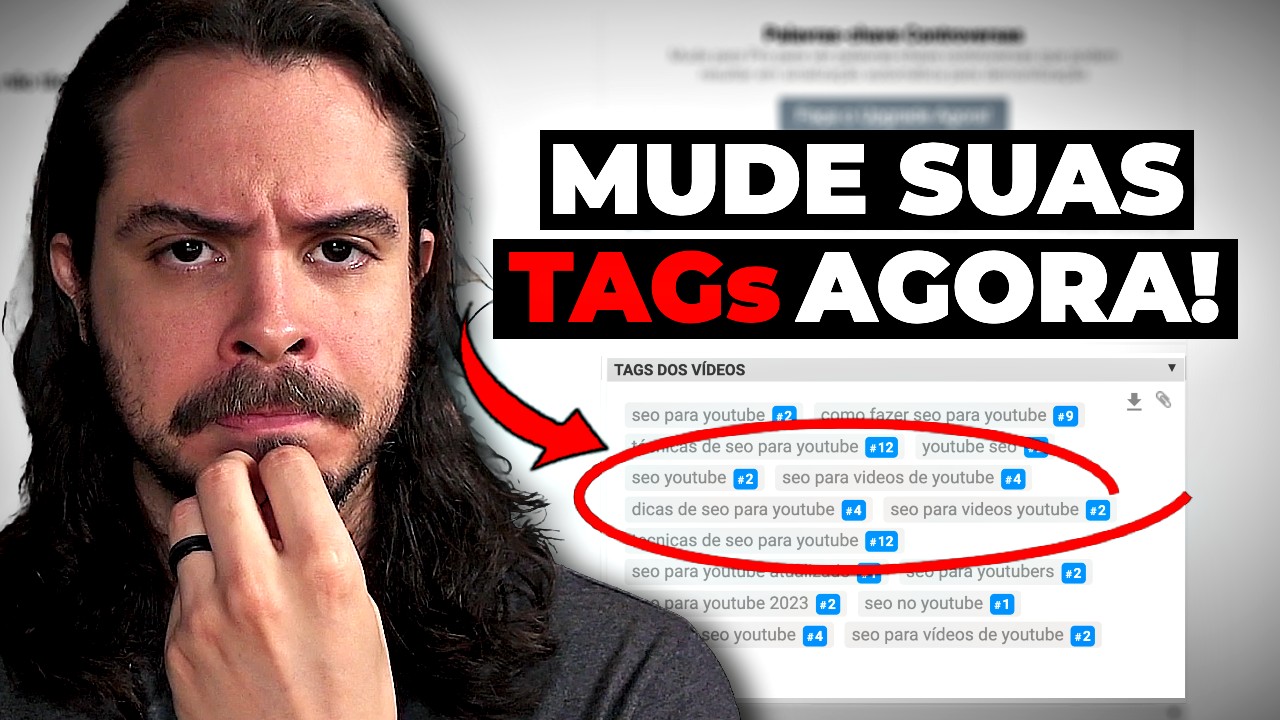
The words you write in your title, what you put in your description, even the famous tags, which are useless, can help bring some information about it, including saying what is not in your video or what are the correct connections. Because sometimes people write the wrong words and then the tags help to identify the right words and the wrong words, the hashtags, the links that you put in the description, on the card, on the final screen, if you insert yours in a playlist. All this is optimization.
To give you an idea, ranking factors on YouTube, I won't name them all, but I have a list of 29: the click-through rate, how your cover attracts people's attention, what's on your video cover. That's why you can't do random skins, that's optimization. Your video cover needs to be optimized to get people to click.
If you have a video that you didn't optimize, you didn't bother to put keywords in the title, you didn't bother to write the description, you didn't hashtag it, you didn't put it in a playlist, you didn't make connections with other videos on your channel , putting the link in the description, on the card, on the final screen, you didn't do any of that. But you're going to need to make a cover and a title that catches people's attention and that people know what the content is about and you talk in the video, you say something. What you say, the algorithm identifies as a topic, as a subject.
And if your cover and title weren't catchy enough and you don't get clicks, you won't get views. So when you create an eye-catching cover and a compelling title, you're improving your click-through rate. This is optimization, you have optimized your video.
There is no video on YouTube without optimization, people. There is no level of optimization. This video had some more, some less.
The more optimized, the more data, the more information, the greater your strategy and your connection with your audience and with the algorithm. And if you overlook many factors, you are neglecting the possibilities within the platform. You are missing chances, in other words, you are closing doors to generate more views.
If someone's video had a lot of views, supposedly not optimized, the person didn't put much effort or practically no effort in optimizing to get results. If it had been optimized, it would have had more results, more views, it would have attracted more audiences, the video would have been more recommended, it would have had more engagement, retention would have been better, the click-through rate would have been higher, the views would have come from more traffic sources , people would have shared more often. When you neglect your video optimizations, you stop thinking about the long term, you only look at the short term.
That's what I was explaining there. You have an impact on that community of people who already know your channel, they click, watch, interact. Then YouTube starts testing an audience profile around that profile of people who are already used to your channel.
Only you don't burst the bubble. Optimization makes you break the standard audience bubble that normally watches your channel. And then you are limiting the long-term growth potential.
In the short term, some of these results are amazing and they work really well. But the problem with YouTube is that things aren't short-term. Everyone who looks at YouTube with immediacy makes wrong decisions and doesn't sustain themselves.
That's why I say, everything on YouTube is in the medium and long term. I tell you to reduce anxiety. Stop looking for magic buttons and easy solutions for results.
Whoever told you not to optimize your video is trying to give you an easy magic solution, but one that is not sustainable in the long run. This person is hardly optimizing for real. Some level of optimization exists.
Remember what I told you? For those who are students of the Formula YouTube Expert, you've already seen this. I'm going to open the Formula class on YouTube.
You can rest assured. For those who are students, I have already listed 29 factors there, and I have a list of 15 more that I am still studying. This number will beat more than 40 factors that we are aware of and that are factors that we have control to make our content more friendly to the public and to the algorithm.
There is no such thing as creating videos just to show up in search results. My priority is to be more recommended and appear more on the homepage and sidebar of other videos. That doesn't exist on YouTube.
YouTube is concerned about the viewer. Wherever the viewer is, YouTube identifies whether there is relevant content for that person and recommends and places that video there. If you neglect optimizations, you are missing opportunities.
It's like saying to YouTube, "I don't want you to pass these recommendations along. I don't want you to give away my video to more people. " You're limiting click-through rate, retention, the chapters you put in your videos, the context of the information.
Because one thing is the topic, the subject of that video, another thing is the context of the subject of that video. The time you publish, the time of year, seasonality. All of these are factors.
If you publish a video today teaching people how to make an Easter egg as extra income, the algorithm will realize that this video, however well optimized it is, is not recommended now, because you are not in the right time. You've passed the time. People will only be interested in this subject next year, next Easter.
It has seasonality. It's no use starting to talk about the World Cup now, which won't happen for three years, because seasonality also affects the reach of your videos. So, you also have to start studying when is the right time to publish certain types of videos and types of content.
Because this will impact, this is optimization too. And then, people will do these crazy tests that are very short-term tests. Videos are different, people.
When the person takes two videos, A and B, and one video has optimization, he did as much optimization as possible, and on video B he didn't try so hard, he did as little as possible, the minimum necessary. Because the minimum everyone has to do: cover, title, write something in the description, some random tags and such, you say inside the video. So YouTube turns that into subtitles.
The minimum has, there is no video without any optimization. So, a very well optimized video and a standard video, without doing anything, without making any effort, the topics are different, the subjects are different, they impact people's interest differently. For example, I've used this example several times.
70% of YouTubers who watch my channel are not monetized, they haven't joined YouTube's partnership program yet. When I make a video about the partnership program, about monetization, about how to improve your earnings on YouTube, 70% of my audience ignores it. Because the person looks and says: "What am I going to learn this for?
My channel is not monetized yet. " And then you don't watch. Now, when I make the video teaching how to enter in YouTube's partnership program, to gain a thousand subscribers, 4,000 hours, is to retain your audience, so 70% of my audience is very interested in watching.
Then you explain to watch, you see that it is within the same topic, but the context makes a difference. If I tell you how to improve your channel's CPM and RPM, 70% of my audience will ignore it because they aren't monetized yet. So they don't want to know how to increase CPM or RPM, they are worried about how to join the partner program yet.
The subject is the same, it's monetization, but I have different interests. This generates a number of different views, regardless of whether I optimized as much as possible, as little as possible. Now, in a video that I already know has a lower potential for views, because of the topic, because of the subject, I need to optimize it as much as possible.
I have to worry, because this video, in the long run, is going to generate a lot of views. Because more people will join the YouTube partnership program, other people who don't know my channel will want to watch it, and I need to break the bubble of people who know me and who are on my channel and who follow my work. And that can only be done with optimization.
Look at my channel metrics on Discord. I didn't post for three months, and the channel grew due to optimization for searches. I sent now to look who is a member of the channel.
You can join these conversations, just like Carol ordered here. Oh, look, Carol didn't post for a period, and look at her views that didn't drop. Why didn't Carol's views drop during this period?
Because she used the videos that she published in this period, look, earlier, they are optimized. Apply the strategies. So, her channel suffers little when she doesn't publish, it suffers little or not at all, because there are still people watching the videos, there are people interested in the subject, and YouTube knows how to recommend it to these people.
And the best thing about Carol's example is that she 's showing a long period. See everything is long term. What was her channel for the last 365 days, and we have to look at our stats over a long period.
What is another positive channel optimization factor for Carol? It has a very well defined niche, a topic, a well defined main subject of the channel. She knows who her target audience is.
So, she's not talking to the wind. She's talking to the right people, in the right way, or the right interest. And it delivers content that meets the demand and expectations of these people.
It optimizes videos well to attract views, not just from search results, because YouTube optimization is not just about search results. It is also for you to be more recommended and for the algorithm to identify the right people to click on. And then you burst your bubble, and your channel keeps growing.
There is no YouTube channel without optimization. And if you neglect this in your videos, you're missing out on long-term growth opportunities. If the resource exists on YouTube, if the tool is available, if YouTube shows you, like, "do these things to improve interaction with your audience", if it's available, you have to use it.
Whenever people ask me, for example, tags. Tag is for what? Anything!
It's useless. YouTube already said that it's useless, but it's available there. So, use it while that tag field doesn't disappear.
You won't stop using or learn to use it the right way. It has the right way to use tags and the right way to optimize your description, recommend links, have playlists, place cards and end screen. This has a purpose.
Why does YouTube allow you to fix the automatic transcription and turn it into your channel's default subtitles? Because it has a purpose. What are chapters for?
They're not just for people to jump to the parts they want. They serve to make your content friendlier for your audience and for the algorithm to understand what is and what is not worth recommending. And there's another thing, Google owns YouTube and knows where else your videos appear for people too.
In Google search results, people don't just search on YouTube, not video, folks. People search Google for videos too. And if your video is well-optimized, it's more likely to appear in Google's search results.
And then you pull in beautiful views from outside sources. Microsoft's Bing are also search engines that recommend videos, and they recommend based on optimization. This is the point that we cannot forget: optimization is essential for your channel to have a long-term life, if you don't want immediate and very short-term magical results that are not sustainable.
You have to do optimization. And look, that's the power of the community there on Discord, for those who are members of the channel. This is power, because we exchange information, we discuss.
Carol, really, I was there. She put it on the forum, in the part where we are discussing optimization, the idea she has for the title of her video, and she went there to ask for her opinion. It's the place for us to debate, you can try it out there and ask people's opinion about a cover.
It doesn't have to be just cover art for your own channel, but covers for other channels. Guys, what do you think this person did here? What was the strategy behind this video?
Look at the script of this channel, look how interesting. Look, my graphics look like this. Having someone to talk to, interact with and learn from.
We get out of these silliness of trying to guess what works and what doesn't. Not even on YouTube with results that are apparently magical. Anyone who wants to be a member of the channel, the link is down here in the description.
If you want to know how to optimize your videos so you don't miss your channel's chances of growth, there 's a video here on the channel where I talk about optimization techniques to improve your click-through rate and retention. All you have to do is follow along, subscribe to the channel and look for these videos. Then yes, you will succeed.
We want to dominate YouTube, we want to control our content production. If that's your goal, watch my videos.


![💥 [DOES NOT MONETIZE] 10 types of Channels that YouTube REJECTS!](https://img.youtube.com/vi/59XJhKBk4N8/maxresdefault.jpg)
![[SEO para Youtube] Como Fazer SEO para Youtube e Ranquear na PRIMEIRA PÁGINA](https://img.youtube.com/vi/Ey0KyKVH7Ns/maxresdefault.jpg)
![💲 Vamos GANHAR MAIS Dinheiro [MUDOU a Monetização do YouTube]](https://img.youtube.com/vi/UywLJRLufe0/maxresdefault.jpg)