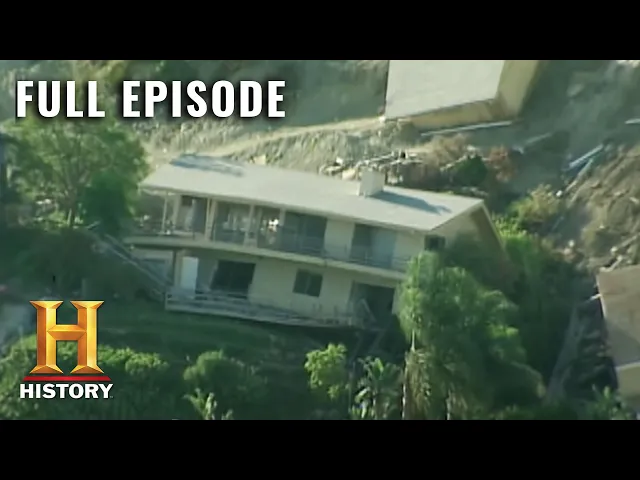
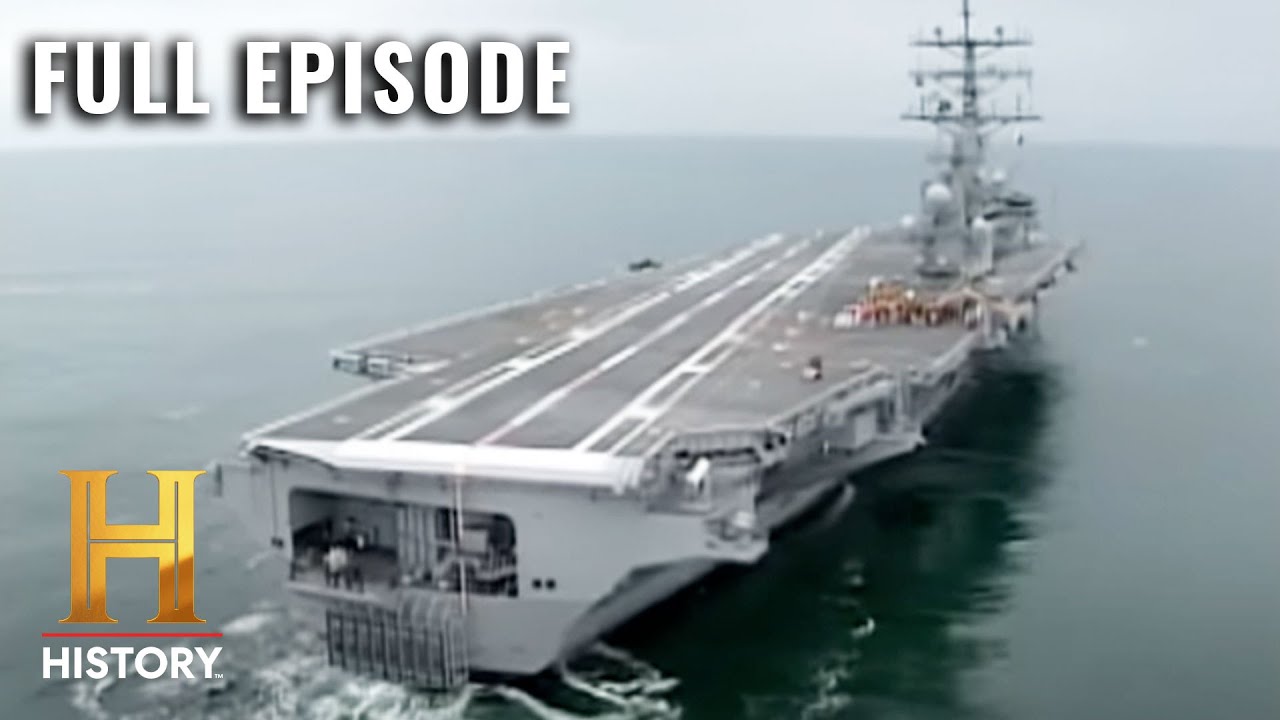
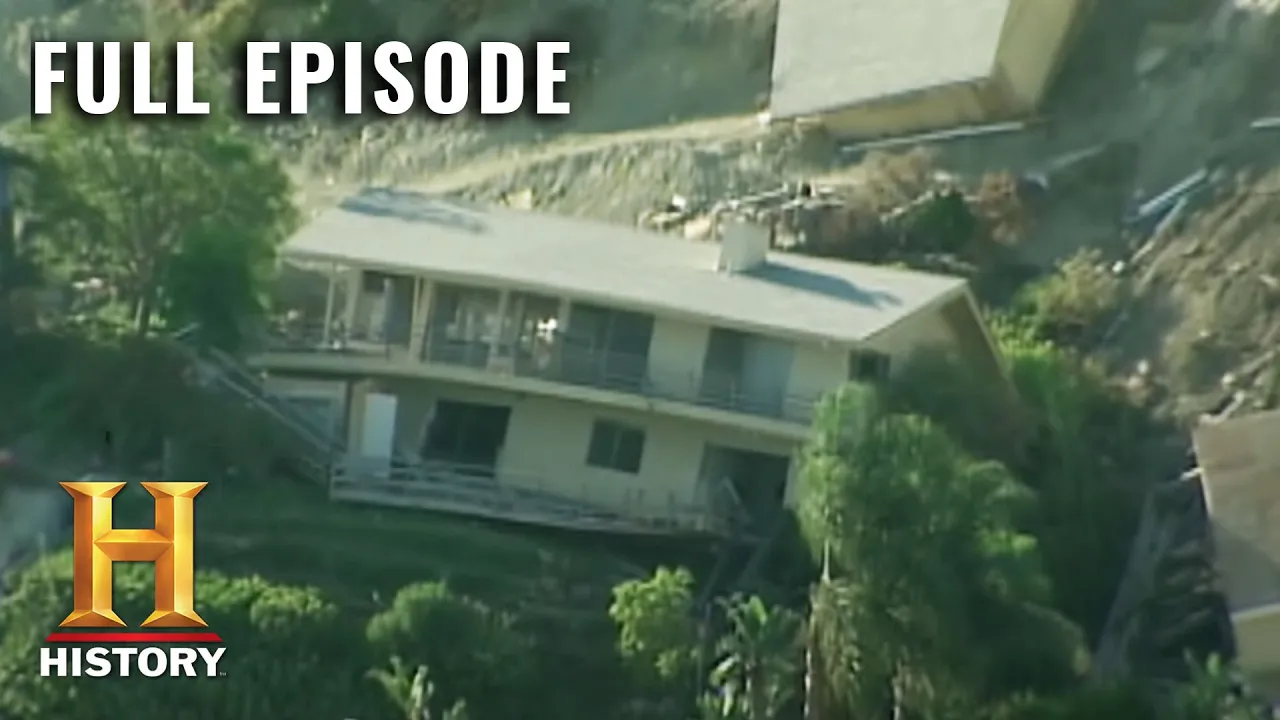
[Music] torrential rains reveal engineering flaws in southern california million-dollar homes slide down a cliff and a major road becomes a gigantic sinkhole in france the roof of a monumental airport terminal collapses off the coast of virginia an aging coal ship sinks in rough seas killing 31 mariners a deadly plane crash changes the face of passenger aviation and a tiny imperfection creates big problems for one of the most acclaimed structures of the 21st century now engineering disasters on modern [Music] marvels [Music] persistent heavy rains wreaked havoc throughout southern california during the winter of 2004-2005 los angeles received 37 and a quarter inches of rain that season making it the wettest year the city of angels had seen in 121 years but months would pass before the rains caused some of the worst damage on the perfectly sunny morning of june 1st 2005 residents of bluebird canyon in laguna beach california were awakened by strange noises i heard really loud popping it almost sounded like a bb gun like kids in the canyon and when i realized it was coming from under the house is when i kind of panicked so at this point i ran back to the front of the house i opened the front door and i actually saw my curb separating from my walkway we could feel the house moving and it was very loud the cracking the popping and we ran outside i think we were the first neighbors out but they quickly followed everyone was screaming asking what happened what happened what's going on what was going on was that a seven acre wedge of land was breaking away from the hillside it would send these residents and their homes sliding down the slope houses cracked streets buckled residents ran for their lives and i grabbed my two-year-old out of the crib my sweet pajamas i just pulled my arm and i knew it right then the house was sliding i didn't know what to do so i just ran into my four-year-old's room and i put out my arm and i said get up and grab mommy's arm i said the house is breaking well i guess you know you might say all hell broke loose we tried to get off the street but as we tried to to go down the road the street actually opened up it rose probably about 30 feet into the air what we didn't realize was that the street was falling that these houses were coming down flamingo road located near the top of the hill and the houses on it plunged about 75 feet what happened is over a half a million cubic yards of earth gave way and literally avalanched down the hill into the bottom of bluebird canyon and that's about the same amount of dirt that would fill over 10 000 swimming pools it's a lot of mass moving very fast with a lot of energy now when this landslide first occurred many of my colleagues were kind of surprised it wasn't a rainy day i'm used to landslides happening on a rainy day well deep seated landslides like this don't necessarily happen on a rainy day they happen when the water table has been elevated and it takes many months for water to percolate down deep into the earth usually seasonal bursts of heavy rain dump 12 to 13 inches on southern california the rain runs off before it's absorbed however the 30 plus inches of rain that soaked the area during 2004 2005 was a persistent rain over a long period of time saturating the earth from october to may this landslide is a bedrock landslide and the bedrock in this area is what we call the tapanga formation and it's a mixture of sands and silts and clays in particular there's a layer at a depth of anywhere from 50 to 80 feet the clay that the landslide failed on is a very plastic clay and by that i mean when you get it wet it's a consistency of play-doh not very high strength material so when you tilt that up and then you compound the problem by having a very heavy rainfall year twice normal rain that builds up water into this and softens the clay that led to the failure the deep landslide claimed 20 homes but miraculously no lives the interior structures of the homes are just crumbled into into hundreds and thousands of pieces walls falling down granite countertops broken in half cabinets ripped off of walls it's complete devastation in most of these homes that you see behind me i would call this an engineering disaster simply from the failure to recognize that this was a hazardous area that's a great challenge and it's one thing that geologists need to do whenever they investigate an area for new development but clearly in this case in retrospect we can tell that this was an unsuitable place to build houses this was not the first time a hillside gave way in bluebird canyon a huge landslide consumed part of the neighborhood on october 1 1978 just a few hundred feet from the 2005 landslide 24 families lost homes then most of the homes on the hillside were constructed before building codes were strict as they are today [Music] at the time these houses were built there really wasn't any kind of geotechnical analysis or geologic assessment of stability they more or less just came along and graded the flat pad and built their houses i'm confident that they didn't know what kind of risks that they were facing in august 2005 red-tagged homes were demolished and a massive hillside reconstruction project began work attacking this slide stabilization in several phases first most important things we have to do are to get the canyon opened up and put in a storm drain system and secondly we're going to be stabilizing the head scarf area so that we don't lose more homes and possibly a street up above those homes we'll be putting caissons and tie backs up there and we'll also be removing all the homes on the landslide and degrading it to seal the fissures and try to establish drainage so that we don't end up with a lot of mud and debris flows when we're all done with the repair plan we will have put back the slope that was there before but way better it will be anchored into the bedrock like it should have been in the first place and we'll have put in with it uh proper storm drains that will when it rains hard we'll collect that runoff and get it underground in a way so that it doesn't saturate the soil and mobilize it again and it will be a perfectly safe building site following current building codes today the cost of the repair plan is estimated at over 10 million dollars to be paid by the state the city of laguna beach and bluebird canyon residents [Music] most residents plan to move back onto the hillside once it's repaired placing their faith in the skill of engineers when you wonder whether homes should be built in places like this at all when they have discovered these kind of geological risks i think the answer still is yes carefully surgically as far as this disaster goes it is a disaster because of a lack of engineering had there been proper engineering before and during the house construction this would have been prevented while this disaster came months after the los angeles storms other engineering disasters occurred during the height of the rains on february 19 2005 after weeks of downpours rainwater filled a crack on busy tahunga avenue in sun valley california a part of los angeles quickly the crack expanded when i first heard about the hole i was just starting to leave work on a saturday morning and we noticed that the sidewalk about where it starts right there was starting to cave in within a few hours the fissure had turned into a 30 foot long fault that bisected the road initially the hole measured about 40 feet in diameter but the sinkhole kept growing the rushing water and falling chunks of roadway crushed a sewer pipe and severed a power line turning the roadway into a virtual river we came back on sunday to help them to fill it with concrete it had already caved in under the street and it was starting to go back gradually as it rained more and more it was raining the hardest i've ever seen since i worked here a neighboring business provided city workers with 250 cubic yards of concrete to help fill the sinkhole we were trying to pour concrete inside of the piece that was missing but every time we poured it in the water was just washed away because the water was coming so fast and so hard that it didn't have a chance to stick the chasm eventually swallowed more than 200 feet of pavement 250 000 cubic yards of soil would eventually wash away to make things worse tahunga avenue was flanked by a landfill on one side and a sand and gravel pit the size of a football field on the other the growing sinkhole joined the existing pit at 10 30 p. m on february 20 public works supervisor rory shaw was monitoring his workers as they repaired the sinkhole suddenly the ground he was standing on caved in i'm watching him from the other side and no more all i hear is this noise and the rumbling of the metal and and the wash and the rapids the truck was parked on a piece of the road that was hanging over and when it started to crack and they could they could hear the road breaking away he tried to run it to the truck i believe when he got in or he got up next to the truck the street just caved in and the truck fell in the hole rory shaw died in a raging turret falling victim to a failure of engineering tahunga avenue had been built over a dry riverbed without an underground pipe system or curbside channels to divert rain waters in southern california dry river or creek beds called arroyos are subject to winter flooding a key point to understand is there is no such thing as a former riverbed water continues to flow into the area water simply doesn't flow on the surface it has to go somewhere or it's going to percolate through the sand and through the gravel whatever else is under there it will percolate or if you have in your road a significant crack as we often do having asphalt pavement that water with his energy will be scouring the underlying bedding through that crack once you start at the crack that crack now from the edge of the road will be unzipping that crack upstream to where the water is coming from and eventually you have this huge huge passive hole still the placement of tahunga avenue is not unique the bottom of the canyon or at least close to the bottom of the canyon is always an attractive place to run a street around the road historically people did it for thousands of years but what needs to be taken into consideration is the fact that those streets do become a water collector and that they cannot be left to their own devices in handling of that water [Music] today the hole remains a visible reminder of the damage caused by heavy rains and lack of drainage on tahunga avenue the city estimates it will cost up to 100 million dollars to repair the whole and build a proper flood control infrastructure that could take years from 1969 to 2004 presidential disaster declarations were issued for 60 landslides 12 of which occurred in california on june 25th 2003 france celebrated the grand opening of terminal 2e at charles de gaulle airport in paris however an engineering catastrophe would turn jubilation into mourning before its first anniversary [Music] terminal 2e was part of a projected state-of-the-art core terminal hub for air france it was being built to handle up to 17 planes at once and 10 million passengers a year aeroporta paris or adp the airport authority for the greater paris region in collaboration with air france spent almost one billion dollars to build the innovative structure made to show off french engineering skill and panache [Music] it's just a joyous space and you need a joyous space when you're coming off the transatlantic flight at 7 00 am and you're going to be in the airport for a few hours waiting for a waiting for another flight out the architecture a structure with no interior columns the futuristic tunnel was admired by many including travelers and workers who arrived at the terminal on may 23 2004 [Music] 11 months after opening celebrations suddenly several tons of concrete steel and glass collapsed as a 98-foot section of air france's boarding lounge roof fell in it's very long but it's also huge in the span it's nearly 100 feet wide a concrete on one side slit of the support it fell to the ground on the other side the concrete literally flattens the roof of the of the oval comes to the floor now sits on the floor there huge amount of concrete remember we are talking one foot sick concrete so that's a lot of weight that's 60 pounds per square foot when the heavy concrete roof crashed it killed four people and injured three others the collapse astonished many engineers and designers just months before the terminal had been praised for its technical prowess how could it fail clues lie in the startling design the roof of the boarding lounge consisted of a concrete vault pierced with openings to allow light to pass through and an exterior metallic structure on which the glasswork was fixed pillars supported the entire construction the oval-shaped structure sat inside a glass shell where the temperature and environment were constant the glass encasing rested on tensioning cables that kept the oval from bulging out it's a structure that gets stronger the more you press on it and the classic compression structure that that people know about is an egg if you think about an egg very very thin shell compared to the size and weight of the egg and yet it's actually pretty strong it takes some work to crack that egg on the other hand if you get an egg that has a crack in it that did develop a crack it's very weak structure on this unusually cold may morning the terminal's concrete structure was extremely fragile prior to the collapse the temperature dropped sharply from 77 degrees fahrenheit to just 39 degrees [Music] the cables are exposed to fluctuating outdoor temperatures that cause them to expand and contract more than the concrete on a hot day the cables expand and slacken reducing structural support and increasing the likelihood that cracks will form now comes an evening after hot day the cable suddenly cools down we know that just prior to the collapse there was a massive drop in temperatures the cable shortens what happens when the cable shortens it wants to straighten out it cannot straighten out because the struts are holding it in the position where it is the force in this strat is increasing dramatically but the concrete was designed to handle the extra force from the struts but when you start dealing with those changes in the forces in the strut that i described to you related to temperature related to the concrete now when it cracks it becomes much more flexible so it's no longer the rigid structure the strut punches through the concrete shell loses its support and goes flat and that's what happened the perfect eggshell was further compromised by necessary structural elements of the terminal in the section that collapsed you have three very large entry ways right next to one another three protrusions that mar the perfect smoothness of the shell that disturbs the symmetry of the structure no longer can the structure redistribute the loads freely if one area gets slightly overloaded you have perfect symmetry it will shift the load elsewhere but if you have those sharp discontinuities such as a whole cut in it that's no longer a nice and self-adjusting oval symmetric structure in february 2005 20 months after the collapse the french minister of transport released the findings of an administrative investigation the report stated that the structure had been slowly deteriorating since its inauguration in june 2003 and they were very very careful about spreading blame that well the metal wasn't quite right with the concrete the foundation wasn't quite perfect the design had a few little problems in it but almost certainly the failure started where the shell was pierced massively from the side in may 2005 adp announced that it would rebuild the damaged roof of terminal 2e pierre groff president of adp said that the only way to ensure passenger safety was to replace the entire curved roof shell the completely renovated terminal 2e is slated to reopen later in the decade and will cost an estimated 195 million dollars [Music] terminal 2e was designed by internationally renowned french architect paul andrew coincidentally he also designed terminal 3 at dubai international airport which collapsed during a construction accident on september 28 2004 [Music] on february 12 1983 a routine shipping run from norfolk virginia to breaking point massachusetts turned into a fatal voyage and one of america's worst maritime disasters it was a bad storm the weather bureau called it the worst east coast storm in 40 years the marine electric bulk carrier similar to this ship was transporting more than 24 000 tons of coal a crew of 34 merchant mariners were aboard most of the crew and officers considered the marine electric a real milk run they always knew that they were only 30 miles off the coast and if something went wrong the coast guard could come out and get them but as the marine electric left the chesapeake bay in the early morning hours of february 11th bad weather off the coast was setting a fatal scenario in motion then in the dead of night on february 12th the situation aboard the coal carrier went from uneasy to desperate that it was about 1 30 when the ship was getting into trouble the seas they were breaking coming right down the deck down to number two and three hatch we said we're in very serious trouble her bow was noticeably heavier as the ocean waves crashed onto the deck less than two hours later the marine electric was listing to starboard and going down in 29 degree water so we started to lower the life boat starboard lifeboat and just as we were doing that the ships capsized right down on their side in less than a minute this happened the ship made a noise that one of the officers described like water going down a drain magnified a billion times it capsized onto its right side trapping many of the men under the ship spilling all of them into the ocean the entire crew of 34 men plunged into the frigid waters with no survival suits 31 men would die that night what fatal engineering flaws caused this disaster the marine electric was a world war ii tanker ship also known as a t2 tanker she was nearly 40 years old they weren't really designed to last forever the the feeling was you made about 30 trips that was going to get torpedoed who knew what would happen after world war ii these ships were used as commercial vessels and oftentimes converted to different uses in the 1970s and the 1960s it was common for these vessels to be in effect cut in half and enlarged by inserting a midsection the common term for this process was jumbo eyes the marine electric was jumboized by more than 80 feet making it 605 feet long now of course you can probably do this safely if you go back and examine the engineering drawings and figure out how to how to properly increase the size and where to supplement the framing of the ship i think it's fair to say this was never done yet while jumboizing probably weakened the marine electric it wasn't the flaw that sealed her fate chief mate bob cusick was part of the marine electric crew for five years and a mariner for over 40 years just weeks before the disaster he pointed out innumerable weak spots throughout the ship including the 40-foot wide cargo hatch covers i'd draw up sketches and exactly where it was the holes and submitted to the captain he submitted them to the steamship company one of those things is like a greek tragedy the compromised hatch covers were not properly repaired we'd just keep patching them we'd put some duct tape over them and then some we called it red hand which like bondo using a hole in the car that was over 97 different uh holes those cargo hatch covers would doom the marine electric but it would take a legal battle to reveal the truth bob cusick paul dewey and eugene kelly were the only survivors of the marine electric tragedy and led the crusade a steamship company has to show that they didn't send the ship out in unseaworthy condition it's a big difference if they know about it or they don't know about it the bitter battle started with the victims families on one side and marine transport lines or mtl the owners of the marine electric and the coast guard on the other the official marine board of investigation started the week after the ship sank but unlike other investigations this one was an investigation that had actual witnesses who had survived and in this case all three of them abandoned the code of silence and wanted to tell the true story of how their comrades died and why mtl set out to prove that the crew and especially bob cusick was at fault for the sinking it hired the best underwater divers with the newest high-tech equipment to examine the wreckage they figured if they could show that the crew namely me or i was the chief officer that i had loaded the ship wrong or i hadn't secured the hatches or the anchors or something that would have been off the hook but it soon became clear that the crew wasn't at fault the survivors of the marine electric revealed that inspections of the ship conducted by both the coast guard and the american bureau of shipping were cursory at best and in some instances completely false [Music] the investigation now focused on the weakened hatch covers later testimony would show that the coast guard certified that the hatch covers were of of a good quality and of a good strength when the hatch covers at that time weren't even on the ship what cusick was able to show on the stand was that the hatch covers were riddled with holes that the men were so afraid of the hatch covers that they wouldn't walk on them for fear of falling to their desks into the bottom of the ship they had patched them and patched the patches the pounding waves had burst through the disintegrating metal hatch covers and into the number one and number two cargo holds dominic colicchio captain in the u. s coast guard former merchant marine and part of the marine investigation board analyzing the marine electric sinking didn't turn a blind eye he asked the hard-hitting questions and didn't relent under pressure because of his tenacity the final report made an impact well beyond the marine electric case essentially the report findings said that a great number of the of the ships in the american fleet were unsound the inspections that the coast guard had done were inadequate and the board also said that the american bureau of shipping had a conflict of interest in inspecting his ships because their fee was in fact paid by the ship owners because of kalikio's determination mandates were created to improve the shipping industry and prevent similar loss of life well the legacy of the marine electric is a very positive one its loss arguably the worst loss in american commercial maritime history produced a lot of very positive changes number one there were much tougher coast guard inspection standards placed so that these old ships were removed from the water secondly ships that plied the north atlantic during the winter had to carry survival suits and the third major reform was the institution of the now famous u.
s coast guard rescue swimmer team that helps people who are in very cold water who can't help themselves in 2001 a memorial was erected at the massachusetts maritime academy to the 31 souls who succumbed to the sea that fateful night by giving their lives to the ocean the crew of the marine electric actually prevented countless others from suffering the same fate they left behind a legacy of reform and justice the marine electric was not the only t2 tanker to meet a disastrous fate in frigid waters on february 18 1952 two t2 tankers broke in half and sank off cape cod when their high sulfur world war ii era steel became brittle and failed during a severe nor'easter the aviation industry as we know it today has been shaped by ingenuity daring and disaster one of the most influential disasters occurred the morning of march 31st 1931. a fokker f-10a a tri-motor airplane was on the field in kansas city and ready to fly with eight passengers and crew it would be their final journey in fog ice and very low cloud cover flight 599 suddenly took a nosedive and crashed near bizarre kansas as we came over that hill right south of us here we could see the tail section sticking up right out of the middle of a big pile of rubble all aboard the plane were killed including one of america's most beloved heroes university of notre dame football coach newt rockne to this day he's regarded perhaps as the greatest college football coach that ever lived but at this day he certainly was the greatest of that breed rockne led the catholic university of notre dame to three national championships and five undefeated seasons during his coaching tenure they do not justify the faith those lives do not feel sorry for themselves but they stick in there and give the best out of themselves until the last whistle blows rockne boarded the twa fokker f-10a at the peak of his popularity the united states plunged into mourning when it learned that the sports legend had died it didn't take long for the aeronautics branch of the government to begin an investigation it wasn't investigated in the most rigorous manner because let's face it there was a lot of experience investigating commercial aircrafts so there's been a huge amount of speculation about what happened in that crash when the federal civilian aircraft agency attempted to investigate this crash they continually bungled it at that point when commercial aviation was getting more prevalent and passengers were flying and particularly because of the celebrity status of newt rockne they started looking into why it crashed so that we can prevent this from happening again it had been only 28 years since the wright brothers flew at kitty hawk the predominant use of aircraft was for u.