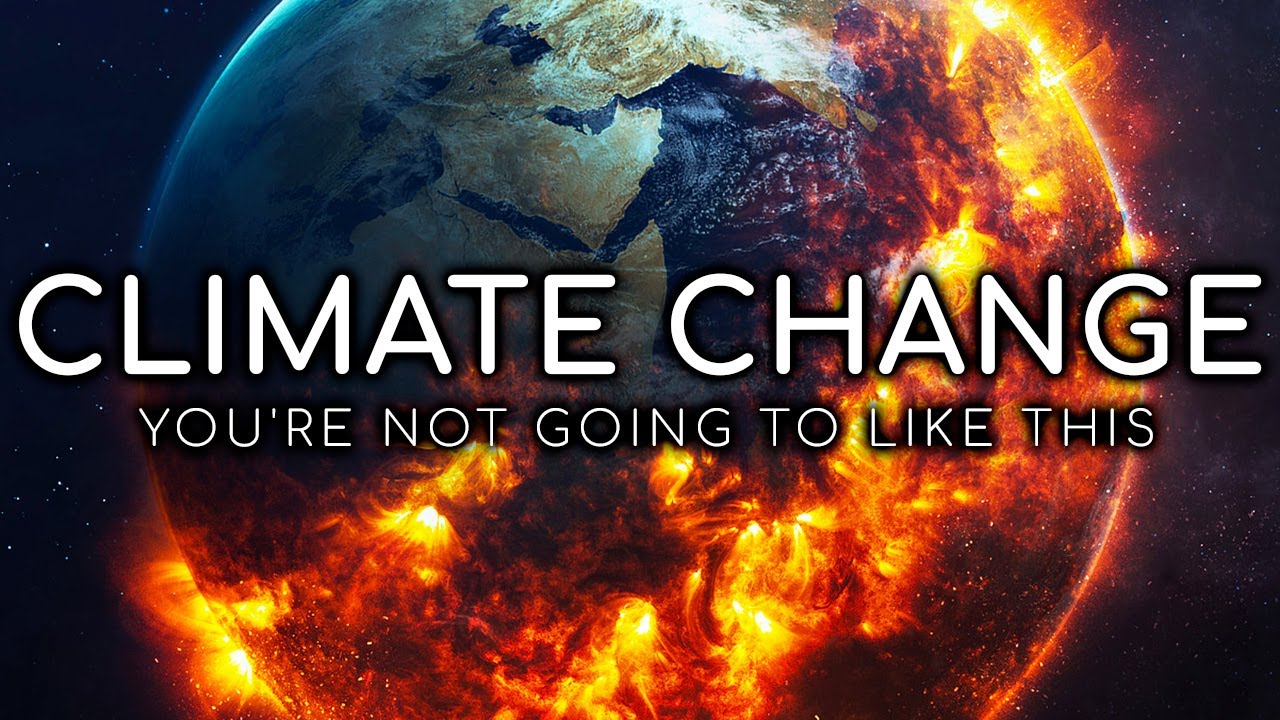
4. 6 billion years ago, there was nothing here but gas and dust. Then the gas and dust collapsed into a spinning disk with a fiery core.
The disk separated into rings that formed planets. . .
that were further shaped by collisions with comets and asteroids bearing ice. But only on the planet Earth would that ice melt into a liquid ocean where life would first form. Where microbes generated oxygen that created an atmosphere and allowed plants and animals to emerge onto land, where they were sustained by water that fell from the sky.
The air, oceans, water, and land of Planet Earth became the sole refuge of life in the solar system, home to billions of species that rose and fell in the face of planetary disasters. Then came humans. If the history of our planet was compressed into a single day, we arrived at just three seconds to midnight.
And in that geological blink of an eye, we’ve become a dominant force, shaping all life on Earth. Today, greenhouse gases from human activity are leading to uncontrollable megafires, rising sea levels, and extreme weather that’s transforming the planet. But it’s not just the atmosphere.
Humans are fundamentally disturbing every major Earth system, from freshwater to the oceans and land, of the only habitable planet in the known universe. And as the clock ticks down towards planetary disaster, our only hope is to harness the power that brought us here and change course. .
. before it’s too late. [PLANET A] [THE ANTHROPOCENE] [WICK WOODLAND, LONDON] Here’s an earthworm, a European earthworm.
. . which we would find all over this country.
But if we dug in the same kind of woodland in North America, we’d find the same species of earthworms. Because when early Europeans went over, they took some crops with them, and they took their farm animals, and some earthworms hitched a ride. And they've now completely taken over the earthworm community across North America.
Humans have created a new habitat. Simon Lewis is an expert on what scientists are calling the Anthropocene or age of man. He studies how humans have become the dominant force transforming life across the planet, from the fish in the ocean to the worms in the soil beneath our feet.
We humans are a globally significant force of nature. We don't live in the Holocene, the formal term for the geological era that we are in. We live in this new term, the Anthropocene.
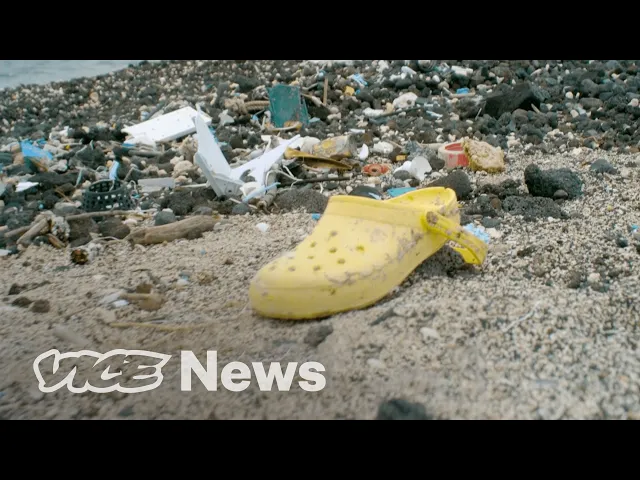
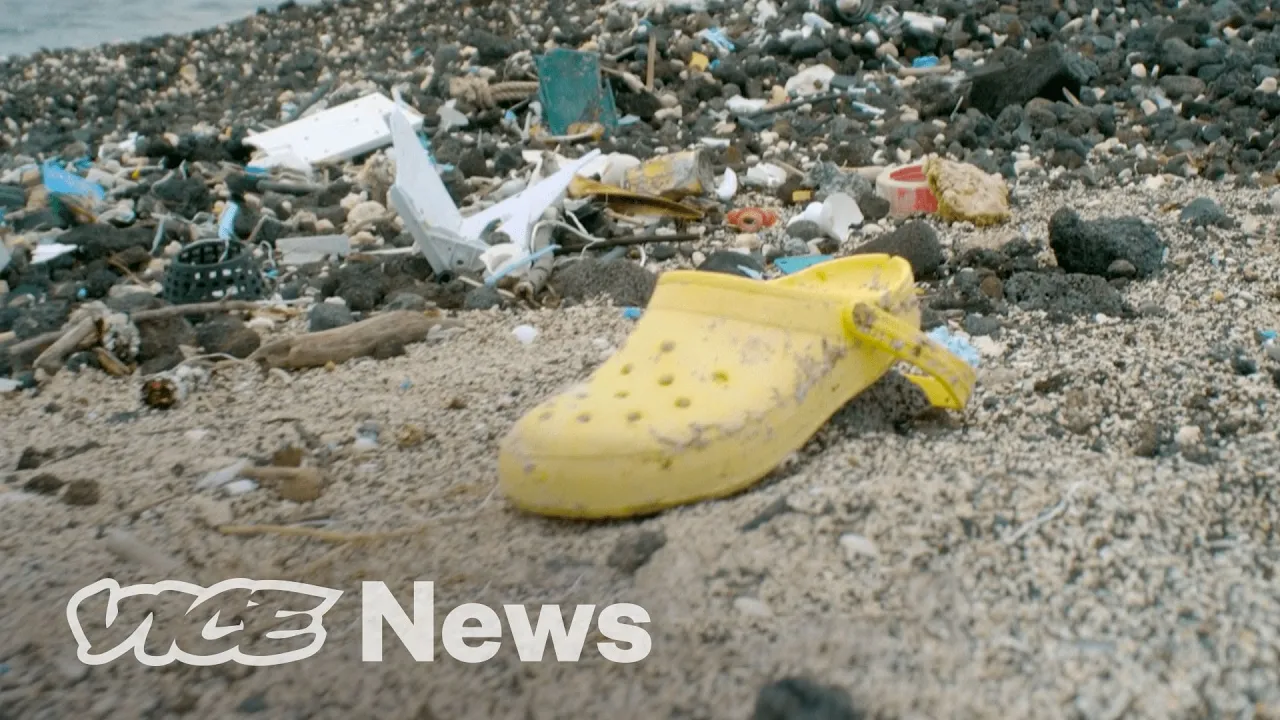
We’ve produced enough concrete to cover the Earth in a layer of concrete two millimeters thick. We’ve produced enough plastic on Earth to wrap the entire Earth in plastic with no breaks. We are having an impact on the nitrogen cycle in a way that's not been seen for 2.
5 billion years. In the journey that follows, we’ll go beyond climate change and explore the entirety of our impact on the planet. We’ll travel across the world, on the ice of the Arctic, and the rivers of India, to the shores of Mozambique, and the jungles of Nigeria.
Because only by understanding those impacts and the root causes, can we ensure that the Anthropocene doesn’t also mark the end of humans. The most immediate threat is climate change. [AIR] It’s the atmosphere that creates the weather and the climatic conditions that all species are adapted to.
So, all of life on Earth is intimately connected with the atmosphere. But when humans started burning fossil fuels for energy to drive the industrial revolution, they began altering the atmosphere on a global scale. As humans put more carbon dioxide into the atmosphere, the temperatures rise and there's more energy in the climate system.
And that often means that you can have more extreme events. These hurricanes are more frequent and are getting stronger and more powerful and more deadly. We have to plan for a more intense rainfall than we have ever seen before.
The five-year rain event, one event in five years, we’re seeing five times a year. Hurricanes are getting stronger. Heavy downpours are getting more frequent.
Heatwaves are killing more people. It is these extreme events that we most associate with human impacts on the planet. And there’s no event more extreme than fire.
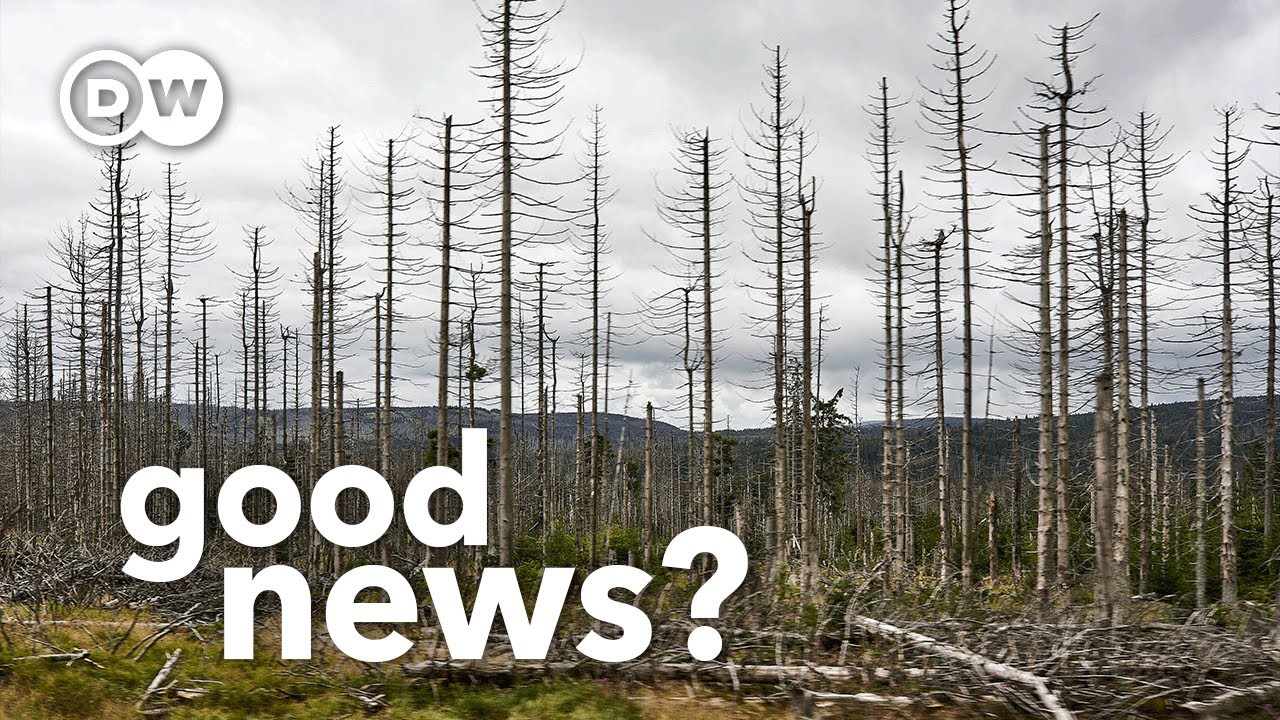
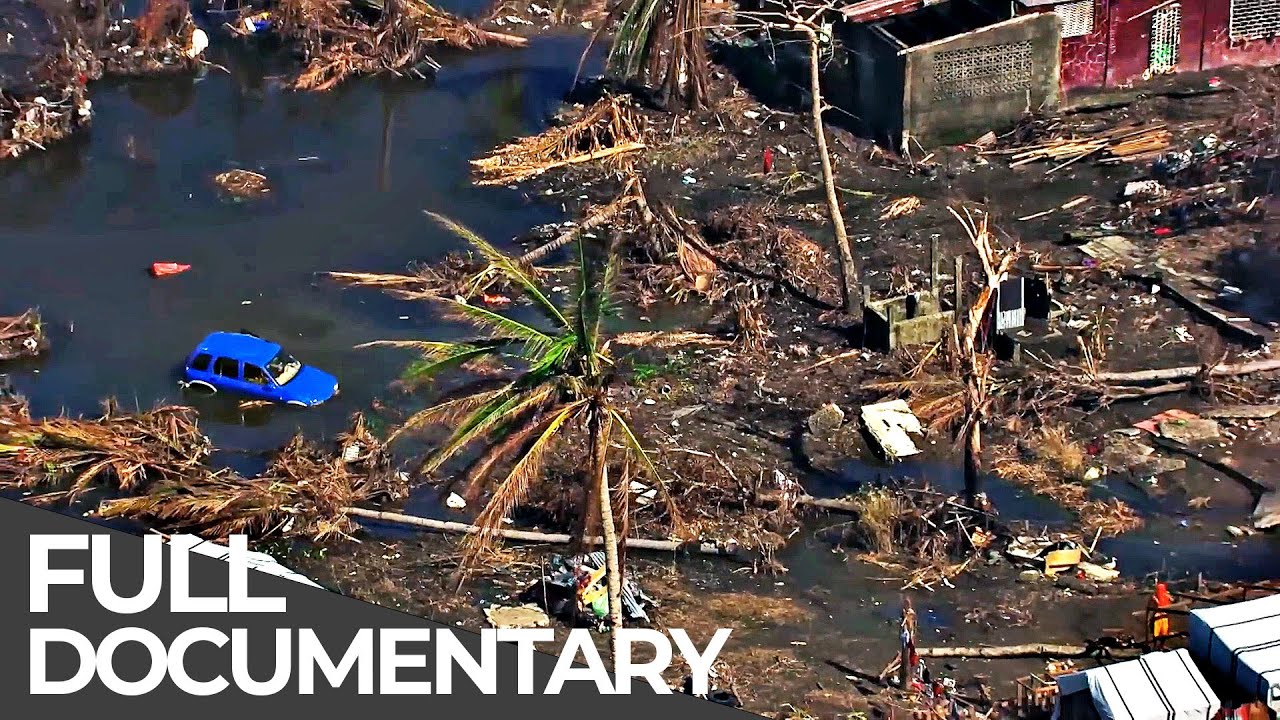
As emissions rise, the planet warms, and droughts are longer and hotter, which is why we’re seeing frequent and violent infernos rage across the globe. In the US, California’s wildfire season is starting earlier and becoming more devastating. [PARADISE, CA] The Camp Fire in Paradise, California, exploded so quickly and with such fury that many residents were unable to escape.
More than 50,000 people were forced to evacuate. And hundreds ended up living out of their cars. Rudy Melashenko is a school bus driver who was finishing his shift when Paradise was evacuated.
It was a bus route from hell in Paradise. That’s the way I’d describe it. Heading north of Highway 70 is a mandatory evacuation zone.
This is the very beginning of the fires, OK? What’s so striking about this, it says 9:11 am, and it’s pitch dark. It’s pitch dark.
Everything was so black, I couldn’t even tell where I was, and I go this route every day. Holy smokes! That’s right next to me.
Oh my gosh! You’re in bumper-to-bumper traffic, and the fire’s right on the side of the road. Did you think, I don’t know, maybe you wouldn’t make it?
This looks very bad. When it was all over, 86 people were confirmed dead. If emissions aren’t brought under control, wildfires will only continue to grow in frequency and intensity.
But while fire may be causing devastation locally, a rise in temperatures is threatening to transform the planet on a much larger scale. What I worry about is the melting of the Antarctic ice sheets. Because once that starts, there’s no technology or other intervention, even in the distant future, that could reverse that.
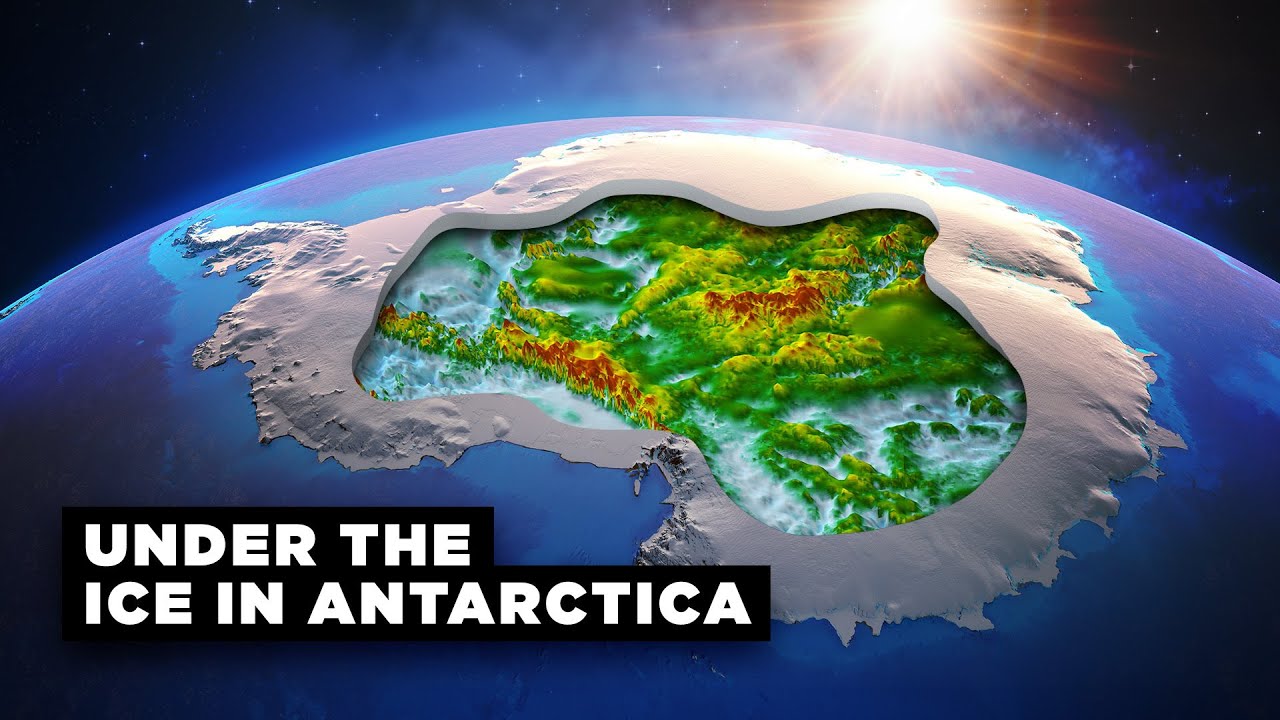
Antarctica’s ice sheet is three miles deep, covers an area of the size of the contiguous US and Mexico combined, and holds close to 70 percent of the Earth’s freshwater. If it melted entirely, sea levels would rise by 200 feet. That likely wouldn’t happen for at least 500 years.
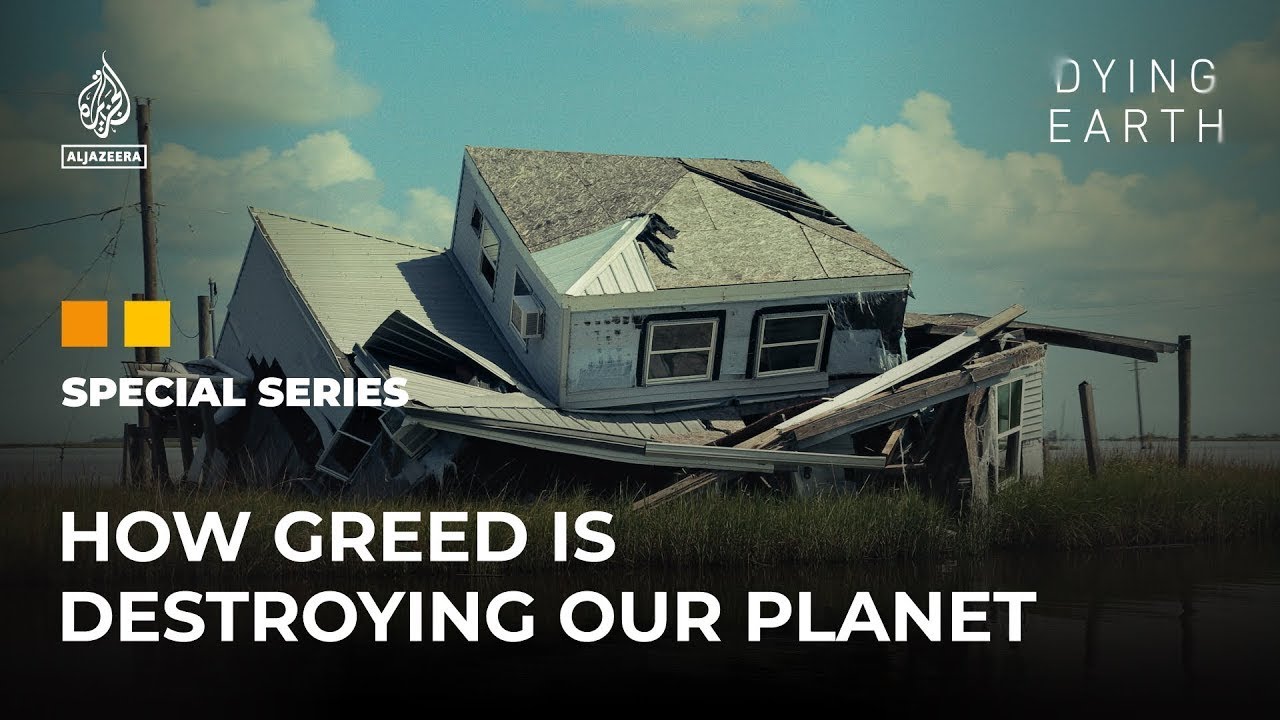
But by the end of this century, sea levels could rise by several feet. In the blink of a geological eye, we’re changing the way the Earth’s system functions. And the impacts of that will be felt not just decades to come, not hundreds of years— sea level rises will go on for thousands of years.
And the evolutionary impacts of what we do will last forever. Climate change may be the existential crisis of our time, but the threat to our planet goes far beyond a warming atmosphere. [OCEANS] I like to think of this as one big ocean.
Right? It's all connected. The Indian, the Pacific, the Atlantic, they’re all connected by gyres and currents.
Even though there are different ecosystems in different parts, I think it is important to consider it as the world’s one ocean. Dr Ayana Johnson is an expert on ocean conservation. The ocean has already absorbed about a third of the carbon dioxide that's been emitted by burning fossil fuels.
And that's just throwing everything out of balance. And of course, the ocean is also warming up. The ocean has absorbed over 90 percent of the heat that has been trapped by all the greenhouse gases that we have added to the atmosphere.
So. . .
it looks the same. . .
but it's changing super quickly. You know, it’s not just climate change that’s affecting the ocean, right? It’s also overfishing.
We’ve removed about 90 percent of the large fish, I mean the tunas, the swordfish, the sharks. . .
over the last 70 years. We’ve just taken them out. We’ve killed them.
For tens of thousands of years, humans have relied on the rich biodiversity of the ocean to survive. [MANDRANA ISLE, MADAGASCAR] I started fishing in Morombe a long time ago, since I was like this child. The Vezo is a nomadic tribe that has sustainably fished for shark in the Mozambique Channel for generations.
But now, they’re coming up empty. We throw our nets, but we get nothing. Before, however, we often caught many when we went fishing.
Their nets are empty because of a threat from an outside invader. Thousands of massive trawlers fish the Indian Ocean. They can cast millions of hooks a day, leaving a path of destruction in their wake.
The shark fin industry is responsible for killing a 100 million sharks a year. And that’s only a fraction of the global fishing industry’s impact on life in the ocean. When the planet’s life support systems are turned into a commodity, environmental disaster isn’t far behind.
[WATER] From an indigenous perspective, water is understood as being a living force and as being acquainted to life itself. So, water isn't thought about as separate from people. Deborah McGregor teaches at York University in Toronto and is Anishinaabe from the White River First Nation.
I think even if people don’t know very much about water, everyone still has a very intimate relationship with water. Everyone still needs water every day in some form. .
. in some form to live. While climate change may seem like the main cause of the crisis, it’s being made worse by how we manage water.
I think the biggest threat to people are people themselves—really! And what they believe to be their priorities: consumption, industrialization, economic growth over sustainability of water. And there's major water wars happening in different places because people need to have water.
And allocation of water— who gets it and who gets to use it— becomes a really huge issue. [OWENS VALLEY, CA] One of those water wars is in California, and it’s pitting ranchers in the Owens Valley against the city of Los Angeles. Ranchers have leased the land and water rights from LA for over eight decades.
But now, because of climate change and growing urban demand, the city is taking back those rights. They say water’s too valuable to irrigate. If you're from Los Angeles, you would know what happens to a lawn if you take-- If you irrigate a lawn and quit irrigating it, it just dies.
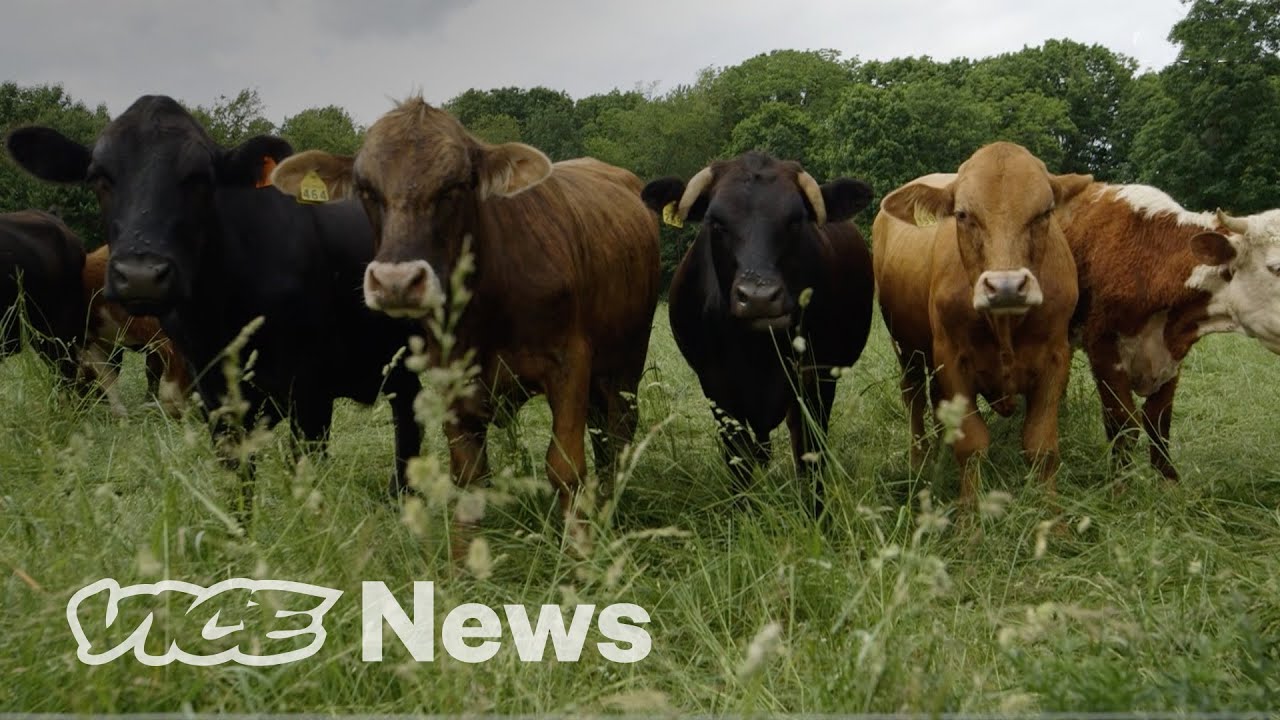
And that's what would happen to those meadows. Gary Giacomini’s family has been ranching in the Owens Valley for generations. Losing his right to water would be devastating.
Our business is strictly family. My wife and I are the oldest generation here. That’s us, our son, and our daughter, and both of their spouses.
That’s why it’s so hard. What we're proposing is not that cows take the priority over people in LA. We just want some balance.
There has to be some more balance. Water is also thought of as being a commodity. .
. something to be bought and sold. It can be allocated to-- for mining.
It could be allocated to forestry operations. It could be allocated to agriculture. So, people will then compete because it creates that capitalist kind of competition scenario.
Experts say that exploitation has created the Anthropocene and the crisis we now face. Nowhere is that more evident than in the struggle to control the land beneath our feet. [LAND] We rely on functioning ecosystems for so much— to keep our water that we drink clean, to provide rich fertile soil that we can use to plant crops in, to provide clean air that we can breathe.
Pamela McElwee is an associate professor of human ecology and an expert on biodiversity and land management. The number one most important driver of biodiversity and species loss is land-use change. It is the expansion of agriculture and the unsustainable way that we grow food that contributes to biodiversity loss.
Food production is the single-largest contributor to deforestation and habitat destruction. So, right now, land-based systems are drawing down about a third of the carbon emissions that we are creating. So, if we didn't have forests, if we didn't have soils, our carbon emissions from fossil fuels would be even worse.
And like so many other things in the Anthropocene, this planet-wide destruction is fundamentally rooted in systems that humans have created to manage land. Things like global trade, that’s incredibly important because when we talk about the disconnect that people feel from the land, global trade is a big part of it. Because you can be sitting here in the United States, you could be consuming commodities from around the world.
And any environmental impacts that come from that consumption are also distant from you— your waste, your trash. The rise of global trade has killed off small farms. We have corporate agro-businesses that control every step of the food production process.
Everything from contracts with farmers to the way food is processed to the way it gets to consumers. Large meat producers use contracts with farmers to outsource their risk and responsibility for cleaning up the mess of factory farming. The biggest problem I see that we have right now is that we need to find a way to stop storing waste.
And we need to process the waste we make the day we make it. Tom Butler manages 8,000 hogs, but he doesn't actually own them. A large meat company does.
Yet he’s responsible for cleaning up their waste. At this little small farm, we were taking on the waste management of a city of 30,000 people. -That sounds like a lot.
-That's a lot of waste. We didn’t have any idea of what we were taking on because we weren’t educated in waste management. I’d say 95 percent of the growers that are on contracts had no education in waste management.
Butler does want to manage his hogs more sustainably. He’s even using his own money to do so with the help of a small government grant. But he's limited by the contract he signed.
If I wanted to close the farm right now, remove all the waste, fill it full of dirt, plant vegetation on top of it, it would cost me $320,000 out of my pocket to just close these two. The industry is just not ready to adopt a different technology from what we have now. We have a system that’s not working, so we just need to change.
If we want to fix our relationship with land and nature, we have to fix the way the economy works, the way the global economy works. And reducing inequity is a huge part of that. Elsie Herring lives next to a different hog farm, one that sprays untreated hog waste on a field near her house.
In North Carolina, that’s a common and legal way of disposing the waste. The hog farm sprays right here in this field, which is, like, eight feet from my mother’s house. How often does it smell like this?
I mean, this is strong! Well, sometimes it smells even if he’s not spraying because a lagoon and two hog houses are sitting back here. In the US, race is the biggest indicator of whether or not you’ll end up living near a toxic waste site.
These facilities are in our neighborhoods and in communities with people of color and low income. That’s where they put these facilities. Climate change isn't about the environment.
It’s about racial injustices as well. It's about social injustices. It's about economic injustices.
So, I’m hopeful that as people recognize all of those interconnections and how deeply embedded they are, we can see the importance of transformative change for getting away from them. The steady destruction of our oceans, water and land has had geologic consequences. Scholars like Lewis say to save ourselves, we need to move beyond the surface level impact of our actions.
We have to think about what the root causes are. What the Anthropocene does is it allows us to think in a much more systemic way about what human societies do, how they function, how they interact with the natural world. And if we can think in a systematic way, then we can start to think about what kinds of changes to society we might need to move it in a very different direction.
We’re different from other forces of nature because. . .
we could get together collectively and choose another course of action.