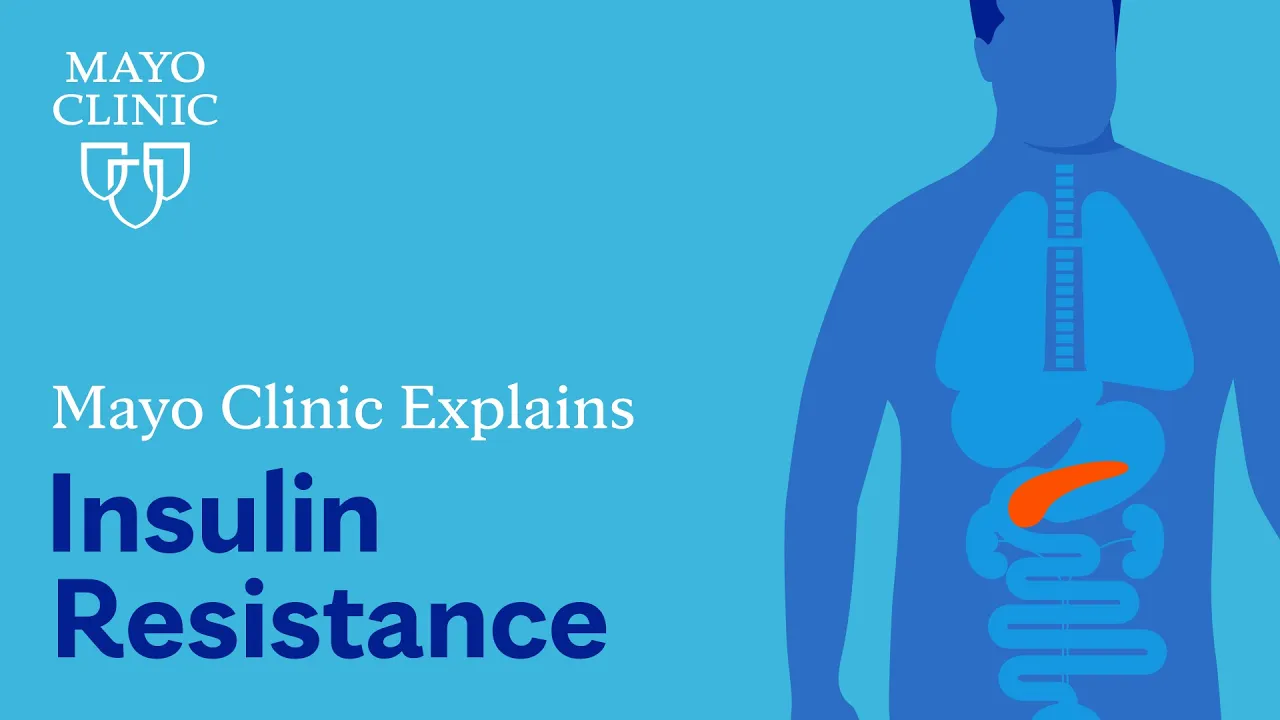
[Music] [Music] hello i'm dr eliana de filippis an endocrinologist at mayo clinic in this video we'll cover the basic of insulin resistance what is it who gets it the symptoms diagnosis and treatment whether you're looking for answers for yourself or someone you love we're here to give you the best information available to understand insulin resistance often referred to as pre-diabetes let's first talk about what insulin does when you eat food your body converts the food into dietary sugars insulin is a hormone released by the pancreas that tells your cells to open up to that sugar
and convert it into energy with insulin resistance the cell don't react and don't open up resulting in excess sugar in the blood over time the pancreas keeps trying to regulate the blood sugar producing more and more insulin until it wears out and can produce large amount of insulin anymore as a result blood sugar levels increase to the point of being in the diabetic range [Music] anyone can become insulin resistant in particular people with excess weight at a higher risk compared to the general population risk is further increased with a family history of type 2 diabetes
age over 45 african latino or native american ancestry smoking and certain medication including steroids antipsychotics and hiv medication there are other medical conditions associated with insulin resistance like obstructive sleep apnea fatty liver disease polycystic ovarian syndrome also known as pcos cushing's syndrome and lipodystrophic syndromes lipodystrophic syndromes are conditioned that cause abnormal fat loss so carrying either too much or not enough fat tissue in your body can be associated with insulin resistance very often people with insulin resistance don't have any symptoms at all it is usually picked up by their doctor during an annual health exam
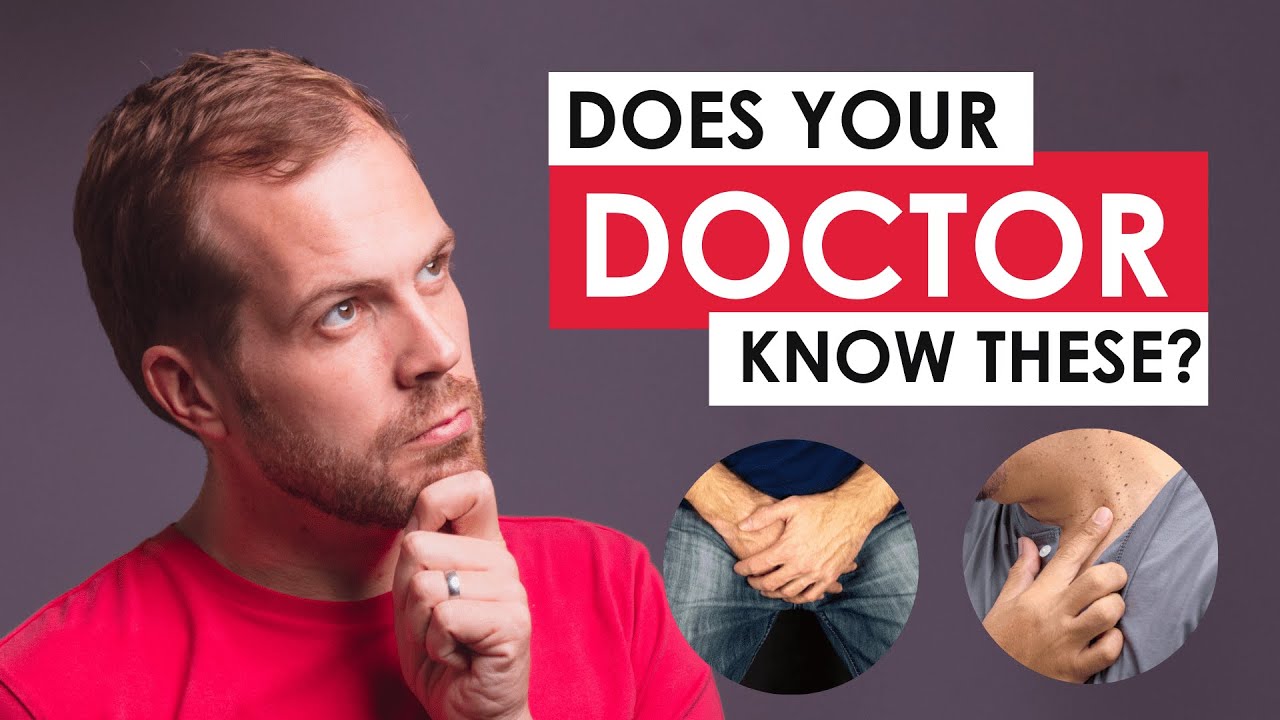
or routine blood work there are some signs of insulin resistance that your doctor may look for this includes a waistline over 40 inches in man and a waistline over 35 inches in women skin tags or patches of dark velvety skin called acantosis negrigans blood pressure reading of 130 over 80 or higher a fasting glucose level equal or about 100 milligram per deciliter or a blood sugar level equal or above 140 milligram per deciliter two hours after the glucose load test in a1c between 5.7 and 6.3 percent fasting triglycerides level over 150 milligram per deciliter an
nhdl cholesterol level under 40 milligrams per deciliter in man and an hdl cholesterol level under 50 milligram per deciliter in women [Music] if your doctor spots these symptoms they may follow up with the physical exam and a variety of blood tests that measure the levels of glucose or sugar in your blood and or your tolerance to that glucose or more recently a blood test called hemoglobin glycosylated a1c often simply referred as a1c reversing insulin resistance and preventing type 2 diabetes is possible through lifestyle changes medication or sometimes both healthy bodies comes in different shapes and
sizes losing weight through drastic means can be dangerous and counterproductive instead get ideas from a doctor or a nutritionist about ways to incorporate healthy foods like fruits vegetables nuts beans and lean proteins into your meals also consider incorporating exercise and movement into your day-to-day life in ways that makes you feel good even though permanently defeating insulin resistance isn't always possible you can help your body to be more receptive to insulin listen to your body reduce stress give it the nutrition and the activity it desires if you'd like to learn even more about insulin resistance watch
our other related videos or visit mayoclinic.org we wish you well


![What is insulin resistance? Why does it happen? [Dr. Christopher Gardner]](https://img.youtube.com/vi/U1cr14xffrk/maxresdefault.jpg)