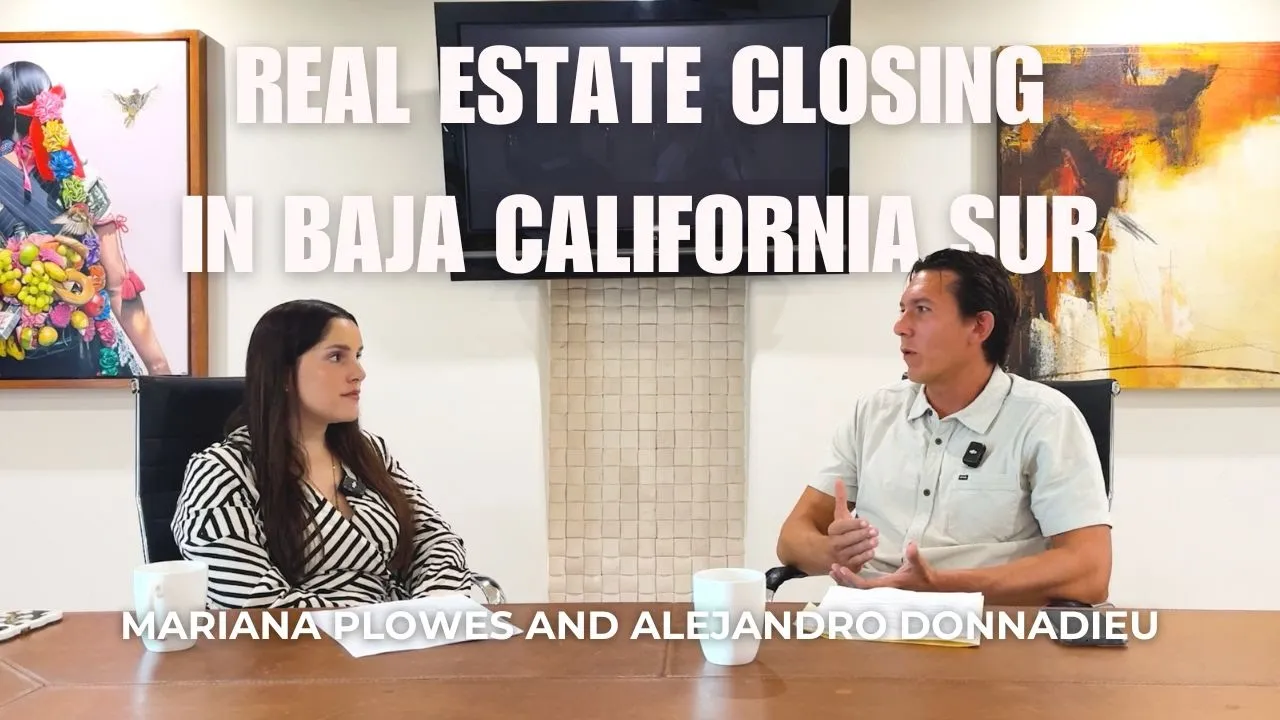
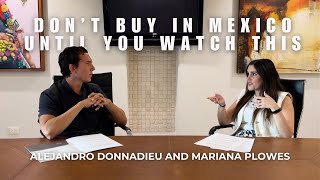
Good morning everybody. We're in another episode of Baja Brief. Today we are in Baja Legal Consulting Group with Mariana Pow.
How are you Mara? I'm good. How are you?
Very good. This is the second time we have you in the podcast. Yes, I'm happy to be here talking to you guys again.
We're really happy to come here with Mariana because she always helps a a lot when we as agents have questions that we sometimes kind of know the answer but when they become really specifically we need to get uh to the experts. We put together some questions that have been appearing in different cases and we're bringing it them to Mariana to see what you think of them, what you can answer. Uh we think they are really interesting.
They have been picked. So let's start. Yep.
Perfect. Okay. First of all, once a property is set up in a corporation or a fid commiso, is it possible to move it to another structure without selling it?
Yes, you can always transfer your property to another structure without selling it. But this is not advisable because any transfer of rights or of the property will trigger the payment of certain taxes like capital gains or uh the acquisition tax. Even if you're not selling, then okay, we're not paying capital gains, but it would trigger the acquisition tax and it would be prrated to the amount that you're actually transferring.
So, we don't advise doing this. It's not a very smart strategy because you're only going to pay double. So, what we do advise is always think ahead of what's the purpose of your property, if it's going to be commercial use or private personal use.
And then from there you can decide what's the best way to go. But we really only advise this type of situations if it's a very specific case that it's the only way to go. But other than that, it's uh it's better to decide upfront instead of changing once you already have it on a situation that had to be like like this.
No. Um, we've had a lot of clients that have this debate or always ask us like well I will start with aid kiso and then I will change it but we always tell them like don't you're just going to spend a lot of money you have to do basically a new closing even if it's yourself to another company so it's really not advisable and for clients that have come to us uh it's been it's actually good that we haven't had the situation because it would be a bad advice for the clients Yeah. So, you're already saving money for the PL.
Yes, exactly. You see, if I buy a fido, can I transfer it over to a corporation years later without tax implication? No.
Always any transfer of property will trigger the payment of taxes. Yeah. So even if you're changing if you have a a trust and you're changing the beneficiaries of the trust I have a case right now where they want to change the beneficiaries to their parents even that is going to create uh taxes in case of families we can uh treat it as a donation so it won't won't trigger the same taxes but it always does so it's not advisable if I purchase a property with the int the intention of leaving it to my children who are under 18.
Can I legally include them on the fed commisso as 100% beneficiaries or do I need to have an ability involved? You can leave them even if they are minors. The only thing is that they will have to you will have to appoint someone as the legal guardian.
Uh, and in case the process happens when they are still minors, the process is going to be more complicated because it's going to have to be before a judge. It's not going to be a regular transmission of rights of new beneficiaries. So, it would be before a judge and with a legal guardian.
So, those are the things to take into consideration. But yes, you can appoint your children even if they're minors. Does it imply a different cost?
It would be directly maybe if the legal guardian that you have tells you, I'm going to charge something, which is rare. And the judge process that would also add to your closing cost. Okay.
Yeah. Oh, this is for the Mexicans. The Mexican national typically have concerns about using closing attorneys or escro services.
I think it's difficult for them to understand why it's necessary here in Cabo. In the rest of the country, real estate doesn't work like it works here in Cabo. Uh for me that I'm from Mexico City, it was a shock when I came here.
I didn't know things work differently. So, it's the same if people it's the first time they're buying in Cabo and they are from another part of the country. It's very difficult to understand because generally Mexicans are able to close directly with the notary and they don't require a closing attorney.
But here in Cabo, it is necessary because of the com the complications that it has that most of the properties, if they're selling, the seller is going to be American or Canadian and they have a trust. So, you're going to need someone to uh extinguish that trust. We've seen that people are more understanding of that and we generally offer a call with the clients and the agents ask us if we can explain why it's needed and once we explain it's very clear for them.
And escrow is not used either in the rest of the country. I mean maybe in some parts like here but escrow services are completely something American and Canadian. So it's also very difficult to understand fully.
We do advise all of our transactions even if it's Mexican with Mexican to use escrow because it adds the extra security to the transaction. So um even if it was not a law by MLS that it needs to be through escrow we always advise uh to use escrow just to have that extra safety. Of course it was also a chop for me when I'm fromatlan when I came here.
Uh that's something that we didn't use in the rest of Mexico as you said right. It's really important to start adapting to that because in the United States in Canada it gives a really solid base of security of what what is going to happen between the transaction. So an escore account is like a trans transition account where you have some of the money uh when uh on the time that all the process is happening.
So both parts are safe with this J party who is protecting the money. Last week I actually have a client that is Mexican and he's buying a house that is from an American and that's happening right now and I have the questions right which is how do they extinguish the fid commission? You just say it earlier but what's the procedure?
Can can can it be done in pesos? Can it been done in dollars? What do you recommend?
So when we have this type of transactions, what we do is we do two separate closings. One for the seller and one for the buyer. And uh generally the seller is going to be the one that takes care of the costs for extinguishing his trust.
So in that case it's going to be in dollars. He's going to extinguish the trust. He's going to pay us and pay the trustee bank in dollars.
And it's very simple to extinguish a trust. It's just an instruction letter from the seller saying that they want to extinguish that they are going to work with such notary and that the new person that will own won't need the the trust. Once that is done, we can actually start working on the other side which would be the Mexican purchasing.
That will depend on the terms of the offer, but it will be it can be either pesos or dollars, whatever your seller wants to take. probably it's going to be dollars because if he's an American, it's going to be a much faster process because the buyer is Mexican. So, we're going to skip the part of the trust and it's going to be faster.
That's good to know actually. Okay. We're going to talk about wire fraud risks.
Okay. Have you seen any recent cases of wire fraud in Mexican real estate transactions? I mean, unfortunately, wire frauds it's a global problem.
Yeah. Uh and here in Cabo it's not exempt of this. Thankfully we have never had any of these issues in the law firm but we've heard of cases here in Cabo that has happened in the past couple of years.
Sometimes escrow works perfectly, but sometimes people that maybe are not so familiar with technology, they can receive an email from another person pretending to be escrow and they wire the money somewhere else. So, it's important to always use instructions that your attorneys are sending you, making sure that those are the only instructions. escrow instructions are never going to change.
So, it's always going to be the same. It's a big red flag if they send you an email saying, "Oh, the new wire instructions have changed. " That will won't happen.
So, yeah. Uh that's important. And that's why we also try to use here in the law firm, we always recommend using escros that have encrypted communication between the parties.
That way, you can make sure that that's not going to happen. So generally these type of escros are those that have websites that communicate directly with the seller and the purchaser. So they will send email, they will send in that website the escrow agreement, everything.
So that way you avoid sending emails. Everything will be received through a website that is completely encrypted. So um I think that's also the success of the new escros that are here in Cabo is that they do have this platform.
So, we always advise using using that. And if not, because the seller feels more comfortable using another escrow that doesn't have this, just be careful with who you are receiving the information from and what you do with it. It has to be follow the instructions and maybe double check with your attorney.
Actually, all escros always ask us for the phone number of the buyer and the seller. And many people ask, why do you need that information? And it's because the escrow actually calls the seller to make sure uh if they want to receive the money and they call the buyer to confirm that they are actually sending the money.
So that's just a double check of security that all escro companies do. So it's also important to understand the reasons why. This is a good question.
You know about the hiddland here in Mexico. Yes. How complex is the process of converting a hiddland into private property?
May maybe tell us a little bit where is an AIO land first. Okay. Um Ahilos are not properties.
That's like the base of everything. An aido is a piece of land that was granted to a group of people and then they saw by the government and they they subdivided it in parcels. As such they have the possession.
They can do whatever they want with that. They can uh cultivate food. they can do anything and they can even decide to sell it.
However, for that to happen, it's a very complex process that we need to do because they are not owner. So, they don't have the property, right? So, in order for an ailo or a parcel to be taken out of an ailo or to make a complete eilo a property, you need to do a process to disinccorporate the ailo to make it private property.
So to do that um it's complex because you need to have the okay from the rest of the AIO people. The members in the hido they have a community they they create an assembly. Okay.
And through the assembly they decide everything such as deciding to sell the complete Aido or to just sell a few parcels from the Aido. If it's only a few parcels, it's easier because it will only affect the person that is actually selling them. But when it's about the whole Hilo, which happens a lot with developers that want to buy a big amount of land, the process is way more complex because then it needs to be accepted by all the Hilo community or at least by the majority and it's very complicated because these people have been living in that land for a long time and generally these lands are used for growing food everything.
So sometimes they're not very okay with doing it or they need a little bit more explanation of why and what's going to be the benefit and what they're going to get and it needs to be done before a notary. And then we have a ministry of uh agrarian development. They need to accept and review that the assembly made by the Aido complied with all the legal requirements that the majority was there that they had the actual minutes to do it.
It needs to be registered. Once it's registered, they actually give the certificate that it's now going to be a private property. And now until all of that happens, it can be a process that takes a lot lot of time.
Have you been in a process of this? I have been in a process like that. It can take uh it can be fast if the AIO is completely okay with it and they are very cooperative.
It can be six to eight months but I've also been in cases that it's been two to three years and they are still trying to decide or somebody goes to the agrarian ministry and they say no I don't agree and they make an appeal. So it can be very lengthy. Um here in Cabo most of the private properties that are not now private they were done with the correct process and they are already private property but a lot of cases for example in La Ria Los Bles they are still a hido and they are still in the process of changing.
So it's always important to make a a good due diligence to make sure that it was made through the right process and that it's actually private land and it's no longer on a hidd. That's an important one. A complex one, right?
Yeah. Okay. Now, if someone buys a large parcel, let's say five hectaras or about that's 12 acres, I think, how difficult is it to subdivide that into individual lots or parcels for resale?
Subdividing is not very difficult. What we need to check is the urban development plan. Every area of Cabo or of any place really is subdivided by areas and zones.
So there are zones where you can only build residential homes. There are zones where you can build uh hotels or commercial areas. So first you need to check in what area your piece of land is situated.
And based on that the urban development plan is going to tell you if you subdivide you need at least uh such amount of meters for the front and for the back and you need to have one street. It gives you the guidelines. You cannot just subdivide into 100 uh lots because maybe it's going to be too small.
So the the plan tells you how many times you can subdivide it. So, if the plan says you can subdivide as long as you have five square meters of front of each lot, it's just an example, then you can subdivide in that amount. But if you're trying to subdivide in more than what the plan actually allows you, then it's going to be a more complicated process because you're going to have to go before Cavilo municipal and they are going to have to make an analysis of the plan, why it's needed, if it's going to be beneficial for the town, and only if it's going to have a lot of benefits and it's going to be better for some reason, they will allow it.
But as long as you do a subdivision under the terms that the urban development plan already uh allows, it's a fast process. It can be between six to 12 months. Is this costly?
Uh it depends on how many uh subdivisions you want to have. And it is costly if you have to go before Cabilo. Yeah.
If it's only a regular subdivision, you have to pay the rights that that uh implies and the costs for the dese and the bitos that are going to do it that they're going to charge their own fee, but it's normal. It's normal. What type of land zoning is typically the hardest to change in Mexico?
I'm I'm guessing a hidden natural protected areas. Yes, natural protected areas are the most complicated because a hiddland ultimately if they all want to they can sell and it's fine. The problem is when you're near natural protected areas that is going to be extremely difficult because it's always a priority to keep them well you're trying to protect uh nature and everything around it.
Right? So if it's already a protected area, there's a reason behind, right? Yeah.
So anything that is uh ecologically protected, it's I mean I won't say impossible because we've seen it happen, but it's very difficult and the the times it happens, do they have like maybe relocate the area? Sometimes you cannot really relocate because um but when they do allow it, it's a very thorough process where you need to commit yourself to creating I think it's even double or three times the amount of for example trees that you are taking off. You need to plant them somewhere else.
You need to have a program for uh animals, for flowers, how you're going to keep them. It's a very thorough process. It's very complicated and it requires federal authorizations.
So yeah, we also do that here in the law firm. We do environmental law. So we've seen it.
It's very complicated. It is possible, but it does imply a lot of things that you need to do, a lot of obligations and commitments that are not short-term, but commitments that you need to make 50 years ahead or something like that. like it's a lot of of work.
Can you explain how the 521 guarantee works for new construction? So, that's a great rule that is uh provided by Perco. Okay.
And basically what they say is that you get a 5-year guarantee for any structural damage. Anything that you see in the walls, everything that's 5-year guarantee, 3 years for any waterproof issues. So if there are leaks or um anything related to water that was not in permeabilized correctly that's also included and then one year for any other thing.
Obviously this does not include um that the washing machine doesn't work. I mean any other thing in the property that is not working correctly. You have one year like the doors and yeah.
Okay. I wanted to ask you Mariana, have you what's the last case you had that it's of interest for the people um maybe in the last couple of weeks or that you're working in right now? Well, I think one of the most complicated cases that we have right now is we have um an American buyer and Mexican sellers.
So in this case it's kind of like the opposite that of what we always see and in this case the sellers the original sellers passed away. So now the ones selling are the children of the sellers which are 10 children. So they are all over.
So that makes it easier, but it's tricky because you need to do the actual inheritance process before you're able to actually transfer the property and create the trust for the buyer. Okay? So it's been a very complicated process but sometimes people get scared of how are we going to sell the property or who's going to want to buy it if it has we need to be 10 people agreeing to sell and the inheritance and the notary and everything but of course for the buyer has to be like a a real impact.
Yeah for the buyer when it first happened it was very he was in shock. He was like oh my god my closing is going to take years. It's been working very fast because the parties have been really cooperative.
Obviously, it's not going to be a fast closing. It's going to take time. Do the 10 of them have to sign?
Yes, unless they give powers of attorney. So, it makes it very complicated because you need the information of the 10 of them of their wives or their husbands. Uh in some cases, grandchildren were also involved or one uh original son died.
So now it's also the inheritance process of that child. So it's a lot of things. At the same time, I think it's a great example of how closings, even if they look very complex, the great thing about having a closing attorney is that they're going to make it easier and doable.
Because sometimes, I don't know, I've had agents that tell me, "No, it's very complicated. I don't think I'm going to take the listing or I don't think I'm going to advise my buyer to take this property because it's a mess and it can be tricky but it gets done. In this case in particular, can can we prevent it?
Like maybe if they are already in the process of buyer seller, if I die in the process, uh can I protect the transaction in a way that I don't involve my 10 kids or grandkids? No. As a seller, no.
As a buyer, you can include certain clauses in your offer to purchase. Yeah. Saying that in case you die, um the offer will be cancelled or in case you die, your wife is going to take care of the offer and we'll continue with the process.
But in case of the seller, it's not possible because it's part of the the will they have. Yeah. So, as soon as they die, the process needs to get started.
So, you need to go all the way to the wheel. Yeah. Right.
Okay. Well, that's pretty interesting. Yeah.
Um, well, that's all for today. Thank you ma very much for for hearing us, for watching us. Mariana, thank you so much for having us here again.
No, thank you.





![Muamma | Episode 06 [Eng Sub] - 8th Jan 2026 [ Saba Qamar & Ali Ansari ] HUM TV](https://img.youtube.com/vi/SE679tkUY9M/mqdefault.jpg)

![Case No.9 Last Episode 32 - [Eng Sub] - Presented by Happilac Paints & Nisa Cosmetics - 8th Jan 2026](https://img.youtube.com/vi/wVocY80vjGA/mqdefault.jpg)



![Muamma | Episode 05 [Eng Sub] Jahan Ara's New Trap - 7th Jan 2026 [ Saba Qamar & Ali Ansari ] HUM TV](https://img.youtube.com/vi/yvCmH075iUY/mqdefault.jpg)