Speak up, guys! Well, I'm starting a new channel from scratch. Anyone who already followed me on the two old channels knows that I created this new one to really start from scratch for the algorithm, and little by little follow the progress of the channel.
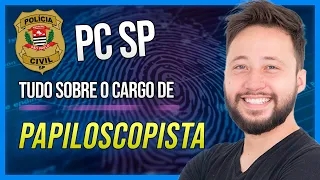
On this channel, I'm going to talk about basically the same things I talked about on the other channel, but with fewer subscribers. Starting with this video in a different way, without standing in front of the camera in the room, let's talk about PC SP, which was the first video I made on that other channel about the São Paulo Civil Police. Many want to pass this exam, whether it is at secondary level or higher level, as an investigator or clerk.
So, in this video, I'm going to say a few more things than I've already said in previous videos, about how I spent two months at PCSP. For those who don't know, I left my first competition, the ESA (Sergeants School), precisely to study for the PCSP competition. At the time, several competitions were coming out and I decided to suspend my enrollment at ESA to dedicate myself to the PCSP competition.
I applied for two positions during these two months of study: the first was telecommunications agent, a position I didn't get into, remaining for five or six questions, which is quite a lot. But it was the most competitive position of the year, with 140,000 applicants, if I'm not mistaken, a lot of people. Afterwards, I became a papilloscopist assistant, a position for which I was approved.
There were big differences in my studies compared to my first competition. In the first competition, subjects such as history, geography and Portuguese, which are common in practically all competitions, were included. At PCSP, subjects like Criminal Law and Constitutional Law began to drop, things I had never seen before.
Therefore, my grade was not that good and I was in the cut, average. If I had gotten one more question wrong, I would have been out. It took me three and a half years to be called, not only because of that, but also because of the pandemic at the time, which contributed to the delay.
My studies started intensely; I woke up at 6 am and studied until 10 or 11 pm, sometimes even longer. I also remember waking up early to try to speed up the content and cover most of the notices. I studied for two tests and that was my pace.
It was very difficult, compared to my first competition, in which I had 10 months to study calmly. In the first competition, I didn't use preparation, but in the second, for the PCSP, I used a preparation that, unfortunately, was very bad. Depending only on this preparation, I would be in trouble, especially when it comes to identification as a papilloscopist assistant.
So, I ended up using YouTube to watch classes the day before, which helped me understand the basic content needed for the test. The competition for papilloscopist assistant was less competitive, with around 40,000 applicants, which was a significant difference compared to the 140,000 applicants for the first position. I decided to become a papilloscopist assistant due to the smaller number of applicants and because as a police officer I needed a category D driver's license , which I didn't have.
Therefore, I chose a position that I considered more accessible. The difference between papilloscopist and papilloscopist assistant is minimal when working; the main difference is that the papilloscopist can sign reports and certain documents, while the assistant cannot. Furthermore, the papilloscopist's salary is slightly higher.
This is done to justify salary differences and reduce costs, such as the difference between agents and investigators. As I already mentioned, my studies were intense, I woke up very early and slept very late. I used a preparatory course, but I didn't study 100% of it.
As I said, I turned to YouTube, especially the classes the day before, which were of great help. It was a very busy two months . I know several people who studied for three months and I think it's worth it if you dream of passing.
It's worth dedicating time just to study and pass. Now, I believe there will be several competitions for investigators, clerks and delegates, which are at a higher level. So consider making a technologist, like I did.
The competition I passed was at a medium level, I don't know if there will be a medium level now, but it can unless the next researcher competitions and similar competitions start to require a higher education level. I completed a Technologist in Public Management, it was 100% EAD and I got a scholarship through ProUni. I don't know if there are any remaining grants, but it's worth searching.
So, if you want more information on this subject, leave it in the comments about what you want to know, training, etc. , within the limits of what I can share. I will be producing more content about this.
Don't forget to like, subscribe to the channel and activate the notification bell. Leave your feedback in the comments. Until the next video!
It cost!